Bootstrap
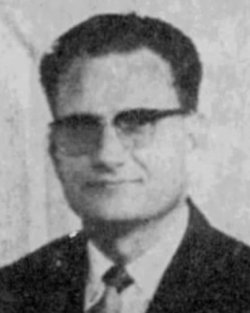
W.E. Best

The Sustaining Word of God

Psalm 119:11
W.E. Best August, 23 1983 Audio
0 Comments
Best's Corner

Sermon Transcript

Auto-generated transcript • May contain errors

100%
Let's read beginning with the
first verse. We'll read through only the 16th verse. Actually,
it's the second stanza that we'll be discussing more than the first
stanza tonight. I'm sure that you know that there
are 22 stanzas in the 119th division of Psalms answering to the 22 letters of the Hebrew alphabet.
And each stanza has eight verses. I'll give you the meaning of
these things in a moment. Let's read beginning with verse one
and read through verse 16. So we'll read the first two stanzas.
Blessed are the undefiled in the way who walk in the law of
the Lord. Blessed are they that keep his
testimonies and that seek him with a whole heart. They also
do no iniquity. They walk in his ways. Thou has
commanded us to keep thy precepts diligently. And that means zealous
obedience. Oh, that my ways were directed
to keep thy statutes. Then shall I not be ashamed when
I have respect unto all thy commandments. Partial obedience brings shame. I will praise thee with uprightness
of heart when I shall have learned thy righteous judgments. So praise
follows true learning. I will keep thy statutes, O forsake
me not utterly. Humility is joined with the psalmist's
resolution. Now the second stanza beginning
with verse nine. Wherewithal shall a young man
cleanse his way? By taking heed thereto according
to thy word. With my whole heart, here's a
repetition of verse two. or a portion of the second verse.
With my whole heart have I sought thee. Oh, let me not wander from
thy commandments. Verse 11 is our text if we have
a text tonight. Thy word have I hid in my heart
that I might not sin against thee. Three parts to this verse. First of all, thy word is the
best thing, the best treasure that the Lord could commit to
you and me. have I hid in mine heart, that's the best place,
that I might not sin against thee, that's for the best purposes. Verse 12, blessed art thou, O
Lord, teach me thy statutes. With my lips have I declared
all the judgments of thy mouth. I have rejoiced in the way of
thy testimonies as much as in all riches. I will meditate in
thy precepts. and have respect unto thy ways. I will delight myself in thy
statutes. I will not forget thy word."
There is no portion of Scripture in all the Bible that magnifies
the Word of God like the 119th division of the Psalms. I might
add, that the 119th division of the Psalms actually gives
a further and more detailed explanation of the 19th division of the Psalms,
and I think it's about verses 7 through 11. So the whole Psalm,
that is 119, is an elaboration of Psalm 19, verses 7 through
11. Now let me point out a few things
in the Psalm as a whole. I'd like to begin by giving a
quotation from a book that I have and I've had for a long period
of time. In fact, Dr. Peter Connolly was instrumental
in me having this particular book. It was printed in England.
has some excellent things in it. I've never seen the book
on any bookstore shelf here in the States. I treasure it highly. It was written by a man who faced
the Roman Catholics in Ireland many years ago, and he took all
the verses, the key verses that the Catholics use, to try to
substantiate their particular views on the sacraments and so
forth, and has done a most excellent job of answering the major arguments
given by the Roman Catholic Church. Now, I'd like to give you, first
of all, their view of the Word of God. What is the Roman Catholic
view of Holy Scripture? I'll give you a quotation by
Pope Pius. who said, and I quote, I also admit the Holy Scriptures
according to that sense which our Holy Mother, the Church,
has held and does hold, to which it belongs to judge of the true
sense and interpretation of the Scriptures. Neither will I ever
take and interpret them otherwise than according to the unanimous
consent of the fathers." And of course, they mean by that
the Roman Catholic fathers. Now, let us not be too hard on
the Catholics. Baptists are guilty of the same
view. I'm talking about a lot of Baptists,
as the Catholics. They want a Baptist interpretation
of Scripture. Methodists, most of them, want
a Methodist interpretation of Scripture. Presbyterians want
a Presbyterian interpretation of Scripture. And we could go
on and on. Pentecostals want a Pentecostal or charismatic
interpretation of Scripture. So when the Pope said that I
also admit the Holy Scriptures according to that sense which
our Holy Mother the Church has held, So Baptists, they understand
the scriptures and they say, we will hold to them according
to what the Baptists say about them. And if they do not literally
say that, their actions demonstrate that that is their view. Now for several things in the
light of the psalm as a whole. The first thing I want to point
out is that the psalmist was suffering affliction in the form
of persecution at the time that this psalm was penned. Now I'm
sure you might want to ask the question, well who is the author
of this psalm? You'll notice in many of the psalms it will
say the psalm of David, the psalm of Asaph, and then the psalms
of Moses, Solomon, and so forth. But it is the consensus of opinion
by many scholars, Hebrew scholars, that Ezra was the writer of this
psalm. Now, I can't prove that. You can't either. You can't disprove
it. I don't know all the arguments that they use and why they have
come to this conclusion, but it is the consensus of opinion
of many scholars that Ezra is the one who actually penned the
119th division of the Psalms. So the psalmist was suffering
from affliction. And it was in the form, of course,
of persecution. And some 66 verses make mention
of affliction. In other words, out of 100 and
how many verses in this psalm? 176, isn't it? Yes, 176 verses.
176, 66 verses make reference to affliction
or to persecution. So this was uppermost in his
mind. And you can understand why he relied so heavily on the
Word of God. Because of the persecution that
he was encountering in his life as a follower of the Lord. So
he was conscious of the need of God's Word to give him the
strength that he must have in order to face the opposition
that he was encountering. Now, there are 22 stanzas, which
corresponds, of course, to the 22 letters of the Hebrew alphabet.
Each stanza has eight verses. Now, let's give the significance
of the number eight. Some people do not believe there
is any real significance in numbers. I've studied numerology. I may
not go to the extent or to the extreme that some have in the
study of numerology, but I know that three, the number three
certainly speaks of the divine triunity. Five speaks of grace,
six of man, seven of perfection, and eight of ultra-perfection
or absolute perfection. It goes even beyond the perfection
of number seven. And since we have mentioned seven,
let's look at seven and eight. The word seven in the Hebrew
means to be full, to be satisfied, to have enough of. That's the meaning of the word
seven. And I believe the Hebrew word is sheba. Is that right,
Tom? And then, I don't mean to put you on the spot. We can't
remember all the Hebrew or Greek or anything else. And then the
word eight, and I believe that the Hebrew word for eight is
Shimona, and it's like S-H-M-O and long O and N-E-H. So as seven
in Hebrew means to be full, to be satisfied, to have enough.
And of course, this reminds us of Christ's seven sayings on
the cross. And then in the book of Revelation, you have seven
churches. and you have seven trumpets, and you have seven
bowls of wrath, and you can see the significance of seven in
the study of the Revelation. But the word eight in the Hebrew
means to make fat. In other words, it goes beyond
to be fully satisfied or to have enough. And here it means to
make fat. It means to super abound. are more than enough. Now that's
the meaning of the word eight in the Hebrew. Now since that
is the meaning of the word eight, and there are 22 stanzas, and
each stanza has eight verses, what is the psalmist saying to
you and me? There is enough to make us fat in the word of God,
and it superabounds And not only does it superabound, but there's
more than enough for you and me in the Word of God. More than
enough. Now this is something that is
interesting. Deity is mentioned in every verse of the 176 Psalms
with the exception of two. Listen closely. But even in those
two, deity is implied. Now, I'll give you the two verses.
We're not going to look at all 176, but I'll give you the two
verses where God's name is not mentioned, but yet the name of
God is implied. So it is correct to say that
deity is mentioned in every verse of the Psalm, with the exception
of two in our King James Version, but even in these two, and the
verses are 121 and 128. And there, deity is implied. Let's look at verse 121 and 128. 121, I have done judgment and
justice. Leave me not to mine oppressors. So, deity is implied. Then in verse 28, therefore I
esteem all thy precepts. You say, well, there is the pronoun,
but it's italicized. So it is a word supplied by the
translators. Therefore you couldn't be dogmatic
about it. But deity is implied. Therefore I esteem all precepts. And since all precepts, whose
precepts? So it's God's precepts. So the
name of the Lord or deity is implied even in this psalm. All
things to be right and I hate every false way. This Psalm records the most elaborate
eulogy of God's Word. I said it is the most elaborate
eulogy of God's Word ever written. It is safe to say there is some
reference to the Word of God in 172 verses out of 176. Now what are the four that doesn't
mention the Word of God? I'll give them to you. Verse
84, 90, 122, and 132. So the whole Psalm is an elaboration
of Psalm 19, verses 7 through 11. Let's go back to the 19th
division of Psalms and read verses 7 through 11 for a moment. So
the 119th Psalm is an elaboration of these verses, 7 through 11,
of the 19th division of Psalms. So we've got 19 and 119, easy
to remember. There are three major divisions
of the 19th division of the Psalms. God reveals some of the attributes
of deity in nature in verses one through six, and then in
verses seven through 11, and these are the verses that we'll
be reading, God has revealed himself in Holy Scripture. And
then in the last division of the chapter, beginning with verse
12 through verse 14, God reveals himself to some experientially. I said God reveals himself to
some experientially. So he reveals himself first of
all in nature. in verses one through six, and
then in scripture, verses seven through 11, and then 12 through
14, he reveals himself to some, not to all, experientially. So
in nature, in scripture, and in the heart, experientially. Now let's read verses seven through
11. The law of the Lord is perfect. converting the soul. The testimony
of the Lord is sure, making wise the simple. The statutes of the
Lord are right, rejoicing the heart. The commandment of the
Lord is pure, enlightening the eyes. The fear of the Lord is
clean, enduring forever. The judgments of the Lord are
true and righteous altogether. More to be desired are they than
gold, yea, than much fine gold, sweeter also than honey and the
honeycomb. Mover by them is thy servant
warned, and in keeping of them there is great reward. We're warned, but by the keeping
of God's word, there is great reward. Now going back to the
119th division of the Psalms, this is an elaboration of verses
seven through 11 of the 19th division. A person is revealed
by what he loves and by what he hates. You will find the psalmist
in this 119th division of the Psalm talking about his love
for the word and hating everything contrary thereto. So when you
love something, you hate everything that's contrary to that which
you love. So there are 10 references to love in this psalm. Nine are applied to the word
and one to the name of Jehovah God. Turn to verse 97. Verse 97. Oh, how love I thy law. It is my meditation all the day. How love I thy law. And then notice at verse 113,
I hate vain thoughts, but thy law do I love. Now we'll be looking at some
of the other verses. Well, let's just look through the psalm here. I think I have them marked. The
first one on loving the law or loving the word is verse 97.
And then verse 113, but thy law do I love. Then drop down to
verse 119, thou puttest away all the wicked of the earth like
dross, therefore I love thy testimonies. And then verse 127, therefore
I love thy commandments above gold, yea, above fine gold. Verse 132, look thou upon me
and be merciful unto me as thou usest to do unto those that love
thy name. And then 140, thy word is very
pure, therefore thy servant loveth it. 159, consider how I love
thy precepts. 163, I hate and abhor lying, but thy
law do I love. 165, great peace have they which
love thy law. 167, the latter part, I love
them exceedingly, that is the testimonies of God. So you can
see the references to the psalmist and his expression of his love
for the word of God. So a person is revealed by what
he loves and what he hates. Now here's a person who says,
I love God's Word. Well, does he study it? Does
he read it? Does he meditate upon it? If he doesn't, he doesn't
love it. That's just like a man saying,
I love my wife, but he doesn't come home when he should, and
he rats around. He's unfaithful and he spends
his money on other things rather than taking care of his family. So that's no manifestation of
love. He doesn't love her. So if a person loves the Word,
he reads the Word, he studies the Word, he meditates upon the
Word, he gives time for it, he makes time for it. So there are 10 references to
love, nine are applied to the Word and one to the Lord himself. There are four references to
hate in this psalm. And the references are verses
104, 113, 128, and 163. No person can love the
things that are to be hated and love the divine law at the same
time. Look at verse 113 for a moment.
I hate vain thoughts. but thy law do I love. So it is not only the duty of
the believer to know what God's revealed will is, but it is also
his delight. Verse 47 and verse 48. Look at these two verses. Verses
47 and 48. And I will delight myself in
thy commandments, which I have loved. My hands also will I lift
up unto thy commandments, which I have loved, and I will meditate
in thy statutes. So the love of God's commands
is to be distinguished from the mere outward observance of them. Someone has said, he who preaches
to others must delight in the practice of what he preaches.
Good statement. Let me repeat it, and then we'll make a practical
application of it. This man was commenting on these
two verses, when the psalmist said, I will delight myself in
thy commandments, which I have loved. My hands also will I lift
up unto thy commandments, which I have loved, and I will meditate
in thy statutes. So the writer said, he who preaches
to others must delight in the practice of what he preaches.
How in the world can a person preach something to someone else
if he doesn't delight in the very thing that he is proclaiming?
I think you can tell when a person really loves the Word. I think
you can tell when a person meditates in the Word. So it is by grace that the law
has been written upon the heart of the individual. Unto this
takes place every desire to be The right kind of a person, of
course, is just actually to be a law unto oneself. The depraved
man counts the commandments of God burdensome. That's true of every unsaved
person. He thinks there's no fun in the
life of the Christian. He thinks he's just a stick in
the mud. The happiest person in the world
is a Christian who is not only a Christian but one who has a
good workable knowledge of the scriptures and he's capable of
being able to recall and bring to his mind when he is in need
or he faces some unusual circumstance. He's a happy individual. He relies
on the Word of God. But the depraved man, the unsaved
man thinks the observance of the testimonies of God or the
statutes of the Lord or the commandments of the Lord are burdensome. But
God's commands are not burdensome, John said in 1 John chapter 5. We know that natural men observe
some of God's commands. Even natural men observe some
of God's commands. But not with an inward delight. You and I observe God's commands
with an inward delight. Therefore, we do not think that
they're burdensome. Someone has said, some assemble with saints,
that is unsaved people, assemble with saints to hear the word
proclaimed. But what the saints do out of delight, others do
out of custom or compulsion. Good statement. To those who
hear out of compulsion or custom, the word is a reproach or a weariness. That's why when some people go
to church and the preacher preaches over 15 minutes, it's too long. Becomes wearisome. The individual's
anxious to get out and do something else. So it is not only the duty of
the believer to know what God's revealed will is, but it is also
his delight. The Word of God is complete as
a guide for the believer. One preacher said, quote, first
century Christianity cannot be practiced today, end of quote.
What do you think about that statement? I don't believe it.
Don't believe it for a minute. I believe that first century
Christianity can be practiced today. I believe first century
Christianity is being practiced by a few. I said by a few. Now let's observe another statement
of the Psalm that's very good. It has to do with the whole heart. The whole heart. The first reference
is in verse two. Blessed are they which keep his
testimonies and that seek him with the whole heart. I'll give you the references
without reading all of them on the whole heart. And then we
will observe some statements that I think are outstanding
on this point. The whole heart is found in verse
one of Psalm nine. Let's go back
for a few minutes. and also in 111 verse 1, and
then in the 119th division, the whole heart is referred to in
verse 2, verse 10, verse 34, verse 58, and verse 145. So there are several references
to the whole heart. The whole heart of the unsaved
is faint, according to Isaiah 1 verse 5. We know that the heart
of the unsaved is wicked, desperately wicked, and who can know it but
God himself? Jeremiah 17, 9. But what about the heart of the
saved? Jeremiah 24, verse 7 will give you the answer that will
harmonize with what the psalmist is talking about in this division
of the Psalms. So with a whole heart, very important. Now the psalmist was faced with
great afflictions. And being faced with great afflictions
as a result of the persecution that he was having to endure.
Let's look for a moment now at verse 63. He said, I am a companion of
all them that fear thee, and of them that keep thy precepts. The earth, O Lord, is full of
thy mercy. Teach me thy statutes. And he makes reference, as I've
already given, in a number of the verses concerning his afflictions. Let's observe now some things
concerning afflictions in the life of the Christian. So afflictions are not a consuming,
but a refining fire to those who are followers of the Lord.
Continuing afflictions prove that God sees something in His
people that they do not see in themselves. And that's why we
are continually subjected to afflictions, because they serve
as a refining fire. Now, why does the Lord allow
Christians to suffer? Good question. There is a reason for every why. Affliction is, first of all,
a pathway to devotion. Look at verse 67. I said a pathway
to devotion. Before I was afflicted, I went
astray, but now have I kept thy word. So first of all, affliction
is a pathway to devotion. Secondly, affliction is to prove us. to prove us to ourselves, not
to God. He knows us. So God led Israel
in the wilderness for a period of 40 years. For what purpose? To humble them, according to
Deuteronomy 8 in verse 2, to prove them and to know what was
in their heart. Thirdly, affliction is to furnish
us with spiritual power. 2 Corinthians 4, 7 and 12, 9. Remember Paul's thorn in the
flesh. He prayed for it to be removed. Instead of the Lord
removing it, he said, my grace is sufficient for you. Your strength
will be found in your weakness. So affliction is not only a pathway
to devotion and to prove us, but it is to furnish us with
spiritual power. Fourthly, Affliction is a polisher
of character. Romans 5, 3 through 5, Hebrews
12, 10 and 11, and James 1, 3 and 4. A believer without affliction
is a weak Christian. That's always been true, always
will be true. Any Christian without affliction
is a weak Christian. Fifthly, affliction is a preparation
for fruitfulness. John 15, 2. You remember the
branch that did not bear fruit? That was taken away, but the
one that did bear fruit, he pruned it that it might bring forth
more fruit. So the pruning certainly denotes preparation for fruitfulness. John 15, 2. 2 Corinthians 1,
3, and 4. So affliction is like the pruning
knife that takes away, not necessarily evil things from us, but superfluous
and useless things. There are a lot of superfluous
things in all of us. There are a lot of useless things
in all of us. Then sixthly, affliction is a pledge of coming glory.
Job 23 verse 10. So it's for the believer's spiritual
benefit. And finally, Number seven, affliction
is for praise at the second advent of Jesus Christ, 1 Peter 1 verse
7. So afflictions are for this world. It's while we are in time, while
we're creatures of time. They make us long for eternity. So the psalmist said, I love
thy law. Do we love the word of God? I hate every false way. Verse 104. When the psalmist
said, I hate every false way, it doesn't make any difference
whether in opinion or practice. Shun a heretic. So what he said
is you would the devil himself. Good statement. We know that
heresy is the leprosy of the head, and there was no leprosy
as heinous as the leprosy of the head, according to the 13th
chapter of the book of Leviticus. He was pronounced utterly unclean. Utterly unclean. So a person
coming out of a wrong kind of a house, brothel house, was asked
if he was not ashamed. Listen to the reply. He replied,
no. Now, that's a soak in for a moment. If you were seen coming out of
some questionable place by a devoted Christian, a member of the same
assembly that you're a member of, and he were to ask you, aren't
you ashamed to be coming out? Here was a man's reply when he
was seen coming out. And this is a Puritan statement,
a Puritan gave this. He replied, no. The shame was
to go in. I like that. I should have never gone in.
But it took honesty to come out. Now let's make an application
of that. It is bad enough, someone has said, to fall into error. But it's worse to persist in
it. I like that. Now let's make an
application of that. There are a lot of Christians
today who are involved in things in their churches, wherever they
are, in their denominational related churches, that are wrong. Error is involved. And they will
not come out. Now it is, the worst thing is
not just being found in error, falling in error. The worst thing
in the life of the Christian is to persist in it. And that's
why, beloved, whenever, as far as I'm personally concerned,
whenever a Christian is shown from the scriptures that something
is wrong, that he is involved in something that is contrary
to the word of God, and he will not get out, I tell you, I lose
all respect in the world for him. I don't care who he is.
I don't care if it's a relative of mine. I don't care if it were
my parents, if they were alive. It doesn't make any difference
who it is. for any person to persist in error that is evident
to be error. I lose all respect in the world
for such a person. So it is bad enough, as the Puritan
said, to fall into error. But it's worse to persist in
it. The first, he said, shows thee
to be a man. Now listen to this. The first
shows thee to be a man. You can tell this is Puritanical
language. So if you fell into error, it just shows that you're
a man. You're not perfect. And we all
fall into error of some kind. But then the Puritan went on
to say, but the last makes thee like the devil that will not
repent, end of quote. That sounds just like a good
Puritan statement. And I think the fellow who said
it was William Gurnall. Now let's think about this. Let's
make an application of it. So we love God's Word, and we love
God's Word, we hate everything that is contrary to the Word
of God. That's why it doesn't bother me. When someone makes
an unscriptural statement, I say, I don't believe it for a second.
Well, aren't you afraid you're going to offend somebody? If
you offend somebody, he'll have to be offended. If I love truth,
at the same time I hate error. Well, but you don't want to offend
people. You might miss an opportunity
to be of influence to them. I don't believe a word of that.
That's exactly what Billy Graham has been doing for years, when
he's put on the spot. Therefore, I have no respect
for him. I don't have any respect for
any person and especially a so-called preacher who knows what the truth
is and yet he'll persist in something that is compromising in order
to feather his own nest or think that he'll gain an advantage
by doing it. So I like what William Gurnall
said. I wish we had a lot more William Gurnalls today. So it's
bad enough to fall into error, but worse to persist in it. The
first shows thee to be a man, but the last makes thee like
the devil that will not repent. Somebody says, well, that's strong
language. Surely is. But it's truth. And then in verse
113, it says, I hate vain thoughts. But thy law do I love. Look at
verse 116. Uphold me according unto thy
word, that I may live, and let me not be ashamed of my hope. Now we can't cover all the things
that we would like to, but look at verse 140 in conclusion. Thy word is very pure, therefore
thy servant loveth it. The Word is not only pure, that
is free from all and mixture, but it is a purifier. I said it is a purifier. That's why it is said, a trite
statement, but a true one. The Word will either keep us
from sin or sin will keep us from the Word. The Word will keep us from sin
or sin will keep us from the Word. In conclusion, God's Word is
called the Word of Christ because much was given by Him and bears
testimony to Him, Colossians 3.16. Secondly, God's Word is called
the Word of Grace because grace is the glorious theme of the
Word, Acts 20 and verse 32. God's Word is called the Word
of the Cross because in Christ's crucifixion, redemption was accomplished,
1 Corinthians 1.18. Number four, the word is called
the word of the gospel because it brings glad tidings to the
elect. Acts 15 7 and Romans 1 16. Number five, the word is called
the word of salvation because it brings deliverance to the
elect. Acts 13 26 number 6 the word
is called the word of truth Because it has God for its author Ephesians
113 and Colossians 1 and verse 5 finally The word is called
the word of the kingdom see the kingdom always comes in very
important subject because it holds out to all believers the
hope of the everlasting kingdom, Matthew 13 and verse 9. Let's
go back to verse 11 in conclusion. Thy word have I hid in mine heart
that I might not sin against thee. Thy word is the best thing.
Secondly, have I hid in my heart the best place that I might not
sin against thee for the best of purposes. Not even related to what I started
with tonight. In having the long conversation with Kenneth yesterday. By the best, I can't read and
get out of it, but I'd like to get out of it now. But when I
asked him if he could recall the scripture that he knew, he
said, I surely can. It behooves us, beloved, to hide
the word away in our hearts. So when the time comes, and after
all, we're all going to face it. We don't know when, we don't
know how. We need to be able to call the
scriptures to mind that will give us the spiritual strength
we need. We can do that even in severe
pain. Even when we cannot meditate
and concentrate upon the scriptures as we would like. How sad to see people who are
in the declining years or months or maybe days of their lives.
They're Christians, but they do not know enough truth to give
them the stability and strength they need when they really need
it. They have to rely on somebody
else. They want the preacher to come. And beloved, that's
all right, that has its place. But I tell you what, I want to
know enough of it that I'm not going to have to depend on you
to come and to give me assistance and quote scripture to me. I
want to be able to call it to mind to give me the strength
when I need it. Let's stand for that.
W.E. Best
About W.E. Best
Wilbern Elias Best (1919-2007) was a preacher and writer of Gospel material. He wrote 25 books and pamphlets comprised of sermons he preached to his congregation. These books were distributed in English and Spanish around the world from 1970 to 2018 at no cost via the W.E. Best Book Missionary Trust.

Comments

0 / 2000 characters
Comments are moderated before appearing.

Be the first to comment!

Joshua

Joshua

Shall we play a game? Ask me about articles, sermons, or theology from our library. I can also help you navigate the site.