Bootstrap
W.E. Best

Let Us Go on to Spiritual Maturity

Hebrews 6:1-3
W.E. Best January, 9 1983 Audio
0 Comments
Best's Corner

Sermon Transcript

Auto-generated transcript • May contain errors

100%
But this morning, as we're still thinking about
the new year, I do not know of a greater subject from which
to speak than that given us by the writer of Hebrews. I trust that we've all taken
time to stand still long enough to take inventory concerning
the blessings that God has given to us in Christ. Having done
that, we have a responsibility. Let us go on to higher ground. Let us go on onto spiritual maturity. Three outstanding points in the
first three verses of Hebrews chapter 6. Therefore, or wherefore, leaving
the principles of the doctrine of Christ, let us go on unto perfection,
not laying again the foundation. Verse 3, And this will we do,
if God permit. The readers of this epistle had
left Judaism, but they had not gotten very
far away from the very first principles of the doctrine of
God. Now you need to go back to the
12th verse of the preceding chapter to make that connection. The apostles showed them the
need for going on to spiritual maturity. There are different
opinions as to what the writer of Hebrews was really saying
in these verses. I'm going to give you, by way
of introduction this morning, the two principal views of this
passage. First of all, some say the first
principles of the doctrine of Christ In verse 1, or we could
translate it like this, the word of the beginning concerning the
Christ, and the article is found before Christ, must refer to
the First Testament sacrifices. Listen closely. For the Jews,
they say, were exhorted to leave them. Likewise, they say the
word perfection must speak of the New Testament sacrifices
or sacrifice to which they were to allow themselves to be born
along. Thus they were to abandon the
type for the reality, the shadow for the substance. Now that is
one view of this passage. Let us look at that statement
in the light of its context. There is merit in that. What
is the principal theme of Hebrews? Every Christian should know what
the principal theme of Hebrews is. The principal theme is the substance
is better than the shadow. The better things are mentioned.
We have a better sacrifice. We have a better priesthood in
the eternal priesthood of Christ. Christ is greater than Aaron.
Christ is greater than Moses. Christ is greater than Joshua.
Christ is greater than the angels. These are all statements found
within the context of Hebrews. The blood of Jesus Christ is
greater than the blood of bulls and goats and calves. There is no doubt about that.
So the principle thought in Hebrews is that the substance is greater
than the shadow. The reality is more meaningful
than the shadow. No one should argue with that.
So the emphasis according to Psalm is that the writer of Hebrews
in addressing Hebrew believers was exhorting them to leave the
first principles of the doctrine and go on to maturity. Get away from those traditions.
Be far removed from all the types and the shadows. latch on to
the substance, to the reality, forgetting about all the things
that prefigured, that foreshadowed, that typified the substance or
the reality. There's still another view. The
second view of this passage is that the first principles of
verse 1 refer to the beginning of the Christian life. I find
nothing wrong with that. I see truth in both of these
views. The apostle was addressing Hebrew
believers. No one can question that. And
it was the beginning of their Christian life. So those who take the second
view and place all the emphasis on it say that the first principles
refer to the beginning of a Christian life. Let us no longer linger
here But let us go on to higher attainments. Thus they emphasize the beginning
of the Christian life that also applies to the first view. I believe the apostle was addressing
Hebrew believers. I'm sure there were some who
named the name of our Lord who were not genuinely saved. We
have indication of that within the context of Hebrews. And some
were going along for a while and then they were drawing back
onto perdition. And Paul said, we are not of
them who draw back onto perdition, but we are them who believe to
the saving of the soul. He was giving the contrast between
true believers and mere professors. Let us divide the passage this
morning into these three divisions. Having left the first principles
of the doctrine of the Christ, or the teachings concerning the
Christ, that's number one. Let us go on to maturity, spiritual
maturity. And number three, this we shall
do. if God permit. You might wonder
about the third point, if God permit. Isn't it His will for
us to go on to maturity? Why would He use the statement,
if God permit? There's a reason for it, as we
shall see. First of all, the word leaving
is important. The Greek word for leaving in
verse 1 is an arius active participle of the verb athiomi which means
to leave behind, to leave behind. Now since the verb means to leave
behind, and we have here an arius participle of that verb, then
it could be translated having left behind. They had already
left behind the first principle of the doctrine
of Christ. So having left behind. Now what
is meant by leaving behind? How can one leave behind? the
first teachings concerning the Christ? That's the question. We want to illustrate it if we
can, and I think we can from several points of view. At first
sight, the meaning of the clause is not obvious. I said at first sight it isn't
obvious. It seems to clash with those
connected with it. Does it really? There are different
ways to leave an object. I want to look at it negatively
and positively in trying to give to you the beauty of this verb
as it is used in this verse of scripture. First of all, there
are different ways, I said, of leaving an object. To illustrate, a prodigal may
leave his father without ever returning. Secondly, an apostate will leave
the teachings to which he has been subjected never to return. We find in 1 John 2, verse 19, They went out from us, that is
the apostates, because they were not of us. If they had been of
us, they would no doubt have continued with us. But they went
out that it might be fully made manifest that they were not of
us. In 2 Peter 2, verses 20 through
22, those who had been subjected to biblical teaching who knew
mentally certain principles, left them, and then Peter likens
them, first of all, to a hog that returns once again to its
wallowing in the mire. Secondly, Peter likens such persons
as the dog that returns to its own vomit. Peter doesn't leave
us in doubt, he goes on to say, it would have been better had
they never have known the way of righteousness than after having
known it to turn from the holy commandment delivered unto them. That's one way in leaving an
object. Like the prodigal who leaves
his father and never returns. or the apostate who leaves the
truth to which he has been subjected without ever returning. I said
an apostate, I didn't say a Christian. I didn't say a weak believer.
On the other hand, let's look at it from another standpoint.
The scholar leaves the letters of the alphabet only to use them. Does that make sense? This is
the sense in which the verb is used here by the writer of Hebrews. Having left the first principles
of the doctrine of Christ, or the teachings concerning the
Christ, let us go on to spiritual maturity. The scholar who learns the alphabet.
Does not every time he sits down to read and it comes to word,
he doesn't start giving the alphabet. He doesn't start saying A, B,
C, D, E, F, G and so forth. Does he? No, he is capable of
using the alphabet which he has learned. But he has left the
alphabet. He no longer rests in the alphabet. He now uses the alphabet. So he employs the alphabet in
startling combinations as the instrument for either acquiring
knowledge or diffusing knowledge. Does that make sense? That's
exactly what the writer of Hebrews is talking about. Secondly, we
are to leave the first teachings concerning the Christ just as
a tree. that has been planted will leave
its roots when it towers toward becoming a majestic tree. Again, you and I are to leave
the very first principles of the teachings of Christ like
a builder will leave the foundation in order to erect a superstructure
upon it. Beloved, I want to stack the
evidence. I want us to see the beauty of
the verb that is used by the writer of Hebrews. So we must
leave the first teachings of the Christ as the mathematician
will leave his axioms in order to proceed to the construction
of his demonstration. What purpose would it be for
a person to learn the alphabet and then rest in the alphabet? What value would it be to him?
What value would it be for a person to put on a tremendous foundation
for a building and never leave the foundation in order to erect
the superstructure upon it? Now let's apply that principle.
I said, let's apply that principle. What advantage is it for you
and me to acquire the elementary teachings concerning the Christ
without, beloved, reducing them into practice, everyday living, and connecting them with the
higher principles of the Christian life? Now this makes sense to
me. It would be a sad commentary
on any person, if he laid a foundation, he went to great expense to have
a tremendous foundation for a building. And after five years, no superstructure
had ever been started upon the foundation. Or ten years would pass without
any superstructure. Here is a person who has learned
the alphabet. He can go through his ABCs, but
he has never learned to leave them to the extent that he can
use them effectively in formulating words
in order that he might acquire knowledge, in formulating words
in order that he might diffuse the knowledge which he has gained. To leave the first elements of
the teaching about Jesus Christ is not to depart from the soundness
of the faith which has been once delivered to the saints. Jude
3. So what does it mean? It's very
simple. It is to leave the first miles
of the journey behind as one makes progress toward the completion
of his Christian course. After having made that statement,
I'm reminded of a verse of scripture that fits it. Do you know what
Paul said when he came to the close of his earthly life? I
have fought a good fight. I have finished my course. Now don't forget that because
Paul had, I think, that in mind as he gave us the statement found
in verse three. This we shall do if God permit. This we shall do if God permit. What would you think of a person
who said, I'm going to take a journey? A week passes and you come back
and he is not 10 feet away from where the journey was to have
its beginning. There he sat. I'm going to take
a journey. There he sits. Now believe me,
we smile at this, but I want to ask you a question this morning. How many of us have learned the
fundamental principles concerning the Christ, but we have never
gotten any further away than those principles concerning the
Christ? There we sit, rejoicing in the
elementary things that we learned, and we haven't gotten any further. Having made that statement, There
are many things connected with the Christian life, beloved,
that are not communicated to the soul at the time one is converted. Many things. I'll tell you something. People can fake it for a little
while, but people can't fake it for long. I'd like to go back
and tie this in with my message last Sunday morning. without
reviewing what I said last Sunday morning. I believe there are
many Christians who fake it. I believe there are preachers
who fake it. I believe there are people who want to enter
into a special aspect of the Lord's work who fake it. But
I'll tell you something, you can only fake it for a short
period of time. It'll not take but a short time
for a person to expend himself And you'll know all that he knows.
And unless he continues to make progress in his Christian life, he will soon have expended himself
and he'll have nothing really to give that will enable the
person who listens to him to make any progress in his or her
spiritual life. Yes, a person can fake it for
a short period of time. But when you hear the individual
over some period of time, he can't fake it for long. Now how many of us have been
guilty of faking it for a period of time? Do you see what I'm doing? It is so important, beloved.
Growth in spiritual knowledge is absolutely essential to spiritual
health. Now you may think you're in good
spiritual health this morning, but if you have made no progress
in your pathway in the Christian life, then you're not spiritually
enriched and you're not spiritually healthy. If you have not gotten
very far away from where you started, you're not spiritually
healthy. It's just that simple. You may fake it for a time, you
may think, you may cause others to think that there is greater
depth than actually exists. But you know, and God knows,
and He's the judge of our hearts. So we're to leave the first miles
of the journey behind in order we might press forward toward
the end of the journey. That is exactly what Paul did.
That should be the ambition of every Christian. To illustrate
it even further, it is to leave the foundation in order that
one might build upon it. After all, what is the purpose
of a foundation? It is to have a home. It is to
have a shelter over one's head. It is to have the commodious
place in which he might live. So to leave the alphabet is to
devote oneself to the riches of its literature. But there
cannot be any literature in one's mind unless he knows the alphabet. So we see how important this
is. Now look once again at verse 1. Wherefore, having left, having
left, of Eomy, which means to leave behind. So the tree in
spreading its branches does not forsake its roots. The word leaving is used in the
sense of leaving the foundation in order to build upon it. And there's something interesting
about this verb. The action of the arius participle here, and
this is an arius participle, according to Greek grammar, precedes
the action of the main verb, which is, let us go on. Listen to that. So it precedes the action of
the main verb. The main verb is, let us go on.
And this is the action that precedes, let us go on. Having left behind,
let us go on. Now we've come to something that
is very debatable, even among Greek scholars. I doubt very seriously if many
of you will take time to investigate it, so I'll share it with you. If you're interested, you'll
take notes. If not, you'll let it just slip right on by. Let's look next at the verb,
let us go on. Here we have What some say is
a middle, others say it is a passive subjunctive of the verb furrow,
which means to bear or carry. You say, well, it doesn't make
any difference. Oh, yes, it does. Oh, yes, it does. Let's investigate
it. Let us go on. I want to raise
a question. Does this mean personal effort? Listen now. Do you think this
means personal effort or does it refer to personal surrender? You don't see that in studying
the King James. But what do you think it means?
Having left the first teachings of the Christ, let us go on. That's the verb. And it is either middle or passive,
subjunctive or furrow, which means to bear or to carry. I
think we can explain it by raising the question. Now, what does
it really mean? Is the writer saying this is
to be a personal effort on the part of each one who goes on? If that be true, then it would
be in the middle voice. You say, well, that's not important.
Oh, yes, it is. Or secondly, is it personal surrender
of one to the will of God, thus allowing, as it were, the Spirit
of God to operate and bear him along or carry him along? That would be passive. Which
does it mean? Can't mean both. But I'll tell
you something. The inflected form of the verb
can be either middle or passive. And since it can be either middle
or passive, the only way that you can come to a conclusion
is to study it in the light of its context. And even then you
might have difficulty. I said, even then you might have
difficulty. Now, if I were a mind to this morning, I could quote
A.T. Robertson, Nicole, and many others, and say some believe
this and some believe that. Some believe it's passive, others
believe it is middle voice. Now, what do we mean by middle
voice? That means the person participates in the action, if
it's middle voice. If it is passive, he is being
acted upon. In other words, he is surrendering
to the will of God and being born along by the will of God. There are some who say, well,
there is an element of truth in both, and I won't argue with
that. I won't even argue with that. So let's look at it. The question is, is it personal
effort or is it personal surrender? I kind of like the personal surrender.
I lean heavily toward the personal surrender. But they had already
left, having left, being believers in Christ, having
left the first principles of the teaching of Christ. Let us surrender ourselves to
the will of God and be born alone. I see nothing wrong with that.
And I'm inclined to believe that it means that. And I believe
there are stronger arguments for that view. That is for the
passive rather than for the middle voice. So Paul is deeply concerned
about these Hebrew believers. But there is a lesson in this
for you and me. Beloved, I can't help but reflect
upon my own life. As I look back over years of
Christian life, my Christian life, there have been times when
I have felt there have been some real periods of progress, and
then there are periods in which there has not been the progress
that there should have been. Have you found that? So the Christian life, the Christian
path is to be as the shining light that shines more and more. And I'm stopping there. But I'm
not talking about this morning absolute perfection. I'm talking
about relative perfection. I'm talking about reaching spiritual
maturity. Let's look secondly. Let us go
on unto perfection. There are many things connected
with Jesus Christ and His truth, which are not communicated to
the soul at the point of conversion, but which must be acquired by
you and me progressively. And that, beloved, throughout
our Christian lives, we never arrive. Great truths always come one
by one. One by one. There isn't anything that disgusts
me anymore after these years of living for Christ and preaching
the word and studying and trying to share things with others.
than to find individuals who will read one book or maybe read
through the Bible hastily just for the sake of saying I've read
the Bible and then he thinks he's gained all the knowledge
there is to be gained and he wants to sit in judgment on everybody
else and he wants to instruct everybody else when he is in
need of instruction. I want you to know there are
no 90 day wonders on the Christian path. I said, there are no 90-day wonders.
Now, some of you may not know what I mean by 90-day wonders,
some of you younger people. During World War II, there was
such a need for officers, and so they would take a fellow out
of college, if he had two years of college, and they'd send him
through 90 days of training, and he'd come out a 90-day lieutenant.
And I'll tell you, that was pretty rough on some of those old sergeants
who had been in the service for many, many years. and they had
some 90 day wonder come out and in 90 days he felt like he could
tell an old staff sergeant or a master sergeant who had been
in the service for years and years and who had forgotten more
than the 90 day wonder even knew and yet they had to be under
his leadership. Beloved, I wonder how many churches there are today where the people are having to
sit and listen to a 90 day wonder Do you know what I mean? Oh, he may know a few things
academically, but he knows very few things experientially. And
truth is learned one by one. As a person learns one truth
and he applies that truth, then he's in a position to learn another
truth. And he's not going to learn another
truth until there's been application of the one that he thinks he
knows. You know where the proof of that
is found? John 7, 17. That's a Bible statement. You're not going to gain greater
knowledge until there's an application of the knowledge already gained.
We have to know experientially that which we know academically
before we can learn anything else and be in a position to
instruct others. So there are no 90-day wonders
on the Christian path, spiritually speaking. I said spiritually
speaking. So progress must be made. But
let's notice something. We're to go on unto perfection. We're to go on to personal and
spiritual maturity. It is gained by the individual. Someone else can't do it for
you. It doesn't make any difference how many services you might come
to, how much teaching you might listen from this pulpit. Unless
there is an application, unless there is some effort on your
part during the week or in subsequent days to make a study of those
things for yourselves, beloved, you don't get it. You just don't
get it. So progress in divine knowledge
of something is distinct from changeableness in doctrine. There's
no change in doctrine. To leave the elementary teaching
is not to depart from the soundness of the faith once delivered to
the saints of God. The word perfection here comes
from the Greek word, which means completeness or perfection. It's
interesting. This word is found here and also
in Colossians 3 and verse 14. And it refers to ripeness of
knowledge or practice. It is practice. It is an old
word for maturity. according to outstanding Greek
scholars. No longer babies in Christ. No longer babies in Christ. Now
I want you to get the context from which this statement is
made. Go back now, this is why I read this passage to begin
with this morning. The writer had been talking about
the eternal priesthood of Christ. So he said, of whom we have many
things to say and hard to be uttered, hard to explain. seeing
ye are dull of hearing, for when for the time ye ought to be teachers,
ye have need that one teach you again, which be the first principles
or elements of the oracles of God. And you see there is similarity
between that statement in verse 12 and the first principles or
the principles of the doctrine of the teaching of Christ in
verse 1. Not the same word in the Greek, but there is similarity
between the two statements. And then he says in verse 3,
For every one that useth milk is unskillful. He's unskillful in the word of
righteousness. If all you ever hear is the milk
of God's word from the pulpit, then that man is unskillful in
the word of righteousness. If all you ever hear is John
3, 16, that man is unskillful in the word of righteousness.
But I know a lot of folk who are perfectly satisfied to hear
the man on the Lord's day to just go over the same thing day
in and Sunday in and Sunday out, month in and month out, year
in and year out. No progress. He says, He's a babe. He's a babe. Look at that. But strong meat belongs to persons
who are of full age. And by the way, the Greek word
translated full age here simply means mature. It is a word for maturity. Even
those who by reason of the use of their spiritual senses If they're able to exercise them,
they can discern both good and evil. So we see how important it is
to make spiritual progress. Now how do we explain this? How
can we illustrate this going on to maturity? Let me give you
several illustrations. The acorn does not become an
oak in a day. You do not become a mature Christian
in a day, in a month, in a year, or more. The person who has had one lesson
at some college or university does not become a scholar in
one lesson. I'm illustrating it where we
can understand it. The well-trained soldier was
not a raw recruit yesterday. When you find a well-trained
soldier, you're looking at a person who's had many years of experience. He was not a raw recruit yesterday. A mature Christian was not a
raw recruit yesterday. Does that make sense? I go further. It is not one touch of the artist's
brush that paints a beautiful painting. It takes a man who has been doing
it for a long time to give us a beautiful painting. There are months between seed
time and harvest. I'm using illustrations we cannot
ignore. What about the path of the just?
Turn with me for a moment. Back to Proverbs, I want to show
you some beautiful things in this text of Scripture. Proverbs 4 verse 18, that will
help to illustrate our point. The path of the just is as the
shining light. It's like the light of dawn that shines more and more, or
brighter and brighter under the full day. There are three things to which
I direct your attention, and before I get through, I'll have
four. First of all, the path of the
just resembles the shining light in three respects. Number one,
as to origin, it emerges from the darkness at the dawn of the
day. Now I can give you one that should
precede that one, and that would make four. The light of the just is preceded by a state of spiritual
darkness. Ephesians 5 verse 8. Ye are darkness. But now are ye light in the Lord.
Ye were darkness, Paul said, in talking about the Ephesians.
But now are ye light in the Lord. So the light of the just is preceded
by a state of darkness. Ephesians 5, 8. So as to origin,
it emerges from the darkness of the dawn, from the darkness
of the dawn of the day. Secondly, or thirdly, using the
four-point outline, as to progress, get this, as to progress, it
grows in brightness unto the perfect day, that is the day
of Christ's personal appearance. Lastly, as to perfection, progress
ends there, not here. Now let's look at that verse
and then analyze your own life by it. Use this as a measuring
stick. Solomon said the path of the
just is as the shining light that shines brighter and brighter
onto the perfect day. And before the beginning of light in your
heart, you were in a state of eternal, or you were in a state
of darkness. So as to origin, it emerges from
the darkness at the dawn of a new day. As to progress, it grows
in brightness, as the brightness of knowledge, the brightness
of holiness, unto the day of Jesus Christ's personal presence.
And as to His perfection, progress will continue until the perfect
day. So, there is no absolute perfection
here. There is progress here. There
is sanctification here. Perfection is at the perfect
day. Let's look at this a little deeper.
The just man is not the person who merely begins He is not the person who merely
begins, but the man who perseveres. His path is one that shines brighter
and brighter. Can that be said of you? Can
that be said of me? In other words, His path is no
meteor which shines brightly and then passes into outer darkness. How many people have you seen
in church? How many people, since you've been a Christian, have
you known, who have made professions of faith, who have just turned
somersaults, who have jumped high, and talked louder, and
screamed more, but it didn't last. It didn't last. So the path of the judge a meteor which gleams and expires,
but it is the path of the cloudless light of heaven itself. Such light is not actuated by
mere human impulses, but by divine principle. It'll last. You'll notice, too, in this verse
that the use of light is twofold. First of all, it enables us to
see, and secondly, to be seen. We can see without this light, and we cannot be seen without
this light. So there are two things about
it. Great passage of scripture, is it not? I like to take a verse
like this and continue to just dig into it. In whatever path we set out,
there is no such thing as standing still. I said there is no such thing
as standing still. Once a person finds himself in
the path of righteousness, the path of the just, there is no
standing still and never moving forward. There are two ideas in the text.
Look at them. One is progression and the second
is perfection. There is progress to the point
of perfection. Perfection is not here. Perfection
is in the day of Christ. So when you look at the verse,
it gets bigger and bigger. I'll give you a quotation by
a Puritan. The things that I have shared with you have not come
from Puritans. But here is a Puritan statement
about this verse. This path is entered by the gateway
of justification, That's true. Its course is sanctification,
and its consummation is glorification. When one enters the path of the
just, it's by justification. The course of this path is sanctification. The consummation of this path
is glorification. There is no standing still. The
work of sanctification is to make saved people sound. What do you think the writer
of Hebrews is talking about? Let us go on to perfection. To perfection. The more we know
about the triune God, the less, beloved, we are satisfied with
ourselves. Now, will you test yourself with
that statement? If you're satisfied with yourself
this morning, you don't know much about the Lord. If you're
a Christian, you know very little about the Lord. The more a Christian
knows about the Lord, the less he is satisfied with himself. Now that gives you something
to go on when you're witnessing. And when you talk to these religionists
today who are so self-satisfied, it'd be well to remember that
statement. Solomon is talking about absolute
perfection in Proverbs 4.18. The writer of Hebrews is talking
about relative perfection. He's talking about spiritual
maturity. And we're not all on the same
level of spiritual maturity. Some are more mature than others.
Those who are more mature are those who have applied themselves. Persons who have been more diligent
in the study, and not only study, but application of principles
thus learned. Now we come to the last point. One thing I see the Apostle doing He's really admonishing these
Hebrew believers to leave the milk of God's Word for more nutritious
food. Nothing wrong with that. And now we come to the last point.
In verse 3, he says, and this will we do, this will we do,
if God permits. Now you might like for me to
study with you this morning, but I don't have the time to
do that. There are three different groupings here concerning the
foundation, if you'll look at them, and I'll just mention them.
The first is repentance from dead works and faith toward God. That's the first. So the first
pair of elementary truths is repentance and faith, and these
refer to man's relation to God. The second pair, and look at
verse 2, of the doctrine of baptisms and of laying on of hands, so
the baptisms here could be washings, a symbolic act of cleansing,
and laying on of hands, symbolic act of denoting the communication
of a gift. These are associated with man's
relation to fellow believers. And the third pair, resurrection
and eternal judgment, this pair is related to the future life. Both are eschatological, resurrection
and judgment. They're both eschatological.
Now, I'm not going into those. That could be another message.
But coming now to verse 3, and this we shall do, having left,
having left the first teachings of the Christ, let us go on to
maturity. And now, this Will we do if God
permit? Or in the New America Standard
Bible, this we shall do if God permit. The writer must proceed
to the deeper truths of scripture regardless of what his readers
may or may not do. Now, beloved, you're going to
have to come to the conclusion in your own Christian life. I've
had to do it. Through the years I've had to
make the decision, regardless of how people follow the teaching,
I've had to make up my own mind what I'm going to do by the grace
of God, regardless of what others do. I said regardless of what
others do, what they may do or what they may not do. It is true
that you have some folk Every church who are willing to study
and apply themselves and you have others who are just seemingly
Satisfied with a status quo Have I've learned the alphabet But then it neither able to acquire
much knowledge Nor are they capable of diffusing it So the writer says, regardless
of what those to whom I'm writing do, I know what I've got to do. We
shall do. Now some say that the writer
was in prison. He was in prison, and the reason
he says, if God permit, we'll look at that in a moment, if
God permit. In other words, if the Lord lets me out of prison,
and I continue to live for a while, then I must make progress. But
if not, that's the will of God. Nothing wrong with that. But
I think that is just surmising something that cannot be proved
by Scripture. But I thought I'd mention it to you. But let's
look at the latter part of this verse. If God permit. The word permit here is an interesting
word. We have that third class condition
in the Greek of the particle, eon. But it has a suffix, and
the suffix is per, P-E-R, eon per. And eon per is not used
too many times in the New Testament. But whenever it is used, and
this was interesting, It gives strength to the third
class condition, eon. Now some translations have translated
this word, eon per, as indeed. If God indeed will permit. I could give you a few places
where this particular compound word is used, but we'll not take
time to do that. I do want to say that this was
no idle form used by the writer. If God permit. I'm afraid sometimes
when we speak, I'm going to do thus and so if God permits, and
it's a mere idle form without any real substance. Would you
agree with me? This was no idle form. If God indeed will permit. So he will go on with the argument
and not attempt to again lay the foundation. And notice what
he does in the first verses of this chapter. He doesn't go and
expound these first principles. He leaves them and he goes on. There's a purpose in it. Have
we missed this? Have we failed to see something? So the addition of the word per,
the article per, gives the idea that that with which it is connected
is to be taken in its fullest sense, if God indeed permit. In other words, Paul was saying,
regardless of what you do in your personal life, I know what
I've got to do and I trust we shall all go on, if God permit, if God
permit. He was not only talking about
the letter that he was addressing to them, but also what he would
do in his own personal life. Let's summarize these verses
in conclusion. First of all, the writer had
shown them what babies they were. how immature they were in the
last verses of chapter 5. They could not, as Paul said
to the Corinthian church, endure the meat of God's word. They
were unskillful. They were not capable of giving
good instruction to persons with whom they came in contact. Strong
meat belongs to the mature. Such mature persons have their
spiritual senses exercised in discerning both good and evil. Wherefore, in view of this, having
left, having left, don't forget it, the first principles of the
teachings of Christ, let us go on. unto maturity, and this we shall
do, if God permits. Let's stand as we sing. Watch
the song, Brother David.
W.E. Best
About W.E. Best
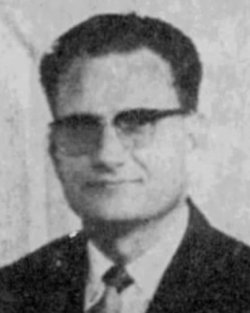
Wilbern Elias Best (1919-2007) was a preacher and writer of Gospel material. He wrote 25 books and pamphlets comprised of sermons he preached to his congregation. These books were distributed in English and Spanish around the world from 1970 to 2018 at no cost via the W.E. Best Book Missionary Trust.

Comments

0 / 2000 characters
Comments are moderated before appearing.

Be the first to comment!

Joshua

Joshua

Shall we play a game? Ask me about articles, sermons, or theology from our library. I can also help you navigate the site.