Bootstrap
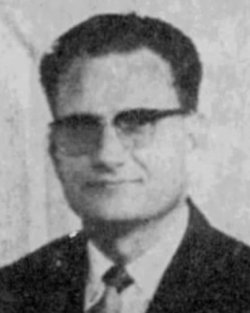
W.E. Best

Christ Made Sin, Part 1

2 Corinthians 5:21
W.E. Best October, 24 1982 Audio
0 Comments
Best on the Person of Christ

Sermon Transcript

Auto-generated transcript • May contain errors

100%
Open your Bible this morning
to the 5th chapter of 2 Corinthians. 2 Corinthians chapter 5. Our
message this morning will be the beginning of a two-part series
on Christ being made sin. Can you interpret that? Do you
really know what that statement means? I would like for us to read beginning
with verse 14 and read through verse 21 for our scripture reading.
We'll be investigating only the 21st verse in connection with
the other messages that we have brought on the subject of Christology. For the love of Christ constraineth
us, because we thus judge. that if one died for all, then
we're all dead, and that he died for all, that they which live
should not henceforth live unto themselves, but unto him which
died for them and rose again. Wherefore, henceforth, know we
no man after the flesh, yea, though we have known Christ after
the flesh, yet now henceforth know we him no more. Therefore,
if any man be in Christ, he is a new creature. Old things are
passed away. Behold, all things are become
new. And all things are of God, who
hath reconciled us to himself by Jesus Christ, and hath committed
to us the ministry of reconciliation. To wit, that God was in Christ,
reconciling the world unto himself, not imputing their trespasses
unto them, and hath committed unto us the word of reconciliation. Now then, we are ambassadors
for Christ. as though God did beseech you
by us. We pray you in Christ's stead,
be ye reconciled to God. Now for a detailed study of verse
21. For he, that is God, hath made
him, that is his son, to be sin for us. What a statement! God making Christ to be sin for
us. This is a debatable subject.
If you have read very many commentaries, you have already observed how
debatable it is. Then Paul added a very significant
phrase. Who knew no sin? Let's go back
now and read all of the first part of verse 21. For He, God
the Father, hath made Him, God the Son, to be sin. You'll notice the two words to
be, they're italicized. They are supplied by the translator.
He made him sin. Doesn't say he made him sinful. Doesn't say he made him a sinner.
It does say he made him sin. What does that mean? Could you really explain it if you were asked to? Then he
says, who knew no sin? that we might be made the righteousness
of God in Him. Actually, this morning, we'll
be spending all of our time on the first part of this verse. We'll be showing the result of the first part of this text.
But our major emphasis this morning is on Christ made sin. The more I study, the greater shock I experience
as to how little I know about the scriptures. Furthermore, the more I study, the greater is my amazement that
I even know a little. Did you get the impact of those
two statements? I'm shocked by how little I know. I heard recently that Thomas
and Edison once made the statement that man doesn't know one millionth
of one degree about anything in the world. That's an infinitesimal small
amount, is it not? Edison said, man does not know
one millionth of one degree about anything. Significant statement. So I'm
shocked as to how little I know. And the more I study, the greater
is my shock. And yet I'm amazed that God in
His grace has allowed me to know even a little. That's of grace. And I'll tell
you what, when that's understood, there's no room for boasting. No one will walk around like
a proud peacock congratulating himself on how
much he knows about any subject. The subject that you and I are
investigating this morning can be understood only, only in view
of God's reconciling work in Jesus Christ. You're going to
have to take the first part of this text, 2 Corinthians 5.21,
and look at it in the light of the entire context. That's why
we read a beginning with the 14th verse. So we began with
that verse for a reason. The only way it can be understood
is in the light of the reconciling work in Christ. Please observe the
first part of the text again. We don't want to miss a thing.
And yet we're so prone to miss important things. You'll notice
that Christ's holiness and his being made sin are inseparably
connected. Isn't that amazing? Isn't that
wonderful? Not only amazing, but wonderful.
There's a reason for that. Paul is protecting what he has
just said by inspiration of the Holy Spirit. God made Christ
sin for us. And in order to protect himself
against God being the author of sin in any form or fashion,
he said, Christ is without sin. So they are inseparably connected.
Holiness of Christ and Christ being made sin, inseparably connected. Let's raise a few questions and
answer them by way of review. If Christ could sin, then he
would not have been absolutely holy. That we have been discussing
over the past few weeks. Furthermore, if the Son of God
had not been absolutely holy, He could not have provided the
redemption which was absolutely necessary in order for you and
me to be reconciled to God. Now, beloved, we must think logically. And when one thinks logically
in the light of Scripture handled correctly, there'll be harmony. However, We know that Jesus Christ
was holy. He was harmless as he walked
among the sons of man. He was undefiled. He was separate
from sinners, as the writer of Hebrews tells us in Hebrews 7.26. We're going to look at those
statements in a moment. But before we do, let me emphasize
it once again. that Jesus Christ could not sin. If He could have sinned, He could
not be your Redeemer and mine. He would have stood in need of
a Redeemer. Any person today who preaches the peccability
of Jesus Christ, evidently, evidently, and I can't be too dogmatic about
this, has never come to know what grace means. I don't care
how religious he is. I don't care what size the institution
is that he pastors. I don't care how many members
they have. Beloved, I come back to the Word of God, and I'm going
to stake everything on what the Word of God says. I'm not concerned about what
a denomination teaches. I'm not concerned about what
some man teaches, but I'm greatly concerned about
what God has said, and I want to know what he said and why
he said what he said. So if Jesus Christ could have
sinned, he would not have been holy. If he had not been holy,
he could not have provided the redemption necessary for us to
be reconciled to God. We can't get away from that. However, Jesus Christ was holy. Turn with me now to Hebrews 7.26
for some introductory things that we want to give before we
start investigating the first part of 2 Corinthians 5.21. We're told that Jesus Christ,
our great high priest, was holy. The word for holy here is hasios. I'll spell it for you. We're
going to have to get technical this morning. That's H-O-S-I-O-S,
hasios. Hasios means undefiled by sin. It means free from wickedness. Pure, holy. It means supremely
holy. Need I say more? This adjective is used not too
many times in the New Testament. I'll give you all the references
where it is used. And in most instances where the
adjective is used, it is describing the Lord. For instance, in Peter's
message on the day of Pentecost, as he spoke to the Jews. Turn
with me, if you will, to Acts chapter 2. And read with me, if you will,
please, the 27th verse. Maybe we should read a few verses
before we get to verse 27. Acts chapter 2. And looking at the 27th verse
in particular, but his message actually begins in The 21st verse. We'll begin with verse 21. And it shall come to pass that
whosoever shall call upon the Lord, the name of the Lord shall
be saved. Then verse 22. Ye men of Israel,
hear these words. Jesus of Nazareth, a man approved
of God among you by miracles and wonders and signs, which
God did by him in the midst of you, as ye yourselves also know. Him, being delivered by the determinate
counsel and foreknowledge of God, ye have taken, and by wicked
hands have crucified and slain, whom God hath raised up. Drop
down now to verse 27. Because thou will not leave my
soul in hell or Hades Neither wilt thou suffer thine holy here
it is Hathias thine holy one to see corruption Turn to the
13th chapter of the Acts of the Apostles We have a repetition
of that Statement in the 13th chapter verses 34 and 35 and And as concerning that he raised
him up from the dead, now no more to return to corruption,
he said, On this wise I will give you the sure mercies of
David. Wherefore he saith also in another psalm, Thou shalt
not suffer thine holy hosias, one to see corruption. Then turn with me, if you will,
please, We're not looking at Hebrews 7.26 because you're holding
that place. Look at Revelation 15, verse
4. John spoke of the Lord as for thou art holy. Hathias. Finally, in reference
to the Lord Himself, in Revelation 16.5, and I'm reading from the
New American Standard Bible because you do not see it in your King
James Version translation. And here it is in the New American
Standard. Righteous art thou who art and
who wast, O holy one. Now the adjective is also used
in 1 Timothy 2.8 when it refers to those who lift up holy hands
in praying. It is also used in Titus 1 and
verse 8 when describing the individual as being sober, just, holy, that
is, hosios, temperate. Now the Lord Jesus was holy. And when you know the meaning
of the word hosios, undefiled by sin, free from wickedness,
supremely holy, that describes Him. Then look at the next word, the
word harmless in Hebrews 7.26, akikos. Akikos means free from
evil, blameless, innocent, without guile. This word is used only
twice in the New Testament. It is used here as it applies
to the Son of God. And it is used in Romans 16,
verse 18, and in your King James Version, it is translated simple,
but there's a better translation. The New American Standard Bible
translates it unsuspecting. Unsuspecting. Now we know how
it's used in Hebrews 7, 26, but turn with me to Romans chapter
16, and look at verse 18. And you'll see why I think the
New America Standard Bible's translation is much better than
the King James Version. We'll begin with verse 17. Paul
said, Now I beseech you, brethren, mark them which cause divisions
and offenses contrary to the doctrine which ye have learned,
and avoid them. Beloved, you had better avoid
them like you would a rattlesnake, blue bonnet plague. Verse 18,
for they that are such serve not our Lord Jesus Christ. That's plain enough, isn't it?
But their own belly and by good words, get this,
and fair speeches deceive the hearts of the simple. And I surely
do like the New American Standard Bible's translation, unsuspecting. A young believer is unsuspecting.
He's a very gullible individual until he becomes indoctrinated.
It isn't enough for a person to be saved. That's important. He can't be taught until he's
been saved. But when he becomes a Christian,
he must be taught. And it's the man of God's responsibility
from the pulpit to declare the whole counsel of God that God's
people might be indoctrinated and not be tossed to and fro
by every wind of doctrine that blows. That they might not be
deceived by persons who use fair speeches, but yet they're serving their
own bellies, unsuspecting. Go back, if you
will, please, once again, to Hebrews 7.26. Let's look at another
adjective. Harmless. Jesus Christ was not
only holy, he was not only harmless. Now looking
at the third, undefiled. Amiantus. The word is amiantus. It means unstained, unsaw, free
from that by which the nature of a thing is deformed or defamed,
or its force and vigor impaired, pure from sin. Do words mean anything? They
surely do. And since I have mentioned the
meaning of words, I was looking up a word recently in the dictionary
and came across something. We hear people every once in
a while use the word, the slang expression, Sam Hill. Do you
really know what it is? It's a euphemism for hell. Yes, words mean something. So
the next time you hear some Christian who doesn't know any better and
he'll use that expression Sam Hill, he might as well just use
the word hell. It's a euphemism for hell. Words
mean things. We're to know the meaning of
words. Jesus Christ was holy. He was harmless, undefiled, amiantus, unspained, unsaw, free
from that by which the nature of a thing is deformed or defamed. Beloved, you see why I'm magnifying
this subject? I want you to know the one whom
I serve and worship is the Holy One of God, the impeccable Christ. Then let's
look finally, well, let me give you the places where this word
is used. Not found too many places in
the Scriptures. Used here in Hebrews 7, 16. It is used in
Hebrews 13, 4, where it speaks about the bed of a married couple
is undefiled. It is used in James 1 and 27,
pure religion undefiled. And in 1 Peter 1, 4, where our
inheritance is kept preserved for us, and it's undefiled. uncontaminated. Now look at the last statement.
Separate from sinners. We're only looking at the word
separate. We have here a perfect passive participle of chorizo,
which means to sever, to disunite, to disassociate oneself, to withdraw
or depart, Now, you can look up many verses on this, but the
one that I'm thinking about this morning is Hebrews 7, 26, and
here it means to be aloof. Jesus Christ was not only holy,
harmless, undefiled, but He stood aloof from sinners. That's a lesson for you and me
in separation. And what a lesson it is. Now,
before we go any further, let's drive down three important points
here. Jesus Christ knew no sin. That's what we have in 2 Corinthians
5.21. Look at the word knew. What does it mean? He was not
personally acquainted with sin. He did not know sin experientially. Now, I want to raise a question.
If Jesus Christ was tempted in all points, as we are according
to some theologians today, and as we have read to you excerpts
from different men in the past few weeks, when they talked about
the temptation of Christ, and when Satan tempted him, he was
attracted by all the things that were offered to him, that means,
beloved, if that be true, that Jesus Christ was tempted to commit
adultery. He could be tempted to get drunk.
He could be tempted to do all other kinds of things. But there's
not a word of truth in it. And that's not what it's talking
about. He knew no sin. And the word
knew here is to be understood in the sense that Adam knew Eve. Do you know what that means?
I hope you do. He knew her intimately. And knowing her intimately in
that sense she conceived. Jesus Christ knew no sin. He did not know sin experientially. That doesn't mean that he doesn't
know sin, what sin is. God knows everything. He knows
all things. But he did not know it experientially. So that's number one, he knew
no sin. In 1 Peter 2 and verse 22, he did, did know sin. And thirdly, in him is, and I'm
stressing is, is no sin. This is Bible. I believe it.
I can't make anybody else believe it, but all I can say is you'd
better believe it or go to hell. And everybody who doesn't believe
it is going to hell. And he's going to hell because he has
not been regenerated, but every regenerated person believes what
I have just stated. Jesus Christ knew no sin. He
did no sin. In him is no sin. And he believes
it because of grace within him. Listen carefully. Since God's
judgment has come upon man because of what he is, number one, what
he is. I said God's judgment has come
upon man, first of all, because of what he is. Secondly, because
of what he has done. And thirdly, because of what
he has not done. Now this is a long sentence,
so I'll go back and connect it. I said since God's judgment has
come upon man first of all because of what he is, secondly because
of what he has done, and thirdly because of what he has not done,
Jesus Christ must stand in the sinner's place for what he has
done, for what he has not done, and I'm keeping the first one in
the first part of the sentence to the last. and for what He
is. For what He is. Now, I'm not
discussing the last two this morning because they're not necessary
in connection with my lesson. I said God's judgment has come
upon you and me. As we came into this world, we
were in a state of depravity and God's wrath was upon us because
of what we were in Adam. And God's judgment stands upon
every person because of what he is, because of what he has
done, and because of what he has not done. And since that's
true, then Jesus Christ, who is the substitute for the ill
act, he must be judged for you and
me as to what we are in Adam. He must be judged for what
we have done. He must be judged for what we
have failed to do. But I'm only thinking about the
first, what we are. That's all that I'm concerned
about this morning. If Jesus Christ could have sinned,
he could not have died for what we are. He could not have stood in our
place for what we are. He would have had to have someone
to stand in his place for him. if he could have sinned. He would
have been disqualified. Even the type of Jesus Christ
in the Old Testament had to be without blemish. Exodus chapter
12. Even the lamb that was taken
to be offered had to be without blemish. If the type had to be
without blemish, what about the anti-type? Beloved, he was holy. harmless,
undefiled, and who stood aloof from sinners. No ground of fellowship. He was
not one with them. If Jesus Christ had the capacity
to sin, he would not have been able to stand aloof from them.
He would have had something in common with them. Please think
through it and see the seriousness of the doctrine, that damnable
heresy of peccability. Our actual sins are forgiven
for the sake of Christ's redemptive work on our behalf. Listen to Ephesians
chapter 1 verse 7, in whom we have redemption through his blood
The forgiveness of sins according to the riches of His grace. However, our nature is not forgiven. The old sinful nature that you
still have is not forgiven. It is condemned. Did Jesus Christ have a sinful
nature? He did not. No, He did not. and it's blasphemy
to say that he did. You and I have been forgiven
of our sins, but the old nature is condemned, not forgiven. We find in Romans chapter 8 verse
3, Jesus Christ came in the likeness of sinful flesh and for our sin
did what? Condemned sin in the flesh. The old flesh is still the old
depraved flesh. And you know it all too well. Therefore you thank God for the
grace that you have within you. And that's the only good thing
about you and me. Now we come to the real subject
that we want to discuss with you. Who made Christ to be sin? Who made Christ to be sin? Or
who made Christ sin, to put it literally? Who made Christ sin? That's the question. We have
a divine commentary on this. Where is it? Turn to Isaiah 53,
10. Isaiah chapter 53, verse 10.
You're familiar with it. I'll give only a portion of it.
It pleased the Lord to bruise him. He hath put him to grief. Here
it is. This is the part that I want you to mark. We're interpreting
the meaning of Christ made sin this morning. We have to know what it means. And I believe we can know what
it means in the light of the reconciling work of God through
His Son, Christ Jesus. Now the last part of the 10th
verse. when thou shalt make his soul an offering for sin. Look at that. Who made his soul
an offering for sin? God the Father made his soul
an offering for sin. Who made him sin? 2 Corinthians
5.21 The Father made him sin. He, for he hath made him sin
for us. Now let's get down to the interpretation.
I'd like you to turn once again to Acts chapter 2 and verse 36
this time. This is found within the context
of Peter's message on the day of Pentecost. Peter said, Therefore
let all the house of Israel know assuredly that God hath made. That's the word we're looking
at now, isn't it? God made his son sin. Made his son sin. Peter said, God hath made, made
that same Jesus whom he hath crucified, both Lord and Christ. I want to ask you a question from the context of the verse. What would you say the word made
means here? Look at it now. Think with me for a minute. I'll
give you the Greek and we'll go into it in a moment. But what
would you say the word made means here? Let's read it again. I
want to see if you can pick it out without knowing the Greek. So Peter preaching said, Therefore
let all the house of Israel know assuredly that God hath made,
God hath made that same Jesus, whom ye have crucified, both
Lord and Christ." Now let's shorten it. God hath made Christ both
Lord and Christ, or He hath made Jesus both Lord and Christ. How could He make Him Lord and
Christ? Now we're going to have to look at the word made. We
have here an arius active indicative of the verb poieo. Now we're going to have to see
what the word poieo means that's translated made here. It means
to make. It means to prepare. It means
to bring about. It means to accomplish. It means
to perform. It means to declare to be. Listen
now. It means to appoint. Now which one of these would
you apply to the word here? What statement would you apply
here? Listen to it. I'm going to read it now and
change it a little bit. And, beloved, that doesn't mean I'm
a heretic in doing it. I'm giving you the word poieo. Peter said
this, Therefore let all the house of Israel know assuredly that
God hath appointed Jesus both Lord and Christ. Does that make sense? He was appointed both Lord and Christ. Let's go
a little further. Now we have just answered the
question, who made Jesus Christ saint? Who made the Son sin? God the Father did. Doesn't say
He made Him a sinner. Doesn't say He made Him sinful. He made Him sin. We have to know
what that means. We'll get there. Now the second thing I want to
call your attention to is the word sin. What does it mean? Did you know that the punishment
of sin is called sin? Even the punishment of sin is
called sin. Go back with me to Genesis chapter
4. You may want to turn your Bibles
to that passage before we look at several verses. Genesis chapter
4. And we'll begin reading with
the first verse and we'll skip around a little bit. And Adam
knew Eve. There's the meaning of knowing. Christ did not know sin in the
sense that Adam knew Eve, experientially. And she conceived and bared Cain
and said, I have gotten a man from the Lord. And she again
bared his brother Abel, and Abel was a keeper of sheep, but Cain
was the tiller of the ground. And in process of time it came
to pass that Cain brought her the fruit of the ground, an offering
unto the Lord. And you know the story. We know that Cain killed
Abel. Now look at verse 6. And the
Lord said unto King, Why art thou wroth, and why is thy countenance
fallen? Verse 7. If thou doest well,
thou shalt not be accepted. And if thou doest not well, here
it is, sin, sin lieth at the door. Now let's stop right there
for a moment. Sin lieth at the door. Now what's the answer to
that? Drop down to verse 13. What was
Cain's complaint? What was his reply to the Lord?
It's found in verse 13. Cain said unto the Lord, My punishment is greater than I can bear. The punishment that will lie
at your door. Then Cain said, My punishment
is greater than I can bear. What am I proving? I am proving
that punishment of sin is called sin. Let me give you another
illustration of this. Turn to Hebrews chapter 9, verse
28. Hebrews 9, 28. You say, you're
getting too technical for me. Well, that's your problem, not
mine. But we've got to handle the scriptures properly. I'd
like for us to begin with verse 26 and read through 28, but it's
verse 28 that we'll be pointing to, a statement within the text. For then must he have, he often
have suffered since the foundation of the world. This is talking
about the Lord Jesus. When you go back to verse 24,
for Christ has not entered into the holy places made with hands,
which are the figures of the true, but into heaven itself
now to appear in the presence of God for us. Then verse 26,
hath he appeared to put away sin by the sacrifice of himself. And as it is appointed unto men
once to die, but after this the judgment, so Christ was once
offered to bear the sins of many, and unto them that look for him
shall he appear the second time without what? Sin! Unto salvation. Now what is the
meaning of verse 28? Surely it has a meaning. You
mean it is connected with what we're talking about this morning?
Oh yes, it surely is. We have shown, first of all,
that it was the Father who made Christ sin, or appointed Him. Appointed Him. And then the word
sin can also mean judgment. And now we're looking at Hebrews
9, 28. So Christ was once offered to bear the sins of many, and
unto them that look for Him shall He appear the second time without
sin. Now let's pause there for a moment
and consider two words, without sin. Without sin. What do those two words mean?
Beloved, they mean without any reference to judgment upon sin. That took place when Christ came
the first time. That took place when He went
to the cross of Calvary, when He stood in your place and in
mine, when He was judged for your sins and for mine. So when
He comes a second time, it'll be without sin, with reference
to any judgment upon sin. Let's carry that a little further.
Without any reference to judgment for sin, for the many, that is,
for the elect, Why? Because sin was judged for the
sheep at Calvary. At Calvary. The sacrifice for
sin is called sin. You see what I'm doing? I said
the sacrifice for sin is called sin. And I'm putting all this
together, and I hope you see the significance of it. The Lord
said, In Hosea chapter 4 verse 8, they eat up the sin of my
people. What were they doing? They were
eating the offering for sin. So even the sacrifice for sin
is called sin. Let's go back a moment. It was
God who appointed Jesus Christ to judgment. For sin stands for judgment. And Jesus Christ said, when I
come the second time, it'll be without any reference whatsoever
to an atonement being made for sin. In other
words, when He comes a second time, He will come to complete
that which He began at Calvary as a result of His first advent. So we have God's appointment
of His Son to judgment. Sin is called judgment. When
Jesus Christ comes a second time, there'll be no reference made
whatsoever to judgment for sin. That's already taken place. That
took place at Calvary. You say, well now wait a minute,
preacher, that won't hold water. There is going to be judgment
upon sin when Jesus Christ comes a second time, not for you and
me. Beloved, please look at the context. Please look at the verse.
Within the context, he's talking about him suffering for many.
He's talking about the result of his first advent, what he
did for you and me when he came the first time. So don't take
the verse out of context. Christ's second coming will not
be related to sin. It'll not be related to the atonement,
but to the consummation of what he began at his first coming.
The Father appointed His Son to execute His decree. We've been talking about the
decree of God. Last Sunday we talked about the purpose of God.
So the Father appointed His Son to execute His decree, to fulfill
His prophecies, and to redeem His elect. Now we're going to look at seven
things. And then we have seven questions to ask after we have
looked at these seven things. Look at our text. For he hath
made him sin for us. Who knew no sin? That we might
be made the righteousness of God in him. Do you want something
to shout about? Listen to these seven things.
Number one. Christ, who knew no sin, was
made sin for us that we might be made the righteousness of
God in Him. Analyze that for a moment. He
knew no sin, but He was made sin. Beloved, in our natural
state, we did not know righteousness experientially. but we've been
made righteous in Christ who was appointed to be judged for
us. Don't you see the beauty of this?
Look at it again. Christ who knew no sin was made
sin that we might be made the righteousness of God in Him.
He knew no sin experientially, yet He was made or appointed
to suffer for sin that we who knew not righteousness might
be made righteous in Him. That's number one. Number two,
Christ bear our sins in His own body on the tree. 1 Peter 2.24. That we here and now might bear
the marks of Jesus Christ. Galatians 6 and verse 17. Do
you bear the marks of Christ? The Lord Jesus bear our sins
in His own body on the tree. in order that we might bear the
marks of Christ here and now. Number three, the Son of God
was made the Son of Man. Listen to this. The Son of God
was made the Son of Man in order that the sons of men or some
sons of men might be made the sons of God. I'm just adding to this text in 2 Corinthians 5
21. Number four, Jesus Christ took
our misery at Calvary in order that we might take His glory
even now and forever. Number five, the divine Logos
was born of a woman in order that you and I might be born
of God. Number six, Christ suffered the
effects of our sins, suffered the effects of our sins, that
we might experience the effects of His righteousness. Finally, Christ was made sin
by imputation. and I can't get into detailed
study of imputation this morning, that'll have to come later. That
we might be made righteous by imputation. How was Jesus Christ made sin? Imputatively. I said imputatively because he
had none of his own. We had no righteousness of our
own. But we have been made righteous,
imputatively. Righteousness is not only imputed,
but it's imparted. And I can't get into those two
things this morning. So our sins were transferred. I'll use a different term to
help you better understand imputation. Our sins were transferred to
Jesus Christ in order that His righteousness might be transferred
to us. I want to drive it down if I
can this morning. I've gotten so discouraged reading commentaries
through the years on this text. I've been determined to try to
study it out to the best of my ability with all the helps that
I can get and have been able to get and spend some time thinking
through it on my own. Listen to these questions. Seven
questions, nine conclusion. And then in my last point this
morning, the seventh question, we're going to get a little technical,
but you'll see the beauty of it. Question number one, what
does it mean for the Holy Christ to be made sin? I've already
answered it, but let me shorten it if I can. It means that Jesus
Christ was appointed by the Father to bear sin's penalty. The second question, how did
Paul guard against the idea that it meant that Christ was made
a sinner? He added, who knew no sin. He did not know sin experientially. The third question, what is meant
by the words for us? They mean on our behalf. Christ
became our substitute. He was our surety. He stood in
our place. He suffered what we deserve to
suffer. Question number four. What was
the object of Christ being made sin? It was that we might be
constituted righteous by imputed righteousness and made righteous
by imparted righteousness. There I threw it in. I'll explain
it more later. Let me repeat it. What was the
object of Christ being made sin? It was that we might be constituted
righteous by imputed righteousness. and made righteous by imparted
righteousness. There's a difference between
imputed righteousness and imparted righteousness. Number five, what
is meant by that we might be made righteous We become in Christ, listen to
this, we become in Christ what He was for us at Calvary. Number six, what is meant by
the righteousness of God? It means that which alone can
satisfy the holy demands of God. Finally, number seven. And oh,
what a climax. What difference is there between
the two words made in the text? You have the English word made
twice, but you have two different Greek words. First of all, Christ was made.
I've already given you This word, it is an aorist active
indicative of the verb poieo, which means to appoint. To appoint. And he was appointed
to stand and to be judged for you and me in order that we might
be made. Now let's look at the second
word made. The second word made here is an aorist subjunctive. of Ginnomai, which means to become. Now I want you to see the beauty
of it. Hence, Jesus Christ was appointed to die for us in order
that we might become righteous in Him. So you could translate the first
word appoint For the word made, put it in the margin of your
Bible, don't forget it. And the second one, made means become. Jesus Christ was appointed to
suffer for you and me in order that we might become righteous
in Him. But I'm not through with this
last point. Our becoming righteous in Christ cannot refer to God's
inherent righteousness. I said it cannot refer to God's
inherent righteousness. The righteousness which we obtain
through grace, even when perfected in heaven, is similar to, but
not identical with, God's immutable righteousness. His inherent immutable
righteousness. One is the unaltered character
of God. The unaltered character of God. But the other is the communicated
character by the Spirit of grace to the elect. Do you see the
difference? So in conclusion, for him who
knew no sin, was made sin. He was appointed to die for you
and me in order that we might become righteous in Him. Beloved, that's the truth of
the Gospel. These things must be explained.
They must be interpreted. Let's stand as we sing. What's
the song, Brother David?
W.E. Best
About W.E. Best
Wilbern Elias Best (1919-2007) was a preacher and writer of Gospel material. He wrote 25 books and pamphlets comprised of sermons he preached to his congregation. These books were distributed in English and Spanish around the world from 1970 to 2018 at no cost via the W.E. Best Book Missionary Trust.

Comments

0 / 2000 characters
Comments are moderated before appearing.

Be the first to comment!

Joshua

Joshua

Shall we play a game? Ask me about articles, sermons, or theology from our library. I can also help you navigate the site.