Bootstrap
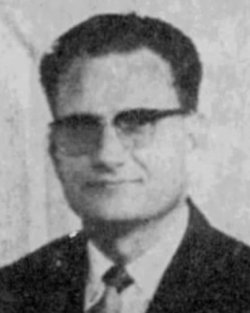
W.E. Best

The Whole Heart

Jeremiah 32:36-41
W.E. Best August, 8 1982 Audio
0 Comments
Best's Corner

Sermon Transcript

Auto-generated transcript • May contain errors

100%
Open your Bibles to Jeremiah
chapter 32. Our subject is entitled The Whole
Heart. The Whole Heart. We'll read verses
36 through 41 of Jeremiah chapter 32. Then we will turn to Jeremiah
24 and read verse 7 and you'll see the connection. after which
I refer you to one statement in Proverbs 23, 26. And now, therefore, thus saith
the Lord, the God of Israel, concerning this city, whereof
ye say, It shall be delivered into the hand of the king of
Babylon by the sword, and by the famine, and by the pestilence.
Behold, I will gather them out of all countries, whither I have
driven them in mine anger, and in my fury, and in great wrath,
and I will bring them again unto this place, and I will cause
them to dwell safely. And they shall be my people,
and I will be their God. And I will give them one heart,
and one way that they may fear me forever for the good of them
and of their children after them. And I will make an everlasting
covenant with them that I will not turn away from them to do
them good, but I will put my fear in their hearts that they
shall not depart from me. Notice especially the next verse. Ye, I will rejoice over them
to do them good, and I will plant them in this land assuredly with
my whole heart, and with my whole soul. This is God speaking, beloved. What he does for you and for
me, he does with his whole Keep that thought in mind. Now turn
back to Jeremiah 24 verse 7. And I will give them an heart
to know me, that I am the Lord, and they shall be my people,
and will be their God. Now look at the last part of
verse 7. for they shall return unto me
with their whole heart." What God does for his people is done
with his whole heart. And when he gives his people
a heart to turn unto him, they turn unto him with their whole
heart. Now one other verse. I'll just
give the first part of it. Proverbs 23, 26, Son, give me
thine heart. Son, give me thine heart. The sovereign God who gives his
people a new heart with his whole heart will find that his people
will return unto him with their whole heart, yet he asks his
people to whom he has given a new heart, Son, give me thine heart. What do you think the verse means? Son, give me thine heart. These are three great passages
of scripture. Jeremiah 32, 41, Jeremiah 24 verse 7 Proverbs
23 verse 26 There is a rule in the interpretation
of Scripture That the promises made to natural Israel So far
as they are spiritual applied to the Saints of God in any age
Please do not forget that statement We have spent much time during
the last few weeks in our Sunday evening services discussing revelation,
inspiration, and illumination. We have now come to the subject
that we will be discussing with you in a subsequent lesson, interpretation. Here is one of the first rules
of interpretation that I'm sharing with you this morning, reaching
into one of the lessons that we will be bringing shortly on
the subject of the interpretation of Scripture. It is a rule in
the interpretation of the Word of God that whenever there is
a promise given to natural Israel, to natural Israel, so far as
that promise is spiritual, it is a promise to you and to me
and to every Christian regardless of the age in which he might
live. If we cannot see that, then we miss much in the study
of Holy Scripture. Now we know there were promises
given to natural Israel that do not pertain to you and me.
We're not going to have to cross the Red Sea as Israel did. We
will not have to cross the River Jordan as Israel did. But yet
there is a spiritual lesson in the crossing not only of the
Red Sea but also the River Jordan that applies to you and to me
in our Christian lives. Scripture is replete with promises
of the day when God will give Israel a new heart, or a heart
to know Him. Let's look once again at Jeremiah
24, verse 7. I will give them a heart to know
Me, that I am the Lord, and they shall be My people, and I will
be their God, for they shall return unto Me with their whole
heart. Knowing God is not the same as
knowing about God. I hope you know the difference.
A new heart, for instance, is not necessary to know about God. But a new heart is absolutely
necessary to know God. Let me illustrate the difference.
When Paul spoke of the heathen, In Romans chapter 1, beginning
with verse 19, when they knew God, they glorified him not as
God, neither were thankful, but became vain in their imaginations,
and their foolish heart was darkened, professing themselves to be wise,
and became fools, and so forth. He was talking about the heathen
who knew about God, they didn't know God. Yet they knew about
God, and knowing about God rendered them inexcusable before this
God about whom they had some knowledge of his existence, of
his power, and some of his attributes. I said some of his attributes.
Some of the attributes of God are revealed in nature. Other
attributes are revealed only in special revelation, in Holy
Scripture. Therefore, there is a difference
between knowing about God and knowing God. Every unsaved person
knows something about God. There is no such person who doesn't
recognize the Supreme Being in some sense, according to the
last verse of Romans chapter 1. In other words, there is no
such person as an atheist in the biblical sense of the word.
No such person. He just claims it. He just claims
he doesn't believe in a Supreme Being. But it does take a new
heart to know God. And that's what we have here
in Jeremiah 32, 36 through 41. God said, I will give them a
heart. Or as we find in Jeremiah 36
and Ezekiel 36, he'll give a new heart. He will remove the stony
heart and give a heart of flesh, one that is capable of knowing
God. Nationally speaking, Israel today
does not know God. However, the Apostle Paul shows
us in Romans chapter 11 that the stream of salvation that
turned to the nations, and I'm talking about the Gentiles, until
the fullness of the Gentiles be come in, will turn once again
to national Israel according to Romans 11, 25, and 26. At
the present time, however, we have to sing, Ye chosen seed
of Israel's race, A remnant weak and small, Hail him who saves
you by his grace, And crown him Lord of all. Israel, however,
will turn unto God with their whole heart when that day, the
day of the coming of Jesus Christ, shall take place. We're not speaking
on that particular subject this morning. But we are looking at
the subject entitled, The Whole Heart. God renews the whole heart
when a person is saved. And the reason He does so is
because the whole heart, Isaiah 1 verse 5, is faint. Now the word faint, taken from
the Hebrew, could also mean sick. So the heart of the unsaved person
is sick. His heart is faint. The natural
heart is deceitful above all things, and desperately wicked
who can know it. No one can know the depraved
heart but God Himself. You may look into your heart
and you may see some things that are rather wicked, but you cannot
fathom the depths of your own depraved heart. Only God Himself
knows the depths of the depraved heart. There is nothing so false
and there is nothing so deceitful as the depraved heart. Even the
unsaved know that to some extent. After grace has come into the
life of an individual, he knows exactly what he was before the
grace of God came into his heart and into his life. When we understand
the meaning of grace, and it takes grace to understand the
meaning of grace, the recipient will never look upon the wicked
without crying, Lord, if it were not for your restraining and
saving grace, that could be me. That means when you drive down
the street and you see someone reeling because of drunkenness,
or you see a person who has been stoned out, so to speak, as a
result of dope. Or you see a prostitute walking
the street. Don't ever forget, if you have
grace, you will cry out, Lord, but for your restraining and
saving grace, that could be me. That could be me. You'll notice
that Jeremiah goes on to say that the heart is not only deceitful
above all things, but he states that it is desperately wicked.
desperately wicked. The natural heart is not only
wicked, but it is desperately wicked. The wickedness grows
with age and experience. Will anyone question that statement?
I'm sure you will not. Here is a young person, grows
up, leaves home. He or she possesses a depraved
heart. The grace of God has not entered into the life. And that
person has the potential to become just what I have mentioned a
few minutes ago, either a dope addict, a drunkard, a prostitute,
a thief, a murderer, or just name it. But when the person
first starts out, even though the individual is wicked, he
is not as wicked as he will become through experience. through practice. So Jeremiah said the heart is
not only deceitful, but it is desperately, desperately wicked.
So the wickedness grows with age and experience. Furthermore,
its wickedness is a great deep. It is so base that no one can
fathom its depth. Every faculty of the heart, every
faculty of the heart, and how many faculties are there? There
are three principal faculties, and they are understanding, affection,
and will. They're all affected by depravity. Some of you may recall that last
Sunday evening I made the statement that the Jews, when referring
to the heart, believe that the heart actually referred not only
to the understanding of an individual, but also his affection as well
as his will. Therefore, understanding, affection,
and will have all been affected by the fall, by the fall. When God gives one a new heart
in grace, the Lord then asks the question, My son, give me
thine heart. This morning we're going to see
what that means as well as what it does not mean. Son, give me thine heart. What
do you think it means? The great benefactor becomes
the petitioner. Isn't that humbling? In other
words, only love seeks love. Son, give me thine heart. What infinite condescension that
God should request love. After all, What has God to gain
by requesting love from His creatures? That's humbling indeed, isn't
it? God is not enhanced by the love that we give to Him, by
anything that we offer to Him. He's not enhanced by anything
that we have to give or offer to Him. He's perfect. He's infinitely
perfect. He's absolutely perfect. But
let's look at it from another point of view. You and I, as
recipients of His grace, are greatly enhanced by what He gives
to you and to me. Oh, what condescension for God
to request His people to give to Him their hearts. He's asking
you today. He's asking me. He's asking every
recipient of grace, give me thine heart." I must tell you at the
beginning of our interpretation of that statement that it does
not refer to Solomon requesting that his son in the flesh give
him his heart. But we do find in the study of
Proverbs reference made to divine wisdom. Beloved, it is divine
wisdom that is requesting his people to give to him their hearts. That's the meaning. That's the
meaning. After all, the heart belongs
to him. He deserves the heart of his
people. Number one, first of all, he
created the heart. Secondly, he has redeemed the
heart. And thirdly, he sustains the
heart. Since God created the heart,
redeemed the heart, and sustains the heart, it is our obligation
to give to him our heart. That means we give to him our
understanding, our affection, and our will. Let's see what
it really means. What does this passage really
mean? Son, give me thine heart. Giving the heart is giving one's
understanding, affection, and will. Let's look at these three
things because they're so important. A person knows God because, first
of all, he is known by God. Turn with me to John chapter
10, a very familiar verse to all of us who have been Christians
for any length of time. The Lord Jesus said, I am the
good shepherd. I am the good shepherd, and know
my sheep, get this, and am known of mine, and am known of mine. Now there are those today who
say, Lord, Lord, have not we prophesied in thy name? And in
thy name have cast out devils, or rather demons, it is in the
original. and in thy name done many wonderful
works who do not know the good shepherd. You and I cannot know him unless
we were first of all acknowledged by him. When it speaks of the
Lord Jesus knowing his sheep, we have the Greek word, the verb
ginosko. He acknowledged us. Now the question
is raised When did he acknowledge us? There has never been a time
when the Lord Jesus Christ has not acknowledged his sheep. He has eternally acknowledged
us as his sheep, and we cannot know him who has not first of
all acknowledged him. So he says, I am the good shepherd,
I know my sheep, and am known of mine. Therefore the reason
for their not knowing in Matthew chapter 7 and verse 22 and 23,
the reason they did not know him, look at the 23rd verse,
it is because Jesus Christ said, I never knew you. I never knew you. Will you underscore
the word knew? carry a little deeper into the
meaning of this word that'll mean more to you if you'll listen
and take a few notes. I've already stated that Jesus
Christ knows the sheep, and Jesus Christ is known by his sheep,
but yet he said concerning those who said, Lord, Lord, have we
not done wonderful things? Have we not cast out demons?
Have we not called upon thy name? Yet the Lord Jesus said, I never
knew you. Now the word knew is a second arius active indicative
of the verb gnosto. It is a known. No one can know
Jesus Christ as Savior who has never been acknowledged by the
Lord Jesus Christ. Now I'm going to say something
and develop it a little more later. I want you to be thinking
about the ariest verb for a moment. That may not mean anything to
you, but I can explain it. And when I explain it, you'll
have a greater appreciation for the verses that we are now investigating.
The verses I said that we are now investigating. So we understand
him. We have to understand him before
we know him. And we know him because we understand
him. And the Lord, by illumination, has enabled His own to understand
and know Him, to acclaim Him. But let's not get the cart before
the horse. We acknowledge Him, we know Him, because He has already
acknowledged us, and He has known us even before the foundation
of the world. That ties in with divine election.
That ties in with all the precious truths of God's Word. Let's look
at the second thing. When one gives his heart to Christ,
he not only gives his understanding, but he also gives his affection. Turn with me, if you will, to
1 John 4, verse 19. Another familiar verse to you.
An individual loves God because God first loved him. John said we love him because
he first loved us. We love is first person, present,
active, indicative of the verb agapao. And agapao is the strongest
verb which describes love. It means to love, it means to
value, it means to esteem, it means to feel or to manifest
generous concern for or to be fruitful toward. But you notice
in this text it says, Christ first loved us. Think about the
word first for a moment. The word first comes from the
Greek word protos, and protos means earlier or former, means
before. So Jesus Christ loved us. His
love was prior to our love for him. He has loved us with an
everlasting love, as we find in Jeremiah 31. Therefore, there
has never been a time when he didn't love us, because we were
in the covenant of redemption, and that even before the foundation
of the world, 2 Timothy chapter 1 and verse 9. So he first loved
us, and this, of course, precedes our love for him. Since God's
love is manifested in Jesus Christ, a person must be in the eternal
covenant relationship with Jesus Christ before he can experience
Christ's love. Proof of this is found in Hebrews
13, 20 and 21, also Romans 5 and verse 8. So we love him because
he first loved us. Finally, when one gives his heart
to the Great Shepherd, he not only gives his understanding,
his affection, but also his will. Turn to Romans 9, beginning with
verse 15, you will find that one's will to do God's will is made willing, of course, by
the sovereign God. So the sovereign and determinative
will of God is stressed in Romans chapter 9. Therefore, the recipient
of mercy owes his favor, owes grace to the will of the sovereign
God. Having received mercy, Because
he said, I'll show mercy upon whom I will show mercy and whom
I will harden. So it's all in the hands of God
to do what he pleases with his own. But you will find in Philippians
chapter 2 and verse 13 that having received mercy from the gracious
God, he makes us willing to do his good pleasure. So he works
in us. and makes us willing to do of
his good pleasure. The one on whom mercy has been
bestowed, therefore has been made willing by the grace of
the sovereign God. Grace is not sovereign, God is
sovereign, and grace is the grace of the sovereign God. Paul said,
it is God at work in one who will make him willing who will
make him willing to do God's will. That's Philippians chapter
2 and verses 12 and 13. Now look again at our text. Proverbs 23 and verse 26. Son, give me thine heart. I like the American, the New
American Standard Bible's translation of this. It goes like this. Give
me your heart, my son. Give me your heart, my son. So,
give me your heart, my son, does not mean that it is an act of
the sinner's will. You will not find anywhere in
Holy Scripture where a sinner is ever exhorted to give his
heart to Jesus Christ. And yet, we hear it said so much
today. And zealous people who do not
have biblical knowledge exhort and encourage unsaved people
to give their hearts to Jesus Christ, and there is no scripture
for any such admonition. It is foreign to the Word of
God. God does not want the sinner's depraved, wicked, deceitful heart. All one should be able to have
to do, really, is just stop and think it through for a moment.
God does not want one's own wicked, depraved, sinful heart. So there
isn't any admonition in all of God's Word where a sinner is
authorized or admonished to give his heart to God or to Jesus
Christ. So Jesus Christ is not standing
outside the sinner's heart begging to enter. Listen to these remarks. No, he is not waiting for the
sinner to become willing to let him in because the sovereign
God enters the heart. and makes the heart willing to
embrace Jesus Christ as Savior. Let's look at a few things along
this line. The only response of the unregenerate
sinner to the gospel is that of rejection. If you're present
this morning and you're unregenerate, your only response to the message
that I shall bring this morning is one of rejection. It is not
one of acceptance. The proof of it is found in John
3, verse 19. And it just so happens that that
statement follows the admonition that is given, but one fails to see the true
significance of it. And what do we have in verse
19? Here it is. And this is the condemnation,
that light is come into the world. And men loved darkness rather
than light because their deeds were evil. So the objective light
of the gospel is rejected by the subjective darkness of the
sinner's heart. So the only response that an
unregenerate person has to the truth of God's word is one of
rejection, not one of acceptance. Hence, he cannot repent. He cannot
repent because God grants repentance, Acts 11, verse 18. God yields
repentance, 2 Timothy 2, verse 25. God alone turns the heart
in order that the one who has been turned by the sovereign
God can turn to the Lord, Jeremiah 31, verses 18 and 19. Therefore, the sinner cannot
repent. Furthermore, he cannot even believe. He can't believe
because faith is the gift of God, Ephesians 2.8. For by grace,
if you say through faith, and that not of yourselves, it is
the gift of God. But that isn't all. Not only
can he not repent, and he cannot believe, but he cannot open his
heart and let Jesus Christ in, as the Arminian teaches, because
it is God who opens the heart, Acts 16 and verse 14. Furthermore,
he doesn't even have the will to accept Jesus Christ because
his will is enslaved to sin, John 5 and verse 40. You will
not come to me that you might have life. Therefore the sinner
cannot, by any act or disposition of his own, make God willing
to save him. You can't make God willing to
save you. Now that isn't stated very much,
is it, today? Many men are afraid to make such
a statement. I am not afraid to state what
the Bible gives. So as it was God who made man
in creation and not man himself, Psalm 100 and verse 3, It is not man that makes him
a new creature in Christ Jesus, but God Himself makes man a new
creation in Christ Jesus. 2 Corinthians 5 and verse 17. So you can use the analogy. The
psalmist said that man does not make himself. It is God who has
made him and not man himself. You didn't make yourself. You
didn't create yourself. And since one does not create
himself, He certainly cannot save himself. He cannot recreate
himself. Let's go a little further. Look
at the verse again. Son, give me thine heart. What does it mean? We have seen
what it doesn't mean. Now what does it mean? What does
it mean for one to give God his heart? And beloved, this gets
right down to where we all believe. Here is the heart-searching part
of our message this morning. And believe me, it is heart-searching. Give me thine heart means dedication. It means self-dedication. God
said to the prophet Jeremiah, And I will give them in heart
to know me, that I am the Lord. And they shall be my people,
and I will be their God. Here it is. for they shall return
unto me with their whole heart." So the text promises that the
elect Jews from among the elect nation of Israel shall know God
to be Jehovah. the elect remnant of Israel from
among Israel shall return unto God with their whole heart, and
that is future. That is future. I will rejoice over them, he
said, to do them good, and I will plant them in this land assuredly
with my whole heart and with my whole soul. Now there is one thing I want
to say. I want it to sink into all of our hearts this morning. What God does for you and me
is done wholeheartedly. The grace that we have received
has been wholehearted grace. Now I want to raise a question.
Can we do anything less as the recipients of the wholehearted
God who has bestowed wholehearted grace upon us, can we reciprocate
with anything less than our whole hearts? Now that's a serious question.
What God has done for us was done wholeheartedly. And beloved,
we reciprocate as the recipients of grace, wholehearted, not half-hearted. that hits us right where it is
supposed to hit us. That's the soul-searching part.
We can know if we really have passed from death into life by
a self-examination of our hearts. Listen to the psalmist. The psalmist
said, give me understanding and I will keep thy law. Yea, I shall
observe it with my whole heart. Now if there's anyone dozing,
wake up. With my whole heart. That's what
the psalmist said. He couldn't say less. Do you
know why he couldn't say less? The wholehearted God had given
him wholehearted grace. And he reciprocated by saying,
I will keep thy law with my whole heart. That means the Lord comes first.
You know where it's found? Psalm 119, verse 34. Let me give
you another statement by the psalmist. He said in the 69th
verse of the same division of the Psalms, The proud have forged
a lie against me, but I will keep thy precepts with my whole
heart. Beloved, that puts us right where
we belong. God gives his people one heart
and one way, it says, in Jeremiah 32. The heart must
be one in acceptance. God never receives the homage
of a divided heart. Let me illustrate that. False
gods can bear a divided empire. But God says, I'm alone. I'm alone. So false gods can
assemble, and they can bear a divided empire, but not God. Not the
sovereign God of the universe. Someone has said, eras can lie
down like goats in a field, but no era can lie down side by side
with the Lordly line of truth. End of quote. Oh, that's a great
statement. Does the wholehearted love of
Jesus Christ deserve our wholehearted love in return? Christ's love which caused him
to become the God-man deserves redeemed man's entire homage,
that is, his whole heart. Christ's love which led him to
Calvary deserves our crucifixion to the world for his sake. Son,
give me thine heart. Do you know why he asked for
the heart? I came across this little sentence this last week
and I treasure it highly because I think it says a lot in just
a few words. The heart is the moving principle of all the members
of the body. That's why the Lord asks for
the heart. If he gets the heart, he gets
all the members of the body. He gets the hands, the feet,
the mouth, the eyes, the ears. Because the heart is the moving
principle of all the members of the body. Therefore, Son,
give me thine heart. We're talking about self-dedication.
The one heart speaks of a united heart. It lives for a single
object. As Jesus Christ is our one life,
he is our one way. The way of Christ becomes the
way of the true believer, the regenerated person in his conversion
experience. And here's the punchline, beloved.
I said the regenerated person in his conversion experience
chooses for the rest of his life what he will do. I want that
to soak in. And I'm going to illustrate it
in several different ways. I'd like you to turn with me
first of all to Romans chapter 6. Romans chapter 6. We're going to look at some Greek
words for a few minutes. I will explain them to you and to be
more meaningful to you after I've done this. Look at verse
13. The Apostle Paul in Romans chapter
6 through the 6th verse of chapter 7 illustrates the obligation
of sanctification by death, number one, and that is in the first
14 verses of chapter 6. Secondly, by slavery, in verses
15 through 23 of chapter 6, and thirdly, by marriage in chapter
7, 1 through 6. We're talking about self-dedication
or consecration, or progressive sanctification, if you want to
use that term. So Paul illustrates the obligation of sanctification,
first of all, by death, Romans 6, 1 through 14. Secondly, by
slavery, verses 15 through 23, and then by marriage in chapter
7 verses 1 through 6. Now, I can't preach on that.
That's a message that ought to be developed. But there are three
great points that I want you to remember. Now, look at verse
13 for a moment of chapter 6. Paul said, Neither yield ye your
members as instruments of righteousness unto sin. Now, here it is. But
yield yourselves unto God. Put a circle around the word
yield. As those that are alive from the dead and your members
as instruments of righteousness unto God. Drop down to verse
19. I speak after the manner of men
because of the infirmity of your flesh. For as ye have yielded
your members servants to uncleanness and to iniquity unto iniquity,
even so now yield. Put a circle around that word.
It is the same verb. In fact, it is the same inflected
form of the verb in both verses 13 and 19. Same inflected form
of the verb. Yield your members servants to
righteousness unto God. Now go over, if you will, please,
to Romans chapter 12, and let's read verse 1. Romans 12, verse
1. Paul said, I beseech you therefore,
brethren, by the mercies of God, that ye, here it is, present,
the word present, the verb present, in Romans 12, verse 1, is the
same verb that is used in Romans 6, 13, and 19. Now let's make
a study of this for a little bit, and then I'll illustrate
it. I stated a moment ago that the person who has been regenerated
by the grace of God that in his conversion experience he has
made a choice for the rest of his life as to what he will do. A choice for the rest of his
life as to what he will do. And we're looking at the word
yield that is used in Romans 6.13 and 6.19 and the word present
in Romans chapter 12 and verse 1. The verb is paristime. And paristibi means to present
to God, to dedicate, to consecrate, or to devote. Same verb, but
different inflected forms. But it so happens that we have
the same inflected form in both verses 13 and 19 of Romans chapter
6. However, in Romans 12 and verse
1, we have a different inflected form. We have an arius infinitive. in chapter 12 verse 1, whereas
in Romans chapter 6 and verses 13 and 19, we have what? An ariest imperfect. Ariest imperfect. Please keep
this in mind. Now I'll illustrate that for
you. The ariest tense in the Greek denotes a once for all
decision in pastime. a once-for-all decision in pastime. Now I'll explain a little more
in just a moment, but I want to use two or three illustrations
now. Hence the Christian does not decide each day when he gets
up that he's going to live for the Lord that day. You're not going to get up in
the morning and when you get up you say, well, I'm going to decide
today if I'm going to live for the Lord. No, beloved, that decision
was made when you, in a conversion experience, committed yourself
to Jesus Christ. The decision was made at that
time. Now let's bring it down. You can understand it even a little
better. What would you wives think if
your husbands, when they got up of a morning, The husbands
came to the breakfast table and they sat down and they said,
well, I'm going to decide today whether I'm going to fulfill
the office of a husband today or not. Would you wives enjoy hearing
that? What if the man, when he gets
up in the morning and he sits down at the breakfast table and
his wife comes in, she finally gets out of bed and she walks
into the kitchen And she hasn't fixed any breakfasties yet. And
so she said, husband, I'm trying to decide today whether I'm going
to fulfill the office of a wife or not. What do you think the
husband would think about that? Doesn't it make sense to go back
and say, whenever the husband took the wife as his lawful wedded
wife, And he said, I do, when the preacher asking the question,
do you take this woman whose hand you now hold to be your
lawful wedded wife? He says, I do. And when he said, I do, he was
making a once for all decision to be a husband to her as long
as they both should live. Is that true or not? It surely
is. I want you to know, beloved,
in my conversion experience to Jesus Christ, when I embraced
Him as Lord and Savior, in my commitment to Him, I made a once-for-all
decision that began there, but will continue
as long as I live in this world. I don't decide each day that
I'm going to live for Jesus Christ. I'm simply carrying out each
day the once-for-all decision that was made in time past. It's
in the arius tense. Now let me illustrate it even
a little further. The arius verb in the Greek,
in fact, there are three different types of verbs, arius verbs,
three different types. And I want you to see this morning
which one that you think that I'm talking about falls, what
category it falls into. There is what is known as the
ingressive verb, and the ingressive verb denotes the initiation of
an act. Then there is what is known as
the constative, and that means it's
a continuation. It looks at the act as a whole,
as a whole. Now think about that for a moment.
And then there is the culminative arius verb, and it emphasizes
the culmination or the finality, the last part of the action.
Now, which category would you say that yielding, presenting
one's body to the Lord falls into? Beloved, it has to be the constative,
doesn't it? It's looking at it as a whole.
So when you accepted Jesus Christ as your Savior, when you embraced
Him as Lord and Savior, that was a commitment made in time
past. But every day you live, it is
carrying out that one-time commitment to Jesus Christ. I heard an interesting
story recently. During World War II, there was
a certain soldier who just had a difficult time Every day committing himself
to kill men on the battlefield So one morning While they were
on the front lines they got up he was sitting there and he was
trying to make up his mind whether he was going to kill anybody
that day or not and While he was trying to decide whether
he was going to kill anyone or not. He was killed to get the
point Now I'll illustrate so we can
understand it The point is, whenever a person is drafted into the
armed services during time of war, he has made a commitment
by the very fact he's going to war to kill, if need be. And he doesn't get up every morning
on the battlefield or while he's on the front line, while he's
on the front line trying to make up his mind whether he's going
to kill somebody that day or not. He made that commitment. the very day that he entered
the armed service. What I'm saying, beloved, is
that when you and I committed ourselves to Jesus Christ, that
was a once-for-all commitment. It's in the Aries tense. It's
time past, past time. But it's constative. And every
day one lives, he is carrying out That once for all commitment
to Jesus Christ. That's what it means to give
your heart to Jesus Christ. Son, give me thine heart. Not a piece of it. He'll not
accept the homage of a divided heart. You say, well, I cannot. I just don't feel that I cannot.
I just cannot give you all my heart. Well, you can rest assured,
and that is, there has not been a work of grace in your heart. I don't care how religious one
might be. I don't care how often he goes to church. I don't care
how much money he gives. When God gives a new heart, he
gives the new heart with his whole heart. And the person to
whom he gives a new heart returns unto God with his whole heart.
And therefore he gives to the Lord his heart. I think we can all understand
that language. Some professing Christians give neither their
time, talents, nor money. Do you know why? Because they
have not, first of all, given themselves to the Lord. That's
2 Corinthians 8, verses 1 through 5. I affirm that you have no
problem in getting people to give their talents. give their
time or give their money if they have first of all given themselves. Let's turn to 2 Corinthians 8
for a moment. 2 Corinthians chapter 8, one of the greatest chapters
in all the Bible on the subject of giving. But it's the first
five verses that I call attention to. Moreover, brethren, we do
you do with the grace of God bestowed on the churches of Macedonia,
how that in a great trial of affliction the abundance of their
joy and their deep poverty abounded under the riches of their liberality.
For to their power I bear record, and yea, beyond their power,
they were willing of themselves, praying us with much entreaty
that we would receive the gift and take upon us the fellowship
of the ministering to the saints. And this they did, not as we
hoped but first gave their own selves to the Lord. That's just
another way of saying they have returned with their whole hearts.
That's just another way of saying they have given their hearts.
Son, give me thine heart. They first gave their own selves
to the Lord and unto us, and notice this, by the will of God. Persons who do not give themselves
to the Lord will find something wrong with either the message
or the messenger in order to justify their disobedience or
cover up the fact that they reject God's message. That's just how
simple it is. Now, there are others who have
abused some biblical doctrines, such as divine election and the
security of the believer. and take occasion for them to
rest in a state of worldliness. But God's promise, look at it,
I will put my fear in their hearts, verse 40 of Jeremiah 32, that
they shall not depart from me. And I want you to know this gives
an antidote against the poison that these persons assume these
doctrines promote. In other words, I can do as I
wish. After all, if I'm elected, I'm
elected. And if they don't like that doctrine,
then those who just like to accept some points of the great doctrines
of grace and they like to talk about the security of the believer,
they say, I'm secure. Even if I do something and I
sin, I'm secure. That's the wrong attitude to
take. I'll put my fear in their hearts that they might not depart
from me. That's an antidote against those
who use divine election as an excuse or those who use the security
of the believer as an excuse for a worldly and wicked living. Outward religion depends upon
the excitement which creates it. But I want you to know the
fear of the Lord The fear of the Lord lives on when all around
is frostbitten. Persecution in the life of the
Christian acts as a winnowing fan. And those who are lied as
chaff are blown away by the persecution. But I want you to know those
who are true believers in Jesus Christ remain and they are polished
by persecution. Polished by persecution. Look
at Jeremiah 32, verse 41, in conclusion. God blesses His people
with His whole heart. You know, it's just a few days
ago that I started putting these things together. The whole heart
of God for me. Certainly deserves my whole heart
for Him. My whole heart for Him. But the word assuredly in Jeremiah
32, 41 confirms the truth of certainty. When a person is absorbed,
is absorbed by mighty purpose, he may do other things that are
needful. However, he will bend all matters, all matters toward
that mighty purpose or his chief end. Let me illustrate it. You
men have your jobs, and you work diligently on your
jobs. But I want you to know your job is not your vocation. If your job is your vocation, then God is not in what you're
doing. Serving the Lord is a Christian's
vocation. and his job is simply his avocation
enabling him to make a living and he's certainly he's to work
and he's to provide for his own because the person who does not
provide for his own he's worse than an infidel but even in the
provision that he makes for his own everything is bent in the
direction not of his avocation but his vocation serving the
Lord serving the Lord Now I use that as an illustration
to show you what God does. God has done, God is doing, and
God will do many things. But everything that God has done,
is doing, and will do, is bent in the direction of His people. Isn't that a wonderful thought? That's Romans 8, 28. All things
work together for good to them who love God, to them who are
called according to His purpose. Everything that God has, is,
and will do is bent in the direction of His people. And what He's
doing for you and for me is being done with His whole heart. Can we reciprocate with less
than the whole heart? Our firm we cannot. Our firm
we cannot. The whole heart must be in it. So the ground upon which we turn
to the Lord with our whole hearts is the wholehearted purpose of
God. That's the ground. And the wholehearted
purpose of God includes God's eternal love for us, the death
of Jesus Christ on the cross for us, and the indwelling Holy
Spirit of regeneration within us. You cannot give God any less
than your whole heart. I want to just read the three
scriptures now for our conclusion. And you think about them. If
they grip you like they have gripped me, something we'll have to give.
When God said concerning Israel, but I made this statement at
the beginning, that whenever a promise was given to natural
Israel, the spiritual application of it applies to His people in
whatever age they might live. So what God says to Israel here,
it has a spiritual application for you and me. I'll gather them
out of the countries. You and I have been gathered
out from among the heathen. We've been called by the grace
of the sovereign God. They shall be my people, I'll
be their God. I will give them one heart and one way, that they
may fear me how long? Forever. That's a reverential
fear. Fear me forever. Dropping down
to verse 41. Yea, I will rejoice over them
to do them good. And I will plant them in this
land assuredly. A promise made to Israel, but
there is a spiritual application for you and me. with my whole
heart, and with my whole soul. Then
in 24 verse 7, I'll give them heart to know me, that I am the
Lord, and they shall be my people, and I'll be their God, for they
shall return unto me with their whole heart. Can't refute that, can you? Now
examine your heart. Look at your heart. What's your vocation? What is
your avocation? What's your vocation? What's
your avocation? Son, give me thine heart. That's the voice
of divine wisdom asking for spiritual sons to give to Him their hearts. Let's stand as we sing.
W.E. Best
About W.E. Best
Wilbern Elias Best (1919-2007) was a preacher and writer of Gospel material. He wrote 25 books and pamphlets comprised of sermons he preached to his congregation. These books were distributed in English and Spanish around the world from 1970 to 2018 at no cost via the W.E. Best Book Missionary Trust.

Comments

0 / 2000 characters
Comments are moderated before appearing.

Be the first to comment!

Joshua

Joshua

Shall we play a game? Ask me about articles, sermons, or theology from our library. I can also help you navigate the site.