Bootstrap
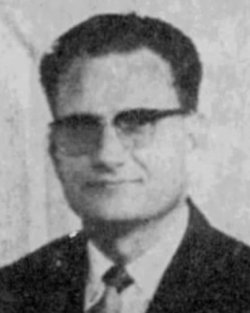
W.E. Best

God Is Sovereign

Isaiah 40:18-25
W.E. Best May, 16 1982 Audio
0 Comments
Best's Corner

Sermon Transcript

Auto-generated transcript • May contain errors

100%
To whom then will ye liken God? Or what likeness will ye compare
unto him? The workman melteth a graven
image, and the goldsmith spreadeth it over with gold, and casteth
silver chains. Look at verse 20. He that is
so impoverished, that he hath no oblation or sacrifice, chooseth
a tree that will not rot, chooseth a tree that will not rot. He seeketh unto him a cunning
workman to prepare a graven image that shall not be moved. Even
the heathen wants something that will not decay. Even the heathen
in all of his idolatry want something to worship that will not be moved. Verse 21, Have ye not known? Have ye not heard? Hath it not
been told you from the beginning? Have ye not understood from the
foundations of the earth? It is he that sitteth upon the
circle of the earth, and the inhabitants thereof are as grasshoppers
that stretcheth out the heavens as a curtain, and spreadeth them
out as a tent to dwell in, that bringeth the princes to nothing,
he maketh the judges of the earth as vanity, yea, they shall not
be planted, yea, they shall not be sown, yea, their stocks shall
not take root in the earth, and he shall also blow upon them,
and they shall wither, and the whirlwind shall take them away
as stubble. To whom then will ye liken me? Or shall I be equal, saith the
Holy One?" I'm not speaking on God is holy this morning. I'm
speaking on God is sovereign. The God of this century no more
resembles the supreme sovereign of Scripture than the flickering
of a candle resembles the midday sun. Let's face it. Heathen outside of professing
Christendom have their gods of wood and stone, just as we have
read here in Isaiah chapter 40. They are no different, however,
from the heathen inside of professing Christendom who form a God out
of depraved minds. Heathenism is heathenism, whether
it is in Africa or whether it is in America, even in the Bible
belt. where people talk about the scriptures,
they talk about God, but live as though God did not even exist. There are as many heathen per
square inch within professing Christendom as there are outside
of professing Christendom. A common expression often heard
today in the religious community is, ìLet God be God.î How ridiculous! And you hear
it all the time. Iíve heard it so much even recently
on radio, on TV, that statement made by religionists, ìLet God
be God.î I want you to analyze that statement
for a moment. Do you remember what the Lord
Jesus told Pilate? We referred to this passage last
Sunday morning. Pilate had made the statement
that, don't you know in speaking to Christ that I have power to
imprison you and I have power to release you? And our Lord
replied by saying, No man has any power except God give it
to him. No man has power except God give
it to him. Man does not have the power to
do anything unless God gives him the power. Let God be God. Think about this
passage. When the Apostle Paul preached
to the Athenians, The record of it is found in the seventeenth
chapter of the Acts of the Apostles. He said, in him, that is in God,
we live and move and have our being. How can we, who live and have
our being in God, let God be God? Ridiculous, isn't it? It surely
is. How can the effect let the cause
be the cause of the effect? Doesn't make much sense, does
it? And yet I find in Scripture, Revelation 4.11, John said, Thou
art worthy, O Lord, to receive glory and honor and power. For
Thou hast created all things, and for Thy pleasure they are
and were created. And Paul tells us in Colossians
1. that in him all things are held
together." Colossians 1.17. Yes, even in professing Christendom
today, people talk about God but live as though he does not
exist. I have a classic illustration
to give you. My brother-in-law has a very responsible position
in a company. He was telling me this last week
about some employees in their company, and he was telling me
about one woman who has eight children, all born out of wedlock,
with a different father for each one. She works for the company. Not
only that, but she has three grandchildren And all three grandchildren
were born out of wedlock, fathered by a different man. Eight children,
all by a different father. Three grandchildren, all by a
different father. He said, I'm not through yet.
Recently said, one woman came to her supervisor, And she said,
I want a maternity leave. I've got to have a maternity
leave. He said, you pregnant? Yes. I didn't know you were married. I'm not. He said, have you ever thought
about an abortion? He was going to make a point.
She threw up her hands and said, an abortion? Why, God disapproves
of abortions. You know what's coming, don't
you? He knew what he was doing. The Bible is against abortions,
he said. You know me. Yes. I'm not about to have an abortion.
He said, while you're reading the Bible the next time, see
what it says about fornication. See if God disapproves of fornication.
sexual promiscuity. He made a point. Oh, they talk
about God. They talk about the Bible, but
live as though God did not exist. Beloved, that's the age in which
we live. One of the members of the church handed me an article,
taken out of the Houston Chronicle recently. There is a book that
has been written by two famous American sociologist. I remember
one name. I don't remember the other. O'Toole
was one of his name. And they gave their predictions
about what we can expect between now and the turn of the century.
Things aren't going to get better even by these sociologists. They're
going to get worse. There's going to be more sexual
promiscuity. And these predictions sound like
Bible, and yet they're not theologians. They're sociologists. So people are talking about God,
but living as though God does not exist. I heard this morning, I thought
it was a good statement, but this fellow was speaking on,
is God dead? And he made some great statements.
I think it was channel 13. I think it was from about 8.30
to 9 o'clock. I'll give you two or three, because
I thought they were good, and they go right along with what
I'm developing this morning. Is God dead? He said if God is
dead, why isn't there a day that is set aside in memory of his
death? He said we have Lincoln's day,
and Washington's day, and All Saints' day, and he went on and
named every day. that we observe as a holiday.
But he said, no day has been set aside to observe the death
of God. Is God dead? He said, when I
look out, I see the flowers blooming and the trees putting forth their
leaves. He said, is God dead? No, God's
not dead. If God were dead, the flowers
would not bloom. The trees would not put forth
their leaves. He said, if God's dead, then
there's no light. There's nothing but darkness
and chaos. He said, if God is dead, I don't have a lawyer.
He's right. I don't have a judge. He said,
I've lost my best friend. But this is a statement that
he made that I really did like. Oh, he talked about losing the
wheel within the wheel, providence, if God is dead. But this one
I thought was a classic statement. This one appealed to me more
than anything else that he said. And he used the same passage
that we're using here in Acts chapter 7 and verse 28. In Him,
that is in God, we live and move and have our being. He said,
if God's dead, I'm dead, because I live and move and have my being
in Him. But he said, I'm alive, therefore
God is not dead. That's pretty good theology. His subject was all right. Is
God dead? You and I know that God is not
dead. In one of the letters to Erasmus,
Martin Luther said, quote, Your thoughts of God are too human.
Your thoughts of God are too human. Probably that renowned scholar
resented such a rebuke. Nevertheless, it was thoroughly
deserved. That statement reminds me that
God made when he complained against Israel in the 50th division of
the Psalms in verse 21, when he said, Thou thoughtest that
I was altogether such in one as thyself. as thyself." You
know, I couldn't help but think in the study of this particular
verse, Psalm 50, verse 21, when God said and complained against
Israel, Thou thoughtest that I was altogether such and one
as thyself. In the beginning of human history,
God said, Let us make man in our image after our likeness. Throughout human history, Men
have been saying, let us make God in our image after our likeness. And that's it. That's still taking
place. That's taking place today. Let's
analyze that statement in the light not only of the 40th chapter
of Isaiah's prophecy, but also some related passages. What do men do when they seek
to make God after their image and their likeness? They project
upon divine character their own character. Nothing infuriates me anymore.
Nothing makes me any more angry. than to hear someone talk about
God and project upon the sovereign God of the universe, the holy
God, the righteous God, the just God, their own perverted character. That's exactly what's being done
today. Everybody has his view of what he thinks God is like. What he thinks God is like. Let's
look at this from three points of view. First of all, idolatrous
men have their fictions of God. They seek him in the grosser
and more bestial forms. I'd like you to turn with me
to the first chapter of the book of Romans. And here's the description
of it, beginning with verse 21. Here's what idolatrous men are
doing, and this doesn't mean idolatrous people in Africa,
in New Guinea, or some remote corner of the world. But it takes place right here
in America, because that when they knew God, or when they knew
about God, they glorified him not as God, neither were thankful. but became vain in their imagination, vain in their imagination, and
their foolish heart was darkened, professing themselves to be wise,
they became fools, and changed the glory of the uncorruptible
God into an image made like two corruptible man, and the birds,
and four-footed beasts, and creeping things. that was happening in Paul's
time, it's taking place today. It's taking place today. Then
let us think, secondly, about superstitious men. Superstitious
men ascribe to God thoughts and practices that are unworthy of
his holy nature. Their God is perpetually their
foe, and never their friend. Finally, and this is where we
want to spend our time this morning, Religionists imagine that the
Most High is moved by sentiment rather than principle. I said religionists imagine that
the Most High God is moved by sentiment rather than principle. And when I use the word principle,
I'm talking about biblical, the biblical principle. They suppose
that God's power is so weak that Satan thwarts his purpose. We
hear this all the time by religionists. They think that God's will is
to save every man without exception, but many men, by their unbelief,
are defeating God's purpose. They assume that God's plan,
like theirs, is something that can be constantly changed. Beloved, the spiritual ignorance
of men today is displayed when the depraved scale of man's measurement
is employed to measure the infinite God. How utterly impossible it
is for a creature to bring the Creator under his obligation. And that's the thinking, that's
the teaching, that's the preaching of religionists today. I said God is sovereign, and
I'm going to prove it from Scripture. The sovereign God must be viewed
upon the throne of his eternal purpose. Is that true or false? His determinate counsel underlies
all his acts. Job said in chapter 23 verse
13 of the book of Job, But he is in one mind, and who can turn
him? And what his soul desireth, even
that he doeth. There can never be a new thought
or a new purpose in God any more than there can be a new God. Whatever he purposed in eternity,
he purposes in time. Whatever he purposed in eternity
is executed in time. So his purpose, therefore, is
fixed, it is settled. This is the reason the Apostle
Paul calls it, in Ephesians 3, verse 11, the eternal purpose
which he purposed in Jesus Christ. the eternal purpose which he
purposed in Jesus Christ. The eternal purpose of God carries
the same connotation as he is in one mind. In other words,
you can take Ephesians 3.11 and Job 23.13 and they mean and teach
the very same thing. God's purpose and God's mind,
both are one. He is one in purpose, he is one
in mind. The thoughts of God are all reducible,
in other words, to one mind. Think about that. All the thoughts
of God are reducible to one mind. That's the way it is expressed
in Job 23, verse 13. The Greek word for purpose is
prophesis. Prophesis means plan, purpose,
or will. I might add, the word prophesis
is also used in projecting the showbread, it also means to set
forth, like setting forth the showbread on the table of showbread. But it means plan. It means purpose. It means will. Behind all the
events of history, there is an eternal purpose being worked
out. I like what Jonathan Edwards,
the great American preacher, who was a strong grace man, said,
and I quote, God does not do what he does, nor order what
he orders accidentally and unawares, either without or beside his
intention. And if there is a foregoing design
of doing and ordering, as he does, This is the same with purpose
or decree." The finite mind of man cannot
understand the infinite mind of God. Consequently, man's chief
concern is to be given to God's commands. The secret things belong
unto God, but the things which reveal his commands. belong to us and to our children. God's purpose will be revealed,
will be revealed in time. Therefore we have the second
meaning of prophecies to set forth, and that is the reason
Habakkuk said in Habakkuk chapter 2, verses 2 and 3, And the Lord
answered me, and said, Write the vision, and make it plain
upon tables, that he may run that readeth it, for the vision
is yet for an appointed time, but at the end it shall speak
and not lie, though it tarry, wait for it, because it will
surely come, it will not tarry." The proof of God's purpose is
learned from the nature and perfections of God. I said the proof of his
purpose is learn from the nature and perfections of God. We cannot
consider all of God's perfections in this lesson this morning,
but I do want to mention four. I want to mention the three that
we commonly hear, and they are omniscience, omnipotence, and
omnipresence. But I'd like to add a fourth,
his immutability. Now when we think about these
four attributes of God, these perfections of God's character,
they will help us to learn the nature and the perfections of
God. So these perfections prove and
they protect God's purpose. I said they not only prove, but
they protect God's purpose. Let's see if they do. Number
one, God is omniscient. That means he knows everything.
If he knows everything, then nothing can take him by surprise. You and I are often surprised,
but God is never surprised. He's omniscient. He knows everything. He knew everything from before
the foundation of the world. That's why there can never be
a new thought with God. If there could ever be a new
thought with God, he would cease to be God. He's perfect in omniscience. and being perfect in omniscience,
nothing can ever take him by surprise. Secondly, he is omnipotent. That means he is all-powerful.
Since he is all-powerful, then nothing can thwart the purpose
of God. I want you to see how God's purpose
is protected. Not only proved, but protected.
Thirdly, God is omnipresent. That means he is everywhere.
Everywhere. And the psalmist gives a tremendous
description of this in the 139th division of the Psalms. And since
he is everywhere present, then nothing can slip up on him. He's everywhere present. Finally,
God is immutable. That means he's unchangeable.
And since he is unchangeable, then nothing can cause God to
change his mind. I am God. I change not. Malachi
3, 6. Every good and perfect gift comes
down from the Father of lights, with whom there is no variableness,
neither shadow of turning. He is immutable. He changes not. So you can see how important
this is. If anything is by chance, or the mere effect of second
causes, one cannot truthfully say, now I want you to turn to
Romans 11, 36, and I'd like to insert three things as we read
this verse. I want to show you the beauty
and the depth of this text of Scripture. I said if anything
is by chance, or the mere effect of second chances, one cannot
truthfully say, as Paul did, for of him, and then you could
insert in parenthesis if you want to, in creation. For of him, that is in creation. And through him, you can also
insert there, in providence. Through him, in providence. And
to Him, and once again you can insert something, directed and
ordered to His own eternal glory, are all things to whom be glory
forever. Amen. Now let me read the verse
again and insert these statements that I have inserted. All I'm
doing is giving an interpretation of the verse with a very brief
statement. For of Him, that is in creation,
And through him, that is in providence, and to him that is directed and
ordered to his glory are all things to whom be glory forever.
Amen. Is that true or false? Beloved,
it's true. That's the teaching of Scripture.
The extent of God's purpose covers everything from eternity past
through time and throughout eternity future to use vernacular that
we're familiar with as Christians on earth in time. God's decree
is unchangeable. Listen closely. God's decree
is unchangeable. There will never be, there will
be no alteration in the divine intention. I said there will
be no alteration in the divine intention. what God intended
before the foundation of the world, there will never be any
alteration in it. Secondly, no new act will ever arise in the
divine mind. No new act will ever arise in
the divine mind. And lastly, there will never
be a reversion of the divine plan. Now, beloved, those three
statements have some meat in them. No alteration of the divine
intention, no new act shall ever arise in the divine mind, and
no reversion of the divine plan, will, or purpose of God. Hence,
the God of the Christian, listen to this, the God of the Christian,
I'm not talking about the pagan, I'm talking about the Christian,
the God of the Christian. is absolutely sovereign, infallibly wise, authoritatively
omnipotent, and supremely immutable. That covers the field. God's
eternal purpose is exercise without restraint. Without restraint, now we're
going to answer some things that we often hear today by religionists. And I've already stated that
religionists have formulated their own views of God. And they
are as atrocious as the views formed by heathen outside of
professing Christendom. What's the difference between
a person worshiping a statue made of wood or of some metal
or stone? and worshiping a God formulated
by the prayed mind. What's the difference? None.
Absolutely none. So God's eternal purpose is exercised
without restraint, without restraint. Hence man has no control whatsoever
over the fulfillment of God's purpose, God's plan. This means that God's will, God's
plan, God's purpose rotates on its own axis. You believe that? I do. I said
God's plan rotates on its own axis. That is, on his own purpose
and his own good pleasure. God willed to create, therefore
he created. Listen now. His will to create
was not dependent, but independent of the creation. Now let's come
down to man's salvation and make the same application. If God
was sovereign in creation, and He was, His plan was not dependent,
but independent of His creation. Then what about salvation? What
about the new birth? What about regeneration? Furthermore,
God purposed to save a certain number of individuals from their
sins. Therefore, He saves them. He regenerates them. He changes
them. He willed to save certain individuals,
and His will or plan to save certain individuals is not dependent
upon the individuals, but wholly independent of the individuals
whom he saves. Does that make sense? If the
first is true concerning creation, the second is true concerning
the redemption and the application of that redemption to those whom
he wills to save. Bold creation and salvation are
acts by sovereign God. He could not ask permission to
create, could he? When God created man, he didn't
ask man permission to create him. Man was a non-entity. As man was a non-entity and he
couldn't ask man about creating him, does he ask the sinner for
permission to recreate him? And yet we hear this all the
time. God can't do anything until the sinner invites him into his
heart. Well, let's look at a few statements.
In Romans 9 and verse 18, God does not ask permission to save
man. Why? Because he's God. He's the
sovereign God. But so then it is not of him
that willeth, nor of him that runneth. That's verse 16. But of God that
showeth mercy. Now drop down to verse 18. Therefore
hath he mercy on whom he will have mercy, and whom he will,
he hardeneth. God's will is perfect. in saving those whom he chose
to save. His plan, our will, is perfect
in damning those whom he passed by. After all, no one deserves
the mercy and goodness of God. When anyone is saved, he is saved
by the mercy of God. When the individual is lost,
he is lost as a result of his own depravity, his own depraved
nature. He's lost because of his own
sins. There's a popular religious song that I know all of you have
heard, and I'm trying to make this as practical as I can. It's
entitled, God was there all the time. He was there all the time.
Have you ever heard that? Oh, it's sung so often today
on religious programs. He was there all the time. Very
popular song right now. Now, what does the song depict?
The song depicts the Savior waiting, waiting, patiently waiting for
the sinner to make up his mind whether or not he will choose
to let Jesus Christ into his heart. He was there all the time. You can't listen to KHCB very
long without hearing it. You cannot listen to any other
religious song very long without hearing it. I want to ask some
questions. Did Abraham will to become Abraham? Pretty good question, isn't it?
Did Saul of Tarsus will? to become Paul the Apostle? Did you will to become a Christian
because you willed to become a Christian, you chose to let
Christ come into your heart? Beloved, that's heresy. That's
humanism. That's humanism. Such teaching
is an insult to the absolute sovereignty of God. The sinner
cannot believe or repent apart from regeneration. You and I
know that, and we know it experientially. Salvation is the fruit of God's
decision, not the sinner's decision. Moreover, if the salvation of
any person is a result of his decision, He should abandon it
as quickly as he can. And I'll tell you something,
you can abandon the salvation that you get from your decision. Don't forget that. That's why
we have people deciding to join a church, and they decide they're
saved, and in their eyes they're saved for a while. But a person
can abandon his decision which results in what he says, quote,
his salvation. But when you are saved by God's
decision, you can never abandon the salvation that God gives.
That's the difference. I'd say it's a pretty big difference,
wouldn't you? I'm relying not on my decision, but God's decision.
I have no confidence in my decision. If you have confidence in yours,
then you are a person to be pitted. You're nothing but don't know
it. You remember what Nebuchadnezzar said in his confession? He not
only exalt the supremacy of God and the sovereignty of God, but
man's nothingness. Man's nothingness. Whatever of man's will can surely
be abandoned. But the salvation that is of
God can never be abandoned. No wonder Paul said, who has
saved us and called us not according to our works but according to
his own purpose and grace given us in Jesus Christ before the
world began. I know whom I believed and have
persuaded that he is able to keep that which I have committed
unto him against that day. Secondly, God's eternal purpose
is exercised without constraint. Without constraint. I didn't
use restraint, I said constraint. There is nothing in man to constrain
God to act in his favor. Whenever a sinner thinks that
he can do something that can constrain God to act in his favor,
you can rest assured he knows nothing about God, he knows nothing
about man. Therefore, he is ignorant of
both theology and anthropology, as well as soteriology, the science
of salvation. He is in complete ignorance.
The sinner deserves nothing but condemnation from the sovereign,
holy God. And I'll tell you, I was brought
to that place where I realized it, and so were you. Thus, there's
nothing outside of God to constrain God to act. When God acted in
your favor, He acted from His side, and He was not constrained
from your side. False teachers tell sinners today
to take the first step. They'll say, open the door of
your heart and let him in. Furthermore, they'll say, won't
you make a decision for Christ? Now these are common expressions
used by religionists today. I asked my wife a question this
morning as we were having breakfast. a program was on and some of
these terrible statements were made by the preacher at the conclusion
of his message, I turned to her and I asked the question, did
we overlook all these things or were we so involved in things
that we just didn't see or didn't pay any attention to those things? Or are things getting worse today
than they were 25 years ago? I think a lot of it we were so
involved that we overlooked a lot of things. And secondly, things
are a lot worse today than they were then. Arminianism is more
rampant today than ever. Humanism is seen on every hand
today. You and I know that no person
can open his heart. It takes the Spirit of God to
open the heart of a sinner. in order that he can embrace
the Lord Jesus Christ, the Savior and Lord. No sinner can take the first
step in the direction of God. No man can come to me, Christ
said, except the Father, which hath sent me, draw him. John
6, verse 44. There is nothing in the praise
sinners to constrain God to save them. Now, if you want a vivid
description of the sinner, turn with me to Romans 3. Now, if
you can find anything in these 14 horrible indictments against
every sinner that will indicate there is something in the sinner
that would constrain God to act in his favor, you can do more
than I can. I can't get anything out of it.
And the reason I can't is because it isn't there. Let's begin,
if you will, please, with verse 9. What then? Are we better than
they? No and no wise, for we have before
proved both Jews and Gentiles that they're all under sin. As
verse 9 of Romans 3, as it is written, there is none righteous,
no not one. There is absolutely nothing in
the sinner to constrain God to act in his favor. Verse 11, there
is none that understand it. Now wait a minute. None that
understand it. We hear it said today, oh, if
the gospel is just made plain, if we can just change the language
somewhat and bring it down to the modern-day vernacular, people
can understand it, they will embrace it. Oh, no, they won't,
they can't understand it. So look at the 12th verse, 11th
verse. There is none that understand
it. There is none that seeketh after God. There's none that seeketh God.
There is not a sinner who seeks God. We need to put things in
their proper perspective. Verse 12, is there anything in
the sinner that would constrain God to act in his favor? Verse
12, they're all going out of the way. They're together become
unprofitable. There is none that doeth good,
no, not one. Their throat is an open sepulcher. How can an open sepulcher, how
can such constrain God? With their tongues they have
used to seed. The poison of ash is under their lips, whose mouth
is full of cursing and bitterness. How can cursing and bitterness
constrain God? Act in one's favor. Their feet
are swift to shed blood. destruction and misery are in
their ways, and the way of peace have they not known. And finally,
there is no fear of God before their eyes. No fear of God. So regeneration
is God giving sinners life, which enables them to do what they
must do, that is, repent and believe. but cannot do because
of depravity. And there's no contradiction
in that statement. You know, to preach like Arminians is like
standing in a graveyard saying, all you people out there in those
graves, open your heart and let the Lord Jesus in. Now that would
make a lot of sense, wouldn't it? What would you think of me
if you saw me down here on Gulf Freeway and Forest Park Cemetery
and standing out there? Come on, take the first step,
all you who are in the graves. That makes just as much sense
as the preacher standing before dead sinners and telling them,
take the first step, make your decision, open your heart. They
cannot respond spiritually until God works a work of grace in
their hearts. God's eternal purpose is exercise
without condition. Without condition. His purpose
to save is unilateral, not bilateral. Those who believe that the condition
is bilateral believe in synergism. That's a cooperation of man with
God. So it is contrary to Scripture
to speak of God's part and man's part in regeneration. Man's part
to believe, they say, number one, and God's part, secondly,
to regenerate. They've got the cart before the
horse. But that's the order of every Arminian. Now listen carefully
to this. I said it's contrary to scripture
to speak of God's part and man's part in regeneration. Man's part
to believe and secondly God's part to regenerate. The Bible
order is God regenerates and thus the sinner who has been
regenerated is enabled to believe. That's the order. And I challenge the religious
world to disprove that. So the order is reversed. Repentance and faith are fruits
of regeneration, not prerequisites to regeneration. Suppose a person who had been
dead for several years greeted you on the street one day. Would
you conclude that he had opened the grave and ask a renowned
doctor to perform a miracle and give him life? Don't believe
you would. So God is sovereign. We have
seen how that the heathen form their own gods of wood and stone
and they worship them. And religionists are forming
their own concepts of God from depraved or by depraved
minds, and there isn't any difference between them. A false god is
a false god, whether he is one worshipped by the heathen in
the darkest jungles of Africa, or a religionist sitting in a
fine building here in America, and forming a god out of his
own depraved mind. God acts by principle, not by
sentiment. He is sovereign in creation.
He is sovereign in redemption. He is sovereign in regeneration.
He is sovereign in providence. Yes, God is absolutely sovereign. He cannot be restrained from
performing His will and purpose. He cannot be constrained by man
to act in man's favor, and finally, he cannot operate on the condition
that man must do something before he can. Salvation is unilateral. It's all of God and not of man. Let's stand as we sing.
W.E. Best
About W.E. Best
Wilbern Elias Best (1919-2007) was a preacher and writer of Gospel material. He wrote 25 books and pamphlets comprised of sermons he preached to his congregation. These books were distributed in English and Spanish around the world from 1970 to 2018 at no cost via the W.E. Best Book Missionary Trust.

Comments

0 / 2000 characters
Comments are moderated before appearing.

Be the first to comment!

Joshua

Joshua

Shall we play a game? Ask me about articles, sermons, or theology from our library. I can also help you navigate the site.