Bootstrap
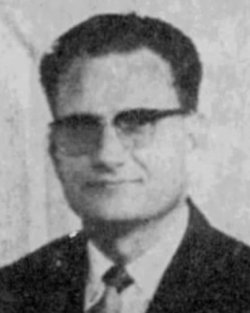
W.E. Best

Self-Denial

Philippians 2:20-21
W.E. Best January, 21 1981 Audio
0 Comments
Best's Corner

Sermon Transcript

Auto-generated transcript • May contain errors

100%
the second chapter of Philippians.
I'm not going to bring a message tonight from the passage that
we're studying, but I do want to read a couple of verses from
the second chapter, and I'm going to see if you can follow me and
see maybe where we're headed in another area later on. I want to read verses 20 and
21 of chapter 2, And then I want you to turn to
John chapter 10, and we'll read at least a dozen verses from
the 10th chapter of the Gospel of John. Paul said, For I have
no man like-minded who will naturally care for your state. For all
seek their own, not the things which are Jesus Christ's. Now those are two verses that
are in harmony with the context, not only of the last part of
chapter one, but also the portion of scripture that we are presently
studying. Keep in mind what he said in
verse five, let this mind be in you, which was also in Christ
Jesus. What is the subject? What's being
emphasized in this portion of scripture? With that in mind,
look at the two verses again. For I have no man like-minded,
you may want to observe your marginal reference here, so dear
unto me, who will naturally care for your state, that is the condition
of the Christians at Philippi. For all seek their own, not the
things which are Jesus Christ's. Now turn to John chapter 10.
Let's read the first 12 verses. I want to emphasize self-denial
this evening. Self-denial. Verily, verily, I say unto you,
he that entereth not by the door into the sheepfold, but climbeth
up some other way, the same is a thief and a robber. But he that entereth in by the
door is the shepherd of the sheep. To him the porter openeth, and
the sheep hear his voice, and he calleth his own sheep by name,
and leadeth them out. And when he putteth forth his
own sheep, he goeth before them, and the sheep follow him, for
they know his voice. And a stranger will they not
follow, but will flee from him, for they know not the voice of
strangers." This parable spake Jesus unto them. Really, we should
say, not parable, but this proverb spake Jesus unto them. But they
understood not what things they were which he spake unto them.
Then Jesus said unto them, Verily, verily, I say unto you, I am
the door of the sheep. All that ever came before me
are thieves and robbers, but the sheep did not hear them.
I am the door. By me if any man enter in, he
shall be saved and shall go in and out and find pasture. The
thief cometh not but for to steal and to kill and to destroy. I am come that they might have
life and that they might have it more abundantly. I am the
good shepherd, the good shepherd giveth his life for the sheep. We're talking about self-sacrifice,
self-denial. Verse 12, but he that is an hireling,
and not the shepherd, whose own the sheep are not, seeth the
wolf coming, and leaveth the sheep, and fleeth, and the wolf
catcheth them, and scattereth the sheep. Let's read one other
verse. The harling fleeth, because he
is an harling, and careth not for the sheep. Self-denial. We often hear it said that this
particular person even though he is a member of the church,
is a rather self-centered Christian. A self-centered Christian is
a contradiction. That will not stand the test
of Scripture. Furthermore, a self-serving under-shepherd
contradiction. I said a self-serving under shepherd
is a contradiction. He is as much a contradiction
as the person who says that he is a Christian and yet he is
a self-centered individual. An awesome dignity clings to
the office of under-shepherd. I'd like for us to consider just
how awesome that dignity is. Turn with me to the Gospel of
Mark, chapter 6, and let us read verse
11. Our Lord had given instructions
to the twelve disciples, as they sent them out, two by two. So you're familiar, I'm sure,
with that. In view of that statement, let us now read verse 11. And whosoever shall not receive
you, those whom the Lord Jesus sent out as under shepherds, and whosoever shall not receive
you nor hear you, When ye depart thence, shake off the dust under
your feet for a testimony against them. Verily I say unto you,
it shall be more tolerable for Sodom and Gomorrah in the day
of judgment than for that city. Let us not forget the awesome
dignity that clings to the office of under shepherd. And I'm talking
about the under-shepherd who cares for the sheep. I recently read an article that
intrigued me to some extent, and I think this is a good introduction
into our study of the true shepherd as he is presented in these verses
in John chapter 10. Keep in mind we're not giving
a verse-by-verse exposition of this great portion of Scripture.
It would take days to do justice to this chapter. But there is
one point that I'm seeking to emphasize in our lesson this
evening. We have the true shepherd and we have the true under shepherds
also mentioned in this portion of scripture. We also have reference
made to those who care not for the sheep. In other words, they're
harling prophets. I'm sure that all of us have
seen in our lifetime an individual who has an unusual gift, we might
say, as a preacher. And so he is blown up by some
Christians. His ego is built up. He comes to the place in his
life as a result of much praise that he has received. He feels like he is too large
for the small congregation that he is ministering to in his work
as a servant of Christ. And so some people get together
and they organize an independent organization from the church. And they say, we're going to
support you. We want you to branch out. Your ministry, your gift
is such that you should not be confined to a very small congregation. So we're going to do our best
to support you. We're going to appeal to the
sheep of God's pastures to support you. And we're going to ask for
the sheep to pray for you. Is that scriptural? Is that scriptural? It is not.
It's contrary to scripture. In fact, that is putting everything
in reverse. The under-shepherd is appointed
by the chief shepherd, the Lord Jesus himself, to minister to
a local flock. Regardless of the size, that
person is there for a specific purpose. He is not there to be
elevated by the praise of people to the extent that he feels,
now I've come to the place that I can no longer keep my talents
and the abilities that I have confined to this one little congregation. I've got to branch out. What's wrong with it? And yet
we see that today in the realm of religion. Everything is wrong with it.
The man whom God appoints as an under-shepherd is to serve
the people. He is to pray for the people.
He is to serve the people. He is to minister to the people.
He is not to be ministered to. but he is to minister. So we
can see everything wrong with that. Now with those remarks
before us, let us look at John 10. There is a great lesson given
us concerning this very subject in this portion of Scripture.
First of all, as we begin, and we'll look briefly at these first
12 or 13 verses tonight, the Lord Jesus himself enters the
sheepfold of Judaism in a lawful manner. In other words, he was
properly introduced. Not improperly introduced, but
properly introduced. Look at verse 1. Verily, verily,
I say unto you, he that entereth not by the door into the sheepfold, but climbeth up some of the way,
the same is a thief and a robber. Our Lord in this proverb, and
that's what it is, a proverb, is not talking about people seeking
to get into heaven by some means other than through Jesus Christ
in the first part of this chapter. He is simply stating that as
the true shepherd of the sheep, the good shepherd who is to give
his life for the sheep, He is introduced in a proper manner,
and he has a lawful entrance into the sheepfold. And the sheepfold is not heaven.
The sheepfold is Judaism. And this points back to the last
verses of chapter 9, especially the last three verses. So the
antecedent of the sheepfold will take you back to the Pharisees
to whom our Lord addressed in the last part of the ninth chapter. So Jesus Christ presented himself
in a lawful manner to the sheepfold, and the sheepfold is Judaism. So there was a peculiar people
within a peculiar people. I'll explain that. Israel, nationally
speaking, was a peculiar people and call that in the 19th chapter
of the book of Exodus. But the Lord Jesus had a peculiar
people within this peculiar people. In other words, within this national
Israel, so to speak, there were some for whom Jesus Christ would
lay down his life. So actually we have two things
to observe here in the very first part of chapter 10. And we're
looking first of all at the example of Jesus Christ, his manner of
entering into Judaism. So we have first of all the fold
of Israel according to the flesh. And the fold of Israel according
to the flesh, of course, was the Mosaic covenant. the fold
of spiritual Israel and that's the peculiar people within the
national people that are also called peculiar. So we have the
spiritual Israel and the spiritual Israel cannot be connected and
are not to be connected with a Mosaic covenant but with a
covenant of promise. The covenant of promise. And
this covenant was first revealed to Adam in Genesis 3.15, more
fully developed in the Abrahamic covenant, an unconditional covenant,
and fully manifested in the gospel of the Lord Jesus Christ, 2 Timothy
1, 9 through 11. Now what separates the sheep
from the rest of mankind? What is it that really
separates the sheep from the rest of mankind? It is God's
electing love. So sheep recognize, according
to the first verses, after the Lord Jesus had entered in a lawful
manner, having been properly introduced. You see, as the Lord
Jesus, who sets before us the example, as he was properly introduced,
So the under-shepherds whom he appoints to the various flocks
of sheep, they must also be properly introduced and will be properly
introduced. So we need to keep that in mind.
And when the Lord Jesus was properly introduced as he went into the
sheepfold, we're told that the sheep recognized the voice of
the true shepherd, and having recognized the voice of the true
shepherd, they followed the Lord Jesus Christ out of Judaism. There are three doors in the
first few verses of this chapter. In fact, the first 10 verses. There is the door into the sheepfold
in verse 1. In verse 7, there is another
door. It's called the door, and Christ is called the door. And
really, He is the exit out of Judaism. Then again in verse
9 I am the door by me if any man enters in he shall be saved
and shall go in and out and find pasture Now they're going in
and out and finding pasture has been a very controversial passage
We'll spend a little time on it in a few minutes, but we haven't
gotten that far yet So we have Christ going in through the door
into the sheepfold in a lawful and proper manner and the sheep
having heard his voice and go out with him. So the Lord Jesus
Christ did not save the religious Jews in Judaism, but he saved
them from Judaism, and as he led them out, of course, they
followed him out of Judaism. It is the responsibility of the
under-shepherds whom Jesus Christ appoints to lead the sheep I
said the sheep out of Judaism or out of any religious system
that is not of God. That's the responsibility of
under shepherds. So the Lord Jesus led the spiritual Israel
out of Judaism. He led them out of Judaism just
like Jesus Christ came for the purpose of saving his people
from their sins. Not in their sins, but from their
sins. So as people are saved from their
sins, they're also saved from man-made religious institutions. This is a biblical fact. So sheep
recognize the voice of the shepherd. You'll notice that they believe
his doctrine because they recognize his voice. Now the under-shepherds
whom Jesus Christ appoints as the truth of God is proclaimed,
sheep recognize the truth and they receive it not as an under-shepherds
doctrine merely, but the doctrine is received because it is his
and theirs because the truth belongs to their Lord. It is
the gospel of God. It's the gospel of the Lord Jesus
Christ. So Christ is the exit out of
Judaism, and that's in verse 7. In other words, he's the exit
out of all human religions. You'll notice in verse 8, and
this has been a rather controversial verse to many, he makes reference,
he said, all that ever came before me, thieves and robbers, but
the sheep did not hear them." Now let's look at this statement
for a few minutes. All who came before me. That doesn't mean
that Isaiah, Jeremiah, and the true prophets were false, were
thieves, were robbers. So what does this mean? In other
words, all who precede Christ are thieves and robbers. All who precede the Lord, that
is, all who run without being sent, are thieves and robbers. True shepherds follow, I said
true shepherds follow the one true shepherd. And therefore
they do not precede the true shepherd. They follow the true
shepherd. And this is what we must keep
in mind when we look at this verse. So the word before that
is used here in verse 8 cannot be translated without. So all
who put Jesus Christ behind them are impostors. Let's put it in
that framework. And I think we can all understand
it. All who put the Lord Jesus Christ behind them are impostors. That means that a true under-shepherd
will always put the Lord Jesus Christ first. He'll make the
Lord Jesus Christ the one true shepherd who gave his life for
the sheep. The under-shepherd will make
him preeminent. Not only in his life, in the way he lives but
also in his testimony. So faithful pastors or under
shepherds have God's approval in their entry among the sheep. They will lead the sheep out
of all man-made religious systems into the green pastures of God's
pure doctrine. And this is the work. of the
under shepherds of Jesus Christ. You'll notice too the sheep are
endowed with certain qualities. And I believe this with all of
my heart. I said true sheep are endowed with certain qualities.
Let us look at these qualities. First of all, they are conscious
of their need of direction. Every true sheep is conscious
of his need of direction. They are gifted with discernment. In other words, they recognize
the voice of truth when it is proclaimed. They follow the true
under-shepherd. And finally, they flee all false
shepherds. This is tremendous instruction
for us. Let me repeat this. The sheep are endowed with certain
qualities. Number one, they're conscious
of need, of their own need, of direction. They're gifted with
discernment. They follow the true under-shepherd,
and they flee every false shepherd. So we are not sheep because we
believe. We believe because we are sheep. We believe because we are sheep.
Now looking again at Christ, the Lord Jesus is the door, we're
told, in verse 9. I am the door. By me if any man
shall enter in, he shall go in and out and find pasture. So
the Lord Jesus is both the shepherd and the door. I've already mentioned
there are three doors. Verses 1, 7, and 9. When Christ
is represented as the door, He is the mediator. In this character,
He is subject to the Father as mediator, as the door is subject
to the doorkeeper. So the Father brings all the
sheep and all the shepherds to Christ as the chief shepherd. All that Christ does is in accordance
with the will of God the Father who sent Him. And to all whom
the Father admits, it is because the doorkeeper opens. And the
doorkeeper, if you want a biblical verse for it, is John 6 verse
44. That familiar verse to all the recipients of grace who have
made any study to any extent of the subject of grace. One
could be meant by Christ as the shepherd entering into the foal
through himself. He's the good shepherd, and yet
he's the door. So the literal rendering of this
is not the shepherd, but as a shepherd of the sheep. So the contrast
here is between the true and false shepherds. True shepherds
do not run unsent. Now look at verse 9. I am the
door. By me, if any man shall enter
in, he shall go in and out and find pasture. Going in and out has been a phrase with many different
interpretations. As many, I suppose, as some of
the verses that we have been investigating in Philippians
chapter 2. Let us look at this tonight.
I think there's a great principle set forth. The Christian has
two sides. The Christian life has two sides. There's a going in and there's
a going out in the Christian life. I'm going to explain the
text and then I'm going to seek to give some examples or some
illustrations from the Old Testament of these two principles. the
going in and the going out. So the Christian life has two
sides. Number one, the first side is
going in for worship. We go in for worship. We go in
for study. We go in for meditation. We go
in for prayer, as it were. Now that's one side. Now the
other side is the side of service and warfare. So we go in for
worship, for meditation, for study, to receive strength that
will enable the sheep to go out in service and warfare. Because there are both service
and warfare which every Christian will encounter. Now, where are
the illustrations in the Old Testament that will help us to
understand these two statements that I've made, going in and
going out? First of all, the entering in
is not something that is done once, and then the person, after
having gone in, can forget about going in again. The going in
here is something that is constant, just like 1 Peter 2, verse 4, The tense of the verb that is
used, coming to Christ, is not something done once, but there
is a continual coming to Christ. Just like in 1 John 5 verse 1,
when one believes, there is a continual believing. In other words, faith
is not something that is exercised and then it isn't continually
exercised. So there is a believing, the
continual believing, there is the coming to Christ, a continual
coming to Christ, so there is an entering in, there is a continual
entering in. In Exodus chapter 12, we're all
familiar with this portion of scripture. Exodus 12 gives to
us the account of the lamb after it had been offered and the blood
had been applied the lamb was roasted and the people ate of
the lamb and after having eaten the lamb that was in preparation
it was to strengthen them for what purpose? To go out of Egypt. To go out of Egypt. So in Exodus
12 In Egypt, the Israelites ate the lamb that had been roasted
with fire. And this corresponds with the
saints of God feeding upon Christ when they go in, they feast upon
Christ, they study the scriptures, they meditate, they worship,
they pray in order to receive strength to go out for service. Now let's look at the other side.
I said there are two sides to the Christian life. Then when
you turn to Exodus 29, verses 31 through 35, the feeding here
is not the feeding upon the lamb that had been roasted, but here
it is the feeding upon the ram of consecration. Not the feeding
on the lamb that had been roasted, but feeding upon the realm of
consecration. And this answers to the believers
being nourished upon the love of Christ in order to be strengthened
for approach. So in the first, they ate in
view of going out of Egypt. And in the second, it was in
view of going in. In and out. is what is taught in this portion
of scripture. So the Lord Jesus is the true
shepherd, and then we have the true shepherds. The true shepherds
enter in by the door, that is, by the Lord Jesus Christ. True
shepherds do not run unsent. They do not force open the door,
nor steal in unnoticed by the porter. They are recognized as
having been appointed by Jesus Christ the Great Shepherd, the
Good Shepherd, the Chief Shepherd. No call will compensate for the
wont of Christ's call. So Christ gives unto such favor
in the eyes of the sheep, and the sheep recognize the voice,
and they follow him as he follows the Good or the Great Shepherd. So true shepherds, like the chief
shepherd, go before the sheep. As they go before the sheep,
they are to set the example before the sheep. They show the sheep
green pastures and refreshing streams by leading them to those
places. where the Word of God, of course,
is to be expounded and Christ Jesus is to be magnified. Let's go back to the thought
now that Paul brings out in Philippians 2, verses 20 and 21. Paul said, it seems that there
is no one who really cares for your state, that is, your condition
of life. Seems that everyone is concerned
about himself. And yet he sent Timothy, if you'll
read the verses following those verses that we read at the beginning.
He sent Timothy, and Timothy was a true shepherd. And he was
sent for the purpose of assisting the sheep to whom he had been
sent. Self-denial is the important
thing. The Lord Jesus sets forth the example of his own self-denial. So there is to be a threefold
self-denial on the part of true under-shepherds as they're sent
to the sheep to shepherd them as the Lord Jesus sends forth
his own for that purpose. So there is to be, first of all,
self-denial regarding the call. Regarding the call. In other
words, the call means more than anything else. If the call doesn't
mean more than anything else in life, then there's something wrong.
In other words, the call is not genuine. So the cost is not too
great. The cost is not counted. So there's
to be self-denial regarding, first of all, the call. Jesus
Christ denied himself. And this is the thing that Paul
is stressing in Philippians chapter 2. Secondly, there is to be self-denial
regarding the care of the sheep. The true under-shepherd must
be more concerned about the spiritual welfare of the sheep than he
is about his own personal needs and ambitions. Is that the language of scripture?
It surely is. Do you remember what Paul said
in writing to the Corinthians in 2nd Corinthians, I think it's
12, verse 14? I care not for yours, but you. It wasn't the money of the Corinthians
that he was concerned about. It was the Corinthians about
whom he was concerned. So when people's spiritual welfare
is uppermost in the mind of the yonder shepherd, other things
will naturally fall in their rightful places. And that was the ambition of
Paul. I care not for yours, but I care for you. Now think about
that statement in the light of what Paul said to the Philippian
saints in chapter 2 verses 20 and 21, I find none who really
cares for your state that is your condition of life. For it
seems that everyone is seeking his own and not the things of
others. Now think about that in connection
with these hireling prophets of Christ's day. And then thirdly, Not only is
there to be self-denial in regard to the call, and secondly, in
regard to the care of the sheep, but there is to be self-denial
in regard, of course, to gain. Gain. I'm talking about gain in life,
whether it be monetary gain, or whether it be prestige, whatever
it might be. There are some who are so concerned
about being recognized and having recognition or honor. But you
see, this was not the spirit of Christ. And this is why the
Lord Jesus said to the Philippian saints, let this mind be in you
which was also in Christ Jesus. It's a spirit of humility. It's
a spirit of self-sacrifice. It's a spirit of self-denial. Self-denial. Now let's look at
the verses beginning with verse 10. Then our Lord has some things
to say concerning these fall shepherds. He says, the thief
cometh not but for the steal and to kill and to destroy. He
sets himself in contrast to that person by saying, I am come that
they might have life and that they might have it more abundantly. I'm the good shepherd. The good
shepherd giveth his life for the sheep. Self-sacrifice. Self-denial. Now we can't emulate the Lord Jesus Christ
in this regard. But yet there is to be a spirit
of self-sacrifice, a spirit of self-denial. Then in verse 12,
But he that is a harling and not the shepherd, whose own the
sheep are not, seeth the wolf coming, and leaveth the sheep,
and fleeth. And the wolf catcheth them, and
scattereth the sheep. The harling fleeth, Why? Because he's in hireling and
he does not care for the sheep. Now let's go back to Philippians
in closing and look at these verses again. Verses 20 and 21. Paul said,
For I have no man like-minded who will naturally care for your
state or your condition of life. Not talking about position. Position
is one thing. Standing is one thing. State
or condition is an entirely different thing. So Paul was concerned about the
spiritual condition of the Philippian saints. After all, there were
some problems in the Philippian church. If you don't believe
there were problems, look at chapter 4, beginning with verse
1. He says, therefore, my brethren,
dearly beloved, and long for my joy and crown, so stand fast
in the Lord, my dearly beloved. I beseech you, Odius, and beseech
Syntyche, that they be of the same mind in the Lord. And I
entreat thee also, true yoke fellow, help those women which
labored with me in the gospel. with Clement also and with other
my fellow laborers whose names are in the book of life. Rejoice
in the Lord always and again I say rejoice." Evidently there
was a problem between these two women and it must have created
quite a stir within the church at Philippi or their names would
not have been mentioned publicly in the manner in which Paul mentions
them. Going back to verses 20 and 21,
for I have no man like-minded, who will naturally care for your
state. For all seek their own, not the
things that are Christ's. In other words, there were Highland
teachers, even then, with whom Paul had to contend. And then
he goes on to say, beginning with verse 22, but you know the
proof Him that as a son with a father he hath served with
me in the gospel and he had reference here to Timothy Him therefore. I hope to sin presently So soon
as I shall see how it will go with me There is to be a spirit
of self-denial That characterizes not only the life of every Christian
but but every under-shepherd as well. So a self-centered Christian
is a contradiction. A self-centered or self-serving
under-shepherd is also a contradiction. Let's stand for the benediction.
W.E. Best
About W.E. Best
Wilbern Elias Best (1919-2007) was a preacher and writer of Gospel material. He wrote 25 books and pamphlets comprised of sermons he preached to his congregation. These books were distributed in English and Spanish around the world from 1970 to 2018 at no cost via the W.E. Best Book Missionary Trust.

Comments

0 / 2000 characters
Comments are moderated before appearing.

Be the first to comment!

Joshua

Joshua

Shall we play a game? Ask me about articles, sermons, or theology from our library. I can also help you navigate the site.