Bootstrap
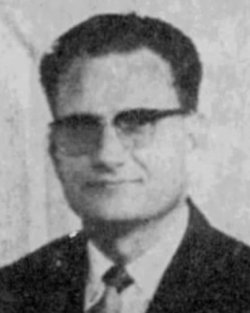
W.E. Best

The Preservation and Perseverence of the Saints

1 Peter 1:5
W.E. Best December, 1 1978 Audio
0 Comments
Best's Corner

Sermon Transcript

Auto-generated transcript • May contain errors

100%
Let us keep in mind that God's
preservation and the believer's perseverance
are inseparable. The believer's perseverance is based upon God's election,
verse 2, the Son's redemption, verse 2, and the regenerating work of
the Holy Spirit, verses 2 and 3. Therefore, perseverance is the
fruit of God's election, the Son's redemption, and the Holy
Spirit's positional sanctification. I want to call attention now
to the outline of the text. Peter said we are kept by the
power of God. That's point number one. The
word kept means to be protected, preserved, or garrisoned. In fact, it's a military term
in the Greek language. The preposition by should be
the preposition in, who are kept in the power of God. In the original
manuscript, it is not the preposition for by. It is epsilon nu, which
is in, and it should be thus translated. Therefore, we are
kept in the power of God. The second point, through faith. The preposition through is the
Greek preposition dia and through is a good translation. So we're
kept in the power of God and it's through faith. Through faith. The last phrase, now you'll notice
the next preposition is unto. It is the Greek preposition eis,
e-i-s, pronounced like i-c-e, eis, and in this instance it
ought to be for, for salvation ready to be revealed
in the last time. Let us now look at the verse
again. Who, this refers to those who
have been elected, redeemed, and set apart by the sanctifying
work of the Holy Spirit in regeneration. Of verses 2 and 3. Who are kept
in the power of God. It is through faith. Now we have the efficient cause
of our preservation. The efficient cause of our preservation
is the power of God. Now we have the instrumental
cause not of regeneration. Keep in mind, regeneration is
not being discussed. The giving of the principle of
life is not at issue here. So through faith, here we have
the instrumental cause of what? Salvation or deliverance. Not
the initial act of giving life, but the manifestation of that
life which is through faith. I've said before, I repeat again
briefly, God does not believe for us. He gives us the ability
to believe, the capacity to believe, the principle of faith in regeneration. So the person who has been regenerated
will manifest his union by what? The exercise of his faith. So
through faith. And it's for salvation or a deliverance
that is ready to be revealed in the last time. In the last
time. So three parts to verse 5. Let us now, before we start developing
these three points, Go back briefly and point out some great doctrinal
truths that give to us the foundation for these three blessed truths.
In verse 5. In verse 1, Peter, an apostle
of Jesus Christ to the strangers. The word strangers refers to
the Jewish believers who were not in the land. Since they were
not in the promised land, they were, what? Strangers. And Peter refers to them as such. Now verse 2. The first word in
your King James Version is elect. Elect according to the foreknowledge
of God. Let's stop for a moment. Elect
according to the foreknowledge of God the Father. On Thursday
of this last week, I was awakened by a radio at a little after
5. Vernon McGee was speaking, and
I was surprised to hear him speak from this very passage that we're
using this morning. He spent almost his entire time
discussing verse 1, which I'm not going to do, giving the history
of it, and that's fine. He came to verse 2 and he said,
now let me point out some things for you to be thinking about
between now and the next broadcast. He said, I want you to know verse
2 is literally filled with doctrine. And I want you to be prepared
for it. After having said that, he made this statement. He said,
the first word is elect. He said, now don't be afraid
of election. He said, Peter used the word, I wished he had not,
but he did. Oh! I said, that was enough for me.
Beloved, I do not wish that at all. I'm glad he stated it. Let
us not forget that he was speaking under inspiration of the Spirit
of God. By the very fact that he said, he used the word elect,
I wished he had not, but he did. That was enough to turn me off. And I really didn't care about
what he had to say after that because I felt like whatever
he said would not be very valuable. Elect according to the foreknowledge
of God. The general opinion held by religionists
today of the first part of verse 2 is that God elected individuals
whom He foresaw would believe. But I must remind you that the
Greek word translated foreknowledge in this text is only used two
places in the scriptures. This particular word, prognosis,
is used only two places. It is used here and in Acts 2,
verse 23. Let me say that foreknowledge
in this passage goes beyond the classical meaning of previous
knowledge. It points to a designation of
certain people from among mankind to a certain position that is
revealed in the context. I'd like to add to that statement.
I'm not preaching on this, but I'm giving you the background
for verse 5. Election on the basis of foreseen
faith as many believe, supposes God saw something to motivate
him to choose an individual to salvation. But beloved, I must
tell you, God didn't see anything in any one of us to motivate
him to choose us. So that argument is contrary
to Holy Scripture. It is contrary to the very principle
of grace, which is unmerited favor. You'll notice we have
not only the election of God the Father, now notice, secondly,
we have sanctification of the Spirit before we have reference
made to obedience and the sprinkling of the blood of Jesus Christ.
I can remember years ago when I read and studied this verse
that I was somewhat confused over the order given here, but
it's simple. And the reason I was confused
at that point in my study of the Scriptures was because I
did not at that time make the proper distinction between regeneration
and conversion. Now look at the order of how
simple it is. Elected by the Father. Now the second point
in the order here of verse 2 is the sanctifying work of the Holy
Spirit and this refers to the positional Sanctification of
the one whom God chose in Christ. So sanctification here is positional
sanctification, not practical sanctification, not progressive
sanctification. Thus you can see the importance
of the order. One is sanctified by the Holy
Spirit before there is any obedience or what? Embracing the person
and work of Jesus Christ, which is in the last part. The order
is just exactly as it should be to harmonize with God's plan
and God's order. Now notice something else in
verse 2. We have the divine triunity. We have God the Father, we have
God the Son, and we have God the Holy Spirit. Any person who
denies the biblical doctrine of the divine triunity is a heretic. Now observe the last part of
verse 2. He says, Grace unto you and peace
be multiplied. The word multiplied is an interesting
word. We could spend 15 minutes on
that word and yet not do justice to the teaching of this particular
word. This word translated multiplied
comes from the Greek word, it comes from the Greek verb plethuno. And what does it mean? It means
to increase, it means to abound, It means to multiply. That's
the meaning of the word. Now Peter is desirous for these
strangers scattered abroad, these Jewish believers who are being
severely persecuted according to the context of the five chapters
of this epistle. The word suffering is found many
times and you need to keep that in mind when you read and study
this epistle. So he wanted these believers
These babes in Christ, as it were, these young plants that
God had planted, He wanted them to be fed, and He wanted them
to be watered, and it was His responsibility to feed and to
water these young plants. He wanted them to grow. His desire
was that they would leave the bottle, the bottle if you please,
and become steadfast, stalwart, Christians as they face the persecution
which they must endure So he gives the foundation. He said
I won't grace and peace to be What multiplied I? Won't grace and peace to be enlarged
in your lives. I want these things to abound
in your experiences and now he says in verse 3 blessed and That
word simply means praise. Praise be the God and Father
of our Lord Jesus Christ, which according to His abundant mercy,
and here He talks about regeneration, He talks about being born again,
hath begotten us, hath begotten us again, or has regenerated
us, and it is to a living hope, a living hope, And this is by
the resurrection of Jesus Christ out from among the dead. Since the inheritance is preserved
in heaven for you and me, beloved, we must be preserved through
all of our pilgrimage in order that we may enjoy this inheritance
at the end. Keep that in mind. Peter was
giving comfort to these Jewish believers. He was saying, just
as your fathers, your forefathers, were protected, were preserved
for the inheritance that awaited them, the land of Canaan, you
and I now, as the recipients of the grace of God, we are preserved
for the inheritance. which is also preserved. It is
preserved for us, and we're preserved for it. And since the inheritance
is preserved for us, we must be preserved through all of our
pilgrimage, through all of our wanderings, in order that we
might enjoy this inheritance in the end. That's the truth
of this passage. And now coming to our text. And
there are three parts to it. First of all, who are kept in
the power of God? God's power is the efficient
cause of preservation. God works in the midst of unseen
realities, preserving the inheritance for you and me. He also works
in us, keeping us, protecting us, preserving us. for that inheritance
which is preserved for us. Here we have a two-fold preservation. How wonderful. A two-fold preservation. The inheritance for us and we
are kept or preserved for that inheritance. Let us now look
at the word kept. The word kept comes from the
Greek word which means being guarded. Being guarded. It is used in several places
in the New Testament. I do not have the time to give
you all those references. I have them in my notes, but
it isn't necessary to give them to you. But here it means what? To be garrisoned. It is a military
term. Now, the word is also used, I'm
talking about the original word, not only militarily speaking
in the Scriptures in the sense of guarding or garrisoning his
own, But it is also used metaphorically, in the sense, it means to preserve
one for the attainment of something that is preserved for him. That
is preserved for him. So this is the preservation,
beloved, from apostasy. From apostasy. You and I are
preserved from apostasy. We do not have to worry about
apostatizing. Let me give you a great passage
of Scripture on that point, in the 10th chapter of Hebrews,
and we'll deal with this passage more in a subsequent lesson.
But Paul, in writing to those Hebrew believers, said, we are
not of them that draw back unto perdition. We're not of them
that draw back unto perdition, but we are of them that believe
to the saving of the soul. Thank God for that. So we are
preserved from apostasy. In other words, we are preserved
unto the completion, the perfection of the work that was begun in
us in regeneration. It is continuing now by practical
sanctification, but will be perfected when we stand in the presence
of Jesus Christ, when we shall see Him as He is, 1 John 3, verses
2 and 3. Now, the Greek verb from which
we get the word keph is phoureo. Phoureo. And it means to preserve
one. for the attainment of something
that is preserved for him. Now, when we think about the
regenerated person in the light of the first part of this text,
the believer is surrounded or garrisoned by God's power because
we're kept in this power. Someone has said, we are surrounded
by this protection of God. There is, we are overarched and
we're undergirded. What more could we ask for? Overarched,
undergirded, and completely surrounded. And that's the meaning of count.
One cannot ask for more than that. He cannot ask for greater
assurance than that. And he has the assurance. The
assurance that he is thus kept in God's power. Let's amplify
that a little bit. God hides his people. Colossians
3, 3. We're hidden in God and in Christ. We're hidden in Christ who is
hidden in God. Colossians 3, 3. So we're hidden. Then let's think about this.
God secures this principle of life which he has given us from
being overcome by outward attacks. And beloved, I must hasten to
say God secures this principle of life from internal corruption. Thank God for that. Now think
about it. This principle of life which
God has given to us It is secured from being overcome by outward
attacks, and furthermore, it is secured from inward corruption. From inward corruption. Let's
go a little further. This principle of life which
has been given is a great restraining influence in the life of the
believer. It is a restraining influence as well as a sustaining
influence. sustaining influence. We're guarded,
we're kept, we're preserved through faith's trials as well as faith's
service. We're going to be tried and we'll
get into that tonight. So we're kept always, because
it says in the last part of our text, unto the end. So we're
kept unto the end. In other words, we're kept for
the resurrection morning. Furthermore, we're kept for public
exhibition. 2 Thessalonians 1, verses 1-10. And lastly, we are kept, what? For the purpose of enjoying the
kingdom forever. We're kept in the power of God.
Let us look now at the second point. Through faith. We're looking
now at the second preposition, through faith. Let us see first
of all what this does not mean before we look at what it does
mean. This does not mean that divine power is the efficient
cause and faith is the instrumental cause in regeneration. That is
not the subject of Peter's discussion. But what do we have here? We
have in the first, that is in the power of God, the efficient
cause, and we have through faith, which is the instrumental cause,
in salvation or deliverance. And I'm not talking about the
initial gift of the principle of life. I'm talking about overcoming. There are many salvation experiences. There are many deliverances.
And God has given to you and me faith whereby we overcome. 1 John 5, 4 and 5. We overcome. And we overcome how? Through
faith. Through faith. And even this
faith is the gift of God. It is not by natural faith that
one overcomes. It is by supernatural faith which
is the gift of God. So let's go a little further.
In the power of God we have preservation. Through faith we have perseverance.
So the second is the fruit of the first. Now the Arminian would
say that the first would have to be the fruit of the second.
You see, he reverses the order. He thinks that it is by one's
faith that he is regenerated. But that is not the subject.
Regeneration has already taken place. Verse 3. Praise God that
we have been born of God. We have been begotten of God.
We have been regenerated. So now he is saying in verse
5, we are preserved through faith, and this faith is the fruit of
God's preservation. We are kept in the power, garrisoned
in the power of God, and it's through faith that we overcome
throughout our Christian lives. And God has given us that faith
whereby we overcome. So it's still of God, you see.
Let's go a little further. Preservation must be recognized
as having its necessary place in salvation. And it has the
first and primary place in our deliverance. And secondly, when
it comes to perseverance, we must not overlook the fact that
perseverance, too, has its recognized place in this experience. And then I'd like to sum it up
with this simple statement. I got the idea from a Puritan,
and I tried to put it in my own words. Now listen carefully to
this. As the born-again person experiences continual protection
by God's power, he also experiences what? continual perseverance
through faith, which is the gift of God. Now let me repeat that.
As the born-again person experiences continual protection in the power
of God, he also experiences continual perseverance through faith while
he walks the path of faith. in this life. Now, you cannot
separate the two. That brings me to my proof text,
and I'll use only one, because I'll have time to give only this
one particular point. Turn with me, if you will, to
Hebrews chapter 11, and let us look at verse 27. Looking at
one text, and we're talking about enduring, and endurance here
is what? Perseverance. Perseverance. Verse 27, we're talking about
Moses, using him as an example. By faith, he, that is Moses,
forsook Egypt, not fearing the wrath of the king. Here it is,
for he endured. Now I'd like for you to underscore
the first two words, by faith, and then the two words, he endured.
By faith, he endured. Now you have a complete sentence.
By faith he endured. But I want to add something.
Look at the last phrase. By faith he endured as seeing
Him who is invisible. Now we're going to get into a
blessed, I say a blessed thought that I want to expand on with
you. First of all, endurance. We're talking about perseverance.
Through faith we persevere. I said through faith. So perseverance
guards against the idea of security. Listen to this now. All of you
who have had Baptist training in the past, get this. Perseverance
guards against the idea of security, irrespective of the extent to
which a person might fall into sin. You see, this is a protection
against it. What are you saying? It is true
that a believer sins, but the believer can never, by the grace
of the Spirit within him, abandon himself completely to a life
of sin. So that protects us against the
false doctrine of antinomianism. By faith he endured. Now this
is interesting, very interesting. The word enduring here, or endured,
comes from the Greek word kartaeo. It is spelled in the English
k-a-r-t-e-r-e-o, kartaeo. And what does it mean? It's only
used twice. Now, I beg your pardon, it's
used only once, and this is the only instance in which this particular
word is used in the scriptures. What does it mean? It means to
be steadfast, to be strong. I'm going to show you the difference
between the word that is used here and the word that is used
in many places in the New Testament. Like he that endureth to the
end, the same shall be saved. In Matthew 10, 22, where the
word endured is found, it is not the same Greek word. Here,
it is kartaeo. And it means what? It means to
be steadfast, to be strong. So Moses endured because he had
the strength by which to endure. And the strength by which he
endured was the power of God. You see how simple it is? He
endured. He endured. So he was steadfast. He was strong. Now then I'd like
to give you another word. And I'll give you a few references
where the other word is found that also speaks of perseverance,
but it's an entirely different Greek word. The next word is
Ḥupomeno, and it is spelled in the English H-U-P-O-M-E-N-O. This word is used in Matthew
10, 22. He that endureth to the end,
the same shall be saved. It is used in Matthew 24, 13.
Mark 13, 13. Now I have a whole list of references,
but I can't give them all to you. But let me give you about
three more that will suffice. Hebrews 10, 32. Hebrews 12, 2.
And 3 and 7. And finally, James 1 and verse 12. Now, this word is used in connection
with Jesus Christ who endured as seeing the joy that was set
before him. This word is also used in verse
7 in reference to the chastening of God's people. And the person
who endures God's chastening, that's a manifestation that he's
a child of God. Now, this word means, listen
to it, to remain, to undergo, to bear, to have fortitude, to
abide, to persevere. So you see, it's an entirely
different word from being strong. From being strong. Now, let's
notice this text again. By faith he endured. Moses endured
by faith because Moses saw the invisible one. He saw him who
is invisible. Now look at the phrase, seeing
the invisible God, or the last phrase of verse 27. God is said
to be invisible in respect of his essence. Proof of this is
Romans 1.20, Colossians 1.15, and 1 Timothy 1.17. There is a peculiar reason for
the Apostle's use of this expression here in this particular verse.
Now do you know what it is? Look at it. Moses endured as
seeing Him who is invisible. I said the word invisible refers
to what? The very essence of God. The
essence of God is invisible. No man has ever seen God. per
se. Invisibility is one of the negative
attributes of God. There are other negative attributes,
which I cannot mention and don't have time to go into this morning,
but I just mentioned that by way of reference. But here, the
Apostle's use of invisible here is used for a different reason
entirely. It requires faith to see Him,
who could not be seen by the natural eyes. I said it took
faith to see Him who could not be seen and who cannot be seen
by the physical eyes. So it was by faith that Moses
saw the invisible. And I'm going to show you this
morning what it means to be able to see the invisible. I'll give
you a biblical explanation of that. But let's go a little further.
We know that Moses was capable of enduring. Why? Because by
faith Moses saw the invisible. I'd like to illustrate that.
Beloved, loneliness is endurable by sight of God's sympathy. You and I who are the recipients
of the grace of God can endure loneliness by sight of what? God's sympathy. Opposition can be endured by
you and me as a result of having a glimpse by faith of the divine
presence. Temptation or trial can be endured
by you and me for the simple reason that by faith we have
a glimpse of the majesty of God. Hardships can be endured by us
who are the recipients of grace when we have a glimpse of the
invisible one and his love for us by faith. Yes, afflictions,
regardless of how severe they are, can be endured by us when
we have a glimpse by faith of the glory of God the Father and
His Son, Jesus Christ. Do you get the idea? By faith,
Moses endured as seeing Him who is invisible. Now notice, Moses
did not act as though he saw God. I said he didn't act as though
he saw God, because that would have been nothing more than a
mental fiction. He really did see God. He saw
God by faith, and faith is the means by which the person sees
the invisible God and rejoices in what he has seen. So I said
that invisibility is one of the negative attributes of God, just
as the unchangeableness of God is one of his negative attributes.
The unsearchableness of God is another negative attribute. The
irresistibility of God is still another negative attribute. But
now let me explain. What does it really mean to see
the invisible? I want to simplify it for you.
And those of you who have the grace of God will see this immediately
and rejoice in it. The Lord Jesus said to the disciples
in John 14 and verse 21, I will love him and will manifest myself to him." This passage throws light on
seeing the invisible. What does it mean? It simply
means that God manifests himself to faith. God reveals himself
to faith. And by faith you are able to
see the invisible. Let me show you that that is
taught within the context of the passage which we're studying.
Look at verse 8. I'll comment on this later. 1
Peter 1 verse 8. Whom having not seen ye love,
whom having not seen ye love, that is, having not seen him
with your physical eyes ye love, in whom though now ye see him
not with your physical eyes, yet believing, and it's by believing
that you see the invisible, and God has manifested himself to
the faith which he has given to the recipient of grace. All
in the world faith is, and seeing by faith is the manifestation
of the invisible God to faith. That's it. And that's it in simplicity,
if you can call it simplicity. Now let's go a little further.
We're coming now to the last point of verse 5. We're kept
in the power of God. We're garrisoned in the power
of God. And it's through faith, because it is by faith we endure
as seeing Him who is invisible. And all of this is for, here
comes the last preposition, for a salvation ready to be revealed
in the last time. The salvation here is eschatological. Please observe what I said. The
salvation is eschatological. It is something for which the
believer hopes and looks. Its consummation is future. It
is something fully prepared before by God. So there is an inheritance. There is a salvation. There is
a perfected salvation that is preserved for us. prepared beforehand
by God. Let me illustrate that. Go back
to Matthew chapter 25 and verse 34. The Lord Jesus said, To those
people on that day, then shall the king say unto them on his
right hand, Come ye, blessed of my Father, inherit the kingdom
prepared for you. Beloved, the kingdom is already
prepared. The kingdom prepared for you
from the foundation of the world. So there is a salvation. There
is a perfected salvation that is ready even now to be revealed. Waiting for us. This is eschatological. So we are garrisoned by the power
of God through our own faith. for a salvation that is eschatological,
it is future, it's perfection, which is even now ready to be
revealed. Now ready to be revealed. All
right, let's explain this a little bit. The salvation that you and
I now enjoy by faith, the deliverance that we now enjoy by faith is
nearer than when we first believed. We're enjoying it now. We have
the foretaste of it now. What do you think the Apostle
Paul meant when he wrote to the Roman saints in Romans 13, verse
11, and he said, our salvation is nearer now than we would first
believe? I can remember as a young preacher many years ago, a Church
of Christ elder got a hold of me on that text, and he said,
now you Baptists say, I was a Baptist at that time, he said, you Baptists
say that you have salvation now. You don't have it now. Paul said
that our salvation is near now that we first believed. And actually,
he shook me up a little bit. I didn't know how to deal with
that verse at that time. Now you can see the importance
of knowing the mind of God. Salvation has been experienced
in the past by you and me. It is being experienced by us
even now. And there's to be even a greater
experience of this salvation. I have experienced deliverance
from what? The guilt of sin? The condemnation of sin? I am
now experiencing deliverance from its power, that is, sin's
power. But oh, the time is coming when
I will experience deliverance from the very presence of sin.
That's eschatological. So what is Peter saying? We're
preserved in the power of God through faith for a salvation
that is even ready at this present time to be revealed. Somebody
might say, well, I thought salvation was revealed now. It is. It is
revealed now. There is a salvation that is
revealed to you and me now. But the salvation for which the
believer longs is a future aspect of this salvation. It is the
perfection of that salvation. It is the consummation of that
salvation. Look at verse 9, if you will,
please. Receiving the end of your faith, even the salvation
of your souls. There's another verse that has
thrown a lot of people, but it shouldn't, if you look at it
in the light of its context, Actually, it is carrying on the
same thought that is expressed in the last part of verse 5,
receiving the end of your faith. Now, the word end in verse 9
is an interesting word in the original. It is the word T-E-L-O-S
in the English, for the English spelling, pronounced talus. And
what does it mean? It's not referring primarily
to the conclusion. But to the goal are the consummation
of faith. So receiving the goal, the consummation
of your faith, which is what? The full, complete, and perfected
deliverance of your souls. I could give another translation
of that. Deliverance of your souls, or salvation of your persons. The complete salvation of your
persons. So the salvation that you and
I enjoy at the present time, it is revealed to us. We experience
it. It's a continual experience.
But there is to be a final experience of this salvation, which is greater
than what we are now experiencing. And, beloved, that'll be when
I see Jesus Christ as He is. And this whole body of mine will
be fashioned like in the glorious body of Jesus Christ, and all
the problems that I'm having now with which I have to contend,
I'll no longer have to contend with them. Why? Because my soul
will be completely and perfectly delivered from all contact and
defilement with which it has to contend in the realm of sin. So what do we have? Salvation
in the sense of its consummation. has not yet been revealed. It is not the time for the perfection
or the completion of salvation. Why? Because there are others
to be saved. Look at 2 Peter 3.9. There are
other persons that are to be brought into the ark of safety.
Thus the same writer said, The Lord is not slack concerning
His promises, so men count slackness, but is longsuffering to usward,
longsuffering to usward, not willing that any should perish,
but that all should come to repentance. That is, all for whom Christ
died will come to repentance. So it's not time yet. It's ready
to be revealed, but not time yet. But there is to be a time.
So look now. at the statement in the last
part of verse 5, ready to be revealed in the last time. There
is to be a last time for everything. I said there is to be a last
time for everything. The last time is going to be
a tremendous blessing, the like of which you and I have not yet
experienced, when salvation will be consummated or perfected.
What a time. There's to be a last time for
everything. But what about the unsaved? Isn't that an awesome
thought? There's to be a last time for
the unsaved too. The true faith that we endure all
things, that's perseverance. And it's for a salvation that
is ready to be revealed in the last time. There is an inheritance
that is reserved for us as God's people. Thank God we are preserved
for that inheritance. And we're going to be preserved
through all of our pilgrimage, and we're going to come and enjoy
this perfected salvation. in the end.
W.E. Best
About W.E. Best
Wilbern Elias Best (1919-2007) was a preacher and writer of Gospel material. He wrote 25 books and pamphlets comprised of sermons he preached to his congregation. These books were distributed in English and Spanish around the world from 1970 to 2018 at no cost via the W.E. Best Book Missionary Trust.

Comments

0 / 2000 characters
Comments are moderated before appearing.

Be the first to comment!

Joshua

Joshua

Shall we play a game? Ask me about articles, sermons, or theology from our library. I can also help you navigate the site.