Bootstrap
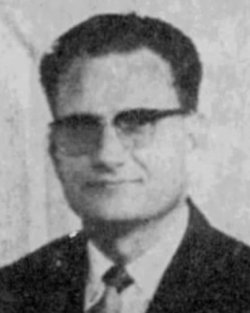
W.E. Best

#2 Telescopic View of the Foreword of Romans

Romans 1:1
W.E. Best July, 1 1973 Audio
0 Comments
Remastered October/November 2024

Sermon Transcript

Auto-generated transcript • May contain errors

100%
Open your Bibles once again to
Romans chapter 1. I hope that you have started
memorizing Paul's foreword, the first 17 verses of this chapter. Last Sunday morning we sought
to give to you a panoramic view of the entire book of Romans. If the outline which we gave,
along with some of the subdivisions, if this was not enough to encourage
you to want to make a diligent study of Romans, then I don't
have anything to offer you that would induce you to want to make
such a study. I said at the beginning of our
studies of this epistle, that there is not any book in all
the New Testament that would better qualify us for the Lord's
work than a study of Romans. There is not a book in all the
New Testament that will come as near bringing
about a revival in the hearts of God's people than the Book
of Romans. You're going to find that unless
you seek to apply the things that you learn, that you'll want
to make excuses, and you might even end up in finding fault
with a lot of things. I hope that this will not be
true in the life of any one of you, but that each one of you
will seek to make a personal application of everything that
you learn from the book of Romans. This morning, as we look at the
foreword to Romans, I would like for us to look at these seventeen
verses through a telescope, as it were. I would like to present
a telescopic vision of the first seventeen verses. After we have done this, then
we will go back, beginning next Lord's Day morning, the Lord and make a microscopic study
of some of the most important statements and words found in
the four words. As we give a telescopic view
of the four words this morning, I'm going to divide it into Let us once again read Paul's
foreword to Romans. If you've memorized verses, just
kind of follow along and quote them. Paul, a servant of Jesus Christ. Paul, an apostle, separated unto
the gospel of God. which he had promised afore by
his prophet in the Holy Scripture, concerning his son Jesus Christ
our Lord, which was made of the seed of David according to the
flesh, and declared the Son of God with power, according to
the spirit of holiness, by the resurrection from the dead. By
whom we have received grace and apostleship for obedience to
the faith among all nations for his name. Among whom are ye also
the call of Jesus Christ. To all that be in Rome, beloved
of God, all saints, grace to you and peace from God our Father
and the Lord Jesus Christ. I thank my God through Jesus
Christ for you all, that your faith is spoken of throughout
the whole world. For God is my witness, whom I
serve with my spirit in the gospel of his Son, that without ceasing
I make mention of you always in my prayer, making request,
if by any means now at length I might have a prosperous journey
for the will of God to come unto you. For I long to see you, that
I may impart unto you some spiritual gift to the end you may be established. That is, that I may be comforted
together with you by the mutual faith, both of you and me. Now,
I would not have you ignorant, brethren, that oftentimes I purposed
to come unto you, but was let hitherto or hindered, that I
might have some fruit among you also, even as among other Gentiles. I am better both to the Greeks
and to the barbarians, both to the wise and to the unwise. So, as much as in me is, I am
ready to preach the gospel to you that are at home also." I
am not ashamed of the gospel of Christ, for it is the power
of God unto salvation to every one that believeth, to the Jew
first and also to the Greek. For therein is the righteousness
of God revealed from faith to faith, as it is written, The
just shall live by faith.' By the time we will have completed
our study of this foreword, you should know the first seventeen
verses by memory. Last Sunday morning, after giving
to you the brief outline of the entire book of Romans, in which
there are three major divisions, after Paul's foreword and between
his foreword and his final word, We have, first of all, the righteousness
of God communicated. Secondly, the righteousness of
God vindicated. And lastly, the righteousness
of God demonstrated. Each one of those major divisions
has a great number of subdivisions. This morning, as we look at the
foreword I want to give to you, by way of introduction, some
of the outstanding outlines that are found within these verses. For instance, I've already prepared
several messages and am looking forward to preaching each one. In verse 1, there are three major
truths to be expounded. We'll take one message beginning
next Lord's Day morning, expounding the first verse. First of all,
Paul a servant. The word servant is better translated
bond slave. Secondly, Paul was a call apostle. And lastly, he was a person separated
unto the gospel of God. So we have Paul a servant, Paul
a called apostle, and lastly, a separated person unto the gospel
of God. So a bond slave, a called apostle,
and a separated person. When you look at the last statement
of verse 1, references made to the gospel of God. Within the
foreword there are seven significant things said about the gospel. First of all, the gospel is of
God, verse 1. Number two, the gospel was promised
in the Old Testament, verse 2. 3. The gospel concerns the person
and worth of Jesus Christ, verses 4 and 5. 4. The gospel must be preached,
verses 14 and 15. 5. The gospel is the power of
God unto salvation, verse 16. Also in verse 16, the gospel
is to the Jew first, and then to the Gentile. And finally,
in verse 17, the gospel is the revelation of God's righteousness. After leaving the subject of
the gospel, considering the seven things that are stated about
the gospel in Paul's foreword, we then begin with verses 2,
3, and 4. We have the inspiration of the
scriptures given us in verse 2. We have the two natures of Jesus
Christ presented in verses 3 and 4. Born of the seed of David,
declared the Son of God. In these two statements we have,
first of all, the incarnation, and secondly, his eternal sonship,
or his divine nature. As you think about this subject
once again, because there are so many ways in which this subject
can be approached, we have the gospel prophesied in the Old
Testament. Secondly, we have the gospel
personified in the Lord Jesus Christ. And thirdly, we have
the gospel personalized in the elect of God, with special reference
being made to the Roman Christian. So this would be a subject, the
gospel prophesied, personified, and personalized. This would be an outline on the
first seven verses. Beginning with the 8th verse
through the 13th, We have three other great truths which we will
seek to expound. First of all, faith in verse
8. Now, there is something significant
about faith in verse 8. I can't hardly wait until I share
some things with you concerning your faith. I would like to say
this for you to be thinking about. You'll notice Paul said first,
I thank my God through Jesus Christ for you all that you are
faithful. In the reading of the King James
Version, the pronoun precedes the word faith, but that is not
true in the original language. Therefore, one will miss a great
blessing by not being able to find out as a result of just
investigating the original language, how that the word faith precedes
all of you, or of you. In other words, in the original
it reads like this, the faith of you. So the emphasis is not
on the individual Christians at Rome, but on their faith. Now, I just have to drop this
before I go any further, because of the importance of this subject.
Brother Pennington made reference to this, I think, last Wednesday
night, or Wednesday night is a week ago, along this same line. How many of us have heard preachers,
when they introduce someone, or evangelists, when they introduce
some celebrity? Talk about how great this individual
is! Oh, how great and wonderful he
is! Paul never did that, beloved,
in that sense. Paul was not extolling an individual,
but the faith of that individual, and therefore faith in the original
precedes of you. In your King James Version, he
says, First I thank my God through Jesus Christ for you all that
your faith. Now, you see, if one is not careful,
he will emphasize the pronoun your over the word faith. You and I know that faith is
the gift of God. And it is faith which is the
gift of God that is to be magnified, and not individuals who are the
recipients of that faith. So that does away with bragging
on individuals. We're to brag on what the Lord
has done for individuals. So we have faith. We go from
faith to fellowship in these verses, and from fellowship to
fruit. So there are three great things
to be discussed, faith, fellowship, and fruit. we have three I am's of Paul,
the three I am's of Paul. I am better, I am ready, and
I am not ashamed. Then, of course, when we get
into the last part of the 16th verse and the 17th, we will spend
one entire message discussing the subject entitled, The Righteousness
of God, which is the theme of the entire epistle to the Roman
saints. Now I want to give two or three
other things by way of introduction to our outline on the four words
this morning. In this four word, Paul's qualifications
are emphasized. We can soon see why Paul was
used as he was by the Lord. It was the Lord who had qualified
It was the Lord who gave him the desire which he manifested. For all the saints of God, he
had the care of all the churches. I'd like you to go with me, first
of all, to John 3. This is a good introduction to
our study this morning, especially concerning one of
the major qualifications of the Apostle Paul. I had a question
asked me last Wednesday night. This question can be answered,
and at the same time use it as an introduction, and it has a
beautiful lesson for you and me. You remember how John the
Baptist, the forerunner of our Lord, was asked if he were the
Christ, and of course he said, He was asked if he were one of
the prophets of Christ, and he said, I am such as Elijah, and
he said, I am not. He was just simply a boy crying
in the wilderness, preparing the way of the Lord. Beginning
with the 27th verse of John chapter 3, John answered and said, A
man can receive nothing except it be given him from heaven. what a great text of Scripture
that is. Ye yourselves bear me witness
that I said I am not the Christ, but that I am sent before him. Now, verse 29 is a text that
is misunderstood by a lot of persons. It is used by many individuals
to emphasize something that just ought not to be stressed. Let
us now see the meaning of verse 29 in the light of its context.
It is John the Baptist who is speaking. He that hath the bride
is the bridegroom. But the friend of the bridegroom,
which spendeth and heareth him, rejoiceth greatly because of
the bridegroom's voice. This my joy therefore is fulfilled. He must increase, but I must
decrease. He that cometh from above is
above all. He that is of the earth is earthly,
and speaketh of the earth. He that cometh from heaven is
above all. Verses 29 and 30 are the two
texts that we will now investigate. John said, He that hath a bride
is the bridegroom. There is one thing we know for
sure. Bride, in this text of Scripture,
refers to a company of regenerated Israelite. Don't forget that,
please. The remnant of Israel. The statement, he that hath a
bride is the bridegroom, must be imperfected. Look at the word,
hath. Mark it. Don't forget it. Two things must be discussed
in reference to the phrase, he that hath a bride is the bridegroom. Number one, we must consider
first of all the possession. The possession is viewed from
the standpoint of the eternal covenant of God. Hebrews 13, 20 and 21. Another text of scripture, I
am sure, will come to your mind. John 6, verse 37, All that the
Father giveth to me shall come to me, and him that cometh to
me I will in no wise cast out. In the 16th verse of the 10th
chapter of John, the Lord Jesus said, Other sheep I have, notice
the 10th, I have which are not of this fold, that is, of Judaism. He has reference to the Gentiles
whom he had elected, or whom the Father had elected and given
to him in the covenant of redemption. So the statement, he that hath
a bride is the bridegroom, must first be considered from the
standpoint of God's eternal covenant, or God's decree of divine election. The one having the bride refers
not only to the eternal covenant, but to actual possession by regeneration. Many persons do not know that
the word election is used two ways in the Scripture. It is
used first of all in Ephesians 1, verse 4, in reference to God's
eternal decree. Secondly, it is used in 1 Peter
1, verse 2, elect according to the foreknowledge of God, the
Father. There, Peter is not talking about the eternal decree of the
Father, but he's talking about the actual choosing out, picking
out from among mankind of people for his name. So election is
used in two ways. First of all, as the eternal
decree, and secondly, as the actual picking out from among
mankind. And I gave you the two references.
Ephesians 1.4, the eternal decree of the Father and 1 Peter 1.2,
the actual picking out from among mankind. Now, you can see the
truth of this in the light of the context of 1 Peter. You will
make a mistake, you will not handle the Scriptures correctly,
if you interpret the word elect in 1 Peter 1.2 as referring to
the eternal decree of God the Father. Peter's not talking about
that, but the actual picking out. Now, he that hath a bride
is the bridegroom. So you have to look at the word,
hath, and consider the possession of Jesus Christ, first of all,
in reference to the eternal covenant, and secondly, as the actual possession
of those who have been regenerated. You see, election is not salvation,
election is unto salvation. Now, let's go a little further.
Let's look at the next statement. But the friend of the bridegroom. Who was the friend of the bridegroom?
The friend of the bridegroom in this case was none other than
John the Baptist. He was the friend of the bridegroom. In other words, John was Christ's
groomsman. Did you know in the study of
Jewish writings, we're told that in Judea there were two groomsmen. There was one for the bridegroom
and there was another for the bride. Follow me now. I want
to give to you one of the most beautiful pictures this morning
of John the Baptist and the Apostle Paul, as we will go to the qualifications
of Paul in just a few minutes. in his foreword to the Roman
Christians. So there were two groomsmen,
one for the bridegroom and one for the bride. We're told in
Jewish writings that these two groomsmen acted as intermediaries
between the couple. It was the duty of the friend
of the bridegroom to present him to the bride. And it was
the responsibility of the second groomsman, the one responsible
for the bride, to present her to the bridegroom. Now, beloved,
if you're acquainted with the Scriptures, your mind is already
running out and you've already latched hold of a tremendous
text of Scripture. I read this just recently, and
as I read the statement in the writings of the Israelites, the
Jewish people, they talk about two groomsmen, one for the bridegroom,
one for the bride. The one for the bridegroom was
to present the bridegroom to the bride, and the one for the
bride was to present the bride to the bridegroom. A verse of
Scripture came immediately to my mind. I wonder if it has to
yours. All right, let's develop this. Let's take John the Baptist. He was a friend of the bridegroom. In other words, he was Christ's
groom this morning. It was his responsibility to
present Christ. He was a forerunner of Christ. Let's observe three things now
about Christ's groomsman. We're told in the last part of
verse 29 that he standeth, that's number one. Secondly, he heareth. And number three, he rejoiceth
greatly of the bridegroom's voice. This, my joy therefore, is fulfilled. So three things are stated about
John that must be considered. Number one, he's standard. He's standard. Go with me, if
you will, please, to John 10. You don't have to turn to John
10, but go with me in your thinking to John 10. There are three doors
in John 10. The first door is the entrance
into Judaism. The second door is the exit out
of Judaism. And the third door is Jesus Christ
himself, verse 9. Now, the Lord Jesus presented
himself in a lawful manner to Israel. John the Baptist was,
as it were, the porter who stood upon it. You see here, the friend
of the bridegroom So John the Baptist stood and he introduced
the Lord Jesus as he presented himself in a lawful manner to
the Israelites. In other words, he went in to
Judaism in a lawful manner. We are told in John 10 that any
person who sought to climb over into the sheepfold any other
way than going by means of the door, he would be a thief, he
would be a robber. John the Baptist, however, stood
there recognizing the groomsman and opened the door for him.
He was the one who presented Jesus Christ to the elect within
Judaism. All right? Second, not only does
he stand waiting, as it were, because, you see, the statement,
he's standing, speaks of what? expectation and waiting. So for some time, John the Baptist
had waited. For some time, he had expected
the Lord Jesus. And he said, Behold the Lamb
of God that taketh away the sin of the world. All right? Now what? We go from standard
to hearing. He recognized the voice of Jesus
Christ. He knew his voice, and so he was presented to the
elect within Judaism. And then finally, he rejoiceth
greatly at the voice of the bridegroom. Do you know why he rejoiced so
much? He rejoiced because the voice
he heard speak. He knew that voice was the voice
of command. And here shall live John 5 and
verse 25. The same voice that spoke in
Ezekiel 16 and verse 6. God spoke and those whom God
had elected came to life. So it was a voice of command,
the voice that possessed life. So there was rejoicing on the
part of John the Baptist who came before the Lord Jesus to
present, as it were, the Lord Jesus Christ to the elect within
the sheepfold, that is, Judaism. Now there is another function
to be performed. And Paul illustrates this great
principle. There was a groomsman for the
bride. Will you turn with me to 2 Corinthians chapter 11 and
let us consider that passage of Scripture in reference to
the Apostle Paul? And you can see why I wanted
to develop this in connection with our study of the qualifications
of Paul in his four words. to the Roman epistle. I do not
stand in the same relationship that John the Baptist stood to
Jesus Christ. I do not stand in the same relationship
that the Apostle Paul stood in relation to the church at Corinth.
I mean in its strictest sense. But, beloved, there is a lesson
in this for every man of God today. You see, there is a sense
in which every minister not only presents Christ to people, but
those who are saved, they are to be presented to Christ. That's
the responsibility. Now, when that is understood,
that thought makes a tremendous difference with that person's
attitude concerning his work, his service for Christ. Now, let's begin our study. of
the four worlds. There are seven themes in these
17 verses. First of all, the Gentile name
Paul was assumed shortly after the beginning of his mission
to the Gentiles, according to Acts 13, verse 9. This was his
identification. Let me give you the words that
we will be discussing in these seven points that I want to emphasize
this morning and pause forward. They are, first of all, identification,
number two, proclamation, number three, salutation, number four,
intercession, number five, obligation, number six, preparation, and
number seven, Now let's take them one at a time. And all of
these words stand out in Paul's foreword as we get, I hope, a
telescopic view of the first 17 verses of Romans 1. I said that the Gentile named
Paul, this was his Gentile name, Paulus, the Greek His Hebrew
name, of course, was Saul. And for the fact that he used
the Gentile name in writing to Gentiles, this, of course, gives
to us his identification. Paul was a Jew, but a native
of Tarsus, no mean city, we're told, in the Acts of the Apostles. It was a Greek city. According
to Acts 21-39 and Acts 22 verses 3 and 25, Paul's education was
at the feet of Gamaliel, according to the 22nd chapter of the Acts
of the Apostles. Let's consider his former training
for just a few minutes. The Jews had three different
areas of teaching. I said three different areas,
three different forms of teaching. Damaniel was the highest form
of Hebrew teaching. I'm not going into that in detail
now. I think I've already given this in our study of Acts. I
don't remember if I did or not. But Damaniel was the highest
form of Hebrew teaching. He was at the top rung of the
ladder when it came to his responsibility as a teacher of the Jews. Paul sat at his feet. He learned
the law at the feet of Gamaliel. And there is no better training
than for one to get it at the feet of one such as Gamaliel. His recognized capacity among
all the Jews as being the teacher of all people. Here's where Paul got his claim.
The name Paul means little. Some say it refers to his physical
stature. Others say it refers to the humility
of Paul. We're not told exactly what the
word little really refers to. I do know that he was a humble
man, and yet he was a very stern individual. You know, I get amused at people
today. I'm sure there are some, when they read portions of Paul's
writings, they would say, oh, he was too stern. And then when
they read other portions, they say, he was a lovable individual. He was both lovable and stern. You notice people today, when
they want to create a problem within a church, they will oversimplify
certain things. I've never seen it faced. There
can be an oversimplification of love, as well as there can
be an oversimplification of sternness. Paul was both a stern individual
and he was a lovable individual. And it takes both of these characteristics
for the man of God to be the kind of a shepherd that he should
be. He must be stern under certain
circumstances, and yet have a compassionate heart when it comes to other
areas of his work. Paul the little, he considered
himself the chief of sons. When I was reading about Paul
the Little, I couldn't help but think about a statement by way
of comparison, James the Less. You see what I mean? James the
Less, this is given us in Mark's gospel, Paul the Little. But here we have the identification
of Paul. And he used the name Paul, a
Gentile name, because this indicates the loosening of Jewish exclusiveness. I said this indicates the loosening of the
bonds of Jewish exclusiveness. Paul not only preached to Jews,
but he preached to Gentiles as well, as we will see in a few
moments in his foreword. We have in verses 2, 3, and 4,
the Son of God, the Lord Jesus Christ, was Paul's proclamation,
his proclamation. Christ's names denote his eternal
relationship within the Godhead. All three names of our blessed
Lord are given us in these verses. 3 and 4, concerning his son Jesus
Christ our Lord. In other words, he is called
the Son of God. He is the eternal Son, and this
gives to us his position within the Godhead. And then his threefold
name, Jesus, this refers to his incarnation, Christ, he was anointed
with the Holy Spirit without measure. His lordship was embraced by the apostle Paul. So Paul, an apostle of Jesus
Christ. Now when we go back and think
a little bit about Saul of Tarsus, let's consider for just a few
minutes Saul's pre-salvation condition. His pre-salvation
condition was both intellectual and religious. He would be classified
as an intellectual if he were living today, having received
his formal training at the feet of Gamaliel. He was also a religious
individual because he persecuted all who were not in favor of
his religious views. According to Galatians 1 and
verse 14, he made habit of the church of God. So his pre-salvation
condition was intellectual and religious. Let's go from his
pre-salvation condition to his conviction. In his conviction, I'm talking
about Saul's conviction, we have included both vision and voice. He had a vision and he heard
a voice. Now don't expect Paul's conviction
to be a pattern for conviction of every individual today because
it isn't true. You haven't seen a vision, even
though you claim you have, and you haven't heard the voice in
the sense that Paul both saw a vision and heard a voice. So when we carry this a little
further in his conviction, having first of all seen a vision, having
seen Christ in a vision and having heard his voice, we have illumination
and information. There can be no divine conviction
apart from illumination, and there can be no divine conviction
apart from information. Therefore, if you are to be divinely
convicted Something must precede your conviction, and that is
a work of grace in your heart. Then when the gospel is expounded,
there will be illumination for the spirit, and the information
that is given in the message will bring conviction to your
heart. Finally, Saul's conversion experience. And of course, this is always
the fruit of regeneration. first of all, his embracing the
Lordship of Christ. I have no confidence today whatsoever
in the average decision that a religionist makes. When Saul of Tarsus was illuminated
by the Spirit of God, and when the information was given to
him, he embraced the Lordship of Jesus Christ. Not only did
he embrace Christ's lordship, but there was a surrendering
on his part to become a bond slave of Jesus Christ forever. And that is the meaning of Paul,
a servant or a bond slave of Jesus Christ. Did you know that
in the meaning of the word bond slave, We have the will of the
individual exercised, and the will of the individual is exercised
because he has been made willing by the grace of the sovereign
God. So Paul identifies himself to
the Romans. He has a message for the Romans,
so his proclamation is the gospel of the Lord Jesus. He magnifies
the person and work of Jesus Christ. Look at verses 3 and
4 just briefly, as I share just a few highlights from these two
verses. Concerning his son Jesus Christ
our Lord, which was made in the seat of David according to the
flesh, and declared the Son of God with power according to the
spirit of holiness for the resurrection from the dead. Here was God dwelling
in flesh. Do you remember in our study
of Daniel chapter 2 how that the philosophers of Chaldeans
did not believe that it was possible for Elohim, for God, to dwell
in flesh? Do you remember that? Here we
see God willing in flesh the very thing that the Chaldean
philosophers denied that could take place. You know, it was something great
for God to give to you and to me and all recipients of grace
the sealing of the Holy Spirit. But I'll tell you something greater
than that, how that God could dwell vitally in flesh. In him dwelleth all the fullness
of the Godhead vitally, and we are complete in him, Colossians
2 verse 9. We have the union of the two
natures, the human nature and the divine nature, in one person,
Jesus Christ. The union of the two natures
in one person is unique. There has never been another
union like this one. There shall never be another
union like this one. I said it's unique. It is unlike
all other unions. Let's consider it for a moment.
First of all, body and soul are united in man. Even though body
and soul are united in man, body and soul have one nature. Let's go a little further. Distinct
personalities are preserved in the union of Christ and believers. I'm united with Jesus Christ,
but I'm still a human being. So there is, you see, the characteristics
of me, they're maintained. And the characteristics of the
Son of God are maintained. So, we have the distinct personalities
are preserved in the union of Jesus Christ with his own people.
I do not become a little Christ. That's heresy. That's heresy. I said that's heresy. So, distinct
personalities are preserved Even though Jesus Christ is united
to us, and we're united to Him. Let's go a little further. In the union of the persons of
the Godhead, we see distinct persons, but one nature. God the Father, God the Son,
and God the Holy Spirit. Three distinct persons within
the Godhead, but one nature. One nature. So the union of the two natures,
divine and human, in the one person, Jesus Christ, made our
union with Christ possible. You and I could not enjoy our
union with Christ today if Jesus Christ had not come. If we could not read these two
verses concerning the Son Jesus Christ our Lord, which was made
of the seed of David according to the plan, and declared, notice
he was not made but declared the Son of God with power, according
to the spirit of holiness with the resurrection from the dead. Let's consider something in the
union of the divine and human natures. God became man, the
God-man, making it possible for you and me to become united to
Him through the redemptive work that He accomplished on the cross.
Secondly, in the union of grace, that follows now. First of all,
I said in the union of the two natures in one person, the divine
nature and the human nature in Jesus Christ, that makes it possible
for us to be united to Him. Secondly, in the union of grace
we are made one with Jesus Christ. Finally, in the union of glory
we shall be eternally with Christ the King in the kingdom. This was Paul's proclamation. What a proclamation! Number three, the saints of Rome
were the addressees of Paul's message. This was Paul's salutation
proper. I should say, salutation proper. He said, "'To all that be in
Rome, beloved God called saints, grace to you and peace from God
our Father and the Lord Jesus Christ.'" That's verse 7. So
this gives to us Paul's salutation proper. the addressees of his
message. Paul's policy was not to build
on another man's foundation. The beloved of God is an expression
that applies only to believers. So Paul was writing to the Roman
Christians. The believers in Rome were saved
by the effectual call of God. I must tell you this, Several
years ago, Dr. Harry Ironside was going from
Chicago to the West Coast on a speaking engagement. That was
when riding cranes was an ordinary thing. There were two nuns, Catholic
nuns, in the same coach with him. In fact, they were sitting
directly in front of him. And they got to talking. And
of course the subject of religion came up. Dr. Ironside introduced
himself, of course he knew who they were. There's not any doubt
in his mind as to who they were. And so finally he got around
to the subject of saints. He said, have you ever seen a
saint? He asked if he's known a saint. Their reply was, no,
we've never seen a saint. Why haven't you seen the Saints?
And so the reply was, well, after they've been dead for some length
of time, and if their works have been such, they will be canonized.
We made a Saint. A Saint. And so Dr. Ironside
said, you mean you've never seen a Saint? No. He said, I want
an easy one. You're looking at Saint Harry. We're a Saint's mess. So you
notice what Paul says? To all that be in Rome, beloved
of God, call Saints. They were already saints. They
didn't have to die and then after many years somebody canonized
them and made them saints. They were already saints. They
were saints by the effectual call of God. And after all, the word saint
simply comes from the word which means holy, called holy. They had been made holy in the
holiness of Jesus Christ. This was his salvation. Then
notice his affection for the saints in Rome. His affection
led to his intercession. I said, to his intercession.
He says, I pray for you, beginning with verse 8, First I thank my
God through Jesus Christ for you all. that your faith is spoken
of throughout the whole world, for God is my witness, whom I
serve with my spirit in the gospel of his Son, that without ceasing
I make mention of you always in my prayer." Interceding for
the saints at Rome. First of all, Paul was thankful
to his God. Plutarch said, I thank my God. My God is the sovereign God. My God is the electing God. My
God is the redeeming God. I thank my God through Jesus
Christ. Now notice, through Jesus Christ. Look at the perfect outline here.
Here's the message when it's there. Number one, he says, I
thank my God. And then he says, through Jesus
Christ. Here is the ground for his thanksgiving. You can't thank God if you do
not know Jesus Christ. His thanks were through Jesus
Christ, your Savior. So I thank God through Jesus
Christ. And then the subjects of his
intercession were for you all. Let's elaborate on this a little
bit. Paul's intercession was not spasmodic and occasional. It was without sincerity. There
is the qualification of a man whom God has called. Paul's intercession
was hopeful. He had a desire that those of
the Roman Christians that he might impart unto them some spiritual
gift, to the end they might be established. Beloved, what do
you think we come together on the Lord's Day for? What do you
think we come together here in the week for? It is in order
that we might impart unto you some spiritual gift to the end
ye might be established. Did you know when the preacher
stands before you, he's not receiving, he's giving. Now in order to be replenished,
we must spend time alone with the Lord. That reminds me of a statement
that Martin Luther made during his lifetime. He said, and I quote, supplication
makes the minister suitable to preach the word. Supplication
makes the minister suitable to preach the word. Meditation gives
the minister food to minister when he stands before the people
and tribulation keeps him humble. All three are needed. I said
all three are needed. Our blessed Lord went aside often
to pray and he has left us a great example by doing this. There are a number of verses,
but this one stands out to me. When he had sent them away, he departed in the mountains to
pray. We can see in the light of the
example which our blessed Lord has left for us that much of
man's true life must be lived alone. And I'm emphasizing two
words, the word true and the word alone. I said much of man's
true life must be lived alone. He is under no eye but the eye
of God, with no companionship but the companionship of Jesus
Christ, and without guidance or help or a teacher save from
the Holy Spirit himself. Someone said, and I quote, existence
and life are not the same. Isn't it awful when a person
is just existing and that's all he's doing? So existence and
life are not the same. The same person went on to say
thinning life and thinning up life are not the same. I want to add one to that. And
I think I closed a message a couple of weeks ago with something along
those lines. Longevity and redeeming the time
are not the same. It is not how long one lives,
but how well he lives as he lives. Charles Haddon Spurgeon died
at the age of 57. David Brynard, I've forgotten
now, around 30 years of age, a little less than 30. Many of God's noble men did not
live to be old men. But who can doubt that David
Reynon lived a life that was full. He redeemed the times.
He made the most of every opportunity. The same was true with Spurgeon.
He began preaching at the age of 19 as part chief adviser.
Later became the Metropolitan Tabernacle. Therefore, you, as
a recipient of this break, choose to do what God has chosen you
to do.
W.E. Best
About W.E. Best
Wilbern Elias Best (1919-2007) was a preacher and writer of Gospel material. He wrote 25 books and pamphlets comprised of sermons he preached to his congregation. These books were distributed in English and Spanish around the world from 1970 to 2018 at no cost via the W.E. Best Book Missionary Trust.

Comments

0 / 2000 characters
Comments are moderated before appearing.

Be the first to comment!

Joshua

Joshua

Shall we play a game? Ask me about articles, sermons, or theology from our library. I can also help you navigate the site.