Bootstrap
W.E. Best

#7 Faith, Fellowship & Fruits with Primary Emphasis on Faith

Romans 1:8-13
W.E. Best July, 1 1973 Audio
0 Comments
Remastered October/November 2024
Sound is metalic, but for the most part intelligible. Tape was very degraded.

Sermon Transcript

Auto-generated transcript • May contain errors

100%
verses 8 through 13, and after
reading these verses, if you have memorized them, you may
want to quote them along and see if you've really memorized
them. This is the second division of Paul's foreword to the Roman
Saints. After we have read this portion
of scripture, we want to give just a brief running interpretation
to introduce these verses, after which We will then begin to investigate
the subject of faith. Let us begin with verse 8. First,
I thank my God through Jesus Christ for you all, that your
faith is spoken of throughout the whole world. For God is my
witness, whom I serve with my spirit in the gospel of his Son.
that without ceasing I make mention of you always in my prayer, making
request, if by any means now at least, I might have a prosperous
journey by the will of God to come unto you. For I long to
see you, that I may impart unto you some spiritual gift to the
end, that ye may be established." That is, that I may be comforted
together with you by the mutual faith, both of you and me. Now,
I would not have you ignorant, brethren, that oftentimes I purposed
to come unto you, but was let hitherto or hindered, that I
might have some fruit among you or in you also, even as among
other Gentiles. There are three outstanding points
in this section of Scripture, and they are faith, fellowship,
and proof. In other words, we will interpret
this portion of Scripture by using these three statements,
faith, fellowship, and proof. You will notice in verse 8, Paul
makes reference to his God. I thank my God." And this, of
course, through Jesus Christ, since the Lord Jesus is the mediator
between God and man. And it is through Christ and
by Christ that we have access to the Father. He also makes
reference in verse 9 to his Spirit, my God, and secondly, my Spirit. Finally, in the 9th he refers
to his prayer. When we look at these two verses
and consider what Paul has to say concerning his God, his spirit,
and he's not talking about the Holy Spirit, but his renewed
spirit, and then finally his prayer. Paul's God was the sovereign
God of the universe. His spirit was his renewed spirit,
and his prayers constituted his special yearning for the Roman
saint, saint whom he had never seen in person. When we look
at these three statements, we see first of all Paul's zeal
as the apostle, his mind as the teacher and his heart as the
pastor. In connection with that statement,
I would like for you to turn with me to Philippians chapter
1, and let us read verses 3 through 7 to amplify the thought that
Paul expresses in these statements, in Romans chapter 1. Philippians
1, beginning with verse 3. The apostle said, I thank my
God upon every remembrance or every mention of you, always
in every prayer of mine for you all making requests with joy for your fellowship in the gospel
from the first day until now. You see how vitally connected
faith, fellowship, and fruit are. He goes on to say, from
the first day until now, being confident, since I am confident,
would be a better translation of those first two words, of
this very thing, that he which hath begun a good work in you
will perform, or finish, it until the day of Jesus Christ. even
as it is need for me to think this of you all, because I have
you in my heart, inasmuch as both in my bond and in the defense
and confirmation of the gospel, ye all are partakers of, or with
me, of grace." So he makes reference to his
God, to his spirit, and to his prayer. Now for the three divisions of
this section of the prologue, Paul thanked God for the faith
of the Roman believers. Paul's intercession was thankful,
verse 8. First, I thank my God through
Jesus Christ for you all. Second, his thanks was continual. It was not something he began
and then stopped. but it was continual according
to verse 9. For God is my witness, whom I
serve with my spirit in the gospel of this psalm, that without ceasing
I make mention of you always in my prayer. Thankful, continual,
and third, in verses 10 through 13, hopeful. When he said, Making
request, it by any means now at length I might have a prosperous
journey by the will of God to come unto you. For I long to
see you, that I may impart unto you some spiritual gift, that
in the end you may be established. That is, that I may be comforted
together with you by the mutual faith, both of you and me. So
his thanks, something that was not started and then stopped. It was continual. and hope. His yearning may be summarized
in this manner. In verses 10 through 12 we have
the object of the hope. In verse 13, the obstacles of
this hope. And in verses 14 and 15, leaving
this particular division of the prologue in order to complete
the thought, the obligation which the apostle Paul had to the Roman
Saints, to those who were educated and
to those who were uneducated. His desire was to preach the
gospel to them that were at Rome also. Paul's love, which he would
lavish upon the Saints at Rome, found its channel, first of all,
in prayer, verse 9. There is an interesting word
in verse 9, "'For God is my witness, whom I serve.'" The word here
is not the same as that found in verse 1, which we've already
studied. Paul, a servant of Jesus Christ. The word there means
bond-slave. Here it is not the work of a
slave that Paul is talking about, but the service of a priest,
and it's a different Greek word entirely that is used here. And this, of course, brings before
us the thought of the common priesthood of all believers. The spirit of all true service
is expressed in verse 11. Look at it once again, "'For
I long to see you, that I may impart unto you some spiritual
gift to the end ye may be established.'" Spiritual gifts were given to
God-called men for the purpose of blessing others, according
to Ephesians 4, verses 11 through 16. There is a sense in which
this is true of all believers. Notice what I said, there is
a sense in which this is true of all believers. I am not saying
that God gives to all believers the same gifts that he gives
those whom he has called to serve in a special way as officers
of the Church. But I am saying that God does
give to his people blessings that in turn they may impart
those blessings to others. for their own edification. He speaks of the mutual faith
in verse 12, and this is where we will get into the subject
of fellowship in about two weeks. He says, that is, that I may
be comforted together with you by the mutual faith both of you
and me. Love led to definite plans on
the part of the apostle Paul. Love sought a way for the fulfillment
of those plans. He did not leave out the will
of God, if you will notice. He makes reference to the will
of God. And love pursued its options. Now, when we think about the
gifts that were given to the apostles, they were extraordinary
servants. Ministers today are ordinary
persons. The mutual faith about which
Paul speaks in verse 12 does not mean that this is mutual
faith on the level of the apostleship, but as a result of the gift being
given to the apostles, it would resolve in a mutual faith or
fellowship among all of the saints of God. This needs to be stressed. So in this division of the subject,
the emphasis is on the word faith. First, I thank my God through
Jesus Christ for you all that your faith is spoken of throughout
the whole world. There is something we need to
see at this point, and that is, in reading the original,
the word faith precedes reference to the Roman believers. In other
words, it would read like this in the original. First, I thank
my God through Jesus Christ for you all, that the faith of you,
that the faith of you, emphasis is on the word faith rather than
the Roman. Now, this is important for us
to consider. This eliminates so much that we see and hear
today on the part of religion. When they talk to an individual
who has grown maybe in grace and knowledge of the Lord Jesus,
and reference is made to their faith, and more stress is placed
on their, the pronoun their, than the word faith. Paul emphasizes the word faith,
which is the gift of God. The Roman believers was a secondary
mass, a secondary mass. So it's the
faith of youth, that would be the proper order. Now, in looking at the second
division of this portion of Scripture, Paul desired to have fellowship
with the Roman saints. faith leads to fellowship, which
in turn brings strength and encouragement to the people of God. And finally, Paul wanted to have
some fruit in the Roman Christian. The interesting thing about the
13th verse is this. Paul reflects on the fruit He
was to derive from his visit to them, rather than on the fruit
they would derive from him. You need to see that. That's
important. He's thinking about what he is going to get, the
fruit that he is going to gather, in other words, rather than what
the Roman believers would gather from him. So he said, Now I would
not have you ignorant, brethren, that oftentimes I have purposed
to come unto you, but was left hitherto or hindered, that I
might have some fruit in you also, even as among other Gentiles. I want to gather some fruit from
you when I see you in person. Now for the beginning of our
study of the subject of faith. This is a very important series
of lessons. The more one studies the Scriptures,
the more he is convinced that he cannot pass by lightly any
subject in the Word of God. We cannot take anything for granted. It doesn't make any difference
how much you have studied this subject in the past. Just forget
about your past studies. And let us begin as though we
were beginning at the beginning, and our study is a subject of
faith. Faith is often taught as being of human origin. I was sharing with my wife on
the way to church this morning some different views held by
different religionists. I've just completed an investigation to some point,
to some extent, on the various views of faith. For instance,
the Catholic interpretation of faith, the Methodist interpretation
of faith, the interpretation of faith at the Church of Christ, and Baptists in general. And
so you can see that this is a very important subject. Now notice
what I said. Faith is often taught as a human
art. It is often represented as being
the same kind as that human trait which causes man to put his money
in a bank or his confidence in the government. In view of what
you and I have experienced recently, we would not want to put too
much confidence in the leaders of our government, would we?
Let's be honest. Let's be realistic. But yet, faith is viewed in this
manner. And I'm talking about viewed
by religionists, beloved. I'm not talking about some person
out here who doesn't even have any understanding whatsoever
of Christianity. He talks about faith, and he
has some concept of faith, natural faith. He would say, when I sit
down in his chair, I believe it will hold me up, and I want
to confess I've been guilty of doing it years gone by. That's A person,
if he believes that a chair will hold him up, he has faith. So
why not just transfer that faith to God, and when you transfer
that faith or confidence to God, you're saved. You've heard that.
Now, is that true? Is it true? I want to read you
a statement made by Dr. Gresham Machen. an outstanding
scholar of God's Word. He makes this statement, quote,
Faith is, in our day, being exalted to the sky. And he wrote this
50 years ago. In fact, this was written in
1925. Faith is, in our day, being exalted
to the sky. But the sad fact is, that this
very exaltation of faith is the precursor of despair. Follow this, but I hope that
you will really take some notes of what I'm giving. I'm giving
you some outstanding statements that I've gleaned over hours
of research work on this subject, over many years. He goes on to
say, faith is being considered as a beneficent quality. of the
soul without respect to the reality or unreality of its object."
That is a tremendous statement. I want to repeat it. He said, "...faith is being
considered as a beneficent quality of the soul without respect to
the reality or unreality of its object." And the moment faith
is considered in that way, in that moment it is destroyed. He went on to explain it. He
said, we often hear it said, what difference does it make
what does the work, just so the work is done. What difference does it make
whether the disease is cured by Christian science or by faith
in Christ? Do you see what he's getting
at? Who can deny that faith in materialism
is conducive to a calm and healthy life, thus preventing a nervous
strain? Should we unsettle their faith
by talking about sin, guilt, and judgment?" Beloved, that
little paragraph contains enough truth in it to keep us busy investigating
for a long period of time. But I want to emphasize one point.
when he says that faith is being considered as a beneficent quality
of the soul without respect to the reality
or unreality of its object. There is the key. Now, we hear a lot about faith,
do we not? But the question is, Is faith
genuine that we hear so much about today? Is it genuine faith? We have seen false systems. We are constantly hearing false
systems expounding. And the great emphasis is on,
please, your faith, your faith. Let me stop to say that many
religionists, in fact most religionists, make human faith a contributing
factor to one's salvation in Christ. But human faith, my friends,
is not a contributing factor to one's salvation in Christ.
Get what I said? That's an important statement,
and one about which there is a great deal of debate. And that
debate is continuing even in our day. Yes, these false systems emphasize
faith, and they stress loyalty to God. Put your faith! Someone
has said, people are often told that they are to transfer their
beliefs from worldly objects to God, and the result will be
salvation. Thus, under the emotional stimulus
of elephant speakers, millions of people transfer their loyalty
to God, join religious institutions, and are put to work. It has proven
to be a successful system, and who can argue with success? That's the consensus of opinion
today. Now listen to the answer. God
can and does argue with such a false system. You see, in this
system, more emphasis is placed upon the method than upon the
Savior himself. More emphasis is placed upon
human faith than the object of true faith, which is none other
than Jesus Christ. And finally, more emphasis is
placed upon human faith, or a human contribution to salvation, rather
than faith which is the gift of God. I'm talking about saving
faith which is the gift of God. Now, there is a definition of
faith given us in the Scripture. And I've enjoyed studying the
subject as though I had never studied it before. I forgot about all my notes and
just started investigating the subject of faith all over again,
at which time I wanted to investigate and test my own faith. That's
the meaning of 2 Corinthians 13.5. Examine yourself to see
if you be in the faith. Now in order to understand the
subject, it has to be studied, that is, the word in its noun
form, in its verb form, and also in its adjective form. And we'll
get into this later. We'll show you the simplicity
of that in just a moment. But we do have a definition of
faith. Hebrews 11.1 is recognized as being God's definition of
faith. When you turn to Hebrews 11.1,
I'm not going to make a study of this verse this morning. In
fact, I have one message that I'm going to give just to the
interpretation of the first verse of Hebrews chapter 11, but I
am not doing it this morning. I want to introduce the subject
this morning in as simple a manner as I know how. I want to give
to you a skeleton, and I hope in subsequent lessons to put
some mead on that skeleton. Look now at the statement made
by the writer of Hebrews, Hebrews chapter 11, verse 1. Now faith
is the substance of things hoped for, the evidence of things not
seen. We're told what faith is. But we're not told all that faith
is. you will make a serious mistake
if you turn to this portion of Scripture and say, this is God's
definition of faith, per se. I'll illustrate that. The writer of Hebrews is using
the word faith and giving a definition of faith or an aspect of the
definition of faith as it fits the context. Now I'm emphasizing an aspect
of the definition of faith. Yes, we are told what faith is.
Faith is the substance of things hoped for, the evidence of things
not seen. But we are not told all that
faith is. This is only one aspect of what
faith is. Now let me prove the point. For
instance, in 1 John 4a, the statement is made, God is love. Now some of you see where I'm
going. That's the definition of God, because God is love.
But that is not all that God is. God is a God of judgment. God
is a God of wrath. God is a righteous God. God is
a just God. So you would not turn to 1 John
4, 8 and say, God is love, and then draw a conclusion that this
is the Bible definition of God. But that is only one aspect of
God. So Hebrews 11.1 is not the definition
of faith. It is only one aspect of the
definition of faith. I want you to do a little thinking
before we develop this subject in a subsequent message. Would
you say that faith in verse 1 is subjective or objective? Now,
take down the question and then you consider it while you have
time. Now most persons that you read
will say that the word faith in the first verse of Hebrews
11 is subjective faith. Now it's difficult for me to
keep from just telling you what it is and what it isn't at this
point. But I don't want to if I can keep from it. I want you
to think about it. I may, however, let it slip before
I get through because it's difficult not to do it. I better just leave it right
there. Let you think about it. Is it subjective or objective? Is it subjective or objective? I know what some of you will
do and do it. I challenge you to do it. Consult works that
you have access to and you're going to find different opinions
and then it's going to result in you having to sit down with
the Holy Word of God in a prayerful attitude and try to come to the
conclusion as to how the word faith is used here, whether it
is used in the sense of subjective faith or objective faith. So I'll let you think about that.
Now this is not the definition of faith. This is only one aspect
of the definition of faith. That I want to emphasize. Now the word faith is used several
ways in the scriptures. I'd like you to consider these
three ways because we will have to make this study in order to
write and abide the word of truth on the subject of faith. Faith
must be studied from three different points of view at the present
time in order for us to do justice to the subject. Faith is to be seen as an act
of believing. Number two, faith is to be studied
in the sense of the substance of that which one believes. The substance of that which one
believes. And number three, the word faith
is used in the sense of faithfulness. Now when we study these three
different views of faith, we will study the noun form, the
verb form, and the adjective form of the word faith. I want to simplify this as much
as possible this morning in the introductory message. Let me
begin by saying that faith must be defined. In order for us to
know what true saving faith is, it must be defined. Definition
of terms, therefore, is very important. I made this statement
last Sunday evening as I was discussing with you, and I appreciate
the great response that we had on the part of many of you on
the subject that we discussed with you last Sunday evening,
John 1 and verse 14. But the definition of terms is
most important. Most people do not like to have
their conversation checked by so vulgar a thing as one expressed
it as a question for a definition. Now you may be talking to someone
and you say, well, I have faith in the Lord. If that individual
were to stop you and ask for a definition of your faith, what
would you do? What would you do? Would you
want to be in a position to give a definition of faith? You see, there is a reason for
the attitude that is prevalent today. Dr. Gresham Machen gives this observation
as to the attitude that is held by so many people today. He made
the statement that educators are told, quote, give the students
an opportunity to learn instead of spending so much time teaching,
end of quote. He said students are often told
to practice the business of mental digestion. He said, but the trouble
is, they have no food to digest. Good statement. They haven't
been given any food to digest. Isn't that true in a spiritual
sense? Many people go to church today and they're hungry. I'm
saying that some, I'm talking about Christian people of course,
are hungry to hear the word of God. Extended. So when they go,
they do not get enough food to even digest after they leave
the service. But he was applying this to our
schools of higher learning. He went on to say, the stress
is on originality. I like this. He said, but a person
cannot be original in his treatment of a subject unless he knows
what the subject is. There is too much criticism about
things which people know absolutely nothing or almost nothing. Many people will criticize some
of the great biblical doctrines of the Word of God, and yet they
have never given even as much as ten minutes of time to consider
what the Bible has to say. Now, faith must be defined. I'm just going to introduce this
this morning by showing you what faith is not. In one message that I intend
to bring either tonight or next Sunday morning, I'm going to
give you ten parts of saving faith. Therefore, Hebrews 1.11.1
is not the definition of faith, but it's only one aspect of the
definition of faith. And I'm going to give at least
ten parts in order to properly define saving faith. But first of all, what faith
is not? You know, there is a natural faith which looks to the ability
of the natural man. I'll deal with these in detail
later. There is a historical faith which is theoretical but
not practical. There is a temporary faith, and
I will give you biblical examples of all of these. I'm not making
statements before you this morning, but what we do not have biblical
examples of these. There is a temporary faith which
continues only for a time. And number four, there is faith
occasioned by the works or the miracles of God rather than the
person who performs the miracles. May I say on that last point
before we go into a real simple definition of faith, and I'll
ask you in a few moments to turn to the ninth chapter of the Gospel
according to Mark for our first illustration and first part of
the definition of faith that I want to introduce in our message
this morning. I said, there is faith occasioned by the miracles
of our Lord rather than the person who performs the miracles. I'd
like to discuss that with you for a moment. The Lord will not
be regarded as a means of getting things. He is not that kind of a God,
for he's not that kind of God. God refuses to be treated in
this manner. You and I are often defrauded
in this manner because we cannot see the heart of an individual,
but God sees the heart. He cannot be deceived. You and
I are often defrauded. We have even been defrauded by
our government leaders. And you as an individual have
been defrauded. Maybe a person has come to you,
a friend or a relative, and he's willing to borrow some money
from you, and he makes a sad appeal to you, and you respond,
and he promises you that he will do, that he'll pay you back at
a certain time, but he never does. You see, you and I do not
know the heart. We can't see the heart. We can
only judge individuals by their manner of life. that over a period of time. But
God knows the heart, and God will not be treated in this manner.
He is not one to whom you go only when you want something,
without any consideration whatsoever for the person that Jesus Christ
is, for the person that God the Father is. My wife and I were coming back
from visiting her mother. A little over a week ago we had
the radio on KSKY in Dallas and that is a wild religious... You
can hear everything on that thing. We listen to about three or four
15-minute programs and all of them stress faith. You can get
whatever you want. You can get a job, you can get
money, you can get positions, you can get fame, you can get
fortune and on and on just by having faith. This very thing
that I'm refuting now was magnified in about four 15-minute programs,
one following the other. So there is such a thing, you
see, as faith occasioned by miracles, and not the person who performs
the miracle. God is not content to be an instrument
in our hand or a servant at our beck and call. He is not content
to minister to the world in need. of those who do not care for
him. The pressing needs of mankind
are causing many to value God, not for his own sake, but only
because he is able to satisfy those needs. And they follow
him just as many disciples follow the Lord Jesus just for the bread. according to the sixth chapter
of the gospel, according to John, that they got from him. They
cared nothing for the person of Christ, and the Lord Jesus
knew it. And when he began to really speak
to them in strong language, what did they do? They ceased to follow
him. Finally, this point is so important. Faith in God does not mean that
God will give us everything we desire. But what it does assure us is
that if we possess God, then we can have composure if we suffer
the loss of all besides him. Let me give you three illustrations
of that. Job, number one. Job had great wealth, had a family. He lost all, he lost his family,
he lost his wealth, and even his own wife turned her back
upon him. But he said, I came into this
world naked and I will leave in the same manner, but I'll
not curse my God and die. Let me repeat the statement I
made. Faith in God does not mean that
God will give us everything we desire, but what it does mean
is that if we possess God, We may suffer the loss of all things,
but yet we will have composure in the loss of those things because
we have God. The three Hebrew children made
the statement that their God was able to save them from the
burning fiery furnace, but if not, but if not, they still trusted
him anyway. suffered the loss of almost everything. He didn't have any food to eat
according to Habakkuk 3, 17-19. There was no fruit in the orchard. There was no grain in the field.
There was no meat in the stall. Yet will I joy in my God, he
possessed the Lord. Now you see what true faith is. So there is a natural faith,
there is a historical faith, there is a temporary faith, there
is a faith occasioned by miracles and not based upon the person
who performs those miracles. I want to give to you one of
the most simple biblical examples of what faith is to begin our
study, and it will not be completed here. Turn with me now to the
ninth chapter of the Gospel according to Mark. I think I have time
to give you the basic points of this chapter. I'd like for us to begin reading
with verse 14. I want you to do a little marking in your Bibles
as we go along. Our blessed Lord has just come
down from the Mount of Transfiguration. Our Lord Jesus, along with Peter,
James, and John, have been on the Mount of Transfiguration. So Christ went from the Mount
of Transfiguration to the valley of satanic wickedness. And the change was from the company
of Moses and Elijah for the rude intercourse of unbelieving scribes. Let us now begin reading with
verse 14. And when it came to his disciples, There were nine
present, you see, Peter, James, and John coming along with him. So when he came to the disciples,
he was coming to the nine. He saw a great multitude about
them, and the scribes questioning with them. And straightway all
the people, when they beheld him, were greatly amazed, and
running to him, saluted him. And he asked the scribes, What
question ye? with them or among yourselves.
And one of the multitude answered and said, Master, I have brought
unto thee my son which hath a dumb spirit." He was a lunatic, a
lunatic son, in other words, a son possessed with the devil
or by a false spirit. He brought his son Verse 18,
And wheresoever he taketh him, he tarryeth him, and he foameth,
and gnasheth with his teeth, and pineth away. And I spake
to thy disciples, that they should cast him out, and they could
not." Will you look at the words, they could not? This father of
the lunatic son came to the nine disciples and asked that they
might cast the demon spirit out. But they could not, and it literally
means they were not strong enough. They were not strong enough. I'll discuss with you in a moment
why they couldn't. I want you to see the spiritual lesson of
it. But let's go ahead and read through the 29th verse. I'll
do a little commenting as I read it. He answered him and said,
all faithless generation. How long shall I be with you?
How long shall I suffer you? Bring him unto me. Why did the
Lord Jesus raise this question? Christ's first question was not
one of ignorance. It was designed to draw attention
away from his disciples, the nine if you please, and to himself. Verse 20, And they brought him
unto him, And when he saw him, straightway the Spirit tear him,
and he fell on the ground and wallowed fully." In other words,
he was demon possessed. And he asked his father, how
long is it ago since this came unto him? And he said, of a child. Of a child. Now I want you to
go back a moment to verse 17. When the father brought the lunatic,
or demon-possessed son, to the disciples, we know that this was a manifestation
of his love for his son. You know, our love is often the
very source of deep sorrow. Will you apply that? Will you
make that application? Sure, a son can be the source
of one's joy, but the same son, or daughter, if you please, can
be the source of deep sorrow. So here is a father, and I want
you to know right now, he was a true believer in Jesus Christ. And I'll prove that in a moment. was the source of his joy, but
at the same time, being demon-possessed, he was the source of deep and
abiding sorrow. I'm sure that there's not a father
or mother here this morning that does not know that to some extent,
spiritually. And then, if you'll notice in
the 18th verse, Wherefore, he taketh him, he tarreth him, so
affliction is often the means of the greatest blessing." Sometimes our affliction can
be the very means of a great blessing. Say, suppose, I'll use an illustration,
that God in his marvelous grace were to reach down and save our
son. He has been the means of great
sorrow. I'm making it a practical application,
that's what you ought to be doing, if you're not already doing it.
But if God should so choose to save him, that affliction would
become the means and source of a great joy and blessing. The disciples could not. Do you
know why they could not do anything? There's a reason why. He said,
well, they didn't have the power to do it. The main reason is
this. Jesus Christ was not present
with them when the Father brought the demon-possessed son. I want to show you the beauty
of it, the importance of it. We're told in the 15th chapter
of the Gospel according to John in verse 5, the Lord Jesus speaking
said, without me ye can do nothing. There was a sense, you see, in
which our blessed Lord was not with the disciples. And since
he was away from them, they could not do anything. You can't, neither
can I do anything, apart from the strength and help that the
Lord gives. That's the main reason they couldn't
do it. Christ was not present with them.
You must consider that the Lord Jesus at that time was here in
person walking among the sons of men, he had not gone to the
cross of Calvary, he had not shed his blood, he had not ascended
to the right hand of the Father, and the Holy Spirit had not descended
giving his people power. And so by the very fact that
he was not present with them, they could not! They lacked the
power, they lacked the ability. All right, let's read a little
further now. and oftentimes it hath cast him
into the fire and into the waters to destroy him, but if thou canst
do any thing." Now look at that. Here is the Father making a statement,
if thou canst do any thing. An interesting study is to make
a study of the ifs of Scripture. I want to compare this if with
a leper. The leper put an ilth upon God's
will, if thou wilt thou canst make me clean. This father, who
was weak in the faith, put an ilth upon God's power. If thou canst do anything, have
compassion upon us and help us. Now verse 23, and this is the
heart of our study this morning. Jesus said unto him, If thou
canst believe. Do you notice what our Lord did?
He quoted the Father's own words. He quoted the Father of this
lunatic child's own words. He said, If thou canst believe,
all things are possible to him that believe. Verse 24, And straightway
the father to the child cried out, and said with tears, Lord,
I believe! Help thou mine unbelief! Help thou mine unbelief! When Jesus saw that the people
came running together, he rebuked the foul spirit, saying unto
him, Thou dumb and deaf spirit, I charge thee, come out of him,
and enter no more into him. And the Spirit cried, and rent
him sore, and came out of him. And he was as one dead, insomuch
that many said he is dead. But Jesus took him by the hand,
and lifted him up, and he arose. And when he was come into the
house, his disciples asked him privately, Why could not we cast
him out? And he said unto them, This kind
can come forth by nothing but by prayer and fasting. I only
want to give three things here. First of all, this time can come
forth by nothing. In other words, faith embraces
Christ, prayer embraces the sovereignty of God, and fasting is a denial
of one's own self. And those three ingredients are
very important. But now for a summary of this
man's faith that was brought to life. This father had faith,
but his faith was weak. And the Lord knows how to bring
genuine faith to life. He knows how to bring this faith
to the place where it will manifest itself. Now, let's give a brief summary
of this portion of Scripture and try to present a few important
points on the manifestation of true faith. of true faith. We see how the disciples were
dependent upon the fellowship and help of Jesus Christ. Number
two, we see how faith and unbelief can be mixed together in the
same heart. There is in the heart of each
one of us this morning who is saved a mixture of faith and
unbelief. and what complete dominion Jesus
Christ exercises over Satan. Something more than abstract
theology awaited the disciples at the foot of the mountain.
The scribes were asking reasons for such failure. I want you
to know there are plenty of such scribes today. Many times when
you and I I want you to know there are plenty of religious
scribes who were standing around asking questions, why have you
paid? Asking reasons for such pay.
Now this is what the nine disciples were encountering in the presence
of these religious scribes who were full of questions. Anybody
can ask a question. It doesn't take a very bright
person to ask a question. But in order to answer a question
properly, it takes one who is a student of the Word of God. Christ's first question, as I've
already stated, was not one of ignorance. In verse 19, he was
designed to draw attention away from the disciples to himself.
The great principle of Scripture is that men must first confess
their own inadequacy. and then be brought to see the
sufficiency of Jesus Christ. The disciples were brought to
this place. You and I must be constantly brought to this place
to see our own inadequacy before we can ever see the sufficiency
of Christ. We're not called upon to put
God to the test, follow me now. We're not called upon to put
God to the test by irresponsible prayer for what is our human
desire without it being the will of God. We must be warned against taking
a statement of Scripture in isolation and basing presumptuous prayer
on it. And this is done so much today.
We'll give an illustration of that. and these methods. One great illustration is found
in John 15, verse 7. The father cries for help. Notice
this. First, as he approached the disciples,
and they lacked the power because Christ was not present with them.
They didn't have that intimate fellowship with Christ. They
didn't have the presence of Christ, therefore they could not, they
lacked power. Without me, Christ said, you cannot do anything.
And then he came to Christ. Here's the point I want you to
see. Beloved, if you don't get anything else this morning, get
this. Human instinct will often lead
us to individuals when we are in great need. Human instinct will lead us to
individuals when we are in great need. But if a person possesses
faith which is the gift of God, he'll be driven on by that faith
to Jesus Christ. Beloved, that's a point worth
remembering. Here's where you can distinguish
between that which is not genuine saving faith and that which is
true faith.
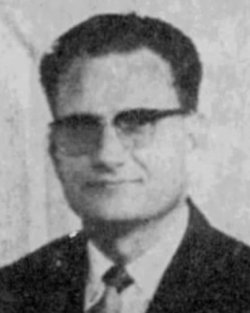
W.E. Best
About W.E. Best
Wilbern Elias Best (1919-2007) was a preacher and writer of Gospel material. He wrote 25 books and pamphlets comprised of sermons he preached to his congregation. These books were distributed in English and Spanish around the world from 1970 to 2018 at no cost via the W.E. Best Book Missionary Trust.

Comments

0 / 2000 characters
Comments are moderated before appearing.

Be the first to comment!

Joshua

Joshua

Shall we play a game? Ask me about articles, sermons, or theology from our library. I can also help you navigate the site.