Bootstrap
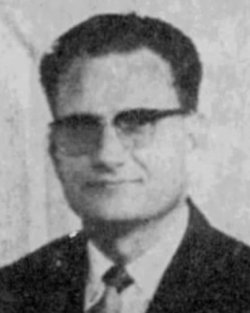
W.E. Best

#14 Fruit-Bearing

John 15:1-16
W.E. Best July, 1 1973 Audio
0 Comments
Remastered October/November 2024

Sermon Transcript

Auto-generated transcript • May contain errors

100%
Open your Bibles once again to
Romans chapter one. We'll be backing up a little
bit tonight. My wife asked me this afternoon, she takes these
messages and then types them up for record. She said, do you
want the one that you preached this morning to follow the one
that you're going to give tonight? I said, yes, I believe that would
be the correct order. So we are backing up somewhat,
but There are some things about the subject that I'm bringing
tonight that I wanted to go into to some extent, and I felt it
would be better to do it this evening than this morning. And
there were some things that I wanted to give in the message this morning
that I felt would be better for some of the folk who would be
present that would not be here this evening. And so that's the
reason that I spoke on verses 14 through 16 this morning. And
tonight we'll back up and complete our study, our present study
of the second division of Paul's foreword, verses 8 through 13. I was happily surprised two weeks
ago tonight when I asked how many of you had memorized Paul's
foreword, and I think almost everyone held up his hand. That's
great. In fact, I wish that it were
possible for all of you as we go through Romans, because we'll
be in this book for about three years, more or less, maybe more,
that you just memorize the whole book of Romans, and that isn't
asking too much. You may think it is, but it isn't,
because we'll be covering the subject, the great truths that
are contained in Romans over a long enough period, you should
be able to just commit the whole book to memory. I said that I
did not expect that of the membership as a whole, but I am expecting
this of our preachers who are studying for the ministry, both
Mark Roberts and David Anderson. I know that David is loaded down
in his senior year in college, and he has so much homework to
do and other things, it may be difficult for him to spend as
much time in the study of the Book of Romans as it would be
for Mark. But we cannot commit too much
of God's word to memory. I hope the time never comes in
our lifetime when our Bibles will be removed from us, but
it has happened in the past and it could very well happen again
before the coming of our blessed Lord. So we need to commit as
much as possible to memory. Let us look once again at verses
8 to 13 as we speak on the subject tonight of truth bearing. Paul said, First, I thank my
God through Jesus Christ for you all, that your faith is spoken
of throughout the whole world. For God is my witness, whom I
serve with my spirit in the gospel of his Son, that without ceasing
I make mention of you always in my prayer, making request,
if by any means now at length I might have a prosperous journey
by the will of God to come unto you, for I long to see you. that I may impart unto you some
spiritual gift to the end ye may be established. That is,
that I may be comforted together with you by the mutual faith
both of you and me. Now I would not have you ignorant,
brethren, that oftentimes I purposed to come unto you, but was let
hitherto or hindered, that I might have some fruit among you or
in you, if you'll notice your marginal reference, also even
as among other Gentiles. When I gave to you several weeks
ago the outline on this portion of Scripture, I stated that we
have three great truths and they are in this order, faith, fellowship,
and truth. In the discussion of truth tonight,
I want to say that the Apostle Paul is not emphasizing the truth
that he is going to gather from the Romans What did I say? He's not thinking
so much about the fruit that he's going to gather from the
Romans, is that right? Or is it the fruit that they're
going to gather from him? Now, which is really the correct
statement? I want you to think about it
before we go any further. I've already commented on it briefly,
but is he talking about the fruit that the Romans are going to
gather from him are the fruit that he is going to gather from
them. Well, actually the emphasis is on not the fruit that they're
going to gather from him, even though he's going to make much
contribution to their spiritual welfare, yet he's thinking about
the fruit that he is going to gather from the Roman Christians. When you think about Paul addressing
the Roman saints, And the main point of emphasis is that he
is going to preach to persons who have already been regenerated
by the Spirit of God. They've already had a conversion
experience, so they've been regenerated and converted. Now he is going
to preach to them in order that they might be strengthened in
the faith. He was concerned, deeply concerned,
about their spiritual growth, and he wanted to have fellowship
with them knowing that if he had fellowship with them, they
would have fellowship with him. So he spoke of the mutual faith
both of you and me. In order to make a study of the
subject of fruit-bearing, I request that you open your Bibles now
to the 15th chapter of the Gospel according to John. There is no
greater chapter in all of the scriptures on the subject of
fruit-bearing than John chapter 15. We're going to give an exposition
of the greater part of the first division, the first major division
of John chapter 15. I'd like for us to read together
now, beginning with the first verse, and as we read, I want
to point out some things, and you who are taking notes will
do some marking and taking notes as we read. I am the true vine,
and my father is the husbandman. every branch in me that beareth
not fruit, he taketh away, and every branch that beareth fruit,
he purgeth it, that it may bring forth more fruit." Several things
in these first two verses. First of all, I am the true vine
and my father is the husbandman. The father is the one who prunes,
he is the vinedresser. Actually the word husbandman
could be better translated vinedresser. So the father is the vinedresser,
the son is the one who cleanses, and the believer is the person
who abides. We have the father pruning, the
son cleansing, and the believer abiding. Those are three great
statements and we will elaborate on them in a few moments. Now
something else in verse 1, I am the true vine. The Lord Jesus
appeared as a most excellent branch. Notice now it is the
believer that is the branch. The Lord Jesus is the vine and
the Father is the vine dresser or the husband. The Lord Jesus,
as he came into this world, came through the virgin womb and assumed
a human nature, an impeccable human nature. But he had the
appearance of a branch. Why? Because he was the God-man.
As he walked among the sons of men, they saw him as a man. But he was more than man, he
was the God-man. He was more than man because
he was and he is the true vine. And it is the true vine that
gives life to the branches. So Christ appeared as the most
excellent branch, but he was the vine. He was the very source
of blessings to the branches. Now this applies to Christ's
earthly sojourn. You need to keep that in mind.
When we think about the Father, he is the cultivator. But he is the cultivator or the
vinedresser of Christ, not in heaven now, but while he was
on earth. Don't forget that, please. So
we have the father, we have the son, and we have the believer. Now in verse 2, there are two
references to fruit. First of all, reference is made
to the person who bears fruit, and the one who bears fruit is
pruned in order that he might bring forth more fruit. So you
have in verse 2 fruit and more fruit. Connect those two statements
please because we're going from these two statements to two additional
statements found within the context of the passage of scripture that
we're going to be discussing tonight. And they are much fruit
and fruit that shall remain. Now verse 3, now ye are clean. You who heard our message last
Sunday evening from the 13th chapter, as we concluded our
study of fellowship, are in a better position tonight to understand
what I'm going to say in reference to the third verse, because there
should be a vital connection between verse 3 and chapter 13
of the Gospel of John, verses 7 through 17. Now ye are clean through the
word which I have spoken unto you. Abide in me, and I in you. As the branch cannot bear fruit
of itself, except it abide in the vine, no more can ye except
ye abide in me. I am the vine, ye are the branches. Christ is speaking to the disciple.
He that abideth in me, and I in him. The same bringeth forth
much fruit. Now we have fruit, more fruit,
much fruit in verse 5. There is another reference to
much fruit in the 8th verse as we will see in a moment. For
without me ye can do nothing. If a man abide not in me, he
is cast forth as a branch. You cannot understand the first
part of the second verse without connecting the first part of
the second verse with the first part of the sixth verse. Notice
in verse six, if a man abide not in me, he is cast forth.
Go back with me now to the first part of verse two. Every branch
in me that beareth not fruit, he taketh away. Now skip down
to verse six. If a man abide not in me, he
is cast forth. as a branch, and is withered,
and men gather them, and cast them into the fire, and they
are burned. If ye abide in me, and my words
abide in you, ye shall ask what ye will, and it shall be done
unto you. Herein is my Father glorified, that ye bear much
fruit, so shall ye be my disciples. As the Father hath loved me,
so have I loved you. Continue ye in my love. If ye
keep my commandments, ye shall abide in my love, even as I have
kept my Father's commandments, and abide in his love. These
things have I spoken unto you, that my joy might remain in you,
and that your joy might be full. This is my commandment, that
ye love one another as I have loved you. Greater love hath
no man than this, that a man lay down his life for his friends.
Ye are my friends, if ye do whatsoever I command you. Henceforth I call
you not servants, for the servant knoweth not what his Lord doeth.
But I have called you friends for all things that I have heard
of my Father I have made known unto you. Ye have not chosen
me, but I have chosen you. Notice the negative approach
first of all. and ordained you, that ye should go forth and bring
forth fruit, and that your fruit should remain. You ought to connect
fruit, more fruit, much fruit, and now fruit that shall remain. That whatsoever ye shall ask
of the Father in my name, he may give it you. These things
I command you, that ye love one another. If the world hate you,
ye know that it hated me before it hated you. If ye were of the
world, the world would love his own. But because ye are not of
the world, but I have chosen you out of the world, therefore
the world hated you." Our subject is fruit bearing. Now let me
kind of outline it first of all before we begin our exposition. We have first of all a union
of life, verses 1 through 8. Secondly, we have a union of
love, verses 9 through 17. This results in a disunion with
the world, verses 18 through 25. Christ's life in us produces
fruit through us. The branch does not labor, It is the spirit of the living
God within the Christian that labors. Now, this is something
we need to understand. We make a distinction tonight
between fruit and works, and there is a real distinction. Many religionists do not understand
the distinction, but it's very vital. It's vital to our understanding
and being able to rightly divide or handle right the truth of
God's Word. So the life of Christ produces fruit through his people. That needs to be understood by
us. Are you a fruitful Christian? That's the question. Are you
a fruitful Christian? Well, you might ask, well, is
there such a thing as an unfruitful Christian? No. Maybe I ought
to put it in this term. Are you an unfruitful professing
believer? That would be the better term,
would it not? Many people profess, you see, to be Christians, but
every Christian bears some fruit, and I'm going to prove that.
The contrast presented in John 15 is between a non-bearing branch,
you say, but that branch is in Christ. We'll get to that in
a moment, so don't get disturbed. And the branch that does bear
fruit. All right, look with me once
again at verse 2. Every branch in me, in me, Christ said, that
beareth not fruit. The contrast is a branch that
does not bear fruit and the branch that does bear fruit. That's
the contrast of the passage. I affirm based upon the authority
of God's word that every Christian, every born again person bears
some fruit. He may not bear much, but he
bears some. There is some fruit, and if there
isn't any fruit, then he's not a Christian. He's just a professor. We'll prove that later on as
we develop the subject. You say, but I don't understand
the first part of this second verse. I'll tell you who threw
me for a long time on this text, Arthur W. Pink. I don't know
how that he taught this passage in his later years. But his exposition
of the Gospel of John was one of the first expositions that
he ever wrote on any book. And he made a number of mistakes
in that book, like any person would do. And his exposition
of verses 2 and 6 threw me for a long period of time. But these
verses don't throw me anymore. And I hope that if you've been
thrown by these two verses of Scripture, that you will not
be disturbed by what might appear to be the truth on the surface,
but after analyzing and investigating the text very carefully, I think
we can see what is really taught in these two verses. So keep
in mind the contrast is between a non-bearing branch and a truth-bearing
branch. That's the contrast. The non-bearing
branch is taken away. Now, our study last Sunday evening
in the 13th chapter is the key to the understanding of this.
So if you missed out on that, I can't go back, you see, and
review what we've already stated, except to bring out two or three
points that will, I think, be helpful to you, since some of
you did not hear our exposition on the 13th chapter. that we discussed quite a bit
last Sunday evening in the 13th chapter is no longer with the
disciples. Who is that person? His name
is Judas Iscariot. When our Lord said in the 13th
chapter, and he's talking about fellowship, what must be done
in order for fellowship to be maintained with Christ, when
he said in the 10th verse, and you know we've already discussed
the two words translated wash One means to bathe all over and
the other means to bathe a portion of the human body. And the Lord
Jesus washed the feet of the disciples on that occasion. He did not bathe them. They'd
already been bathed. They'd already been regenerated. They did not need to be regenerated
because they'd already been born again with the Spirit of God.
But they needed to be cleansed from their daily contact and
defilement with sin, just as we need daily cleansing from
our sins. Therefore, we confess our sins
with the full assurance that the Lord Jesus Christ will forgive
us of our sins and cleanse us from all unrighteousness. Now,
Judas was no longer present and when our Lord said in John 13,
10, you are clean but not all. He made reference to none other
than Judas Iscariot. And then when you study the last
part of the 13th chapter, Judas went out and it was dark. He
was not present with them when our Lord gave this discourse
in John 15 on the subject of fruit bearing. Now that is the
key to the understanding of what appears to be a problem text,
or in fact two problem texts, verses 2 and 6. Every branch
in me that beareth not fruit, but one might say. You will notice
it says every branch in me, in me. Therefore, the branch was
in Christ, and that is the general consensus of opinion by many
persons who have given an interpretation of this portion of Scripture.
We'll speak on that in a moment. I want to point out some things,
first of all, and we may not be able to complete our exposition
of this tonight. If not, we will continue next
Lord's Day evening. Then he says, after having already
made the statement that he would remove the fruitless branch, and the fruitless branch in the
person of Judas was removed. He was no longer with them. Now
he says, and every branch that beareth fruit What's he going
to do? He's going to purge that fruit-bearing
branch in order that it might bring forth more fruit. Now let's
look at this for a moment. Every branch is the subject of
either destruction or pruning. Don't forget that. Let me repeat
it. Every branch is the subject of either destruction or pruning. The fruitless branch is destroyed. The fruitful branch is pruned
that it might bring forth more fruit, much fruit, yea, fruit
that shall remain. And we're discussing the subject
of fruit bearing. Now, Judas was no longer with the disciples,
as I've already stated. As a fruitless disciple, he had
been taken away. The Lord therefore said to the
eleven on this occasion, ye are clean. Now notice the third verse.
Now ye are clean. Ye are clean. And every one of
them was clean because he was speaking to the eleven disciples
on this occasion. Through the word which I have
spoken unto you. We must comment on that text
for a moment. Now ye are clean through the word which I have
spoken unto you." Cleansing by the word is twofold. Follow me. Number one, by the
word of command. Number two, by the word of the
gospel. Please get that statement. Now
I'll explain. I said cleansing by the word
is twofold. First of all, by the word of
command. Number two, by the word of the
gospel. What is Jesus Christ talking
about here? Now you're clean through the
word which I've spoken unto you. Here he's talking not about the
word of command, but the word of the gospel. They had already
been cleansed by the word of command and he was now making
them clean by the word of the gospel which he spoke to them.
I'll explain now the difference between the word of command and
the word of the gospel. I want to give three biblical
examples of the word of command. I refer you first of all to Genesis
1 verse 3. In the beginning God created
the heavens and the earth, verse 1. Verse 2, and the earth was
without form and void, and darkness was upon the face of the deep.
Verse 3, and God said, here it is, here's the word of command,
and God said, let there be light, and there was light. That is
the word of command. That does not refer to the word
of the gospel. It is the word of command. All
right, the second example I want to give from the Old Testament
is found in Ezekiel chapter 16. Do you remember the baby that
was thrown out into the world as an infant still in its pollution? And Ezekiel presents the condition
of Israel in this manner in the first verses of Ezekiel chapter
16. The whole history of national
Israel is given in that long chapter of Ezekiel 16. In the
first eight verses you have the state of Israel in her state
of corruption. But in verses 6 and 8, When the
Lord passed by and saw Israel as a newly born infant cast out
into the world, unswaddled, still in corruption, what did the Lord
say? Live! That is the word of command. Not the word of the gospel, but
the word of command. The word of the gospel was not
proclaimed there. The Lord simply passed by and
saw Israel in that condition and said, live! And Israel lived. Now I want to give you a New
Testament example of the word of command. Turn with me, if
you will, please, to John 5 and let us read beginning with verse
24. John 5, 24, Verily, verily, I say unto you, He that heareth
my word, and believeth on him that sent me hath everlasting
life, and shall not come into condemnation, but is passed from
death into life. Verily, verily, I say unto you,
the hour is coming, and now is, when the dead shall hear the
voice of the Son of God, and they that hear shall live. This refers to the word of command. Those who are dead in trespasses
and in sin shall hear the word of command. I'm talking now about
regeneration. I'm not talking about conversion.
You see what I'm saying? I am making the distinction between
regeneration and conversion. Regeneration is by the word of
command. Conversion is by the word of
the gospel. The hour is coming and now is
when the dead shall hear, those who are dead in trespasses and
in sin, shall hear the voice of the Son of God, the word of
command, if you please, and they that hear shall live. This is
the word of command. Now I've given you two biblical
examples from the Old Testament and one from the New Testament
concerning the meaning of the word of command. The Lord Jesus
said to his disciples who had already heard the word of command,
they had heard the voice of the Son of God, they had been made
alive in Jesus Christ, the principle of life had been given to them.
Now they're being made clean by the word of the gospel. And
this is what our Lord meant in John 17, 17, sanctify them through
thy truth, thy word is truth. We are made clean daily by the
word of truth. Verse 3, now ye are clean through
the word which I have spoken unto you, abide in me. And I in you, as the branch cannot
bear fruit of itself, except it abide in the vine, no more
can ye except ye abide in me." As we begin in the study of the
first part of John 15, the father prunes, the fruitful are subjected
to what? To the pruning knife of God's
providence. You and I prune daily. And it
doesn't hurt for us to be pruned. There are a lot of things that
need to be pruned. And all of us as Christians recognize
that fact. There isn't a one of us who doesn't
need daily pruning in his life. So we are pruned by the Father
by providence. The sun cleanses. How does the
sun cleanse? He cleanses us, of course, by
the word of truth, and this by the agency of the Holy Spirit
of God. And the believer abides. He perseveres. The Spirit of God in him enables
him to abide and therefore to bring forth some fruit. Now back
to verses 2 and 6. We want to explain this. I stated
as we look at these two verses of Scripture that every branch
is the subject of either destruction or pruning. Judas no longer with
the disciples. He had already been removed by
providence, by providence. Every person who professes to
be a believer and there is no fruit will sooner or later be
removed from those who are the children of the living God and
who seek to honor the Lord by worshiping him in spirit and
in truth. Year clean, verse 3. Now this
verse should be connected, as I've already stated, with chapter
13, verses 7 through 17. The eleven were proved and tested
that they might bring forth more fruit. Judas was taken away,
that is, he was cut off, and I'm not afraid to use that terminology,
while the true vine was on earth. You see, Judas was removed while
Jesus Christ was on earth, and the true disciples were pruned
by the vine dresser for more fruit. Christ changed from the
disciples whom he knew to be clean and said, If a man abide
not in me, he is cast forth as a branch. Verse 6. The subject
in verse 6 does not refer to that relation with the risen
Christ, follow me now, by the Spirit, a relation which cannot
be broken but of that link which even then was formed on earth,
and in this case in the person of Judas, which could be either
true or false. Now that principle still exists
today. There are many who profess to
know the Lord, but by their works they deny him being abominable,
we are told in Titus 1 and verse 15. In order for one to understand
the phrase found in verse 2, every branch in me that beareth
not fruit he taketh away. In order to understand that you
must go back and make a study of the 14th chapter and the 20th
verse. Will you look at it for a moment by way of illustration?
In the 14th chapter our Lord said, at that day ye shall know
that I am in. Notice the preposition, it is
the same Greek preposition. used three times in verse 20
and used here in John 15, verse 2. He says, I am in my Father,
and ye in me, and I in you. Notice that, if you will. Now,
first of all, Christ in the Father. I think we can explain this.
There is a most intimate relation between the eternal father and
the eternal son. I said there is a most intimate
relation. They are possessors of the same nature. I and my
father are one. John 10 verse 30. Indwelling
is not identity as we have stated before but we repeat it again.
That means that Christ in the believer does not make the believer
Christ or Christ the believer. You see what I'm talking about?
So the Lord Jesus said, I am in the Father. That did not make
Christ the Father as the oneness, which is a heresy that needs
to be exposed. And it did not and it does not
make the Father Christ or Christ the Father. So there is an intimate
relation And this intimate relation can be understood by understanding
the meaning of the Greek preposition in this case. Let us go a step
further now. There is a most intimate relation
between Christ as mediator and the eternal Father. You see the
Lord Jesus, while he was here on the earth, he was the God-man,
walking among men, Two natures united in the one person, Jesus
Christ. But Jesus Christ as the mediator
between God and men, there was a relation between the Father
and the God-man. So there was a most intimate
relation between the Father and the Lord Jesus. Now when we think
about this relation, We think about the Father and his part
in the redemptive work that Jesus Christ came to accomplish. The
Father sent the Son and the Son was submissive to the Father
and willing to come and to die for you and me. Let's go a step
further. There is another union in this
20th verse. The Lord Jesus said, I am in the Father. Then he said,
and ye in me. In other words, the disciples,
the believers, were in the Lord Jesus Christ. So believers are
in Christ. Now let's look at this relation
for a moment. We are most intimately related to Jesus Christ. The
apostles, as apostles, were identified with Christ. Their cause was
Christ's cause. What about Judas? Now I'm getting
to the point. What about Judas? He was an apostle.
So there was a sense in which he, you see, was in Christ from
the standpoint of office, not from the standpoint of his spiritual
relationship to Christ. Now look at it and think about
it for a moment. So, he was an apostle. There
was an intimate relation as far as office was concerned between
Jesus Christ and Judas. All right, let's go a little
further. But there was no intimate spiritual relation between Jesus
Christ and Judas. The apostles as Christians, now
we have to consider them first of all apostles as apostles.
Now let's consider them, secondly, apostles as Christians and emphasizing
now the statement as Christians. So this requires even a more
detailed study. This means that believers are
treated as if we had done what Christ has done. Now let's look
at the last relation in the 20th verse. And the Lord Jesus went
on to say, and I in you. Christ is in his people. This,
like the former declaration, has a meaning peculiar to the
apostles and a meaning common to all believers in Jesus Christ. Now, with that before us, let's
look at verses 2 and 6 again. Every branch in me that beareth
not fruit, that beareth not fruit, there was a relation of office,
an intimate relation of office with Judas, But he was a fruitless
person because he did not know Christ, whom to know is life
eternal. He was a fruitless branch. The Lord Jesus said, I'll remove
every fruitless branch. Then in the sixth verse, if a
man abide not in me, he is cast forth, cast forth as a branch. Now, what is the proof of salvation? The proof is fruit. I've said
all that I've said thus far to get to this point. The proof
of salvation is fruit. Here we see a fruitless branch
removed and the fruitful branch prone that it might be more fruitful.
Now I'm going to prove to you that fruit is the proof of salvation. Open your Bibles with me to the
13th chapter of the Gospel according to Matthew. the parable of the
sower. You're familiar with this parable. I'll only just give
a few statements from this parable to prove the point. This is found
in Matthew chapter 13, and it begins with verse 3. And he spake
many things unto them in parable, saying, Behold, a sower went
forth to sow. Who is the sower? The sower is
none other than the Lord Jesus in this case. And when he sowed,
some seeds fell on the wayside, verse 5, some upon stony places,
verse 7, some among thorns, verse 8, but other fell into good ground. Will you notice the corner word
of scripture, the conjunction but in verse 8? Now let's do a little explaining.
What do we have here? The seed sown was the same in
each case. The difference was in the kind
of soil. The four soils that are given
us in this portion of Scripture have been rightly called, number
one, the impenetrable. The waysides are impenetrable. Number two, the superficial.
stony places, superficial. There are a lot of superficial
believers today. And as faith continues to be put to the test,
we're going to see more and more just how many superficial Christians
there are, or superficial professing believers. Number three, the preoccupied. That's the stony ground. And
number four, the prepared. So we have the impenetrable,
the superficial, the preoccupied, and finally, the prepared. Now,
the message was indiscriminately sown, but it was discriminately
fruitful. You follow me? Foresaw, all right? In the first, it has been said,
the seed was on the wayside but not in. on but not in. Secondly, in the second soil,
the seed was on and in but not down. There was just a little
dust on top of the rock. There was no depth of soil. It
was on, in, but not down, no depth of soil. The third, it
was on, in, and down, but not up, the thorny ground. The fourth, we find that the
seed in this prepared soil, and this is the only prepared soil,
the other three are not prepared. It was on, in, down, and up. Beloved, no but. No but. All right? Let's look at that
for a moment. Our Lord interprets that. parable
later on in the 13th chapter. So look with me beginning with
the 18th verse as our Lord interprets it. You don't have to speculate
about what it means. Hear ye therefore the parable
of the soul. When anyone heareth the word
of the kingdom and understandeth it not, then cometh the wicked
one and catcheth away that which was sown in his heart. Now look
at this. The seed is the word of the kingdom.
The word each time is sown in the heart. Does that throw you? Sown in the heart. What does
that mean? Not merely in the mind. It is not refused merely intellectually. But man's whole being rejects
God's truth. So in the parable, The issue
seems to depend on the song, and the explanation, it seems,
to depend on the seed. Now, there was nothing wrong
with the message. The fault lay in the unprepared song. The first three were not prepared.
I've seen the seed in thirty-four years of preaching. Some of it
hard, impenetrable ground, the wayside. I've seen some fall,
and people just say, oh, what a joy, and they receive it, among,
at once. But as soon as a trial comes,
as soon as persecution comes, they fall away. I've seen the
word, the same word fall upon forty ground heels. Oh, they
talk about it, but yet there are other things that choke the
Word of God out, and they give place to other things, and more
concerned about other things than the Word of God. It's Saul,
not prepared. The first three Sauls were not
prepared Sauls. All right, let's read on. Verse
20. He that receiveth seed into stony
places, the same as he that heareth the word, and among with joy
receiveth But beneath the thin surface of dust there lay what? The bed of rock. In verse 21,
yet hath he not rooted himself, but doerth for a while. For when
tribulation of persecution arises because of the word, by and by
he is offended. He also that receives seed among
the thorns is he that heareth the word, and the care of this
world and the deceitfulness of riches choke the word, and he
becometh unfruitful. Verse 23, here it is. But he
that receiveth seed into the good ground, that person or those
persons into whose hearts the word has fallen, it is the word
of command. And when a person has heard the
word of command, he will hear the word of the gospel. There is fruit. Notice what it
says. Now there are three soils. Now
there is a threefold description of fruit, and it's given us here
in the 23rd verse. He that receiveth seed into the
good ground is he that heareth the word and understandeth it,
which also beareth fruit. Beloved, the thing that you and
I are to do is to investigate our own lives. Is there any fruit?
If there is no fruit, then there is no grace, because grace produces
fruit. Now he goes on to say, "...and bringeth forth some an
hundredfold, some sixty, some thirty. But I assure you that
wherever there is grace, there is some fruit. And where there
is no fruit, there is no grace." And he removes that branch. Now, go back to John 15. John 15. Truth is the proof of grace. Those who attach themselves to
Jesus Christ by profession will, if there is life, be cleansed. You're not going to kick against
the Word of God. You're going to rejoice when
you hear the word of God, even though it causes your flesh to
smother. Because you know it is exactly
what you need. You need pruning. You need cleansing. So those who attach themselves
to Christ by profession will, I said, if there is life, if
there is grace, be cleansed. But if there is no life, If there
is no grace, they will be taken away. Providence will remove
them. I could give to you several examples
of this. I'll give one from the sixth chapter of John. There
were many disciples, it says, in John 6 who followed the Lord
Jesus. They were following him only for what they could get
out of him. Our Lord knew that to be the case. And so he began
to what? Discuss the great doctrines of
grace. And no man can come to me except
the Father which hath been withdrawn. That was too much for them. They
said this is a hard saying. The next time our Lord makes
that statement in John 6, they begin to strive among themselves.
The third time he made that statement, the Bible says they turned and
walked away from his presence. They ceased to follow. The writer of the Gospel of John
has also given us the first epistle of John, and he describes these
persons in 1 John 2.19 in this manner. They went out promised
because they were not honest. If they had been honest, they
would no doubt have continued with it, but they went out that
it might be made manifest that they were not honest. Providence
removes unfruitful righteousness. Now, the responsibility of man
is emphasized in this portion of Scripture. But it is a responsibility,
I must warn you, which man will not be able to meet without the
grace of God. It is not the question of whether
a real believer can be separated from God as those who believe
in falling from grace teach, and these two verses are their
so-called proof text. Notice what I said, it is not
the question of whether a real believer can be separated from
God. That's not the question under
discussion here. But that a real believer will bear fruit. That's what our Lord is emphasizing
and it cannot be denied. Fruit is the Christian's life,
not his deeds. Not his deeds. A fruit tree does
not struggle to bear fruit. The Christian doesn't struggle
to bear fruit. He bears fruit by the indwelling
Holy Spirit. Let me prove that. Turn with
me to 1 Corinthians 15.10. 1 Corinthians 15.10. On three different occasions
the Apostle Paul uses this statement. One in reference to his salvation,
and here in 1 Corinthians 15, verse 10, he uses it not in reference
to salvation as he does in Galatians 2.20, but here in reference to
his service for Christ. The 10th verse, Paul said, but
for the grace of God I am what I am. And his grace which was
bestowed upon me was not in vain. But I labored more abundantly
than they all. Now follow this. I labored more
abundantly than they all. He doesn't stop there. Look at
the next words. Yet not I. That reminds me of
Galatians 2.20. I'm crucified with Christ, yet
not I. Yet not I. That's the yet not
I of salvation. Here's the yet not I of service. I labored more abundantly than
they all, yet not I, but the grace of God which was with me." It is the Spirit of God in you
and in me that brings forth fruit. It's not your labor, it's the
labor of the Spirit of God in you. So the tree does not struggle
to bear fruit. ever put itself into the vine. We must not confuse fruit-bearing
with works. Fruit, for instance, is born
silently, without noticeable activity, for the owner, speaks of character, and the person who is fruitful
partakes of the nature of the true or divine, in this case. So Christ's life in us produces
fruit through us. Living in Christ involves loving
one another, according to the content. But we're not discussing
that aspect of the subject tonight. Separation to Christ means separation
from the world. Now let me state those three
things again. Christ's life in us produces
fruit through us. Living in Christ involves loving
one another. Separation to Christ means separation
from the world. Now in closing, we have a baptism
of service tonight. We'll also be observing the Lord's
Supper. give you the distinction between
fruits, or fruit I should say, and works. Seven things I want
to mention. First of all, fruit is born silently. Silently. Works are accompanied
by much noise. If you don't believe that, turn
your radio on some religious station sometime and listen to
the noise. are witness for the Lord on the
job or persons with whom you come in contact. And they'll
tell you about their religious activity and they'll make a big
noise about it. But they won't tell you much about worship. So fruit is born silently. Works are accompanied by much
noise. Look at me. Things are done to
call attention to the individual. Secondly, fruit is without noticeable
activity. Did you ever go out and look
at, maybe if you have a tree, a fruit tree of some kind, did
you ever go out and just watch it? Fruit, you see, is without noticeable
activity. Works acquire a great amount
of activity. Some people are so occupied with
works, there's no time for bearing fruit. Are you following me? That's true even in the lives
of Christians sometimes. They don't bear as much fruit
as they ought to because they're so engaged in religious activity. Number three, fruit is for the
owner. Fruit is for the Lord. Works are usually done for others. Notice what I said, are usually
done for others. Number four, fruit is produced
by a good tree. Only a good tree can produce
good fruit. Works can be performed by corrupt
means. Even religious works. can be
performed by corrupt and wicked. I could preach for an hour on
that point, but I won't do it tonight. Number five, fruit speaks
of what we are. Work speaks of what we do.
W.E. Best
About W.E. Best
Wilbern Elias Best (1919-2007) was a preacher and writer of Gospel material. He wrote 25 books and pamphlets comprised of sermons he preached to his congregation. These books were distributed in English and Spanish around the world from 1970 to 2018 at no cost via the W.E. Best Book Missionary Trust.

Comments

0 / 2000 characters
Comments are moderated before appearing.

Be the first to comment!

Joshua

Joshua

Shall we play a game? Ask me about articles, sermons, or theology from our library. I can also help you navigate the site.