Bootstrap
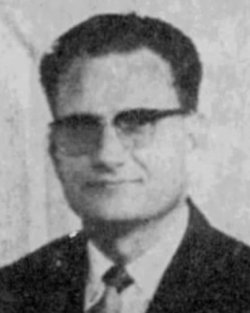
W.E. Best

#19 The Wrath of God Is Revealed, Part 2

Romans 1:18
W.E. Best July, 1 1973 Audio
0 Comments
Remastered October/November 2024

Sermon Transcript

Auto-generated transcript • May contain errors

100%
Once again, open your Bibles
to Romans 1. We'll take up where we left off this morning. Is
it asking too much of you to memorize the last part of Romans
1? My wife made a statement to me
last night as we went to bed. She said, I can see the value
of memorizing scripture. You see, the more you know about
the word, the easier it is to follow one when he teaches or
preaches. In fact, if you have memorized
the first 17 verses of Romans 1, then as I have sought to show
you over the period of the last three months, the real meaning
of the word servant in verse 1, Paul is servant, You know
that it does not mean service in the sense of which we think
of service, but it comes from the Greek word doulos, which
means one that is related to the Lord Jesus Christ. Service
follows. These things will stand out in
your mind as we call attention to them. So I hope that you will
commit more scripture to memory. I'm not asking you by any means
to memorize the whole book of Romans. I am requesting that
both Mark and David do this very thing if they are in the Church
as long as we will be teaching from the Book of Romans. Let
me say something else about our teaching and preaching from Romans.
I am not only going to give an exposition of every verse during
our course of study, but I'm going to take great themes, as
you have already noticed, from the Book of Romans and then of
course expound upon those great themes. We will do this in addition
to a verse by verse study of the book of Romans. Now you can
see that we will be in this book for a period of probably three
years or maybe more. I assure you of this. that if you will really study,
if you will really apply yourself, and it takes a disciplined life
for one to be able to accomplish anything in his Christian life.
After we have finished the book of Romans, for instance, I believe
that you will have a workable knowledge, that is to a great
extent, of the Bible from Genesis to Revelation. That doesn't mean
that we'll cover all of the Bible. But we'll cover every major theme
of the Bible in relation to our study and messages on the Book
of Romans. I've made up my mind in the remaining
years of my ministry, I want to major on majors and minor
on minors. And I say that with all sincerity. I want to major on majors and
minor on minors. And so, in doing this, we will
touch upon every great Bible theme in our course of study
in the Book of Romans. That doesn't mean that we will
exhaust the study. It doesn't mean that after you
have maybe sat under the ministry of this minister, say, for a
period of four years and you've heard an exposition of Romans,
that when you hear someone else speak that he doesn't have something
additional to give. You see, no person can ever completely
explore the Word of God. So all that you learn will only
prepare you for a greater appreciation for a more diligent study, even
of the Book of Romans. All right, tonight we'll begin
once again with the 18th verse. This morning, in the discussion
of the 18th verse, I gave three major points. We had time to
develop the first two. I stated, after just mentioning
a few things about the last point, that we would take up there and
continue our study this evening. You can already see that the
subject of sin, or the doctrine of sin, will now be studied in
connection with the 18th verse. So let us look once again at
the 18th verse. For the wrath of God is revealed
from heaven against all ungodliness and unrighteousness of men who
hold the truth in unrighteousness." Now, by the time we will have
finished our study of this verse, you should know it by memory. That doesn't mean that we're
going to ask you to stand up and quote it. But I can't emphasize
too much the importance of young men like Mark and David. committing
great portions of scripture to memory. Beloved, many times these
things will come to your mind in the course of a message in
expounding on a great theme. And this is when the Holy Spirit,
the Holy Spirit can only bring to your mind what you have already
studied out. Keep that in mind. The Holy Spirit
is not going to bring one thing to the mind of a minister or
to the mind of a Christian that what that Christian has not already
studied. That doesn't mean now that the Holy Spirit will not
eliminate your mind, enable you to see some things that you have
not seen before, but you must give due consideration to what
God has said. That's the importance of considering
what the Lord has said and he will give us understanding. That's
the promise that has been given to us. But you'll find even in
your witnessing for the Lord, that the more you study, the
more you learn, the greater help it is in your witnessing and
in order to give an effective witness for the Lord. There are
too many people today trying to witness for the Lord that
should not witness at all. They're doing more harm than
they're doing good, and I say that in all sincerity. For the wrath
of God is revealed from heaven against all ungodliness and unrighteousness
of man who hold the truth in unrighteousness. I said this
morning that the first major point is that wrath with God
is a principle, not a passion. Brother Glenn Cole told me tonight,
just before the song service began, he said, Preacher, I really
did appreciate that statement. That really was helpful to me,
to know that the wrath of God is a principle, not a passion. The second point that we dealt
with this morning, the wrath of God is revealed. The more
I think about this particular point, Beloved, my heart is literally
wrung out, and I think you can see why. As we are subjected
to the things that we see on every hand today, the wrath of
God is revealed. How is the wrath of God revealed?
I appreciated so much a young man this morning after the service
who said, I didn't follow you at first, but before you really
made the statement, he said, I saw what you were driving at. That is the advantage of studying
and following along. And it's right for you to do
that. Wondering, well now, how is the preacher going to develop
this? That shows that you're following along and you're doing
everything that you possibly can to enter into the worship
service. The wrath of God today is revealed
in many different ways. But in the light of the last
part of Romans chapter 1, The wrath of God is revealed today
by giving men and women up. Now, don't rush to a wrong conclusion
of this. You cannot prove reprobation
by this. I want to give a note of warning
at this point. You'll notice God giving them up. That doesn't
mean that he doesn't give some up in the sense of reprobation.
But you can't prove that all that are given up are reprobated. Will you keep that thought in
mind, please, and I'll show you why. The giving up has to do
with punishing sin by sin. In other words, God is punishing
sin by sin. This is one of the methods that
God punishes sin. Therefore he gives them up to
a life of uncleanness. They are apostates in that. They
have been enlightened They have a certain amount of life, and
they're going from that life which they have, and as a result
of going from that life, God gives them up. As we're told
in the 28th verse, to a reprobate mind. I hope that I can encourage you
to memorize these verses. Well, you go along with me and
let's just look at the whole last part of the chapter. I'm
doing this as I go through Romans, therefore I'm not going to ask
you to do something that I'm not willing to do myself. All right, let's begin. I'm not
even looking at the portion of Scripture. I'm not looking at
Romans, so I may miss a word once in a while, but you go along
with me. I'm trying to encourage you to
commit to memory great sections of Scripture. For the wrath of
God is revealed from heaven against all ungodliness and unrighteousness
of man, who hold the truth in unrighteousness. Because that
which may be known of God is manifest in them, or to them,
for God has showed it unto them. For the invisible things of him
from the creation of the world are clearly seen, being understood
by the things that are made, even as eternal power and Godhead,
so that they are without excuse. Because that, when they knew
God, they glorified him not as God, but became vain in their
imaginations, and their foolish heart was darkened. professing
themselves to be wise, they became fools and changed the glory of
the uncorruptible God into an image made like to corruptible
man and to birds and four-footed bees and creeping things. Wherefore,
God also gave them up to uncleanness, through the lust of their own
hearts, to dishonor their own bodies between themselves, who
changed the truth, or exchanged the truth, it should be, who
exchanged the truth for a lie, and worshiped and served the
creature more than the creator, who is blessed forever. Amen. For this cause God gave them
up unto vile affections, for even their women did change the
natural use into that which is against nature, and likewise
also the men, leaving the natural use of the woman burned in their
lust one toward another, men with men working that which is
unseemly, and receiving in themselves that recompense of their error
which was meek." Now, the last part, beginning with the 29th
verse, is not as easy to memorize, and I would not request maybe
that you spend the time to do this, because in these verses
we actually have a catalog of these terrible sins. But I would
request it for ministers because of its importance. You see, Romans
is an important book to memorize. Ephesians is another important
book to memorize. Philippians is another. The Gospel
of John, the book of Revelation, if a minister knew those books
by memory, and he really knew the meaning of each verse and
every fundamental doctrine and word, I tell you, he would never
be without something to say. when
he stands before people, he would have a tremendous reservoir of
truth. Now notice, beginning with the
29th verse, being filled with all unrighteousness, fornication,
wickedness, covetousness, maliciousness, full of envy, murder, debate,
deceit, malignity, whispers, backbiting, haters of God. despiteful, proud, boasters,
inventors of evil things, disobedient to parents, without
understanding, covenant breakers, without natural affection, implacable,
unmerciful, who knowing the judgment of God that they which commit
such things or practice such things," notice now, the word
commit would be better translated practice, who, knowing the judgment
of God, that they which commit such things are worthy of death,
and not only do the same, but have pleasure in them that do
them." Now, to continue where we left off this morning in the
18th verse, the third point. God's wrath
is revealed against all ungodliness and unrighteousness. There are
three things we want to look at in the last part of the 18th
verse. First of all, the word ungodliness. Secondly, the word
unrighteousness. And then, who hold the truth
in unrighteousness. These are the three things that
we'll develop with you this evening and then go into the study of
the doctrine of sin. That is, we'll begin our study,
a series of messages on the doctrine of sin. The word ungodliness
refers to that which is religious in character. The word comes from the Greek
word which means impiety toward the Godhead. It doesn't make
any difference whether it be impiety toward the Father or
impiety toward the Son or impiety toward the Holy Spirit. Impiety
toward the Godhead. Now, there is another word. onomia, the word translated ungodliness,
is asobia. And then onomia means disregard
for God's laws. You can see already that whenever
a person shows disrespect or there is a manifestation of impiety
toward the Lord, Naturally, there is a disregard for the laws of
God, and so these things follow in that order. It may seem strange
to you to think of men committing acts of sin against the sovereign
God. But this has been, this continues
to be, and will continue to be, until the last enemy is destroyed. in the bottomless pit. You and
I know that it is a fact that Jesus Christ was crucified. We're
told in 1 John 5, 17 that all unrighteousness is sin. We're
told in Romans 14, verse 23, whatsoever is not of faith is
sin. These are two great biblical definitions of sin. All sin,
therefore, is against God. Whenever you sin against an individual,
in reality you are sinning against God. Let me use an expression
found in the first book of Samuel. We sin when we fail to pray for
one another, but this sinning and failure to pray one for another
is a sin against God. In other words, we sin against
the Lord, so even prayerlessness is a sin. You know that. Him
that knoweth to do good and doeth it not to him it is sin. But
this sin of prayerlessness is in reality a sin against God,
and that is the statement. I don't recall the exact text, but there was request for forgiveness
because this one had sinned In that, the individual had not
prayed for his companions, and then he realized that his sin
was against God. Men today are conspiring to kill
God. You know, there is a new theory.
Robinson in England, Al Tizer from Georgia, the Methodist preacher
and others, they're coming out, you know, and they have come
out now for some time with the theory God is dead. I want you
to know that our God is not dead. I'll tell you, though, who the
folk are that are dead, those professional religionists who
are saying that God is dead. They're dead. They're dead in
trespasses and in sin. And all of their professionalism,
of course, is a sin against the true and living God. Ungodliness
comprehends all the sins against the first table of the law, and
I want to illustrate that for you. We're looking now at ungodliness. Ungodliness refers to that which
is religious in character. I said the word ungodliness comprehends
all the sins against the first table of the law. Turn with me,
if you will, please, to the familiar portion of Scripture, Exodus
chapter 20, as we look at the first table of the law. beginning
with verse 1. We'll only look at the first
three statements, or the first three commandments, tonight. And God spake all these words,
saying, I am the Lord thy God, which hath brought thee out of
the land of Egypt, out of the house of bondage. Number one,
thou shalt have no other gods before me. Now remember the verses
of Romans 1, 18-32. And you'll see how in that portion
of Scripture we have God's own description of sin. When they
knew God, they glorified him not as God. So you see there's
a divine commentary. Romans 1, beginning with the
18th verse, is a commentary on the meaning of sin. The Lord
said, Thou shalt have no other gods before me. Look at the second. Commandment in verse 4, Thou
shalt not make unto thee any graven image. Now don't forget
the 23rd verse of Romans chapter 1. What do they do? They change the glory of the
uncorruptible God into an image. Here is what? The very thing
that God said don't do. And here it is in Romans 1, verse
23. Changing the glory of the uncorruptible God into an image
made like too corrupt of a man, and the birds and four-footed
bees and creeping fiends. Now you can see why God gave
them up. Then look at verse 7 of Exodus 20. Thou shalt not take
the name of the Lord thy God in vain. For the Lord will not
hold him guiltless by taking his name in vain." I don't have
time to really go into this this evening except to say that the
one act of transgression on the part of Adam in the Garden of
Eden was a sin that actually included all the Ten Commandments. That one sin of Adam. was the
breaking of every one of the Ten Commandments. Would you like
me to just run through that with you and show you how the one
sin, the one act of transgression by Adam actually broke all ten
commandments that God gave in Exodus 20? I'll run through it
just briefly with you. See, some would like for us to
do that. First of all, Adam broke the first commandment by choosing
another, that is, a false god. He broke the 1st commandment. 2. He broke the 2nd commandment
by making of God out of his own belly. He ate the forbidden fruit. 3. He took the Lord's name in
vain when he failed to believe God's threatening. God said,
You can eat of the fruit of every tree, but don't you partake of
this. Number four, the fourth was broken by Adam when he broke
the sinless rest in which he had been placed by God in the
garden of Eden. Number five, the fifth was broken
when he dishonored his creator father in heaven. Number six,
murder was committed by Adam when he brought death to himself
and to his posterity. I'm sure you remember Romans
5.12. Number 7, spiritual adultery was committed, notice I said
spiritual adultery, was committed when he preferred the creature
above the creator. We have this in Romans 1. They
exchanged the truth of God for a lie and worship and serve the
creature more than the creator who is blessed forever. Amen.
Number eight, the aid was broken when he took that to which he
had no right. In other words, he stole. He
was guilty of stealing. He took that which he had no
right to. And nine, the knife was broken
by accepting the devil's false witness against God. And number
ten, finally. The tent was broken when Adam
coveted that which God had not given to him. So the one act
of transgression by Adam in the Garden of Eden was actually the
breaking of all ten commandments that God has given in Exodus
chapter 20. So ungodliness, all the sins
against the first table of the law. Ungodliness denotes the
lack of reverence for God. I said that ungodliness refers
to the religious character of an individual. I didn't say the
Christian character, I said religious character of an individual. It
is the same as saying, depart from us, we desire not the knowledge
of thy ways. And that is the same that is
expressed only in different words in Romans 128. They didn't want
to retain the knowledge of God in their mind. Therefore, God
gave them over to a reprobate mind, a mind void of discernment,
incapable of right reasoning, a mind that stands disapproved
before the Lord. Now we come to the word unrighteousness.
Ungodliness refers to that which is religious in character. Now
you can see why, and you can see the importance of the order
here. Unrighteousness denotes that which is immoral. When a
man does not think correctly, his life is not lived correctly. It's just that simple. Beloved,
I believe that most of you, in fact I think all of you who come
realize the importance of really embracing the whole counsel of
God. We can't just pick and choose
the things that we like and discard the other things and say they
are not of importance. I realize that everything is
important in the place in which God meant it to be. Some things
are more important than other things, but that doesn't mean
that everything is not important. Everything is important. Now
there are some truths in God's word that we can be lenient with
to a point, and we are to be lenient with. Every person is
to be convinced in his own mind. I've been the pastor of some
of you for 25 years. Four or five of you for 26 years. And whenever I bring something
that you're not really familiar with, I don't try to push it
on you. That is not the way to do it.
I am to simply acquaint you with what the scriptures teach, and
then it is up to you to believe, to study, and to apply what has
been taught. But we must, in order to live
right, we must think right. And if a person doesn't think
right, he isn't going to live right. The other day, and I'll
illustrate this, my insurance man was telling me about a preacher
that he knows, and this preacher got in trouble, committed a terrible
sin, left the congregation. He's still here in the city of
Houston, living in adultery. and 200 people from the church
have fallen him, they are now attending a Bible class that
he's teaching, and they're going to organize another church. Now,
it's a known fact that he's beautiful. He even left his wife and married
another woman. Now, believe it, that man is
not thinking correctly. How in the world can the people
under such ministry live correctly? How in the world can that man
really teach with any conviction on the subject of adultery? I'll
tell you, he won't teach it. He will pass it by. The man of
God, however, must be in a position, that doesn't mean that the man
of God is perfect. You who have been knowing me for 25 years
know that I'm not perfect, and I want you to know I'm not preaching
to perfect people. But you know as well as I do, I know you pretty
good, and you know me. We're striving, and we are, to
have the opinion that Paul expressed in the third chapter of Philippians.
I have not as yet, in the twelfth verse, attained perfection, but
I strive after it. The goal of a Christian, and
I'm talking now about Christian perfection, I'm not talking about
sinless perfection. But we must believe things. We
must be versed in the whole counsel of God. We must not evade any
issue, whatever it is. We must face it, and then do
our very best to apply it to our personal lives. This is the
desire of every Christian. So unrighteousness denotes that
which is immoral. The word unrighteousness comes
from the Greek word arikia, and this is a comprehensive term,
follow me now, this is a comprehensive term for wrong, for wrong, for
wrongdoing or for injustice. That's the simplicity of the
word. The order is significant. Religious impiety leads to what
is immoral. I have seen, and so have you. Persons who are guilty of immoral
acts, instead of facing and getting right, they run. Unless we think straight, we
cannot live straight. Romans 1, 19-32, this section
proves the point that religious impiety leads to what is immoral. As ungodliness refers to no fear
of God, so unrighteousness, which is immorality, has no standard
for man. Do you see the importance of
looking at these two words? I repeat, as ungodliness refers
to no fear of God, and that's exactly what we find in Romans
3.18, there's no fear of God before their eyes. One of the
14 horrible indictments against man in the third chapter, beginning
with the tenth verse. And then, so unrighteousness
has no standard for man. I gave you this this morning,
but I will repeat it again as we continue to think, and then
go into the study of the doctrine of sin. We'll introduce the subject
tonight. When we think about these two
words, ungodliness and unrighteousness, now let us see them, each one,
in its proper perspective. First of all, ungodliness denies
God's character. ungodliness denies God's character. Any person today who says that
Jesus Christ was a peccable person is denying the holy character
of my blessed Lord. The second, unrighteousness,
destroys man's character. Why? Because unrighteousness
is a comprehensive term. that denotes injustice, wrong
action, anything that is wrong, that is not right. Ungodliness attacks the Godhead. Unrighteousness attacks God's
government. We see this on every hand today. Ungodliness condemns God and
unrighteousness, seeks to justify man. Self-justification is the
thing that we are subjected to on every hand today. Now look at the last part of
the text, holding the truth in unrighteousness. That is, holding
the truth in that which is wrong, in that which is not just but
unjust. The particle, I'm talking now
about the Greek particle, translated holding down, is the way it should
be translated, holding down. You see, they continue to hold
down, denotes a continuous action. So those persons about whom Paul
spoke, they were holding down, they were suppressing, as others
have translated the Greek particle, they're holding it down in unrighteousness. They were consistent in their
sins. And today such men are consistent
in their sins. There was a perseverance in immorality. Now think about that for a moment.
Perseverance in immorality. Who, knowing the judgment of
God, that they which commit such things, or practice such things,
are worthy of death, not only do the same, but have pleasure
in them that do them. A perseverance in that which
is unrighteous. Beloved, as ungodly men persevere
in unrighteousness. Let's turn and look at the other
side. Thank the Lord for his grace
which enables us as Christians to persevere in righteousness. To hold down the greatest truth
someone has said is the biggest lie. So any person who suppresses
the biggest truth, that becomes what? The biggest lie. You can
see now why Dr. Barnhouse was asked by his professor,
who came to hear him speak at a chapel service at Princeton
University after Dr. Barnhouse had graduated. He said
to him at the close of the service, I wanted to see how big your
God is. I am convinced that you believe
in the absolute sovereignty of God. Preach him. Preaching, Donald,
preaching. There are people today who suppress
the absolute sovereignty of God. And in suppressing the absolute
sovereignty of God, they are creating the biggest lie. God is either sovereign or he's
not sovereign at all. He is either God or no God at
all. And the God whom we serve, is
not dependent on the will of man, but the will of man is dependent
on the will of God. You see how important this is.
Truth can only live in the minds of people as it lives in the
lives of people. Now for the doctrine of sin. You're not afraid of the word
doctrine. any more than I'm afraid of the word doctrine. We're not
getting into the origin of sin tonight. We want to discuss with
you for a few minutes the fact of sin and just begin by introducing
the doctrine of sin. I read a unique statement the
other day and I want to share it with you as we now begin the
study of the subject entitled, The Doctrine of Sin. We'll be
emphasizing now for a few minutes the importance of doctrine. I
read this statement recently, quote, modern technology has
given us in many respects a new world in which to live. I could not help but reflect
on that, the world in which I'm living now is a different world
than I lived in when I was a boy, 10, 12, 15 years of age. Well, we didn't even have an
automobile. We didn't have to worry about gas shortage or rationing.
We didn't have a car when I was a boy. The first family car was
purchased after I finished high school and left home. In fact,
the first and only car my father ever owned, a 39 Plymouth. And
he drove it from the time he bought it until my mother died
in 1951 and he was 80 years of age at the time and the car in
those 12 years had a total of 26,000 miles on it. They really
got up and went, didn't they? Modern technology has given us,
in many respects, a new world in which to live. We can no more
remove ourselves from this new system of things than we can
escape the air we breathe. That's true. Now here's the warning,
and what a warning it is for us. However, we must be on guard. Lest the changes brought about
by technology change our attitude about eternal realities. That's a great statement. Let me give the last part of
that again. However, we must be on guard lest the changes
brought about by technology change our attitude about eternal realities. This man whose work I was reading,
and it's a relatively new work, Went on to make this observation,
and I think this is a good introduction into our study of the doctrine
of sin. Christendom has suffered in the
last 50 years, and it has. I've been preaching
for 34 years. I preached my first message 34
years ago this past July. If some persons had told me 34
years ago that I would be confronted with the things that I am subjected
to today, it would have been difficult for me to believe.
And you know what I'm talking about. Christendom has suffered
in the last 50 years. Now here's the point. The loss of consciousness in
three of the greatest areas of biblical teaching. Here's the
point I'm reaching. The loss of consciousness in
three of the greatest areas of biblical teaching, namely the
sovereignty of God, the guilt and condemnation of
sin. Now you see why I'm using this
to preface our study on the doctrine of sin. and the importance of
biblical doctrine. I made the announcement that
we were beginning a study of the doctrine of sin. The word
doctrine is being made light of today by most religionists. I did not say Christians, I said
by most religionists. I have had some encounters just
in the last two weeks with some persons about this
very thing, doctrine. Curses today are literally making
light of the word doctrine. Now let's begin our study of
doctrine since we're going to study the doctrine of sin. And
we want to review doctrine a little bit before we get into the word
sin. What does the word doctrine mean?
It comes from the Greek word which means teaching, either
that which is taught or the act of teaching. What did I say? Doctrine denotes
either that which is taught or the act of teaching. How important
is doctrine? Or how important is teaching? A lady called me yesterday and
she was telling me that she asked the associate pastor two days
a week ago why that they were not really feeding the people. He said the people are not capable
of receiving strong meat. Now, beloved, I don't believe
that. I wouldn't want anybody to tell me that. Now, I'm not
so smart, but I'll tell you what. I believe that any child of God
has the capability of understanding doctrine, don't you? He has the
capability of taking strong meat. I'll tell you, that statement
was only for one purpose, and that was to excuse the pastor
and the associate pastor, to make an excuse for their lack
of determination to study and to prepare in order to feed the
people. That's all in a word it was. The pastoral epistles stress
sound doctrine. 1 Timothy and 2 Timothy, over
and over again you find reference made to doctrine. Paul, in fact,
in 2 Timothy, beginning with the 4th chapter in verse 3, I
believe it is, "'Preach the word, be infant in seas and out of
seas, reprove, rebuke, exhort with all longsuffering. For the
time will come when they will not be able to endure sound doctrine,'
that means teaching, "'but will hew to themselves teachers having
itching ears.'" You know what Paul said? He went on after making
that statement to say, I've fought a good fight. I've kept the course. I've kept the faith, rather.
I've finished my course. Henceforth I is laid up for me
a crown of righteousness, and not only for me, but for everyone
who loves his appearance. Paul fed the sheep. And it is
the responsibility of the men of God today to feed the people
of God. So reference is made to sound
doctrine. sound doctrine, sound teaching.
John climaxes its importance in 2 John 9 when he says, if
any person comes and brings not this doctrine, the doctrine of
Christ, you are not to receive him into your house. I quoted
this this morning, neither bid him Godspeed, because if you
do, you will become a partaker of his evil deeds. Some of you
have heard me give this, but this comes to my mind and it
will be helpful to some of you. Several years ago I was visiting in a
home The father was a member of the church of which I was
pastor. His son, 25 years of age, had joined the church of
Christ in order to be with his wife. And this young man had
become indoctrinated in the church of Christ doctrine. He thought
what he didn't know just wasn't known. I went by to visit the
father who was ill. And so this young man jumped
on me like a Bantam rooster. And he started asking me questions.
What about Acts 2.38, repent and be baptized. You can always
tell a church of Christ by the way he pronounces baptism, baptized.
For the remission of sins, and ye shall receive the gift of
the Holy Ghost. Arise and be baptized, and wash away thy sins,
calling on the name of the Lord. So I started asking him some
questions and he couldn't answer them. And he said, you're afraid
to talk to my preacher. Well, I was much younger than
I am now. I'm not saying just exactly what
I do now, probably the same thing I did then. I said, I haven't
seen a Camelot preacher yet, I was afraid of. And that's exactly
what he wanted to hear. You know what he did? He let
me off the hook. He just reached over and got
the telephone and he called his pastor. He said, Brother Wortham,
I remember the man's name, he was pastor of Norhill Church
of Christ out in the Heights. He said, Brother Wortham, he said, I've got a Baptist preacher
over here visiting my father. He said, I've told you about
him. And he said he just made this statement to me that he
hadn't seen a Camelot preacher yet he was afraid of. And his
brother Wortham said, put him on the phone. Well, I picked
up the phone and he started out, you know, being very gracious.
He said, oh, I'm so happy to know of a Baptist preacher who's
not afraid of us Church of Christ ministers. He worded it, you
know, like he's supposed to. He said, will you debate me? I said, well, I don't know, where
do you want to have the debate? He said, well, in your church. I said, oh, no, I'm going to
be more consistent than you. He said, what do you mean? I
said, I'm not going to receive you into my house or even dig
you God's feet, because if I did, I'd be a partaker of your evil
deeds. Boy, he hit the ceiling. So I said, we'll have it in yours. That wasn't what he wanted. He
didn't want it in his church at all. And so we finally ended
up having a one night debate in the home of this young man. That's as far as I'll go. But
I told him, I said, I must be consistent with what I believe.
I'm not going to receive you into my house or in the church
where I minister or bid you Godspeed because if I did, I'd be a partaker
of your evil deeds. So you see what John says here
in John, 2 John, verses 9 through 11. Now, a doctrine is a statement
of Christian experience. I'm trying to explain now the
meaning of the word doctrine. And since there is always more
in Christ than we have experienced, I want you to get this thought.
Our doctrine can never be adequate or fine. Now let's go back. Beloved, I believe in the doctrine
of the impeccability of Jesus Christ. But since there is more
that I'm able to embrace at the present time, then my belief
in the doctrine of the impeccability of Christ can be improved on
by me. Now listen to this statement.
I want to show you the importance of doctrine. What is a doctrine? A doctrine is a statement of
Christian experience. And since there is always more
in Christ than we have experienced, there are a lot of things in
Christ that I haven't experienced. There are a lot of things in
Christ that you haven't experienced. So since there is always more
in Christ than we have experienced, then, beloved, our doctrine can
never be adequate or final. And that is true as long as we
live. Our concept of the doctrine of
impeccability can never be final in this life! I'm amazed. Every time I study, sometimes
I get into a new passage of scripture, and then this great truth just
jumps out at me! I can understand what Brother
Anderson meant. And you know this is true when
you come into the knowledge of some great subject. I can remember
I had not been preaching but a short time and I was getting
Dr. T.T. Sheehy's paper from Toronto, Canada. He was called
the Spurgeon of Canada. He believed in the absolute sovereignty
of God. He believed in the doctrines
of grace. Along with his works coming into my home and in my
first pastorate in Big Spring, Texas from 1943 to 1947, almost
1948. Along with some books that were
sent me by a Plymouth Brethren man who believed in the doctrines
of grace just as they're taught in the scriptures and he was
feeding me with some great books. It seemed like that every page,
you just jump out at me, you know what I did? I took a Bible.
And this is the way I do every great subject that I get into
the study of in my private study. I took a Bible that had no markings
in it, a relatively cheap Bible, and I started in with Matthew
1 and I went all the way through the New Testament. And every
place where there was some reference to the absolute sovereignty of
God, I'd take my red pencil and I'd mark it. I went all the way through to
Revelation. I wanted to do it in the New Testament first of
all. And then when some other great theme was presented to
me, do you know what I would do? I'd take the Bible, one that
was unmarked. And I go all the way through
and make a chain of references. And it is amazing, beloved. It
just seems that on every page it just jumps out at you. And
that's true with every great truth that you learn, that you
learn. When you study, it seems like
it just jumps out at you. But we never come in this life
to the finalizing of any great doctrinal thing. A. H. Strong in his systematic
theology has given several significant statements about doctrine. I want to give you two or three.
Quote, doctrine without duty is a tree without roots. Doctrine without duty is a tree
without roots. How true. Now turn it around. Duty without doctrine is a tree
without roots. Isn't that a tremendous statement?
Now look at it for a moment. Doctrine without duty is a tree
without fruits. There can be no genuine fruit
apart from doctrine. Now, duty without doctrine, and
this is the cry of our day, duty without doctrine, forget doctrine. Duty without doctrine said Dr. Strong, is a tree without any
roots. No root system. Listen to this
one. Because the fruit survives for
a time when removed from the tree. Fruit, you see, may survive
for a time when removed from the tree. Shall we say it is
independent of the tree? Isn't that a great statement? I like the apples this time of
the year, the new crop. We got some delicious apples
the other day, great big ones. Now when I take one of those
apples and look at it, can I say that this apple is independent
of the tree? I cannot. Listen to this statement. It is the mistaken disaster of
the religious world that effects our salt. instead of causes. The cause of a Christian life
is doctrine. There cannot be right living
without right thinking, and right thinking is doctrine. I give this as the last. Without
the historical Christ and personal love for that Christ, the broad
theology of our day will reduce itself to a dream, powerless
to rise a sleeping church. Do you know why there is such
liturgy, why there is such complacency, why there is such apathy today?
It is because there is no doctrinal teaching, that's
W.E. Best
About W.E. Best
Wilbern Elias Best (1919-2007) was a preacher and writer of Gospel material. He wrote 25 books and pamphlets comprised of sermons he preached to his congregation. These books were distributed in English and Spanish around the world from 1970 to 2018 at no cost via the W.E. Best Book Missionary Trust.

Comments

0 / 2000 characters
Comments are moderated before appearing.

Be the first to comment!

Joshua

Joshua

Shall we play a game? Ask me about articles, sermons, or theology from our library. I can also help you navigate the site.