Bootstrap
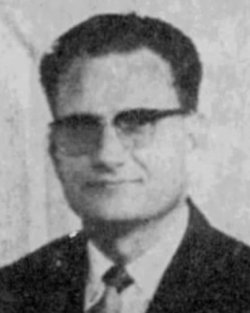
W.E. Best

#24 Evidences of the Existence of God

Romans 1:19-21
W.E. Best July, 1 1973 Audio
0 Comments
Remastered October/November 2024

Sermon Transcript

Auto-generated transcript • May contain errors

100%
I'm using this morning verses
19 through 21 of Romans chapter 1. After a few introductory statements
concerning the subject of neo-orthodoxy, we will then view some of the
high points of verses 19 to 21 before we begin developing the
subject entitled The Existence of God or Evidences for the Existence
of God. Beginning with the 18th verse,
you want to keep your minds occupied with this entire section beginning
with the 18th verse through the 32nd. The Apostle Paul in writing
to the Romans said, For the wrath of God is revealed from heaven
against all ungodliness and unrighteousness of men who hold the truth in
unrighteousness. Because that which may be known
of God is manifest to them, notice your marginal reference, for
God has showed it unto them. For the invisible things of him
from the creation of the world are clearly seen, being understood
by the things that are made, even his eternal existence in
Godhead, so that they are without excuse. The 21st verse, because
that when they knew God, and there's a better translation,
knowing God, so because that when they knew God, they glorified
him not as God, but became foolish in their hearts, Notice this,
and changing the glory in the next verse of the uncorruptible
God into an image made like two corruptible man, four-footed
beast, and creeping things. But that 21st verse, because
when they knew God, they glorified him not as God, neither were
thankful, but became vain in their imaginations and their
foolish heart was darkened. We'll be looking at two verbs.
in that text in just a few moments to show you the awfulness of
a person knowing the existence of God and then not giving the
proper honor to God that he should. The question has often been asked,
can the existence of God be proved by argument? What do you think? Do you think the existence of
God can be proved by argument? Many philosophers, you'll notice
what I said, philosophers deny that it can be proved by argument.
I want to give you now two statements by those who hold to the neo-orthodox
position. Neo-orthodoxy sees no need to
prove the existence of God. It is assumed, they say, throughout
the system of neo-orthodoxy. According to this system, no
man can prove the existence of God. Thus, the system of neo-orthodoxy
makes this statement, quote, no man can say that he is, end
of quote. I emphasized two words in that
statement that I quoted from the neo-orthodox system. he is. The system further states,
now here is the point that I want you to observe very closely.
The system further states, quote, when we try to prove God exists,
then we are guilty of making God the object. We are guilty
of making God the object. Think about that for a moment. when he says he exists, still
quoting, then God is the subject and God is wholly the subject
and not the object, end of quote. I want you to think about that
for a little bit. I want to give it in its entirety
now without pausing. The system of neo-orthodoxy states,
quote, When we try to prove God exists, then we are guilty of
making God the object. When he says he exists, then
God is the subject, and God is wholly the subject and not the
object." There are other philosophers
who say that the knowledge of God is intuitive, therefore it
cannot be proved by any human being. In the light of the scriptures
found in Romans 1, 19 through 21, I think we need to come to this
conclusion. Paul stated very clearly in those three verses
that there is a subjective knowledge of God in every man. Now look at the 21st verse again.
Because that when they knew God, they glorified him not as God. It cannot be denied that every
person who comes into this world has a subjective knowledge of
the existence of God. Now that's a very plain statement,
one that can be understood by each one who is present. Paul
is talking about unsaved persons in that portion of Scripture.
He is talking about the knowledge that is gained from the general
revelation of God in nature. Paul is not discussing the revelation
of God in Christ or the revelation of God in Scripture. He is simply
discussing the subject of the revelation of God in nature.
The invisible things of him from the creation of the world are
clearly seen being understood by the things that are made so
that they're without excuse. Now there has been a lot of controversy
over the first part of the 21st verse and in comparing that verse
of Scripture with some statements made by Paul in his letter to
the Galatians and in his letters to the church at Thessalonica. There is no contradiction between
knowing God in the sense in which Paul is presenting knowledge
of the existence of God in this particular portion of Scripture,
Romans 1, 19 through 21, and the statement found like in,
I think it's Galatians 4, 8, talking about the heathen who
know not God. There is no contradiction between
knowing not God in the sense of knowing not God in the person
of Christ and knowing God from the standpoint of the general
revelation of God made known in creation. So this needs to
be understood because there is an apparent to many people, contradiction
between this portion of Scripture in Romans 121 and the verses
that I've just mentioned briefly in Galatians and in Paul's letters
to the church at Thessalonica. Paul is not talking about the
revelation of God in Christ. He is not discussing the subject
of the revelation of God in Holy Scripture. such as we have, for
instance, in Genesis 1.1, in the beginning God created the
heavens and the earth. I think there is something that
I ought to give at this point before we go any further. Robert
Canlish has given a tremendous chapter, I think, very brief
chapter, on this very thing about which we're speaking. I'd like
you to look with me, you can quote it so it isn't necessary
for you to turn to Genesis 1.1. In the beginning God created
the heaven, or heavens it should be, and the earth. Robert Camlish,
a writer in the past century, has made this statement and it's
a great statement. He's making a comparison as it
were. between this statement found in Genesis 1.1, the revelation
of God in Holy Scripture, and the revelation of God in nature,
apart from Holy Scripture. This is what Mr. Canley said.
He entitled his little chapter, a brief chapter, Creation Viewed
as a Matter of Faith. I give this quotation. This is
one of the greatest statements that I've found by any person.
He said, and I quote, the fact of the creation is regarded in
the Bible as a fact revealed and as such it is commended to
our faith. Thus the scriptural method of
this subject is exactly the reverse of what is called the natural.
Now notice what he said. In other words, in commenting
on Genesis 1.1, in the beginning, God created the heavens and the
earth. He said, the scriptural method of this subject, creation
viewed as a matter of faith, is exactly the reverse of what
is called the natural, and I assume what he meant by natural, is
that which we are now discussing in Romans chapter 1, verses 19
through 21. He went on to say, it is not
to ascend from nature to nature's God. Now this is exactly what
takes place in Romans 1, 19 through 21, when one begins to realize
that there is a supreme being. He begins with himself and he
reasons up, as it were. But the method is entirely the
reverse of that. When we have the revelation of
God in Holy Scripture, you see, in the beginning, God created
the heavens and the earth. And this is what Mr. Canlish
was talking about. So he said, it is not to a sin,
commenting on Genesis 1.1, from nature to nature's God. Then
I like to think about Romans 1.19 and 20. but to descend, if we may so
speak, from God to God's nature. So you see in the reading and
in the study of Genesis 1, you go from God and then you go to
the creation. God who created. And this is
what he's talking about. He said, as he goes on, are his
works of nature. not to hear the creation speaking
of the Creator, but to hear the Creator speaking
of the creation. That's great. He goes on to say,
God himself appears in the beginning God, see, Genesis 1.1, and tells
us authoritatively who he is, and what he has done and why
he has done it. When I draw inference for myself
concerning the author of creation, when I reason out from his works
the fact of his existence and the chief attributes of character,
I am conscious of a certain feeling of superiority." What a great
statement. What is he saying? He is saying,
when I begin with myself, when I use my own faculties and come
to the conclusion by my own faculties that God does exist, reasoning,
you see, from man and going up to God, from nature to nature's
God. He said, when I do that, I am
conscious of a certain feeling of superiority. The deity becomes
almost, in a certain sense, my creature, the product of my own
elaborate process of thought. I am occupied more with my own
reasonings than with the transcendent excellences of him of whom I
reason." Oh, what a great statement. But now, Genesis 1-1, God speaks
and I'm done. He opens his mouth and I hold
my peace. I now at once recognize real,
a real and living person. And I would insert the word Godhead
at this point, because the word God in Genesis 1.1 is not talking
about a person per se, but the Godhead, with the three persons
of the Godhead. And I'm inserting that. But he
said, I now at once recognize a real and living person, and
I would say Godhead, beyond and above myself. Now in very truth,
My faith does become the substance of things hoped for, the evidence
of things not seen. That is a great statement as
one considers the distinction between the revelation of God
in Holy Scripture, Genesis 1, and the revelation of God in
nature, Romans 1 19 through 21. Now as we consider this passage
in Romans 1, 19 through 21, it cannot be denied that there is
a subjective knowledge of God. Since the subjective knowledge
of the existence of God is an objective fact, it must be revealed
and established by evidence. Let me please get that statement.
I'll repeat it. I stated in the light of
the passage that I've quoted from Romans 1, and I'm using
now in particular verse 21, because that when they knew God or knowing
God, they glorified him not as God. So there is a subjective
knowledge of God in the heart of every person. who comes into
this world, and since the subjective knowledge of the existence of
God is an objective fact, and go back to verse 19 and verse 20, and the 20th verse
proves that there is the objective fact of the existence of God. So since the subjective knowledge
of the existence of God is an objective fact, it must be revealed
and established by evidence. Now if that doesn't contradict
the statements that I have already given to you by neo-orthodoxy,
first of all the statement which says no man can say that he is
And the next statement given by neo-orthodoxy which states,
when we try to prove God exists, then we're guilty of making God
the object. When he says he exists, then
God is the subject and God is wholly the subject and not the
object. I am here to say to you that
God is both object and subject. just as there is the objective
evidence of the fact of God's existence in nature, and there
is also the subjective experience or knowledge of that objective
fact. Let's carry it now to the conclusion
to which it should be taken by a Christian. You see, such philosophy
as I have given you by neo-orthodoxy goes on to deny the necessity
of the objective revelation of God's mind in Holy Scripture. But the objective fact of God
that is revealed in Holy Scripture, the objective fact concerning
the attributes of holiness, love, and other great attributes those
attributes become a subjected experience in the life of every
person who has been born of the Spirit of God. I read recently this statement,
and I think it's good. Objection to the atmosphere which
sustains man The atmosphere which sustains man illustrates that
one assumes that God exists while he argues that he does not exist. That's putting it down where
people can understand it. You know, there are some who
say they do not believe in the existence of God. A man once
began his argument against the existence of God by saying, and
I quote, I am an atheist. God knows. He was real wise, wasn't he? He thought he was clever, but
he was not so smart, was he? And when I think about this and
carry it to its logical conclusion, I have to come to this place.
as a person acknowledges his own existence by doubting it. Are you following me? I said as a person acknowledges
his own existence by doubting it, so he acknowledges the existence
of God by questioning it. And he reminds me of the fellow
who said he didn't believe in the existence of God so he was
going to demonstrate it. So he walked out of his house
and he looked through the window and when he looked in the window
he said, I don't see anybody in there. You get the point? That's how foolish a person is who denies the existence
of God. In the light of Romans chapter
1, there is not a person under the canopy of heaven who can be honest and say he
does not believe in the existence of God. The last verse of the
chapter proves that there is no such thing as an atheist. who knowing the judgment of God,
that they which commit such things are worthy of death, and not
only do the same, but have pleasure in them that do them." Every
person acknowledges the judgment of God. According to Romans chapter
1 verses 19 through 32. I would like you to turn with
me now to Romans 1, and I'd like to give a few statements as we
look at some of the main points of these verses 19 through 21. I'm not giving what you would
call a verse-by-verse or a phrase-by-phrase or word-by-word exposition, but
I do want to call attention to some outstanding things in these
verses. We'll be discussing the revelation
of God and making a distinction between the general revelation
of God and the special revelation of God. And we'll be using the
19th verse primarily in the discussion of that particular subject. But
as we look at these verses, 19 through 21, I want to call attention
now to several things, hoping that you will take some notes
on some important statements found in these verses. Verse
19, because that which may be known of God. So general revelation
is first of all limited. All I'm going to do this morning
is just mention these things because the things that I am
now mentioning to you in connection with the 19th verse will be discussed
later in our message on general revelation. But this general
revelation is first of all limited that which may be known of God,
hence some things may not be known of God. You see, the Lord retains the
right, since he is the sovereign God of the universe, to hide
some things until he sees fit to reveal them. By the fact that the statement
is made, that which may be known of God, proves that the general
revelation of God limits the revelation of God. Secondly,
this general revelation is not only limited, but it is sufficient
to accomplish the purpose for which it is intended. You'll notice he goes on to say,
is manifest to them for God has showed it unto them. Verse 20,
for the invisible things of him from the creation of the world
are clearly seen, being understood by the things that are made,
even as eternal power and Godhead, so that they are without excuse,
sufficient to accomplish the purpose for which it is intended. Enough is revealed to make every
man inexcusable before God. And lastly, It is manifested
because he says in verse 19 and also verse 20, it has been shown
them and it is manifest to them. So it is made manifest. Now the statement manifest in
them, using the preposition in, is not to be understood in the
same sense as Romans 2, verses 14 and 15. You need to notice
this, when Paul said, for when the Gentiles which have not the
law, that is, they do not have the written decalogue, do by nature the things contained
in the law, these having not the law, that is, the written
decalogue, are a law unto themselves. And then he proves it in the
next verse, which show the work of the law written in their hearts.
Even though the Gentiles do not have a written law as the Jews
possessed, there is a law written on the hearts of the Gentiles. And he goes on to explain it
by saying, their conscience also bearing witness, and their thoughts
the meanwhile accusing or else excusing one another." He's talking
about the internal witness of the conscience. Now that is not
what the Apostle is talking about
here in the 19th verse, manifest in them. It is not to be understood
in the same sense as chapter 2, verses 14 and 15. Therefore,
in them should be translated, and it is so translated in your
marginal reference, to them. And verse 20 is an explanation
of the statement God manifested it unto them. Notice the last
part of the 19th verse, for God has showed it unto them, for,
you see, the invisible things of him from the creation of the
world are clearly seen. Now look at the 20th verse. The
invisible attributes that constitute God's nature are listed under
three heads in verse 20. They are the eternality of God,
The omnipotence of God and the word Godhead would be better
translated deity. Creation teaches the eternity
or the eternality of the Creator by the simple law of cause and
effect. God's creative power could not
exist without a source. It is manifest in creation. The
word Godhead, or divinity as it is often translated, is generic
as distinguished from power which is specific. The term reflects
on the perfections of God revealed in general revelation. God's
government of the world is proof of his attributes mentioned in
this verse. Therefore we see the omnipotence
or the power of God. All things were created by him,
Paul said in writing to the Colossians, and all things are held together.
By him all things subsist. Now let's look at verse 21. He says, because that when they
knew God, or better translated, knowing God. And he's talking
about the knowledge that is derived from general revelation, that
is, from creation. So knowing, in this verse, denotes
the permanency of the knowledge. Knowing denotes the permanency
of the knowledge. No moral degradation can brought
out this knowledge. Now think about that for a moment.
It doesn't make any difference how low the heathen become in their moral
lives. They can never brought out this
knowledge of God. Now this is a very important
point I'm making. So knowing here denotes the permanency
of the knowledge. And all of their immorality will
never blot out their knowledge of God. Even though they do not
like to retain God in their knowledge and God will give them over to
a reprobate mind, that does not mean that this knowledge of God
in creation or the existence of God can be brought out of
their minds. Now let's notice two things, neither glorified nor gave thanks. Here are two verbs and I must
explain these to show you how important they are. Neither glorified nor gave thanks
are two verbs which are arious, active, indicative. Now let me
break that down. Follow me now, I want to show
you something. First of all, the indicative mood of these
two verbs states the appalling fact I said the appalling fact. Secondly, the active voice that
is used here in the Greek reveals the progressiveness in this double
sin. What do you mean double sin?
Neither glorifying or giving God thanks. So the indicative
mood states the appalling fact, and the active voice reveals
their progressiveness in this double sin. Finally, the arius
tense in the Greek expresses the final decisiveness. Oh, this ought to make a shake
when we think about lost persons today. who are going on deeper
and deeper and deeper into sin. So the Aorist expresses the final
decisiveness with which they refuse the adoration that belongs
to God. It simply means they do not value
God at all. So what do they do? They turn
to the vanity of their own reasoning. Look at the word vain in verse
21. What became vain? The word vain here does not mean
proud. It literally means useless. Useless. So they turned to the
vanity of their own reasoning. And then he closes the statement
by the use of the word heart. He says, and their foolish heart
was dark. So the heart is the center of
emotion, will, and activity. Now I'm trying to give to you
some of the high points of those verses to prove to you that God's
existence is known by every human being
who has a rational mind. under the canopy of heaven. And
this is in direct contradiction to the neo-orthodoxy, a philosophy
that is being promoted by a lot of religionists today, such as
Karl Barth, who died recently, Reinhold Niebuhr, Brunner, and
many others. Now, I doubt that we get very
far this morning in developing this subject, but we'll get as
far as we can. We want to deal with four different arguments
on the existence of God. But before we get into those
arguments, there are some other things that I want to share with
you by way of introduction. Charnock, who has the outstanding
work on the attributes of God, has made some significant statements
in his work entitled The Existence of God. In fact, that is the
first subject discussed by Charnock in his work, which is the standard
work on the attributes of God. I want to share with you just
a few statements by him, and then I want to expand on two
or three. He said, God is so inaccessible
that we cannot know imperfectly. However, God is so greatly manifested
that we cannot be totally ignorant of his existence. That's a great statement. I'm
just sharing with you just a few of the nuggets from about 75
pages. And as you know, the Puritans
went on and on and on. in their writing. Another statement,
God's essence cannot be comprehended, but his existence cannot be denied. I don't remember now if it was
Charnock who made this statement or another person that I was
reading, but I want to elaborate on this illustration. Someone
said, as the light from the sun manifests other things to us,
so it also manifests itself. We've experienced some beautiful
weather this fall. Today as you walk out of this
auditorium into the beautiful sunlight, It is by the rays of
the sun, by the light that comes from the sun, that you're able
to see this building, you're able to see one another, you're
able to behold many things in God's creation. But don't
forget, the same light that comes from the sun, which enables you
to see other things, also enables you to see the sun itself. So the invisible things of God
from the creation of the world are clearly seen, clearly seen,
being understood by the things that are made even as eternal
power in Godhead so that men are without excuse. Let me illustrate
it in another manner. You may walk into a dark room
some night. You know where the light is and
you flip on the light. a table lamp. The light that comes from that
table lamp enables you to see the various things within the
room. But the same light that comes from the table lamp, which
enables you to see other things in that room, also that light
enables you to see the lamp. So that which God has revealed
to you and to me in nature also reflect the fact that God exists. It is just that simple. Revelation always implies a revealer. There's no revelation without
a revealer. There's no creation without a creator. Nothing can
be made without someone to make it. Now here are some outstanding
statements by Charnock. These, I think, are the greatest
that he has made in his whole work on the existence of God. At least these appeal to me more. He said, and I quote, if man
made himself, then he was a cause before he was the effect. If man made himself, then he
was the cause before he was the effect. Now when you think through
that, you can see how ridiculous. And I'm going to break that down
this morning and make it practical before we get through. Another statement by him, quote,
if the first man made himself, why did he limit himself? Isn't
that a good, isn't that a great statement? Why did he limit himself?
If man made himself, why did he limit himself? If he gave himself being, why
did he not give himself the perfections of being? See, when you think through that,
you know that man didn't make himself. Had man made himself, he would
have given himself the perfections of being. Man would not be where
he is today had man made himself. It's just that simple. He went
on to say, if the first man made himself, why did he not preserve
himself? Preservation is not more difficult
than creation. If the first man made himself,
he would have been able to support himself. He would not have needed
the assistance of any creature. But every man is dependent, not only on other creatures here
on earth for his existence, but most of all, his dependence on
God. For in Him we live, move, and
have our being. That has to do with the providence
of God, and tonight we will complete our discussion of sin, the commencement
of sin, or the beginning of sin. and the relation of sin to the
will of God last Sunday evening and tonight the relation of sin
to the providence of God. The verse that I've just quoted
from Acts 17, that verse has to do with the providence of
God. In him we live and move and have our being. We are dependent
creatures and we all know it. We all know it. There are four arguments And
I may not get any further than the first this morning that I
want to give to you in discussing the subject of the existence
of God. The first is known as the cosmological argument. The second is known as the teleological
argument. Now don't become discouraged
if you're not acquainted and familiar with these words. We'll
give you the meaning of them. They're terms that we need to
be acquainted with in our study of the Scriptures. You know,
I was thinking of this this past week as a result of discussing
some things with some folk. You know, the great tragedy today
is this. When the whole counsel of God,
when the whole counsel of God, and I'm talking about the Word
of God being taught from Genesis 1-1 to Revelation 22-21, when
this Bible in all of its completeness is taught to people, the average
religionist today thinks that a great majority of it is heresy
because they've never heard it. And they're so unfamiliar with
many things that they think that those things are heretical if
they've never heard them before. I want you to know the average
religionist today can go to church all of his life to the average
religious institution and he'll never hear some of the fundamental
foundational things. And I say that without any apology
because it's a fact. And those of us who have been
Christians for any length of time know that it is a fact. So we
have the cosmological argument, we'll be dealing with that in
just a moment, the teleological argument, the anthropological
argument, and the ontological argument. These are the four
arguments. Anyone who has made a study of
theology has, at one time or another, gotten into the study
of these arguments. But now we want to look at the
cosmological argument. We're going to define each one,
we're going to show how that it is used, we're going to show
the imperfections of each argument, follow me now, and yet the advantages
of each argument when they're used properly. The advantages
of each one when it is used properly. We'll define it, first of all,
each argument, show how that it is used, generally speaking,
and the imperfections of each argument because there is no
argument, there is no system of thought that comes from the
mind of man that is perfect, that is absolutely perfect, that
is perfection. So we look now at the cosmological
argument. What does this argument do? It
proves the existence of a necessary and eternal being. That's the
main point in this particular argument, the cosmological argument. You say, well, why use a big
word like that? It isn't as big as you might
think. This word comes from the Greek word cosmos, which is translated
world in your Bible. And it means order or system
or orderly arrangement. Even Eladia's cosmetics. It actually
comes from the word cosmos. The word cosmetics. So you see
it's not such a strange word after all, is it? If we'll just
investigate it a little bit. Now there are three things that
I want to discuss with you under each one of these arguments.
And the one we're now dealing with is the cosmological argument.
So first of all, let's define the cosmological argument. The word cosmological comes from
the Greek word cosmos, if you want to spell it in English,
k-o-s-m-o-s, which means world, means orderly arrangement. This branch of philosophy deals
with the origin and general structure of the universe in which we live. Now the basic principle of this
argument is every effect must have a cause. After having made that statement
you might ask, now preacher, we believe that every effect
must have a cause. How could there be any imperfection
in that argument? Well, there is an imperfection
in that argument. Do you know what it is? There
is an imperfection in that argument, as I'll show you in a few minutes.
It is true that every fact, as we would say, just naturally
speaking, must have a cause. To maintain that anything has
caused itself to exist is to assert that it acted before it
existed. We're going to break this down
this morning and make it practical. In other words, non-existence
cannot produce existence, and non-entity cannot produce an
entity. That's the simplicity of it.
And that's true. We all accept that. So whenever you see anything,
you know that this came into existence by the aid of someone. Let me illustrate it in this
manner. If someone brings a beautiful painting and shows it to you,
the first question which comes to your mind, who's the painter? Who's the painter? So when you look out at creation,
when you look at the moon, when you look at the stars, when you
look at the sun, the question that comes to your mind, if you
are a rational person, who is the creator? The heavens declare
the glory of God and the firmament showeth his handiwork. Who is
the creator? Now let's bring that down to
our salvation. Let's make it practical this
morning. Let's do a little preaching as we teach. Will you turn with
me to the 65th division of the Psalms? 65th division of the Psalms. Wherever there is, in fact, there
must be a cause. With that thought in mind, let's
illustrate something. The psalmist said in the fourth
verse of Psalm 65, blessed is the man whom thou choosest and causeth, and causeth, look
at that, to approach unto thee, that he may dwell in thy courts.
Choosing causes. Now who is it that causes a person
to approach the Lord? Last Sunday morning we discussed
some very important things in relation to a person's coming
to Jesus Christ. And you can see how that will
tie in with what we are going to say now. Would you not say
that it is absurd for an individual to put effects in the place of
causes and causes in the place of effects? Wouldn't you say
that that would be absurd? Now let me raise this question. With
that in mind, is faith the cause of God saving an individual or
is God the cause of faith? Do you see what I'm talking about? Most religionists you hear today
will say that faith is the cause of salvation. Is it? Or is God the cause of faith? I'll illustrate it in this manner. Would you say that faith is the
cause of God's ordination? Or would you say that God's ordination
is the cause of faith? According to Romans 13, verse
48, all that are ordained to eternal
life believe. Ordination is the cause of faith.
Faith is not the cause of ordination. Is faith the cause of God's election
or is election the cause of faith? You see what religionists do
today? They get the cart before the horse. That'd be like saying that the
manufacturer is result of the automobile. In other words, the automobile
is the cause of the manufacturer. That's kind of foolish, isn't
it? It's just that ridiculous for
a person to say that his salvation, his relationship to the Lord
is dependent on himself. So the psalmist said, blessed
is the man whom thou chooses and calls it to approach unto
thee. If I walk into your home and
see a beautiful set of cabinets, would I say that those cabinets
are the cause of the carpenter? Or is the carpenter the cause
of those cabinets? I think you see the importance.
of putting things in their proper order. And this is the importance
of the cosmological argument. But let's go a little further.
The purpose of this argument is to prove that the universe
is not eternal. I said the purpose of the cosmological
argument is to prove that the universe is not eternal. Did
you know that some scientists are trying to prove, in fact
they're saying that the Earth is not really, we're not really
losing our natural resources, we're not really losing our energy,
our energy is not decreasing, our natural energy? But beloved, that isn't so. When you think about this in
the light of what we're faced with even at the present time,
you see, if the Earth were eternal, don't you think it would already
have lost all of its energy? Someone has illustrated it in
this manner, said it's evident that the universe is running
down like a clock. Now, I'm not worried about it running down
before the Lord completes His purpose in the universe. How
about you? Some people seem to be worried
about, you know, it running down completely before the Lord completes
His purpose, but that isn't going to be the case. The purpose of
God on this universe is going to be complete. I assure you
of that. So, it is running down. I don't
think this can be denied, and this can be proved in several
ways. For instance, water doesn't run uphill without force. Heat does not pass from cold
to hot, does it? So if the universe is running
down and at the same time it is eternal, as some say, does
it not stand to reason to you and me that it would already
have run down? Now let's look at another aspect
of the cosmological argument. There are some imperfections
in this argument. We say yes, the effect proves
that there is a cause. And we have to go back to the
first cause. Now, what about the imperfection of this argument? You know, when we talk about
causality, and that's what we've been talking about, God causing
the universe to come into existence, God causing the sinner, that
come to the Lord Jesus Christ? Now, in the discussion of causality,
here's a point that needs to be emphasized. If we maintain
that the cosmological argument is perfect, absolutely perfect, how would this principle apply
to God? How would it apply to God? Now, the principle of causality
should be stated differently and I want to give you the true
way of stating the principle of causality. Here's how that it really should
be stated. It is proper for you and me to
say that existence itself, existence itself, does not demand a cause. Now let that sink in for a moment.
Existence itself does not demand a cause. If existence itself
demanded a cause, then that would mean that God himself demanded
a cause. Existence itself does not demand
a cause. Now we want to state it properly. But the coming into being of
that which was not existent demands a cause. Do you see what we're
doing? Can you see the imperfection
of this argument? And don't let someone hang this on you sometime.
Don't let some so-called atheist or some agnostic or some individual
hang this on you. Now let's look at it. The principle
of causality should be stated in this manner in order to put the sovereign God in the
place that he deserves to be placed. So it's proper for you
and me to say that existence itself does not demand a cause. But the coming into being of
that which was not existent demands a cause. It's just that simple. You see,
that takes the Lord God of heaven out of the picture. He is the
self existent. He is the eternal existent one. He's always existent. So the
cosmological argument is imperfect when you apply it to God himself. But if we state this argument
properly, I'm talking about the principle of causality, then
we say that existence itself does not demand the cause, but
that which had no existence, the coming into existence of
something which had no existence, that demands a cause. The earth at one time had no
existence. God spake and the world came
into existence. God said, as we find in Hebrews
11 verse 3, the Lord spoke and worlds came into existence.
W.E. Best
About W.E. Best
Wilbern Elias Best (1919-2007) was a preacher and writer of Gospel material. He wrote 25 books and pamphlets comprised of sermons he preached to his congregation. These books were distributed in English and Spanish around the world from 1970 to 2018 at no cost via the W.E. Best Book Missionary Trust.

Comments

0 / 2000 characters
Comments are moderated before appearing.

Be the first to comment!

Joshua

Joshua

Shall we play a game? Ask me about articles, sermons, or theology from our library. I can also help you navigate the site.