Bootstrap
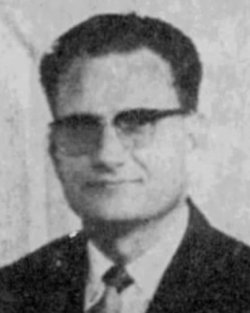
W.E. Best

#45 Justificatiion - Objections to Eternal Justification Answered

Romans 8:33
W.E. Best July, 1 1973 Audio
0 Comments
Remastered Oct/Nov 2024

Sermon Transcript

Auto-generated transcript • May contain errors

100%
Keep in mind now, please, the
seven adverbs which we have given to you, all which are related
to the subject of justification. The doctrine of justification
should be studied under these seven headings, namely, one,
sovereignly declared, that's what we're studying now, and
we'll be able to complete, I am sure, by next Lord's Day evening. Two, freely given. Romans 3 in
verse 24, 3 meritoriously provided, Romans 5, 9, 4 authoritatively
manifested, Romans 4 verse 25, 5 efficaciously bestowed, 1 Corinthians
6 verse 11, 6 experientially known, and finally evidentially
revealed. experientially known, Romans
5, 1, and evidentially revealed, James 2 and verse 24. I stated last Sunday evening,
as I introduced the first aspect of justification after defining
the term, showing that it is a legal term as it is used in
the scriptures. God declaring one just on the
basis of his holiness and his justice being satisfied by the
redemptive work of his Son, Jesus Christ. Then we dealt with these
three things, and they are very important. God's covenant reconciled
justification with his wisdom. Christ's ransom reconciled justification
with God's justice. And finally, the Holy Spirit's
regeneration reconciled justification with God's holiness. Now, let
me add something to this. You can never come to the place
in your study of the scriptures where there is not something
to be added to what you have already learned. Thus, one can
continue to amplify the great truth of God's Word, whatever
truth one might be studying. One of the Puritans said, There
are three parts to the subject of justification. He went on
to clarify himself by saying, when I say there are three parts
to justification, I am not saying that there are three parts to
the actual justification of one, but he put it like this, there
are three different stages of justification. Well actually
that is what we have said and what we have already given you
tonight by way of review, God's covenant, Christ's ransom, and
the Holy Spirit's regeneration. But I like what this person went
on to say in adding something to this particular thought. He
said the first two, that is the work of the Father, that is the
imminent act of God the Father in justifying, which is eternal,
and the work of Jesus Christ on the cross, which is something
that was externally provided for us, and finally internally
imparted by the work of the Holy Spirit in regeneration, we would
say that the first two, that is the work of the Father and
the work of the Son, are both imminent acts looking toward
the actual justification of one by faith. I like that. Notice
what I said now. These two, the first two, the
work of the Father and the work of the Son, are imminent acts
looking toward the actual justification of the sinner through faith.
And finally, the third part, as he put it, is not an imminent
act, but it is an act of the Holy Spirit not toward the elect
one, but upon the elect one. Now you see the difference? The
first two look toward the justification through faith of the elect, and
the final, the work of the Holy Spirit, not toward but upon in
time applying what the Son purchased and the Father planned. I like
that. I think it amplifies what we have already stated and gives
us another approach to this great subject of justification. Now
we come to about four major objections. This morning I gave to you seven
points in favor of justification through faith and time, and these
persons deny eternal justification. Then I gave to you seven great
arguments for eternal justification and justification through faith
and time. Now what are four major objections
to eternal justification? So get ready. What I have had
to do in the last several weeks, I have actually had to sit down
and reminisce, go back over all the great principles that I have
learned concerning God, theology, the science of God, the attributes
of God, such as the eternality of God, the wisdom of God, and
so forth, and then apply these principles to the subject of
justification. And this is exactly what we must
do, beloved, in order to properly understand. Now, the first that
I'll deal with tonight, how can a non-entity be justified? This is one of the so-called
unanswerable objections to eternal justification. Now, how would
you answer it? But if it isn't enough for you
as a Christian to just say, well, I believe because the Bible says
so, that doesn't make much sense. That won't help a person. It's
true that the Bible says a lot of things, but are you able to
put in the words in giving a testimony that will honor the Lord in explaining
something to someone who raises a question? Now the question
is, how can a non-entity be justified? What do they mean by that? You
know what they mean by that. How can a person, for instance,
who has not yet been born physically, How can that person be declared
just by God? So how can a non-entity be justified? Are you ready for the answer?
Are you ready? I'm going to go slow because
I want you to take some notes. Actually, I'm getting into the
realm of imputation without calling it by that name. Some of you
will recognize this principle as I apply this principle to
the answer of the question, how can a non-entity be justified? Are you familiar with what we
have taught in the past on real imputation? Do you know the difference
between real imputation and judicial imputation? Real imputation is imputing that
which was previously yours to begin with. In other words, it
is the imputation of that which is antecedently yours. Now I'm giving it to you in just
one brief statement. I cannot enlarge upon this because
I will do that when I discuss the subject of imputation with
you. Now what is judicial imputation? Judicial imputation is the imputation
of that which was not yours antecedently. Which was not yours antecedently,
or not antecedently yours, however you want to explain it. Now,
maybe I need to explain that just a little bit. I made this
statement this morning that if you were to say that our sins
that have been imputed to Jesus Christ that that is real imputation,
that's heresy. You see, our sins were not antecedently
Jesus Christ's. You see what I'm talking about?
So when our sins are imputed to Christ, you must use the term
judicial imputation and not real imputation. That's why it's so
important. Jesus Christ had no sin. So don't
make the mistake in saying that when our sins were imputed to
Christ, that is real imputation, because it isn't real imputation,
that's judicial imputation. Well, let's turn it around. When
it comes to the imputation of Christ's righteousness to us,
Beloved, that is not real imputation. That is judicial imputation because
righteousness was not antecedently ours. The righteousness that
is imputed to us is the righteousness of Jesus Christ of our righteousness.
So you have to use the term judicial imputation, not real imputation. Now I want to show you the importance
of this by making that distinction to begin with. Now I'm not getting
into immediate and immediate. I'm not doing that tonight. Now,
what is the answer to the question, how can a non-entity be justified? Now this is a long answer, but
I assure you if you will follow me and take notes that you will
be helped as you apply the principle that we have even given to you
to some extent tonight. First of all, the elect have
not an actual being. when they were elected in the
council of God. At that time they had not an
actual being. In other words, when we were
chosen in Jesus Christ before the foundation of the world,
we did not at that time have an actual being. We didn't even
exist. Do you follow me? You see, we're answering the
question, how can a non-entity be justified? And this is the
only way that it can be properly answered. So the elect have not
an actual being, but they have a representative being in Jesus
Christ. You and I. who are saved tonight
have been saved by the grace of God. We had a representative
being in Jesus Christ before the foundation of the world for
the simple reason that we were given to him in the covenant
of redemption and that before we actually came into existence.
Now that isn't difficult for us to understand, is it? As the members of posterity cannot
be contemplating as existing when Adam sinned, you and I did
not exist actually when Adam sinned. Now you see it would be very
difficult for me to get away from that imputation, the imputation
of original sin to all the posterity of Adam. But I can't get that
far tonight. We'll deal with that later. I'm
only answering the question, how can a non-entity be justified? So I said, as the members of
posterity cannot be contemplated as existing when Adam sinned,
yet all the members of the human family were conceived by God
and destined to exist. Now I'll go slower. I just applied
this principle two weeks ago in answering this particular
objection, and it will later be put in print. Now let's go
a step further. They were foreordained, you and
I were foreordained to exist, and every person who was foreordained
to exist will actually exist in time. You can rest assured
of that fact. So they were foreordained to
exist and the certainty of existence was guaranteed. The certainty
of every individual whom the Father gave to the Son in the
covenant of redemption, so to speak, is destined to exist. Every descendant of Adam destined
to exist and shall come into existence. Now let's take that
thought a little further. all the members of the race come
to exist actually, notice how I'm emphasizing the word actually,
actually by the process of generation. And notice I'm using the word
generation, by the process of generation. This is the divinely
constituted means whereby God's foreordained design comes to
effect in history. Now, I want to say at this point,
it is a capital mistake to interpose the question, when does each
member of the race become actually sinful? Let me repeat it. Get your thinking cap on now.
I told you that and I warned you about that to begin with.
We're discussing some very important themes. We're wading out beyond
ankle deep water. Now listen to me a moment. I
said all the members of the race come to exist actually by the
divinely constituted means whereby God's who ordained design comes
to effect in history. I said it is a capital mistake
to ask the question, when does each member of the human family
actually become sinful? Now what is the answer to that?
Do you know? I said it's a capital mistake to ask that question.
Now let me prove it. The truth is each person never exists other
than sinful. Does that make sense? I said the truth is each person
never exists other than sinful. Now let's carry a little further.
Each person is eternally contemplated by God as sinful by reason of
his solidarity with Adam's sin which he committed in the Garden
of Eden. Now that takes us to Romans 5.12,
does it? Did you know that Romans 5.12-21
is one of the deepest portions of Scripture in all the sacred
canon? If you don't believe it, start
studying it. Start studying it. Let me repeat,
Romans 5, 12 through 21, and we will study it phrase by phrase,
word by word, in this series on the subject of justification
before we will have finished. But it is one of the great doctrinal
sections of Scripture. It is as deep doctrinally as
Ephesians 1, Romans 8, and yet many people do not realize the
depth of that portion of Scripture. Now, it is not strictly accurate,
follow me closely, it is not strictly accurate, therefore,
to say that we become depraved by natural generation. Now this
is what Arminians believed. I can't get into that aspect
of it enough. You notice what I said? I said it is not strictly
accurate for me to say, or any person to say for that matter,
that we become depraved by natural generation. You see, that ignores
the solidarity of all of us with Adam when he sinned in the Garden
of Eden. I'll give you something to chew
on for a while. And yet it's great, beloved, when you study
it out and you see the truth of it, you rejoice. When one
begins to study, for instance, Romans 5, 12, Wherefore by one
man sin entered into the world, and death by sin. Did you know
the Apostle Paul actually starts a comparison but never completes
it? He starts a comparison in the
first part of verse 12 of Romans 5 but never completes it. Then
he adds, even so, even so, he leaves his comparison. I can understand that being a
preacher. I can understand why he began a comparison but never
completed it. Many times I start off saying something and never
really complete that because you get off of this into another
area and it's all so interrelated. And then the last part of verse
12, he takes up another subject. another subject and then we have
what is known as a parenthesis in verses 13 and 14 and in the
parenthesis he actually explains the latter part of the 12th verse. Now I can't go any further than
that tonight. But I do want to emphasize this, Romans 5.12,
the solidarity of all of the descendants of Adam with Adam
in his sin. Wherefore by one man sin entered
into the world, and death by sin. And so, and so, death hath
passed upon all, for all have sinned. Or some translations
render it like this. in whom all sin. Now what is Paul bringing out?
He is bringing out the solidarity of all the descendants of Adam
with Adam in the sin which was committed in the Garden of Eden.
May I say to you tonight, when we talk about the imputation
of original sin to all the descendants of Adam, beloved, that is real
imputation. Real imputation, imputing something
to you and to me which was antecedently ours. I'll tell you something
else that maybe you haven't given much thought to. In verse 12
it talks about the sin of one man. That statement is found
five times in verses 12 through 19 of Romans 5. The sin of one
man, the disobedience of one man, and the righteousness of
one man. He is giving a comparison and there is also a contrast
between Adam and Jesus Christ. In Adam all die. In Jesus Christ
all are made alive. Now, so I'm talking about the
solidarity. that you and I have with Adam
in the original sin. Natural generation, however,
is not the reason we are conceived in sin. It is not because of
natural generation that you and I are conceived in sin. It is
because of our solidarity with Adam and his sin that we are
conceived in sin. You see, this divides those who
believe in free grace from those who believe in free will. And
there's a very distinct and sharp division. The reason why we are
naturally generated in sin is because of our solidarity with
Adam and his sin. You say, well how does that answer
the question? How can a non-entity be justified? Now, let me go
back and sum it all up. I want to read to you what I
have put in just a few words. I could preach on it. for all
the remaining moments of our message tonight. But I can't
afford to take that much time. Now, I must go back over this
and give to you this principle in order to apply it to the elect
of God and the justification of the elect. The same principle
applies. And what I want to show you tonight
is the importance of applying the principles that you learn
as you study the Scriptures. Now, I said the elect have not
an actual being, but they have a representative being in Christ.
As the members of posterity cannot be contemplated as existing when
Adam sinned, yet all the members of the human family were conceived
by God as destined to exist. They were ordained to be and
what? and the certainty of existence
was thus guaranteed. All the members of the race come
to exist actually by the process of generation. This is the divine
constituted means whereby God's foreordained design comes to
effect in history. It is a capital mistake to interpose
the question, when does each member of the human family become
actually sinful? The truth is, each person never
exists other than sinful. Each person is eternally contemplated
by God as sinful by reason of his solidarity with Adam. And when he actually comes into
existence, he comes as a sinful creature. It is not strictly
accurate, therefore, to say that we become depraved by natural
generation. It is true in the act of generation
we become depraved, but this is true because it is by generation
that we become distinct persons. Natural generation, however,
is not the reason we are conceived in sin. The reason why we are
naturally generated in sin is because of our solidarity with
Adam and his sin. Now do we understand that principle?
Now let's apply that principle to eternal justification, will
you? In applying that principle which I have given to you, we'll
see the truth concerning the subject of eternal justification.
Now, here's the way I've done it. all the elect come to the
actual knowledge of justification by the process of regeneration. Does that make sense? Just like
we come into existence, actually speaking, by natural generation,
so we come to the actual knowledge of justification by regeneration,
not by natural generation. Now apply the principle. Regeneration
is the divinely constituted means whereby God's foreordained design
of salvation comes to effect in history. You see the parallel? Why? Because we're using a biblical
principle. And what applies to one area
applies to the area that we're now discussing. The members of
the elect family cannot be contemplated as existing when God made his
covenant with Jesus Christ, Hebrews 13, 20 and 21, yet they were
foreordained to exist. Any question? No, no, no question. God's foreordination guaranteed
our existence. It is a capital mistake, therefore,
notice the application of the principle. It is a capital mistake,
therefore, to do what? To ask the question or to raise
the question. What is the question? The question,
when is the elect person actually justified? Or when is he justified? That is as far as God is concerned.
When is he justified? That's just like asking, when
does a sinner become sinful? See? How the principle applies. Now listen to it. So it's a capital
mistake to interpose the question, when is the elect person justified? The truth is, each person, elect
person I'm talking about now, Those whom the Father gave to
the Son in the covenant of redemption never exists in the covenant
of God other than justified. See how simple it is? Or let's go a step further. He
is eternally contemplated by God as justified by reason of
his having been given to Jesus Christ in the covenant of redemption
and when he is actually regenerated, he is made conscious of his eternal
justification in Christ. Does that make sense? You see,
it's really simple. When you understand one principle
and you apply that principle, it's very simple. So being made
conscious of justification through faith is not the reason that
we're justified. I said being made conscious of
our justification by God is not the reason that we're justified. That would make faith the means
or the foundation of our justification. But faith is the fruit of our
justification and not in order to justification. So being made
conscious of justification through faith is not the reason we are
justified. The reason we are justified is
because we are justified by God in the eternal covenant of God.
And that's an imminent act of God. There never was a time when
you and I were not justified. Now, I'm not through. That's
just the beginning. But I'll tell you what, that's
a good beginning. Now the next question. How can
a person be justified before any sin is actually committed? This is another one of their
questions. How can a person be justified before any sin is actually
committed? Can that be answered? It surely
can. It is affirmed by those who deny eternal justification that it is absurd to justification
for a person to be justified before he actually sins or before
any charge has been brought against him. I've already answered it. Actually, I've already answered
it. But let's add something to it. The answer to this is very
simple. You say simple? Yes, I said simple. Were not sins imputed to Jesus
Christ before they were actually committed? I want to ask you
a question tonight. Jesus Christ died 2,000 years
ago. I didn't exist then. And yet
my sins, which I committed in time, were imputed to Jesus Christ
and he paid for them. He became my surety then. He
didn't become my surety When I exercise the faith that God
gave to me and embrace the finished work of Jesus Christ, that's
not when my sins were imputed to Christ and he paid for them.
He paid for them 2,000 years ago. So my sins were future when
Jesus Christ died on the cross. I want to show you how foolish
this argument is. I want to show you just what
such logic will lead people to. According to this view, then
only the sins of the Old Testament people could be imputed to Christ. Because you see, they actually
lived and they actually sinned before the coming of Jesus Christ,
before the death of Jesus Christ. So according to that logic, then
only their sins could have been imputed to Jesus Christ. But
according to the Word of God, and you'd know it to be true,
all the sins of all of those persons whom the Father gave
to the Son were imputed to Jesus Christ, my sins, 2,000 years
after the death of Jesus Christ. And Jesus Christ paid for them
2,000 years ago. I said the answer is very simple,
and it is. Now, here's another question.
Now this is not put in a form of a question. This is put in
a little different form. They say that the decree of justification
is one thing and justification itself is another thing. Now, what is the answer to this?
Actually, I've already answered it by the first principle that
I gave, but we will amplify it. Justification is a complete act
in the eternal mind of God. Can anyone doubt that? Psalm
147 verse 5, a great text of Scripture which speaks of the
knowledge of God, it is infinite. Infinite. Now you and I with
our finite minds just cannot comprehend. We apprehend what
we don't comprehend. It is impossible for you and
me to comprehend the infinite mind of God. But we embrace because
we know it's true. No new thought has ever come
to the mind of God. As I stated this morning, what
he thought he thinks, what he thinks he shall ever think. Now,
does the subject of justification come in to this thinking on the
part of God? Yes. It's an imminent act of
God. So nothing new can enter the
divine mind. that which is future to man. Now, we have to apply the principle
that we studied when we made a study of the eternality of
God. That principle must be applied
here. Are you following me? Let's see
if you recall the principle. And if you do, apply it at this
point and you can understand. I said nothing new can enter
the mind of God. God's knowledge is infinite.
Psalm 147 verse 5. Now that which is future to man
is a present fact to God. Let me illustrate it if I can.
I'm living in 1975. If I am living in the year of
our Lord, 1985, now something may be accomplished at that time.
Now it would be future, you see. That which is accomplished then,
that's future to me as I live now. But it isn't future to God
because there's no time with God. Now listen to me. We're
applying a principle that deals with the eternality of God. And
it's very important. So that which is future to you
and me is a present reality to God. That's why the apostle says,
he calleth those things that be not as though they were. Romans 4 verse 17. All right,
let's go a little further. All things that have with respect
to God, both a known and a real existence. Now there is a known
existence and there is a real existence, but they both are
known to God at the same time. Let me illustrate that point.
Now there was a known existence in the mind of God of Will Best,
who would be born June 18, 1919. And that was a known fact to
God. But it didn't really take place
until June 18th, 1919. So there is a known existence
and there is a real existence, but both of them, notice what
I said now, both of them are known to God at the same time. my known existence and my actual
existence. Now you're that little further.
Why? Because there's no time with
God. He's the ever-present, He's the eternal, I am. Now, though
all things in time do not coexist with God, yet God coexists with
them. Are you following me? Listen
to this verse of Scripture. The Lord speaking through the
prophet Isaiah. In Isaiah 41 verse 4, I am the Lord, the first
and with the last, I am he. So as the present I am of the
divine existence does at once till heaven and earth, so the
present duration does. at once comprehend all time and
eternity. You see, we're staggered by that. But that's true because there's
no time with God. No time with God. Now let's illustrate that if
we can. Though the knowledge of future things may lie at a
great distance from us, They cannot lie at a great distance
from God. Are you following me? Why? Because God is the infinite
being and we might say the eternal now. God at once possesses both time
and eternity. No time with God. No time with
God. Now let's come to the next question.
They say that justification follows calling in Romans 8, and verse
30, we used this this morning, but I want to add something to
it. They say that justification comes between calling and glorification. And since justification comes
between our being called of God, and we're called in time, and
we're going to be glorified in the future, therefore justification
is in time and cannot be eternal. That's their argument. No one
but an Arminian would offer such argument. I want to show you
how foolish the argument is. Actually, we've already answered
this, but I will amplify it. Justification as a declarative
act follows calling, but justification as an imminent act precedes calling. It's just that simple. Are you following me? I said justification
as a declarative act follows calling. but justification as
an imminent act of God precedes our calling. Let me use a biblical
example. I think it's John Gill who uses
this illustration, and it's a good illustration. In some places,
when one is studying the subject of divine election, for instance
in Ephesians 1 and verse 4, election precedes our calling. But when
you turn to 2 Peter chapter 1 and verse 10, and this is the only
verse the Arminian knows, in that text of Scripture, our calling
precedes election. Well, why? Peter's talking about
an entirely different thing. He's talking about the believer
making his election sure. And the only way that a believer
can make his election sure is first of all to make his calling
sure. Why? Because no person has any interest
in election apart from faith. As no person has any interest
in justification apart from faith. So Peter's talking about assurance. Give diligence, therefore, to
make your calling and election sure. As you make your calling
sure, you make your election sure. But when Paul, in Ephesians
1, talks about election, he is talking about what? The eternal,
imminent act of God that precedes calling. You know, there are a lot of
folk that do not know that election itself is used two ways in the
Scriptures. It is used, first of all, as
an imminent act of God. And then, in 1 Peter chapter
1 and verse 2, when it says, elect according to the foreknowledge
of God, and that literally means foreordination of God, the word
elect there does not mean the same as the word elect in Ephesians
chapter 1. One is talking about the decree
of election and the other is talking about the time when God
actually picks out, chooses out from among mankind those whom
he had previously elected in Christ before the foundation
of the world. The same thing is taught in John 15 in verse
19. He has chosen us out of the world.
That means we're already in existence and God in time reaches down
and picks us out of from among mankind. And that election, that
choice, of course, is the fruition of His eternal decree. Now listen to another statement. justification through faith and
by faith prove that faith is something prerequisite to justification? What is the answer? Now it is
true there are many verses where it talks about being justified
by faith, through faith, and so forth. And you're familiar
with many of those passages of Scripture. A great number of
them are found in Romans 3, Romans 4, Romans 5. Now those verses do not disprove
justification before faith. Remember this morning I made
a statement and it was a significant one. There is a justification
before faith unto faith. Please don't forget those two
words, before and unto. Now, justification by and before
differ but they are not contradictory. You say they differ because one
of them is an imminent act of God and the other is a declarative
act of God. That's the simple answer. Now
we come to another. It is asserted by some that justification
cannot be from eternity, but only in time, since man actually
sins and believes in time, with emphasis placed on believing
in time. The answer has already been given,
but we will add to it, we will amplify it a little bit. The
elect of God are considered under two different representatives,
or heads, Adam and Jesus Christ. As related to Adam, all are sinners
and under condemnation. However, as considered in Jesus
Christ, the elect are loved with an everlasting love. Jeremiah 31 verse 3 and John
chapter 13 verse 1. Jesus Christ was the object of
the Father's love. and wrath at the same time. I want you to see this. I want you to see this. You see
their objection is this. Now listen to it again. It is
asserted that justification cannot be from eternity but only in
time since man actually sins and believes in time. Now they
object to this. They say it's impossible for
God to love a person and yet for that person to be under the
wrath of God at the same time. Is that so? Don't forget our
blessed Lord Jesus Christ was loved by the Father and at the
same time He suffered the penalty of our sins. Therefore, He suffered
the wrath of God. All at the same time. Can you
deny that? No, it cannot be denied. and
we come now to the last that we will deal with tonight. It
is called the now of justification. They refer to it as the now of
justification and they use 1 Corinthians 6 verse 11 when the Apostle Paul
in speaking to the Corinthian church talks about what they
were before the grace of God came into their lives. verses
9 through 11, he talks about them being sanctified and justified. Now the word sanctify precedes
justification in that text. Does that throw you? It shouldn't.
You see there is, first of all, a positional sanctification,
and then there is progressive sanctification, and the third
aspect of sanctification is ultimate sanctification. when we shall
stand in the presence of Jesus Christ and be like him, for we
shall see him as he is. Now, since sanctification is
mentioned before justification, there has been much misunderstanding
about that text of Scripture. What is Paul talking about? He
is talking about positional sanctification. The same sanctification that
he talks about in 1 Corinthians 1-2 as he referred to the Corinthians
as being sanctified in Jesus Christ. He was not talking about
their progressive sanctification there. He was talking about their
positional sanctification. The same sanctification that
the writer of Hebrews talks about in Hebrews 10 verse 14 when it
talks about being sanctified forever by the blood of Jesus
Christ. That means to be set apart once
and forever by the blood of Jesus Christ. That's positional sanctification. We have been set apart forever.
by position or sanctification. Then he mentions justification
in the same text, 1 Corinthians 6 and verse 11. And in the 11th
verse when he makes reference to it, it is called by those
who oppose eternal justification, it is used as the now of justification. And here's the argument. They
say the now is the now of our justification. And the justification
pronounced upon Christ is now pronounced upon us, and
it takes place in time. As Jesus Christ was declared
just when he came into the world, of course, it is a declarative
act. 1 Timothy chapter 3 and verse
16. So now we are declared to be
justified before God, and this takes place in time. The interesting
thing about this, the word now is not even to be found. They
make it that, but we'll use it. I won't argue with them about
that, but what is the simple meaning of the text? Here it
is. The justification pronounced
upon Jesus Christ when he rose from the dead, Romans 4.25, that
which is pronounced in the heart of the elect by the regenerating
spirit, that which shall be pronounced before men and angels at the
judgment of God, are only renewed declarations, as one has said,
of the grand original justification in the eternal mind of the sovereign
God. Now let me sum it all up with
just a few words. Beloved, do you believe in eternal
justification? You do if you believe justification
to be an imminent act of God. It is God that justifies. It is God that justifies. But that justification is made
known to you and me by faith. And the ground of our justification
is not our faith, but it is the finished work of Jesus Christ
which is the object of that justifying, declarative justification. So my faith is in Christ. That's
why I said this morning that if you want assurance, don't
look to your faith. Don't look to your faith. look
to Jesus Christ the object of true faith. There is where assurance
comes, and not from one looking at his faith. Did you know most
religionists today are always talking about, my faith, my faith,
and I'll tell you something, that's the only faith they know
anything about, a human faith. They're strangers of the faith
which is God's gift. The faith that leads them out
of themselves, that Jesus Christ the object of faith. An imminent
act of God made known to the believer through faith, and the
object of that faith is the righteousness of Jesus Christ, the imputed
righteousness by which he is declared just before the righteous
and holy God. Therefore God is the just and
the justifier of him that believeth in Jesus Christ. Is your faith
in Jesus Christ? You can know whether your faith
is genuine or not. Are you looking at your faith?
Are you worried about your faith? Or are you looking at Jesus Christ? That's the question. Assurance
comes from looking at Jesus Christ.
W.E. Best
About W.E. Best
Wilbern Elias Best (1919-2007) was a preacher and writer of Gospel material. He wrote 25 books and pamphlets comprised of sermons he preached to his congregation. These books were distributed in English and Spanish around the world from 1970 to 2018 at no cost via the W.E. Best Book Missionary Trust.

Comments

0 / 2000 characters
Comments are moderated before appearing.

Be the first to comment!

Joshua

Joshua

Shall we play a game? Ask me about articles, sermons, or theology from our library. I can also help you navigate the site.