Bootstrap
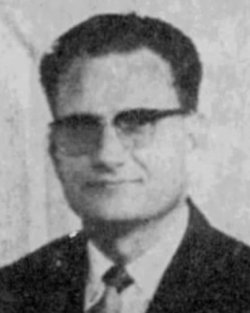
W.E. Best

#47 Justification - Justification in Time Cannot Restrict the Eternal Love of God

Romans 8:28-33
W.E. Best July, 1 1973 Audio
0 Comments
Remastered Oct/Nov 2024

Sermon Transcript

Auto-generated transcript • May contain errors

100%
I want to begin first of all
by saying that the controversy, this is one of the issues that
I'm dealing with now, the controversy between eternal justification
versus justification by faith is not a question of two mutually
exclusive doctrines. Now that's the proposition I
want to deal with for a few moments. It is a very important one. What
do you mean by that statement? That the controversy which exists
between eternal justification versus justification by faith
is not a question of two mutually exclusive doctrines. Justification by faith in time
cannot restrict the eternal love of God. That ought to help us
to get into the study of this particular point. Man's faith
is not the cause of his justification before God. Notice what I said. Man's faith is not the cause
of his justification before God. I ruled that out this morning
in the five things that I gave. Let me refer to them briefly.
We showed, first of all, that repentance is not the cause of
justification because it is God who grants repentance. And I
gave you three verses of Scripture. We're just simply giving the
main points to show you what I'm getting at tonight. Faith
is not the cause of justification because faith itself is the gift
of God. Moral works are not the cause
of justification. We prove that from Romans 4 verse
2. Abraham was not justified by
moral works before God. Paul put a stop to that by using
a hypothetical statement. If Abraham were justified by
works, he hath whereof the glory, but not before God. The rights of religion, whether
it be baptism or some other religious right, no religious right Our
religious rights can or do justify a man before God. No single right,
not several religious rights, can justify any man before God. We approve that, first of all,
from Romans 4. Abraham was justified by faith before he was circumcised. He would be just as scriptural
to say that a man, and there are some religionists who believe
this, is justified by baptism as to say that Abraham was justified
by the rite of circumcision. The context of Romans 4 proves
conclusively that Abraham was justified by faith before he
was circumcised. Finally, the deeds of the law
do not justify, Romans 321, for by the deeds of the law no man
shall be justified or no flesh shall be justified in the sight
of God. That's why we say that faith
is not the cause of a man being justified before God. You say, well doesn't that rule
out justification by faith? it doesn't rule it out, as we
will see in our study of this tonight. Justification according
to Romans 8, 29, and 30. Now if you would like to refer
to these verses, verses that you are very familiar with as
Christians, but let's turn to them and let's look at the five
things that are mentioned in this portion of Scripture, verses
29 and 30. For whom he did foreknow, that's
number one. He also did predestinate, that's
number two. Verse 30, he also called, that's
number three. He also justified, that's number
four. Finally, he also glorified, that's
number five. Every person who has studied
these two verses to any extent knows that the arius tense of
the verb is used, which is very important. Therefore, you and
I can speak of these great truths that are found in these two verses
in the manner as, from God's point of view, as already being
accomplished, since there is no time with God. That's why
God calls those things that be not as though they were. Romans 4 and verse 17. We often hear it said, as persons
are interpreting these two verses, things still future, owing to
their certainty, are spoken of as present. Now we hear that
said all the time. Things still future, owing to
their certainty, are spoken of as present. That's true from
God's point of view. The glorification of our bodies
is future for us, but not for God. That's why the arius tense
of the verb is used even in reference to being glorified. With God,
it's the same as already having taken place because there is
no time with God. With you and me, it is future.
Now we'll discuss that more as we progress in our study of this
controversy which exists. Since justification, now we're
picking out this one great biblical truth in Romans 8, 29, and 30,
is a divine act of grace. Notice what I said. Justification
is a divine act of grace. And since it is a divine act
of grace which no human act can achieve, then it, justification,
along with the other doctrines that are mentioned in the context
of these two verses, is apart from faith in the sense of justification
being an imminent act of God. Justification, like the other
doctrines that are mentioned in this passage of Scripture,
is also in the Arius tense. Therefore, God who foreknew us
redemptively, as you look at the very first great biblical
truth in verse 29, in eternity past, also foreknew
us in glorification in eternity future. There is no argument
with that. I don't believe that any person
will argue with that. Now in the light of this fact,
man cannot distinguish between the time element, from God's
point of view, beloved, please keep this in mind, from God's
point of view, I said man cannot distinguish between the time
element in predestination, calling, justification, and glorification. I said from God's point of view,
about the only aspect of salvation that many Christians know. is that which is viewed from
man's standpoint. He has not been led far enough
in the study of the Scriptures to be able to see beyond his
or the exercise of his faith in Jesus Christ. I appreciate
so much when the members of this church think through things as
they hear them explained or expounded. And then sometimes one will come
to me and I say, now preacher, how would you state this? Is
this the proper way of stating it? In other words, I want each
one of you to be able to learn the great truths to the extent
that you put those things in your own framework in order that
you can explain them to the best of your ability when you seek
to bear witness for the cause of Jesus Christ. Just this morning,
Well the man came to me after the service and he said, would
it be correct for me to say that the principle of faith is given
in regeneration and that the person in whose heart there has
been a work of grace wrought, that person exercises that faith
in a conversion experience. I said that's exactly right,
couldn't be stated better. The principle of faith is given
in regeneration, enabling the recipient of the principle of
faith to exercise that principle in a conversion experience. Now, I don't see anything difficult
about that. You see, it takes life in order to manifest itself. So one has to have the principle
of life before there can be any manifestation of that life. That's exactly what he was talking
about. So I think that he has it worded real well. In fact,
I don't think it could be stated any better. Now I stated that
in the light of the fact that those whom God foreknew, redemptively
speaking, the first great biblical truth in Romans 8.29, and that
being an eternity past to you and me. Notice now, it's only
to you and me, eternity past. We have to speak of it in that
term. And those whom God foreknew to be glorified in eternity future,
you and I speak of it in that way, in that manner. But God,
you see, doesn't think as you and I think. He's just the ever-present
I am. He's the eternal. one, without
any beginning, without any ending. With Him there is no past, present,
or future. He is the ever-present One. And when we understand the eternality
of God, one of the great attributes of God, there shouldn't be any
misunderstanding about what we mean when we talk about eternal
justification as an imminent act of God. So God is the eternal
I am. Now let me explain that a little
more. This will recall some things to your mind that we discussed
with you last Sunday evening as we dealt with this to a great
extent. Justification by faith in time is future to all who
have not been regenerated. In other words, if we have someone
in this auditorium tonight and he has not been regenerated by
the Spirit of God. Actual justification by faith. Notice how I stated that. Actual
justification by faith is future for that person. in whose heart
there has not been a work of grace. But in time, if God so
chooses in his sovereignty to work a work of grace in the heart
of that person, and we call that work of grace regeneration, then
to that individual, which may take place tonight, it may take
place tomorrow, it may take place next week, it may take place
next month, but actual justification by faith would be future to that
individual. Now there shouldn't be any misunderstanding
on that point. So justification by faith in
time is future to all who have not been regenerated, but what
is future to man is present with God. If that is not true, then
we do not understand the eternality of God. Thus, that which is present
to God must precede that which is experienced by man in time. And that which is present to
God, even though it is going to be experienced by man in the
future, that proves exactly what I've been saying, that there
is an eternal justification. So that which is future to man
in time does not coexist with God, but the whole of God's redemptive
plan from foreknowledge in Romans 8, 29 to glorification in the
30th verse, all of these great truths which are enfolded in
God's redemptive plan, they will be developed of course and there is an order
in the development as far as man is concerned, but they are
all imminent acts of God and therefore eternal. Now what is
the conclusion to this? The conclusion I think is very
simple. The conclusion is that justification which is eternal
to God is experienced by faith of God's elect in time. I see no difficulty in that.
Let me state it again. The conclusion is that justification
which is eternal to God is experienced by faith of God's elect in time. Now let's look at the second.
There are two threats to the gospel. Notice what I said, two
threats to the gospel. I think one is as deadly as the
other. One is Arminianism, the other
is antinomianism. I've already discussed these
with you. Now, it is true that there is a period in church history
that is considered and should be considered by us as being
a terrible thing. And that is the period known
as antinomianism. And I won't go into that. But
there are still antinomians. There were some who really adhered
to the theory of antinomianism. But there are many persons, even
today, whether they understand it or not, still could be classified
as being antinomian because they deny what? Justification by faith
in time. Now, many men who believe in
the doctrines of grace are classified as hyper-Calvinist because they
believe in eternal justification. I could give you a list of the
great puritans. and some even later than the
Puritans who embraced the doctrine of eternal justification. I can
also give to you a list tonight if I were mind to. of those who
are bitterly opposed to what I believe to be a biblical doctrine
known as eternal justification, the imminent act of God. It is
God that justifies Romans 8 and verse 33. Now as we consider
the two threats to the gospel, one threat is antinomianism. Antinomianism flatly denies justification
by faith and time. Now there are many different
areas in which this can be found and I won't go into those particular
areas. Many times a person who makes
reference to eternal justification is accused by men of being a
fatalist. Some say to believe in eternal
justification leads to fatalism. There are those, and I've been
accused of this, of not believing in the free offer of the gospel. Well, beloved, those of you who
have heard me preach over the years know that I say that the
gospel is to be preached indiscriminately to everybody. It is the Holy
Spirit of God who discriminates. Now notice what I said. From
your standpoint, from my standpoint, the gospel is to be preached
indiscriminately. That's why we have such statements
as go into all the world and preach the gospel to every creature.
You and I are to give the gospel of the Lord Jesus Christ indiscriminately. But it is the Holy Spirit of
God who discriminates. I've come across something recently.
You'd be amazed at the controversy. In the areas of controversy,
I'm exploring all of them that I can because in exploring them,
I will come out with a better understanding of these great
truths and be in a position to counteract some of the influences
that are being promoted today. Now, as I said, there are many
different views. Well, what do you believe about
illumination? I was somewhat amazed in just
recent weeks in the study of some recent works. And, of course,
they go back and make some statements in view of previous statements
having been made, even 100 years, 200 years more ago. There are
some who go so far as to say, like in Hebrews 6 and in 1 Corinthians
10, that there is such a thing as illumination by the Spirit
which falls short of regeneration. Now believe it, I can accept
that. I cannot accept that. I cannot find any scripture to
substantiate such a view. And they talk about illumination
without regeneration. I was reading the work of a man
recently and he said all the Israelites who fell in the wilderness
were illuminated but not regenerated. I can't subscribe to that view,
not at all. And in one of his proof texts
was that hypothetical statement of Hebrews 6, 4 through 6. Having
tasted of the heaven a gift made partakers of the Holy Ghost.
He believes that the statement being made partakers of the Holy
Ghost speaks of illumination by the Spirit, but it falls short
of regeneration. Now beloved, the only message
that an unsaved person can reject and the only manner, follow me
please now, please follow me here. The only way that an unsaved
person can resist the Holy Spirit in the light of Acts 7.51 is
the external preaching of the Word by the man of God. That's the only manner in which
he can resist the Holy Spirit. The Holy Spirit is irresistible
in regeneration. And I do not believe, and I cannot
find any scripture to substantiate any such belief, that a person
can be illuminated and yet fall short of regeneration. When the
Holy Spirit comes in the heart and life of an individual, he
does not start something which he does not bring to completion. So we have to be careful in talking
about illumination without regeneration. Illumination for the Spirit without
regeneration. I'll deal more with that next
Sunday evening from 1 John 2, verses 20 and 27. In 1 John 2,
20 and 27, we have the ocean of the Spirit. And every person who is regenerated
by the Spirit of God has the ocean of the Spirit. Therefore, he does not need a
teacher. Why? Because he's taught of God.
Now let's stop a moment. Does that mean that if you have
been regenerated, you don't need a preacher? No, that's not what
John's talking about. And that might be the foolish
conclusion to which some would come. You see, that would contradict
Such a statement is found in the fourth chapter of Ephesians.
And he gave some apostles and some prophets and some evangelists
and some pastors, teachers for the perfecting of the faith and
so forth. Now, the Lord gives ministers
and ministers are God's gives to his people. And people do
need teachers. And that's exactly what elders
are. We have teaching elders and we have ruling elders. Like
1 Timothy 5, 17, he talks about the honor which the elder is
to receive and double honor if he's a teaching elder, double
honor. So you see the Bible does teach
teaching elders. Now what does it mean when it
says in 1 John 2, 20 and 27 that we have an unction from God?
The unction, and we'll get into this more, I'm simply relating
something now that will help you to be thinking between now
and next Sunday evening on a very important point. The individual
who is regenerated has the unction of the spirit and he understands,
what does that mean? He understands the principle
of truth. In other words, he has this principle
within him that is capable of making discernment. Therefore,
when the truth is proclaimed, he recognizes the truth as truth. And that's exactly what Jesus
Christ meant when he said, in John 10, my sheep, hear my voice. And they'll not follow the voice
of a stranger. So every person in whose heart the Spirit of
God dwells, he has a holy unction. Let me illustrate it in this
manner. How many of you have heard the
song, He Touched Me, He Touched Me? Most of you have heard that
song if you've listened to the radio very much. It's a religious
song, He Touched Me. In other words, if you've been
touched by the grace of the sovereign God in regeneration, you have
been given the spirit or ability to discern between that which
is truth and that which is error. That doesn't mean that you know
all truth immediately. It doesn't mean That you don't
need teachers, but it simply means that the Lord has given
to you the principle of discernment. That's what it means. Therefore,
you recognize truth when you hear it. I'm afraid that many
of these who sing, he touched me, he touched me, they don't
know. They haven't been given, even though they sing the song,
He Touched Me. They haven't really been touched
by the grace of the sovereign God. If they were touched by
the grace of the sovereign God, they would be able to make judgments
better than most of them make. I said there are two threats
to the gospel. One is Arminianism, and the other
is Antinomianism. Arminianism rejects eternal justification. Follow me now. Antinomianism
rejects justification by faith and time. You know, it's real
refreshing to me when I find the work of some man who has
gone into these extremes, like the extreme view of antinomianism. embracing eternal justification
and denying justification by faith in time. And on the other
hand, Arminianism, that embraces justification by faith in time,
but denies eternal justification. And then he shows the fallacy
of these two extremes. And there is a medium, a happy
medium, And that's why I made this statement tonight to begin
with, that the controversy between eternal justification versus
justification by faith in time is not a question of two mutually
exclusive doctrines. In other words, eternal justification
does not exclude justification by faith in time, and justification
by faith in time does not exclude eternal justification. The great worker of man's salvation
is not restricted, as one has said, and I like this statement.
The great worker of salvation of man's salvation is not restricted
by the boundary of time, but it is within time that justification
is experienced. The eternity of God's grace comes
to the elect in time and is understood only in the context of faith. You'll not come across a better
statement than that. That gives to you the harmony
between the two extremes of Arminianism and Antinomianism. We must not address ourselves
to the hidden depths of God's purpose to the exclusion of the
revelation of himself in Jesus Christ. Now that's an important
statement. Did you miss it? I said we must
not address ourselves to the hidden depths of God's purpose
to the exclusion of the revelation of himself in Christ. Now Paul
deals with the great hidden truths, the depths of God's grace in
Romans 8, 29 and 30. But does Paul stop there? He
does not. You'll notice when he comes and
turn to the 11th chapter of Romans as he comes to the last part
of the greatest doctrinal section of Scripture in all the Word
of God. And listen to how the Apostle
Paul closes that great doctrinal section. Here it is. Oh, the
death of the riches. both of the wisdom and knowledge
of God, how unsearchable are his judgments and his ways past
finding out. For who hath known the mind of
the Lord, or who hath been his counselor, or who hath first
given to him, and it shall be recompensed unto him again. For
of him," notice the prepositions, of Him, and through Him, and
to Him are all things, to whom be glory forever. Amen. Now that's how he closed the
great doctrinal section. Did he stop there? No. He went
on to the great practical portion. beginning with the very first
part, the first verse of Romans chapter 12 and the practical
portion of Romans which begins with Romans 12 verse 1 goes through
chapter 15 verse 13. Now how can a person be practical
unless he has some doctrinal stability? some doctrinal stability. Now
I stated that we must not address ourselves to the hidden depths
of God's purpose, to the exclusion of the revelation of himself
in Christ. Listen to the words of Hebrews
1, 1 and 2. God, who at sundry times and
in divers manners, spake in times past unto the fathers for the
prophets, hath in these last times spoken unto us by whom? His Son. His Son. John 1 18, Jesus Christ is the
revealer of the Father. I said the revealer of the Father.
And we'll get into some very important points in just a few
moments. Now what's the conclusion of
our second point that we're seeking to make tonight? There can be
an overestimation of faith, like Arminianism, and there can be
an underestimation of faith, like antinomianism. Both are serious and deadly errors. Notice how I said that. I said
there can be an overestimation of faith, like Arminianism, which
even makes a god out of faith. And there can be an overestimation
of what? Not an overestimation, but an
underestimation of faith, like Antinomianism, which denies justification
by faith in time. I like a statement that John
Calvin has made, and when I quote him, I do not mean to imply that
I'm setting him up as a norm for all truth, but I think that
he has made a significant statement in reference to the very thing
that I'm talking about tonight. Listen to this statement. One man in commenting about the
statement made this observation, which I like very much. It has
been said that God's mercy comes to us in the administration of
redemption along the trail of history. I like that. I want
to repeat it. I want you to see how you put
these things together. It has been said that God's mercy
comes to us in the administration of redemption along the trail
of history. You remember what I said this
morning in my closing remarks? And beloved, there's a lot of
gracious truth in those statements, and I hope that you'll think
about them a lot. I said love and grace, that is for the elect,
are essentially the same. Essentially the same. And then you remember what I
said in my closing statement. What does the grace of God teach
us on earth? The grace of God doesn't teach
us about Christ. The grace of God teaches us Christ. Now reverse the order throughout
eternity, Ephesians 2, 7, Christ will teach us grace and the meaning
of grace. I said to you this morning, I
can't explain grace, neither can you. Even our Lord himself never sought
really to define grace. He illustrated it. And that's
what we'll do next Sunday morning. We'll give a message on the illustration
of grace in connection with our second aspect of justification.
But now for the statement. How that God's mercy comes to
us along the trail of history. Here's
Calvin's statement. Quote, in the first place, If
we seek the fatherly clemency and propitious heart of God,
our eyes must be directed to Christ. I want you to see the wealth of
truth here. Let me go back. Don't want us
to miss this. In the first place, if we seek
the fatherly clemency and propitious heart of God, our eyes must be
directed to Christ. Wouldn't you and I say that's
what faith which is the gift of God does? Leads us out of
ourselves and points us to Christ. He goes on to say, our eyes must
be directed to Christ in whom alone the Father is well pleased. The Father's not well pleased
with you. The Father's not well pleased
with me. The Father can never be well
pleased with you or with me in the flesh. But the Father was
well pleased with His Son. because of who he is, the eternal
son of God. So the father being well pleased
with his son, faith directs us and leads us outside of ourselves
and causes us to focus our eyes on the person of Christ. So he
goes on to say, if we are chosen in him, we shall find no assurance
in ourselves. You can't find any assurance
in yourself. You can look at yourself from
now on until doomsday. No assurance can be found in
yourself. Assurance is found in who? Christ. Not in you, but
in Christ. I don't find any assurance by
looking within. I'm directed outside of myself
and I behold the objective Christ. who reveals the Father. So if
we are chosen in Him, we shall find no assurance in ourselves. Listen to this, not even in God
the Father considered alone, abstractly from the Son. Christ, therefore, is the mirror
in which it behooves us to contemplate our election, and here we may
do it with safety." Isn't that a great statement? I quote it
because it is great. It is great. Now, the same principle
applies to justification. to justification. Justification
is honored in faith, follow me, and yet faith is unmerited because
it is the gift of God, not of works, lest any man should boast. Faith is the fruit, not only
of election, but of being declared just. before God, since justification,
actual justification, is synonymous with what? Positional sanctification. Now we come to this point, and
this will be as far as we'll be able to get tonight, and there's
so much preaching material here that it'll take 10 or 15 minutes
to develop this. There is a real distinction between
the offices of Father, Son, and Holy Spirit in the scheme of
grace. I said there is a real distinction
between the Father, Son, and Holy Spirit. in the scheme of
grace. Each person of the Godhead executes
a different part in the salvation of man, or in the same work of
man's salvation. Now let's begin with the Father,
then we'll take the Son, and finally the Holy Spirit. And
I think you'll appreciate the conclusion. I'm not going to
take the time now to give you all these verses of Scripture.
Time would not permit us to do it. I'll just simply give to
you a phrase, and as I give to you the phrase, I will give the
reference from which it is taken. But listen now closely. The Father
is revealed as representing the sovereign promoter of the Godhead. Let me repeat that for the benefit
of you who are taking notes. I said the Father is revealed
as representing the sovereign promoter of the Godhead. Now listen to these statements.
It is said of the Father that He purposed. Ephesians 3 verse
11. He hath chosen us. Ephesians 1 verse 4. He hath predestinated us. Romans 8 verse 29. He gave His
Son, John 3, 16. He sent His Son, 1 John 4, 9. He made Him to be sin for us,
2 Corinthians 5, 21. He spared not His own Son. I like to quote all these verses,
but that isn't sufficient. I'm simply proving a point. He
spared not His own Son, Romans 8, 32. He justified, Romans 8.30. He called, Romans 8.30. He raised up Christ, Acts 3.26. He crowned Christ, Hebrews 2.7. He exalted Christ, Acts 5.31. He commended His love toward
us. Romans 5 8. Have you observed something?
Isn't the father the one who is considered the promoter of
the Godhead? Can that be denied? Oh no, no. Now listen to the son. The son
is revealed as acting in official subordination to the Father. We have such expressions as the
Son was sent by whom? The Father. The Son given by
whom? The Father. We find the expression
coming into the world to do the will of whom? The will of the
Father. making himself of no reputation,
made sin for us, humbling himself, made a curse for us, wounded
for our transgressions, crucified in weakness, raised in power,
Highly exalted and given a name which is above every name that
at the name of Jesus every knee must bow and every tongue must
confess that he is Lord to the glory of God the Father You ask
for the references here. They are Philippians 2 7 Galatians
3 13 Isaiah 53 several references in Isaiah 53 Ephesians 5 2 Hebrews
10 12 Philippians 2 9 and 10 Now we come to the Holy Spirit,
the third person of the Godhead. The Holy Spirit is revealed as
sent by the Son from the Father. This is taught in John 14, 14
through 16. Also taught in John 16, verses
12 through 14. Now listen to these statements
concerning the Holy Spirit. The Holy Spirit is the one who
testifies of Christ. Of Christ. He bears witness of Christ. Paul
says he shines into the hearts of men. 2 Corinthians 4 and verse 6. He
dwells in believers. He works in and through believers. He witnesses with our spirits. He helps our infirmities. He
seals us under the redemption of the purchased possession.
Scripture references, I'll give you a few. John 15.26, 16.14,
1 John 5.6, John 15.89, Ephesians 1.14 and 17, 2 Corinthians 4.6. Now what did I say? I said the
Father is represented as the sovereign promoter of the Godhead. The Son is revealed as acting
in subordination to the Father. The Holy Spirit is sent by the
Son from the Father and he dwells within, bears witness to the
Son. sealing us under the redemption
of the purchased possession, bearing witness with our spirit,
thus giving to us the assurance of our relationship to God through
the redemptive work of the Lord Jesus. Now, we come to the concluding
statements, and these are as important in their area of truth
as the concluding things I gave this morning. in connection with
the message that I was bringing on justified freely by His grace. The work of the Holy Spirit in
us must not be made the ground of our justification. The ground
of our justification is not the Holy Spirit within us, but the
work of Jesus Christ accomplished on the cross for us. Now let
me show you a very important distinction. The work of Jesus
Christ on the cross is a completed work. Thus the Lord Jesus said,
it is finished. Nothing can be added to the finished
work accomplished on the cross by the Son of God. However, the
work of the Holy Spirit within us is not finished. That which he has begun in our
hearts by the impartation of righteousness, a righteousness which is not
perfect but will be brought to ultimate perfection when we stand
before the Son of God. So you can see there is a difference.
There is a difference between the work of Jesus Christ on the
cross for us and the work of the Holy Spirit within us. Too
many people today are looking for sinless perfection within. There is no such thing as sinless
perfection within. You see, our justification before
God is not upon the basis of imparted righteousness. It is
upon the basis of imputed righteousness, which is perfect! imparted righteousness
is not perfect, but the work of the Holy Spirit within us
is bringing us to ultimate perfection, and that will never be experienced
in this life, only when we stand in the presence of Jesus Christ. The Spirit within has revealed
to you and me who are saved the foundation of our justification
and that foundation is the redemptive work of Jesus Christ on the cross.
But He continues to sanctify you and me. Notice what I said. He continues to sanctify you
and me. And I'm grateful for it. Therefore,
his work in us, unlike the work of Jesus Christ for us, is incomplete. While the work of the Holy Spirit
in us is as necessary for our justification as the work of
Christ for us, and I'm talking about actual justification by
faith and time, it is not necessary for the same reason. nor is it
effectual for the same goals. Now that's an important statement.
The function of the Holy Spirit is to apply what the Father purposed
as the promoter of the Godhead. What the Son purchased as the
one who was in subordination to the Father. Now listen to this in closing.
The question is often raised. Here's the question. Is there
not a difference between the eternal purpose to save and the
execution of that purpose in time? Or between the procuring
of redemption and the application of it to the souls of men? Now listen. Though we acknowledge that actual
justification is simultaneous with regeneration, yet we cannot
restrict God's eternal justification to time any more than we can
restrict eternal love to time. God has loved us with an everlasting
love. And how could he love us? Without
knowing it, we stand just before Him through the redemptive work
of Jesus Christ, who is the Lamb that was slain from the foundation
of the world. Now, I'm not through explaining
it. Please get my last point. Purpose, purchase, and application. can no more be separated than
Father, Son, and Holy Spirit. Let me repeat. Purpose, purchase, and application
can no more be separated than Father, Son, and Holy Spirit. Now, here it is. the oversimplification
of application to the neglect of purpose and purchase produces
an erroneous doctrine. I'm going to repeat it, but I
want you to write this down. You better get this down. This is the answer. Beloved, this is the conclusion
of the whole matter that I've been discussing with you tonight.
I said this is the conclusion of the whole matter. I said the oversimplification
of application to the neglect of either purchase or purpose. Now there are some who talk about
justification by faith in the sense that their faith, you see,
is the foundation of the cause of their justification before
God. I agree with Barnhouse and I agree with many other men.
I agree with the puritans, most of whom that I've read, who deny
that faith is the cause of justification. The cause of justification. That
would be making a god out of one's faith. But there are people today who
oversimplify faith. Have you put your faith in Jesus? That's the question that's usually
asked. Have you put your faith in Jesus? So there's an oversimplification
of faith. Some go a little further than
that and talk about the redemptive work of Jesus Christ. But if
you talk about God's eternal purpose, they throw up their
hands in despair. No, no, no. Listen now. I said that purpose, purchase,
and application can no more be separated than the Father, Son,
and Holy Spirit. Now in conclusion, the oversimplification
of application to the neglect of purpose and of purchase and
purpose produces an erroneous doctrine. as this is true in
the science of theology, in separating the person to the Godhead or
oversimplifying one person to the neglect of the other persons,
results in erroneous doctrine. So the same principle applies
in this subject about which we're talking tonight. purchase, and application, and
these three truths are involved in the great science of man's
salvation. Now, I really ought to have time
tonight to develop for a few minutes, but I don't have the
time. What is justifying faith? Something very interesting is
brought out in John chapter 6. I ask you to turn to John chapter
6. Now just call attention to this.
I affirm that justifying faith is the work of the triune God. In verse 29, our Lord speaking
makes the statement. Jesus answered and said unto
them, This is the work of God. What is it? That ye believe on
him whom he hath sent. Faith in Acts 14 verse 27 is
called the door of faith. That's what it's called in Acts
14, 27, the door of faith. The three persons of the Godhead
have a hand in the opening of the heart and drawing the sinner
to Jesus Christ. Let me prove it. Number one,
the Father gives as well as draws. John 6, 37. Now all of this is
within the context of this is the work of God, that ye believe
on him whom he, the Father, hath sent. Verse 37, all that the
Father giveth me shall come to me, and him that cometh to me
I will in no wise cast out. There is a giving in eternity
as well as a giving in time. There is, as I have shown you
before, an election which is connected with the decree of
God just as there is an election which actually takes place, the
actual picking out from among mankind in time. John 15, 29,
John 15, 19 it is, and 1 Peter 1, 2. So there's a giving in eternity,
there's a giving in time. Now second, the son receives
and everyone whom he receives he casts not out. Also verse
37, all that the father giveth me shall come to me and him that
cometh to me I will in no wise cast out. Christ knows His sheep
by name. He calls them by name. They recognize
His voice and they follow Him. John 10, 14 and 15. Why do you
think the Lord Jesus Christ is referred to as the arm of the
Lord in Isaiah? We're given by the Father and
the Lord Jesus Christ reaches out and takes hold of us. Now
finally, number three, the Holy Spirit quickens. Look at verse
63 of John 6. All of this within the context
of verse 29. This is the work of God that
ye believe on him whom the Father has sent. It is the Spirit that
quickeneth. The flesh profiteth nothing. The words that I speak unto you,
they are Spirit and they are life. Before we apprehend Jesus
Christ, that means before we lay hold of Him, the Holy Spirit
regenerates us. Thus in the power of the regenerating
Spirit, we apprehend Christ and through Him we have access to
the Father. I want you to see something beautiful,
beloved, in closing. The Father gives, so it begins
with the Father. The Son reaches out and receives
us. The Holy Spirit quickens. Now
let's start at this end of the line. So we have the work of
the Father, the work of the Son, and the work of the Holy Spirit.
And that's why I gave to you the work of each one of the persons
of the Godhead and man's salvation and all the references or many
references that I gave to you a few moments ago. So the Father,
the Son, and then the Holy Spirit. And now let's begin with the
Spirit. The Holy Spirit who applies what the Father planned and promoted
and the Son purchased. The Holy Spirit applies the redemptive
work to the heart of the sinner. That's the work of the Holy Spirit.
That's the prerogative of the Holy Spirit. The Spirit quickened
it. The flesh profits nothing. And
then the Holy Spirit within us having been given the principle
of faith, leads us outside of ourselves to embrace Jesus Christ. What? In a conversion experience
and it's through Christ that we have access back to the Father
where salvation began to begin with. Now, beloved, anything
short of that is not the true gospel of the Lord Jesus Christ.
It begins with God. God gave us to Christ. Christ
reaches out, the Holy Spirit regenerates, works faith within
us, leads us outside of ourselves and embraces Christ and his redemptive
work, and through him we have access back to the Father. So
everything which begins with it comes down to man through
the Son and the Holy Spirit, through the power of the Holy
Spirit, back through the Son and ultimately to the Father
and to his glory. Does that sound like it's Bible
to you? This is saving faith. This is the faith that comes
from God, given to the person whom the Father
gave to the Son, and the person in the power of the indwelling
Spirit exercises that principle of faith, embracing Jesus Christ
in a conversion experience, and through Christ has access to
the Father. I don't have to have someone
to stand between me and the Lord Jesus Christ? Jesus Christ is my mediator between
me and the Father. See? He's the mediator. So it's
through Him, He's the only mediator. I don't need any man as a mediator.
You don't need any man as a mediator. Jesus Christ is the mediator. What do you think of Christ?
That's the question. What do you think of Christ?
W.E. Best
About W.E. Best
Wilbern Elias Best (1919-2007) was a preacher and writer of Gospel material. He wrote 25 books and pamphlets comprised of sermons he preached to his congregation. These books were distributed in English and Spanish around the world from 1970 to 2018 at no cost via the W.E. Best Book Missionary Trust.

Comments

0 / 2000 characters
Comments are moderated before appearing.

Be the first to comment!

Joshua

Joshua

Shall we play a game? Ask me about articles, sermons, or theology from our library. I can also help you navigate the site.