Bootstrap
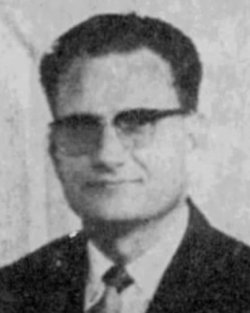
W.E. Best

#49 Justification - Justification by the Blood of Christ

Romans 5:6-11
W.E. Best July, 1 1973 Audio
0 Comments
Best on Romans

Sermon Transcript

Auto-generated transcript • May contain errors

100%
in the discussion of the first
of the third phase of justification, justified by
his blood. Last Sunday morning we discussed
verses 6 through 11 of Romans chapter 6. Tonight we want to read those
verses once again, but we will not be speaking from those verses.
But we do want to keep our text before our minds. That is the
9th verse, which is the text we are using in the study of
the 3rd phase of justification. In connection with Romans 6, Romans 5 rather, 6 through 11,
we want to use as our text this evening 1 Peter 3, verse 18. But first of all, let us read
Romans 5, verses 6 through 11 once again. For when we were yet without
strength, in due time Christ died for the ungodly. For scarcely
for a righteous man will one die, yet for adventure for a
good man some would even dare to die. But God committed his
love toward us in that while we were yet sinners, Christ died
for us. The ninth verse is our text which
we're using as a basis for the third aspect of justification. Much
more than being now justified by his blood, we shall be saved
from wrath through him. For if, when we were enemies,
we were reconciled to God for the death of His Son, much more
being reconciled, we shall be saved by His life. And not only so, but we also
join God through our Lord Jesus Christ, by whom we have received
the atonement, or we have received the reconciliation. Now, turn,
if you will, please, for our text this evening. 1 Peter 3, verse 18. There are three points in this 18th verse of 1 Peter
3. We are told what redemption is. Redemption,
first of all, is by propitiation. Second, redemption is by substitution And number three, redemption
effects reconciliation. I gave you the outline of the
text even before we read it. Now let's read the text. For
Christ also hath once suffered four sins. That denotes propitiation. that just for the unjust describes
substitution, and redemption effects reconciliation
that he might bring us to God, being put to death in the flesh,
but quickened by the Spirit. The Lord willing, next Sunday
morning I will speak from one of my favorite passages of Scripture, one about which there is much
controversy and I feel much misunderstanding. I mentioned to you last Sunday
evening, I think it was, by way of introduction into our study
of 1 Corinthians 11, as we dealt with the subject of the Lord's
Supper. And I want you, during the week,
to read Leviticus chapter 16 several times. And I do request that you read
it several times. In the reading of the chapter,
I want you to observe there is a marked distinction between
the bullock that was offered for Aaron and his sons and the two goats that constituted
the one sacrifice for the congregation of Israel. This past week I listened to
one of the programs on Channel 8 in the observance of the Jewish
holidays. And the night that Juanita and
I looked at the program, they were discussing Leviticus chapter
16, the atonement chapter. I enjoyed listening to the Jewish
interpretation of the day of atonement. But I want you, when you come
to the 14th verse, I believe it is, to notice the difference. And there is a marked difference
between Aaron and his sons and the congregation of Israel as
a whole. When it comes to the sin offering
for the nation of Israel, or the congregation of Israel, the
two bullocks constituted the sin offering. One was slain,
one was kept alive. Most everyone today, in giving
an interpretation of the live goat, misses the point altogether. And the reason the point is missed,
is because of a lack of understanding of eschatology. So I'm just bringing
that before you, hoping that you will read the chapter, become
familiar with it before we discuss it with you next Lord's Day morning,
which will be probably our last message on the third aspect of
justification. In the light of Romans, chapter
5, verses 6 through 11, We see, first of all, that God loves
the ungodly. Verse 6. He justifies sinners. Verse 8. He reconciles enemies. Verse 11. All of this is accomplished
through the blood of Jesus Christ. We have not discussed with you
the first five verses of Romans chapter 5 because we're holding
this portion of Scripture back until we come to the sixth aspect
of justification, justification by faith. When we discuss that
phase of justification, we will then give an interpretation of
the first five verses. But I want to summarize by way
of introduction tonight Our study once again of the 9th verse in
connection with 1 Peter 3, verse 18, where we have it plainly stated that redemption
is accomplished not only by propitiation, but by substitution, and redemption
effects reconciliation. So the summary of Romans 5 1
through 11 is as follows. We have in the very first part
of the chapter the subject of justifying grace, which gives
both stability and assurance. The Lord would have his people
to be assured of their relationship to God. So justifying grace according
to the very first part of the chapter gives both stability
and assurance. We also find afflictions mentioned
within the context of the first part of Romans 5. Afflictions
in this life cannot defeat our justification in grace. Afflictions
according to the context only increase our assurance and hope. That's why, beloved, that you
cannot judge hastily by a person's testimony as to whether he is
really saved or not. It takes time. But when afflictions
come, we have the assurance based upon the testimony of Holy Writ
that afflictions in this life cannot defeat justification in
grace. They only increase the assurance
and hope of the believers in Jesus Christ. And then number
three, the love that is expressed also within the context of the
first division of Romans 5, the love that died for us will live
for us unto the consummation of our assurance and hope. Beloved,
that ought to be of great encouragement, and I know it is, to the children
of God. And while it is assurance to
the children of God, it is the pure gospel to those who are
outside the arc of safety. Redemption by blood, according
to the context of Romans 1, 5, 1 through 11, gives assurance
in justifying faith during the trials of life and in eternity. Thus, we could sum it all up
by saying, assurance, hope, and security are the great truths
for the believer in Romans 5, 1 through 11. Now we come once
again to our text using the one phrase, justified by his blood,
in connection with 1 Peter 3, verse 18. We know that to justify
means to declare our pronouns righteous. Now we come to the
word redeem, or redemption. To redeem means to purchase. It means to buy back. Redemption cannot be explained
by one Greek word. This has been fascinating to
the students of the Greek language. It takes three Greek words. to
really explain the subject of redemption. Let me give them to you for fear
that if you have heard them, you might have forgotten some
of them or the significance of all of them. They must all be
put together. And when they're put together,
we have a perfect example a perfect illustration of all three words,
even though the words themselves are not used, yet the truths
which they portray are used in John 10, verses 1 through 11. That is the great biblical example
of putting together these three words. Let me now give them to
you. You may not be as concerned about
the Greek words as you are, I'm sure, the meaning of each one.
The first one is agorazo. What does it mean? It means to
purchase. To purchase where? In the market. In the market. Agorazo. The second word is the same Greek
verb with a prepositional prefix. It is ex-agra-atzo. And what does it mean? It means
not only to purchase in the market, but what does it mean? It means
to rescue from. To rescue from. Then we come
to the third Greek verb. It is lutra'o, and lutra'o means
to loose or set free. Now we will put all the three
words together. We have the biblical portrayal
of the subject of redemption. Believe me, there is no greater
subject to be preached than the subject of the redemption which
was accomplished by Jesus Christ on the cross of Calvary. Now
let's put them together. The first, to purchase in the
marketplace. The second, to purchase out of
the marketplace. And the third, to set the one
whom Christ has a purchase not only in but out of free. Free. He is let loose or he is
set free. If we had the time tonight, we
could give to you the many different passages in the New Testament
where these different words are used as they come from the root
words found in the Greek language. But I'm simply giving to you
the meaning of them. Now all of us are familiar with
John 10. At least I am hopeful that all
of us are familiar. So familiar that it will not
be necessary for us to turn and read the first 11 verses. Let
me relate to you just briefly the important points of the first
11 verses of John chapter 10. You remember the Lord Jesus Christ
went into the sheepfold. He went into it. There are three
doors. There is the entrance into, there
is the exit out of, and then the Lord Jesus said in verse
9, I am the door, by me if any man shall enter in, he shall
go in and out and find pasture. That denotes freedom. First of
all, the Lord Jesus went into the sheepfold. The sheepfold
is not heaven. The sheepfold is not the church.
But the sheepfold, according to the context, and there should
not be any disconnection whatsoever between the last verses of chapter
9 and the first verses of chapter 10, the sheepfold represents
Judaism. And the Lord Jesus Christ came
born under the law, born made of a woman. under the law for
the purpose of redeeming them that were under the law. Thus
the Lord Jesus Christ entered in in a lawful manner. To him
the porter opened and he entered in calling his own sheep by name,
purchasing them in the market And then he became the exit out
of Judaism. He didn't come to save them in
Judaism. He came to save the elect out
of Judaism, just as he has come to save you and to save me out
of the bondage of sin. And then having entered in and
having led them out, They were set free, therefore I am the
door, by me if any man goes in, he shall go in and out and find
pasture. That denotes freedom. That is
the position of every person who has been redeemed by the
blood of Jesus Christ. There is a difference between
a purchase that is for resale and a purchase that is made in
order to take the article out of commerce. I will illustrate
it in this manner. I do not think I have illustrated
the subject of redemption in just this manner before. Many
men over the past centuries, have sought to illustrate this
great truth in many different ways. And all of them that have
been given by honest Bible expositors are good to
some extent. But I think the one that I'm
going to share with you tonight is the best illustration that
I have come across as far as a human illustration is concerned. You notice that I stated there
is a difference between the purchase of an article for the purpose
of resale and for the purpose of taking it out of the market
altogether. I read an illustration not long
ago. There is in Washington, D.C., a library that carries
the title Folger Shakespeare Library. There is within that
library a Shakespeare folio which was bought to remain within the
library. It was stipulated when the folio
was purchased that it was to remain in the library. It must never be placed on the
market again. Now all of us know what it is
to purchase something with the idea of selling it later for
the making of a profit, and there isn't anything wrong or illegal
or immoral with that. So many times an individual will
buy a piece of land, he might even purchase a house and live
in it for a short period of time, not with the idea of living in
it all of his life here on the earth, but only living in it
for a time with the idea of selling it later and making a profit.
So when the person purchases a piece of property, with that
thought in mind, he is thinking not about taking it out of the
market altogether. That was not his motive in purchasing
it. He bought the piece of property
with one motive in mind, and that was to place it on the market
once again with the idea of making some profit off of it. Now, when
Jesus Christ, beloved, went into the slave market of sin and purchased
your redemption, in other words, he bought you, he bought me by
his own precious blood. He not only bought us in the
market, But he bought us out of the market and he set us free
and we are never, notice I said, we are never to be placed in
the market of sin again. Does that mean anything? That's
the best way I know to explain it. When Jesus Christ stepped into
the slave market and paid the ransom for his sheep, according
to John 10 and verse 15, It was a purchase that was made once
for all. Hebrews chapter 10, verses 10
through 14. Beloved, if that cannot grip
your heart, then there is a lack of grace. For you and me to know that we
have been purchased out of the market of sin, and we shall never
be placed in the market of sin again should give us great assurance
and comfort. So the Lord Jesus Christ came
for the purpose, Matthew 121, to save his people from their
sins. Now there's a great biblical
example of this in Hosea chapter 3. I'll take the time tonight
to turn and read that short chapter. Most of us are familiar with
the life of Hosea, the man who took Gomer as his wife. And Gomer
became unfaithful to Hosea. She went after other lovers.
She sold herself, which literally means she sold her own body. But Hosea loved her enough according
to the third chapter of the prophecy of Hosea, that he went and paid
the price for her, and she was purchased by the redemptive work
of Hosea. Do you know what that illustrates?
One cannot read verses 5 and 6 of Hosea chapter 3 without
reflecting upon the future of Israel's redemption. which shall
not be accomplished until Jesus Christ comes out of the most
holy place, which is described in Leviticus 16, after the high
priest has taken the blood of the slain goat and has gone into
the most holy place for the purpose of reconciling, and notice what
I'm saying, reconciling the holy place. thus enabling God to look
with favor upon Israel. And Israel will not be saved,
nationally speaking, until Jesus Christ comes out of the holy
place, and then the live goat steps on the scene, and that
gives to you and me a picture of the redemption applied to
national Israel. And that, of course, is based
upon the blood of the slain goat. Now, let's look first of all
tonight at the first point that Peter makes in 1 Peter 3, verse
18. Redemption, I said, is by propitiation. We've already dealt with this
to a great extent, but that doesn't mean, beloved, that we understand
it as we ought to. It doesn't mean that we have
heard it too much already. In order to understand this,
we must go back to the tabernacle in the wilderness, and I'm talking
about propitiation. Every part of the tabernacle
reveals the work of Jesus Christ, whom God has set forth to bear
the sins of many. Now, when we study the tabernacle
in the light of Exodus, chapters 25 through 40, It must always be studied in
connection with the book of Hebrews. No person can study and understand
Hebrews without an understanding of the tabernacle. I'm only going
to give something by way of contrast now. When you turn from the book
of Exodus to the book of Hebrews, Hebrews sets forth the fact that
Israel was to turn away from the law and turn to Jesus Christ. You see, Hebrews was written
to Hebrew believers. The writer of Hebrews makes the
statement in the 7th chapter, beginning with the 11th verse
through the 19th verse. The statement is made, the law
made nothing perfect, but the bringer in did by which we draw
nigh unto God. The law did not make anything
perfect. The law could not make anything perfect. But the one
whom the law foreshadowed, the one who has brought in the better
hope that is described by the writer of Hebrews, did, and it
is by him, not by the law, that we draw nigh unto God. In the
light of this, we have in Hebrews chapters 8 through 10, these
outstanding truths. Instead of the lamb that is described
in the book of Exodus, we have Jesus Christ, the antitype in
Hebrews. Instead of the Aaronic priesthood,
we have Jesus Christ, who is made a priest forever, and that,
of course, after the order of Melchizedek. Why? Because he has the power of an
endless life. That is described in Hebrews
chapter 7. Instead of the altar of the tabernacle,
there is Jesus Christ. He is the altar. Instead of the
tabernacle itself, Hebrews chapter 9 verses 1 through 12. We have
Jesus Christ who fulfills everything foreshadowed by the tabernacle
in the wilderness. Thus, when we come to the 10th
chapter, we can see, beginning with the 10th verse, that it's
by the offering of one man, Jesus Christ, that we are perfected
forever. And having been sanctified Forever,
by the once-offered Christ, we have assurance of our relationship
to God the Father. When we go back and consider
the tabernacle, if there had been no covering on the Ark of
the Covenant, it would have been the testimony of death against
the whole congregation of Israel. But there was a covering. That
covering is called the Mercy Seat. And the mercy seat means
propitiation. And we have already discussed
the adjective form of that word in our study of the third chapter
of Romans beginning with verse 24. Redemption by blood, ministered
satisfaction to the divine nature of God. Now we're getting into
an area I want you to listen carefully. Because there's a
lot of controversy about some things I'm going to say from
here on until I have finished this message tonight. The necessity
of redemption lies not in the governmental theory. You see,
there are many different theories of the atonement. There is what
is known as the governmental theory. There is what is known
as the influence, the moral influence theory. There is what is known
as the example theory. And finally, there is what is
known as the identification theory. Not any one of these theories
will stand a close scrutiny of Holy Scripture. And yet many
religions, not only of the past, but also of the present, subscribe
to one of these that I'm going to mention only briefly. I'm
talking about the necessity of the redemptive work of Jesus
Christ. I am emphasizing that the divine
nature had to be satisfied in order for God to look with favor
upon sinful mankind. Now let's look first of all at
the governmental theory. The necessity of redemption lies
not in the governmental theory. Here is a brief definition of
the governmental theory. Those who hold to this particular
view say that Jesus Christ died in order to honor his government. He died in order to honor his
government. That is, to magnify his law and
to maintain his position as the supreme ruler of the universe. And that's as far as they go.
That will not satisfy divine justice. That will not stand
the close scrutiny of Holy Scripture. Then there is what is known as
the example theory. You and I believe that Jesus
Christ, according to 1 Peter 2.21, is our example, but there
is something that precedes Jesus Christ being our example. Before
he can be our example, he must be our substitute. He must be
our mercy seat. And unless he is our mercy seat,
Unless he is our substitute, unless he is our surety, I assure
you of one thing. The example theory is absolutely
meaningless. But the example theory is meaningful
to the child of God. No preacher is to be your example. No Christian is to be your example. Our example is none other than
Jesus Christ, God's eternal Son, the God-Man, the unique person
whom we love, whom we adore, whom we worship, and whom we
serve. Then there is what is known as
the moral influence theory. This resembles, in some respects,
the example theory. But there is a point of difference. It does recognize some kind of
subjective power exercised upon the one who is to follow the
example. Now that's the one main point
of difference. I said it does recognize some
subjective power exercised upon the one who is to follow the
example. And we'll get into this subjective
part later. Finally, there is what is known
as the identification theory, which says that Jesus Christ
came to remove the hindrance between God and man, but there
is no place for penalty or expiation, but simply, as you know and as I know, Divine
justice had to be satisfied, and divine justice is not really
expressed. That is, the satisfaction of
divine justice is expressed in this identification theory. Now,
Christ's redemptive work must balance the books. I said must balance the books.
You'll have to bear with me tonight. We'll go rather slow because
I preached along this morning about an hour and 45 minutes,
so it's not as easy to be as free after you've done that.
But I'll give you the truth, and if you're listening, you
can take it. So it'll be more of a teaching
than it will preaching. But I said the books of God must
be balanced. Someone has said Christ's redemptive
work must balance the books. It must restore the moral equilibrium. It must pay back to God that
of which sin has robbed him. Now we're getting into a very
important part of the redemptive work of Jesus Christ. Where shall
such satisfaction be obtained? This is where Jesus Christ comes
into the picture. The deity of Jesus Christ gave
him the capacity to minister to the divine nature, and his
human nature enabled him to offer himself as a substitute for his
own. Now, will you look at our text
which we read, 1 Peter 3.18? Will you look at the first part? We have in the first part of
the text the three great divisions. First of all, propitiation. Secondly,
substitution. And number three, reconciliation. Then it makes the statement in
the last part of the text, he was put to death in the flesh,
but was quickened by the Spirit. Now in this we have what? The
two natures which were united in the one person of Jesus Christ. He was put to death in the flesh
because God absolutely considered cannot die. So he was put to
death in the flesh and he was quickened by the Spirit or the
divine nature. Now listen, only Jesus Christ
could say what was said in John 10, 17,
and 18. What did he say? This is in the
very chapter where we have brought out the illustration of redemption,
going into, purchasing in, purchasing out of, setting free, dying for
the sheep. It is in that very context that
Jesus Christ says in verses 17 and 18, I have power to lay down
my life, and I have the power to take it again. Only the unique person, Jesus
Christ, in whom the divine nature and the human nature were united,
constituted, the divine person, the God-man, And in the human
nature, I have power to lay down my life. And by the power of
the divine nature, he was able to go through death and come
out victorious on the other side of death. Therefore, we have
the death of death in the death of Jesus Christ. That's John
Owen's favorite statement. But it's also mine, too, because
it portrays a great truth. Now I want to raise a question.
Where did Jesus Christ effect our redemption? When did Jesus
Christ effect our redemption? How did Jesus Christ effect our
redemption? First of all, where? I'm going to answer that by quoting a Puritan. There's a lot of controversy
over when redemption was effective. Can one date the Atonement? I said, can one actually date
the Atonement? Can one really shut the Atonement
up to time and place? Is not Jesus Christ eternal? Was he not made into the power
of an endless life? Was his life brought to an end? No. His life
had no beginning, and it has no ending. No one but an eternal
being, therefore, could say, I have power to lay it down,
I have power to take it again. In laying it down, he satisfied
divine justice. In taking it up, life is made
possible to you and me. Therefore, we must come into
contact with this life. When did Jesus Christ really
suffer? Here's the language of the Puritan
that means much to me. He said, I am not so much concerned
to know when it began as when it ended. And he emphasized the last words,
when it ended. He said, I am not so much concerned
when it began, but when it ended. It began in eternity past. The question is, when did it
end? And that's the important point. It ended with his death
on the cross. That's where it ended. It is finished. That's where
redemption was accomplished. It is finished. That's where
redemption ended. Now, the work of Jesus Christ
has been completed. It is finished. But the work
of the Holy Spirit has not been completed. And it seems that
there are some today that get confused. over the completed
work of Christ and the unfinished work of the Holy Spirit in applying
that finished work. There ought not to be any confusion
whatsoever. The plan of God is finished. It was finished in eternity past.
The redemptive work of Jesus Christ is completed. Nothing
can be added to it. The application of it is unfinished. and will not be completed until
the last one for whom Christ died is safely in the ark of
safety. So I say with the Puritan, I'm
not so much concerned as to when it began as I am when it ended. And yet I know it began in eternity
past. in that covenant relationship
between the Father and the Son. Now when we think about the redemptive
work of Jesus Christ, redemption is accomplished by propitiation. We have talked about the retroactive
aspect and the prospective aspect of this redemptive work of Jesus
Christ. I've given you already some outstanding
statements about it, but we can never never complete a study
of a subject with such magnitude. Listen to what one man of the
past has said as he thought about the retroactive sense or value
of Christ's redemptive work. He said, the question is often
asked, what right did God have to pass over the sins of people
before the death of the testator. Here is his answer, and this
is something that I haven't given you before. You see, you can
just keep amplifying these great biblical truths. Here is his
answer, and this is something that I haven't given you before.
You see, you can just keep amplifying these great biblical truths.
And every time you hear something that amplifies that truth, it
makes it more precious to you. The answer is, said one, on the
ground of the promissory note that had been issued and signed
by the sun before the foundation of the world. Now we all know
something about a promissory note, humanly speaking. Now listen to it. What right
did God have to pass over the sins of Old Testament people
before the death of the testator? The answer is, on the ground
of the promissory note that had been issued and signed by the
Son before the foundation of the world, and because God knew
that He would redeem His promise. And because God knew He would
redeem His promise. He passed over the sins done
aforetime. That can't be expressed any better
than that. All their expressions as good,
but none better. As to the prospective value,
John said the blood of Jesus Christ, his Son, cleanseth us
from all sin. In this we have the tense of
competence and continuance. So Christ's blood is competent
and in it keeps on cleansing. This is the cleansing of satisfaction. Now we come to the second point
of 1 Peter 3.18, the just for the unjust. Redemption is by
substitution. You know what the critics say
about substitution? They say that Christianity fails
at its very foundation by basing everything on substitution. Now how do they rationalize this? Here's the way it is rationalized
by men. They say this theory, that is
the theory of substitution, makes Jesus Christ the innocent, bear
the penalty for the guilty, and lets the guilty go free. I can remember several years
ago, I had a lengthy discussion with one of the lawyers in the
city of Houston. He didn't like the subject of
justification, and he let me know it. That is what we believe
about justification. He didn't like its related subject
of imputation, and he let me know it. He didn't like this,
you see, he was a lawyer. And this, in substance, was his
argument. The very idea of the innocent
bearing the guilt of the guilty and letting the guilty go free. Beloved, what is the answer?
Now this has been described in many ways, but just recently I read a wonderful
illustration, and I'm going to paraphrase it quite a bit to
conserve time, but to me it was a great illustration. But I'm
not going to spend the time on the illustration. I'm going to
spend time talking about God the Father, God the Son, and
God the Holy Spirit are one God. Now when we think about God the
Father, God the Son, and God the Holy Spirit as being one
God, I'm talking about the Godhead. Three persons, one God. What
do we have? God is sitting on the throne
of judgment. And the holy God sitting on the
throne of judgment looks at sinful mankind and pronounces the sentence,
all have sinned and come short of the glory of God. That is the sentence pronounced
by the judge of the world, by the holy judge. Now let's not
stop there. I said God the Father, God the
Son, and God the Holy Spirit are one God. So God, who pronounced
the sentence guilty, after pronouncing the sentence of guilty, stepped
down from the throne of judgment in the person of Jesus Christ. Assumed human nature. for the purpose of dying for
our sins. And in the person of Jesus Christ,
Jesus Christ who is God, manifest in the flesh, paid for our sins,
the satisfied divine justice enabled the holy God to look
with favor upon the sinner. Why? Because his justice is satisfied. He does not let the guilty go
free. We are not guilty. Why? Because we stand in the redemptive
work of Jesus Christ. Will you get the picture? The
person who used an illustration, he was talking about a certain
judge one time who sat on the bench. And a person was brought
before him, and it happened to be one very close to him in the
flesh. And in order to do justice to
the law, the judge had to pronounce the person guilty, even though
he was close to him in the flesh. And then, after pronouncing the
person guilty, he stepped down from the seat of judgment. and
said, I'll pay, I'll pay the price. I'll pay the price. Levite, if you don't see that,
you don't see anything, and you don't know what redemption is
all about. So God, who pronounced the sentence guilty, after pronouncing
the sentence, stepped, as it were, down from the throne of
judgment. Jesus Christ came not to judge,
but to save. And he paid the penalty against
us. The sinner does not go free as
a sinner or as a guilty person. We're saved. We're forgiven in
the redemptive work of Jesus Christ. And God can look with
favor upon those who are in Christ Jesus. You see, sin against God is an
awful sin. Every sin against God is infinite. And in order for there to be
redemption, there must be an infinite Savior, and Jesus Christ
is the infinite Savior. There must be an infinite sacrifice. So when someone asks, how could
the death of one person redeem thousands and thousands of individuals,
the answer is simple. the sacrifice is infinite, because
it is the sacrifice of the infinite Son. Now we come to reconciliation.
And here is a subject that is debated a great deal. Some of
you have works in your libraries at home, and no doubt you've
already come face to face with different views on the subject
of reconciliation. I'm not asking you to accept
what I say because I say it. And I certainly don't want you
to accept what any other man says because he says it. Regardless
of how he has been used of the Lord or he might be used even
now of the Lord. Put all the scriptures together.
I read recently where a person spent a lot of time discussing
reconciliation. He said, I'm spending more time
than usual on the Greek word for reconciliation because there's
so much misunderstanding about reconciliation. And he is an
outstanding expositor. He was used mightily of the Lord
while he was living. And I enjoy reading his works.
But I cannot agree with him on the subject of reconciliation. He says reconciliation is only
from man's point of view in being reconciled to God and there is
no such thing as reconciliation from God's point of view toward
man. I can't buy it. Now will you
follow me? Will you take some notes? Will
you check me out? It is true that when one reads
Romans 5, 9-11, 2 Corinthians 5, 18-21, I'm giving you the
verses if you want to take them down. 1 Peter 3, 18, which we
have used tonight, all of these scriptures speak
of us being reconciled to God. So we can say in the light of
these verses that the scriptures speak of our being reconciled
to God. Now there are other references
other than those I have mentioned. Let me give them to you. Ephesians
2.16, Colossians 1.20 and 21, Hebrews 2 and verse 17. And still there are three other
references I would like to give you if you're taking them down.
Matthew 5.24, Romans 11.15, and 1 Corinthians 7 verse 11. Now tonight I'm simply introducing
in the discussion of this last point the subject of reconciliation
which I will deal with more extensively, the Lord willing, next Sunday
evening. Because of its relationship to the subject that we are now
studying. The redemption of Jesus Christ that was necessary to
render satisfaction to the moral nature of God must now satisfy
the quickened witness within the heart of every recipient
of grace. Let us remember that regeneration
and all the benefits flowing therefrom find their moral basis
and justification in the redemptive work of Jesus Christ. Christ's
work was finished, and that which satisfied the nature of God,
let me stress that, that which satisfied the nature of God, satisfies also the principle
of life within the breast of every child of God. I know tonight
that the nature of God is satisfied. And if the nature of God is satisfied,
beloved, I'm satisfied. Do you see what satisfaction
that gives one? Do you see what assurance it
gives the believer? Now listen to some statements.
I'd like for you to take some notes at this point because I'm
introducing something that you will not run into in everything
that you read. But I assure you if you study
long enough and you consider diligently enough that you'll
be subjected to this point and you're going to have to give
it consideration. The atoning blood of Jesus Christ
preserves peace in the Godhead. I said the atoning work of Jesus
Christ preserves peace in the Godhead. thus making it possible
for God to reconcile sinners to himself. It makes a quickened
sinner to be at peace with God, and that is why Paul said, therefore
being justified by faith, we have peace with God through our
Lord Jesus Christ, Romans 5, verse 1. Now here is the point. Listen carefully. I affirm that
it can be said that Christ's redemptive work has reconciled
God to us. Now get this phrase, in the sense,
making it possible for a holy God to look with favor upon sinful
mankind. And I challenge anybody to refute
that. Now, not long ago I was reading
an article. This man did not like this view
of reconciliation at all. And he spent much time trying
to disprove this aspect of reconciliation. He said the very idea of this
aspect of reconciliation is contrary, follow me now, to the immutability
of God. That stumped me for a while.
I had to give that some consideration. After thinking it through for
a long period of time and comparing it with every great attribute
of God, beloved, I think I have the answer. Will you listen? The removal of God's wrath does
not oppose immutability. In fact, it proves God's immutability. Now, how are you going to explain
that? Listen. God always acts according to
His unchanging righteousness. You can't deny that. That cannot
be denied. I do not believe that it can
be refuted. What did I say? I said God always
acts according to his unchanging righteousness. It is because of God's unchanging
righteousness that his relative attitude... Now what in the world
do you mean by relative attitude? Beloved, if you have ever studied
the statement, God repented, you know what I'm talking about. God repented. I'm talking about
God's relative attitude. Now listen. I said it is because
of God's unchanging righteousness that his relative attitude does
change toward those who are changed by grace. In other words, God's unchanging
righteousness could never look with favor upon sinners or the
ungodly until they were changed by the grace of God toward God. And you know, after studying
this, searching, because I was not satisfied with many things
that I had read and studied on the subject, Then I came across
this statement. You see, nothing's new under
the sun. Let me pause here. Last week I received a phone
call, and I get a call quite often from this person. And sometimes
it's interesting and sometimes it isn't interesting. He called
up, and it usually is a call not for information, but to inform
me as to what he's learned. And so he started out by telling
him what the Lord had taught him. And when he got through,
I said, it sounds to me like that you believe that God has
inspired you to give us something that we don't have in the scriptures.
And then he began to spit and sputter, and he said, well, I
didn't mean it in that sense. I said, that's exactly the way you stated
it, and I don't like it. A man older than I am, and I
respect age, but I didn't like it. And I let him know I didn't
like it. He said, well, you know, there
are two ways that we learn things. Number one, by direct revelation,
and number two, from others. Now let me tell you something.
You've never learned anything except from others. And I said, I don't care in what
area that you might discuss, you haven't learned anything
except from others. Now God has illuminated your
mind and as a result of the illumination of your mind, you've been able
to understand those things. But I said, God doesn't speak
to you as He spoke to the Apostle Paul. And he really did spammer
and stuff. You see, beloved, you can get
off into all kinds of heresies with that concept, and this is
exactly what is being taught today by the charismatic movement.
They would have you to believe that God is revealing things
to them that He's never revealed before. I'm here to tell you
tonight what I believe. Everything that God has for you
and me is recorded in the book of God. It's already here. And only through an enlightened
mind can we understand what's already been given. While he
was talking to me, he started telling me something and he forgot.
And he started laughing and I said, what's that a sign of? He said,
well, one thing for sure, the calendar is not backing up. And
that's true. That's true. But I didn't like
what he said. Because, you see, he wanted me
to think that he had something the Lord had spoken to him while
he was sitting, thinking and meditating, and nobody else. I said, listen, I don't care
what you come up with, at any time now or in the future, there
are men before you who've already thought about it, if it's true. He didn't like that because I
kind of deflated his ego. And love it or not, I believe
that such a person's ego needs to be deflated. I've been thinking along this
line, you see, trying to reconcile these things, and then I came
across this statement. Listen to it. The change in God's relative
attitude toward those who have received the reconciliation only
proves God's immutability. I said, great, that's wonderful. Listen to it again. The change
in God's relative attitude toward those who have received the reconciliation
only proves God's immutability. You see, God always acts according
to His unchanging righteousness. Now we come in closing to the
two points that I want to emphasize. Christian reconciliation has
two sides. I believe with all of my heart
tonight that Christian reconciliation has two sides. Number one, it is a reconciliation
by which God has reconciled us to himself. In other words, God
has laid aside His holy anger against our sins and has received
us into His pavement. Do you know what that is? That
is objective reconciliation. Now, the second, the second and
subordinate to the first, reconciliation comes under the operation of
the Holy Spirit when the enmity of the sinner toward God is removed. This is exactly what Paul is
talking about in 2 Corinthians 5, 18 and 19. This is subject. Now I have a work in my library
that you do not have. I try to recommend all the works
that I would really like for you members to have. And beloved,
it doesn't bother me one bit for you to read Well, I've read
through the years and say, well, the preacher learned that when
he got here. It doesn't bother me a bit. If it's truth, after
all, it's God's truth. And I want you to be birds in
the Scriptures. But I have a work that is not
available today. It's been out of print for many
years. Written by a man in Ireland. And he's not really a strong
grace man. But he has some good things in
certain areas of biblical truth. So I happened to pick up this
volume the other day. It's kind of systematic work.
Easy to find subjects in it. It's very concise, right to the
point. I thought I'd see what he had
on reconciliation. And I did. And I was surprised
at what he had. Let me give you something. He
too believed that reconciliation is two-fold, objective and subjective. And this is a statement he made.
He said, all attempts to make the secondary the primary, meaning,
is a determination to remove the reality of God's anger against
sinners. and emphasize the love of God. That's exactly what we're faced
with today. I said I couldn't have come across
a greater statement. Now what did I say? I said Christian
reconciliation is too bold. First of all, and it is objective. Notice I said it is objective.
It is a reconciliation by which God has reconciled sinners to
himself. In order to do this, God has
laid aside his holy anger against sin and the sinner for whom Christ
died, and looks with favor upon them. But divine justice has
to be satisfied. And it is in that sense, even
though the word reconciliation itself is not used. I can say
without any reservation that in the redemptive work of Jesus
Christ there is an objective sense of reconciliation. And then second, and subordinate
to it, the Holy Spirit in regeneration reconcile us to God by removing
the enmity which we have toward God. I close with this. You see,
they're always saying that reconciliation is never to be presented from
God's side in our direction. The beloved, the great atonement
chapter is against that view. Will you turn to the 16th chapter
of Leviticus for a moment? So I'm introducing something
tonight, I hope you'll consider it. Now if you don't agree with
me, this is not heresy. It's not heresy. Listen to this
in the 20th verse. For what purpose did the high
priest go into the tabernacle, into the holy place? The 20th
verse. and when he had made an end of reconciling the holy place. Bloody God was reconciled in
the sense that his divine nature was satisfied, removing what? His holy anger upon us, thus
enabling him to look with favor upon us. The high priest here
is typical of Jesus Christ, who offered himself and went into
heaven itself with a poured out life to reconcile,
in a sense, the holy nature of God, thus enabling God to look
with favor upon us. So, when He had made it in to
reconcile the holy place and the tabernacle of the congregation
and the altar, He shall bring the life to I close with this
statement. This is something for you to
think about. If reconciliation were nothing more than subjective,
please follow me. There is more in this than what
appears on the surface. I said if reconciliation were
nothing more than subjective, it would be strictly psychological. But below me there is the objective
side of reconciliation, and it is the objective side, really,
of reconciliation that makes the subjective side a reality. You see, if it were merely subjective,
I said it would be nothing more than psychological. A person
would say, well, I feel like I'm reconciled. That doesn't
mean a thing. Unless the holy wrath of God is removed and God
can look upon you with care. So if it is nothing more than
subjective, it's nothing more than psychological. And we've
got too much religion today that is nothing more than psychological. I feel it. Beloved, I want you
to know that our assurance comes not from our feelings. But bless
your heart, there is people to know that God's nature has been
satisfied. And God can look with favor upon
you and me through the redemptive work of His Son, thus reconciling
us to a righteous and holy God. Now that's worth listening to.
That's worth believing. That's worth embracing.
W.E. Best
About W.E. Best
Wilbern Elias Best (1919-2007) was a preacher and writer of Gospel material. He wrote 25 books and pamphlets comprised of sermons he preached to his congregation. These books were distributed in English and Spanish around the world from 1970 to 2018 at no cost via the W.E. Best Book Missionary Trust.

Comments

0 / 2000 characters
Comments are moderated before appearing.

Be the first to comment!

Joshua

Joshua

Shall we play a game? Ask me about articles, sermons, or theology from our library. I can also help you navigate the site.