Bootstrap
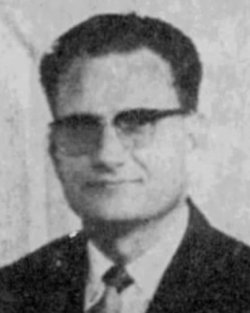
W.E. Best

#50 Justification - Authoritatively Manifested in the Resurrection of Jesus Christ

Romans 4:20-25
W.E. Best July, 1 1973 Audio
0 Comments
Remastered Oct/Nov 2024

Tape nearly lost, but improved.

Sermon Transcript

Auto-generated transcript • May contain errors

100%
fourth chapter of the Book of
Romans. Tonight we will be discussing the fourth aspect of justification. Justification authoritatively
manifested in the resurrection of Jesus Christ out from among
the dead. I am not going to give an interpretation
of the greater portion or even a smaller portion of Romans chapter
4, because when we come to the sixth aspect of justification,
justification by faith, we will be teaching the principal thoughts
of chapters 4 and 5 of the book of Romans. This morning we completed
our study of the third aspect of justification, justified by
blood. And I want to emphasize once
again that our study in Leviticus 16 should have been one of the
most important studies for us concerning the redemptive work
of our Lord and Savior, Jesus Christ. I'm going to say this, and I
don't mean anything disrespectful about it when I say it, but I
had a question when I started the exposition on Leviticus 16
by one of the members of the Church, the question was, have
you ever read this particular interpretation anywhere? No, I just hatched it up one night
sitting in a dark chimney corner. Or I had a dream. No, there are
others who hold to the view, but it is not a common interpretation. of Leviticus chapter 16, and
especially the two goats constituting the one sin offering, one that
was slain and the other that was kept alive. I usually come
across individuals who believe things, and I hope that I don't
leave the impression with any of you that this is something
that I have just concocted out of my own imagination. but something
that comes from the study of the scriptures and the works
of others. I'd like for us to begin reading
tonight with the 20th verse of the 4th chapter and read through
the 25th. Verses 24 and 25 are the two
verses to which we shall be referring this evening in our message and
especially the last verse, verse 25. I think I ought to, by way of
introduction, give to you the brief outline of the fourth chapter
so we can better understand what we are discussing in the last
part of the chapter. The case of Abraham was used
by the Apostle Paul to prove the important points of justification. There are five major points in
chapter 4. They are, number one, Abraham
was justified not by works but by faith, verses 3 and 4. Number 2, justification is of
faith that it might be by grace, verse 16. Number three, having
been justified by grace through faith, justification came to
Abraham not through the law but through the promise, verse 14. Number four, having been justified
by faith in God's free promise, Abraham was not justified by
circumcision or any other outward privilege, verses 9 through 11. Finally, number five, having
been justified by grace through faith in God's promise, Abraham
had no ground of boasting or glorying before the Lord, Romans
4, verse 2, and Romans 3, verse 27. If you were to divide the
chapter beginning with verse 1 through verse 25, there are
three fundamental divisions. I gave to you the five major
points and I did not give them to you as they would fall in
place chronologically, but I gave them to you in the order in which
I think they should be given in the study of the subject as
it is related to chapter 4. Now for the outline of chapter
4, we have first of all in verses 1 through 8 justification by
faith, not by works of morality. Justification by faith, not by
works of morality, and this is of course the subject of verses
1 through 8. Salvation is a problem of life,
not labor. And number 2, beginning with
verse 9 through verse 12, justification by faith, not by rites of religion,
is the topic of verses 9 through 12. Abraham was saved 14 years
before the rite of circumcision. Finally, number three. verses 13 through 25, we have
justification by faith, not by the deeds of the law. This, of
course, is the theme of the last verses beginning with verse 13
through 25. Now I'd like for us to read beginning
with verse 20, talking about the faith of Abraham, the father
of the faithful. He staggered not at the promise
of God through unbelief. but was strong in faith, giving
glory to God, and being fully persuaded that what he had promised
he was able also to perform. And therefore it was imputed
to him for righteousness. Now, it was not written for his
sake alone that it was imputed to him. Beloved, that does not
mean that Abraham's faith was imputed to him in lieu of righteousness,
which is a very common interpretation, and we'll get into that more
in our study of the sixth aspect of justification, justification
by faith. Now verse 24, but for us also
to whom it shall be imputed, if we believe on him that raised
up Jesus our Lord from the dead. Paul is emphasizing the resurrection
of Christ in the last part of verse 24. And then he brings
it to a conclusion in verse 25, and there are two principal divisions
of verse 25. And around these two divisions
we shall bring our message tonight. who was delivered for our offenses."
Now, the word offenses is not a good translation. Actually,
it should be, who was delivered for our trespasses and was raised
again for our justification. And was raised again for our
justification. So you can see there are two
main parts to the 25th verse. He was delivered up for our trespasses,
he was raised up for our justification. The subject is entitled, Justification
of the Elect is Authoritatively Manifested by Christ's Resurrection
out from among the dead, verse 25, Romans chapter 4. There are
several things by way of introduction I must say tonight. before we
get to the exegesis of the text. Lessons of faith are learned
from Abraham. Three things I want to stress.
First of all, we have the basis of our faith. What is the basis
of our faith? The basis of our faith, as we
have already studied in the third aspect of justification, is the
death of Jesus Christ. Now tonight we're going to add
something to that. We're going to add resurrection
to the death of Jesus Christ. You might ask the question, well
why should we add resurrection to the death for one's justification
before the Lord? Brother Goble, I can see some
are getting a little cool. Will you put it just on the air
circulating fan, please? The basis of our faith is the
death and resurrection of Jesus Christ. Surely we can see by
this time how foolish it is, how inadequate it is, for one
in the study of justification to cover just one or two aspects
of this great subject of justification. No one can have a clear understanding,
no one can have a biblical concept of justification without going
into all of the different aspects of justification that we are
endeavoring to study at this time. The basis of our faith
is the death and, as I said, we're adding resurrection tonight,
the resurrection of Jesus Christ. The end of our faith, according
to 1 Peter 1, verse 9, is the salvation of our souls. Now, I need to stress something
at this point. If you read the King James Version
of 1 Peter 1, 9, you may come out with the wrong concept of
the meaning of that text. It literally means our persons. He's talking about the consummation
of our salvation, the consummation of it, not just the salvation
of one's soul, but the salvation of the person. And, beloved,
the salvation of the person includes spirit, soul, and eventually
body. So the end of one's faith is
the salvation of his person, not just his soul, not just his
spirit, but the entire person, spirit, soul, and body. Finally, the encouragement of
our faith is the example of Abraham. There is no greater example of
faith in all of the scriptures. than that which we are studying
in connection with Abraham, called the father of the people. A great
amount of scripture is given to the subject of Abraham's faith. James 2 talks about Abraham being
justified not only by faith before God, but he goes on and takes
it a step further, that faith which justified Abraham before
God is demonstrated or manifested by his works before men. You see, there is a justification
before God apart from works, and there is a justification
before men by works. Notice what I said, there is
a justification by faith before God apart from works. And there is a justification
before men by works. That's what James is talking
about in James chapter 2. Paul in the fourth chapter of
the book of Romans is talking about Abraham being justified
by faith before God apart from works. That denotes one's acceptance
before God, being declared just before a righteous and holy God. Why is our justification associated
with the resurrection of Jesus Christ in the light of Romans
4 and verse 25? I stated to you last Lord's Day
that there is more in this verse of Scripture than appears on
the surface. I'm always amazed every time I enter into a study
of a particular verse of Scripture or a particular subject. There
is always more involved than what appears on the subject.
Now what? Why is our justification associated
with the resurrection of the Lord Jesus Christ? There are
three great events in the life of our Savior. Notice what I
said. There are three great events
in the life of our Savior. And they all go together. You
cannot separate one from the other. Any more than one person
of the Godhead can be separated from the other person of the
Godhead. Just as God the Father, God the Son, and God the Holy
Spirit constitute the one true and living God, even though there
are three persons in the one Godhead, you cannot separate
one of the persons from the Godhead and have the true and living
God. You know what that means? That
means the Unitarians do not have the true and living God. Do you
know what that means? That means the folk right over
here across the street who call themselves oneness do not worship
the one true and living God. That's what it means. You say,
well, preacher, now you're not manifesting enough love. No,
because I hate that damn liberal heresy. I hate it with all the
passion of my soul. It is contrary to Scripture.
And no person, get what I'm saying, no person can be saved by believing
in that damnable heresy. Now just as there are three persons
in the Godhead, in the one Godhead, beloved, there are three great
events. in the life of our Lord Jesus
Christ. What are they? Number one, his
nativity, or if you want to use another expression, the incarnation.
Number two, the death of Jesus Christ. And finally, number three,
the resurrection of our blessed Lord. If you want to know the
importance of the subject of the resurrection, Instead of
the entire 15th chapter of 1 Corinthians, there is not a greater chapter
in all the scriptures on the importance of the resurrection.
You know what Paul said in that chapter? It is not enough, it
is not enough for a person to believe in the person of Jesus
Christ. It is not enough for a person
to believe even in the death of Jesus Christ. There must also
be the resurrection out from among the dead. out from among
the dead. And that finalizes, notice this,
that finalizes the work that Jesus Christ came to perform. So there are three great events
in the life of our Savior, the Lord Jesus Christ. Let's look
at them briefly. Number one, as we think about
the incarnation or the nativity, whichever you want to use. First
of all, man is alienated from God. And the first step in the
divine process of restitution was the incarnation or the nativity. There was a personal union of
deity and humanity in the Word made flesh, John 1 verse 14. What did I say? I said there
was a personal union of deity and humanity. in the Word made
flesh, John 1 and verse 14. But the life that Jesus Christ
lived while he walked among the sons of men, and walked among
the sons of men holy and apart from sin, such life would not
atone for sin. The holy life that he lived could
not atone for sin. Thus the example theory of the
atonement will not stand the test of scripture. So we have
to go beyond the holy life which he lived. Now number two, union
of the divine and human natures in the person of Jesus Christ
alone does not remove the barrier of alienation. God not only sent
his Son in the likeness of sinful flesh, Romans 8, 2, but to condemn
sin in the flesh by Jesus Christ being made an offering for sin. Romans 8, 2 and 3 and 2 Corinthians
5 and verse 21. The Lord Jesus Christ died for
the elect. Notice what I said, and I'm not
ashamed of that statement. I'm not backing up an inch. He
didn't die for every person. I told the folk, I think it was
last Wednesday night, about receiving a long-distance phone call from
Von Carlson, Carl Carlson's eldest son, who is now working in Fort
Worth. He asked me if I knew of a Grace
Church. And I said, I do not know of one to recommend to you.
I know of one in Dallas, and I told him about the one in Dallas,
told him the preacher's name. And he said, I've been calling
around and trying to find, and I visited, and I have visited
different churches. Finally, I decided I'd just make
a few phone calls. And he had maybe talked to the
secretary, and he'd want to know if this church believed in the
doctrines of grace, and the secretary would want to know, well, what
do you mean by the doctrines of grace? And so he thought the best way
of saying it was, you believe that Jesus Christ died for everybody?
One secretary said, why, everybody believes that. Everybody believes that. Jesus
Christ died for everybody. But let me, if Jesus Christ died
for everybody, you and I might as well go home tonight. We might
as well close the doors of this building. I'm wasting my breath
in preaching. If Jesus Christ died for every
person, then every person is going to be saved. Jesus Christ
did not die for some who will never be saved, according to
the theory that is promoted by religion, not by persons who
have been instructed in the faith once for all delivered to the
saints. So the incarnation and the atonement are each the necessary
complement of the other. Now we've come to the second
great event in the life of our Lord Jesus Christ. We're not
spending time tonight discussing the Nativity or the Incarnation. You're familiar with that, you
believe that. We're looking now at the second great event in
the life of Jesus Christ. And I said that the Incarnation
and redemption are each the necessary complement
of the other. In other words, the incarnation
was necessary for the effecting of our redemption. God cannot
die. God absolutely considered cannot
die. It's a very idea that God can
die. So he assumed a human nature
in which he could taste death and then come forth victorious
through death. He was put to death in the flesh,
but he was quickened or made alive by the Spirit, 1 Peter
3, verse 18. And so then we can turn right
around and say redemption was necessary to carry out the purpose
of the incarnation. You see how each is a complement
of the other. In other words, Jesus Christ
came into the world, took upon himself the likeness of sinful
flesh, not sinful flesh, and he was here for the purpose of
doing what? Setting an example before us?
No. But he came primarily to be our
substitute, our savior, our redeemer. So each one is a complement of
the other. Now we look at the third great
event in the life of our Lord Jesus Christ, and this is necessary
before we begin our study of verse 25. Now I want to raise
a question. Can we stop with the incarnation
and the death of Christ? Can we logically stop with the
death of Jesus Christ? Can we say that Calvary marked
the completion of our redemption? Can we honestly say that? We
cannot. We cannot. You might say, well,
I thought that his death on the cross, that marked the completion. I'm not through yet. Calvin no
more marked the completion of our redemption than justification
by Christ's blood completed our justification. Would you get
the parallel? Let me repeat it for your consideration,
and you ought to be able to tie these things in that we've already
given. What did I say? I said that Christ's redemptive
work on the cross did provide, of course, a remedy for sin. But the remedy for sin left results
which needed a further remedy. That's what I'm saying by the
use of different language. Now, I stated before that, can
we say that Calvary marked the completion of our redemption?
My answer to the question was, Calvary no more marked the completion
of our redemption than justification by Christ's blood, which we have
been discussing in the third aspect of justification. completed
our justification. So we come now to the resurrection, which not only set its seal to
the incarnation and atonement, but completed both as far as
Jesus Christ was concerned. Will you turn to Romans 1 and
read with me verses 3 and 4? Let us not forget some things
that Paul said in the very beginning of his Roman epistle. Concerning
his son Jesus Christ our Lord, which was made of the seed of
David according to the flesh, there's the incarnation. there
is a nativity, and declared the Son of God with power, according
to the spirit of holiness. by the resurrection from or out
from the dead. Paul placed emphasis, did he
not, upon the resurrection of the Lord Jesus Christ. Christ's
resurrection was the proof of the Father's acceptance of his
opponing work on Calvary. Now we come to an exposition
of verse 25. Christ's death atoned for the
elect. Notice what I said, atoned for
the elect. Secondly, his resurrection justified
the elect. Now let's look at the first part
as the text is divided into two major divisions. Number one,
Christ was delivered for our offenses, for our transgressions,
our trespasses. Several things we want to discuss
under this point. I said Christ was delivered for
our trespasses. You remember what we said this
morning? Where the sinner begins in his understanding of the sacrifice
of Jesus Christ, he begins with the understanding of his sins
being forgiven. He begins with a trespass offering
and he comes finally to the burnt offering. That must be understood. Now I want to raise three questions
in connection with our first point. First of all, by whom
was Christ delivered? By whom was he delivered? Well,
if you were to ask that question to the average Christian today,
and I'm talking about in professing Christendom because most people
in professing Christendom are not informed as to the basic
truths of God's word. I'm sure that most people would
answer, he was delivered by Judas Iscariot. Don't you think that would be
the answer that most people would give? They would think about
the Lord Jesus being betrayed by Judas. My question is, by whom was Christ
delivered? I'm going to begin where the
Scriptures begin. I am not going to begin with
Judas, I'm going to complete my study of this particular question
with Judas. I'm going to begin with God the
Father. Don't you think that's the proper place to begin? Didn't
God the Father so love us that he gave his Son? Have we forgotten
Isaiah 53, verse 10, which plainly states that the Father made his
soul the soul of Jesus Christ and offering for sin? He was delivered up by God the
Father. He could never have been delivered
up by Judas. if God had not determined before
the foundation of the world that he would be the liberator. This
is exactly what we have in Acts 2.23 and also Isaiah 53 and verse
10. Now I said I'm going to conclude
with Judas. We remember what took place on
that great night in which our blessed Lord was betrayed by
Judas Iscariot. I'd like you to turn to the 26th
chapter of the Gospel according to Matthew. We don't have time
tonight to look at John's account, which some things are added by
John that are not found in Matthew's account. I want us to look at
Matthew's account. We don't have time to read this
chapter. As you can see, it is 75 verses
in length. It is a long chapter, but I would
like to call your attention to some important things in the
chapter. So we will look, first of all,
at verse 47. And while he yet spake, Lo, Judas,
one of the twelve, came and with him a great multitude with swords
and spades from the chief priests and elders of the people." Now
John adds something that I like very much because it shows the
folly of depraved mankind. John talks about them coming
with their lanterns, you see, it was night. Can't you just
visualize, here were those depraved men And they came with their
staves, as Matthew talks about, with these instruments really
for warfare, and they came, as John says, by using the statement
that he made in the 18th chapter of John, with lanterns. Here
they were with their little flickering lanterns looking for the light
of the world. Isn't that something? Isn't that
something? Depraved men walking around in
the dark with their little flickering lanterns looking for Jesus Christ
who is the light of the world. Here they were with their swords,
with their weapons of warfare while the record tells us that
Jesus Christ could have called a legion of angels had he wanted
to and they could have kept him from that hour. But you see it
had been decreed, it had been predetermined, that's predestination,
by God the Father that Jesus Christ, his son, must go to the
cross, that he must be betrayed by such and one as Judas. So look at verse 47. And while
he had spake, Lo, Judas one of the twelve came, and with him
a great multitude with swords and spades, from the chief priests
and elders of the people. Now he that betrayed him gave
them a sign, saying, Whomsoever I shall kiss, that same as he,
hold him fast. Why, one day he'd be saying,
Praise him, and the next day he'd be kissing with a kiss of
betrayal. What can you expect from depraved
men? Pay no attention to their praising. They can praise you
today and give you the kiss of betrayal tomorrow. They can holler,
Hosanna today and tomorrow or before the day is over. Crucify! Crucify! My beloved, I've seen
religion that's like that. I've seen religion that's like
that. Why are they gonna start out, oh, we really love our preacher. And then when the preacher doesn't
go along with some of the things they wanted to do, then before
the day is out, let's declare the pulpit vapors. Get rid of
it. I want you to know that lost
people can go from praise to crucify just like that. Just
like that. So what does Judah say? Whomsoever
I shall kiss, actually behold him pass. Hold him fast. Now I want you to go over to
the 59th verse. Now the chief priests and elders
and all the council saw false witnesses against Jesus to put
him to death. Finally you see the Lord Jesus
was brought before the chief priests, the elders, the rulers
of the Sanhedrin. And what did they do? The council,
they saw false witness. They were not concerned about
truth. Beloved and may I add this, they
were not concerned anymore about justice then than many of our
so-called lawmakers today are concerned about justice now. Are we naive enough in this generation
to believe that lost mankind who are makers of a lot of our
laws, that they're really interested in justice. Why they're not interested
in justice? Most lawyers are not interested
in justice. You say, now watch out preacher, I have relatives.
Well, I have a nephew that's a lawyer in Dallas. I'll tell
you something real funny. He has been assigned to a case recently.
This woman was in a cafe eating dinner. And she saw a cockroach
crawling on the wall. And so one of the employees of
the restaurant smashed the cockroach and she claimed it made her sick
in her stomach and she sued the restaurant. How do you like that? How do you get a lawyer to just
take your case, whatever the case might be? She became sick
in her stomach. And so our nephew was assigned
by his firm with whom he works to represent this woman. She
was made sick and so she's suing the establishment because she
got sick. One of the employees smashed
a rope and it made her sick. I'll tell you, she's sick somewhere
else besides her stomach. That woman's sick in her head.
But the point I'm making is there is not much what? Interest in
justice. injustice and we know it's true.
So what do they do? The chief priest, now notice
who it is. The religionists of Christ's name. The Pharisees,
the religionists. I want you to know the religionists
today are not concerned about justice any more than the Pharisees
were of Christ's name. They sought false witness. They
wanted these false witnesses. Now look with me carefully, and
found none. Yea, though many false witnesses
came, yet found they none. At the last came two false witnesses,
and said, This fellow said, I'm able to destroy the temple of
God and to build it in three days. You see, this poor, depraved
man, who was used as a false witness against our blessed Lord, Heard him say, I'm going to destroy
this temple and raise it again in three days. You know what
Jesus Christ is talking about? He's talking about the temple
of his body. And that poor fellow who heard him speak is talking
about the temple in Jerusalem. For this person, he's going to
destroy the temple. That's like religion is the name
of the denomination. Be careful about that fellow. He's going
to destroy our denomination. I'm trying to make an application.
Do we see it? Does it apply? Well, certainly it applies. Now
look at verse 62. And the high priest arose and
said unto him, Answerest thou nothing? What is it which these
witness against thee? Now beginning with verse 63 through
65, I'm calling attention to something very important. But
Jesus held his peace. held his peace. Beloved, there
are times when it's foolish to say anything. It's foolish. I was telling some of the men
this morning, we have some Jehovah's Witnesses that come by almost
every Saturday in our area. You see, most of the houses in
our area were built by a Mormon, I mean by a Jehovah's Witness
man. And so they have a little kingdom hall not too far. And
so they just parade our addition almost every Saturday. Well,
the same persons have been by. They've seen me and I've seen
them, but they just still come by. Well, I've got an appointment.
I don't want to talk to them. I'll be frank with you. I don't
want to talk to them. Now, whether you understand it or not, that's
between you and the Lord. I don't want to talk to them.
And I told this fellow yesterday, I don't have anything to say.
And from now on, you know what my reply is going to be when
I see this same face come? I'm not going to cast pearls
before swine and turn around and walk back in the house. That's what I'm going to say.
I'm not going to cast my pearls before swine. And if you've had
any dealings with them, you all know what I'm talking about.
They don't believe in the deity of Jesus Christ. They don't believe
in really the authority of the scriptures and many other heretical
things. Now, get this in verse 63. Jesus
held his peace. And the high priest answered
and said unto him, I adjure thee by the living God, that thou
tell us whether thou be the Christ, the Son of God. Jesus said unto
him, thou hast said, nevertheless I say unto you, hereafter shall
ye see the Son of Man sitting on the right hand of power and
coming in the clouds of heaven. Now the 65th verse, I want you
to see this. And the high priest put a circle
around this word, R-E-N-T, rent. He rent his clothes. What does
that represent, do you know? saying he has spoken blasphemy. Notice now it was a high priest.
What did he do? He rent his clothes and said
thou has spoken blasphemy or he has spoken blasphemy. What
further need have we of witnesses? Behold now ye have heard his
blasphemy. Now what does it represent in
the first part of the text? The high priest rent his clothes. The scene in verses 63 through
65 is truly dramatic in the conclusion of Christ being
delivered up by Judas to the high priest and the elders of
the Sanhedrin. The high priest read his clothes.
You see, here we have two high priests facing each other. I
want you to see the picture. If you miss this, you miss the
whole thing. I say here we have two high priests facing each
other. We have the Jewish or the Levitical
high priest who read his clothes. standing before Jesus Christ,
the great High Priest, made forever after the order of whom? Melchizedek. Two High Priests facing each
other. Now the false High Priest rent
his clothes. Look at that. And do you know
what that denotes? You see, one was the earthly
high priest after the order of Aaron, the other the heavenly
high priest who was about to assume his office at the Father's
right hand because his death was imminent. And then his resurrection
and of course his ascension to the right hand of the Father. When Christ Jesus announced himself
as the Son of God, Caiaphas, get this, in mock horror, rent
his clothes. What did this do? According to
Leviticus, now you see you've got to go back to Leviticus to
understand the meaning of the word rent. when he rent his clothes
in mock horror of a statement made by Jesus Christ who was
the real high priest. His renting of his clothes put
him out of the office of high priest. He didn't know it. He didn't
know it. Get this. He didn't know it.
But when he rent his clothes, according to Leviticus chapter
21 and verse 10, by that act he put himself out of the Aaronic
priesthood. He didn't know he was doing it,
but isn't it fitting that he do that in the presence of Jesus
Christ, our great high priest. That's meaningful. That's meaningful. So the Lord Jesus Christ was
delivered up, first of all, by God the Father. And his being
delivered up by Judas to the Sanhedrin for a mock trial, by false witnesses who accused
him of blasphemy, that was simply the means chosen by God the Father. by which he would actually be
delivered up in time by the hands of wicked men to be crucified
and slain, Acts 2, 21 through 23. That by the determinate counsel
and foreknowledge of God the Father. Oh, I'm going to have to hurry
if I finish this. You see, there's a lot in it I haven't touched
it yet. To whom, or to what I should say, was Jesus Christ delivered? By whom was Christ delivered?
Number one question. And the second question, to whom,
or to what rather, was Christ delivered? Three things. First
of all, he was delivered to shame, Isaiah 53.3. Secondly, he was
delivered to pain. Isaiah 53, 4 and 5, this is a
great chapter on the sufferings of Jesus Christ. Finally he was delivered to death,
Galatians 3 and verse 13. So he was delivered first of
all to shame, then to pain, finally of course to death. Think about
the shame men gamble for his garments. He was unclothed. Did you know there are three
places in the Bible where the nakedness of mankind was exposed
by sinful acts? Do you know their counts? Well, look first of all at Adam.
What happened to him? And where did he go? He recognized
the shame attached to nakedness, and that's something that in
our society that is not recognized. That's how depraved our society
is. Adam fled into the forest. He
sought to hide himself. Number two, in the ninth chapter
of the book of Genesis, when Noah was found naked by
his son. Number three, in the 32nd chapter
of Exodus, when Moses was upon the mount in communion with God,
the children of Israel dancing, and it all goes together, dancing and says they were naked
as they danced around the golden calf made by Aaron. Now those
are the three in the Old Testament, but when we come to the life
of our Lord Jesus Christ, wicked men, yes, he was exposed to shame,
his garments stripped from him, they gambled for his garments,
but don't forget this, he was unclothed that you and I might
be clothed upon. He was delivered to pain. There's
no suffering like the excruciating physical pain which our blessed
Lord suffered while he was hanging on the cross, suspended between
heaven and earth, nails driven in his hands and in his feet.
But I ought to stop here to emphasize something. I heard a statement
the other day by a preacher, and I appreciated it. It was
good. Tremendous statement. Let me give it to you. I wrote
it down because of its value. He said as he was talking about
the sufferings of Jesus Christ, and I quote, Jesus Christ does
not want our sympathy because of what he suffered, but he wants our faith. Now he proved it. Listen to the
proof. It's found in Luke 23, 28. You remember when the women
marched around the cross as our blessed Lord was suspended between
heaven and earth, suffering untold agony? And the record states that as
they marched around the cross, they stood with the cross bewailing
and lamenting him. What did he say to them? Here
it is. Daughters of Jerusalem, weep
not for me, but weep for yourselves and for your children. I'm afraid
that today too much emphasis is put upon the physical sufferings
of our blessed Lord, which draws nothing more than human sympathy
that is minus of true faith. in the sacrifice of Jesus Christ. Please don't forget that. Weep not for me, but weep for
yourselves and for your children. Yes, our blessed Lord was delivered
to death. And the final question, for what
was Christ delivered? It was for our trespasses. Our
trespasses. Now we've been discussing that
for several weeks and I'll not go any further. He was delivered
up for our trespasses. He became our substitute, our
savior. Now let's look at the last part
of the 25th verse. We have been looking at delivered
up for our trespasses. Now he was raised up, I might
say, for our justification. The Lord Jesus was first delivered
up and then he was raised up. He was delivered up in order
to deal effectively with our trespasses and he rose again
out from among the dead to guarantee our justification before God. The Lord Jesus was put to death
in the flesh but quickened by the Spirit. Now I have some questions
in connection with this point. Three questions to go along with
the three questions that I raised in the study of the first point.
Christ was delivered up for our trespasses. Question number one,
by whom was Christ raised up? Did you know the Godhead was
active not only in the death of Jesus Christ, but also in
his resurrection? When I say the Godhead, I mean
the Father, the Son, and the Holy Spirit. In Christ's death, the Father
made his soul an offering for sin, Isaiah 53.10. We're told
in John 10, 17, and 18, the Lord Jesus speaking, I have power
to lay down my life. He voluntarily laid down his
life. I read in a book just yesterday
that Jesus Christ was forced to do so. Oh, that man missed
the point. He voluntarily laid down his
life. I have power to lay it down.
I'll look at the other part in just a moment. And he offered
himself through the eternal spirit. for what purpose? To obtain eternal
redemption for us. Now looking at the resurrection,
all three persons of the Godhead were active in the resurrection
of our blessed Lord. In Christ's resurrection the
Father raised him up, this is what it says in Acts 2, 23 and
24. The Son also said, I have power to take it up again. And he was quickened by the Spirit,
1 Peter 3, 18. Question number two, for what
purpose was Jesus Christ raised? He was raised to prove the Father's
acceptance of his sacrifice. But there's more to it than that.
I must hasten to say there was more to it than that, if not
all. He was raised to guarantee our
actual justification. And you'll notice I stress the
word actual. He was raised to guarantee our
actual justification. He was also raised to guarantee
the resurrection of our bodies, Christ the firstfruits. Answer
they that are Christ at his coming and then come at the end of the
consummation of the resurrection. 1 Corinthians 15, 23 and 24. Now this statement, why is there
more? to Christ's work in the world
than just his death on the cross. Let's look at this, several points
now in conclusion. First of all, we know that we
died with Jesus Christ on the cross according to Romans 6,
1 through 10, and we live with him in resurrection. If you are a Christian, you have
already been raised up spiritually and made to sit together in the
heaven as in Christ Jesus. That is the resurrection to which
Paul referred when he said, if ye then be risen with Christ,
seek those things which are above, set your affection on things
above and not upon the things of the earth. Why? Because you're
dead to sin and your life is hid with Christ in God. And when
Jesus Christ, who is the very source of our life, shall appear,
then shall we appear with him in glory. We died with him. Beloved, you and I did not die
with Christ when we trusted Christ as Savior, when we had a conversion
experience. We didn't even die with Jesus
Christ when we were regenerated by the power of the Spirit. all
for whom Jesus Christ died, died with him when he died 2,000 years
ago. Now, we'll get into those verb
tenses in Romans 6 later, I don't have time to do that tonight,
except to say we died with Christ on the cross and we live with
him in his resurrection. We do not live by Christ's death. But beloved, it is by the lie
that was released to us through his death. Are you following
me? What did I say? I said we do
not live by Christ's death. We actually live by virtue of
the life that flows to you and me through the death of Jesus
Christ. By virtue of his death. Jesus
Christ is not dead. He's very much alive at the right
hand of the Father. He died once in the end of the
age to put away sin, but the sacrifice of himself. And now,
where is he? At the right hand of the Father.
He'll never die again. He'll never offer himself again.
And it's by virtue of this life which flows to us through the
redemptive work of Jesus Christ by which we live. And that's
why the Lord Jesus said to his disciples, because I live, ye
shall live also. Number three, in sacrificial
dying, the emphasis is not upon the death, but the giving of
life through the means of death. Number four, thus the emphasis
in our text, Romans 4 verse 25, is not upon the penalty, please
follow me, or you go off and misquote me, is not upon the
penalty of sin, but upon the deliverance Not upon Abraham's
dead powers, but upon the living Isaac in the light of the context. Not upon the dead sinner, but
upon the living and resurrected believer. That's the point that
is emphasized in this chapter. And I challenge you to study
verse 25 in the light of the whole chapter and come to any
other conclusion Number five, the cross breaks
the power of sin in the first part of the text and the resurrection
opens the power of God to you and to me, to all the elect of
God. Now we're coming to a very important
point and we must make proper distinctions. This is number
six. Redemption was more than paying
a penalty. It was more than dismissing from
suffering. It was more than escaping from
punishment for the elect for whom he died.
I want to go back over this, but this is the concluding statement.
This is the most important of these seven things that I'm giving
in conclusion. What did I say? I said redemption
was more than paying a penalty. That was included, but it's more
than that. It is more than dismissing the
elect from suffering the awful torments of hell. It included
that, but more than that. It was more than the escaping
of punishment for the elect. Now, here's the other side. It
was also God's way of providing life that the ungodly might live
in favor before a righteous God and beloved, that now and not
later. If only the former things were
accomplished, if only the paying of the penalty, the dismissing
from suffering and the escaping of punishment, If only those
things were accomplished in redemption, then a dead sacrifice would suffice. I want you to see the importance
of the resurrection. I've said all of that to bring you to this
point. Christ's death accomplished the former. His life consummates
the latter. We live by the power of the resurrected
Christ who lives within us. The regenerated sinner died with
Christ and he was raised with his resurrection. The Christian
life is not only a crucifixion, but beloved, the Christian life
is a resurrection. And this, I am afraid, is not
understood by a great number of Christians in our time. Now,
I want to say one thing in closing. You see, baptism is a picture,
a great picture. We don't believe in sprinkling.
We don't believe in pouring, because neither sprinkling nor
pouring can give a true picture of the death and resurrection
of our Lord. Every time a believer in Jesus
Christ obeys the command of the Lord in baptism, he is saying
to the world by the act of baptism, I believe that Jesus Christ paid
the penalty for my sins. I'll never suffer the awful agonies
of hell. I've been delivered, but there's
more to it than that. When the person who has had a
conversion experience is raised up out of the watery grave, he
is saying, I live by the resurrected Christ. How in the world can sprinkling
symbolize it? How can pouring symbolize it?
You see, it's important. And that's why we're told in
the scripture, buried in the likeness of his death, raised in the likeness of his
resurrection. Did you know that baptism is
a great picture of the two great doctrinal truths of Romans 4.25. He was delivered up for our trespasses,
raised for our justification. So the believer wants the world
to know that my faith and if it's true genuine faith,
it is God's gift, is in Jesus Christ who was delivered up from
my trespasses and he was raised for my justification. I died with him when he died
on the cross.
W.E. Best
About W.E. Best
Wilbern Elias Best (1919-2007) was a preacher and writer of Gospel material. He wrote 25 books and pamphlets comprised of sermons he preached to his congregation. These books were distributed in English and Spanish around the world from 1970 to 2018 at no cost via the W.E. Best Book Missionary Trust.

Comments

0 / 2000 characters
Comments are moderated before appearing.

Be the first to comment!

Joshua

Joshua

Shall we play a game? Ask me about articles, sermons, or theology from our library. I can also help you navigate the site.