Bootstrap
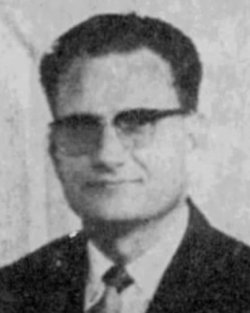
W.E. Best

#53 Justification - Illustration of Justification by Faith

Romans 4:1-8
W.E. Best July, 1 1973 Audio
0 Comments
Remastered Oct/Nov 2024

Sermon Transcript

Auto-generated transcript • May contain errors

100%
Romans chapter 4, let us read
verses 1 through 8, as we continue to study the subject of justification
by faith. It was a blessing to me this
morning to observe the reaction of some in the congregation,
and I can't of course determine just what your idea is by how
that you might react visibly before me as I preach. But I must say that it was gratifying
to observe some in the congregation this morning as I began discussing
with you the meaning of faith. And when I went into Hebrews
11 verse 1 and gave what is commonly believed about faith,
that Hebrews 11.1 is the biblical definition of faith, and yet
I was not giving an interpretation of the verse at all. I was simply
using it as an illustration. But when I said that the faith
of Hebrews 11.1 is not subjective, I could tell that some were really
thinking. And then when I went on to say
that it is objective rather than subjective and proved it by the
context, I could see some smiles and some indications of approval
or understanding, and that's always gratifying. We will continue to amplify that
very truth. The one statement I made this
morning that will be amplified over and over again from different
points of view, not only in this service tonight but in the services
to follow, the statement was, and I repeat
it again, that we are not justified upon the basis of anything inwrought
in us or performed by us. We're not justified upon the
basis of anything wrought within us or in wrought righteousness
or upon the basis of anything performed by us. If we do not understand that
principle, then really there's not any need of going any further.
If that is not a true biblical principle, then I'm as far off
base as any person can be. I maintain, however, that I'm
not off base, that that is the biblical principle. Now, for
the reading of verses 1 through 8, what shall we say, then, that
Abraham, our father, as pertaining to the flesh, hath found? For if Abraham were justified
by works, he hath whereof the glory, but not before God. For what saith the scripture,
Abraham believed God, and it was counted unto him for righteousness. That preposition for is important
and we will be using it tonight and in weeks to come. Now to
him that worketh is a reward not reckoned of grace but of
death. But to him that worketh not but
believeth on him that justifies the ungodly His faith is counted
for righteousness. After using Abraham as an illustration
of justification by faith, then Paul turns and uses David as
the second illustration of justification by faith, but from a different
point of view. even as David also describeth
the blessedness of the man unto whom God imputed righteousness
without worth, saying, Blessed are they whose iniquities are
forgiven and whose sins are covered. Blessed is the man to whom the
Lord will not impute sin. In our Sunday evening services
beginning tonight and maybe through next Sunday evening, we will
be discussing the fourth chapter, or some truths found in the fourth
chapter of Romans. In our Sunday morning service,
which we began this morning, we'll be studying the fifth chapter
of Romans. So we'll be going back and forth
in the fifth chapter in the Sunday morning service. and in the fourth
chapter in our Sunday evening service. In every properly developed discourse,
three things are absolutely necessary. Number one, there must be an
explanation. That's why I spent the time this
morning discussing or defining the phrase justified by faith. We have sought to give an explanation,
and we will be amplifying, as I've already stated, that explanation
over and over again. Number two, there must be an
illustration, and that is exactly what we are now studying in the
fourth chapter of Romans, an illustration of justification
by faith. We have given one service to
the explanation or to the definition of justification by faith. Tonight
we will be using Abraham as an illustration of justification
by faith. The third essential ingredient
in every properly developed discourse must be application. In the study of justification,
we have first of all the fulfillment of all that is past concerning
the provision of man's redemption and the foundation of all that
is future. Paul has already explained to
us the foundation of justification in chapter 3, verses 24 through
31. Now in chapter 4, Paul gives
to us an illustration of justification, not only in referring to Abraham,
the father of the faithful, but also in mentioning David, and
we will see what part David plays in this illustration of justification
by faith. The apostle Paul concludes his
treatise on justification in this epistle, showing that the
application of justification is peace or assurance. The case of Abraham was used
to prove the following important points concerning the subject
of justification. These points are not given in
the order in which they are found within the context of chapter
4, but they are given in order which I want to give them this
evening for our consideration as we progress in our study of
this subject. Number one, Abraham was justified
not by works but by faith, verses three and four. Number two, justification is of faith in
order that it might be by grace Verse 16, neither faith nor the
fruits of faith can be either the ground or the cause of one's
justification before God. Number three, having been justified
by grace through faith, justification came to Abraham not through the
law but through the promise of God. Verse 14, Number four, having
been justified by faith in God's free promise, Abraham was not justified by
circumcision or any other outward privilege according to verses
9 through 11. And number five, Having been
justified by grace through faith in God's promise, Abraham had
no ground of boasting or glorying according to Romans 4 verse 2
and also Romans 3 and verse 27. You might raise the question,
why did Paul bring in David to further illustrate the subject
of justification. The case of David in verses 6
through 8 of Romans 4 was used to prove that justification is
vitally connected with imputed righteousness. That is a very
important point. I said his justification was
connected with imputed righteousness. Thus Abraham and David illustrate
that justification is on the basis or on the ground of the
righteousness of God. Chapter 3 of Romans verses 21
through 31. Now for a very important distinction
between Abraham and David who are used to illustrate justification
by faith. In the first five verses of Romans
chapter 4, we find that Abraham did not possess righteousness, but righteousness was imputed
to Abraham. He was an unrighteous person,
but righteousness was imputed to him. He was an ungodly person
as Abram the pagan, but righteousness was imputed to his account. David, on the other hand, a righteous
man, one to whom righteousness had been imputed. He, as a righteous
person, possessed unrighteousness. But his unrighteousness was not
imputed to his account. Now that completes the illustration.
And one could not ask for a greater illustration than Paul gives
to us in using both Abraham and David. Let me simplify it now. Abram the pagan, an ungodly man,
a person without righteousness, it was to such a person that
righteousness was imputed. It was upon the basis of that
imputed righteousness that we talked about this morning that
Abraham was justified before God. David, on the other hand,
a man to whom righteousness had already been imputed, David was
a righteous person. He was righteous in the imputed
righteousness of Jesus Christ. Not only had righteousness been
imputed to him, but righteousness had been imparted to him. As
an individual to whom righteousness had been imparted, he was not
a perfect person. Now that gives to you and me
something that we ought to be vitally concerned about because
we're not perfect. We sin, and yet every individual
to whom righteousness has been imputed and imparted, the imputed
righteousness furnishing the basis for justification before
God, and the imparted righteousness furnishing the basis of the ground
for the understanding of one's being just before a holy God. Even though David sinned, and
he did sin, his sinning did not remove him from God. In other words, union with the
Lord was not severed by his act or acts of sin. Yet, when David
sinned, even though fellowship with God was lost, union with
the Lord was not settled. Thus, his unrighteousness was
not imputed to him. Why? Because his unrighteous
acts had already been imputed to his Savior, the Lord Jesus
Christ. Therefore, as an individual,
who stood righteous before God, even though he sinned and lost
fellowship with God, his union with the Lord was not severed,
though his fellowship was severed, until there was a restoration,
and that restoration was dependent upon confession on the part of
David before fellowship could be once again enjoyed. So we
have two tremendous truths here. The imputation, first of all,
of righteousness to an ungodly man and the non-imputation of
sin to a godly man. Now how plainer can one make
it than that? And that is exactly what we have
in verses 1 through 8. In the first five verses, the
imputation of righteousness to an ungodly man. In verses six
through eight, the non-imputation of sin to a godly man. Now we'll spend most of our time
tonight discussing Abraham. Abraham was not the first person
to have either faith or righteousness. Proof of that is found in Hebrews
chapter 11. However, those that preceded Abraham, according to
Hebrews chapter 11, were not referred to as being fathers
of the faith family. And there is a reason for that.
Three important things are before us in the discussion of the first
five verses of Romans chapter 4. They are, number one, To reach
the point of faith in God, faith in Christ, one has to come to
recognize that he is as good as dead. Abraham came to that
place. I said Abraham came to that place. He came to the place that he
recognized that he were as it were as dead. He was as it were
as dead. So he came to that place, thus
he believed in God. Now that's emphasized in the
last portion of the chapter which we're not discussing or studying
this evening. Now number two, the positive side comes in when
One is made by grace to see the obedience of Christ, or the righteousness
of God. The believer in Jesus Christ
sees what pleases God. Therefore, he is constituted
righteous before God. And number three, the believer
then gets the practical side. And the practical side is demonstrated
by Romans 6. in Titus chapter 2 verses 11
through 14. No sinner in himself ever moved
Godward. The movement has always come
from the seeking God. Faith is not added as a second
independent ingredient which makes its own contribution to
justification in Christ. On the contrary, faith does nothing
but accept or come to rest, as we said this morning, in the
grace of the sovereign God manifested in the sacrificial work of Jesus
Christ. To walk the way of faith is simply
to admit that Jesus Christ is the way, the life, and the truth,
and we could go on and on. In reality, it is not faith that
justifies. Now I'm amplifying. It is not
faith that justifies. Faith is only an instrument with
which we embrace the Lord Jesus Christ. It is subjective through
which we said this morning, and we'll state again tonight, the
objective faith flows in giving assurance, joy, peace to the
believer in the Lord Jesus Christ. Here is something that a lot
of folk do not know. Did you know that the word faith is used
more than one way in the scriptures? It is used, first of all, in
the sense of the faith once delivered to the saints. It is used in
the sense of the system of truth that has been committed to us.
This is the meaning of Philippians 1.29, when Paul spoke about striving
together for the faith of the gospel. He was not talking about
subjective faith. He was not talking about personal
faith. He was talking about the system
of truth, striving together for the faith of the gospel. What
do you think the writer of Jude was talking about in Jude verse
3? Earnestly contend for the faith once delivered to the saints. He was not talking about subjective
faith. He was talking about objective
faith, the system of truth, the testimony of God. As we said
this morning, The testimonies of God are wonderful. Therefore,
the individual who has been regenerated by the Spirit of God keeps those
testimonies. He joyfully keeps them. They mean more to him than anything
else in all the world, and we cannot place too much emphasis
upon that. Secondly, faith is used in the sense of its subjective
aspect. It is used subjectively as well
as objectively. The faith of the individual,
the principle of faith wrought in the heart and regeneration.
And the word faith is also used in the sense of faithfulness,
the faithfulness of the Christian. Actually, when one studies the
word faith, it has its verb form, noun form, and adjective form. So you see, even in the study
of faith, it's an endless study within
itself. I said, in reality, it is not
faith that justifies. Subjective faith is simply the
instrument through which objective faith flows, giving assurance,
peace, and joy to the believer, to the regenerated person. Faith is not a human act that
complements God's act of grace. I think that's an important statement.
That's a Puritan statement, but it's a good one. I like it so
well I just wrote it down in the margin of my Bible. I like
good nuggets because good nuggets can be amplified and they can
continue to be amplified. Listen to it again, faith is
not a human act that complements God's act of grace. I stated this morning it is not
by the righteousness of two but the righteousness of one by which
an individual is justified. It is not by the righteousness
of Jesus Christ plus what some believe to be a righteous act
on the part of the recipient of grace. So the writer was correct
when he said faith is not a human act that complements God's act
of grace. Faith holds us in fellowship
with Christ, who is our justification. That is a tremendous statement.
His merits, which are imputed to us, are more than sufficient
to acquit us of our sins. So faith is never presented in
the Scriptures as a foundation for one's justification before
God. We cannot emphasize that too
strongly. Now we're going to look into
several statements in the first five verses of Romans chapter
5. Abraham is the great example
of justification by faith. His faith could not be reckoned
for righteousness to himself or to another. Christ's sacrifices
are better still Jesus Christ who offered himself as a sacrifice
is the ground of our justification. You see, I think that more ought
to be included than just the sacrifice of Jesus Christ. We
ought to refer to the person, the person who offered himself. In stating it in that manner,
we include the person as well as the work of our Savior, the
Lord Jesus Christ. and too much cannot be said about
either the person or the work of our Savior. Brother Goble,
will you put the air conditioner just on the fresh air circulating
fan, please? The method by which Abraham was
justified is the same method by which all are justified before
God. This is proved by verses 23 and
24 of Romans chapter 4. The relation between faith and
justification is revealed in the justification of Abraham. Proof of that is found in chapter
4, verses 3, 9, 22, Galatians 3, 6, and James 2, 23, and we
gave you those references this morning. One has said, and I
quote, faith is not a preliminary stipulation for justification,
it is man's experience of it. End of quote. Tremendous statement.
I enjoy reading the works of men and when I come across great
statements, it is those choice statements that really thrill
my own heart. The last verse of chapter 3 of
Romans forms the transition and introduces the theme of chapter
4. Let us look, if you will, please,
at the last verse. Do we then make void the law through faith? God forbid. Yea, we establish
the law. And then he begins with the introduction
of the theme of chapter four, which is Abraham being justified
before the righteous and holy God. In the first eight verses,
which give to us the first division of the chapter. We have Abraham
being justified by faith, not by works of morality. Now we will investigate several
things. Abraham, our father. Will you look at the word father
in verse 1? And then will you connect it
with that word as it is found a number of times within the
context of chapter four. What shall we say then that Abraham
our father? In what sense was Abraham our
father? It could read Abraham our forefather,
our forefather, our forefather in the flesh. He goes on to say,
as pertaining to the flesh hath found. And then Paul gives or
he makes a hypothetical statement. If Abraham were justified by
works. Notice the hypothetical statement
now. If Abraham were justified by works. Abraham was not justified by
works. But if he were justified by works, he would have a reason
for glorying. But since Abraham was not justified
by works, there is no basis whatsoever for Abraham looking at himself
or finding anything within himself about which he could glory. Can
you find anything in yourself? that gives you any reason to
glory in yourself? Well, beloved, if you know the
Lord Jesus Christ in saving grace, you can look at yourself from
now on and you will not find anything within yourself that
will give you any right whatsoever to glory before God. And yet, I'm afraid that most
religionists have found things within themselves about which
they can gloat. And that's the reason they're
going around talking about my faith and my this and my that. You see what I'm talking about?
You see the importance of our subject? It cuts everything out
from under man that gives him any idea whatsoever that there
is something within him about which he can gloat. a hypothetical statement. If
Abraham were justified by works, he has world after glory, but
he couldn't do it before God. Oh, it is true one can go around
and glory about himself before men, and I assure you that religionists
will listen to you, and they'll say, isn't that wonderful, but you can't glory before God. Now verse 3, what saith the scripture,
and that is always a good question, what saith the scripture? Abraham
believed God and it was counted unto him for
righteousness. Now we discussed that this morning,
we'll continue to do it tonight, but let's go to verse 4 now.
Now to him that worketh is the reward not reckoned or imputed
of grace, but of death. Will you look at the last three
words of verse 4? It would be an insult, I said
it would be an insult to a worker to call his hire a gift Mercy
are great. Would it not? It would be an
insult to it. Suppose your employer came to
you and said, oh, I really do appreciate all of your labor. All of your labor. Why? What a gift it is. How would
you feel? When you got ready to draw your
paycheck, on the 15th or the 1st, and he said, really do appreciate
the gift. Why? That work of grace, how
would you feel? That would be an insult to you,
wouldn't it? Well, let's turn that around for a moment, will
you? Let's just turn it around. It is also an insult to God for
man to think that God is obligated to it. You think about it from that
point of view. So it would be an insult to man after he has
labored diligently for a month for his employer to say, oh,
thank you for the gift. It is also an insult to God for
man to think that God is obligated to man. God is not obligated
to anyone. Now with that thought in mind,
let's look at these two verses again. Abraham believed God and
it was counted unto him for righteousness. Now to him that worketh is a
reward not reckoned of grace, but of death. And then he goes
ahead to say in verse 5, But to him that worketh not, but
believeth on him that justifieth the ungodly, his faith is counted
for righteousness. Now let's discuss these first
five verses. Abraham, forefather according to the flesh, was not
justified by works before God. It was through faith. The words Abraham, father, and
flesh. Look at this. I said the words
Abraham, father, and flesh. And it would be better to translate
the word father, forefather. Forefather and flesh. All three
words speak of the paternity of Abraham in terms of natural
generation. The words father and flesh are words that modify the noun
Abraham. That ought to be simple enough.
I said the words father and flesh are known as apostates and they
modify the noun Abraham. Now we come to Paul's statement. hypothetical statement. If Abraham
was justified by words, this implies a supposition, does it
not? It surely does. It is a hypothetical statement.
The Lord deserves, someone has said, no glory for what a man
did not get from Him. I like that. I like that very
much. Therefore, it would be an insult,
as we've already said, to the worker to call his hire a gift,
mercy, free help, or grace. God, on the other hand, is obligated
to no man. Abraham's faith was counted for
righteousness. Verses 3, 5, and 22 of Romans,
chapter 4. Some say the subject here is
not God's righteousness, but the believer's righteousness. Now, beloved, a lot of times
I give to you names of people when I quote them. And I'm going to try to refrain
from giving so many names. That isn't necessary. I'll just
give the things that they say. But I'll have the names at my
disposal in case any of you might have doubt about the authenticity
of what I might say or have said. Now I said some
say the subject here is not God's righteousness but the believer's
righteousness, a faith which is possessed of righteousness. Now this is the teaching of many
and you can read it in books but I want you to know I don't
believe it. And as pastor of this church, of course I will
not stand for anything contrary to this because we're on a very
important principle here. Now there are some things that
I can overlook, but there are some things that when the truth
has been brought out I can't overlook because of their importance. Abraham's name was entered on
God's book, some say, of life because of his faith. Now that's
a common belief of many today. All you have to do is listen
to the radio for a while and you will hear someone make that
very statement. When one believes his faith,
his name at that time, at the point of faith is entered into
God's book, the book of life. I don't believe that. Notice
what I said, I don't believe that. The scriptures do not teach
that. God does not, when you believe,
at that time, write your name in the Lamb's Book of Life. That's
Arminianism, pure and simple. The Bible teaches that the name
of every person whom he gave to the Son in the covenant of
redemption, that name was written in the Lamb's Book of Life when? When individuals believe? No!
Before the foundation of the world. before the foundation of the
world. So it is wrong for one to say that Abraham's name was
entered on God's book of life because of his faith. That is,
righteousness was credited to Abraham's account on the ground
of his faith, end of quote. Do you see why I took the time
I did this morning to give an explanation of justification
by faith? it was necessary to do it. I
said it was necessary to do it. Now let's look at the word reckoned. The word reckoned is used, the
word imputed is used, and the word counted is used. Actually
you could use one word to describe all three terms that are employed
by Paul here in this passage. Reckon, imputed, all mean the
same thing. That's why we will be discussing
imputation in the course of our study of these two chapters,
Romans 4 and 5. Now let's look at the word reckoning
or imputing or counting. Reckoning, which means placing
to one's account. was different in Abraham's case
than that in the case of Phinehas. I'm giving to you a statement
now that is often made, and I'd like for us to investigate it.
The statement is made reckoning, which means placing to one's
account, was different in Abraham's case than that in the case of
Phinehas. You say, well, might ask the
question, who in the world is Phinehas? Will you turn with
me please to the 106th division of the Psalms? Psalm 106. And read with me verses 30 and
31. We'll find in verse 30 who Phinehas
was. And then of course you can go
back to Numbers chapter 25 and you will find much said about
Phinehas. Then stood up Phinehas and executed
judgment, and so the plague was staged. Now verse 31, we're talking
about counting, reckoning, imputing. And that was counted unto him,
that is Phinehas, for righteousness unto all generations forevermore. Now, the first question, who
is Phinehas? Phinehas was a righteous person.
Now, what he did was counted unto him for righteousness for
all generations. Now, there is a difference between
the word counting in reference to Phinehas and that which is
used in relation to Abraham here in Romans chapter 4. We're talking
about an ungodly man in the case of Abram, whereas we're talking
about a godly person in the case of Phinehas. All right, let's
look at this. In the case of Phinehas, it was
an act of righteous zeal. He was credited with the devotion
which his faith in God produced. But some say it was different
with Abraham. With one it was the act of a godly man and with
the other it was the act of an ungodly man. Now the question
is this, was it Abraham's faith that was counted unto him for
righteousness or was it the promised seed that was imputed to him
for righteousness? Now I've asked a very important
question. Now you're going to have to study when you get home
the entire fourth chapter. I don't have time because I'm
not giving an interpretation of the whole fourth chapter now.
In this service tonight I can't do it. But my question is this. Was it Abraham's faith that was
counted unto him for righteousness or was it the promise seed that
was counted unto him for righteousness? What would you say? Was it Abraham's
faith that was counted unto him for righteousness? We disproved
that this morning. We show that that will not stand
the test of scripture. It was not his faith that was
counted unto him for righteousness, but it was the promise seed.
And the promise seed was none other, according to Galatians
3.16, than Jesus Christ himself. It was the promise seed that
was counted unto him or imputed unto him for righteousness. It
was Jesus Christ that was imputed unto you and me for our righteousness
and formed the basis of our justification before God, not our faith, not
our faith. So don't lose sight of the fact
that it was the promised seed in the case of Abraham, and it
was the promised seed because Jesus Christ at that time had
not come. He was the promisee and therefore God could look
over our pass over for the simple reason that he
was looking and he knew that his son Jesus Christ was on the
way to California. You see we've already dealt with
that aspect we're simply using it here to show how it all ties
in together and it must be tied in. One of the great tragedies
today is that some people are able to understand some things,
but they have difficulty in tying things together. And beloved,
things must be tied together in order to rightly abide the
word of truth. Tied together I say. So the same
it is imputed to others also. That is the promisee. See how
simple it is? The promised seed. Not Abraham's
faith, not your faith, not my faith, but it was the promised
seed in the case of Abraham, and it is the finished work of
Jesus Christ, which has already taken place 2,000 years ago. Now let's continue to look at
this word impute, this word reckon, this word count. The word impute
may be used two ways. Two ways. Now I'm just simply
introducing something tonight without much amplification. We'll
spend several services on the subject of imputation itself.
The word impute may be used two ways. Now I must give this much
at this point in our study in order to properly connect these
great truths that we are studying. in Romans 4, 1 through 5. The
word impute may be used two ways. First of all, when the debt of
one is set down to the account of another, as in the case of
Onesimus and of our sins to Jesus Christ. So the word impute, I
said, may be used two ways. when the debt of one is set down
to the account of another, as in the case of Onesimus. I use
Onesimus because it is one of the great biblical illustrations
of imputation. We're all familiar with a story
in the book of Philemon, how that Onesimus, a slave of Philemon,
had stolen some money from his master, had gone into a far country,
and as a result of his wild living or things that usually result
from a person who would perform such an act, he ended up in jail. The Apostle Paul also ended up
in the same jail and all of this was in the providence of God.
Do you know why? Because God had chosen Onesimus
before the foundation of the world. Onesimus didn't know it
and Paul didn't know it. Paul was placed in prison for
a different reason from that. which resulted in Onesimus being
jailed. But Paul had the privilege of
preaching to him the glorious gospel. He was regenerated and
converted. After his salvation experience,
what did Paul do? He wrote Philemon a letter because
Philemon was a dear friend of Paul's. Paul had been there on
numerous occasions. Worship services had been held
in the home of Philemon, the master of Onesimus. The whole
count is given in that little book consisting of only one chapter,
Philemon. But he made this significant
statement. He who was unprofitable to you is now profitable both
to you and to me. It doesn't make any difference
how unprofitable a person might be. God's grace can make that
person profitable and it is only the grace of God that makes him
profitable. Philemon went on to say in his
letter to I mean Paul in his letter to Philemon he said now
if he owes you anything just put it on my account that's imputation
just put it on my account and what will happen when I see you
in person I'll pay If he owes you anything, just put it on
my account. That's imputation. All right,
so I said the word impute may be used two ways. Number one,
when the debt of one is set down to the account of another, as
in the case of Onesimus and of our sins being imputed to Jesus
Christ. Now, number two, to reckon that to anyone which
was antecedently his. Now we're coming to something
very important. To reckon to anyone that which
was antecedently his, whether it be sin or personal righteousness. Original sin or the case of Phinehas. Now, if faith is used in the
latter sense, as some say, in the latter sense, then all that
is meant by the passage in question, Abraham believed God it was counted
unto him for righteousness, Some say that all that is meant by
the passage in question amounts to this. God declares saving
faith, not as the ground on which one is justified, for he could
never supplant the righteousness of Christ, but as a grace existing
in the believer, which is the effectual instrument and proof
of one's justification, because he rests in the finished work
of Jesus Christ. Now that has some merit. That
has some merit, doesn't it? Abraham was reckoned, he was
esteemed of God as a true believer. So the validity of his faith
is proved by the context. Abraham staggered not at the
promise through unbelief, but was strong in faith, giving glory
to God, believing that what he had promised he was able also
to perform. Now let's go a step further.
The righteousness of Christ provides not only for past sins but for
future sins as well. And that's why we have already
used and have said some things about David tonight in connection
with justification by faith. It presents the other side of
the picture. So David is used by Paul to illustrate the latter
in verses 6 through 8. I had intended tonight to go
back to the 32nd division of the Psalms. But if I were to
do that tonight, I'd spend all the remaining moments plots.
And I don't have time to do that this evening because I'm dealing
with another aspect. Now I want to give you some statements
by men whose works I have in my library. One man said, and
I give a quote, faith is accepted in lieu of righteousness and
is reckoned to him as though it were righteousness. And I
sat under the ministry of this man. And I want to also emphasize
that I was taught a great deal by this man for which I am thankful.
But I do not believe that this is true in harmony with the scriptures.
If faith can be substituted for righteousness, then I want to
raise this question tonight. What about baptism being substituted
for righteousness? I want to illustrate something.
I want to make it as simple as I possibly can. I want you to
look at the preposition that is used in verses 3, 5, and 9. Will you look at them again with
me? I want to take time to illustrate something. What sayeth the scripture? Abraham believed God and it was
counted unto him. Now here's the preposition for
righteousness. The preposition here is the Greek
preposition ais. The same preposition is used
in verse 5, counted for righteousness. The same preposition is used
in verse 9. Faith was reckoned to Abraham
for righteousness. With that thought in mind, will
you now turn with me to Acts 2 and verse 38? If one is going
to believe that faith is for righteousness, then what
about just substituting baptism for righteousness? Don't be too
hard on people today who believe in baptism or regeneration. If
you're going to make faith the basis of righteousness, then
you might as well make baptism the basis of righteousness. I
want to put it where we can all understand it. So look with me
now at Acts 2 and verse 38, a verse that is used by all individuals
who believe in baptism or regeneration. whether they be Catholics, whether
they be Lutherans, whether they be Episcopalians, whether they
be Church of Christ, whether they be Oneness or whomever they
might be. Now look at the statement. Acts
2 verse 38, Then Peter said unto them, Repent, and be baptized
every one of you in the name of Jesus Christ for the same
preposition, for the remission of sins, and you shall receive
the gift of the Holy Ghost. I stated that if faith can be
substituted for righteousness, then what about baptism being
substituted for righteousness? Now I want to show you the simplicity
of it. You say, well, I don't think it's necessary to use this
analogy. Oh, yes it is. If one can be
substituted, so can the other. soak in the other. The same Greek
preposition is used. Now what does baptism do? You
and I do not believe there is any merit whatsoever in water. But what does it do? Water only
points people to Jesus Christ, his death, burial, and resurrection. And that's all it does. In other words, according to
Romans 6, it is a picture, a picture of the death of Christ, the burial
of Christ, and the resurrection of Christ. And that's all it
is. Now, if baptism is a picture,
which means it is something that points to Jesus Christ, that
is all, beloved, that faith is. There is no more merit in faith
than there is in water. All faith does is put an individual
to Jesus Christ, who is the righteousness of God. Now, is that true or
not? Is that true or not? I say it is. I say it is. So as baptism on it points to
Jesus Christ, so does faith. So does faith. So the principle
of faith, the principle that understands, the principle that
gladly receives the message when it is proclaimed, I'm talking
about the message of Christ, and keeps, guards, treasures
the message above everything else in all the world, the subjective
faith simply points the individual to the objective testimony of
the person and work of Jesus Christ, just as baptism points
the individual to the death, burial, and resurrection of Jesus
Christ. No merit in water and, beloved,
believe me, no merit in faith. No merit in faith. I have a lot of other things
I want to give tonight, but I can't give them. I don't have the time.
An hour is already gone. An hour isn't very long. I keep
saying every week that I'm going to cut out my messages to about
40 minutes, but for some reason or other I don't seem to be able
to do it. But will you turn with me? I want to give a few things
in closing from the 10th chapter of Romans and the 10th verse. And I want to give a few significant
statements as we continue to amplify the principle that we
instituted or set before you this morning. That we introduced
rather than instituted. That we set before you this morning.
Look at the 10th verse of the 10th chapter. Now what I wanted
to do when I went into this verse was to start with verse 6 and
go all the way through verse 10. I don't even have time to
make all of those connections tonight. So let's look at verse
10. For with the heart man believeth unto righteousness, and with
the mouth confession is made unto salvation. The preposition
unto is the same Greek preposition ais, used in both cases. Now listen to a few statements
that I want to give in closing. And these that I'm going to share
with you are not original statements with me. They're great statements
that I've correlated from many different works. that I have
read over a long period of time. Just as righteousness does not
consist in confession, look at verse 10, just as righteousness
does not consist in confession, so neither does it consist in
faith. Now look at it. You need to tie
this verse in with what we're studying in Romans 4. There is
a vital connection. For with the heart man believeth
unto righteousness, and with the mouth confession is made
unto salvation. Just as righteousness does not
consist in confession, so neither does it consist in faith. Righteousness
is not defined by either faith or confession. Righteousness
does not consist in faith, but of faith. There's the difference. What a great statement. Righteousness
does not consist in one's faith but of faith. Believe it unto righteousness.
We're looking at that phrase. Is the same as the righteousness
which is of faith in verse 6. Look at verse 6. But the righteousness
which is of faith. Do you see why we must study
all these verses together? Those in Romans 4, 5 and here
in chapter 10? Now listen to some more statements. If faith itself is the righteousness,
how could it be called the righteousness of God? Write that down. Please write that down. Don't
ever forget that. Put it in the margin of the Bible.
Listen to it again. If faith itself is the righteousness,
how could it be called the righteousness of God? You see, Christ has made unto
us righteousness, 1 Corinthians 1.30 and 2 Corinthians 5.21. How can faith be equated with
the righteousness which Christ Himself is and which we become
in Him? Oh, what a great statement. in
the form of a question. How can faith be equated with
the righteousness which Christ himself is and which we become
in him? Now listen to this. Faith is
not made under righteousness. Faith is not made under righteousness. Christ is made unto us righteousness. Faith is not made unto us righteousness. Do you see the difference? Christ is made unto us righteousness. One's faith is not made unto
him righteousness. See how important these statements
are? Let me tell you something. You don't come across the statements
that I'm giving you tonight by just doing a little reading once
in a while. You've got to do a lot of reading
to find great statements like this. Now listen to this. Christ
is not only made unto us righteousness, but he is himself that righteousness. Faith points us to Christ who
is our righteousness. That which points us to righteousness
cannot be the righteousness. Isn't that simple? I want to
give that one a game. That which points us to righteousness
cannot be the righteousness. So the faith, subjective faith
of the individual, which points the individual to righteousness
cannot be the righteousness. Faith does not point us to itself. I'm talking about saving faith.
Thus when you hear individuals say, oh my faith, my faith, faith
never points to itself. So when he makes the statement,
if faith is the righteousness, then we would have to say faith
is unto all that believe, rather than righteousness is unto all
that believe. The righteousness contemplated
in justification is not faith itself, but something embraced
by faith. And then in closing, believing
unto righteousness expresses faith's relation to justification,
not sanctification. Aren't those great statements? Now repeat in closing, we're
not justified by anything wrought within us, we're not justified
by anything performed by us, we're justified by the imputed
righteousness of Jesus Christ. And the principle of faith which
is given to us in regeneration simply looks outside of us and
embraces the glorious message of Jesus Christ, his person and
his work. He is the righteousness of God. That is the basis of our justification. I wonder how many of you remember
a message. I have just some brief points from the message in the
book entitled The Impeccable Christ. But about 11 or 12 years
ago I wrote a message and I can remember when it was such a blessing
to the people as a whole at that time. It was a message on the
person of Jesus Christ. I went through the message showing
that Jesus Christ outside of us. Do you remember the message?
I know Brother Pennington and some of you remember because
some of you made some statements. Now after what I'm saying tonight
and what I've said this morning, it is simply an amplification
of that message. It is Jesus Christ outside of
us and the faith which we have looks outside to the objective
Christ outside of us. You remember I said that Jesus
Christ apart from us came into the world, walked among the sons
of men, died on the cross, became our substitute, became our savior,
became our surety. Outside of us And Jesus Christ
outside of us came forth from the grave, ascended to the right
hand of the Father. Jesus Christ outside of us is
at the right hand of the Father, interceding for us. And Jesus Christ who is outside
of us is coming for us. You remember? So the faith, subjective
faith, simply looks outside of oneself. and embraces Jesus Christ
outside of the individual. It's the objective faith that
flows into and through subjective faith, thus giving peace and
assurance that one is justified before God. Do you have this faith? Is your
faith justifying faith? I hope that no one in this auditorium
tonight is guilty of making a God out of this thing. I hope there is no one. But you
know what you believe. I don't know what you believe.
You know what you believe. But I know that the faith that
justifies is the faith that understands, the faith that receives, the
faith that keeps. Such faith begins with knowledge
because knowledge does not begin in a vacuum. And this understanding
passes into conviction and this conviction passes into assurance.
W.E. Best
About W.E. Best
Wilbern Elias Best (1919-2007) was a preacher and writer of Gospel material. He wrote 25 books and pamphlets comprised of sermons he preached to his congregation. These books were distributed in English and Spanish around the world from 1970 to 2018 at no cost via the W.E. Best Book Missionary Trust.

Comments

0 / 2000 characters
Comments are moderated before appearing.

Be the first to comment!

Joshua

Joshua

Shall we play a game? Ask me about articles, sermons, or theology from our library. I can also help you navigate the site.