Bootstrap
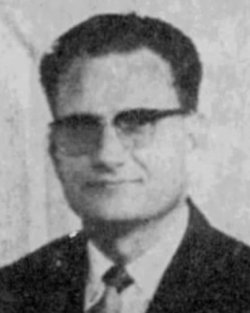
W.E. Best

#56 Imputation - Defined & Illustrated

Romans 4:1-9
W.E. Best July, 1 1973 Audio
0 Comments
Remastered Oct/Nov 2024

Sermon Transcript

Auto-generated transcript • May contain errors

100%
Romans chapter 4. We are beginning this morning
a series of several messages on the subject of imputation. That might sound like a big word
to some people who have not studied the scriptures to any extent,
but it is a word that is found more than 40 times in the New
Testament. Since the word is found more
than 40 times in the New Testament, it is an important subject. In the first service, as we discussed
this subject this morning, I want to define imputation. After we
have given the definition of imputation, along with two biblical
examples that illustrate the meaning of imputation, we will
then Beware of some very serious parallels that some make in the
study of imputation. In the study of imputation, certain
parallels must be avoided. Let me mention these now so you
can be thinking about them before we get to them. You know there
are three major imputations. First of all, the imputation
of original sin to all of Adam's posterity. The question must
be raised, is that imputation real or is it judicial? The second major imputation is
the imputation of our sins to Jesus Christ. Finally, the third
imputation is the imputation of Christ's righteousness to
us. So there are three major imputations. Number one, the imputation of
original sin to all of Adam's posterity. Number two, the imputation
of our sins to Jesus Christ, or the imputation of the sins
of the elect to Jesus Christ, because Jesus Christ did not
atone for all the sins of all mankind. And thirdly, the imputation
of Christ's righteousness to the elect in time. An immature judgment of the subject
of imputation will usually conclude that each of the major imputations
is judicial in character. But that is not the case, beloved,
and I want to warn you at the very outset of our study of this
subject. For instance, let me illustrate
what I'm talking about. The parallel between the imputation
of Adam's sin to us and the imputation of our sins to Jesus Christ cannot
be the same. That's all I'm saying at this
point. Number two, what some believe
to be the parallel between the imputation of Adam's sin to us
and Christ's righteousness to believers cannot be the same. Finally, the imputation of Adam's
sin rests upon a different kind of union from that upon which
the imputation of Christ's righteousness rests. I think you can already
see the importance of such a study. The Greek word from which we
get the word imputation is found 11 times in Romans chapter 4. Within 25 verses The word is
found. Now the word impute is not found
that many times. Those of you who are familiar
with the context of Romans chapter 4 know that there are three different
words translated from the one Greek word that is often translated
imputation or to impute something. You'll notice as we read in just
a few moments a portion of Romans 4 for our scripture lesson, that
there are three words. One is the word impute, number
two is the word reckon, and the third word is the word count.
So there are three words and they all come from the same Greek
word, thus translated differently by the translators of our King
James Version. Let us now read, beginning with
the first verse of Romans chapter 4, we'll read the first nine
verses and then we'll skip around in the remaining verses and cover
all the verses wherein the Greek word is either translated impute,
count, or reckon. What shall we say, then, that
Abraham our father, as pertaining to the flesh, hath found? For
if Abraham were justified by works, he had put off to glory,
but not before God. For what saith the scripture?
Abraham believed God, and it was counted, there's the first
time, counted unto him for righteousness. Now to him that worketh is the
reward not reckoned, there's the second time, of grace but
of death. But to him that worketh not but
believeth on him that justifieth the ungodly, his faith is counted
for righteousness. Even as David also describeth
the blessedness of the man unto whom God imputeth righteousness
without work, saying, Blessed are they whose iniquities are
forgiven and whose sins are covered. Blessed is the man to whom the
Lord will not impute sin. Cometh this blessedness then
upon the circumcision only, or upon the uncircumcision also. For we say that faith was reckoned
to Abraham for righteousness. How was it then reckoned when
he was in circumcision or in uncircumcision? Not in circumcision,
but in uncircumcision. And he received the sign of circumcision,
a seal of the righteousness of the faith, which he had yet being
uncircumcised, that he might be the father of all them that
believe, though they be not circumcised. that righteousness might be imputed
unto them also. Now I'd like you to turn with
me to the 22nd verse and read through the 25th. And therefore it was imputed
to him for righteousness. Now it was not written for his
sake alone that it was imputed. Notice now, not for his sake
alone, but for us also, to whom it shall be imputed if we believe
on him that raised up Jesus our Lord from the dead, who was delivered
for our offenses, our trespasses, and was raised again for our
justification. In the study of this subject,
I could not help but think how little stress today is placed
upon the importance of Bible study. Many religionists today
do not think that it is necessary to study the scriptures and yet
the Bible plainly states, study to show thyself approved unto
God a workman that needeth not to be ashamed rather than abiding
the word of truth. Again, we have in the same context
of that statement Consider what the Lord has said and he will
give to us understanding. Investigations are being made
in various fields of science today, and most of them are approved
by us. In the field of medicine, for
instance, all kind of research work is being done. We hear all
the time about heart research, cancer research, and on and on
we could go and name many different works of research that are being
performed by individuals. There isn't any complaint among
people, generally speaking, because almost everyone would like for
there to be some cure for cancer. I'm sure all would like for there
to be some cure for heart disease, and we could go on and on. Let
us not forget that all of these different works of research,
they only apply to the physical. Man isn't going to live in the body of flesh forever,
and yet man would like to, with all the research that is
being done. Yet when it comes to spiritual
things, the thing that is so amazing to me is, people do not
want to do any research when it comes to theology. They make
excuses. We're only going to live here
for a very short period of time on the earth, but the soul of
man is going to live eternally somewhere. In view of that established
fact, it ought to behoove every individual to want to know all
that can be known. He ought to spend endless hours
I'm talking about lay people now, I'm not talking about just
the preacher. I'm not talking about the persons whom God has
called for the public proclamation of the gospel. We all ought to
be vitally concerned about spiritual truth. I stated last Sunday morning
that faith can only rest in what it receives from the Word of
God. how true that is. If a person
doesn't know very much of the Scriptures, then he doesn't have
a great deal in which to find rest when he faces some unusual
trial or experience in life. It is amazing today how few people
have any understanding whatsoever of the subject which we are now
beginning to study. the subject of imputation. We must be able to make the distinction
between real and judicial imputation. We must be capable of making
the proper distinction between immediate and mediant imputation. I've touched on these things
briefly. But I assure you that in weeks to come, we're going
to dig into these great truths. All I want to do in the message
this morning is to define imputation. And after having given the biblical
definition of imputation, I want to draw two illustrations, one from the New Testament and
one from the Old Testament. as we seek to illustrate this
great biblical truth of imputation. We stated at the very beginning
of our study of justification that one cannot separate justification,
imputation, and righteousness. All three must be studied together.
You cannot separate them. Therefore, they must be studied
as a unit. That's why we are now beginning,
in the course of our study of justification, the subject of
imputation. Let me now give to you the simple
definition of imputation. The word impute comes from the
Greek word which means to reckon whether by calculation or imputation. Imputation may be used two ways,
and this is what we will discuss with you this morning. I said
imputation may be used two ways. Number one, when the debt of
someone is set down to the account of another, as in the case of
Onesimus, taken from the little book of Philemon. Now, when we consider this first
aspect of imputation, that which Onesimus owed was
charged to the count, as it were, of the apostle Paul, and Paul
informed Philemon, the master of Onesimus, that whatever Onesimus
owed him, just put it on my account. When I see you, I will repay
it. Just put it on my account. When
we look at this aspect of imputation, we must come to the conclusion
that this sense of amputation means, I said this sense of amputation
means, that it is imputing something to another which was not antecedently
his. In other words, that which was
imputed to Paul was not antecedently Paul's. It was Onesimus. It was his death, not Paul's
death. But his debt was impugned, reckoned,
counted to Paul. And Paul said, Philemon, when
I see you, if you feel that Onesimus owes you anything, I will pay
it. In other words, I'm going to
be the surety for what Onesimus owes you. That is the imputation
of something to another which was not antecedently his. Now we're going to use the story,
the very familiar story to all of us, in the book of Philemon
that deals with Onesimus, the slave of Philemon. Now the second
way in which the word impute is used, or the way the word
imputation is used, it means to reckon that the one which
was antecedently his, As in the case of Phinehas, and
I'm going to give you first of all the reference that is found
in the 106th division of the Psalms, verses 30 and 31. In order to understand those
two verses, we will have to make a study of a portion of the 25th
chapter of the book of Numbers. Now, once again, let me give
to you the definition of imputation. The word impute, I have already
stated, comes from the Greek word, which primarily means to
reckon, whether by calculation or imputation. Then there are
two ways the word is used. Number one, when the debt of
one is set down to the account of another, as in the case of
Onesimus, Philemon verse 18. And second, to reckon that to
one which was antecedently his, as in the case of Phinehas. I'm
going to take these two in the order in which I have given to
you this morning. You see, the first deals, by
way of illustration, what takes place when one is born of the
Spirit of God, when one is justified before the righteous and holy
God. In the case of Phinehas, we have
that which was imputed to his account, but do not forget, he
was a righteous man. He was of the priestly family.
And since he was of the priestly family, that which was imputed
to him was antecedently his. In the case of Onesimus, who
represents the justification of the sinner before God, we
know that what was imputed to him was not antecedently his. He didn't deserve what he got
any more than you and I, who are Christians today, deserve
what we have. We did not deserve what we got. It was by God's grace or his
unmerited favor that we are what we are today in the presence
of God. Turn with me first of all to
the little book of Philemon, just before the book of Hebrews. One of the great stories of the
New Testament, one that every Christian should be conversant
with. We're not going to take the time
to read all 25 verses of this short book, which consists of
only one chapter, 25 verses in length, but there are a few things
that we do want to call to your attention within the context
of these verses. We have the unprofitable person
becoming a profitable individual. He became a profitable person
because of the grace of God that came to him. Let us begin reading
with verse one. We'll read several verses within
the context of the book. Holy prisoner of Jesus Christ
and Timothy, our brother, unto Philemon, our dearly beloved
and fellow laborer. According to the context of this
short book, that Paul wrote to Philemon, his dear friend, a
Christian friend, a man in whose home there was a little assembly
of saints. Evidently, Paul had been in that
home on several occasions. He had had fellowship with Philemon,
and as a result of having had this experience with Philemon,
he knew him well. He knew that he was a man of
integrity. Philemon had a slave by the name of Onesimus. We're
not told just what happened. We do not know if he stole some
money which belonged to his master. We do not know if he was a tenant
farmer and owed his master something. We do not know the particulars,
and beloved, it isn't necessary for us to know. We do know this
according to this brief letter that Paul wrote to Philemon.
Onesimus did leave him. He went away and he got in jail. In the providence of God, the
apostle Paul was placed in the same jail, but not for the same
reason. We don't even know what happened
in the life of Onesimus that resulted in him being placed
in prison. But he was in prison. In the
providence of God, the apostle Paul was placed in the same prison,
but he was placed there evidently for a different reason. Paul
was placed there for the preaching of the gospel. He had been faithful
unto the Lord. You see how the providence of
God works. We must rest in this biblical fact. Every individual
whom the Father has given to the Son in the covenant of redemption
will be brought to a saving knowledge of Jesus Christ. The individual
cannot get too far away, it doesn't make any difference where he
is, what happens to him, God is able to reach him. And God did just that. You see,
Arnesimus was one whom the Father had given to the Son in the covenant
of redemption. Philemon didn't know it. The apostle Paul did
not know it, but God knew it, and in the providence of God,
now Paul found himself side by side with Onesimus in prison. What happened to Onesimus? He
was given a new heart. Having been given a new heart,
he was capable of hearing and understanding the message that
Paul preached to him in prison. He became a new creature in Christ
Jesus. He had a conversion experience.
And after the conversion experience, Paul knew that he would be released
soon for whatever crime he had committed that resulted in him
having been placed in prison. So now look with me at verses
9, 10, and 11. Yet for law's sake I rather beseech
thee, Paul now writing to Philemon, Being such an one as Paul the
aged, and now also a prisoner of Jesus Christ, I beseech thee
for my son Onesimus. Notice the endearing term that
Paul used. He called Onesimus his son, and
of course he was his son in the faith, whom I have begotten in
my bonds. The same language is used here
that the Apostle Paul uses in 1 Corinthians 4.15 when he made
reference to the fact that he had begotten the Corinthians
with the glorious gospel of the Lord Jesus Christ. Now verse
11, which in time past was to thee unprofitable. Onesimus had
been an unprofitable person. Beloved, we might as well wake
up to the fact. Every unsaved person is an unprofitable person. He may be profitable in some
respects, but as a person he is unprofitable. He can never
become profitable until the grace of God comes into his heart and
life. Now notice verse 11, which in
time past was to thee unprofitable, but now I like those two words
very much, but now. You see, the conjunction but
is the corner word of Scripture. A person can be headed in the
wrong direction, but when the grace of God comes into his life,
he is changed. So this conjunction is the corner
word of Scripture, but now, even though before now Onesimus was
unprofitable to you, I want you to understand, Philemon, that
he is now profitable to thee, and not only to you, but to me
also. So he's profitable to me, and
I'm an apostle. I am a minister of God. He goes
on to say in verse 12, whom I have sent again, thou therefore receive
him, that is, mine own bowels. In other words, receive him as
you would receive me. Beloved, that's Christian brotherhood. I said that is Christian brotherhood.
I do not know how many of you saw this program the other night.
It was on Channel 8. The title of the program, it
was a National Geographic program. It was entitled The Human Machine.
How many of you saw that program? Well, about five or six of you.
It was an excellent program in many respects. Some things were
revealed in that particular program that only doctors themselves
have been able to see. For the first time, the program
stated, those pictures have been made to the public. It was repeated
again the morning after, I think, for persons who look at Channel
8 in order to get credit for some courses they might be taking
at the University of Houston. Now, I didn't care for the atheistic
statements. Notice what I said. I didn't care for the atheistic
statements. But the program as a whole was interesting. Now,
it's been many, many years since I studied biology. I couldn't
even name you all the different teeth that we have. I remember
molars, bicuspids, and incisors, but that's about as far as I
can go. But I had forgotten, and I'm sure that I didn't even
know this. Did you know the human body has 60,000 miles of blood
vessels. 60,000 miles. Now when you think
about that, that just staggers your imagination, doesn't it? 60,000 miles of blood vessels.
But this was the interesting part to me since we have been
discussing recently the subject of Christian unity. The person
showed heart cells under the microscope. When they are separate,
They beat separately, but when they once unite, they beat in
unison. That's a great illustration.
The heart cells, when they're separated, they beat separately,
but once they touch each other, they beat in unison. Well, many
other interesting things. Now, I use that as an illustration
at this point. You see, Paul's heart had not
been beating in unison with the heart of Onesimus. The heart of Onesimus had not
been beating in unison with that of his master Philemon. But Paul
wanted him to know that now, since grace had come into his
heart and life, that his heart was beating in unison with him,
even though Philemon did not know it, and Paul wanted him
to know about it. This is true of all Christians, all who have
been born of the Spirit of God, their hearts are beating in unison.
I said in unison. So then Paul goes on to say in
verse 15, for perhaps he therefore departed for a season that thou
shouldest receive him forever, not now as a servant, but above
a servant. In other words, when he comes
back to you Philemon, don't receive him just as a servant You are
to receive him above a servant. He is to be received as a Christian
brother. A brother beloved, he says, specially
to me, but how much more unto thee. Both, now notice this,
two important things here. Number one in the flesh and number
two in the Lord. Now verses 17 and 18. If thou
count me therefore a partner, Notice how Paul addresses Philemon.
If you count me as a partner, receive him as myself. I know that you love me. Our
hearts beat in unison. Now, if you're going to receive
me in that manner, you will have to receive Onesimus in the same
manner, regardless of what he's done to you in the past, regardless
of what his attitude about you has been. Now, verse 18, here's
the text. If he hath wrong thee, or oweth
thee aught, put that on mine account. Beloved, here is a biblical
example of judicial, notice what I'm saying, of judicial imputation. I said of judicial imputation. Now let's use a metaphor at this
point. What is a metaphor? A metaphor
is a human form of divine truth adapted to the weakness of our
perception. Now, as we look at this whole
book of Philemon, 25 verses, let us use Philemon here as representing
God the Father. Let us use the Apostle Paul as
representing Jesus Christ. And finally, Onesimus as the
sinner who has run away from his master, just as every individual
has gone astray from the Lord according to Isaiah 53 verse
6. Now when we look at these three
persons, Philemon, Paul, and Onesimus, what do we see? First of all, Philemon in this
case would represent the father. Onesimus would represent the
sinner who has run away from the father. The Apostle Paul
as Jesus Christ into whose hands Onesimus falls And Paul assumes
the debt that Arnesemus owed. Beloved, that's imputation. That
is exactly what happened. You see, we have all sinned and
come short of the glory of God. We have gone away from God the
Father. But Jesus Christ has come. And as a result of having
come, our sins, you see, the sins of all believers, were imputed
to Jesus Christ, and beloved, that is judicial imputation. You see, our sins were not the
sins of Jesus Christ. Therefore, it would have to be
judicial. So our sins were imputed to Jesus Christ, and then Jesus
Christ paid the debt, and his righteousness has been imputed
to us and it is this imputed righteousness that justifies us before a righteous
and holy God. Do you see what a beautiful picture?
So we have here a tremendous example of imputation. Therefore, Paul said as he wrote
to Philemon, now whatever he owes you, it's on my account
and I'll repay you. That's exactly what God the Son
says to God the Father. Our sins have been imputed to
him. He's paid the debt. And his righteousness is imputed
to us. And it is this imputed righteousness
that justifies us before a righteous and holy God. Now that's judicial
imputation. That's the first aspect of imputation. All of us this morning who know
Jesus Christ, whom to know is life eternal, we're clothed with
the righteousness of God. That righteousness was provided
by none other than Jesus Christ, who was forsaken that we might
not be forsaken. Thus, we stand today in the imputed
righteousness of Jesus Christ. I am not going into the imparted
righteousness this morning. We'll discuss that at a later
date. Now would you turn with me to
the 106th division of the Psalms for the second way the word impute is used in
the Scriptures. 106th division of the Psalms. We want to read these two verses,
and after we have read these two verses, then we will go to
the portion of Scripture from which the psalmist quotes these
statements, and there we will make our study of the second
way in which the word impute is used. Then stood up Phinehas. Phinehas was of the priestly
family. What did he do? Executed judgment. And so the
plague was staged. Now verse 31 is the text we're
using for the second way in which the word impute is used. And
that was counted unto him for righteousness. What was counted
unto him for righteousness? Go back to verse 30 for a moment.
Phinehas stood up. He executed judgment. as a result
of his just execution of judgment, that execution of judgment was
counted, reckoned, imputed unto him for righteousness. But it
was antecedentally his. You see the difference? And that's
why I'm using it in the order in which I am. We must first
discuss the imputation of righteousness to us which was not antecedently
ours. But after having been justified
before the righteous and holy God, beloved, every saved person
has a holy zeal for righteousness. And what he does for the cause
of Jesus Christ is going to be rewarded. And we have the reward
mentioned in the 31st verse, and the word counted or the word
impute is used. And that was imputed, counted,
or reckoned, whichever word you want to use, unto him for righteousness. But it was for something which
was antecedently his. He was rewarded as a righteous
man. He was not rewarded as an unrighteous
man. We've already talked about an
unrighteous person being made righteous by the imputed righteousness
of Jesus Christ, a righteousness which was not antecedently on
Esamus'. Now we're looking at something
that is imputed to us, which is antecedently ours as Christians. I'd like for us to get a little
bit of the context. from the 106th division of the Psalms
before we go to the 25th chapter of the book of Numbers. This is such an interesting portion
of Scripture. You'll notice in the 105th Psalm,
for instance, we have how God treated Israel. In the 106th
Psalm, we have how Israel treated God. And notice what I said. In the
105th, I don't have time to go back and review all of this because
that would take hours to do. But in the 105th Psalm, we have
how God treated Israel. In the 106th Psalm, we have how
Israel treated God. Now we begin with the first verse
of the 106th Psalm. Praise ye the Lord. In verse
2, who can utter the mighty acts of the Lord? Who can utter the
mighty acts of the Lord? No one can. And then he goes
on in verse 7. Now here are some things that
the Israelites did, and they're not commendable things either.
Our fathers understood not by wonders in Egypt. Beloved, how
many of us today understand the great biblical truths of God?
Just as the Israelites made mistakes then by not understanding the
mighty works that God had performed, there are many of us today who
are committing the same sin, spiritually speaking, because
we do not understand the mighty doctrines that God has committed
to our trust. Now drop down to verse 13. They
soon forgot his works. Verse 14, lusted exceedingly
in the wilderness. Verse 19, went so far as to make
a calf in Horeb and worship the golden image. Verse 24, they
despised the pleasant land, they believed not his word. Now, beloved,
I tell you it's a serious crime when people claim to be the children
of God and you can give to them plain statements of Scripture
and they'll say, I don't believe it. Look out. you can rest assured of one thing,
the judgment of God will fall on you. Verse 28, they joined
themselves also unto Baal Peor. Verse 29, they provoked him,
that is God, to anger with their inventions. And because of all of this, there
was one who was faithful in the midst of faithlessness. and unfaithfulness. His name
was Phinehas of the priestly family. He executed judgment
because God told him to do so. He was faithful in his execution
of judgment and because of his holy zeal, his holy zeal was counted unto
him for righteousness. Notice verse 34, they did not
destroy the nations. In other words, the Israelites
did not do what God told them to do. They were told to destroy
the nation. You and I are to crucify the
flesh with its affections and lust, if you want the New Testament
interpretation of that Old Testament example. Verse 35, but were mingled
among the heathen. In other words, the Israelites
did not live separated lives. They were mingled among the heathen.
This is exactly what we have today. There are many Christians
today who are mingling among and fellowshipping unsaved people. Now notice what he says. And
went so far as to learn their works. They even learned their
techniques. I want you to know there are
a lot of religionists today that are learning the techniques of
the world and the techniques of the world are brought into
the church, just as the Israelites did the same thing by making
the molten calf and worshiping, bowing down to the molten calf.
Notice verse 36. They serve their idols. Verse
37. They sacrifice their sons and
their daughters. Many people today are sacrificing
their children in order that they can be popular for the world. If you want a New Testament example
of it, then verse 38. And shed innocent blood. And shed innocent blood. Now,
turn with me please for the completion of our study this morning. to
the 25th chapter of the book of Numbers. I want us to read
several verses and then we will give an interpretation of these
verses as we did those that we read from Philemon. I want you
to get the picture. Keep in mind now that Phinehas
was a zealous man. He was a righteous man. He was
one to whom the righteousness of God had already been imputed,
righteousness which was not his, not antecedently his, but righteousness
by which he stood justified before God. But as a result of his zealous
acts, his faithful execution of judgment in a time when children
of God must stand up and be counted. His works, His acts were counted
unto Him for righteousness. Let's begin reading now with
verse 1. You'll be amazed at the things found within this
25th chapter. And Israel abode in Shittim. I want to give you the meaning
of names as we go through because the meaning of names. Yes, a name means something in
the Bible. And the meaning portrays something
that we need to understand. Israel abode, the word abode
should stand out to you. Abode where? In Shittim. Now
Shittim means this, things that turn aside. Isn't that interesting? Things
that turn aside. So the Israelites They were abiding
in a place wherein they would be turned aside. There are many
Christians today who are abiding in places and they're being turned
aside from the truth of God. And Israel abode in Shittim.
And the people began, now here's what results in abiding in a
place where Christians should not abide. began to commit whoredom
with the daughters of Moab. Spiritual adultery was committed
and some even went farther than that, they committed fleshly
adultery. Now verse 2, what happened now? The daughters of Moab. Now Moab
means my father or what father? Are you familiar with the history
of Moab? Well, let me give you the brief
history of Moab and the Moabites. Do you remember Lot who lingered
around in Sodom and there was an incestuous union between Lot
and his daughters? And the first son that was born
was named Moab. So you can see why the statement
is made here. The daughters of Moab committing
spiritual whoredom with the daughters of Moab, my father, whose father? You see the question? Whose father?
Now verse 2. And they, that is the daughters
of Moab, called the people. I want you to know the daughters
of Moab will give a special invitation, a special invitation. When you go back and study the
chapter that precedes this, you will find that Balaam sought
to curse the Israelites. He could not accomplish that.
He could not curse them. So the devil used him to try
to curse the Israelites, but that was not accomplished. Even
though many attempts were made by Balaam to curse them, now
the devil knew that he was going to have to change his method
of operation. So the devil said to himself,
Balaam couldn't curse the Israelites, so now I'm going to use the daughters
of Moab. And if I can't curse them, I'll
corrupt them. And, believe it, that is the
method that is employed today by the devil. While I can't curse,
I'll corrupt with evil influences. So look at verse 2. And they
call the people, under the sacrifices of their gods, Notice the word
is plural. God's. A special invitation was
given. Come on over. Why, things are
fine over here. Nothing wrong. All right, now,
let's read the rest of the verse. And the people did eat. What
did they do? They accepted the invitation,
which was contrary to God's commandment to Israel, just as God's command
to you and to me is to be a separated people. They went over, they
ate, and not only did they stop with just eating, the last part
of verse 2 says, they bowed down to their gods. Now verse 3, here's the clincher. Beloved, here's the clincher.
One word in verse 3, Israel joined himself unto Baal Peor. Beel Peor means Lord of the Opening,
and the word Lord is to be spelled with a little l, Lord of the
Opening. The way was made open for them.
And the anger of the Lord was kindled against Israel. And the
Lord said unto Moses, Take all the heads of the people, and
hang them up before the Lord against the sun, that the fierce
anger of the Lord may be turned away from Israel. And Moses said
unto the judges of Israel, Slay ye every one of his men that
were joined unto Baal Peor. Now verse 6, And behold, one
of the children of Israel, and only just one here, One of the
children of Israel came and brought unto his brethren a Midianitish
woman who was a whorish woman in the sight of Moses. Now what
you notice, every step that the Israelites took was one in the
wrong direction. It was down, down, down. And now one person, he goes out
and he brings the Midianitish woman. Now let's stop with the
word Midian. What does Midian mean? Do you
know? The word Midian means strive or contention. Doesn't that mean
something? Strive or contention. So this
whorish woman was brought in the side of Moses and in the
side of all the congregation of the children of Israel who
were weeping before the door of the tabernacle of the congregation. Every step that was taken was
in the wrong direction, and they became so bold that they even
brought this whorish woman into the very presence of Moses, the
leader, and the congregation of the children of Israel. You know, I can't help but think
about a lot of these so-called celebrities today. that are brought
by religionists and they're pushed out in front of a service. Well,
believe it to me, it's like bringing whoreish people and subjecting
whoreish people before the people of God. Do you see the application? I hope you do. If you have a
spiritual mind, you do. If you don't have a spiritual
mind, I can't give it to you anyway. Now let's read beginning with
verse 7. Now, in the face of all of this, we come to Phinehas. And he's the one that represents
the second meaning of the word imputation. And when Phinehas,
the son of Eliezer. Now, first of all, what does
the word Phinehas mean? It means mouth of brass. In other
words, he's going to execute judgment, but it will be a righteous
judgment. You see there is a lawful judgment.
Notice what I said, there is a lawful judgment. There is an
unlawful judgment. And he is the son of whom? Eliezer. And Eliezer means God is helper. So here the malefic brass is
the son of God is helper. The son of Aaron the priest.
So you can see he is in the priestly family. When he saw it, what did he do?
He rose up from among the congregation and took a javelin in his hand.
And he went after the man of Israel into the tent. He went
after the man who had brought the whoreish woman before the
congregation of Israel. And what did he do? And the woman
threw her belly. So the plague was stayed from
the children of Israel. So what happened? He went after
the man of Israel into the tent, thrust both of them through the
man of Israel and the woman through her belly, so the flag was stained
from the children of Israel. You say, I don't understand that.
I do. We are to crucify, we are to
kill the flesh with its affections and lusts. If we as Christians
do not do that, then the testimony of God is
hindered. And that brings the anger of God upon the congregation. Verse 9, And those that died
in the plague were twenty and four thousand. Look at that. And the Lord spake unto Moses,
saying, Phinehas, the son of Eleazar, the son of Aaron, the
priest, hath turned my wrath away from the children of Israel,
while he, here it is, while he was, what? Zealous for my sake. Don't forget that, Steve. Zealous
for my sake. Zealous for my sake among them,
that I consume not the children of Israel in my jealousy. Wherefore
say, behold, I give unto him, and we're going to spend some
time on this. Look at it, beloved. I give unto
him my covenant of peace. I want to ask you a question.
What does that mean, my covenant of peace? God says concerning
Phinehas, I'm going to give to him my covenant of peace. What
kind of peace is that? Do you know? I'm asking you a
question. I want you to ask yourself right
now, do you know what kind of peace that is? Keep in mind this
is a Christian, and there is peace going to be given to the
Christian. What kind of peace is it? Last
Sunday morning in our study of Romans 5, 1 and 2, Therefore,
being justified by faith, we have peace with God. What did
I say about peace in that particular passage? I said that is not the
tranquility of mind, but it is the status of peace. Now I'm
asking you a question. What kind of peace is this? I'm
going to give Phinehas my covenant of peace. Well, we'll get to
that later. Read on. Verse 13, we'll complete our
scripture reading in the 25th chapter of Numbers. And he shall
have it, and his seed after him, even the covenant of an everlasting
priesthood, because he, here's a repetition now, he was zealous
for his God, and made an atonement for the children of Israel. Now,
beloved, let's interpret these first 13 verses. of the 25th chapter of Numbers. We have already seen in the first
part of the chapter what led to Israel's downfall. She abode in Shittim. She abode
in the place that turned them aside. In that place where they
were turned aside, they were subjected to what? The daughters
of Moab. What Balaam could not accomplish
by cursing the devil through the daughters of Moab did accomplish
by corruption. The sin of the Israelites at
Shittim was what? Idolatry. It was spiritual idolatry. It was spiritual fornication. The instruments that were used
In bringing this to pass in the life of Israel, the instruments were the daughters
of Moab, and also the woman from Midian,
which means strife and contention. That's why, beloved, I don't
like strife and contention in the church. When I see it brewing,
if I detect it, I'll do everything I can to stop it, regardless
of the consequences. It must be stopped. It must be
judged. Do you remember when we were
studying some time back in the 13th chapter of the book of Leviticus
about the symptoms of leprosy? And it was the leprosy of the
head. Sometimes you have to wait and see what's really materializing. But as soon as you detect it
going in the wrong direction, it is the man of God's responsibility
to put a stop to it. and not even count the cost,
not even worry about the consequences. Why, it's following the scriptures,
beloved, and persons who are interested in the scriptures
will appreciate it. And those who aren't, it doesn't
make any difference anyway. Notice now they abode at Shittim. They
were dwelling in the midst of sinful people and corrupting
influences. I like what a Puritan said, and
I quote, and a wicked woman, no man can
long be in safety." Do you see what the devil used here? He
used the Daughters of Moab and the Midianitish woman to accomplish
his purpose. And so that's why the Puritan
said, near a fire, a serpent and a wicked woman, no man can long be in safety.
The Israelites departed from the host of Israel, and what
did they do? They joined themselves, it says,
with the people of Moab and Midian. At first there was some sense
of shame, but step by step they reached the place where there
was no sense of shame. You and I are living in a time
today when it seems that there is no sense of shame. I'm talking
about What's taking place in the midst of religion? Then in verse 6, the testimony
of one person can corrupt the testimony of the whole congregation.
The one man from among the Israelites went out and he brought this
Midianitish woman. So one person can destroy the testimony of
a whole congregation. You know, the Lord regards two
things in his people. He doesn't overlook these things.
Number one, personal purity, and number two, uncorrupted worship. God is concerned about two things
in your lives and in my life. Number one, personal purity,
and number two, uncorrupted worship. when we come to bow before the
sovereign God. Spiritual affection, purity of
principle, and clearness of understanding do not go hand in hand with a
corrupt life. No person can live in corruption
and have a clear understanding of spiritual things. He cannot,
no he cannot, have any concern whatsoever for the purity of
principles, as long as he is in that condition. Now Phinehas
must stand up, and he was willing to do so. We can understand priestly
intercession, but execution of judgment is not considered by
many as priestly work. We're living in a time today
when religionists are saying, oh, you're not supposed to judge,
you're not supposed to judge. I'll tell you so quickly, it'd
make your head swell if you don't know what you're talking about.
Christians are to judge. There is a lawful judgment. I
said a lawful judgment. And as Fidehas exercised a lawful
judgment, every child of God today is to, what? Execute a
lawful judgment. Anything that is contrary to
truth, anything that is contrary to the will of God is to be denounced
by the man of God or the child of God for that matter. So we looked at Phinehas, he
was faithful. Faithful. And faithfulness to
God in judging what is displeasing to the Lord is the truest form
of love. Did you know that? All of this talk about love today,
it makes me sick. You know why? Because it's not
love. It's artificial love. It's satan. Or it's sweet and low. It's something.
It's not genuine. True love will manifest itself,
and it will manifest itself in a holy zeal for the integrity
of God. I don't believe that any person
can lay claim on salvation unless there is a manifestation of holy
zeal. Do you know what the Lord Jesus
said? The zeal of my house hath eaten me up. John chapter 2. There is a holy zeal within the
breast of every born-again person, and if it isn't there, he doesn't
have love. He doesn't have the grace of
God. I like what one man said in describing
Phinehas. He said, Phinehas appeared as
a rainbow on the bosom of a storm. That's a very picturesque description. Think of the condition at the
time that Phinehas stood up and manifested such holy zeal for
the Lord. Phinehas appeared as a rainbow in the bosom of a storm.
He didn't stop there. He said, he was a fragrant flower
in the midst of the stench of moral and religious corruption. He didn't stop there. He further
stated, he was the faithful among the faithless and unfaithful. And he closed his statement by
saying, his heart blazed in one blaze of godly indignation. The believer must fear nothing
in a righteous cause. Be sure it's a righteous cause.
And when he's sure that it's a righteous cause,
then he has to fear absolutely nothing. That was Phinehas. When we look at the 13th verse,
we know that heaven smiled upon the holy zeal of Phinehas. And
heaven will smile upon you and me when there is a manifestation
of holy zeal for the integrity of God. Yes, honor comes to those
who honor God. And Phinehas stands as a noble
type of holy zeal. The second thing about Phinehas
is he was rewarded for his zeal. He received God's covenant of
peace. Oh, I enjoyed this particular
point so much in the study of it this past week. What did he
receive? He received God's covenant of
peace. Now, I asked you a few moments
ago, what peace does this represent? Do you know? Do you know? Let's turn to the New Testament.
Go with me, please, to John chapter 14, verse 27. Let's see if we
can come to an understanding of what kind of peace this is.
It is not the status of peace. He already had that because he
was justified before God. So it can't be the status of
peace. All right, look with me at John
14 and verse 27. Our Lord is speaking to the disciples on
the eve of his departure from them. Here's what he says to
them. Verse 27. Peace I leave with
you. Notice the next phrase. My peace
I give unto you. Now let's pause a moment. We
must see the beauty of this. Would you say that the word peace
in the first phrase means the same as the word peace in the
second phrase? If you do, you're mistaken. The first peace is the result
of justification. Thus I call it the peace of justification. The second peace is the peace
of sanctification. Not justification, but sanctification. Now look at it a moment. Christ
said, peace I leave with you. The peace that Jesus Christ left
with the disciples could never be taken from them. You know
why? Because it was a peace of justification. But beloved, the
peace of sanctification can be taken from us. It can be increased, it can be
decreased. The peace of justification can
be neither increased nor decreased. But the peace of sanctification
can be increased as well as decreased. Let's look at it now. This ought
to be helpful. Peace I leave with you, Christ
said. Then he says, My peace I give
unto you. Now this is something I'll give
unto you. This is not something I'm leaving with you. This is
not the peace of justification. This is the peace of sanctification. And then he says, not as the
world give it. The world can't give you the
peace of sanctification. The greatest tragedy in the life
of a Christian is when he becomes disturbed. He goes to the wrong
place too often to try to find peace. He goes to the wrong person. He has the peace of justification,
but when he loses or leaves the peace of sanctification, too
often he's found going to the wrong person, going to the wrong
place to look for that peace. The world can't give it. What
do you mean by that? I'll tell you what, you can buy
your new house and fill it with new furniture, it won't give
you that peace. Won't give you that peace. You
can buy a new car, you can buy your new boat, or you can do
something else, but it won't give you that peace. I'm talking about
the peace of sanctification. The peace of sanctification does
not come from the world. Listen now. Not as the world
giveth give unto you, let not your heart be troubled, neither
let it be afraid. Now I want to keep amplifying
this great truth, showing the distinction between the peace
of justification and the peace of sanctification. The covenant
of peace that God rewarded Phinehas with as a result of his holy
zeal was not the peace of sanctification, he was already in possession
of it. He was the peace, not the peace of justification, he
already had it, he was the peace of what? Sanctification. Now
turn to the very next chapter of the Gospel of John, the very
next chapter, chapter 15 and verse 11. I want to show you
another passage of Scripture that teaches the very same thing
as John 14, 27, but there is a difference in the words employed. Now what does the Lord say to
the disciples? These things have I spoken unto you, that my joy
might remain in you. Now there's the first joy. What
is this joy? Beloved, this is the joy not
of sanctification. The first joy is the joy of justification. It'll remain in you. Then notice
what he says. And that your joy might be full. Now look at something. My joy,
your joy. My joy is the joy of what? Justification
before God. Your joy, I'm concerned about
your joy being full. And your joy is the joy of sanctification. I want your joy to be full. Let me now go back for a moment
with you to Matthew chapter 11. I'll show you this in another
passage of Scripture. These things just keep coming to one's mind
when he gets studying them. In Matthew chapter 11. Matthew
11. We'll bring this message to a
close after this illustration. Let us begin with verse 25. If
there are some with us this morning who have an unusual view, and
I put it in those words because you might not have the biblical
view of divine election and God's absolute sovereignty, let's begin
with verse 25. Matthew chapter 11. At that time
Jesus answered and said, I thank thee, O Father, Lord of heaven
and earth, because thou hast hid these things from the wise
and prudent, and hast revealed them unto babes. Even so, Father,
for so it seemed good in thy sight. Now verse 27. All things
are delivered unto me of my Father, and no man knoweth the Son, but
the Father, neither knoweth any man the Father, save the Son,
get this now, and he to whomsoever the Son will reveal him. Now verse 28, Come unto me, all
ye that labor and are heavy laden, and I will give you rest. That's
the rest of what? Not sanctification, but justification. Now let's read on. Take my yoke
upon you and learn of me for I am meek and lowly in heart
and ye shall find rest. That's not the rest of justification,
that's the rest of sanctification. When does one find it? How does
he come in possession of it? By being zealous for the Lord,
by doing the will of God, by obeying the commands of Christ.
And this is reward. Take my yoke upon you, learn
of me. I am meek and lowly in heart,
and ye shall find rest, the rest of sanctification. For my yoke
is easy, and my burden is light. My yoke is easy, and my burden
is light. Now, when we look at the two
verses of Scripture in the 106th division of the Psalms, then
stood up Phinehas and executed judgment. And so the plague was
staged. And that, that what? His faithful execution of judgment
was imputed, reckoned, counted unto him for righteousness unto
all generations forevermore. I'm sure there were some who
said in the day of Pentecost Phinehas, you should not be judging.
Judge not that you be not judged. Just as people are saying today,
you're not supposed to judge. Judge not that you be not judged.
And they take a verse out of its context. They do not study
all of the passages on the subject of judgment and therefore come
to an erroneous conclusion. But don't forget that it was
because of his faithful execution of judgment that God rewarded
him with a covenant of peace. not the peace of justification
because he had already been justified before God by a righteousness
not antecedently his. But now something was rewarded. He was rewarded and something
was imputed to him which was antecedently his because of his
faithfulness to God. Yes, there is a peace that Christ
gives that can never be taken away. There is a peace of justification. Then there is the peace of sanctification,
and the world can't get it. There is my joy, the joy of justification
that no one can ever take away from me. Habakkuk had it. In the third chapter of the prophecy
of Habakkuk, when the time came that there was no food for him,
everywhere he looked It seemed that everything was against him,
and yet he said, in face of it all, I rejoice in the Lord. You know why? Because it was
the joy of justification. Then there is the joy of sanctification. There is the rest of justification.
There is the rest of sanctification. Everyone this morning present
who knows Jesus Christ, whom to know is life eternal, will
confess immediately that he is clothed with a righteousness
not antecedentally his. But beloved when we stand before
the Lord someday we all want to be rewarded. Look to yourselves that you lose
not those things that you have wrought but that you might have
a full reward as the statement made in 2 John verse 8. And the
reward will be not only in this life a covenant of peace, the
peace of sanctification. But to hear the Savior say, well
done, thou good and faithful servant, you've been faithful
over a few things, I'll make thee ruler over many. There is an imputation of that
which was not antecedently yours, that's grace, that's salvation. And then there is the reward
or the imputation of something to you. which was antecedent
of yours because of your faithfulness in service.
W.E. Best
About W.E. Best
Wilbern Elias Best (1919-2007) was a preacher and writer of Gospel material. He wrote 25 books and pamphlets comprised of sermons he preached to his congregation. These books were distributed in English and Spanish around the world from 1970 to 2018 at no cost via the W.E. Best Book Missionary Trust.

Comments

0 / 2000 characters
Comments are moderated before appearing.

Be the first to comment!

Joshua

Joshua

Shall we play a game? Ask me about articles, sermons, or theology from our library. I can also help you navigate the site.