Bootstrap
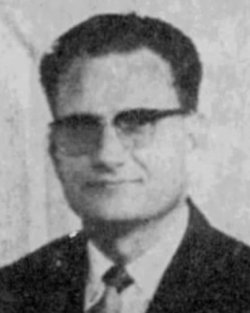
W.E. Best

#57 Imputation - The Imputation of Adam's Sin to Mankind

Romans 5:12-21
W.E. Best July, 1 1973 Audio
0 Comments
Remastered Oct/Nov 2024

Sermon Transcript

Auto-generated transcript • May contain errors

100%
Romans 5, verses 12 through 21,
the last section of Romans chapter 5. It will take us several weeks
to cover this portion of Scripture. Wherefore, as by one man sin
entered into the world, and death by sin And so death passed upon
all men, for that all have sin, or in whom all have sin. For until the law, sin was in
the world, but sin is not imputed when there is no law. Nevertheless,
death reigned from Adam to Moses, even over them that had not sinned,
after the similitude of Adam's transgression, who is the figure
of him that was to come. but not as the offense to all,
so is the free gift. For if through the offense of
one many be dead, much more the grace of God, and the gift by
grace which is by one man, Jesus Christ, hath abounded unto many.
And not as it was by one that sinned, so is the gift. For the
judgment was by one to condemnation, but the free gift is of many
offenses unto justification. For if by one man's offense death
reign by one, much more they which receive abundance of grace
and of the gift of righteousness shall reign in life by one, Jesus
Christ. Therefore, if by the offense
of one judgment came upon all men the condemnation, even so
by the righteousness of one the free gift came upon all men unto
justification of life. For if by one man's disobedience
many were made sinners, so by the obedience of one shall many
be made righteous. Moreover, the law entered that
the offense might abound, but where sin abounded, grace did
much more abound. That as sin hath reigned unto
death, even so might grace reign through righteousness unto eternal
life by Jesus Christ our Lord. We're beginning tonight the study
of this portion of Scripture. Many Bible expositors have said,
and I agree with them 100%, that this section of Scripture is
one of the most profound of all the passages that one could study
from Genesis to Revelation. We began two weeks ago the study
of imputation. I have already shown the two
ways in which the word imputation is used. As an introduction to our study
this evening, I want to point out that there are certain parallels
which must be avoided by us as we study the scripture. There
are three that I'm going to mention. First of all, the parallel between
the imputation of Adam's sin to us and the imputation of our
sin to Jesus Christ cannot be the same. It can never be said
that in the imputation of our sin to the Lord Jesus Christ that there was an involvement
on his part with the corruption of sin. You can already see the
difference between the imputation of original sin or Adamic sin
to all of Adam's prosperity and the imputation of our sins to
the Lord Jesus Christ. We were all involved. Notice
what I said. We were all involved in original
sin. In him we all sin. Now let me pause long enough
to drop a few things for you to consider. We're not going
to go into, as I stated this morning, the federal theory at
the present time. We're not going to go into some
of these different views held by different individuals. I'm
going to present to you what I believe to be the truth on
the subject of imputation. In the course of the study, we
will deal with some of these other views held by individuals. One man, in writing a little
summary of what Burkhauer has written on the subject of sin—it
is a large volume—Burkhauer was teacher of theology in Amsterdam
University for a great number of years, and I judge from the
article which I read by Dr. Lewis Johnson of the Dallas Theological
Seminary that he must not be professor at the present time.
I do know that Dr. Johnson took a sabbatical leave
several years ago and went to Amsterdam and studied for one
year under Burkow. And this was after he had been
teaching in the seminary in Dallas for a great number of years.
Dr. Lewis Johnson is a man about my age. I would say he's in his
middle 50s. He is considered, I'm talking
about Burkhauer now, he is considered to be one of the outstanding
theologians of our time. I have all of his works in my
library. I've enjoyed reading them. However, it is sometimes
difficult to determine just where Burkhauer stands on certain issues. In this article which I read,
Dr. Johnson made mention of a statement
that had been made by some concerning the writings of Burkhauer. And
the statement goes something like this, he unsettles everything
and settles nothing. Well, when you read his works,
I'm sure that you would probably come to that conclusion in the
reading of some of his work. He unsettles everything and seemingly
he settles nothing. It is most difficult sometimes
to know just exactly where Dr. Burke Howard stands on a particular
issue. And yet, if one will read carefully,
he will come face to face with some things that are of great
interest to the student of Scripture in our time. Now, we're not going
to go into these different arguments that Dr. Burkhardt goes into
at the present time. As I said, I'm going to simply
state to you what I believe to be the subject of imputation
as it is taught in the Scripture. I wrestle with this subject a
great number of years. Many Calvinists hold to the federal
headship view of imputation. Personally, I hold to the representative
view, and there is a slight difference, which I will not discuss in detail
tonight. I do believe that the subject
is of utmost importance, but in order for us to understand
the subject of imputation, we're going to have to be able to make
a distinction between real and judicial imputation. We're going
to have to make a distinction between immediate and mediate
imputation. Now, you can read many different
works. And as a result of reading many different works on the subject,
you will find yourself to be confused, as I was for a great
number of years. Only about eight or nine years
ago did I come to what I am now holding to as a subtle position
in my own thinking after a great number of years on the subject
of imputation. It is an important subject. It
is a Bible subject. I believe that unless we have
the proper understanding of imputation, we will make many mistakes in
many areas of Biblical study. So, first of all, the parallel
between the imputation of Adam's sin to us and the imputation
of our sins to Jesus Christ cannot be the same. When it comes to
the imputation of Adam's sin to us, I believe that imputation
is, first of all, real, and secondly, it is immediate. Now, we'll have
more to say on that later. I said, first of all, it is real,
and secondly, it is immediate. When it comes to the imputation
of our sins, to Jesus Christ, the parallel is not the same.
For the simple reason, as I've already stated, there was no
involvement on the part of Jesus Christ in the corruption of sin.
He was the impeccable Savior. and therefore he never became
involved with the corruption of sin. No depravity whatsoever
touched the holy person of Jesus Christ. This is the foundation
of Christianity, and to compromise at this point is to abandon Christianity
altogether. Secondly, the parallel between,
now we're talking about certain parallels which must be avoided.
Secondly, the parallel between the imputation of Adam's sin
to us and Christ's righteousness to us. Christ's righteousness
to us cannot be the same. Now this parallel is me. I have
a work which I read in the beginning of my ministry and my studies.
and I held to this view because it sounded reasonable, and it
was before I had investigated the subject much deeper later
on. But the parallel between the
imputation of Adam's sin to us and Christ's righteousness to
us cannot be the same. Sin-bearing is more than a mere
penal satisfaction. Notice what I said. Sin-bearing
is more than a mere penal satisfaction. It is true that Jesus Christ
was made sin for us. He was made a curse. He bore
our sins. However, we do not read anywhere
in the Holy Scriptures where Jesus Christ sinned or was constituted
a sinner. You see the difference? Nowhere
does one read where he ever sinned or where he was constituted a
sinner. Not too long ago, in fact it's
been a year ago, or maybe a little more, I brought a message from
2 Corinthians 5.21. For him who knew no sin was made
sin. for us that we might be made
the righteousness of God in him. At that time I went into some
of the views that are held by men today concerning what Jesus
Christ was made when it is stated by Paul that he was made sin
for us. But no place can one read where
the blessed Lord Jesus Christ, the Holy One, the impeccable
Savior, ever sinned or was constituted a sinner. The righteousness of
Jesus Christ is both imputed and imparted to us. We'll be
dealing with the imputed righteousness during the study of the subject
of imputation, after which we will then go into the subject
of imparted righteousness. The merit of Jesus Christ's obedience
is indivisible. I'm showing the difference now
between the imputation of our sins to Christ and the imputation
of his righteousness to us. I stated that the merit of Christ's
obedience is indivisible. What does that mean? It means
the whole of his merit, the whole of his merit is imputed to each
individual. Let me illustrate it in this
manner. Here are a thousand persons, for instance, to whom the righteousness
of Jesus Christ is imputed. That does not mean that each
one of those thousand persons receives one thousandth of the
merit of Jesus Christ. Do you follow me? It does mean
that each one of the thousand persons receives the whole merit
of Jesus Christ. Look at that, it's a great song. So the merit of Christ is indivisible. Thus, whenever a person comes
into possession of the righteousness of Jesus Christ, he receives
the whole of Christ's righteousness. He doesn't receive one part of
the righteousness. One thousandth of the part of
Christ's merit or righteousness. So, we see at the very outset
that the righteousness of Jesus Christ, which is imputed to the
elect, the whole of it is imputed. One believer is as completely
justified before God, and that, of course, by free justification
as another, because all the life receive the total merit of Christ's
obedience, not a fractional part of his obedience. We have just
read in Romans 5, 12-21, by the offense of one and by the righteousness
of one, in Adam all die, so in Christ shall all be made alive.
1 Corinthians 15 and verse 22. We will be studying that text
more in the study of this subject. The imputation of Adam's sin
rests upon a different kind of union from that upon which the
imputation of Christ's righteousness rests. Now, this is easily seen
when we consider it. It isn't difficult at all. Notice
what I said. The imputation of Adam's sin
rests upon a different kind of union. from that which the invitation
of Christ's righteousness read. There is no race unity in redemption. Do you see my point? There is
no race unity in redemption, but there is race unity in depravity. See the difference? Now when
you study carefully Romans 5, 12-21, that will just jump out
at you and you can't miss it. You absolutely cannot miss it.
My wife and I were trying to tape—I think this was last evening.
It was late before we retired, and I was taping a few songs,
and we listened to Steve Oldford, who was for a great number of
years pastor of the Calvary Baptist Church of New York City, but
he is no longer pastor of that church. He now resides in Florida. What he's doing I do not know
unless it's evangelistic work or conference work or something.
He did not give any church to which he was affiliated or associated. But anyway, we came across a
program and this man made the statement that I'm going to now
give you. I've never heard him stated like this before. He said
Jesus Christ redeemed all mankind, thus giving all mankind the ability
to choose or to reject Jesus Christ. I want you to analyze
that statement for a moment. Think about that. Now, that is
really far-fetched, isn't it? But, of course, he was being
consistent. Jesus Christ, in his death, redeemed all mankind,
thus giving all mankind the ability to either choose or reject Jesus
Christ. Now, what redemption is there
in that? I'm asking you a question. Redemption means to buy back.
Now, to what extent did he buy all mankind back? According to
this person, they were purchased and placed in a position, thus
giving them the ability to either receive or reject. But that is
not what the Bible teaches about redemption. When the Lord Jesus
Christ redeems one, he goes into the slave market of sin, as we've
already taught, and he purchases him in the slave market of sin,
and he delivers him from the slave market of sin. He doesn't
leave him in a position where he can make a choice to either
receive or reject Jesus' courage. That, my friend, is not taught
in the Word of God. That is Arminianism, pure and
simple, but it is far from being the truth of Holy Scripture.
So the imputation of Adam's sin rests upon a different kind of
union than that. upon which the imputation of
Christ's righteousness rests. Now let's look, if you will,
please, at Romans 5 again. Let me point out these things.
They're not confusing. I can remember as a young Christian,
there were some statements in the latter part of the 5th chapter
that were rather confusing to me. But now, after having made
that statement, let's look at verse 15. But not as the offense,
so also as the free gift. For if through the offense of
one that one is Adam, many be damned. Much more, the grace
of God and the gift are by grace, which is by one man, Jesus Christ,
hath abounded unto many. Now, not unto all, but many,
and not as it was by one, that sin, Adam, So is the gift, for
the judgment was by one the condemnation, but the free gift is of many
offenses unto justification. For if by one man's offense doth
reign by one, much more they which receive abundance of grace
and of the gifts of righteousness shall reign in life by one Jesus
Christ." You need to connect this portion of Scripture with
1 Corinthians 15.22 which states, As in Adam old, I so encourage
shall all be made alive." We're all in Adam naturally. But we're not all in Jesus Christ
naturally. We're in Jesus Christ supernaturally. We're in Jesus Christ by grace. So you can see that the foundation
upon which these two imputations rest are founded upon two entirely
different foundations. When it comes to the imputation
of Adam's sin to all of his posterity, we're all related to Adam. We're all, by nature, in Adam.
But we're not all, by nature, in Jesus Christ. It is by the
grace of God that we're in Jesus Christ. So you can see the difference. And finally, the imputation of
Adam's sins rests upon a different kind of
union from that, as I said, the imputation of Christ's righteousness
rests. So what do we have? The Bible
presents three major imputations. The imputation of Adam or the
Adamic sins to all the human race. Number two, the imputation
of the sins of the elect. Notice I said the sins of the
elect, not all mankind, to the Lord Jesus Christ. And finally,
the imputation of Christ's righteousness to all mankind, no, to the elect
of God. So we have three different parallels
that must be Guard it very carefully. And let me say some again. Number
one, the parallel between the imputation of Adam's sin to us
and the imputation of our sin to Jesus Christ cannot be the
same. Number two, the parallel between the imputation of Adam's
sin to us and Christ's righteousness to believers cannot be the same. And finally, the imputation of
Adam's sin rest upon a different kind of union from that upon
which the imputations of Christ's righteousness rest. I stated
when we began the study of this subject that the immature judgment
will usually conclude that each of the three major imputations
is judicial in character, but such is not the case. We've already
seen the difference between real and judicial. When it comes to
the imputation of Adamic sin to all of Adam's posterity, that
is real. When it comes to the imputation
of Christ's righteousness to us, that is not real, that is
judicial. When it comes to the imputation
of our sins to Jesus Christ, that is not real, but judicial. So the first is real and the
latter two are judicial. We must be able to make that
distinction or be ever confused. Now, there's one other point
before we actually begin the study of the imputation of Adamic
sins, the first major imputation, and that is the doctrine of imputation
is never used in the sense of any transference of moral character. Now, please jot that down and
don't forget it. The doctrine of imputation is
never used in the sense of any transference of moral character. Now tonight, in the final 30
minutes of our study, we're going to begin with the study of the
imputation of Adam's sin to all of his posterity. We will be
studying Roman 5.12 and all of the related passages. within
the fifth chapter of the Book of Romans. The Adamic sin, I
call it the Adamic sin, or original sin if you want to call it, original
sin, is imputed to the human race. It must be admitted at
the very beginning of this subject that our relation to the trespass
of Adam is not expressly defined in terms of imputation. I want us to think about that
for a moment. What did I say? I said it must be admitted at
the very beginning of our study that our relation to the trespass
of Adam is not expressly defined in terms of incitation. You say, well, why are you using
that term? Because I do not know of a better
term. It is implied, even though it
is not specifically stated. Now, I'll give you three verses
of Scripture where it is implied, though not specifically stated. The references are Psalm 32,
2. The second reference is Romans
4, verse 8. And the final reference is Romans
5 and verse 13. I cannot find a better word to
use than this. And I have found that theologians
use the term because there is no better term to be used. Original
sin is immediately imputed to Adam's posterity. We're beginning
now with immediate imputation. I said original sin is immediately
imputed to Adam's posterity. That means that original sin
was immediately imputed to you, immediately imputed to me. Now,
we'll make the distinction in the course of this point. We'll study the difference between
immediate and immediate. Immediate imputation takes place
immediately and is not mediated by hereditary corruption. Now
I want to give you a little point that will be helpful to you.
Whenever you hear a preacher on the radio, whenever you read
a book, whenever you listen to a sermon, and the preacher talks
about Adam's sin being inherited, put it down. He's an Arminian. I'll give you a little help.
Now, he may hold some Calvinistic views, but really at heart, the
Arminianism is creeping out. So whenever you hear, I'm trying
to give a little statement that'll be something that you can remember
and it will serve as a gauge by which you can measure every
sermon you hear. Whenever you hear a preacher,
Talk about inherited depravity. That is Arminianism coming out. So immediate imputation takes
place immediately and is not mediated by hereditary corruption. It precedes corruption and is
reckoned to be the cause of corruption. Now, beloved, that's a significant
statement. You see, immediate invitation is the cause of corruption. It precedes corruption. It is
the cause of corruption. Now let's look at several things
in connection with that thought. The one initial sin of Adam is
imposed upon each member of the human family immediately. I said immediately, not mediantly,
but immediately. It was imposed from Adam to each
descendant without reference to intermediate generations. Therefore, it was not something
inherited by us, but it was something imputed immediately, and the
cause of our corruption. which means the cause of our
being conceived in iniquity, as the psalmist described for
us in the 51st chapter of the Psalms. Secondly, each member
of the human family stands related to Adam as one man expressed
it as, quote, a private wire, end of quote. In other words,
you can't blame someone else. You can't say, well, I inherited
this characteristic from my father. It is true that we inherit certain
characteristics. But I'm talking about depravity
now, Belethi. I'm talking about original sin. And it is because of the imputation,
the immediate imputation, our involvement, our solidarity with
Adam in his original sin, We were involved with him, because
that is exactly what Paul said in Romans 5 and verse 12. There's
a lot of controversy about that text, whether you realize it
or not. You can read a great number of
men, and you will find varied opinions and interpretations
of Romans 5-12. Wherefore by one man sin entered
into the world, and death by sin, and so death hath passed
upon all. For in him, in whom? In Adam. We are all sin. A close observation of that text
will prove what I have just stated, immediate imputation of original
saying. Therefore, each person stands,
as this individual stated it, as, quote, a private wire, end
of quote, a private wire. To impute sin is to regard and
treat Adam's posterity as sinners because they sinned in Adam. So it is because of our involvement
with Adam, our solidarity with Adam, the representative headship
of Adam, we're all involved. So let me state once again, I
believe it with all of my heart. And I've spent a long time studying
this subject because of its importance. It took me a number of years
to come to a settled position on imputation. But I say without
any question, without any hesitation, I believe the imputation of Adam's
sin to us is immediate and real. Real because of our involvement
with Adam, in whom we all sin. Now another point. I stated first
of all in the discussion of the point, original sin is immediately
imputed to Adam's posterity, that immediate imputation takes
place immediately and is not mediated by hereditary corruption. Now, number two, the first sin
of every man must have been committed either in Adam's in the womb
are number three in infancy. Now this is a very important
point. I ought to spend an hour on this,
really. Now let me run that by again.
The first sin of every man must have been committed either, number
one, in Adam, number two, in the womb, are number three, in
infancy. Now let's break that down. First
of all, we cannot conceive of any self-consciousness either
in the womb or in infancy. I don't care how you look at
it. There is no, as I have already stated, consciousness, self-consciousness,
either in the womb or in infancy. There's no self-consciousness
in either. Since there is no self-consciousness
in either the womb are in infancy, then there is but one answer,
beloved, and that goes back to Adam, what I've already stated.
It is in Adam that we see him, and our involvement with him
makes it real and immediate. As far as Adam was concerned,
the first sin was a deliberate and willful act. The human species
existed in him. Therefore, the human species
sinned in him. Now, don't get ahead of me. I
know questions are coming to your mind. They've come to mind. But I assure you that I believe
we will answer every question that comes to your mind before
we will have finished the study of imputation. And the imputation
which we're now studying, the imputation of Adamic sayings
to all of Adam's posterity. Thirdly, if we were not pried
in Adam, p-r-i-e-d, pried in Adam, then we are condemned without
a trial. There's no self-consciousness
in the womb. There's no self-consciousness
in infancy. There's no trial in the womb.
There's no trial in infancy. And since there is no trial either
in the womb or in infancy, there has to be a trial or there can
be no condemnation. Now the question is, where were
we tried? So if we were not tried in Adam,
then we are condemned without a trial. Now this is the accusation that
people are bringing against imputation today. That's why I want you
to be indoctrinated. That's why I wanted to spend
some time this morning on the justice of God, showing that
there is no correspondence between divine justice and human justice.
We have to get that settled in our minds in order to understand
some of the things that we are studying at the present time.
So if we are not tried in Adam, then we are condemned without
a trial. If we are not under the curse because we sinned in
Adam, then we are not under the curse. Beloved, we are under
the curse because we sinned in Adam. By the offense of one, condemnation
is telephoned off. That's what Paul tells us in
Romans 5, 15 through 19. By the offense of one, condemnation
is telephoned off. But when you go back to verse
12, in whom we all sin. Now, number three, still under
the thought Original sin is immediately imputed to Adam's posterity. Now, I realize that this is a
rather deep subject. One of the members of the church
told me just this past week. He said, it seems like the further
we go, the deeper we get. Above, that's why it's so necessary
to study step by step. But we're involved in a Bible
truth. We want to know. as much as we
can know about it because the more we know, the clearer our
understanding is, the greater our appreciation is for the things
that God has done for us in the person of his son. Now, number
three, our involvement in Adam's sin must not be construed as
actual voluntary participation or the transfer of moral character. In outlining this, what I have
done, I'm trying to outline it to the very best of my ability.
It can be improved upon, but this is the best that I'm able
to do. So if you're making an outline tonight, do it like this.
Roman numeral one. We'll be studying for several
Sunday evenings. Roman numeral one. The Adamic sin is imputed
to the human race. And then, capital A under Roman
numeral I, and this is a point we're still dealing with, original
sin is immediately imputed to Adam's posterity. Thus far we
have dealt with the following points. Number one, as I gave
you, immediate imputation takes place immediately and is not
mediated by hereditary corruption. I gave three things under that
point. Number two, I say that the first sin of every man must
have been committed either in Adam, in the womb, or in infancy. And then we gave three points
under that. Now we're dealing with number three. Our involvement
in Adam's sin must not be construed as actual voluntary participation
or the transfer of moral character. Now I'm going to give three points
under this. First of all, this involvement
is explained by representative solidarity with Adam in his sin,
and the forensics are the judicial judgment of being constituted
sinners. Let me run that by again. This is under number three. It
is explained by representatives. Paul and Eric. You see, I like
to think about Jesus Christ as our representative. I like to
think about Adam as our representative. So I think about Adam and Christ.
The first Adam and the second Adam. The first man of the earth,
earthy, as Paul tells us in the 15th chapter, 1 Corinthians.
And the second man, the Lord from heaven. Now, Adam is in
a representative position, and Jesus Christ is our representative. So I like the view of the representative
part that Adam plays, rather than the federal headship, and
that's all I want to say at the present time. So this involvement
is explained by what? Representative solidarity. without any sin, and the forensic
or judicial judgment of being constituted sinners. Secondly,
under number three, it is not strictly accurate to say that
we become depraved by natural generation. Now think about this
for a moment. I stated it is not strictly accurate
for you and me to say that we become depraved by natural generation. Natural generation is not the
reason why we are conceived in sin. The reason why we are naturally
generated in sin is whenever we begin to be what? We begin
to be as sinful creatures because of our solidarity with Adam in
his sin, in whom we have sinned. That's important. That's important. And thirdly, Though we did not
actually exist, now this goes back to something we have already
studied. We dealt with this in detail a number of weeks ago,
and when I did, some of you expressed your appreciation. Now use the
same principle again. Though we did not actually exist
when Adam sinned, yet we were destined to exist. I said we
were destined to exist. Generation is a divinely constituted
means whereby God's purpose is fulfilled in history. Each person
is eternally contemplated by God as sinful by reason of his
solidarity with Adam. Yes, it is true we did not actually
exist, but we were destined to exist. I said destined to exist. And so each person is eternally
contemplated by God as sinful by reason of his solidarity with
Adam in his sin, in whom We all have sinned. The last phrase
of Romans 5.12, don't forget it. Now number four, under Roman
numeral eight, under capital eight, excuse me, capital eight. Now, we're going to deal with
some strong objections. I think I have time to deal with
these. I've got about 13 or 14 minutes. I'd like to deal with
some strong objections to immediate imputation. Now, we're looking
now at the Arminian viewpoints. And what are some of their objections?
I want to give you these because these will be helpful. As you
witness for the Lord, as you stand up for Christ, sooner or
later you're going to have to take a stand and you're going
to have to give a reason for the hope that you have within
you. Let me run it by again. I'm giving
an Arminian quotation. Quote, if we sin then Adam. You
see they're opposed. to immediate real imputation. If we sinned in Adam so that
his act was ours, then we ought to obey in Christ and his righteousness
and death were our own acts." Now, none of that is human reasoning. Now, what's wrong with such reasoning?
Such reasoning proves the lack of understanding of the way the
word impute is used in the three major imputations, which I have
already mentioned. And you can see the necessity
of having given to you those. Now, the only way in which men
can be said to have sinned in Adam is imputatively. I said the only way it can be
said that we sin in Adam is imputatively. The act is a representative as
that of his constituents. So the act of one legally binds
what? The other. We're talking about
representative theory now. So the total guilt of the first
sin thus committed by the entire race in Adam, is imputed to each
individual of the entire race of Adam." Why? Because of the indivisibility
of guilt. Now, we talked a few moments
ago about the indivisibility of Christ's merit. Now, beloved,
let's look at the other side, the indivisibility of guilt. Now let me run this by again.
Here's the answer to it. You see, there is failure to
understand the way the word impute is used in the three major imputations. So the only way in which man
can be said to have sinned in Adam is imputatively. the act of a representative as
that of his constituents. Now, the act of one legally binds
the other. Thus, the total guilt of the
first sin, the Adamic sin, thus committed by the entire race
in Adam by virtue of our solidarity with him, is imputed to each
individual of Adam's race because of the indivisibility of guilt. I am guilty of Adam's sin, and
every individual who is born in this world is as guilty of
Adam's sin as Adam was guilty of it. We're talking about the
indivisibility of guilt. as well as the indivisibility
of grace or the merit of Jesus Christ. Now we're going to look
at another objection. They also say, and I'm quoting
now, that doctrine, that doctrine, they're talking about imputation,
real immediate imputation of Adamic sins, that doctrine is
inconsistent with the first principles of justice. Now do you see why
I said what I did this morning about justice? Listen to this. You see, you couldn't appreciate
what I'm going to say now without that this morning. Listen carefully. That doctrine, we're talking
about Arminianism now. What I want to say, beloved,
to you is there is absolutely no basis of fellowship with an
Arminian. There's no basis whatsoever. That doctrine, the Arminian says,
is inconsistent with the first principles of justice. It takes
for granted that persons can act before they exist, or that
actual sin can be committed by impersonal nature, which is a
contradiction of terms. If we sinned in Adam, then we
were inconscious being, end of quote. There, once again, is
a manifestation of human reason. Let me run it by slowly so you
can get it. That doctrine is inconsistent
with the first principles of justice. They say it takes for granted
that persons can act before they exist, or that actual sin can
be committed by an impersonal nature, which is a contradiction
of terms. If we sin in Adam, then we were
in conscious being, end of quote. That's good human reasoning.
What is the answer? This human reasoning is in direct
contradiction to the Scripture. They teach that the sin of Adam,
not our personal sin, was the ground of condemnation. as the
righteousness of Jesus Christ and not our personal righteousness
is the ground of justification. However, we must be careful in
making this comparison. We must also observe the difference.
What is the difference? We've already stated it, but
let us say it again. The difference is that Adam's act becomes my
act by real imputation, whereas Christ's righteousness becomes
my righteousness by judicial imputation. That's the difference. Oh, what
a difference. What a difference. One is real, the other is judicial. Now I'll give you the third argument. Now, there are other arguments,
but these are the three major arguments that they use. I'm
quoting again. The imputation of Adam's sin
to his posterity is unjust and unreasonable because Adam and
his posterity are not one and the same, end of quote. What's
the answer? Well, let's investigate this.
You and I know that the scriptures teach there was a oneness between
Adam and his posterity. In Adam, all die. There is a
oneness you can't get away from. Paul, under the inspiration of
the Holy Spirit, said, as in Adam, all die. There is a oneness
between Adam and his posterity. The same truth is brought out
in Romans 12, 12-21, which we've already read. Well, let's illustrate
it further. In Genesis 1, 27 and 5-2, male
and female created he them. There you have what? Oneness. Two individuals, but yet there
is a unity between male and female. male and female created, he built. One man said, and I like this,
though God dealt immediately with Adam, it was as a representative of the whole
or the root of the tree. Listen to this. Having dealt
with the head or root, the representative or the root, God has dealt with
all the members or branches. As head and members are one,
as the head of your body and the members of your body are
one, listen to it, According to God's wise Constitution so
by virtue of the oneness all the changes through all the members Coexist with a change in the
head or the representative see this Listen to that again having
dealt with a head or roof God is dealt with all the members
of the branches as head and members are one according
to God's wise constitution. So by virtue of the oneness,
all the changes through all the members coexist in the change
with the chaos. Then he says, thus in Adam all
die. In Adam all sin. 1 Corinthians
15.22 and Romans 5.12. The theory that it is improper
and implies falsehood to treat those as one who are not one
is founded upon a false hypothesis. You see, some things are entirely
distinct, which yet are so united by the established law of the
Creator, that by virtue of that law, it is with them as though
they were one." You can't get away from that. Adam and Eve
were one. That's an illustration of it.
For example, husband and wife are one. However, considered
in themselves, they're a different person. Just as you're different
from Adam, But as there is solidarity between a man and his wife, so
is there solidarity between all of Adam's posterity and Adam. One man said, and I'm quoting,
a tree 100 years old comes from a little sprout, yet the tree
and the sprout are one. Now, we can understand these
analogies. I'm giving this in close. Arminianism
rejects the idea of Adam's sin being imputed to his prosperity. It holds to inherited sin, and
that's why I told you at the beginning tonight, don't forget,
whenever you hear a man talk about inherited depravity, he's
an Arminian. or he is an uninformed Christian,
even though he embraces, generally speaking, the doctrines of grace,
he has not made a study of this subject to any extent, or he
would never use such language. It affirms that as a matter of
justice, God bestows upon each individual from the first dawn
of conscience a special influence. of the spirit, which is sufficient
to counteract the effect of inherited depravity." Now, you see, I'm
quoting now an Arminian, and this is exactly what Juanita
and I heard, I think it was last evening. Listen to this. You
see, this position affirms that as a matter of justice, God bestows
upon each individual from the first dawn of consciousness a
special influence of the Spirit which is sufficient to counteract
the effect of inherited depravity. That's why the man said, Jesus
Christ in his death redeemed all mankind, thus giving to them
the ability to either receive or reject. Same statement, really,
in just a little different wording. This makes it possible, they
believe, provided man cooperates with God. Now what about this? Hereditary depravity emanates
from our solidarity with Adam in his sin. It is a process. subsequent to this solidarity. It is our solidarity and not
a process emanating from it that explains the statement, quote,
in whom all have sin. That's as far as we're going
tonight. We've been an hour discussing this and this is only the first
phase of our study of depravity or original sin being imputed
to all mankind.
W.E. Best
About W.E. Best
Wilbern Elias Best (1919-2007) was a preacher and writer of Gospel material. He wrote 25 books and pamphlets comprised of sermons he preached to his congregation. These books were distributed in English and Spanish around the world from 1970 to 2018 at no cost via the W.E. Best Book Missionary Trust.

Comments

0 / 2000 characters
Comments are moderated before appearing.

Be the first to comment!

Joshua

Joshua

Shall we play a game? Ask me about articles, sermons, or theology from our library. I can also help you navigate the site.