Bootstrap
W.E. Best

#34 The Conscience of the Believer

Romans 2:15
W.E. Best July, 1 1973 Audio
0 Comments
Remastered Oct/Nov 2024
Bro. Best's books in pdf can be downloaded from Spring Assembly of Christ website @ http://springassemblyofchrist.org/uimages/bg1.gif

Sermon Transcript

Auto-generated transcript • May contain errors

100%
want to read verses 12 through
15 once again and then give to you four or five of the basic
points that we discussed with you last Sunday. And then I'll
ask you to turn in your Bibles to the 24th chapter of the Acts
of the Apostles for our second passage of Scripture which we
will read and then discuss the 16th verse using that text for
a basis of our message this morning. First of all, Romans 2, verses
12 through 15. For as many as have sinned without
law shall also perish without law, and as many as have sinned
in the law shall be judged by the law. For not the hearers
of the law are just before God, but the doers of the law shall
be justified. For when the Gentiles which have
not the law do by nature the things contained in the law,
these having not the law are law unto themselves, which show
the work of the law written in their heart or their mind, their
conscience also bearing witness, and their thoughts the meanwhile
accusing or else excusing one another. We'll read the 16th
verse. In the day when God shall judge
the secrets of men by Jesus Christ according to my gospel, three
accusers in verse 15. I gave a running interpretation
of verses 12 through 14 last Sunday morning, therefore I will
not repeat what I gave again this morning. Now just for three
or four of the statements that we made last Sunday and sought
to emphasize in the first message on the subject of the human conscience. I stated first of all that conscience
is an inbred faculty of the soul. This inbred faculty of the soul
is not a member of the body which shall go back to the dust of
the earth. As we take the three statements
found in verse 15, the heart or the mind, the conscience,
and the thoughts or memory, we come up with this statement which
I think is the best that I have read on the subject of conscience
in the light of verse 15 of Romans chapter 2. In the understanding
that is in the heart or in the mind, The soul is a judge, determining
and prescribing, absolving and condemning the jury. In the memory, as you look at
the latter part of the text, Romans 2.15, it is a register,
a record, a witness, testifying de facto. Conscience is something I know,
but it is something I know with another person. I stated last
Sunday that the word conscience comes from two words, and the
prefix is not superfluous. It simply means that I know something,
but I know something with some other person, and that other
person is none other than God himself. In closing, I sought
to make a distinction between creation and regeneration. I stated in creation, the unwritten
law was stamped upon the mind and heart of Adam. In regeneration,
the written law is rewritten in the heart of the person who
has been born of the Spirit of God. He now loves the law which
he once hated. Now turn with me to Acts chapter
24. Our text is found in the 16th
verse. A great statement, but I want
us to observe some things that precede and also some things
that follow as we confine our remarks this morning primarily
to the conscience of the believer. Let us begin reading with verse
1, Acts chapter 24. And after five days Ananias the
high priest descended with the elders and with a certain orator
named Tertullus, who informed the governor against Paul. I want you to observe in the
first nine verses of this chapter the false charges that were brought
against God's servant Paul. They were brought against Paul
by a man who should have given an unbiased report concerning
Paul to the government. I want you to see in the discussion
of this orator, or this advocate, or lawyer, how easy it is for
unscrupulous lawyers to be used, to be employed, in that which
is evil. Such is the case that we're observing
here in Acts chapter 24. we have seen much of this very
same thing in the day in which we are living. Verse 2, And when
he was called forth, Tertullus began to accuse him, saying,
Seeing that by thee we enjoy great quietness, and that very
worthy deeds are done unto this nation by thy prophets, Do you
see how silver-tongued this orator was? There is nothing more heinous
in the eyes of God than a silver-tongued person who will flatter an individual
only for the purpose of advancing his own particular cause. This
is exactly what Tertullus was doing. He was flattering the
governor. He didn't mean a word that he
was saying. Notice verse 3. We accept it always, and in all
places, most noble feelings, with all thankfulness. Notwithstanding
that I be not further tedious unto thee, I pray thee that thou
wouldest hear us of thy clemency a few words. Now for the accusations
of the charges, verses 5 and 6. For we have found this man
a pestilent fellow. We have found him to be nothing
but a plague, in other words, or a pest, a mover of sedition
among all the Jews throughout the world, and a ringleader of
the sect of the Nazarene. who also have gone about to profane
the temple, whom we took and would have judged according to
our law." Now keep that statement in mind because we will be referring
to it in a moment. This very orator, Tertullus,
who appeared very pious in public meetings, cared very little the
sanctity of the temple. We'll prove that before we will
have finished. Verse 7, But the chief captain,
Lysias, came upon us, and with great violence took him away
out of our hands, commanding his accusers to come unto thee,
by examining of whom thyself mayest take knowledge of all
these things whereof we accuse him. And the Jews also assented,
saying that these things were so. Beginning with verse 10 through
verse 21, we have Paul's own defense, our apology before Philae. Then Paul, after the governor
had beckoned unto him to speak, answered, forasmuch as I know
that thou hast been of many years a judge unto this nation, I do
the more cheerfully answer for myself. I'd like to underscore
the word cheerfully, because that thou mayest understand that
there are yet but twelve days since I went up to Jerusalem
for to worship. And they neither found me in
the temple disputing with any man, neither raising up the people,
neither in the synagogues, nor in the city. Secondly, I want
you to know how skillful Paul was in his apology. Verse 14, but this I confess
unto thee, that after the way which they call heresy, So worship
I the God of my fathers, believing all things which are written
in the law and in the prophet, and have hope toward God, which
they themselves also allow, that there shall be a resurrection
of the dead, both of the just and unjust. Now, three things
I want to call attention to. First of all, Paul defended himself
cheerfully. Secondly, his arguments were
presented in a very skillful manner. Finally, he was very
confident in what he had to say. Why was he so confident? He was
confident because he knew the Lord, whom to know is life eternal. He believed all things. which
were written in the law and the prophets. He had hope toward
God. He believed in the resurrection
of both the just and unjust. Now the 16th verse. You can see
why it is necessary to investigate the preceding verses before we
really look into the 16th verse, which is our text. And herein Albert Barnes has interpreted
the word herein in this manner, or for this purpose. For this purpose do I exercise
myself. There are three things I want
to discuss with you in verse 16. First of all, the exercise
of oneself. The Christian life is not easy,
beloved. It is a difficult task. Don't
you believe for a moment that the Christian life is easy, because
it isn't. It is a continual exercise. Now here's what the average religionist
wants no part of in his belief. Paul said, herein do I exercise
myself. Now, in the exercising of oneself,
to what does it pertain primarily in the light of this text? Here
it is, to have always, to have always a conscience void of affairs. We're talking about the conscience
of the believer. We're not discussing this morning
the conscience of an unsaved person. The conscience of the
unsaved person condemns him. He cannot get away from his conscience. I made a distinction last Sunday
morning using a statement that Dr. Barnhouse made in his work
on the Book of Romans a discussion which he had with an imminent
jurist. The imminent jurist made a distinction
between a fundamentally honest person and a fundamentally dishonest
person. I don't have time to review that
again, but it's worth your consideration, and if you have his work, you
need to read it and reread it. But notice now, the Christian
is to exercise himself. He is to exercise himself continually. How do we know this to be true?
Because he is to have always, that is his desire, a conscience
void of offense. So we have the exercise of oneself. The exercising of oneself to
have always a conscience void of offense. And lastly, this
conscience that is void of offense must not only be toward God,
but also toward me. That takes in a lot, doesn't
it? Now let's read verses 17 through
21. for the concluding verses that deal with Paul's apology
before the governor. Now after many years I came to
bring alms to my nation and offerings. Whereupon certain Jews from Asia
found me purified in the temple, neither with multitude nor with
tumult. who ought to have been here before
thee, and object if they had ought against me. Or else let
these same here say, if they have found any evil doing in
me, while I stood before the council, except it be for this
one boy, that I cried standing among them, touching the resurrection
of the dead, I am called in question by you this day." That complete
false apology or his defense before Felix. Let us now, for
a few minutes before we get into the study of the text and the
three parts of the text that we will discuss with you, Look
first of all at the first nine verses as we consider the false
accusations or charges that this orator brought against God's
most noble servant, Paul. Do you know the meaning of Tertullus? What does the name mean? I do not think that we should
pass by without considering the meaning of this orator's name.
The name Tertullus means triple-hardened. That's very fitting, I would
say, for this man who could be hired for a sum of money to bring
false accusations against a righteous man. Tertullus was a Roman barrister,
a Roman lawyer of great reputation. I do not know how you feel about
lawyers of great reputation. I know how I feel, and I'm pretty
sure that most of you know how I feel. I do not have a great deal of
respect for the majority of lawyers which cover this land of ours
today. One of the reasons that this
country is in the mess she is in can be attributed to lawyers,
and I should put the word lawyers in quotation marks. They are
lawyers who can be hired for a fee. You know as well as I
do that regardless, regardless of how guilty a person is, and how evident all the information
is against him, the evidence against him, he can hire a lawyer
to defend him. We all know that to be true.
Well, Catullus was such a character. It is said that he was a person
with great pain among lawyers. The Jews, for the most part,
being ignorant of Roman law, employed Roman lawyers to represent
them in the court. All the commotion which Paul's
enemies created were laid to his charge, and it was easy for
a certain thief to hire Tertullus to bring those false charges
before the government against Paul. Tertullus sold his services. Notice what I said. He sold his
services. to the cause, first of all, of
the strong against the weak. Yes, he sold his services, secondly,
to those who were in the wrong, so he sold his services of the
wrong against the right. I want to share a thought with
you which I do not know just where it came from. I do not
know the author of this statement. I found it yesterday in a book
I was reading. The person gave the quotation,
but he did not know who it was that said it. I'll give it to
you. I think it's a good statement. Lawyers generally know too much
of law to have a very clear perception of justice." End of quote. Did you get that? That's a great
feat. Lawyers generally know too much
of law to have a very clear perception of justice. End of quote. Just
use that statement. Just think of that statement
in the light of many things that have happened and are happening
in America today. In Tertullius' advocacy, we discover
three things in these first nine verses. First of all, be flattering. Verses two and three. You will
notice I said base, lateral. When he went before the governor,
what did he say? Seeing that by thee we enjoy
great quiet. In other words, we're really
enjoying peace when there is none. Do you hear anything like
that today? Do you see how applicable this
is now? why some of our representatives
didn't have time to get out of Israel until fighting really
did start. But these men can really use
flattering language. So this is nothing but vague
flattery. Look at verse 3. We accept it
always. and in all places most noble
feelings. All such flattery, with all thankful. Tertullus was a clever but unprincipled
lawyer. The statement of Tertullus was
supposed to convey to the judge an impartial description of the
prison and a just outline of the offense. Anyone acquainted
with the Apostle Paul would have thought that he was a Barabbas
after Tertullus got through informing the governor about this man. Someone has said false eloquence
is flattery. It speaks to please its hearers. False eloquence is honey in the
mouth and gall in the heart. Eloquence in an unsaved person
is poison presented in a golden cup. How true. And this could be said of Tertullus,
and it can be said of many men who are lawyers today. I said
in Tertullus's advocacy we discover three things. Number one, base
flattery. Secondly, We see flagrant falsehood,
verses 5 and 6. Three false charges were brought
against the apostles. They were sedition, heresy, and
sacrilege. We'll sum them up by the use
of these three. Sedition, heresy, and sacrilege. Tertullus was one who could appear
pious in public meetings, but whose services could be purchased
for a certain fee. Such was the case at this time.
You know as well as I do that the Apostle Paul was not guilty
of sedition in the sense of which he was accused by Tertullus. But I want to say this. Paul
was a revolutionist in this sense, in the sense that his message
rocked the very foundation of every person who was resting
upon a false foundation. That's true of every man of God
today who preaches the truth. He is a revolutionist in the
sense, he is a disturber of a so-called peace whenever he proclaims the
truth. Beloved, most religionists today
cry loud and long when a man of God comes along and preaches
something that disturbs their full sense of security. They
accuse him as the Israelites did Elijah. Art thou he that
troubled Israel? Paul was a revolutionist. Notice
how I said this. In the sense that his message
disturbed the false foundation of every individual who was resting
upon that particular foundation. Let's look at something else.
Paul was not a heretic. He was accused of heresy by Tertullus. but he was not a heretic. In
the first place, what did this lawyer, this eloquent lawyer,
know about the truth of God anyway? Here he was sitting in judgment
on the man of God. I want you to know, beloved,
I wouldn't like it for a second for some smart-headed lawyer
who doesn't know anything about the Bible and about the only
time he will quote the Scripture is try to defend himself in a
certain area, I would not want him to bring an accusation against
me or to accuse me of heresy when he is without any knowledge
whatsoever of divine truth. But here, this oric accused the
Apostle Paul of being a heretic. He was in no position whatsoever
to make such an accusation against God's man. He didn't know the
truth, and he cared less about the truth. But you see, it sounded
good as he brought these accusations against the apostle Paul, who
was hated even by the religious youth. He was hired to represent
them before the so-called human court of human justice. Let's
look at something else. We know that he was not guilty
of sacrament. Paul did never, he never did
profane that which was sacred. after he became a Christian,
it cannot be found anywhere where he ever profaned that which was
sacred. Now, let's look at Tertullus
for a moment. When you look at these six birds who also have
gone about to profane the temple, where was Tertullus at this time? You see, the courts of justice
were held in the temple. here was this orator in the temple
bringing false accusations against Paul and talking about profaning
the temple. Would you think about that for
a moment? Here is a man who was profaning the temple and accusing
someone else of profaning. He was standing there as a person
who was supposed to be representing justice and bringing a false
accusation against Paul. Won't you look at that for a
moment? Can you just imagine Tertullos being excited regarding
the purity of the temple? How suddenly some men become
pious. All of a sudden now this lawyer
became pious. He became interested in words
about the purity of the temple. Oh, what a genius is Hypostas. One cannot misrepresent the people
in the very temple and yet be concerned about honesty for the
purity of the temple, and this is what he was doing. I want
you to know this has a wide range of applications today. There
are many religionists today just as Tertullian. Oh, they go to
the place that has been built and set apart for the worship
of God. They talk about their belief
and their concern about the sanctity of the house. And yet the things
they do in that very place disprove their own sincerity. Let me show you something else
that Tertullus did not say. I want you to see just how wicked
he really was. When he stood before the governor,
he said absolutely nothing about the conspiracy that had been
formed against the apostles. Will you go back to chapter 103?
I want to show you something. He was supposed to have told
all that he knew. He was supposed to have given
an unbiased report about the prison. Yet he said absolutely
nothing about the conspiracy against Paul. Verses 14 and 15 of chapter 23. And they came to the chief priests
and elders and said, we have bound ourselves under a great
curse that we will eat nothing until we have slain Paul. He was not about to mention the
conspiracy against Paul. Verse 15. Now, therefore, ye
with the council signify to the chief captain that he bring him
down unto you tomorrow, as though ye would inquire something more
perfectly concerning him, and we, wherever he came near, are
ready to kill him." He didn't say a thing about the conspiracy.
The man who suppresses a truth, of course, they are of great
importance. You'll notice in verse 14, "...so
worship I the God of my fathers." Paul worshipped the God of the Jews. In other words, he
worshipped the Jews' God. He did not propound any new deity. Would you notice that? Yet he
was accused of heresy. What did he say? He said, so
worship I the God of my fathers. He didn't propound any new deity,
therefore he was not guilty of heresy as he had been accused
by Tertullus. Paul believed in the Jews' scriptures. Keep in mind now, the religious
Jews had hired to tell us. So Paul said, I believe, believing
all things which are written in the law and in the prophets. I not only worship the Jews'
God, but I believe the Jews' scriptures. Now let's look at that for a
moment. Paul now saw the same scriptures
in a different light than he had previously seen them as a
Hebrew of the Hebrews. The Jews possessed the scriptures. Paul, as a Jew, as a Pharisee
of the Pharisees, had known the Scriptures, but now, since his
regeneration and conversion, he saw those same Scriptures
in a different light than he had ever seen them before. Beloved, you sit here this morning,
if you're unsaved, you have the Word of God at your disposal.
You can read them and you are responsible to read them. But
let me hasten to say that when the Lord works a work of grace
in your heart, you will then see the same scriptures in a
new light. The same scriptures will have a new meaning to you
because you are a new man in Christ Jesus. Thirdly, We see Paul's skillful
presentation of his defense when he believed not only in the Jews'
God and the Jews' scripture, but he believed in the Jews'
resurrection, their concept of the resurrection. They believed
in the resurrection, both of the just and unjust. Paul said, so do I. I too believe
in the resurrection of both the just and the unjust. Oh, but
wait a minute. Now since I know Jesus Christ,
whom to know is life eternal, I understand the subject of the
resurrection in a different light than I have ever understood it
before, because I now see the subject of the resurrection in
the light of the glorious resurrection of Jesus Christ, my Lord and
Savior. Do you see that? So he skillfully presented his
apology. His apology. Now let's look at
the text. Herein do I exercise myself to
have always a conscience void of offense, both toward God and
toward men. I admit that we have given quite
a bit of introduction to the study of verse 16, but it was
necessary to do just that. Someone has said that conscience
is the soul's glass and the understanding's light. The very term conscience imports
that there is some law by which conduct is tried and the error
or rectitude is determined. Paul, after his salvation, said,
Herein do I exercise myself to have always a conscious void
of offense toward God and toward me. conscience is the holy of holies
of the human nature. In order for the conscience to
be void of offense, it must first of all be purified with the blood
of Jesus Christ, Hebrews 9.12. Has your conscience been purified
with the blood of Christ? Even the sin-hardened are made
cowards by their conscience, and they confess that conscience
is a thousand swords. Why did you say that? I said
that to show that there is nothing to compare with that of remorse
of the human conscience. In order for the conscience to
be void of offense, it must be purified, must be purified. Secondly, the conscience must
be enlightened. Now we're getting down to some
very fundamental and practical things this morning. There are two kinds of knowledge.
First of all, there is intuitive knowledge. There is enough intuitive
knowledge in every person's conscience to condemn him, to make him inexcusable
before God. That's the teaching of Romans
2.15. I said intuitive knowledge. Not only is there intuitive knowledge,
but there is acquired knowledge. Now get hold of your seat, will
you? The Word is fixing to turn you
every way but loose. This is addressed to the Christian. The conscience is to be enlightened. Bloody, it will not do you any
good when you stand before the Lord and say, oh, I just failed
a study. I was ignorant of that. That
won't do you a bit of good, believer. You'll be wasting your breath.
It is the responsibility of every born-again person to study to
show himself approved, to consider what the Lord has said. This
is what Paul meant when he said that I exercise, I exercise myself
to have always a conscience void of opinions. The conscience is to be enlightened. It is enlightened by acquired
knowledge. You see, the Son of Man has darkened
his mind. And to have a conscience void
of offense, man must labor, notice what I said, labor to obtain
the fullest information about spiritual matters possible. But sometimes I feel like that
I'm batting my brains out in preaching to certain church
members. Some come when they don't have
anything else to do. Some feel like they have done
God a great service by coming once in a while. Then when things begin to go
bad with them, oh, they call. When it's physical, they call.
I've said this before, but I'll repeat it again this morning. My telephone is always conspicuously
quiet when it comes to people wanting to know about spiritual
things or to inform me about their spiritual
plight. I'm trying to get out where we
all live. Will you accept it in that spirit? It is your responsibility and
it is mine to search the Scriptures, to know the mind of God, exercising
ourselves to have always a conscience void of offense. I'll elaborate
on the latter part of that text in a moment. Yes, the Christian must ever
be on guard against ignorance of spiritual things. The only rule which the heathen
have is the law written on their hearts. But beloved, I'm speaking
to Christians this morning. Christians have the Word of God. And it isn't enough to lay it
on the mantle and to look at it as you pass by once in a while. Paul said, I exercise myself. Can you think about that? We'll
elaborate on that more later. To have a conscience, always
have a conscience void of offense. So in order for the conscience
to be void of offense, it must be purified, it must be enlightened,
And finally, it must be kept sensitive and tender. How is
the human conscience kept sensitive and tender? I'll explain. Let me explain it by just reading
two verses of Scripture. Psalm 139, and the last two verses. of that song, when David said,
Search me, O God, and know my heart. Know my mind, know my
heart, try me, know my thoughts, and see if there be any wicked
way in me, and lead me in the way everlasting. Do you know
of any better way for the conscious to be kept tender? and sensitive
than to ask the Lord to search in very hard your mind and your
thoughts. There are too many today who
seek to lull the conscience which is the inward monitor of the
Christian into a state of coma. Now let's get down where we all
is. The conscience may lie, or it may lie quiet for a time. Someone has compared it to the
clock that has the weights, you know, that keep it going. And
every eight days you come and you pull up the weights. So the conscience may lie quiet
for a time, like the clock that stands when the weights are down.
However, in time, God will wind the federal clock of your heart
and conscience by his providential dealings with you. And when he
does, all the wheels of your conscience will be astir again. You know what I'm talking about?
You sure to do. You sure to do. You see, conscience is the final
arbiter in man. Let me say this to you Christians,
saying it to myself first of all, in fact I've been saying
it to myself for several days. You cannot perjure your conscience,
believer. Did you know that? I said no believer can perjure
his conscience. The conscience simply renders
a judgment according to the light it has. Let's think about that for a
moment. I've been trying to put some
things together and make them very practical. Are you embarrassed when you
speak of God's providence during a time of trial or sorrow, when your insincerity is manifested
by your lies, is there any embarrassment? You know it's very easy for all
of us in the time of sorrow, in the time of calamity to say,
this is all taking place in the providence of God. And we talk loud and long about
the providence of God in time of sorrow, in time of tragedy. But my question is, are you embarrassed? Does your conscience, the final
arbiter in your soul, are you embarrassed when you talk about
the providence of God, but yet the insincerity of your state
is made manifest by the course of your life. I'm not through
yet. Let's carry that a little further.
Are you embarrassed? I'm talking about your conscience.
Are you embarrassed when you blame your neglected duty on
the providence of God? Are you embarrassed, believer?
I've asked myself, are you embarrassed when you blame the lack of duty
on prophets? We are responsible individuals.
I said that Christian life is not easy. It is a diligent task. Look at the word exercise. Did you know the word exercise
means to go into training? Someone has interpreted the word
exercise in this manner. I give the quotation. Listen. I am not careless in this great
matter. I do not live in a heedless passion. I fight stains from my conscience
as gladiators fight weakness. What my conscience cannot approve,
that I away with. End of quote. This was why the
Apostle Paul said, When he stood before Agrippa, I was not disobedient
unto the heavenly vision. He labored, he exercised himself in order that he might
have a conscience void of offense toward God and toward man. Let's look at something else
in the latter part of the text. The conscience void of offense
must be toward God and toward man. What does this remind you of
as you consider this in the light of other passages of Scripture? Does this remind you of the two
tables of the law? The first table that pertains
to God and the second table that pertains to man? Here it is. There are many people today who
seem to think that conscience is something related to this
world and those in it. They ignore God, they reject
God, they despise God, but they think that conscience is related
only to this world, and only to me and in this world. As long as I have not stolen
from someone, as long as I have not killed an individual. I'm all right, my conscience
is okay. Notice the order, please. Paul
said, I exercise myself to always have a conscience void of offense,
first of all, toward God. No individual can have a conscience
void of offense toward God unless that conscience has been purified
by blood, enlightened by the study of the scriptures, and
endeavored what? To keep it sensitive to the things
of God. Toward God. Toward God. Yes, conscience is the final
arbiter in the heart of the Christian. What is it that conscience does
in its arbitration? On what does it pass its exclusive
judgments? Beloved, it is never on things
but persons. Please listen to me carefully
now. It is never on things but persons. Let me illustrate that. You do
not curse the disease that seizes a loved one and strikes him down
in agony and death. You do not call the disease wickedness. Why? Because it is not in the
realm of morals. Let's go a step further. You
do not call the animal that mauls a friend to death an act of immorality. Why? Because there is neither
merit nor demerit in the animal. However, with irresistible impulse,
We approve or disapprove of human actions. Why? Because we know that they
are persons with a knowledge, to some extent, of right and
wrong. Every person has some knowledge
of right and wrong, even though he is a heathen man. There is enough intuitive knowledge
in him that makes him conscious to some extent of right and wrong,
and that knowledge makes him inexcusable before God. That
knowledge condemns him. But you and I have more than
the intuitive knowledge. We have the Word of the Eternal
God, and it is the Word of the Eternal God that is to guide
our conscience. Yes, we are responsible persons.
So the conscience void of offense toward God means a conscience
that is clear of transgression. Look at the text again. We find
in Acts 24-16 that Paul was accused, he was charged with the crime
of leading people astray by his preaching and also manner of
life. The apostle, however, declared
that the very opposite was true. The very opposite. His conscience
was void of offense. Even though he was accused of
leading people astray, Paul could say, I am void of offense toward
God and also toward man. Can we say that? Let's look at
this a little more. You'll notice that Paul's apology
had faith in Scripture, in Scripture at the very foundation. Not only did his apology or his
defense have faith in Scripture at the foundation, but he had
hope as the effect of his faith. You and I have hope as a result
of our faith based on Holy Scripture. Finally, we see that there was
practical holiness as the fruit of Paul's faith and hope. When you think about Paul's faith,
we know that saving faith receives all truths which are of divine
revelation. I said all truths, whether precepts,
promises, threatenings, doctrines, are history. The object of faith, as you will
notice, things written in the law and the prophets. The extent of faith, all things
that are written therein, not just some of the things, but
all things that are written therein. and the act of faith believing
all things that are written in the scriptures given to us by
the prophets. No, you cannot perjure your conscience. There are two departments of
the unstumbling conscience. They correspond to the two great
divisions of man's duty, his duty first of all toward God,
and secondly, his duty toward man. There are some people today
who are not afraid of the second table. They're like
the rich young ruler that we preached about not too many months
ago. When he was confronted, subjected to the second table
of the law, he said, all these things have I done from my youth
up. But, beloved, when he was subjected
to the first table, in the light of the first table, you must
love the Lord thy God with all your heart, soul, mind, and strength.
You must not have any images before you. In the light of the
first table, he was brought to the end of himself, and he stood
guilty before God. So all these commandments, many
no doubt are saying today, have we observed from our youth However,
when a person is right with God, he seeks to be right with his
brethren. You can't reverse it. That's
it. That's why I have absolutely
no confidence in confessions and so forth. Whenever a person
says, oh, I believe in God, And all that time he's trying to
cut the throat of a brother in Christ. I don't believe a word
of it, and you don't either if you believe the Scriptures. So you judge a person by his
actions. By his actions. I like what one
man said, God looks on the heart, man looks on the outward appearance,
but this, Eternity will disclose God's judgment. Fruits are judged
by men in time. That's it. Listen to that again. Eternity will disclose God's
judgment. Fruits are judged by men in time. Are you seeking to exercise your
conscience? To be void of offense toward
God and toward man? Paul trained himself as an athlete. He said, I keep my body under
subjection. I am not one who's beating or
boxing or shadow boxing. I'm not beating the air. I keep
my body under subjection, lest when I preach to others I myself
should be a castaway. That means to be disapproved.
Beloved, as Christians, unless our lives are up on the level
of our testimonies, we had better be quiet. We cause the name of
God to be blasphemed among unsaved people, if that be not the case. We're talking about something
very important this morning. Sometimes I hear people talk
about their witnessing and then I see such inconsistencies. I wonder how do they think that
people will listen to such witnesses when there is such inconsistency
in their lives? Paul said, I exercise. I exercise. myself. I labor to have a conscience
void of offense. Someone has worded it like this. A conscience void of offense
does not come easily. There must be daily buffeting
of one's body. Did you hear that? Daily buffeting
of one's body. Secondly, mortifications of one's
inclinations. And finally, crucifixions of
one's own will. That's what it means to exercise
oneself. to have a conscience, to always
have a conscience void of offense toward God and toward man. The Christian life is not easy,
but the hope of the glorious resurrection will bear us up
as it did the Apostle Paul when he stood before an ungodly governor. after having false charges brought
against him by an ungodly and wicked lawyer. Yes, the believer learns a lesson
from the soldier who is to endure hardness, from the athlete who
runs and gives it his all every inch of the race. and the husbandman
who labors patiently to bring forth the best of fruit from
the vineyard. Are we laboring? Are we exercising
to have a conscience void of offense toward God and toward
men?
W.E. Best
About W.E. Best
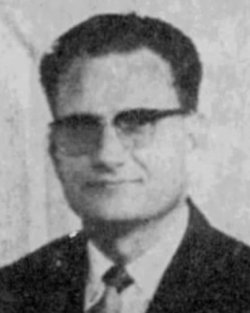
Wilbern Elias Best (1919-2007) was a preacher and writer of Gospel material. He wrote 25 books and pamphlets comprised of sermons he preached to his congregation. These books were distributed in English and Spanish around the world from 1970 to 2018 at no cost via the W.E. Best Book Missionary Trust.

Comments

0 / 2000 characters
Comments are moderated before appearing.

Be the first to comment!

Joshua

Joshua

Shall we play a game? Ask me about articles, sermons, or theology from our library. I can also help you navigate the site.