Bootstrap
W.E. Best

#33 Verse by Verse Interpretation Leading to Indepth Study of Ro.1.15

Romans 2:12-15
W.E. Best July, 1 1973 Audio
0 Comments
Remastered October/November 2024

Sermon Transcript

Auto-generated transcript • May contain errors

100%
Open your Bibles to Romans chapter
2. Last Sunday morning we took verses
12 through 15, and without any exposition of
the verses, we used this portion of scripture as a basis for the
discussion of the subject entitled God's Sovereignty and man's responsibility. This morning we want to give
an exposition of these verses and then in conclusion begin
a study of the three witnesses that every man has within himself. The subject taken from verse
15 will not be completed this morning. This is a subject that
will take several services, at least two if not three, to complete
the study of the three witnesses that man has within himself. Those of you who have been following
us for the last few weeks as we have been giving an exposition
of Romans chapter two, know that the principal subject of the
chapter is God's righteous judgment. To review just a few things in
order to bring us up to the place where we are now beginning our
study this morning, we know that God's judgment, which is a righteous
judgment, is sure according to verse 2. We are sure that the
judgment of God is according to truth. Not only is God's judgment
sure, but it is according to truth, verses 2 and 16. Number three, God's judgment
is inclusive. Every man, whether the person
be a Jew or a Gentile. Number four, God's judgment is
according to man's deeds, verse 6. who will render to every man
according to his deeds. And five, we know that God's
judgment is for both the saint and the sinner, verses seven
through nine. When we look at the subject of
judgment, we know it's sure, according to truth, according
to works, according to the gospel, according to the light which
an individual has, according to his heart, as we find in the
latter part of the chapter, and finally, and we've already discussed
this subject with you, without respect all persons. Now let us read beginning with
verse 12 and read through verse 15. For as many as have sinned
without law shall also perish without law, and as many as have
sinned in the law shall be judged by the law. For not the hearers
of the law are just before God, but the doers of the law shall
be justified. For when the Gentiles which have
not the law do by nature the things contained in the law,
These, having not the law, are a law unto themselves, which
show the work of the law written in their hearts, or minds, their
conscience also bearing witness, and their thoughts the meanwhile
accusing or else excusing one another. We must give an interpretation
of these verses 12 through 15. In order to understand the 15th
verse when we come to it, the great text from which we shall
be speaking for two or three services, we must know what precedes
that great text of Scripture. Let us now begin with verse 12. Without respect of persons, in
verse 11, includes both Jews and Gentiles. Judgment is the
same whether persons sin without law or whether persons sin in
the law. You may wonder what those expressions
mean, without law and in the law. That's why we're going to
make a study of verses 12 through 14 before we begin our diligent
study of verse 15. Verse 12, if you will notice,
divides mankind into two classes, some in the law and some without
law. Now what is the meaning of the
expression without law? What is the meaning of the expression
in the law? First of all, without law applies
to the Gentiles. We know that in the latter part
of Romans 1, beginning with verse 18 through verse 32, Paul is
discussing the heathen, the heathen who have not the written law. even though the heathen have
not the written law as the Jews had the written law, yet they
were a law unto themselves according to the 15th verse of Romans chapter
2. Just because they did not possess,
they did not have in their possession, the written decalogue, yet they
were not without law. Therefore, they were responsible
individuals before God. You see, the subject of Romans
2 is not justification. I must drive this home at this
time. The subject is not justification. No individual is justified either
by the law within or the law without. Neither the law within
nor the law without is given for the purpose of justifying
a man before God. However, the law within as well
as the law without both condemn man. That is the purpose of the
law. The law was given by which a
man could be measured or measure himself. Even though it measures
man, the law never provides the means of man's justification
before God. The law only condemns. This is
the subject of chapter 2. Therefore, you must keep that
in mind or you will be confused, especially when you come to the
13th verse. Without law applies to the Gentiles. They were without a written form
of law, but they were responsible to God according to verses 19
and 20 of chapter 1. Turn back, if you will, to Romans
1 and look at the two verses. because that which may be known
of God is manifest in them." Now do not forget what it says,
is manifest in them. Paul is addressing persons who
were without the written form of the law. Yet there is enough
evidence of God in creation to make every man under the canopy
of heaven responsible to God. He is a responsible individual. He is therefore without excuse
before God. So he says, for God has showed
it unto them, the latter part of verse 19 of chapter 1. Verse
20, for the invisible things of him from the creation of the
world are clearly seen. Notice the two words clearly
seen. Being understood by the things that are made. even his
eternal power and Godhead. Notice the attributes that Paul
mentions as he discusses the subject of man's responsibility
before God. Eternal power and Godhead. How does he complete this verse?
The verse is ended in this manner, so that they are without excuse. Without law applies to the Gentiles. They were without a written form
of law, but they were responsible to God. What they knew from within
as a result of a law within them, an unwritten law, they knew there
was a supreme being. They knew there was a creator. The power of God is made manifest. The Godhead of God is revealed,
and that makes every person without excuse before God. Then notice
in verse 12, the expression in the law. In the law referred
to the Jews. The apostle is not only addressing
the Gentiles in chapter 1, but he's now addressing the Jews
in chapter 2, as we'll see more plainly. a little later. So the expression in the law
referred to the Jews. They had a written law. Now the second thing we need
to notice about verse 12, God's judgment, which is without respect
of persons, verse 11, will be a verdict of guilty pronounced
and a sentence of judgment executed. This is what the Apostle Paul
is showing. Those without law who do not
respect internal witness shall perish, he says. Those within
the law who do not respect the external witness, the written
law of God, shall be judged, and the word judge in this verse
literally means condemned. And verse 12 does not teach how
men are going to be saved, but how they're going to be judged. The subject is judgment, not
justification in chapter 2. We'll not come to justification
until we get to the third chapter of the book of Romans. Gentiles
shall perish without law. Being without an external standard
does not exempt pagans, so to speak. Jews having an external
standard shall be condemned by that standard. There is something
else we can learn from verse 12 as we seek to make it practical. All men shall be judged by the
light to which they have been exposed. All from Adam to Moses were judged
by an inner law. You see, no external law was
given unto Moses, yet men lived and died before Moses. But the
very fact they died proves that they were responsible individuals. You need to read the fifth chapter
of Romans. verses 12 through 14. Those verses
are great for a divine interpretation of the very thing about which
we're speaking now. So from that period of time,
from Adam to Moses, men lived and men died. Were they without
judgment? No, they were not without judgment.
The inner law judged every individual from Adam to Moses at which time
the external law was given to the children of Israel. We'll
have more to say about the children of Israel and the external law
in a few minutes. Now, Jews having an external
standard shall be condemned by that standard. I've already stated
that the word judgment or judge means condemned. All men should
be judged according to the light to which they have been exposed.
We know that death reigned from Adam to Moses after them who
had not sinned, after the similitude of Adam's transgression and so
forth. Romans 5, 12 through 14. Now look at the Jews. He's talking
about Gentiles and Jews in the same passage of Scripture. The
Jews to whom the law was given were judged by the external law. Now we come to verse 13. The
function of the law is not to justify but to judge. You must
understand that as you look at verse 13 or you'll be confused. For not the hearers of the law
are just before God, but the doers of the law shall be justified. I stated that the function of
the law is not to justify but to judge. This verse deals with
those who were within the law. He's not talking to the Jews
primarily. So when you think about the Jews
who possessed the law, what Paul said to the Jews is applicable
to persons who profess to know the Lord, whom to know is life
eternal. I want to make this practical
at this point. Multitudes of people today seek to justify
themselves by mere church attendance, by little money they might give
now and then. You'll notice that Paul, in writing
to the Jews, let them know that the law which they possess would
judge them in the last day. Now you will notice later on
in the chapter, especially beginning with verse 17, Look at verse
17. Behold, thou art called a Jew,
and restest in the law. The Jews were resting in the
law in the same sense that multitudes of professing Christians today
are resting in church membership. I want to make it practical. Now, he goes on to say something
else. And makest thy boast of God. Just as the Jews were resting
in the law and making their boast of God, many religionists today
are resting in church membership and making their boast of God
without really knowing God, whom to know is life eternal. He says
in verse 18, you ought to underscore these things. Let me point them
out in these verses. and knowest his will. Look at
the word boast in verse 17, or brag. In verse 18, knowest his
will. They had the external law, they
read the law, they knew what the law said, and approvest the
things that are more excellent, being instructed out of the law.
Underscore the words boast, knowest, approvest, and instructed. Then
look at verse 19. and are confident that thou thyself
art a guide. Why, the Jews were even religious
guides, a guide of the blind. Notice the next word, a light
of them which are in darkness. Verse 20, an instructor of the
foolish, he isn't through yet, a teacher of babes, which has
the form of knowledge and of the truth in the law. Oh, listen
to this. Thou therefore which teachest
another, teachest thou not thyself? In other words, you are teachers
of other people. Aren't you teaching yourselves?
Listen to Paul. You see how this can be applied
to religionists today, just as this was for the religionists,
the Jews, when Paul wrote these words. He says, thou that preachest
a man should not steal, dost thou steal? Thou that sayest
a man should not commit adultery, dost thou commit adultery? Thou
that abhorrest idols, dost thou commit sacrilege? Thou that makest
thy boast of the law through breaking the law, dishonorest
thou God? For the name of God is blasphemed
among the Gentiles. people who are without the written
form of law, he says, the name of God is blasphemed among them. How? Among the Gentiles through
you, as it is written. That's strong, isn't it? And
then he goes on to say, for circumcision verily profiteth. If thou keep
the law, But if thou be a breaker of the law, thy circumcision
is made uncircumcision. Therefore, if the uncircumcision
keep the righteousness of the law, shall not his uncircumcision
be counted for circumcision? And thou, and shall not uncircumcision,
which is by nature, if it fulfill the law, judge thee who by the
letter and circumcision does transgress the law? Then he concludes
it. For he is not a Jew which is
one outwardly. In other words, he's not a Jew
just because he has received the external circumcision of
the flesh. Any more than a person is a Christian
today just because he's been baptized or he is a member of
an organization, a religious organization. Listen to what
it says in verse 28. For he is not a Jew which is
one outwardly. Neither is that circumcision
which is outward in the flesh. Here it is, but he is a Jew which
is one inwardly, that is, he's been regenerated, he's been given
a new heart, he's been given a new disposition, and circumcision
that really counts is not the circumcision of the flesh, but
it is the circumcision of the heart, he says. in the Spirit,
not in the letter, whose praise is not of men, not of men, but
of God. Oh, beloved, what instruction
that is, even for us today. And we should judge ourselves
by this information that the Apostle Paul has given to us. So verse 13 deals with those
who were within the law. You know, when we think about
the Jews who possessed the law, they listened to the law as it
was read on the Sabbath day. We must think about this, in
using their attitude and how they reacted to what they heard,
and make a practical application of it. It is said there are three
kinds of hearers. First of all, there are those
who hear and do not understand. They hear, but they do not understand.
In other words, they have no disposition of heart to understand
the things they hear. We know that the natural man
receives not the things of the Spirit of God because they are
foolishness unto him, neither can he understand them because
they are spiritually discerned. First Corinthians 2.14, he goes
a step further. in explaining this, three kinds
of hearers. Secondly, there are those who
hear and do not perform. They hear, they understand, but
they do not put what they hear and understand into practice.
Now that hits all of us. There isn't a one of us here
this morning who knows Jesus Christ, whom to know is life
eternal, that puts into practice everything that he hears, and
he ought to, but he doesn't do it. So we're all failing at this
point. And our failure, of course, is
to our spiritual heart. And lastly, there are those who
hear and In other words, they make an effort to put into practice
the things which they hear. Neither the possession of the
law nor the mere hearing of the law furnishes safety in the day
of wrath. It wasn't enough for the Jews
to hear the reading of the word and to possess the word. That
wasn't enough. It isn't enough for you and me
to hear the proclamation of the truth and to possess a Bible,
to have a Bible in our homes. Application must be made of that
which is heard to our hearts in order for us to have any assurance
of safety in the day of judgment. You'll notice that the law has
never been a standard and not a means of salvation. The law
points out the need of salvation, but it does not provide the remedy
for salvation. That was true with the law that
was written and given to the children of Israel through Moses.
The law was never given as a means of salvation. It was given as
a means of man measuring himself by the righteous and holy God.
So it measures man, but does not provide salvation for man. The law shows man his need of
salvation, but does not make provision for that salvation. Take the law within. You see,
the Gentiles have a law, a law within. That law within only
condemns and shows the need of salvation, but it does not punish
the means of salvation. I've read some unusual interpretations
of this verse, and I'll not take time to share them with you.
They're too ridiculous even to consider. We can see the meaning
of verse 13 in the light of its context. The Jews were measured
by the law, but they were saved by what? The sacrifice. Now notice what I said. They
were saved by the sacrifice. Now you might ask the question,
how could the Jews in the Old Testament be saved by the sacrifice
since the sacrifice had not been offered? They were saved by the
sacrifice that was typically set forth in the sacrifices that
were made on the altars. Now the Jews were not saved by
those sacrifices. I was reading a man the other
day, and he made the statement. It was evidently a slip. I'm
sure it was, and we all make them. He said the Jews were measured
by the law, but they were saved by the sacrifices of the altars. Now, beloved, think about that
for a moment. I looked at that the second time. It kind of shocked
me a little bit. The Jews under the old economy were not saved
by the sacrifices of the altars. Beloved, that's in direct contradiction
to the Scriptures. Turn with me to Hebrews chapter
10 for a moment. Let me show you what I'm talking
about. Let us begin with verse 1. Having a shadow of good things
to come, and not the very image of the things, can never with
those sacrifices, plural you see, which they offer year by
year continually make the comers thereunto perfect. For then would they not have
ceased to be offered, because that the worshipers once purged
should have had no more conscience of sin. But in those sacrifices,
and notice the word is plural, there is a remembrance again
made of sins every year. For it is not possible that the
blood of bulls and of goats should take away sin. Wherefore, when
he cometh into the world, that is, when Christ cometh into the
world, he saith, Sacrifice an offering thou wouldst not, but
a body hast thou prepared me. Now drop down to verse 10. By the which will we are sanctified
through the offering, not offerings, of the body of Jesus Christ once
for all. And every priest standeth daily
ministering and offering oftentimes the same sacrifices, plural,
which can never take away sins. It is wrong for you and me to
say that the Jews under the old economy were saved by the sacrifices
of the altars. Because the sacrifices of the
altars could never take away sins. They were saved in anticipation
of the one sacrifice of Jesus Christ, tempified in the many
sacrifices. And, beloved, it must be explained
in that manner. All right, let's go a little
further. You'll notice now in verse 12, he says, But this man,
Hebrews 10, 12, But this man, after he had offered one sacrifice
for sins forever, sat down on the right hand of God from henceforth
expecting till his enemies be made his footstool. For by one
offering he hath perfected forever them that are sanctified or set
apart by the blood of Jesus Christ. So the Jews, the Jewish people,
were saved not by the sacrifices of the altars, they were saved
by faith in the coming of the Christ who was promised the one
perfect sacrifice for sin that was typified in all the sacrifices
of the altars. Their faith looked forward, your
faith and my faith looks back to the finished work of Jesus
Christ on Calvary's cruel tree. Notice the statement in verse
13, doers of the law. Here's where some become confused. Doers of the law does not contradict
the thesis of Romans. What is the thesis of Romans,
do you know? It is a righteousness provided by God, embraced by
faith. That's the thesis of Romans.
The theme of Romans is grace righteousness, not law righteousness. Now notice what I said. The theme
of Romans is grace righteousness and not law righteousness. Will you turn with me to Philippians
chapter 3? I want to prove that point. in
the conversion of Paul, having been regenerated by the Spirit
of God, he has something to say about this very thing. He makes
a distinction between law righteousness and grace righteousness in Philippians
chapter 3. Now let's begin reading with
verse 4. Though I might also have confidence
in the flesh, If any man thinketh that he hath whereof he might
trust in the flesh, I am over. If any person hath a right to
boast of the flesh, I have that right." Now he gives the reasons
for it. Circumcised the eighth day of
the stock of Israel, of the tribe of Benjamin, and Hebrew of the
Hebrews, as touching the law of Pharisee. concerning zeal,
persecuting the church, touching the righteousness which is in
the law. Touching the righteousness which
is in the law. Blameless! That is why Paul lived
in good conscience before God until his day of salvation. He
lived up to the light he had, but he didn't have enough light.
And we'll get into all of those areas of the conscience in subsequent
lessons, for we're going to make a detailed study of the human
conscience. Are you ready? Are you ready
for the Word of God to probe the very secret parts of your
soul? Well, we'll see. we'll see in
subsequent lessons. Now notice how Paul goes on.
Verse 7, But what things were gained to me, those I counted
lost for Christ. It isn't law righteousness, it's
grace righteousness that Paul preached. He knew what it was
to be saved by grace. He counted all of those things
in verses 5 and 6. Reasons why he can make a boast
in the flesh that he counted them all but lost. All right,
beginning now with verse 8. Yea, doubtless. And I count all
things but lost for the excellency of the knowledge of Christ Jesus
my Lord, for whom I have suffered the loss of all things. I've
suffered the loss of what things? All the things that are mentioned
in verses 5 and 6. I have suffered the loss of all
things, and do count them but done, are refuse, that I may
win Christ, and be found in him, not having mine own righteousness,
he explains it, mine own righteousness, which is of the law. You see,
we're not saved by law righteousness, we're saved by grace righteousness. but that which is through the
faith of Christ, the righteousness which is of God by faith. He explains it, does he not?
So if the statement in verse 13 of Romans chapter 2 has confused
you, please study it in the light of all the revelation of God's
mind. Don't run off on a tangent. is not teaching law-righteousness,
that is not his thesis in the Book of Romans, it is grace-righteousness. Grace-righteousness. But let
me say this, grace-righteousness produces obedience. Do you want
that part of it? Grace-righteousness produces
practical holiness. So grace righteousness produces
obedience. Faith, love, and obedience are
the dispositions of the nature of grace, and they express themselves
externally. Now we come to verses 14 and
15, and we'll put these two verses together. The Gentiles, which have not
the written law of the Jews, have a law of their own. They live by an inner law. They did not possess the written
law of the Jews. All men have law, but it is possessed
in different forms. There is not an individual, I
don't care, the darkest man in the jungles of Africa who has
never been exposed to any form of written law is not without
law. Please don't forget that. You
know, if I had understood this in the early days of my Christian
life, It would have been a great help to me, but I didn't understand.
Many questions were asked me. I remember one time my wife and
I were subjected to the testimony of an infidel. Her father was
alive at that time and running a filling station down on Main
Street, out on South Main. And so this man came into the
station. He traded with my wife's father. He knew that I was a ministerial
student. He was a man about 50 years of
age, well-educated, claimed that he was an atheist, and he started
shooting the questions to me. I'll never forget it. And one
was, what about persons who never heard that message that you've
embraced? And then he wanted to make God, you know, an unjust
God by condemning persons like that to hell. Well, I didn't
know what in the world, I was just a young Christian, just
a babe in Christ. I didn't know how to answer his
question. And he delighted. I don't remember how he would
raise a question and then that grin would flash across his face. I've asked you a question you
can't answer. I've got you. That was his attitude. You see,
if I had known this passage of scripture then, I don't say that
I know it as well as I want to know it in the future, but if
I had known this passage at that time as well as I know it now,
I'd had an answer. I'd had an answer. You see, God's
word answers every objection to truth. So the absence, now
notice this, you do not find this in your King James Version.
But in the original, there is the absence of the indefinite
article A. It's omitted. Now, why is this? One great expositor of the Greek
has made this statement. The absence of the article R,
it should say, instead of saying R.A. Law, R. Law unto themselves
holds this law inferior to written law, but nevertheless law. That's
true. He says the absence of the article
are a law, you see, unto themselves. Just leave out, omit the article. And what does it mean? It holds
this law to be inferior to the written law, but nevertheless
law. And that makes every man stand
before God without excuse. The superiority of the written
law is proved by such references as Romans 1.16, Romans 2.9 and
10, Romans 3.2. Look at the third chapter of
the second verse. We'll read beginning with verse 1 of Romans
3. What advantage then hath the Jew? Or what profit is there
of circumcision? Here it is in verse 2. Much every
way, chiefly because that unto them were committed the oracles
of God. By the fact that Jews possessed
the written law made them more responsible and their judgment
will be greater in the day of judgment than the judgment of
the Gentiles. But that does not eliminate the
condemnation or the perishing of the Gentiles. Because they
too are under a law. Gentiles, however, are not under
law. Though inferior to the written
law, they should be judged by their own law. Someone has said,
no heathen nation is so ignorant and steeped in sin, but what
it has some form of law. That's true. Such law may not be written in
their corpse, may not even have any corpse. but it is written
in their hearts. It is written in their minds.
They know what adultery is. They know what stealing is. They
know what many other things are. Therefore, there is a law stamped
upon their minds. No nation puts a premium on murder. No nation puts a premium on adultery. No nation puts a premium on theft. These things are evil under the
crudest forms of law. There is no justification in
chapter 2. The chapter sets forth the principle
of condemnation. Now we come to our subject. That
was a long introduction, but I felt that we must give an interpretation
of these verses before we came to our principal subject that
is found in verse 15. gives us three witnesses, internal
witnesses, that every man has. What are they? First of all,
his heart or his mind. In this case, it could be either
one, the heart or the mind. Secondly, his conscience. And
thirdly, his thoughts. Now we're beginning a study of
these three internal witnesses this morning that will take not
only the remaining part of this service, but at least two other
services, I'm sure. Do you want to know something
about the conscience? Do you understand the human conscience
as well as you would like to? Are you willing to look within
the very deepest recesses of your own soul? Let's begin. Beloved, this is a heart-searching
subject. I will tell you before we begin. I want to define the conscience,
first of all. The conscience, you notice I'm
approaching the subject of the conscience because you cannot
separate all three. You cannot separate the mind,
the conscience, and the thoughts. They are inseparable when we
study the subject. When you study one, you must
study all three. We can distinguish them, follow me now, they are
distinguishable but inseparable. Please do not forget that. So
we will begin with the conscience and then we'll spread out and
cover the subject as a whole. The conscience is an inbred faculty
of the human soul. It's an inbred faculty. You can't get away from it. may
have tried to get away from their conscience, but they can't. Now,
there are a lot of things about the conscience that we'll have
to study. There is such a thing as an evil conscience, a seared
conscience, an impure conscience, and all these things. Good conscience? But I'm beginning this morning
with this first subject, the conscience. It is an inbred factor. In the understanding, now we
go back to the first part of verse 15. the heart or the mind. In the understanding, the soul
is a judge, determining and prescribing, absolving and condemning, de
jure. Now please get this. This was
a great help to me. We know something about de jure
and de facto, all right? So what did I say? In the understanding,
The soul is a judge, determining and prescribing, absolving and
condemning the jury. Now that's the first part of
verse 15. Now look down at the last part, the fourth, or the
memory. Now we'll discuss the memory.
In the memory, the soul is a register. It is a record. It is a witness. And I want you to know it testifies.
De facto. Now this is the greatest thing
I've come across in the study of the conscience and I've been
studying it a number of years. I want to give this slowly because
I want you to get it. We're discussing something this
morning that all of us need to really search out. In the understanding, that's
the mind or the heart, the soul is a judge determining and prescribing,
absolving and condemning the jury. In the memory, that's the
last part of verse 15, it is a register, a record and witness
testifying de facto. Now let's explain that. Before
something is done, conscience serves as a tutor. Now, of course, conscience serves
as a tutor only according to the light one has. Do you understand that? You see,
the conscience must be exercised, and we'll get into this later.
I want to preach one message on the exercise of the human
conscience. You see how big the subject is?
Paul uses that expression, the exercise of the human conscience.
But we must begin at the beginning, and I hope I am beginning at
the beginning this morning. Before something is done, conscience
serves as a tutor to advise and teach. After something is done,
it serves as a judge either to acquit or condemn. That's simple enough. If you
had proper instruction, then before you do something, you
begin to think about it, and your conscience will serve as
an instructor. Now, wait a minute. I've been instructed not to do
this. After you've done it, whatever
it is, then your conscience will serve as you begin to think about
what you've done as a judge. It will either accuse you or
excuse you. Isn't that what the 15th verse
says? Our thoughts to mean while accusing or excusing one another. Conscience makes man his own
judge. That's important. You see, man
has three witnesses. First of all, the witness of
God. He knows that God exists according to Romans 1, 19, and
20, even though he's unsaved. Even though he might be living
in the darkest jungles of New Guinea, he still knows there's a supreme
being. Secondly, you and I are privileged to live in this country
and to have an open Bible. Not every person in the world
has an open Bible. I read something interesting
in yesterday's religious section of the Houston Post. Did you
read about the Christians in Russia? Did you read about their
services? Their services are quite different
from what they are in America. Their services, some people claim,
they don't like the idea of me preaching 45 minutes or an hour,
an hour and a half sometimes, and they'll complain about it.
Their services last four hours. And they're just grateful for
the opportunity of being able to assemble and worship the Lord.
And they don't have to have all the extracurricular things, and
they want no part of those things in their services. They have
met for one purpose. They are meeting under adverse
circumstances, and they counted a privilege to be able to sit
and listen to the Word of God for four hours. How do you like
that? Beloved, I hope that we are never
subjected to things in this country that people in Russia are subjected
to. But I'll tell you, if our Lord Terence is coming, we could
very easily be subjected to the same circumstances. And if we
shall be, I want you to know we have counted it a great privilege
to be able to assemble together on the Lord's Day and stay together
for four hours studying the Scriptures in order to get spiritual food
to sustain us in our activities during the week. We have the
Bible. Not only does man have God, but
he has the Bible and he has his conscience. That's the third.
Man can no more fly from his conscience than he can fly from
God. Human witnesses are sometimes
set aside on account of intellectual feebleness. But we're told that
the human conscience penetrates into the secret parts of man's
soul, and it does. And you know that it does. I
read a good illustration by Dr. Barnhouse, and I want to share
a portion of it with you at this point. I might not agree with all the
things that the imminent jurist said in his conversation with
Dr. Barnhouse, but he had some good thoughts. and basically
I agree, and I think you'll appreciate this. Dr. Barnhouse was speaking
on the subject of the conscience. Of course, he'd been studying
it. He told about a conversation with an imminent jurist, and
he said, this man made the statement, I'll give a direct quote that
Dr. Barnhouse has given in his work
on Romans. The judge said, quote, a fundamentally dishonest man
might make an honest mistake about the truth or falsity of
a statement he had made five years before. But a fundamentally
honest man could never make such a mistake." I want to amplify
that a little bit. I'll give some things that Dr.
Barnhouse said and also the jury said, but I'd like to amplify
that statement. Listen to it again. A fundamentally
dishonest man—we're talking about the human conscience now—might
make an honest mistake about the truth or falsity of a statement
he had made five years before, but a fundamentally honest man
could never make such a mistake. Dr. Barnhouse amplified it a
little bit by saying, an honest man distorts facts. Of course,
the jurist was talking along this same line. A dishonest man
distorts facts and shapes truth to suit his own purpose. That's
true of a fundamentally dishonest person. The only time he tells
the truth is when it's for his own personal advantage. So he's
a habitual liar. But don't be shocked, we all
come into the world that way. The Bible tells us that a child
goes forth from the womb speaking lies. And I think it's the responsibility
of every parent to tell every child, as soon as the child is
capable of understanding anything, that he is a liar by nature. Ooh, I wouldn't do that for anything.
Then you don't believe the Bible. I'll tell you something else.
You don't believe in the sovereignty of God, neither do you believe
in the total depravity of man. Every child must be brought face
to face with the reality of what he is in the sight of God. So every person is a liar by
nature. Do you agree with that? You'll have
to if you believe the book. And I believe the book. I not
only believe the book, but I know what I am by nature, and so do
you if you'll be honest. But we have a lot of dishonest
people today, religionists especially, the most dishonest people in
the world. Did you notice what I said? Religionists, the most
dishonest people in the world with whom you can deal. That
might take you by surprise. So a dishonest man, he will distort
the facts. He will shape the truth to suit
his own purpose. Such a man, the jurist said,
has nothing to rely on but his memory. Now I want to amplify
that a little bit. Here's a fundamentally dishonest
man. He'll say one thing to one person,
something else to another individual, and the only thing he has to
rely on is his memory. And after a while, a few years,
he forgets what he said to whom. Does that remind you of Watergate?
According to my recollection. Does that bring anything to your mind?
According to my recollection. I've heard that until I'm sick
of it, see? Now, a fundamentally honest man
loves the truth, lives with the truth, and the jurist made this
statement. He said, if a fundamentally honest
man is tempted to tell a lie, as soon as he tells it, there
is an indelible impression made upon his conscience and he can
never forget it. That's right, you know what I'm
talking about. You might forget some of the
minor points, but you'll never forget. You may hide it from men, but
you don't hide it from your conscience. I know what I'm talking about
and you know what I'm talking about. Now the difference is between a fundamentally
honest person and a fundamentally dishonest person. A fundamentally
dishonest person, he distorts things, he perverts things, even
when he tells the truth, it's only for his own personal gain.
He'll say this to one person, that to another person, and after
a while the only thing he has to rely on is his memory, and
his memory is faulty. And the judge said that a fundamentally
dishonest person can never bring a good witness. He cannot be
a good witness. He can never be a good witness,
because he can't remember what he said and to whom he said it.
But between the fundamentally dishonest man and the fundamentally
honest man, the fundamentally honest man loves the truth, lives
the truth. Of course, he also has a memory
that is not perfect. But one thing for sure, when
he is tempted to do something, some dastardly thing, tell a
lie for instance, about something. When he does it, there is an
indelible impression made on his conscience and his memory
will bring it back to him as long as he lives. Now isn't that what Paul's talking
about here? Look at it. Look at the 15th verse again.
We want to make this practical. I tell you we're going to get
into some great things concerning the human soul. And only people
who know the Lord, whom to know is life eternal, can take these
things. Hypocrites will be running for
cover, which show the work of the law written in their hearts,
or on their minds, stamped on their minds, their conscience
also bearing witness, and their thoughts, the meanwhile accusing
or else excusing one another. I have so much I want to give
on this subject this morning, and an hour is about already gone.
I must hasten to a few very important points. Conscience is not a member
of the body which returns to dust. Conscience is a faculty
of the soul, and the soul will never return to dust. Now, I
want you to think about this. We're talking about a person
being condemned by his own conscience. as it is at the present time,
the judge and accuser within, so it will be throughout eternity.
As your conscience is your accuser within you now, it shall be throughout
eternity." Beloved, that's a horrible thought. That's a horrible thought
for unsaved people. You see, the conscience of Cain had been touched to the point
that he never did forget about what he did to his brother Abel.
It cried out against him. Think about Judas. His conscience
kept bothering him until he went out and hanged himself. The conscience
of Felix caused him to tremble. Boy, I could give many more biblical
examples of this. So the conscience of an unsaved
person that condemns him now will condemn him throughout eternity. That's punishment enough. That's
punishment enough. But that's not all. The cry of
conscience was as loud, I'm talking about the cry of Cain's conscience,
was as loud as that of Abel's blood. conscience lives when all human
witnesses are dead. Its language will ever be, Son,
remember. Son, remember the thoughts bringing
back that dastardly deed or those dastardly deeds. You'll notice that the Apostle
Paul explained how the heathen, who had not the written law of
God, were accountable to an unwritten law impressed on the hearts of
all mankind. But here's the point. I wanted
to elaborate on that, but time will not permit us to do it this
morning. Here's another point, though. Conscience is not merely
what I know. Follow me now. This is an important
point for you, beloved. Conscience is not merely what
I know, but what I know with some other I'm stressing three
words, with some other person. You see, the word conscience
comes from two words. Don't forget this. The prefix
c-o-n is not superfluous. The other knower whom the word
implies is none other than God himself. What did I say? Conscience is not merely what
I know, but what I know with some other person, and that other
person is God himself. His law makes itself known and
felt in the human heart. Therefore, the work of conscience
in bringing the evil of our acts and thoughts in a lesser manner
goes before the supreme judge of the universe in a greater
way. Now let's go a step further.
Conscience performs a partnership action. Now this is just as important
as the statement that I just made. Conscience performs a partnership
action. No man discerns the rightness
and wrongness of anything through conscience alone. Beloved, I'm giving some valuable
things whether you believe it or not. No man discerns the rightness
and wrongness of anything through conscience alone. It is the intellect
that sees the agreement or disagreement of conduct with the rule of life. It is conscience that experiences
pain or pleasure in itself at this disagreement or agreement. If the conscience agrees with
the mind, then there is pleasure. If the conscience disagrees with
the mind, then there is pain. And I want you to know the pain
of conscience is a terrible pain. I hope that your conscience is
not seared to the point where you can't feel pain. I want to close with this thought
this morning. I want to make a distinction between the unwritten
law stamped upon the human conscience in creation and the written law
given to mankind. First of all, and then I want
to talk about the unwritten law stamped upon the human mind and
heart in creation. And in contrast to that, in regeneration
the law of God rewritten in the new heart, making the new heart
love the law of God. All right, let's begin. First of all, in creation. In creation, the unwritten law
was stamped upon man's heart. It was written so as to be known
and felt. That law which was written on
Adam's heart in creation, and which, though defaced by the
fall of Adam, may still, as it has been stated, like the inscription
on a time-eaten, moss-covered stone, be traced to our own heart. See how guilt reddens in the
blush of a person? You can almost tell if a person
is guilty or not by his reaction. You notice what I said? See how
guilt reddens in the blush? Someone expressed it like this.
See how that consciousness of sin betrays itself in the downcast
look of the child. Johnny, did you do so and so?
He's guilty. No, sir. Head down. And then some stupid parents
say, well, I guess he's telling the truth. Well, by his very
action and his reaction to what you said is a dead giveaway of
his guilt. Watch the action, watch the reaction. Let's go a step further. Then
this person said, even when men wallow in sin, there is a conscience
within men which convicts men of guilt and warns of judgment. Did you know that's taught? When
you look at the last verse of Romans 1, which we've already
studied with you, you see how all of this is connected together? He completes what he has to say
about the awful, heinous crimes of unsaved people in Romans 1,
and he concludes it like this, who knowing the judgment of God. unsaved people who do all these
dastardly things, know the judgment of God, that they which commit
such things are worthy of death, not only do the same, but have
paid
W.E. Best
About W.E. Best
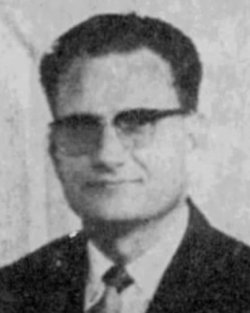
Wilbern Elias Best (1919-2007) was a preacher and writer of Gospel material. He wrote 25 books and pamphlets comprised of sermons he preached to his congregation. These books were distributed in English and Spanish around the world from 1970 to 2018 at no cost via the W.E. Best Book Missionary Trust.

Comments

0 / 2000 characters
Comments are moderated before appearing.

Be the first to comment!

Joshua

Joshua

Shall we play a game? Ask me about articles, sermons, or theology from our library. I can also help you navigate the site.