Bootstrap
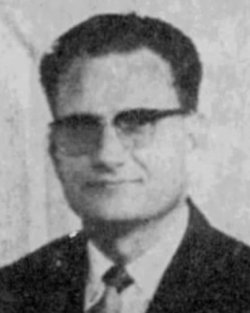
W.E. Best

#38 Justification - How Unjust Men Do Not Justify God

Romans 3:9-18
W.E. Best July, 1 1973 Audio
0 Comments
Remastered Oct/Nov 2024

Sermon Transcript

Auto-generated transcript • May contain errors

100%
It has been said that justification
embodies the gracious act of God in and through Jesus Christ,
which can be understood by faith. I like that. We study justification from the
standpoint of its forensic aspect. What do we mean by forensic justification? The word forensic is a legal
term used to denote the acceptance of anyone as righteous in the
sight of God. Now you can already see the importance
of studying justification and righteousness along together. The basis for justification is
righteousness. The basis for our justification
is not the attribute of God's righteousness, but the righteousness
which was brought out by Jesus Christ on the cross for us, and
it is that righteousness that is stressed in the last part
of Romans chapter 3. Even though both words, righteousness
and justification, come from the same root Greek word, yet
they do not mean the same. Righteousness and justification
are, as I must emphasize, not the same. The saint is constituted
righteous by virtue of the imputed righteousness of Jesus Christ,
but he is justified by a declaratory decree of God. It is true that righteousness
imputed is an abiding fact. justification is the divine recognition
of that fact. Now, I have made a statement,
both of which are related to God. I said righteousness imputed
is an abiding fact. Justification is the divine recognition
of that fact. Now that's justification from
the standpoint of God. We know that when we're justified,
we have peace with God, Romans 5 verse 1. Thus, justification
by faith is the human recognition of that fact. I said justification
by or through faith is the human recognition of that fact. Justification is the acknowledgment
of the unmerited righteousness of Jesus Christ applied to the
ungodly. the righteousness which was imputed
to the publicans in Luke 18, and which set him apart from
the Pharisees who justified himself and went away unjustified. I said a lot in just a few words,
but we will expand upon that statement as we go along in our
study of the subject of justification. Before I give to you the outline
of Romans chapter 3, I want to correlate several references
where the word justification or its equivalent is used. I want to show you the different
aspects of the subject of justification. Follow me now. I'm quoting seven
different references. and I'm using adverbs to emphasize
the different aspects of justification. I am doing this to show you what
all is involved in this great and wonderful subject of justification. Justification is sovereignly
declared, Roman 8.33. It is stated in that text that
it is God that justifies. God is the source of our justification. Justification is sovereignly
declared, Romans 8, 33. Number two, freely given. That has to do, and it is connected
with our text, Romans 3, 24, being justified freely by his
grace through the redemption that is in Christ Jesus. Justified
freely, freely given. Number three, meritoriously provided
by virtue of Christ's blood. Romans 5 and verse 9. much more than being now justified
by his blood, we shall be saved from wrath through him. Number four, authoritatively
manifested by Christ's resurrection. Romans 4 and verse 25. who was
delivered for our offenses and was raised again for our justification. Number five, efficaciously bestowed
by the Holy Spirit, 1 Corinthians 6 verse 11, washed and cleansed,
the apostle tells us in that text, by the Holy Spirit. Number six, experimentally known
through faith, Romans 5 verse 1, therefore being justified
by faith, we have peace with God. And finally, evidentially
revealed by works, James 2 and verse 24. Now let me give these
again without stopping. justification is sovereignly
declared, Romans 8.33. Freely given, Romans 3.24. Meritoriously provided by virtue
of Christ's blood, Romans 5.9. Authoritatively manifested by
Christ's resurrection, Romans 4.25. efficaciously bestowed
by the Holy Spirit, 1 Corinthians 6 verse 11, experimentally known
through faith, Romans 5 verse 1, and evidentially revealed
by work, James 2 and verse 24. Now for a few additional introductory
statements before the beginning of our study of Romans 3. In
Romans chapter 1, men are inexcusable because they have the testimony
of creation. In chapter 2, men are inexcusable
because they have the knowledge of good and evil. They know how
to judge evil in others. Romans 2 verse 1. Now coming
to chapter 3. Men are inexcusable before God
because they have the oracles of God. Think about that for
a moment. Men are inexcusable, chapter
1, because of the general revelation of God. Two, men are inexcusable before
God, chapter two, because men are capable of judging evil in
others. And because of that fact, they
are inexcusable before God. Now we come to chapter three.
Men are inexcusable before God because they have the oracles
of God. Chapter 3 consists of three major
divisions, or parts. Verses 1 through 8 are designed
to answer and remove some objections. We will deal with three of those
objections this morning. There are more questions than
three, but there are three major objections. Paul anticipated
and answered those objections before they were ever raised. Do you see the psychology of
this teaching? The second division, verses 9
through 20, these verses are given to prove
by the testimony of Scripture that both Jews and Gentiles are
involved in sin and guilt. Finally, verses 21 through 31,
in this section the verses are used to exhibit the only way
of man's justification before God. Job raised the question
in Job 9 too. How can a man be just before
God? That is the question. How can
a man be just before God? Now these are the three major
divisions which I've given to you, but they do not offer, as
far as I am personally concerned, the outline that I want to use. Now I want to give you the outline
of the chapter. First of all, in verses 1 through
8, we are shown how that unjust
men do not justify God. We're told that unjust men do
not justify God, verses 1 through 8. You see, I'm keeping everything
within the context of the subject of justification. Unjust men
do not justify God. The only person who will justify
God in his conversation is the individual in whose heart the
Holy Spirit has entered, applying the redemptive work of Jesus
Christ. Number two, this is the second
point that we shall emphasize. In verses 9 through 18, the apostle
gives to us the reasons why unjust men do not justify I said the
reasons why unjust men do not justify God. And finally, and
what a climax this is to the chapter. Unjust men are justified
in Christ, and in this justification, God is justified thereby. verses 21 through 31. Unjust
men are justified in Christ and God is justified thereby. When you go back and consider
some of the verses in the last part of Romans chapter 2, it
doesn't take one long to see the main point of emphasis. in
these verses. I want to call attention to some
things in verses 27 through 29. And shall not uncircumcision
which is by nature, if it fulfill the law, judge thee, who by the
letter and circumcision doth transgress the law? For he is
not a Jew which is one outwardly, neither is that circumcision
which is outward in the flesh. but he is a Jew which is one
inwardly, and circumcision is that of the heart, in the spirit,
and not in the letter, whose praise is not of men, but of
God." I think we need to review some things in these verses before
we begin our study of chapter 3, because there is a very important
connection between chapter 3 and chapter 2. You and I know that
the human heart is ever ready to rest in ordinances. Religionists are always ready
to rest in religious ordinances. In fact, religionists make a
god out of ordinances. They look to ordinances rather
than to God. Therefore, the apostle is showing
that circumcision of the flesh is void apart from circumcision
of the heart. Circumcision of the flesh, apart
from the circumcision of the heart, is of no profit whatsoever
before God. The Jews, according to the latter
part of the second chapter of Roman, were boastful about their
ordinances, the things that had been committed to them. They were relying on their ordinances,
but they were not circumcised in heart. In Jeremiah 9 and verse
26, the Lord speaking through the prophet makes this statement
concerning the house of Israel. Oh, the house of Israel are uncircumcised
in heart. Circumcision of the flesh, therefore,
is of no value unless there is circumcision of the heart. Paul
was not destroying. He was not discrediting the ordinances
of the Old Testament. He was simply showing That circumcision,
which was an ordinance of God committed to the children of
Israel, was proper in its place. But when it was relied upon,
when it was rested upon, without circumcision of the heart, there
was no profit in it. Now, how can we bring that down
to the present? Present-day ordinances of the
Church such as the Lord's Supper, for one, the proclamation of
the Gospel, and other things that could be related to the
Church. And then there is the ordinance of God, the ordinance
of baptism. Of what profit is there of the
ordinance of baptism, for instance, apart from the circumcision of
the heart, apart from the regeneration of the heart? Of what value is
the Lord's table to an individual apart from the regeneration of
the heart? So, the ordinances of the New
Testament are not to be discredited. And, beloved, don't think for
a moment that Paul was discrediting the Old Testament ordinances
because he was not. He was simply emphasizing That
circumcision of the flesh, which denoted separation, was of no
value unless that person's heart had been separated by regeneration. Baptism is of no value to an
individual unless there is circumcision of the heart, but in where the
Spirit of God has wrought a work of grace, we know that baptism
is the answer of that good conscience, which comes as a result of the
regenerating work of the Holy Spirit. So the heart is set in
contrast with the flesh in the last verses of Romans chapter
2. Now for the objection. Paul knew
they would be raised. We're going to deal with three
major objections within the context of verses 1 through 8. We know
that unjust men do not justify God. They do not justify God
because they are void of the Spirit of God. Unjust men justify
themselves, just as the Pharisees. who went up to the temple to
pray in Luke 18. He prayed. He said, Lord, I thank
Thee that I'm not like this publican. I pay my tithes. I give alms. I do all these things. But that man, in justifying himself,
went away unjustified. the publican, recognizing his
sinful condition, said, O Lord, be merciful, propitiate thou
me a sinner. He justified God because he recognized
that he was a sinner. And if he were ever to be saved,
He would be saved by the unmerited grace of the sovereign God. He went away justified. But the
work of the Holy Spirit put a division between the publican and the
Pharisee. And the application of the righteousness
of God put that division between them. We're told in Luke 16 and
verse 15, as our Lord spoke to the Pharisees, ye are they which
justify yourselves before men, but God knoweth your hearts. There are many persons who seek
to justify themselves before men, but let us never forget
that God knows the heart of every individual. You may justify yourself
before me, I may justify myself before you, but God knows your
heart and He knows my heart. I trust that we are not classified
as Pharisees, but by God's grace we're ever ready to justify God. And when a person is ready to
justify God, it is always in the context of condemning
himself. Consider the motive that is back
of such slander against God. Whenever a person refuses to
justify God, and he does so when he justifies himself, The motive
behind it is simply this, he feels that he is superior to
God. I can't make it any plainer than
that. Any accusation that man brings against God is in reality
a claim to superior justice. Whenever you ask the question,
why is God doing what he is to me? The very idea that such a thought
would come from an individual proves that he feels that his
own idea about himself is superior to that which God has about him. The manifestation of truth in
the inward part is when man justifies God. Luke 7 and verse 29. Would you turn to Luke 7 verse
29 for a moment? And all the people that heard
him and the publicans justified God being baptized with the baptism
of John. When a person justifies God in
this sense, He is ready to submit to the ordinance of baptism,
which is the answer of a good conscience toward God. Now, let's
look at the word justify as it is associated with God. What
does it mean? It means that the sinner in whose
heart there has been a work of grace, he justifies God in the
sins. that the criminal does, the judge
before whom he stands, and he acknowledges that the sentence
against him is a just sentence, that he deserves everything that
the sentence includes. So here the people that heard
him preach justified God. Now you know that God cannot
be made just by man, but God was declared just by man. So you and I, when there is a
work of grace in our hearts, we declare God to be just in
all of His dealings with mankind. Such justification of God can
only come from a heart where a work of grace has been performed. With that in mind, do not forget,
please, the third verse and the fourth verse. For what if some
did not believe? Shall their unbelief make the
faith of God without effect? God forbid, yea, let God be true,
but every man a liar. That's justifying God. Let God
be truth, and every man a liar. I mentioned at the beginning
of our study that Paul anticipated the objections of men to the
truth, and he answered them before they were ever asked. There are
three objections. Let me mention them first. and
then we will deal with them one at a time. Number one, what advantage
then hath the Jew? That's found in verse one. Objection
number two, verse three, has the unfaithfulness of the Jew
annulled God's purpose? And the third objection in verse
five, is God unrighteous who taketh vengeance. Now we will
go back to the first objection and deal with each of the three
that are mentioned in verses 1 through 8. First of all, what
advantage then hath the Jew? I mentioned as we were reading
this portion of Scripture that two questions were asked in verse
1. but only one answer is given
in verse 2. The Jew would ask, if I am a
sinner equal with the Gentile, then what advantage is there
in my national position? You can understand why he would
come to that conclusion, being a natural person. What advantage
then? If I'm on the same level with
a Gentile, what advantage was there of me being a Jew? What advantage was there, or
is there, in my national position? That's his objection. So Paul
answers. his objection by saying, much
every way, much every way. In many respects, you have an
advantage over the gentiles. But even though you have many
advantages, you have not made use of the advantages which you
have. because you have not made use
of your advantages, actually you are even more guilty because you have sinned against
greater life. The Gentiles had sinned against
the light of general revelation, Romans 1, which made them inexcusable
before God. But you Jews to whom God has
committed his oracle, and beloved, that means all the Old Testament
Scriptures. You stand with the whole Old
Testament in its completed form in your hands. And that's all that's necessary
for me to discuss with you at this time, even though there
are other advantages. And he mentions them, as I've
already stated, in Romans 9, verses 4 through 6. But this
is the one that is of greater importance. God is committed
to you, his oracle, through you. have come not only the Word of
God, but written revelation of God. He doesn't mention this,
but he does in Romans 9, and I must mention it here. But also
the Lord Jesus, the incarnate Word. You have many advantages over
the Gentiles. Therefore, your condemnation,
your judgment, Your punishment will be much worse than that
of the Gentiles who have not had the advantages to which you
have been exposed. Now there are some lessons you
and I can learn from this. We are not Jews. There are some
things that the American people can learn from this. This is
not a Christian nation by any stretch of one's imagination.
But we do have an open Bible in this country, and by the very
fact there is an open Bible in this country, and there is still
free speech, the people of this country have
a greater responsibility under God than in nations where the
Bible is not an open book, and where free speech does not exist. I thought I would throw that
in because there's a good application of that. So Paul anticipated, and you
will notice he rebutted the idea that circumcision created a disadvantage
rather than an added privilege. You see, the Jews were relying
on circumcision. So Paul said, now, I must rebut
the idea that some of you have that circumcision in reality
has created a disadvantage rather than an advantage for you. You
see, that was the conclusion that some of the Jews had come
to as they considered what Paul had already said in this letter
in the latter part of Romans chapter 2. so much everywhere,
in every respect. But Paul mentioned what is first,
and he used the word cheaply, and he was content with that,
namely, the oracles of God. Do we realize the importance
of having an open book in our hand? I read just this past week
as I was studying this portion of Scripture, about a Catholic
man who had been admonished by his priest to not read the Bible. The priest had said to him, don't
you read that book. You can't understand it. I forbid
you to read that book. Do you know what the man said
in reply to the admonition of the priest? I like what he said. Let me quote. I am authorized,
your reverence, to read the Bible. I have a search warrant." End
of quote. Now, do you know what Scripture
he had in mind? You see, the man had read Farina in the Scripture. He had come across a particular
verse of Scripture that proved to him that he had the right
under God to read the Word. Thus, when the priest said to
him, don't you read it, I forbid you to read that book, you can't
understand it. It has to be interpreted to you
by the priest. The peasant said, and I quote
it again, and I'm hoping that you know that verse of Scripture,
which he had read. and which had made an indelible
impression upon his mind. I am authorized, Your Reverence,
to read the Bible. I have a search warrant. He had read John 5.39, search
the scripture, for in them ye think ye have eternal life, and
they are they which testify of me." The priest became very angry
at him when he explained what he meant. Now, I tell you, you
and I are not subjected to such an admonition as the peasant
was from the lips of the priest, but there are too many people
today in various denominations who read the Word of God not
by the help of the Holy Spirit who is the Teacher, but they
read the Bible in the light of Methodism, Presbyterianism, Lutheranism,
and every other kind of ism that ought to be a wasm. Would you
deny that? And there is no difference I said there is no difference
in a person reading his Bible in the light of Methodism, or
Presbyterianism, or Lutheranism, than for the person to be taught
by Catholicism. I said there is no difference. The Scriptures are committed
to our thoughts. We have an open Bible. Paul named
the first of a long series of advantages. But you will notice
he never returned to enumerate the others here in this chapter.
Look at that. That should stand out. He says
in verse 2, ìMuch every way, or with every respect, chiefly
are first of all because that under them were committed the
oracles of God. He mentions the first, but never
returns in this answer, in this chapter, to enumerate the others. The Jew was the trustee of revelation. That was a privilege which carried
an awful responsibility with it. Consider the advantage of the
people who live today where the gospel is free, are taught, are
borne witness to by faithful witnesses. So we conclude by emphasizing
that circumcision is of no value unless there is separation by
regeneration for which circumcision was assigned. Baptism is of no value today
apart from regeneration of which baptism is assigned. Now we could also raise another
question. What profit is there in the tabernacle? What profit is there in the offerings
of the Old Testament? What profit is there in the feasts
that were given? But we won't elaborate on those.
Now we've come to the second objection. Has the unfaithfulness
of the Jews annulled God's purpose? Verse 3, unbelief does not make
void God's faithfulness. Someone has said, and I quote,
it is an affront to God to make his faithfulness dependent on
man's depravity and his favor on man's corruption, end of quote. What a statement. Now with their human reasoning,
they raised the objection. And the objection was, has the
unfaithfulness of the Jews, some of them, has this unfaithfulness
unnarrowed the purpose of God? Paul said, put such a thought
out of your mind. Let such a thought never enter
your mind. You see, facts are dependent on facts, and facts are independent
of either denials or affirmations. Look at the word true in verse
4. Let God be true. The word truth means unconceived. It literally means openness. That's the literal Greek meaning
of the word truth, openness. That's why, beloved, I've never
gone in for secret things. You see, truth is open. If a
person has truth, it's open. There is nothing to hide in truth.
It's open. Now the Hebrew meaning of truth
adds something to what the Greek definition of truth gives us. In the Hebrew, truth means that
which sustains, that which does not fail or disappoint our expectation. I like to put the Greek definition
with the Hebrew definition and come up with this. Truth is openness,
nothing to hide. Truth, according to the Hebrew,
never disappoints. Truth, according to the Hebrew,
sustains one. Therefore, Paul said, let God
be truth, and every man a liar. Now you'll contrast the word
true with the word liar. The word liar denotes man's unbelief. Man's unbelief, you see, denies
God's promises. But even though there were some
of the Jews who denied God's promises, the denial of God's
promises does not unnerve God's purpose. So facts are independent of either
denials or affirmations. It stands on its own, based on
facts. Then look at the statement, the
faith of God. The faith of God. Verse 3, For
what if some did not believe? Shall their unbelief make the
faith of God? What does that mean, the faith
of God? It does not mean our faith in
God. That's not what Paul is talking
about. He is talking about the faithfulness of God to His promises. The faithfulness of God. It is
God's faith-keeping. in contrast with man's faithlessness. Let God be true but every man
alive. So he's giving a contrast between
the faithfulness of God to his promises and the faithlessness
of mankind. Then we come to the word unbelief.
Shall there unbelief? make the faith of God without
a fact. Unbelief in this text means without
faith or no faith. The terms unbelief and unrighteousness
speak of the inner reality and the external expression of man's
nature. Now, two things are important
here. Look at them. First is the word unbelief and
secondly the word unrighteousness. I said these two words speak
first of all of the inner nature of man and the unrighteousness,
the external actions of that corrupt internal nature. The
first is the man. and the second is his work. Unbelief
does not speak of a negative attitude, but of a positive and
wicked activity. Unbelief, it's not negative. It isn't passive, it's active. And its activity is seen in works
of unrighteousness. Now we come to the third objection,
which is mentioned in verse 5. Is God unrighteous, who taketh
vengeance? Let's shorten the objection if
we can. You'd have to read several verses
to get the full meaning, but let's shorten it by saying that
the objection is simply this. The sinner would rejoice to comfort
himself by meaning, but shorten it by saying that the objection
is simply this. The sinner would rejoice to comfort
himself. by saying that God is inconsistent
in punishing him for producing the background for the display
of his righteousness. Now that's the erroneous conclusion,
you see, to which the sinner comes. Why is God going to punish
me, a sinner, since he is using my sinful activities as a background
for the display of His righteousness. Now let's read verses 5 through
8 so you can see that in its entirety. But if our unrighteousness
commend the righteousness of God, what shall we say? Is God
unrighteous who taketh vengeance? He said, I speak as a man. God
forbid, for then how shall God judge the world? For if the truth
of God hath more abounded through my lie unto his glory, why yet
am I also judged as a sinner? And not rather, as we be slanderously
reported and as some affirm that we say, let us do evil that good
may come whose damnation is just. so you can see what his objection
is. It is a fact that man's sin has
occasioned the displays of God's righteousness. But that does
not mean, beloved, that sin per se glorifies God. Sin per se does not glorify God. You see, they had difficulty
in making a proper distinction. They could not differentiate
between God controlling the evil actions of men for the display
of His righteousness and men doing evil that good might come. They were not able to make that
differentiation. You can understand that that's
the devil's logic, doing evil that good might come. Now let's
look at this in the light of its context. There can be a wrong
interpretation here unless a person studies this in the light of
its entire context. Paul is not dealing with the
truth that where sin abounded, grace did much more abound. Have
you thought about that? Are you thinking with me? Are
you following me? Turn to Romans 5 and verse 20. I said Paul is
not discussing that subject. It is true in the 5th chapter,
20th verse, that Paul says, moreover the law entered that the offense
might abound. But where sin abounded, grace
did much more abound. And Paul is not dealing with
that truth here in the third chapter, verses 5 through 8. Now let's go a little further.
He was not even reflecting on his own personal unbelief and
salvation when he said this. So there are two things that
have to be eliminated. Paul was not reflecting upon
his own sinful condition before the Lord saved him, neither was
he referring to that passage in Romans 5 verse 20, that where sin has abounded,
the grace of God has much more abounded. He was not dealing with a hypothetical
case either. According to verse 8, the apostle
had been accused by some of teaching that very
thing. They couldn't differentiate where
distinctions must be made. Don't expect every person with
whom you come in contact to be able to make proper distinctions. It may sound as you witness for
the Lord and you give forth a testimony that that testimony is going
to contradict a previous statement that you have made. And it will
appear that way to the natural mind. And Paul said, I don't want you
to have any thought in your mind that God is unrighteous who takes
vengeance. I don't want you to think for
a second that you are free from vengeance just because the sovereign
God is using your own evil activities as a background for the displaying
of his marvelous grace. That doesn't mean, even though
God controls the evil actions of men for such a display of
grace, that you have the right to say, I will do evil, that
good may come. That's the logic that the devil
offers. You notice that Paul closes the
eighth verse by saying, whose condemnation is just. The statement, whose condemnation
is just, is not restricted to those who had given a slanderous
report, but to all who gave way to the
abuse in question. Now I'm going to just read the
next two or three verses, and we'll continue here tonight. What then? Here's the mopping
up operation. What then? The apostle presents
a court scene. A court scene. I want you to
get a view of the court scene he's presenting. Paul would have
made a great lawyer, wouldn't he? You know why? Because he knew the mind of God
and he knew human nature. So now he presents a court scene.
He presents this argument from the standpoint of the lawyer.
What then are we better than they? No, in no wise. For we have before proved both
Jews and Gentiles that they're all under sin. As it is written,
there is none righteous, no not one. There is none that understandeth,
there is none that seeketh after God and so forth. So here are
the arguments in his court scene, and I present them in closing. Number one, the accused, all
under sin, Jews as well as Gentiles. Number two, the judge is none
other than God himself. Number three, the jury, the deeds
of the law, verse 20. Number four, the charge. What is the charge? Fourteen
violations, beginning with verse 9 through 18. Fourteen violations,
and they were guilty of every one of them. Number five, the
prosecuting attorney, the law. The law, number six. The defense rested by saying
every mouth is stopped. And finally, the verdict from
the judge, guilty before God. You can't improve on that. It's
all right here. within the context of verses
9 through 19. 9 through 19. The accused, all
under Satan. The judge is God. The jury, the
deeds of the law. The charge, 14 violations against
the law. The prosecuting attorney is the
law. The defense, every mouth stopped,
and the verdict, guilty before God. These things must be seen,
they must be understood, before there can ever be any appreciation
for being justified freely by His grace to the redemption that
is in Christ Jesus, whom God has set forth to be a propitiation through faith in his blood to
declare his righteousness for the remission of sins that are
past through the forbearance of God, to declare, I say at
this time, his righteousness that ye might be just, and the
justifier of him which believeth.
W.E. Best
About W.E. Best
Wilbern Elias Best (1919-2007) was a preacher and writer of Gospel material. He wrote 25 books and pamphlets comprised of sermons he preached to his congregation. These books were distributed in English and Spanish around the world from 1970 to 2018 at no cost via the W.E. Best Book Missionary Trust.

Comments

0 / 2000 characters
Comments are moderated before appearing.

Be the first to comment!

Joshua

Joshua

Shall we play a game? Ask me about articles, sermons, or theology from our library. I can also help you navigate the site.