Bootstrap
W.E. Best

#61 Imputation - The Imputation of Christ's Righteousness to the Elect

Romans 5:12-21
W.E. Best July, 1 1973 Audio
0 Comments
Remastered Oct/Nov 2024

Sermon Transcript

Auto-generated transcript • May contain errors

100%
I want to do just a little bit
of reviewing and then take up where we left off last week in
our study, the doctrine of imputation. Will you turn with me first of
all to 2 Corinthians chapter 5 for our scripture reading.
2 Corinthians chapter 5. Let us read beginning with verse
18. Tonight we're discussing the
subject entitled The Imputation of Christ's Righteousness to
the Elect. Paul said, And all things are
of God, who hath reconciled us to himself by Jesus Christ, and
hath given to us the ministry of reconciliation. To wit, or
what I mean is, that God was in Christ reconciling the world
unto himself, not imputing their trespasses unto them, and have
committed unto us the word of reconciliation. This implies
that reconciliation has already been effected. Now then, we are
ambassadors for Christ, as though God did beseech you by us. We pray you in Christ's stead,
be ye reconciled to God. For he hath made him to be sin
for us who knew no sin, that we might be made the righteousness
of God in him. Last week, in our study of the
sins of the elect being imputed to Jesus Christ, we spent almost
all the time discussing one point. The imputation of our sins to
Christ does not mean that Christ was corrupted by the infusion
of our corrupt nature into his holy nature. Now I mentioned
this, but I did not dwell on it. I do not want to take time
tonight to dwell on this point. I think I said enough on this
point. For you who are making an outline
on this subject, if you have used capital A, the imputation
of our sins to Christ does not mean that Christ was corrupted
by the infusion of our corrupt nature into his holy nature.
Then the second point, or capital B, would be the imputation does
not mean transference of character. Now I've said enough on that,
we'll not dwell any further on it tonight because we will be
dealing with that subject actually when we get into the study of
sanctification and especially in the study of imparted, notice
what I'm saying, imparted righteousness. Tonight, this will be Roman numeral
3, the righteousness of Christ is imputed to the elect. I'd like to give you the three
points that I want to discuss with you this evening. First
of all, capital A, the imputation of Christ's righteousness rests
upon a different kind of union from that upon which the imputation
of Adam's sin rests. We'll have several things by
way of review to say on that point. And then number two, or
capital B, the imputation of Christ's righteousness does not
make the believer as holy as Christ. I said the imputation
of Christ's righteousness does not make the believer as holy
as Christ. And then finally, number three,
or capital C, Imputed righteousness, and this is a point that I want
to really emphasize tonight, imputed righteousness guarantees
the non-imputation of sin. I want to repeat that. Imputed righteousness guarantees
the non-imputation of sin. We'll be referring to David as
an illustration of this. not only from the fourth chapter
of Romans, but also from the 32nd chapter or the 32nd division
of the Psalm. Now, by way of review, under
the first point, the imputation of Christ's righteousness rests
upon a different kind of union from that upon which the imputation
of Adam's sin rests. You remember when we first began
our study of this subject, I said that we must be able to make
the distinction between real and judicial and also the distinction
between immediate and medium. I'm always made to rejoice when
I know that members of the church, believers are studying and they're
trying to come to a definite conclusion as to what they believe
the Bible teaches on any given subject. I had some questions
asked me this last week concerning imputation, and I enjoyed discussing
it with this person who raised the question. Now, keep in mind
that we have already stated that you cannot make it parallel all
the way And this is being done by some, but it just will not
work. We have stated that when it comes
to the imputation of original sin to all of Adam's posterity,
that it is real from the standpoint that we were implicated in Adam's
sin. In other words, we must consider
the solidarity between ourselves and Adam in original sin. Now, we also use the word immediate
in connection with this for the simple reason that we do not
believe, as we have stated several times already in our studies,
that the corrupt nature or original sin is inherited. Now, this is
the common view held today, and if you listen very long to any
preacher on television or the radio, if he makes any reference
whatsoever to original sin before he gets through, ninety-nine
out of a hundred, or I might even go further than that and
say nine hundred and ninety-nine out of a thousand, will say that
original sin or the corrupt nature was inherited. But that is not
the truth. It is true that we inherit it,
but there is something that precedes what we inherit. And we must
consider, first of all, our solidarity with Adam in original sin, because
in him we sin. And that is the reason we use
the word immediate. If you use the word immediate,
that would mean that you believe that the original sin is inherited
rather than the individual being implicated or speaking of his
solidarity with Adam in original sin. Now, you don't use. You can study the works of men,
great scholars. When it comes to the second imputation,
the imputation of our sins to Jesus Christ, we know that that
is judicial and not real. You see, we have made the statement
that real imputation means what? That it is something which was
antecedently ours, antecedently ours. Judicial means that it
was something which was not antecedently ours. So when it comes to our
sins being imputed to Jesus Christ, our sins were not antecedently
His. We know He was holy, harmless,
perfect, the Son of God. and therefore the word real cannot
be used in connection with the imputation of our sins to Jesus
Christ. Now, you don't use either the
word immediate or immediate. It isn't necessary. You don't
use those words when it comes to the second. Now, what we're
studying tonight is the imputation of Christ's righteousness to
us. We all know that it cannot be referred to as real. because
the righteousness was not antecedently ours. We are justified not by a righteousness
which was antecedently ours, but we are justified by a righteousness
that was wrought out by Jesus Christ on the cross, a God righteousness. We had absolutely nothing to
do with the righteousness which Jesus Christ wrought out on the
cross. Now we'll get into many things on this point in the study
of sanctification. There are a great number of people,
for instance, the Armenians, a great number of them, believe
that justification follows sanctification. I'm hoping that you are conversant
enough with the subjects of justification and sanctification, and if you've
been following closely, if you've been studying and trying to get
these great truths down in your own mind, By the way, one has
to do that in order to have the correct understanding of his
relationship to the Lord, to have the correct appreciation
for the grace of God. But there is a distinction between
justification and sanctification, and even though they cannot be
separated, they are not the same. Sanctification always follows
justification, and justification does not follow sanctification. Now we'll get into this in the
weeks and months ahead in our study of sanctification. But
now the righteousness of Christ is imputed to the elect. Here
are seven things I like to state by way of summarizing what we
have already given. Number one, this is under capital
A, the imputation of Christ's righteousness rests upon a different
kind of union from that upon which the imputation of Adam's
saying rests. Now here are seven things, and
it doesn't take but a few minutes, if a person is interested, to
write these things down, because I've condensed them into just
a very few words. As you study, you can enlarge
upon them. Number one, there is no race
unity in redemption. I said there is no race unity
in redemption. You should know what I'm talking
about when I make that statement. Number two, all men were not
in Jesus Christ when he obeyed. All men were not in Jesus Christ
when he obeyed. However, all men were in Adam
when he disobeyed. Romans 5.12 through the 21st
verse of that chapter. There are a great number of references
in that portion of Scripture that will establish that point.
So all men, without exception, were not in Jesus Christ when
he obeyed, but all men, without exception, were in Adam when
he disobeyed. Number three, apostasy. We're
thinking about Adam, who apostatized. Apostasy starts with a race. Redemption, however, starts with
the individual. Doesn't start with a race, but
it starts with the individual. Number four, all men fell in
Adam. Every person is a fallen, depraved,
wicked, ungodly individual. All men fell in Adam, all men
without exception, but all men are not redeemed in Jesus Christ. Number five, union in Adam is
physical. When one refers to union with
Adam, he is talking about a physical union. We're all physically related
to Adam. Union in Jesus Christ is not
physical, it is spiritual, and all men are not related to Jesus
Christ spiritually. Number six, the statement in
Adam is universal. Whenever you find the statement
throughout the Scriptures, in Adam, in Adam, in Adam, the statement
is universal. The statement in Christ is particular,
not universal, but particular. Finally, this is number seven,
all are in Adam by nature. Notice now, all are in Adam by
nature. Some, some are in Jesus Christ
by divine election, regeneration and conversion. Now we come to
the second point. The imputation of Christ's righteousness
does not make the believer as holy as Christ. The precise thing meant is that
the imputed becomes the judicial basis for the bestowal of God's
grace. You see, we were actually justified
in the mind of God when Jesus Christ died for us. We've already
covered the different aspects of justification. We're down
to the last one, and we'll be talking about that from James
2 in a subsequent lesson before we will complete our studies
on the subject of justification. We have gone into seven different
aspects of justification. But the precise thing meant is
that the imputed righteousness of Jesus Christ becomes a judicial
basis upon which God bestows his grace. So imputed righteousness
becomes the basis of the foundation, and let me state it like this,
saying the same thing but in other words, for the what? The impartation of righteousness. So the imputed righteousness
becomes the basis of the foundation for the impartation of righteousness
in sanctification. The imputed in justification
becomes the basis of the foundation for the imparted righteousness
in sanctification. Now the word judicial. Judicial
means the legal way to decide or determine a matter. When we
use the word judicial, it simply means the legal way, I'm talking
now about legal from the standpoint of God, the legal way to decide
or to determine a matter. Thus, on the basis of Christ's
obedience, Romans 5, 15 through 21, The elect have what the Lord
Jesus Christ earned for us, a righteousness qualifying us for heaven. Now,
all the righteousness of men is nothing but filthy rags. In
fact, I should say all the righteousnesses, using the statement by Isaiah,
in Isaiah 61.10, I think it is. All of our righteousnesses is
but filthy rags. How in the world can a person
be justified before God on the basis of filthy rags? He can't. He can't. So on the basis of
Christ's obedience, the elect have what the Lord Jesus Christ
earned for them, all for whom he died, a righteousness qualifying
them for heaven. It was on account of Adam's disobedience
that all men have what Adam earned, his wages, death. It is objected that such teaching
is inconsistent with the veracity of God. Now I want us to go into
this a little bit. I want to simplify some things
if I can tonight, and I think I can. What I'm talking to you
about tonight, the imputed righteousness of Jesus Christ, this is abhorred
by a lot of religionists today. You're probably not familiar
with it, but you would be if you studied, you would be if
you were conversant with other religionists who are conversant
in their own religion. The great tragedy today is most
people who belong to some particular religion don't even know enough
about their own religion to talk to you about it. Now, it is objected
that imputation is inconsistent with the veracity of God. Let's
amplify that point. You know what those, what the
persons who object to this say? They say God does not treat those
as righteous who are in fact unrighteous, end of quote. Let me give that again. God does
not treat those as righteous who are in fact unrighteous."
Now let's discuss that. It must be understood by all
of us that such words as sinner, just, unjust, righteous, and
unrighteous are used in two distinct senses. Sometimes they refer
to moral character, and sometimes they refer to legal relations. Well, how can you illustrate
that? I can illustrate it in this manner. I read this statement
a long time ago, and it was so meaningful to me I put it down
in the margin of my Bible. And when I transfer some notes,
I don't leave this out. Listen to this. A man, therefore,
may be just and unjust at the same time. Do you understand
that? You don't unless you have grace.
Listen to it. A man, therefore, may be just
and unjust at the same time, or righteous and unrighteous
at the same time, end of quote. Now how can we illustrate this?
We can illustrate it in this manner. A man may have committed a terrible
crime and he has been sent to the penitentiary to serve, say,
twenty years for the crime which he has committed. He serves the
twenty years and he is pardoned after he serves the twenty years.
Even though, beloved, he has served the time and he has satisfied
civil justice. I said he has satisfied civil
justice. That does not mean that he stands
as a just person before a righteous and holy God. He may have served his time,
and he may stand justified in the presence of civil justice. While at the same time, as a
person who is lost in sin, he is unrighteous, ungodly in the
presence of a holy God. Even though he's part, he walks
out a free man. He's paid his penalty against
society. So one person has said it like
this, the criminal has satisfied the demands of social justice. social justice. But while having
paid the demands of social justice, he may not be just before a holy
and righteous God. Now let's look at the other side.
On the other hand, the sinner whom God pronounces righteous,
feels himself in his own person to be unrighteous. Love it if you stood up tonight
and you started telling me and telling this church how righteous
you are, I'd say shut up. I don't want to listen to it.
Don't want to listen to it. That is not the language of a
Christian. Go through the scriptures. The most righteous man, Isaiah,
woe is me, for I'm a man of unclean lips. Job, what did he say about
himself in the 42nd chapter of Job? What did the Apostle Paul
say about himself? I'm the least of all saints.
I am the chief of saints. While he stood justified before
God, he felt in himself as an unrighteous person before
such a holy God. Now think about it a moment.
Now both sides are illustrated. Here's a person who is a lost
man, he's committed a crime, he serves time in the penitentiary,
he comes out after serving his time, he is paid the penalty
against social justice. But as a lost man, even though
he's paid the penalty against social justice, he's an ungodly,
unrighteous, unholy person before God. On the other hand, Here is an
individual whom the Lord has saved by his grace. He stands
just before God, justified through the merits of Jesus Christ. But
even though he knows that he's justified through the merits
of Jesus Christ, he feels in himself, like Paul said, I'm
the chief of sinners. He didn't say I was, I am. Please notice that. Now listen, God's judgment in
pronouncing the elect sinner righteous is according to the
righteous character of God. One has said God does not pronounce
the sinner subjectively righteous, which he is not, but forensically
or legally righteous, which he is. because the demands of justice
have been satisfied by his son Jesus Christ. You see, I know
I'm saved. I'm not saved by anything I've
done. I'm saved by what was done for me. Original sin consists
of two parts. Number one, that which is imputed
to us because of our representative solidarity within Adam. And number
two, that which is imparted in us when we come into actual existence. Now I said that to say this.
It is necessary that we should be acquainted with both, imputed
and imparted. That we may look after the twofold
righteousness of Jesus Christ. His righteousness imputed to
us, notice the prepositions I'm using now, His righteousness
imputed to us in justification and an imparted righteousness
in us in sanctification. Righteousness is imputed to us
in justification. It's imparted in us in sanctification. And that's why sanctification
always follows justification. Let's look at imputed righteousness
guaranteeing the non-imputation of sin. Beloved, this does not
make us the world to just do and live anyway. The person has
an idea, he doesn't have grace, and I say that without any reservation.
He doesn't have grace. You see, when a person has grace,
he's changed, his attitude has changed. He has a different will,
he has different desires. If the imparted righteousness
in us does not make a difference in our lives, if it doesn't make
a difference in our desires and our ambitions, then it is not
the righteousness of the Lord is. Because righteousness, when
it is imparted, makes a difference in the life of the individual
in whom that righteousness has been imparted. So imputed righteousness
guarantees a non-imputation of sin. Turn with me to Romans 4. This is one of the greatest illustrations
of this we have in all the Scripture. Paul makes a quotation not only
from the 15th chapter of the book of Genesis, but he makes
another quotation from the 32nd chapter of the 32nd division
of the Psalms. He uses two Old Testament patriarchs,
Abraham and David. And this is interesting. Let
us read, beginning with verse 1, Romans 4. What shall we say then that Abraham
our father is pertaining to the flesh hath found? For if Abraham
were justified by works, he hath whereof the glory, but not before
God. For what saith the scripture,
Abraham believed God, and it was counted unto him for righteousness?
Abram the pagan, Abram the ungodly. Now here we have a righteousness
imputed and imparted to an ungodly man. And Abraham is the pagan. that he uses as an illustration.
Abraham believed God and it was counted unto him for righteousness.
Now to him that worketh is the reward not reckoned of grace
but of death. But to him that worketh not but
believeth on him that justifieth the ungodly his faith is counted
for righteousness. Now he's going to use another
Old Testament patriarch He has just shown how the righteousness
of God is not only imputed but imparted to an ungodly person.
Now he's going to show how that when the righteousness of God
is imputed and imparted to a person, we know that the imputed righteousness
guarantees the non-imputation of sin. So he uses David. Now David was a Christian, but
David sinned. He lived for a time with a terrible
sin on his conscience, the sin of adultery, the sin which he
had committed with Bathsheba. Some time passed before any confession. Now, don't rush to that portion
of Scripture and use that as a justification, because the
Bible does not give these things for justification. The Bible
mentions these things for our warning. Never for our justification. I'm always amused at individuals
today, they'll run to incidents like this and they use them for
what? Justification. They're never
given for justification, they're given for warnings. And now he
says, beginning with verse 6, even as David also describeth
the blessedness of the man unto whom God imputed righteousness
without worse. saying, Blessed are they whose
iniquities are forgiven and whose sins are covered. Blessed is
the man to whom the Lord will not impute sin. The imputation of righteousness
guarantees the non-imputation of sin. I tell you, that's a thrill to
the Christian. And it doesn't lead to antinomianism
either. Now there are seven things I
want to give on this point. Number one, As Abraham illustrates
the imputation of righteousness to the ungodly, so David illustrates
the non-imputation of sin to the godly. As I progress in giving
you these seven things, we'll come to some very important things
to discuss with you. Number two, the sins of believers. Now I'm talking about believers.
I'm talking about justified persons. I'm talking about persons who
have been positionally sanctified and they are being progressively
sanctified. Notice I said progressively sanctified. The sins of the believer are
not charged to the believer. They are charged to the believer's
substitute. I said the sins of the believer
are not charged to the believer, they're charged to the believer's
substitute. My sins, the sins I commit today,
the sins I commit tomorrow, they're not charged to me, they're charged
to my substitute. Now number three, God does not
require for the sins of saints the debt of punishment because
the debt has already been paid by the sinless substitute. You
notice how I'm developing this. God does not require for the
sins of saints the debt of punishment because the debt has already
been paid. by the sinless substitute. Jesus Christ bore our sins in
his own body on the tree. 1 Peter 2.24. Number four, notice
why we're developing this now. Though God does not impute sin,
the sin of the believer, he does aggravate the sin of the believer. Now, I'm going to stop preaching
and start meddling. because we've gotten to that
point where I can stop preaching and meddle a while. Do you want
me to meddle with you? You see, we have to take this
step by step in order to understand it. Now we've gotten to step
number four. Though God does not impute sin
to the believer, that is, he doesn't impute sin that the believer
commits to the believer, yet God does aggravate the sin in
the believer. Now what do you mean by aggravating
the sin and the belief? Alright, you ready for it? In
other words, he aggravates the sin to live. Beloved, you and
I as Christians cannot sin and continue to wallow in it. We
cannot be disobedient and live in disobedience. If we're the
children of God. Because you know, if we're disobedient,
the Lord is going to aggravate that disobedience. Just as you would aggravate the
disobedience of one of your children. You aggravate it. And rightfully
so. And God's going to aggravate
your disobedience. He's going to aggravate my disobedience.
He'll aggravate my sin. I wish I had time tonight to
go back and take the history of the children of Israel to
show how God aggravated the sins of the Israelites. He aggravated
them. Time after time after time. Let
me just mention one. The Israelites said, we want
the leek and the garlic of Egypt. Do you really? They just kept
on, they couldn't be satisfied. They were disobedient. And the
Lord aggravated their sin of disobedience to the extent that
they had all of it just running out of their nostrils. I'll tell you what, a Christian
can become disobedient, he can become complacent, and look out,
God will aggravate that complacency, He'll aggravate that sin, and
you'll pay for it. And you know where you're going
to pay for it? Not in the life to come. You're going to pay
for it right now. That's why, my beloved, when
something happens to me, I don't just ask questions. Well, I wonder
if this is chastening or I wonder if this is just a trial. Beloved,
there's only one sure way for you and me to look at it. God's
chastening. It's just chastening. It's chastening. I get amused at some of these
sanctimonious people. Surely I haven't done anything
that would necessitate God to have to chasten me. Evidently
it's just a trial. How pute! How pute! Both David and Peter illustrate
the fact that I have just... God aggravated David's sin, even
though his sin was not imputed to him. Yes, God aggravated his
sin. Do you remember reading the 51st
division of Psalms, as well as the 32nd, and his descriptive
language, how that he would lie upon his bed at night and just
cry all night long and his bones just ached and hurt? What was
happening? God was aggravating his sin,
that's what was happening. You know, I'm afraid today that
we are becoming so complacent and we just feel so satisfied
with everything. We'll just do what we want to
do and God's not going to touch us. Peter also had his own sin aggravated. Let me tell you how it was aggravated,
you know. Peter stood on one occasion and said, Lord, all
the disciples may forsake you, but not me. The Lord knew more about Peter
than Peter knew about himself. And the Lord said, tell you something,
before the cocks shall crow, you will have denied me three
times. And when the cocks began to crow
and Peter remembered the words of the Lord, he wept bitterly,
but the Lord didn't let him off there. It seemed like every time
Peter turned around, the Lord was doing something. Peter, feed
my sheep. He didn't say it just once. Feed
my sheep! Why did he say it three times?
He wanted Peter to remember something. He was aggravating his disobedience. Beloved, I'm glad the Lord does
aggravate our disobedience. I'm glad the Lord loves me enough
to aggravate my disobedience. And I'll tell you what, beloved,
we had better not make life of the thing the Lord, of the way
he speaks, we'd better not make light of it. I like what Stephen Charnock
said. Let me give you a quotation.
He was talking along this same line, God aggravating our sins. He doesn't impute our sins to
us, but he aggravates them. He aggravates them. Here's what
Charnock said, the outstanding Puritan preacher. The grant is
complete here. I like this. The grant is complete
here. And beloved, the grant is complete
here. You know what he means by that. Then he goes on to say,
though all the fruits of remission, all the fruits of remission are
not enjoyed till the day of judgment. Now listen to him. What did he
say? The grant is complete here. though all the fruits of remission
are not enjoyed till the day of judgment." You see, saints
have spots, as we're told in Deuteronomy 32.5, but they're
not ingrained. You see, saints have spots, as
we're told in Deuteronomy 32.5, but they're not ingrained. They're not ingrained. We all
have spots. Now, number five, we see that
the Lord does not impute sin to us as Christians, but he does
aggravate our sin. You remember what we said when
we were preaching a series of messages on forgiveness, everlasting,
restorative, and governmental? I'm talking about governmental
forgiveness now. When the Bible says we shall reap what we sow,
to whom was Paul writing? He was writing to the Galatian
believers. Believers will reap what they
sow here. Now, number five, it is wonderful
to know that it is when we sin, when we sin, not when we are
sorry for sinning, that Jesus Christ exercises the office of
righteous advocate. Notice how I stated that. I spent
some time thinking through these things. You don't just come up
on these accidentally. I said it is wonderful for you
and me to know that it is when we sin, when we sin, not when
we are sorry for our sin. that Jesus Christ exercises the
office of righteous advocate. 1 John 2 and Zechariah chapter
3, both passages deal with this aspect of the truth which we
are given. Our repentance and restoration
are the results of Christ's advocacy. Now let's get things in the proper
perspective. When we sin, Jesus Christ starts
exercising at the right hand of the Father the office of righteous
advocate. He doesn't even wait for me to be sorry for my sins.
He starts exercising the office of advocate. He starts interceding for me. He's my judge. He's pleading
my cause, my case. And my confession, my sorrow
for sin, these are the proofs of Jesus Christ exercising the
office of righteous advocate at the right hand of the Father.
There are a lot of people who believe that he doesn't begin
to exercise the office of advocate until we are sorry, until we
repent. They got the cart before the horse, just like everything
else. just like everything else. The Lord Jesus Christ begins
the very moment that we sing, even before we feel any remorse
for our sin. And then our confession, our
sorrow, our repentance, these are proofs of what he is exercising
at the right hand of the Father. Now listen, are you ready for
this? If there is no sorrow, if there is no repentance, Then,
beloved, Jesus Christ is not exercising the office of advocate
for you at the right hand of the Father, which means you are
not a child of God. How about that? How about that? That's putting
it like it is. I'm assuming that you want the
truth. That's it. That's it. So advocacy is Christ's side
of restoration. Confession, repentance, remorse,
these are the fruit manifested in the life of the individual
because of the advocacy of Jesus Christ. If a person who says he's a Christian
can live in disobedience and in direct contradiction to the
Word of God without any remorse, what does it mean? It means that
Jesus Christ is not exercising the office of advocate at the
right hand of the Father for you. That's what it means. That's
what it means. Number six. If Christ had not
righteously settled, this is an important point, if Christ
had not righteously settled the question of our sins on the cross,
he could not righteously plead our cause on the throne. I want
to show you something. I want to do away once and forever
all of the heresy that's being proclaimed by so many religions
today, and I can do it with this poem. I said if Jesus Christ
had not righteously settled the question of our sins on the cross,
he could not plead, he could not righteously plead our cause
on the throne. To plead for forgiveness without
first suffering for the offense would be to ask God the Father
to pass by sin without judging it. And beloved, that just will
not stand a chance to stretch. I want you to see that. I wish
I could hear some preaching like that on the radio. I'd rejoice.
I think I'd get up in the middle of my living room floor and shake
a leg. I'd be so full of joy to hear
that. Now let me run that by again. I said if Jesus Christ had not
righteously settled the question of our sins on the cross, he
could not righteously plead our cause on the throne. To plead to the Father for forgiveness
without first suffering and paying the penalty of sin would be to
ask God the Father to pass by without judging it, and that
is impossible. That is absolutely impossible. Sin is either going to be judged
in you and in me, or it has been judged in the
person of Jesus Christ. If sin has been judged in the
person of Jesus Christ, then it is not going to be judged
in you or in me. There is therefore now no condemnation
to them who are in Christ Jesus. 7. The point of restoration is sometimes
slowly reached. Psalm 32 illustrates this fact. Restlessness, beloved, is a sign
of being out of fellowship with God. Restlessness, you know,
I've talked to individuals Through the years it'll be visiting
an individual who had moved into the community Been out of church
five years ten years fifteen years start talking to him. Oh
I'm a Christian. Are you sure? Oh, yeah. Yes back
there when I was a boy 12 or 14 or something. I trusted you
You mean to tell me that you've been out of the service of the
Lord 10 years, 5 years, 15 years, 20 years, and there's no remorse? For what's saved always saves. But when I find a person like
that, I start giving him the gospel. I let him know he's as
lost as a Rocky Mountain denigrate. For no person who is the recipient
of God's grace can get by without it. Whenever a person gets out of
fellowship with the Lord, he becomes restless. David was restless. Read the 32nd Psalm. He was restless. Some time passed before there
was real restoration to the joy of his salvation, but that was
restless. If you can be disobedient to God and not be restless, you're
not a Christian. You can talk about the sovereignty
of God, you can talk about divine election, you can talk about
all these things you want to, you can talk about them until
you're black in the face. Now let's look at Ephesians 1,
4, if you will please, in closing. Ephesians 1, 4, according as
he hath chosen us in him before the foundation of the world,
that we should be holy. should be holy. He's talking
about practical holiness, and without blame, before him, in
love. Having predestinated us under
the adoption of children by Jesus Christ himself according to the
good pleasures of his will, to the praise of the glory of his
grace wherein he hath made us accepted in the beloved. I did
not mention something on the word perfect, and I want to give
a little bit on it. You know when the Bible says
we're to be as perfect as our Father which is in heaven is
perfect? Be ye perfect for I am perfect, so forth. I can, 1 Peter
1 and verse 16. The word perfect does not mean
infinite. Here's where a lot of people
go in the wrong direction. The word perfect, when it refers
to you or to me, does not mean infinite. You see, there's infinite
perfection. We can never reach that. We never
will reach that. We never will reach infinite
perfection because we'll never be God. Even in the kingdom,
throughout eternity, we'll never reach that. That applies only
to God. Perfection is the standard which
God has set before us, and it will be experienced by every
believer who stands before Jesus Christ. 1 John 3, verse 2. I like what I read this past
week on this. I'll share it with you in closing.
I had intended to go into the word perfect. There are several
different Greek words translated perfect in our King James Version.
And what a lesson this is, if I had time to develop it, but
I don't tonight. But listen to this. The concept of a time process
in sanctification is rejected by all false religion. This is
B.B. Warfield, by the way. Listen
to this. God has chosen to take the discipline
of time for the maturing of those who have been born of the Spirit." Listen to that now. God has chosen
to take the discipline of time for the maturing of those who
have been born of the Spirit. We are waiting for the fullness
of sonship. We haven't reached it yet. We
are sons of God, but we haven't reached the fullness of sonship,
Romans 8, 22 and 23. Read it, don't forget it. Now, this will be helpful, just
one statement. There is to be a constant filling
of the Spirit. I think you'll like what this
person says about Ephesians 5, 18, since we brought a message
on it just a few weeks ago, and this will be something to add
to. I rejoiced and I read it. There is to be a constant filling
of the spirit, Ephesians 5 18, as the heart and life of the
believer enlarge and grow, as his interest and knowledge expand. End of quote. There it is. That's the biblical answer for
Christian perfection. Let me give it again. There is to be a constant filling
of the spirit, Ephesians 5, 18. Be not drunk with wine, for in
his excess be filled with the spirit. And this constant filling
of the spirit, as the heart and life of the believer enlarge
and grow. Now, a young Christian who is rejoicing in Jesus Christ
and in the gospel which he has just learned by the help of the
Holy Spirit who indwells his heart. He is not as mature, his
capacity for spiritual things is not as large as the Christian
who has been saved for many years and has been a diligent student
of the scriptures, but yet He is filled with the Spirit. You
know what that means? That means that his capacity
is full. It's all he takes. But as he grows, and he's filled
as he grows, as his capacity enlarges, that's the meaning
of being filled. As one's capacity grows, as his
interest grows, Now ask yourself a question tonight, beloved.
We're not playing church. I don't want to play the part
of a preacher. We're not playing church. We're here for a purpose.
We're here to stand in the presence of God and listen to his words
and apply it to our hearts. This is 1976. Many of us, according to our
age, are in the evening of physical life. This is not something to
mess around with. This is not something to play
with. This is serious business. Has your capacity for Christ
enlarged? Has there been any growth? There is to be constant filling
of the Spirit. As the heart and life of the
believer enlarge and grow as his interests and knowledge expand. The more knowledge the Christian
receives, the more he desires to get. The getting of knowledge increases
the interest for more knowledge. And oh, beloved, what a joyous
experience it is. There's always something new
and fresh There's always fresh manner. There's always a new
experience in the Christian life. Some of my greatest moments of
rejoicing, they're not standing before you preaching. They're
in my study with an open Bible, and searching this, and oh, the
sense of joy and satisfaction. when I come face-to-face with
something that enables me to understand a great principle
of doctrine better. There's rejoicing. There's an
expanding. There's an enlarging. That's practical sanctification.
And when I don't see that in the lives of people, when I don't
see a sense of joy and something I close with this. This will
always happen. Whenever a person gets out of
fellowship with the Lord, he thinks everybody's out of fellowship
with the Lord but himself. What in the world's wrong with
those people? I'll tell you something. Whenever you get out of fellowship
with the Lord, you just continue to go in the wrong way. I'm going
to be frank with you. I'm at a loss as to even talk
to you. You want me to be real honest with you tonight? You
want me to be helpful? Haven't you had people, haven't you had
relatives, haven't you had friends? And there had been a time you
could really talk about things and then because of disobedience
and because of the attitude, all of a sudden you start talking
to the individual and you just hit a blank wall and you don't
have a thing to say. You know what I'm talking about?
Sure you know what I'm talking about. You just hit a dead end. Nothing
to talk about. And no interest, no desire for
spiritual things. There's an interest for everything
else. And all of a sudden, things have changed. But you know what'll
happen? Here's the great tragedy, and
I hate to say it, but I've seen it happen too many times. When
people get like that sometimes, they think that there's something
wrong with everybody else. And then they start looking at
themselves. I'm all right. What in the world
is wrong with the church? What's wrong? What's wrong with
the preacher? He used to talk to me. Well, I'll tell you what.
I don't have anything to talk to you about now. We don't have
too much in common. Beloved, don't you want to be
in fellowship with the Lord and fellowship with God's people
so when we get together we really enjoy discussing the same thing? Isn't there anything greater
to talk about? Is there? Do you know of anything more
fruitful, more edified, more strengthening than the things
of the Lord?
W.E. Best
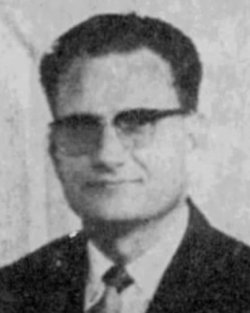
About W.E. Best
Wilbern Elias Best (1919-2007) was a preacher and writer of Gospel material. He wrote 25 books and pamphlets comprised of sermons he preached to his congregation. These books were distributed in English and Spanish around the world from 1970 to 2018 at no cost via the W.E. Best Book Missionary Trust.

Comments

0 / 2000 characters
Comments are moderated before appearing.

Be the first to comment!

Joshua

Joshua

Shall we play a game? Ask me about articles, sermons, or theology from our library. I can also help you navigate the site.