Bootstrap
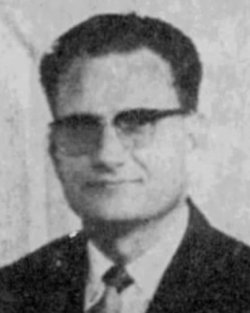
W.E. Best

#62 Sanctification - Introduction

Romans 6:1-14
W.E. Best July, 1 1973 Audio
0 Comments
Remastered Oct/Nov 2024 (as best that could be done)

Sermon Transcript

Auto-generated transcript • May contain errors

100%
several outstanding outlines
on this portion of Scripture have been given. There are two
that I praise here very highly. They're very close together in
the outlining of these two chapters. I only want to mention a few
things by way of introduction, and then we will read the first
fourteen verses of the sixth chapter of Romans for our scripture
reading, after which I will give the introduction to our studies
of this doctrinal section that deals with the subject of sanctification
or Christian holiness. We know that sanctification takes
place in chapters six through eight. We've already dealt with
the subject of justification, beginning with the third chapter,
which has taken us through the greater part of the fifth chapter. Justification does not take all
the carnal nature out of the believer. Sanctification is not
only positional, as we've already given the distinction between
positional and progressive sanctification, and it is until the eighth chapter,
not until the eighth chapter, that the agent of sanctification
is revealed. Now that's a very important point.
I'm going to give you an outline, a brief outline in a few moments,
of these chapters Englishman who has an excellent
outline, one that I praise you very highly on this particular
section of Scripture. I like the way he's outlined
it. Many others are close to him, but I think his is the better
outline. He begins, first of all, by showing
that Paul deals with the subject of condemnation after his introductory
remarks in the first 17 verses of Romans 1. Beginning with the
18th verse of chapter 1 through the 3rd chapter, verse 20, the
20th verse of the 3rd chapter, Paul deals with the subject of
condemnation. After which, beginning with verse
21 of chapter 3 through the last verse of chapter 5, Paul deals
with the subject of justification. Now, we spent a long time discussing
justification with you. I think we studied very diligently
the seven different aspects of justification. Personally, I
do not see any end of the road in sight in our study of scientification. We're beginning a lengthy study.
I'm doing it for several reasons, some of which I will not divulge
at this time. Now, beginning with chapter 6,
verse 1, Paul deals with the subject of sanctification. And sanctification is the subject
that he deals with in chapters 6 through 8. However, in the
8th chapter, Paul does go into the subject of glorification.
Now, this is what Scrooge had said, and I like this very, very
much. He says, condemnation, chapter
118 through chapter 3 verse 20, and justification, chapter 3
beginning with verse 21 through 521, constitute the Christian
message. Now let's pause a moment. Condemnation
and justification constitute the Christian message. Now I
think you will agree with me that when I have given you this
other part, that this is a classic division. Now he says sanctification
and glorification, both subjects which are dealt with in chapters
6-8, but glorification in chapter 8. He says interpret the Christian
life. You see, I'm not going to try
to be dramatic or anything else. I'm going to try to the best
of my ability to interpret the scriptures. I think that's the
most important thing for the people of God. So I'm not going
to just take a text and try to be dramatic and spend a lot of
time discussing things that are of no spiritual value. Now notice
what he says. Condemnation and justification
constitute the Christian message. sanctification and glorification
interpret the Christian life. I think that's great. And it's
easy to make this in the form of an outline, take some brief
notes on it. Now he goes on to say, the first
two tell of Christ's work for us. In other words, we are condemned,
and then of course, in justification, we're told what Christ has done
for us. So in the message, we have what Christ has done for
us. Now, in the next division, sanctification
and glorification, with more emphasis on sanctification, we're told what Christ does in
us. in us. Now the distinction is
between for us in the message and what Christ does in us in
interpreting the Christian life. The Christian message, he said,
must be believed before the Christian life can be lived. There can
be no fruit where there is no root But the proof of the root
is the proof. You can't argue with that. The Christian message must be
embraced before there can be a manifestation of Christianity. And there can be no proof where
there's no root, but the proof of the root is the proof. And
this, I think, is a great climax. As we are now thinking about
sanctification, sanctification deals with the present process. Sanctification deals with the
present process. We know that justification deals
with an accomplished fact, what Christ has done for us. Sanctification
is the present process. Finally, glorification, the final
issue. Let me not say a lot in a few
words, and believe me, I like to say a lot in a few words if
I can. Now let me say something about different books that you
will be reading on the subject of sanctification. You'll read
one person's work, and he may present sanctification in this
manner. He may refer to positional sanctification
and then progressive sanctification. That is a common way of presenting
sanctification in its twofold aspect. First, positional. Second,
progressive. You may get another book, and
that person will deal with it, and I think, in fact, he likes
to use the expression legal and experimental. Legal and experimental. Then he will take maybe another
word, and he will use different terminology, but the meaning
is the same. Someone may say, well, the positional,
we will refer to it as being judicial. And of course that
is, or that is positional. And then the second would be
experiential rather than experimental. The word experiential is used,
of course, to correspond with judicial. So whether you read
one work that presents it from the standpoint of positional
and then progressive, or whether it is legal and experimental,
or judicial and experiential, There are two vital aspects of
sanctification. In order to carry it to its proper
conclusion, of course, we could get into all but sanctification,
which is glorification. We'll not deal with that particular
aspect at the present time. Now, there are other things I'd
like to say about these three chapters in the form of an outline,
but I think I will give those to you in the course of our study
of these chapters. I did state this morning that
in chapter 6, we have death, sin, in chapter 7, death to the
law, and in chapter 8, death to the flesh. I'm going to have
to say this. I don't want to leave you hanging. Death to the law, in chapter
7, is judicial. Whereas death to the flesh, in
chapter 8, is not judicial. I said it is not judicial. Now,
in the first five chapters of Romans, we have seen that Christ
has died The fact that must be recognized
by the believer in chapter 6 is that he has died with Christ. Co-crucifixion. That must be
recognized. Now let us read, if you will,
please, the first 14 verses of the chapter, and I am not giving
an exposition of these verses tonight. We'll do that in subsequent
What shall we say then? Shall we continue in sin that
grace may abound? God forbid. How shall we that
are dead to sin live any longer therein? Know ye not that so
many of us as were baptized into Jesus Christ were baptized into
his death, therefore we are buried with him by baptism into death,
that life as Christ was raised up from the dead by the glory
of the Father, even so we also should walk in newness of life. For if we have been planted together
in the likeness of his death, and the particle if is the Greek particle which literally
means sin. For since we have been planted
together in the likeness of his death, we shall be also in the
likeness of his resurrection. Now he repeats what he said in
verse 3, knowing this, that our old man is crucified with him,
and the body that henceforth we should not
serve Satan. Did you know that was John Wesley's
so-called proof text? He not only used this verse of
Scripture, but he used 1 John 1-7, he used Galatians 2-20,
and he used 1 John 4 verse 17. None of the verses which I have
given teach what John Wesley said they teach. You say, well,
you're dogmatic. I am just as dogmatic as I can
be. Look it, I have no time for Harrison.
Let's look at the sixth verse again. Knowing this, that our
old man is crucified with him, the King James Version has contributed
a great deal to the misunderstanding of this verse of Scripture. I must insert something in this
poem. The arius tense of the verb is
used throughout the first section of Romans chapter 6. When I say
the arius tense of the verb, I mean that that's something
which has taken place in the past and is not continuing. Did you know that the arius tense
of the Greek verb is used in every one of the first eleven
verses of this chapter? This is not something that I've
just recently learned. I came to the knowledge of this
a great number of years ago. And outstanding scholars of God's
Word have already pointed this out. Let me read the verses and
then I'll point out some things. I may be introducing our study
of these chapters for two or three Sunday nights. I can't
pass. Verse 6. For he that is dead is freed
from sin. Now if, or since we are dead
with Christ, we believe that we shall also live with him. Knowing that Christ being raised
from the dead, died no more, death hath no more dominion over
him. For in that he died, he died
unto sin once. But in that he liveth, he liveth
unto God. Likewise, reckon ye also yourselves
to be dead indeed unto sin, but alive unto God through Jesus
Christ our Lord. Let not sin therefore reign in
your mortal body, that ye should obey it in the lust thereof. Neither yield ye your members
as instruments of unrighteousness unto sin, but yield yourselves
unto God as those that are alive from the dead, and your members
as instruments of righteousness unto God. For sin shall not have
dominion over you, for ye are not under the law, but under
grace." That is as far as we will read tonight. Now I stated
that the Arius tense of the verbage used throughout this chapter.
Now, with that before us, let's look at these first 11 verses
once again, if you will, please. Look at verse 1. The question
is raised, what shall we say then? Shall we continue in sin
that grace may continue to abide? The Christian life is Christ's
life in the Christian. That's what Christianity is.
Christ in the Christian. Christ in you is Paul's statement
in Colossians chapter 1 and verse 27, the hope of glory. Now in verse 2, he begins his
answer to the question that was raised. He raised the question,
knowing what many persons would say, due to what he had given
in the last part of the preceding chapter, when he said that, as
sin hath reigned unto death, even so might grace reign through
righteousness unto eternal life by Jesus Christ our Lord. In
verse 20, more will the law enter that the offense might abound,
here it is, but where sin abounded, Grace did much more about it. Grace abounds in helping the
sinner. But grace never abounds in helping
the Christian to sin. That's plain enough. Now, in
verse 2, what does he say? How shall we that are dead to
sin are dead to sin. Do you know how it literally
reads? Consider in the arius, tempus
of the verb. We died to sin. Now notice how
I'm stating it. We died to sin. We have already
seen in the first chapters of Romans what Jesus Christ has
done for us. Christ died for us. He tasted
death for us. He was forsaken for us. All of
these things were done for us by our substitute, the Lord Jesus
Christ. Now in chapter 6, believers are
to recognize that they have died with Christ. When? When they believe? When Christ
died. So we died to sin. Now that's past tense. That is
something that has taken place. It is not something continuous.
Notice what I'm saying. This is judicial. Judicial, not
experiential. This is position. Now, we look at the next verse.
In verse 3. Know ye not that so many of us
as were baptized into Jesus Christ, were baptized into His death. We were baptized unto Christ's
death. And the statement is used twice
within the text. Baptism, according to the Apostle
Paul, is the public proclamation of one's inward spiritual relation
to Jesus Christ obtained before the act of baptism. It is in relation to the death
of Jesus Christ. And it is explained by the symbolism
of baptism. Now, we'll go into this more.
In fact, we'll spend a great deal of time in studying each
one of these verses and each phrase of each verse and some
of the words of each phrase before we are finished. If you don't
like the study, then you won't appreciate it. You won't even
want to come. But if you want to study, I believe
you'll be here. Now in verse 4, Therefore we
are buried with him, by baptism into death, that like as Christ
was raised from the dead to the glory of the Father, even so
we also should walk in newness of life. Now we were buried with
Jesus Christ into death. So the picture in baptism points
two ways. I said the picture in baptism
points two ways. Backward to the death of Jesus
Christ, And what else? And also to the burial, to our
death, to sin, and forward to the resurrection from the dead
and to what? Our new life pledged by the coming
out of the watery grave to walk in what? Newness of life on the
other side of the baptismal grave. So we were buried. Notice the
tens. We died past tens. We were baptized
past tens. We were buried past tens. Now verse four. We were raised
up. He goes on to say in the latter
part, we were raised up to walk in newness of life. So we were
buried, and then number two, we were raised up out from the
lump of dead. symbolically of what has taken
place by our co-crucifixion with Jesus Christ. Then, in verse
6, and here's where the great controversy lies. Let's read
the verse again. Knowing this, that our old man
is crucified, or our old man was crucified. The old man is
all that man is by nature. was crucified with whom? With
Jesus Christ. Now there's a lot of misunderstanding
and all different opinions concerning the two statements, old man and
the body of sin. And we'll get into this at a
later date. But he says in the second part
of verse 6 that the body of sin might be destroyed that henceforth
we should not serve sin. Mr. Wesley said, based on this
text of Scripture, that our old man is crucified, and the body
of sin might be destroyed. He used this verse of Scripture
to teach eradication of the old age. Now, eradication is not
Scripture, as it is the Scripture. Let me give to you a companion
verse to simplify what is really presented in this verse of Scripture.
I say that the legal position of the people of God is set forth
in this passage of Scripture. I say that the death here is
judicial, not experiential. Notice what I said. The death
is what? Judicial and not experiential. Now, why do we say that? The
context will prove what I have just said. If verse 6 teaches
the eradication of a carnal nation, then I want to raise a question.
Why would Paul say what he said in verse 12? Let not sin, therefore,
reign in your moral body. that ye should obey it in the
loss thereof." That would have been a waste of words if the
correlation had been eradicated according to those who teach
the eradication of the correlation based on verse 6. What I'm saying
is this is legal death, a legal death. It is judicial death. It is not experiential death.
It is not experimental death. It's legal. Now, a companion
verse, and I'll explain it like this tonight. Turn with me to
1 John 1, 7. This is one thing that Sidney
Baxter elaborated on, and I think he did an excellent job. He was
quoting Bishop Mole. I have the work of Bishop Mole
and some others. But let's look at 1 John 1,7.
Here's another text of scripture that is used by the eradicationists. 1 John 1,7. I see now I'm not even going
to have time tonight to get to our introductory message. We're
just reading and commenting. But this is the best way I know
to do it. All right, look at verse 7. We'll start with verse
6. If we say that we have fellowship with Him and walk in darkness,
we lie and do not the truth. But if we walk in the light as
He is in the light, we have fellowship one with another. Now the last
part of verse 7, And the blood of Jesus Christ His Son cleanseth
us from all sin. The blood of Jesus Christ His
Son cleanses us from all sin. Now, we've commented on this
before, especially the word cleansing. Now, do you believe that this
verse teaches the eradication of a correlation? It does not. Those who say that
it teaches the eradication of the carnal nature, say, but the
blood of Jesus Christ, God's Son, cleanses us from all sin. And they go so far as to say
they don't sin, they just make mistakes. They've got to get
around it some way. Let's look at the very next verse.
John goes on to say in the very next statement, if we say that
we have no sin, We deceive ourselves when the truth is not in us.
I'm saying to you that a person who teaches the eradication of
the carnal nature is a deceived person. And all who believe it
are deceived. And I say it without any reservation.
I say it because it's the Scripture says it. Now, what does verse
17 mean then? The blood of Jesus Christ, God's
Son, cleanses us from all sin. Beloved, I am here to say that
cleansing from all sin is judicial. I said it's judicial. It is not
experiential. It is judicial cleansing. The blood of Jesus Christ, His
Son, cleanses us Let me put it like this. It is OBJECTIVE cleansing,
not SUBJECTIVE cleansing. I'll put it in that framework.
Now let's elaborate on that a little bit. I said it's OBJECTIVE cleansing,
and not SUBJECTIVE cleansing. If it were SUBJECTIVE cleansing,
then we would not find a statement in the next verse that we find. They put in another framework.
I stand before you judicially clean, and yet I am not clean. Now roll that one over in your
mind for a while. I am judicially clean, and yet I am not actually
clean. You say that's a contradiction?
I don't expect an unsaved person to understand that. The only
person who can understand that is the person who knows Jesus
Christ is the Lord's life eternal. And the person who has been instructed
in the Scriptures. Let me say it again. I am judicially
clean. And yet I am not actually clean. You see, that's confusing. It shouldn't be. Let's look at
it again. The blood of Jesus Christ, his
Son, cleanseth us from all sin. The word sin here is not talking
about the acts of sin committed by belief, but the sin of guilt
from which he has been cleansed by the justification of God.
Does that make sense? Now you can see why so many people
are confused. And, beloved, you've got to know
something about the scripture in order to deal with these people
who are spreading these heretical views as they have never been
spread in our generation. These heresies are being revived.
Now, Baxter makes a statement that I think is great. I really
did appreciate this. He said blood is not an emblem
used for cleansing, per se. Any proof? There are four references
in the New Testament, Hebrews 9-14, this passage here, Revelation
1-5, Revelation 7-14. But not a word of it is talking
about what? Subjective cleansing by the blood. Every one of them is talking
about what? Objective cleansing. Judicial
cleansing. Not actual cleansing. Water is
the emblem for cleansing. I said water is the emblem for
cleansing. Now let me show you the simplicity
of this. Have we forgotten the series of messages on regeneration
and conversion? The substitutionary work of Jesus
Christ provided the ground or the foundation for things. And the Holy Spirit of God applied
that which was accomplished by Jesus Christ's death to the heart
of the individual. And that's why we find in Titus
3 in verse 5, hold this place in 1 John for a moment, I didn't
know I was going to wander around through the Scriptures, but I'm
trying to tie it together. So turn to Titus 3 and verse 5.
Let's see the beauty of the Scriptures when they're handled correctly.
Titus 3, verse 5. Not by works of righteousness
which we have done, but according to his mercy he saved us by the
washing of regeneration. and renewing of the Holy Ghost. Now, he was right when he said
that blood is not the emblem for cleansing. Actual cleansing. I said actual cleansing. Blood
gives the foundation for such cleansing. And water is the emblem
for cleansing. Keep that in mind as you study
the subject throughout the Scripture. Now when we look at this passage,
What is God saying? But if we walk in the light as
He is in the light, we have fellowship one with another in the blood
of Jesus Christ, His Son, cleansed us from all sin or from the guilt
of sin, I stand before you justified because of the imputed righteousness
of Jesus Christ. I am not actually clean. You're not actually clean. But you're possessionally clean,
you're judicially clean, you're legally clean before God. Not
only is that taught here, but that's exactly what the Apostle
Paul teaches in the sixth chapter of Romans, and especially the
sixth verse. Now we're talking about the arius
tense of the verse. Our old self was crucified, notice
this, with him. This took place not at baptism,
but it was pictured at baptism. It took place when we died to
sin, and we died to sin in Jesus Christ when he died to sin. He not only died but he died
unto sin. But you know he didn't die unto
the flesh. He condemned the flesh. That's
why death of sin and death of the law are both judicial, but
when it comes to death to the flesh, it is not judicial. We
participate in that death. I said we participate in that
death. What did I stress this morning? I said justification supposes
guilt. Sanctification supposes guilt. Mortification supposes life. Now let me show you the beauty
of what I just said. Look at the 8th chapter of Romans. It
is not until the 8th chapter that we have the power of such
cleansing revealed to the people of God. And the Holy Spirit is
the power of cleansing. Now there are some things you
and I can do. The Lord isn't going to sanctify us alone. He gives to us the Holy Spirit,
which enables us to sanctify ourselves, or to cleanse ourselves. All right? Verses 12 and 13 of
each chapter of Romans. Therefore, brethren, the subject
here is death to the flesh. Therefore, brethren, we are debtors
not to the flesh, to live after the flesh, for if ye live after
the flesh, ye shall die. We talked about some deaths this
morning, didn't we? And I said the more we grow in
grace, the greater our fear grows. Our fear, our reverential fear
for God grows as we grow in knowledge of the Lord. For there is no
fear and no growth in fear, no increase in the degree of fear,
there is no increase in the knowledge of God. For if ye live after the flesh,
ye shall die. But if ye through the Spirit,
here it is, through the Spirit, I can't crucify myself, I can't
crucify my own strength, my affections and lust, I cannot crucify the
deeds of the body, put them to death in my own strength, but
the Lord gives to us the ability to do it. What did we say tonight? Let's
go back and review that statement again. That's Grobe emails. Fruit manifest what? The life
of the root. And where there is mortification,
that is the manifestation of the life that has been implanted
by the Holy Spirit in regeneration. If there's no mortification,
it simply means there's no life. No mortification, no life. For there's life, there's mortification.
Here it is. If ye through the Spirit do mortify,
crucify, put to death the deed to the body. We don't kill the
body. We mortify the deed to the body. Now some people become confused
when they read the account in the Sermon on the Mount where
the Lord Jesus said, if your right eye offends you, pluck
it out. Do you think the Lord literally means to take some
kind of an instrument and pluck the eyeball out of its socket?
No. If your right hand offends you, cut it off. Do you think
that the Lord meant for a person to literally take an instrument
and whack his hand off? No. He's talking about the very
thing we're talking about here, mortification of the being to
the body. So if ye through the Spirit do
mortify the being to the body, ye shall live. And this life
will manifest, why? That the profession of faith is gained. Well, let's go a little
further. Let's look now at verse 7. Once
again, we have the arius tense of the verse. For he that is
dead is freed from sin. It literally means he who died. He who died. And then in verse 8, we die with
Christ. Christ died, and in verse 8,
we die with Christ. Now, if we be dead with Christ,
or since we be dead with Christ, we believe that we shall also
live with Him. You see how beautiful it is,
when we have the correct understanding? So this death is symbolized in
baptism. Now, verse 9, Christ raised,
past tense again, Knowing that Christ being raised from the
dead died no more, death hath no more dominion over him. We're
talking about judicial death. And as death hath no more dominion
over Jesus Christ, death hath no more dominion over those who
have died with Christ. Then we look at verse 10. Well,
maybe we ought to make a further comment on verse 9. Christ raised
from the dead. Christ's death occurs once, according
to the Hebrew Pentateuch. This is a reputation, if you
please, of the sacrificial mass of the Roman Catholic Church.
The perpetual sacrifice. No such thing. First hand. He
died. Look at the 10th verse now. For
in that He died. He died unto sin once. We see it used quite a few. Here
is 10th of the verse. This death was once and once
only. Once only. And then when we look
at the 11th verse, we know that Jesus Christ died for and unto
sin. We could not die for it, but
in Jesus Christ we have died unto it. At the cross, the Lord Jesus
Christ made his own relation to sin, the believer's relation
to sin. Isn't that wonderful? Did you
get what I said? After the Lord Jesus Christ made
his own relation to sin, the believer's relation to sin. So that we are to reckon ourselves
to be dead indeed unto sin, but alive unto God. Christ our Lord,
and there is the 11th place where the area of 10th of the verb
is found. We have been dealing with the
principle of sanctification. Now you notice beginning with
verse 12, Paul discusses the practice of sanctification. Now
notice what I said. The principle of sanctification,
number one. Now the practice of sanctification. There is no such thing as eradication,
Paul, here. We have the principle of sanctification
in the first 11 verses. And now beginning in verse 12,
the practice of sanctification. And I believe in it. With all
my heart, I believe in it. And where there is no evidence
of practice, there's something wrong. Now look at verse 12. Let not sin therefore reign in
your mortal body. that ye should obey it in the
lust thereof. Neither yield ye your members
as instruments of unrighteousness unto Satan, but yield yourselves
unto God as those that are alive from the dead, and your members
as instruments of righteousness unto God. Beloved, the Scriptures
are complete. And I see that our time is fast
slipping. And I don't hardly know where
to start in my introductory message. I know I can't give it all and
I hate to start and leave out part of it, so we'll just begin
at the beginning and I'll go as far as I can. The more a believer
in Jesus Christ is sanctified, the more conscious of sin he
becomes. I'll start with that statement.
The more a believer is sanctified, the more conscious of sin I am far more conscious of sin
today than I was when I was converted 36 years ago. I said I'm far
more conscious of sin today than I was 36 years ago. I was conscious
of sin then, but I'm far more conscious of it today. As I pick up the daily newspaper
and read and see all of the things that are happening in my generation,
I'm appalled. I'm not going to take time to
give to you a number of things that I read this past week. I'm
sure that most of you read them. Things that are taking place
on the college campuses and universities throughout this country. Did
you read that? Shocking. Seventy-five percent, is one
figure given, of young people who are embarrassed in their
sexuality. Seventy-five percent Staggering
isn't it? Staggering. Every time you pick
up the paper, every time you turn on the television and look
at the news, you see it more and more. But I'll tell you something
that's more staggering still. I've become more conscious of
my own failures and shortcomings. As appalled as I've become at
things in general, I'm also appalled at my own weaknesses and my own
shortcomings. So the more a believer is sanctified,
the more conscious of sin he becomes. Do you know why that's
true? There is no hatred of sin in
the natural man's heart. He doesn't hate sin, he loves
it. You say he doesn't? He does.
He loves it, and he will defend it. Listen to John chapter 3, verses
19 and 20. And this is the condemnation
that life has come into the world, and men love darkness rather
than life. Why? Because their deeds are
evil. There are a lot of religionists
who don't even believe in scripture. Verse 20 says, for everyone that
doeth evil hateth the light. Furthermore, he says, neither
cometh to the light, lest his deeds should be discovered. On the other hand, but he that
doeth the truth coming to the light, that if these may be made
manifest, that they are wrought in God. There is no hatred of sin in
the unsaved person's heart. Watch him long enough and you'll
see. And when you see a professing believer after a while start
condoning this and condoning that, look out, watch him. The believer hates sin. He hates it because of the nature
of God that has been infected. The God-like nature that has
been infected. The principle of life within
it. The unregenerate man is the old
man. The regenerate man has the old
nature to fight, even though he possesses a new nature. And
when I talk about the two natures, I'm not talking about two persons.
We'll get into that more in our study of sanctification. Paul
was not a slave of sin while he was sold under sin. You say,
I don't understand that claim. I'm giving it to you from Romans
chapter 7. He was no slave of sin even during
the time that he was sold under sin. Look at the seventh chapter
of Romans and verse 14. I'll give you something to study. Continue to study. For we know
that the law is spiritual. Paul said, and he was a believer
when he said this, he was a Christian. I am carnal, sold under sin. You say, I don't understand that
language. I assure you we will deal with it. when we come to
it in our study of these chapters. He was no slave of sin while
he was sold under sin. Slaves of sin is what believers
were when they were without Jesus Christ. Romans 6 verse 17. Look at the 17th verse of the
6th chapter. Just kind of skipping around,
covering some important things by way of introduction. Know
ye not that to whom ye yield yourselves servants to obey,
ye are to whom ye obey, whether of sin and of death, or of obedience
unto righteousness? Paul was a servant of righteousness,
even while he was sold under Satan. Warfare between the flesh
and the spirit Is taught in the scripture and the confession
of guilt is expressed in first john 1 8 and 10 The gordon dealt
with the eight prayers The flesh took Paul captain while he was
attracted to the law of god Romans 7 14 through 25 Now let's not
stop that This was before the recognition
of the ability within him, which is revealed in the eighth chapter
of Romans, the Holy Spirit, his abiding presence in the heart
of every believer. So the flash took Paul, Captain, while he
was attracted to the Lord God, chapter 7, 14-25. Someone has
said, through the window of faith, Paul viewed the victory that
was on its way to the battlefield. I like that. Through the window
of faith, Paul viewed the victory on its way to the battlefield.
Who shall deliver us from the valley of this death? I thank
God through Jesus Christ my Lord. I like the way that person expressed
it. Another said, as his attitude
grew in grace, So did his grief over remaining sins. Paul did
not describe a section of himself. I like this. This two-nature
theory has caused a lot of misunderstanding of important things. Now listen
to this. Paul did not describe a section
of himself. Did you like that expression?
A section of himself that was still subject to sin as distinguished
from another section of himself as being under the power of the
Spirit. Now listen to that for a moment and think about it.
Paul, he said, did not describe a section of himself that was
still subject to sin, and another section of himself, in other
words, not subject to sin. He described himself, not a section
of himself, as under the direction of a flesh that was contending
against the Spirit. There's the answer. There's the answer. Let's give
it a game. He described himself, not a section
of himself, as under the direction of the flesh that was contending
against the spirit. So the subject of Romans 7 is
not the natural man as seen by the believer, but the subject
is the believer who has learned to see himself. I'd like to stop
there. I'd really like to just stop
that. That's a good stopping place. What he would say, the
subject of Rule No. 7 is not the natural man as seen
by the believer, but the subject is the believer who has learned
to see himself. But have we learned to see ourselves
as we really are? That's the question. Sanctification
is a process. of which holiness is the completed
state. We know that regeneration sets
a man apart for God. Thus he becomes a saint of God. He's holy as far as his position
is concerned, and he is not as holy as he should be because
of his condition of life. Just that simple. Do you believe
that practical sanctification leads to every aspect of one's
life? I do. Every aspect of one's life. We'll get into that. I will oppose
these remarks. There are four main elements
in sanctification. Four main elements. Number one,
it increases the desire for fellowship with God. I think that should
end the list. I said four main elements in
sanctification. Number one, it increases the
desire for fellowship with God. Number two, it increases the
knowledge of our sinful nature. Number three, it enables the
believer to be renewed more and more after the image of God. Finally, number four, it increases
the believer's eschatological prospect. The goal is perfection
when we seek promise. That's the teaching of verse
John 3, and it is a purifying or sanctifying code. There are
three things which proceed from Sam, and they are guilt, penalty,
and stain. The sacrifice of the Lord Jesus
Christ removes the guilt of sin. The satisfaction of Jesus Christ
removes the penalty. Sanctification removes the stain,
and that is perverse. They're out of the question in
the Christian's life. They're out of the question, guilt and
penalty. There is therefore now no condemnation for them who
are in Christ Jesus. So from day one, even though
guilt and penalty are out of the question in the life of the
believer, yet the believer is overwhelmed by his consciousness
of uncleanness. Therefore, Paul admonishes all
today, just as he admonished the Corinthian Christians in
the seventh chapter of 2 Corinthians. Having, therefore, these promises,
dearly beloved, let us cleanse ourselves from all filth of the
flesh and spirit, perfecting holiness. in the fear of God. You see, I believe in Christian
holiness. Don't believe in absolute perfection, don't believe in
sinless perfection, but I believe in Christian holiness. Here it
is. Having therefore these promises,
dearly beloved, let us cleanse ourselves from all filthiness
of the flesh, number one, and spirit, number two, what perfecting
holiness, Christian holiness, not sinless perfection, in the
fear of
W.E. Best
About W.E. Best
Wilbern Elias Best (1919-2007) was a preacher and writer of Gospel material. He wrote 25 books and pamphlets comprised of sermons he preached to his congregation. These books were distributed in English and Spanish around the world from 1970 to 2018 at no cost via the W.E. Best Book Missionary Trust.

Comments

0 / 2000 characters
Comments are moderated before appearing.

Be the first to comment!

Joshua

Joshua

Shall we play a game? Ask me about articles, sermons, or theology from our library. I can also help you navigate the site.