Bootstrap
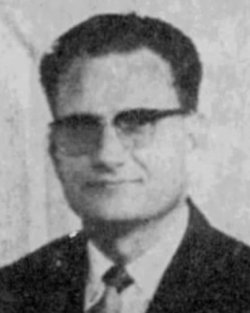
W.E. Best

#70 Sanctification - The Conflict in the Believer

Romans 7:14-25
W.E. Best July, 1 1973 Audio
0 Comments
Remastered Oct/Nov 2024

Sermon Transcript

Auto-generated transcript • May contain errors

100%
I think that tonight we'll be
able to bring our study in Romans 7 to a conclusion at this particular
time. It doesn't mean that we have
exhausted the content of Romans 7 by any means, but I think we've
covered the high point. And there is so little time,
it seems, left and so much territory to cover We'll get back around
to Romans 7 again one of these days, and at that time we'll
get into some areas that we're not covering at this time. This
morning we read the second division and spent most of our time discussing
the first part of the tenth verse. You'll notice that almost all
of our time in connection with Ezekiel chapter 30, was spent
on the first part of the tenth verse. That doesn't mean that
we did not cover some important things within the context of
verses 7 through 13, but most of our time was devoted to the
law which was ordained for the regulation of life. I'd like
to make a few additional comments before we really take time and
read the scripture. to complete really what I didn't
have time to give this morning. When you think about the law
being given for the regulation of life, and then in connection
with that we saw what Ezekiel the prophet had to say, that
if the Israelites obeyed God's statutes, they would live in
them. Keep in mind that this was written
to the Israelites and it was connected with their entrance
into the land of Canaan, therefore their enjoyment, not only the
possession of the land, but their enjoyment of the land. Now, we might ask the question,
what connection does that have with us as Christians today?
We know that the law of the Lord Jesus Christ, and all Christians
are under the law of God as it is in the hands of a mediator. We've already discussed that.
We'll have more to say about it later. But since the law is
given to regulate our lives as Christians, and as we obey the
commandments of Christ, this enables us to what? Experience the abundant life.
That's the simplicity of it. The Lord Jesus said, I am come
that you might have life and that you might have it more abundantly. Do not forget that 2 Peter chapter
1 verses 5 through 11 describe this very vividly. We are to
add to our faith virtue, virtue knowledge, knowledge temperance,
temperance brotherly kindness, brotherly kindness charity. And
if these things be in us and abound, we'll not be unfruitful
in the service of the Lord. The individual who lacks these
things is blind and cannot see afar off. Get the connection? But we are
to give diligence to make our calling and election sure, and
if we do this, we shall have an abundant entrance into the
everlasting kingdom of our Lord. Now I made this statement this
morning that some people are fatalistic, and I saw that this
week. Now let me explain fatalism briefly. I think there are a lot of people
who claim to embrace the doctrines of grace who are fatalistic.
In other words, they rejoice when the doctrines of grace are
being expounded. But when you leave the doctrines
of grace and talk about practical sanctification or Christian responsibility,
they don't like that. They don't like that. That's
the part they don't like, that's fatalism. Any time an individual
sits back and rejoices only in one portion of the scripture
to the exclusion of the other portions of scripture is fatalistic. I can truthfully say, I don't
know about you, but I believe you feel that way, I can truthfully
say I enjoy all the scripture, all of it. I have never in my
Christian life wanted to just isolate a few topics and spend
my entire life studying those few topics. I want a general
knowledge of all the Word of God because I believe I need
it all in order to be a well-rounded or developed Christian. So an
individual who just sits back and says, it's all of God, isn't
it? It's all of God. It surely is. Salvation is of God. But you
see, we're not talking about justification now. We're talking
about sanctification. And when we talk about sanctification
and a great portion of the word of God discusses the subject
of sanctification, that shows me what my responsibility is
as a Christian. And that's the only way that
I'm going to manifest that I really do believe that salvation is
of God. Just as simple as it can be,
really. And I'd like to make another comment or two. concerning the last part of the
tenth verse. He said, The law that was ordained
to life, or for the purpose of regulating life, I found to be
unto death. The word death here is used metaphorically. Now, I use it this morning in
connection with Ezekiel chapter 20, but Paul is using it here
in a metaphorical sense. In other words, he is using it
in the same sense as 1 Corinthians 15, 31, when Paul said, I died
daily. So you see, in our conversion
experience, When the law is driven home to our hearts by the power
of the Holy Spirit, we die. There is a death. There is a
crucifixion. That's the crucifixion of self.
That's sanctification. We're not talking about justification.
We're talking about sanctification. So it's used metaphorically.
I die daily. Paul's discussing his experience
as a result of having heard the gospel and the conversion experience
which he had after, of course, he was regenerated by the spirit
of the living God. So looking at the last part of
the second division, then he says in verse 11, for sin taking
occasion or advantage by the commandment deceive me. I commented
on that this morning, so I'll not repeat it again. showed how
that sin took advantage of the law and deceived Eve. And many people are deceived.
We can be deceived in the same manner. And then in verse 12,
wherefore the law is holy, the commandment holy, just and good. Was then that which is good made
deaf unto me? God forbid. But sin, that it
might appear sin, here's the appearance of sin. Working death,
here it is used, the word death is used metaphorically again.
In me but that which is good, that sin by the commandment might
become exceeding sinfulness. So the sinfulness of sin is seen
in its relation to the holy law of God. That's simple, isn't
it? And looking back at the first
part of verse 13, we know that the law itself is not deadly.
And then when he says, after raising the question, was then
that which is good made death unto me? God forbid. But sin
that it might appear sin. So the goodness of the law only
makes the character of sin more hateful. The goodness of the
law. So sin taking occasion. And then he says, but sin, that
it might appear sin, working death in me, how? By that which
is good. So the goodness of the law only
makes the character of sin more hateful. Now one thing I want
to add to what I said this morning. I made the statement at the close
of the message that sin, that is, that dwells in the believer,
we're talking to Christians now, we're talking to those who are
justified. There is the arousal of sin even
in the lives of the Christian. But I stated this morning the
difference, but what a difference, between the Christian and the
non-Christian is that the Christian has the grace of God to counteract
the arousal of sin in his life. Now let me add this. The degree
to which you and I as Christians are able to overcome the arousal
of sin depends upon our understanding and application of biblical truth. That's why I plead with the people
Sunday to Sunday We must study, we must apply, we must learn,
we must grow, because it is only as we learn truth and grow in
grace and knowledge that we're able to overcome. So the degree
to which we're able to overcome the arousal of sin depends upon
our understanding application of truth. That harmonizes with
many things. In fact, I could develop a sermon
very easily on that. You know, I found one thing.
I'm not worried about running out of sermon material. I'll
never be able to get around to study even all the things that
I want to study for my own personal spiritual benefit. I just never
be able to do it. Never be able to do it. Now let's
read the last division of the chapter. 15 verses 14 through 25 of the 7th
chapter. Here we have the struggle that
goes on in the life of the Christian. Author W.P. says this is the
normal, notice what I said, this is the normal experience of the
Christian. I'd like to give you a statement
by him This last week when I was talking to Van Kerkhoff, you
can judge pretty quickly by that name that he must be German. And I wouldn't doubt at all but
what he is not either a Christian reform or something because I
could tell from talking to him, I didn't come out and ask him
what he was. That wasn't necessary. But I
knew that he believed in the doctrines of grace and he made
some interesting comments. Brother Bass, we're interested.
He said, now there are some things that I've given a title of other
books and manuscripts that I had. He said, well, I'm not interested
right now. He said, you know, the reading
public, not everyone will sit down and read something that
has any content much to it. He said, we're trying to reach
people. And he said, there is a little revival going on in
the doctrines of grace. He said, and we appreciate this,
that we're grateful for this. And he made mention that Arthur
W. Pink has made a great contribution to that in his writings. He said,
I wish that I had all of his titles. He said, I would take
every title because he's now well known. And he said, people
are beginning to read the works of Arthur W. Pink who are interested
in the doctrines of grace. But he said, we need not expect
those who are enemies of the doctrines of grace to appreciate
Arthur W. Pink, or anyone else for that
matter, who is coming out with a strong stand in defense of
these great biblical truths. Now, here is a statement that
Arthur W. Pink makes concerning this last
part of the seventh chapter of Romans. Let me give you a summary. of what he has in a little booklet
on Romans 7, just a little pamphlet, in fact a little track that someone
has taken out of his work and made a little track out of it.
He says, there is much confusion as to the believer's relationship
to the law, and there is today. There is a lot of confusion,
and we'll develop this more later. Well, I'd like to stop here a
moment before I even say any more. I wonder if you have had
a question that has come to your mind as a result of what I've
said about the moral law, that we're under the moral law today.
Do you know what the main objection to Christians being under the
moral law today is? Do you know what it is? There is one main objection,
and these folk who say that we're not under the moral law today
think that they have really raised a question that cannot be answered. Well, I'd like to answer it.
I'd like to bring you up to date. You think about what we'll be
getting into in the eighth chapter of Romans. You remember here
a few weeks ago, I raised a question on Romans 8.4,
and some of you have been asking me, when are you going to get
to that? When are you going to get to that? Well, it's taken a long
time to get there, but we'll get there about next Sunday. What about the moral law? Turn with me, if you will, to
the fifth chapter of the book of Deuteronomy. Fifth chapter
of Deuteronomy. I want to answer the objection,
and I'm sure that some of you haven't come across it or you
would have been showing some reaction to what I said a moment
ago. But if you haven't been subjected to it, I assure you
that you will when you begin to discuss this subject with
religionists, and even some Christians. Let me go so far as to say, and
some Christians. They say, what about the law
of the Sabbath? They think they really have something
that can't be answered. The Sabbath has been changed.
The Sabbath's not the same. Have you thought about this?
This is their major objection. As Christians today, we're not
under the Jewish Sabbath. So they say, now this proves
that it's been done away. What's the answer to that? And
then we know that in connection with the Sabbath, that a Jew,
even if he was caught picking up or doing any kind of work
on the Sabbath day, he was thrown to death. But wait a minute now,
Don't rush into that too quickly. That was an addition to the law
of God. That was not in the original. Moral law. I'm talking about
picking up something or doing something and being stoned to
death for it on the Sabbath. That was added to it. That was
added to it in the law of Moses, not the law of God. I challenge
you to go back and search carefully the law of God as it is first
given in Exodus 20 and is repeated here in Deuteronomy 5. But what about the Sabbath? I'm
going to bring a message sometime in the very near future on the
Christian Sabbath. Now I can remember when I was
prejudiced against the word Sabbath. I was prejudiced against the
word Sabbath because of what I'd been taught. But it's perfectly
right to use the word Sabbath in connection with the Christian
Sabbath. The Christian Sabbath is not the seventh day. The Christian
Sabbath is the first day of the week. We'll get into that later.
Look at the twelfth verse of Deuteronomy 5, "...keep the Sabbath
day to sanctify it, as the Lord thy God hath commanded thee."
Nothing in the original moral law concerning the Sabbath about
being stoned to death if a person were caught doing anything on
that particular day. So that was added to it in the
law of Moses, not the law of God. You see, we have the law
of God, the law of Moses, and the law of Christ. Now, when
you're able to make that distinction, it will save you a lot of difficulty,
a lot of problems. Now, what about the Sabbath? Listen to this, I came across
this by a Puritan. I had to do a lot of reading
because this really brought a question to my mind, and I had to have
some satisfaction on it. God hates sin by nature. I'm giving you the answer now.
God hates sin by nature, not by precept only. God hates sin by nature, not
by precept only. You say, what does that have
to do with the law of the Sabbath? I'll show you in a moment. Such are all the commandments,
all ten commandments now, with the exception of the Sabbath. Write this down, because you
might have to read for ten years and never find what I have been
able to find. I assure you, I had to do a little reading, I had
to do a lot of studying, I had to scratch my own brain. God
hates sin by nature, not by precept only. Such are all the commandments
except the fourth. The fourth is moral by precept
and not by nature. The fourth commandment is what? Hold it now. Is moral by precept
and not by nature. I challenge you to read all the
ten commandments, and when you come to the fourth, you will
find that to be a fact. Now listen to it. God hates sin
by nature, not by Precept only. Such are all the commandments
except the fourth. The fourth is more by precept,
not by nature. Therefore, the Lord may dispense
with the breach of the Sabbath of the seventh day. Now listen
to this. The Sabbath, unlike the other
nine, is more by precept, not by nature. One of seven days for rest is
the principle. One of seven days is for rest,
that's the principle. And beloved, the law of the Sabbath
was not instituted in the law of Moses. The law
of the Sabbath was instituted in Genesis chapter 2. God, the Creator, after he had
finished his work, rested on the Sabbath day, sanctified it,
hallowed it, set it apart. That was the Sabbath. It was
incorporated in the Mosaic law. But it was instituted before
the Mosaic Law. So the principle is for man to
rest one day out of seven. The Jews, here it is, here's
the key. The Jews learn their truth about
the Sabbath from the ceremonial law, whereas Christians learn
the truth about their Sabbath from the apostles. The first
day of the week. First day of the week. I gave
you something that I hope that you'll write down and won't forget.
You won't find it in just anybody's book. I had to do a lot of reading,
a lot of searching to come across that. Well, we're finally getting
around to reading. If you want to, you can start
your recorder back all over here, and I'll set the time now. We'll
go about four at a time. Let's read beginning with verse
14. We may not have time to get any further than verse 14, but
if not, we'll try to cover the basic things of the last verse,
the struggle. Well, I didn't read you all that
Pink had to say, did I? See, I've got too much on my
mind. He went on to say that some say that the believer is
dead to the law, therefore, since the law cannot justify, neither
can it sanctify, and so forth. The same people talk about the
nature of the law, which never changes. But yet, the nature
of the believer does change toward the law and so forth. Now here's
the thing, as the first part of Romans 6 and Romans 7 deal
with a believer standing, so the last part of each chapter
deals with a believer standing. This is good, this is great,
it's true. He said the last half of Romans
6 reveals what our state ought to be, ought to be, whereas the
last half of Romans 7, and this is what we're going to study
tonight, shows what our state actually is, what it ought to
be and what it actually is. And I'll tell you what it actually
is. It's not what we would like for it to be. Paul didn't like
for it to be that. I don't like it, you don't like
it either, if you understand. And then he says, the believer is delivered from
the curse of the law as to his standing, but he is not morally
free from the law as to his faith, as to his faith. I think that's
a pretty good introduction to our reading of the last verses.
Let's begin, verse 14, the struggle of the believer. For we know that the law is spiritual. I have one message entitled,
The Spirituality of the Law, that I'm going to bring later
on. we know that the law is spiritual,
but I am carnal, sold under sin. I want you to know that last
phrase has staggered, staggered many, many people. And I'll be
the first to tell you that I staggered under its influence for a long
time before I saw the truth of it. For that which I do, I allow
not. For what I would that do I not,
but what I hate that do I. If then I do that which I would
not, I consent unto the law that it is good. Now then it is no
more I that do it, but sin that dwelleth in me. But sin that
dwelleth in me. For I know that in me that is
in my flesh dwelleth no good thing. For a will is present
with me, but how to perform that which is good I find not. For
the good that I would, I do not, but the evil which I would not,
that I do. Now if I do that I would not,
it is no more I that do it, but sin that dwelleth in me. I find in the law that when I
would do good, evil is present with me. writer lied in the law
of God after the inward man. But I see another law in my members
warring against the law of my mind and bringing me into captivity. You need to connect that statement,
bringing me into captivity. Connect that with the last part
of verse 14. To the law of sin which is in my members, O wretched
man that I am. who shall deliver me from the
body of this death? I thank God through Jesus Christ
our Lord. Author W.P. gives the best statement on that
that I've ever read by anyone. I thank God through Jesus Christ
our Lord. So then, With the mind I myself
serve the law of God, and with the flesh the law of sin. And this was stated after he
said, I recognize that I shall be delivered through Jesus Christ
my Lord. We've already established the
fact that this entire chapter does not describe an unregenerate
man, but it is descriptive of one who has been regenerated
by the Spirit of God. We have the standing given us
in the first six verses. Then beginning with verse 7 we
have that conversion experience that we talked about this morning.
Now we see in the last part of the chapter the conflict that
goes on in the life of every born-again person. And what a conflict it is. Let's begin with the 14th verse. Christians alone know that the
law is spirit and that they are God. No unregenerate man knows
anything about the spirituality of the law. All you have to do
is go back in your own life before you were regenerated, before
you were born of the Spirit of God, before you had a conversion
experience. and you know as well as I do
that you did not at that time understand the spirituality of
the law. It is also a fact that every
person born of the Spirit of God knows that he is carnal. Brother Pennington's message
last Wednesday night was a tremendous illustration to this very point.
when he talked about Abraham and what he concealed for a long
period of time. And it took some tremendous power
in his life even when he was walking in the will of God for
him to make a confession. Now let's notice the first word.
verse 14. Actually, there are three points
that we want to discuss tonight in this 14th verse. Number one, the law is spiritual. I said I'm going to have a message
on the spirituality of the law later, but I will discuss it
to some extent tonight. Now for the two words, we know.
For we know! Look at that. we know is an expression
which needs no proof. What does it mean? You're not
going to come to me as a regenerated person and ask me a question
about the spirituality of the law, or that you are a kernel
person because you know it. You're not going to ask me a
question about that. This is a fact that needs no
proof. And so the two words that are used here by Paul, for we
know, that's an expression which needs no proof. It is experienced, it is known
by every saved person. If you don't know it, then you're
not saved. It's that simple. So he said, for we know, we know
that the law is spiritual. The spirituality of the law is
learned experimentally by the believer. I have learned the spirituality
of the law by experience. So it is. The message comes not in word
only. I like to use an analogy at this
point. I like analogies, and especially biblical analogies. We're told in 1 Thessalonians
chapter 1 that when the gospel was preached to the Thessalonians,
it went to them in power and in much assurance. Will you turn
and let us read that? First Thessalonians chapter one.
We'll begin with the fourth verse. Paul said,
knowing brethren, beloved, your election of God. Oh, can one know about election? There's only one way. I don't
know your heart. There is one way, however, that
I can tell whether a person is an elect person or not. Here
it is. Knowing, brethren, beloved, your
election of God. Now, how is it known? Here it
is. He tells us how it's known. For, for, our gospel came not
unto you in word only. In word only. What else does he say? But also
now he says, as he gives the positive, in power, in the Holy
Ghost, and in much assurance, as ye know what manner of men
we were among you for your sake, and ye became what? Followers of us. and of the Lord, having received
the word in much affliction, with joy of the Holy Ghost."
It doesn't make any difference how much affliction there is.
It doesn't make any difference how much opposition there is. And beloved, I might add at this
point that in the rebuilding of the walls of Jerusalem, or
in rebuilding the temple itself. There was opposition against
Ezra in rebuilding the temple. There was opposition against
Nehemiah in rebuilding the walls, but the opposition did not hinder
the work. It is not external opposition
that hinders. I'll tell you what it is that
hinders. It's inside lethargy. But we're told the nobles wouldn't
put their necks to the work. Opposition is overcome. There was much opposition in
Thessalonica, but when Paul preached the word, those who had been
regenerated, the word went to them, not just in word only. You know, when I see some folk
absent tonight who were here this morning and held up their
hands, I wonder if my word didn't go forth in words only. Are you following me? Now, let
us not sit back now and be real critical. Let's do some self-examination
at the same time. You see, I'm making a point.
I'm trying to be helpful. The word wins. for in power,
in the Holy Ghost, in much assurance, and they followed. There it is,
plain as it can be. That's how Paul knew that they
had been elected of God, and that's the only way I can know.
I can't know if a person has been elected a god by the mere
fact that he says, oh, I believe the message. Isn't it wonderful
to discuss the message of grace? It's great, isn't it? Now, as the gospel went to the
hearts of the Thessalonians in power, in the Holy Spirit, in
much assurance, I'm using this analogy, so the law The spirituality
of the law was driven to the heart of Paul, and it's driven
to your heart and my heart. And we know it is spiritual.
What did he say? We know that the law is spiritual. One Puritan said, and I quote,
persons only know the law who love it. And that's exactly what Psalm
119 verse 97 says. Only those who keep Christ's
commandments love him. And that's what John 14, 21 says. No one can ever know or love
the law unless it first be written in the heart. That's what Jeremiah
31, 31 through 33 says. The law written in the heart
will be attended with obedience. This obedience, though not absolutely
perfect, get this, this obedience, though not absolutely perfect,
will be attended with grief or pain. There's the answer. Beloved, you and I grieve over
our failures. And if you don't grieve over
your failures, you don't know the law. You just don't know the law. Every person who has been born
of the Spirit of God, knowing the spirituality of the law,
loving the law, the law having been written in his heart, he
loves the law, he's obedient to the commandments of Christ,
he is obedient, but he is not absolutely obedient. He is not obedient to perfection. Knowing that he's not absolutely
obedient, he grieves over his failures. This is what Paul's talking about,
and you'll see how he'll describe this. So the law is spiritual
because, first of all, it proceeds from God who is spirit. It is the very impress of the
character of God. And it's only in the light of
the absolute holiness of God that we see ourselves as we are. One man said, the law directs
man to that worship of God which is spiritual. It is a spiritual
guide, not only of our words and actions, but also reaching
the inward man. It requires that we perform things
which are spiritual, in a spiritual manner. Since these are facts
which cannot be denied by believers, then the next statement by Paul
is an order. I'm carnal-souled understated. Now before we go into this, last
part of verse 14, a statement that has caused so
much controversy through the years. There are many, after
having read it, have said this cannot apply to a regenerated
person, that they're only going by the sound and not the sense
of Scripture. Paul is speaking as a regenerated
man. The great tragedy is the word
carnal isn't even understood, and we'll go into that in a moment.
But now, first of all, for we know that the law is spiritual. Why? Because it's been driven
home to our hearts, been written on our hearts for the Holy Spirit
and regeneration, driven to our hearts for the power of the Holy
Spirit. We know that it is spiritual.
love the Lord thy God with all thy heart, with all thy soul,
thy mind, and thy strength, and thy neighbor as thyself." The
whole decalogue was summed up in these two first and second
commandments. These two great commandments
and our Lord said, upon these two hang all the law and the
prophets. Law and spirit. Then he said, but I'm carnal,
so understand. Look at that. You say that is
a strong statement, but I'm carnal, so understand. How, how can that
be proven? The word carnal here is used
to denote the imperfect state of the Christian. Please follow
me. And I don't care how many men's
works that you read, you will find that all men who are basically
sound will agree on this. The word carnal is used to denote
the imperfect state of the Christian. Therefore, in contrast to the
spirituality of the law in the first part of the text, the holiest
of men are carnal. I like what Barnhouse said in
one of his chapters, and at the very last of the chapter, I don't
recall now what chapter it was, the number,
but it would be well for everyone to read it because this is a
tremendous comment that he made as he was discussing this. You
know, we have a lot of people going around over the country
today and they're talking about themselves and they refer to
themselves as being spiritual. I tell you what, you'd better
be as leery of one of them as you would a snake. I said you better be as leery
of him as you would a snake. In the first place, he's a hypocrite.
In the second place, he's a liar. In the third place, he doesn't
know anything about the scriptures. In the fourth place, he cares
less. Here's in substance what Barthold
said. He said, one thing for sure,
it doesn't make any difference how close a man might be to the
Lord, he'll never refer to himself as being spiritual. Does that recall anything to
your mind? I would request that you read
the last chapter of the book of Job. Job said, I am Baal. Now God said, when God was speaking
of Job, he said he was perfect. Now, beloved, it's all right
for the Lord to say it about you, but no person who has any
understanding of himself is going around and will go around and
talk about how spiritual he is. He's a liar, He's a hypocrite. He knows nothing about the Scriptures.
If he were close to the Lord, he would say as Job did, I'm
Bob. And he would let the Lord say
of him, he's perfect in Christ. He wouldn't be saying it about
himself. What did Paul say? I'm chief of sinners. What did
Isaiah say when he saw the Lord high and lifted up? Well, I assure
you his testimony wasn't like Nima Shecharion. What did he say? Read the sixth
chapter of Isaiah. I'm a man, woe is me, I'm a man
of unclean lips. Listen, beloved, when you and
I see ourselves in the light of the holy law of God, we know
how far short we've come. and we're not going to go around
with a bloated attitude. I say I'm as leery of these high
life people and all of this boasting as I am a snake. I'm going to
lay it out like it is. I'm in agreement with Alexander
White who told his congregation one day, he said, now you folks,
he was fighting the high life movement in England at that time.
and F.B. Marr was leading out in it. He
said, I'll tell you folks something, if you folks think that I'm going
to let you get out of Romans 7 into Romans 8 and talk about
the victorious life, he said, I'm not going to let you get
there. He said, you'll never get there out of my ministry.
I'm going to keep you in Romans 7. He was right. He knew what
he was talking about. To be called carnal is not equivalent
to being called in the flesh of verse 5 of Roman 7. Now notice
what I'm saying. Go back to verse 5 for a moment.
For when we were in the flesh, the motions of sins which were
by the law did work in our members to bring forth fruit unto death.
I said the word carnal in verse 14 is not equivalent to being
called in the flesh in verse 5. Sin in the believer, listen,
is his lamentation. Sin in the believer is his lamentation. I'm not through. His not being
in sin is his consolation. Are you able to make that distinction?
I know that sin dwells in me. You don't have to tell me. If you come and tell me, Preacher,
you did thus and so. Why? I know it. Let me get a
mirror and let you look at yourself a little while. How do you like
what you see? So sin in the believer is his
lamentation He is not being in sin is his
consolation. I'm not in sin, that's my consolation. But the old principle of sin
is in me, that's my lamentation. While there is nothing in verses
14 through 25 that a believer may not adopt, There is much which can never
be asserted by an unregenerate person. Who ever heard of an
unregenerate person desiring the law of God or serving the
law of God after the inward man? And all those statements that
are found in the last verse. That's impossible. No unregenerate
person desires the law, serves the law, delights in the law.
He can't. If he does desire it, if he does
serve it, he is regenerated. And I assure you one thing, if
he desires it, he's going to have a conversion experience
shortly. I said he's going to have a conversion
experience shortly. Now I can remember Between the time something happened
to me and I started desiring the things, Lord, I didn't know
what was wrong. I was just, if I could find somebody that would
talk to me about the Scriptures, I'd spend an hour or two. And
I had a very important job, and I was expected to see that job
go up in its sails. And I'll tell you something, I was spending about half of
my time every day talking to somebody if I could find someone
that would talk to me about the scriptures. And yet my sales were going up
every week and my manager couldn't understand it. He said, my the
sales are going up. How are you doing it Beth? I
said, I don't know. I don't know. And then when I was converted
and felt the call to preach and I notified him, he came up and
he said, I don't understand this. Have you lost your mind? He said, now, if everything were
going the other way, he said, I can understand why you might
want to quit, but everything is in your favor. Why are you
quitting? And of course, he let out some curse words. And I said,
wait a minute, let me explain. I said, I've been converted.
God's called me to preach. Do you know what I'm talking
about? He said, well, I'm Lutheran. I think I know what you're talking about. But there was a time that I desired,
but you see, there was a conversion experience shortly. Now look at the last part. The
Bible speaks of the unregenerate man as soulish. Soulish, the
Greek word is psychikos. But it speaks of the believer in whom the sinful nature resides
as carnal, and the word is psychikos. It is a new word that is introduced
and it is, it is coming, it comes from the root word or the root
noun sarkos, flesh. In the New Testament, the word
sarkikos spelled S-A-R-K-I-K-O-S in the English. It does not indicate
the physical flesh, but the principle of sin that remains in the believer. Now when you understand that,
you won't have any problem when you come to Romans 8. And I want
to warn you, all of you who have all these Puritan works, most
of them are off base on their interpretation of the first verses
of Romans 8. I'll just warn you ahead of time. And we'll get into that in the
next few days. So the word kernel, is a word
that is used to describe what? The old sinful nature that resides
in the believer. Therefore, Romans 7, 14 through
25 describes the struggle between indwelling sin and the indwelling
Holy Spirit in the believer. That's the struggle. The struggle
is between the flesh and the spirit, as we're told in Galatians
5 and verse 17. And Paul describes it here. You
say, but preacher, you haven't explained to my satisfaction
that last statement, sold under sin. It's very simple. You'll not
flounder after we get through. Paul said, I am carnal, soul
under sin. I agree it's a strong expression. The expression here, sold under
sin, cannot be equated with Ahab who sold himself to do evil in
the sight of the Lord, 1 Kings 21, verses 20 and 25. I said it cannot be equated. Ahab
sold himself. Ahab was the active agent in
selling himself, but Paul was what? He was subjected to a power
that was alien to his own will, just as you and I are subjected
to a power that is alien to our own will. The old nature is unchanged
in the Christian, that's why I said this morning. And that's why you have Christian
rebellion. And whenever a Christian is rebellious,
it's because of ignorance, if the truth is proclaimed. I said
it's because of ignorance. I know, I've been there. And
I'm still there. And I'm learning. And so are
you. And you'll never arrive, neither
will I. But when something is given,
and you see Christians rebel, oh, I've never heard that before.
Well, so what? Who do you think you are? I get
amused at people. I've never heard that before. I don't have it much now. In
fact, I hardly ever hear the expression, and I'm grateful
for that. But all the ignorance, ignorance.
That's why I said this morning that And I repeated it again
tonight with amplification. There's no difference between
the nature of the Christian and the unsaved person. The sinful
nature is in the Christian. But the Christian has a new,
he's a new person, and the Lord has given him the principle of
life, and it's because of the grace of God he's able to counteract
the arousal of sin. But oh, let me emphasize this
again. Your degree of overcoming the
arousal of sin is dependent on your understanding biblical doctrine. What do you think David meant
when he said, I'm hiding the word of God away in my heart
lest I sin against the Lord? Why was he hiding it away in
his heart? Now you see, I don't have some conflicts today that
I have had. That doesn't mean that the old
nature is not fair, but listen now, follow me. Because of the
knowledge that the Lord has enabled me to have in certain areas,
when the old nature begins to be alive, I have enough biblical
truth to just throw at him. And I have victory. I'll never get to the place in
my life when I can't grow. But you see, it's important for
us to grow and develop. I feel sorry. I'll be frank with
you. I feel sorry for these Christians today who have never been taught
anything. and they're going around with an attitude, I have arrived. If I'm just a member of a big
church, with a big organization, have a big choir, and I'm a big
person, and the preacher brags on me and tell me how great I
am, just look at me, I'm great! I'll tell you, they're great
on my nerves. There's no humility in that. sold under sin. So you cannot
equate this statement with Ahab who sold himself. Let me give
to you a statement. Quote, the old nature is unchanged
in the Christian. Believers are subjected to indwelling
sin. The old nature being unchanged
is always under sin. The old nature being unchanged
is always under sin. But the new man, being in Jesus
Christ, is not under the law of sin. Oh, what a statement. Now you have to understand the
context of chapter 7 and chapter 8 to appreciate that. Let me
give it again. The old nature being unchanged
is always under sin. nature. But the new man, we've
already discussed that, being in Christ is not under the law
of sin. All right, let's look at verse
2 of chapter 8, for the law of the spirit of life in Christ
Jesus hath made me free from the law of sin and death. For
what the law could not do in that it was weak through the
flesh, God sending his own Son into the likeness of of sinful
flesh and for sin condemns sin in the flesh, and that isn't
all the sentence. And here comes to the question that I raised
several weeks ago, and we'll be preaching on it shortly, that
the righteousness of the law might be fulfilled in us, not
by us. In us. In us, not by us. Oh, it's very important for you
to get the preposition there. In us. And then he goes on to say, who
walk not after the flesh, but after the spirit. Let me bring this lesson to a
close. Christians sin, but they do not
sin in the same manner as non-Christians. Let me illustrate it by giving
you just three or four things. I intended to bring an entire
message on this, but I'll take the time to do it now. Christians
sin, but they do not sin in the same manner that non-Christians
sin. Let me prove that. Number one,
we're talking about Christians. Their sinning, that is the Sinners,
of course, sinners sin by full consent. Christians sin, but
not by full consent. See the difference? When a sinner
sins, he sins by full consent. No child of God sins by full
consent. Number two, when sinners sin
or non-Christians sin, they sin habitually. But the Christian does not sin
habitually. He doesn't live in sin. He doesn't
wallow in sin. When the unsaved person even
does something good, it's sinful. You say, I don't understand that.
Well, when he does something that is accounted as good in
the eyes of the world, he does it with an evil, a wrong motive. Therefore, it's sinful. He doesn't
have the proper motive when he does it. That's just like when
somebody does something good for the neighbor or something,
he does it with the idea, buddy, I want you to do something for
me in return. I want you to do more for me
and I'm good for you. You know anything about that? When the
Christian does something for somebody, he doesn't care if
anybody ever does anything for him or not. He doesn't do it
with that motive in mind if he does it properly. He does it
because he wants to do it. Does that make sense? I'll tell you what, when Christians
do things for others with the expectation of receiving something
from somebody else, that's the wrong motive. That's the old
nature sticking up its ugly head. When the Christian does something
in the right motive, he does it because he loves to do it,
he wants to do it, whether he ever receives anything in return
or not. You see, that's why the Bible
talks about the Christian being a cheerful giver. Loves to do
things. Loves to give himself. I tell
you, I'm leery of these people who say they're Christians, and
it's always warning and cunning in this direction. In this direction. I'm leery. The Christian loves. To give, he loves to share. Christ
said, I came not to be ministered unto, but to minister and give
my life a ransom for many. Well now, I have many other things
to give on this point, but I'll preach on that later. The word
law simply means a fixed principle. And the word law is used several
ways. If you will notice in the last
section of Romans 7, we have the law of God in verse 22. The
law of God is the fixed principle in the believer which is of God.
Then we have the law of sin in verse 23. The law of sin in Paul's
members is the fixed principle that came into the world with
Paul and continues with him even after he is saved by the grace
of God. And then we have the law of the
mind in verse 23. The law of the mind is the fixed
principle given to the mind in regeneration. In regeneration,
the mind is savingly enlightened. Now, let's notice this in closing. Paul's cry for deliverance. His cry for deliverance. Have
you ever cried for deliverance? I want you to be honest. I'm
not going to ask you to hold up your hand now, so don't worry.
Don't get excited. I won't ask you to hold up your
hand this time. But be honest. Have you ever
cried for deliverance? Verse 24, O wretched man that
I am. Wretched man that I am. Who shall deliver me from the
body of this death? Have you ever cried like that? Have you? If you haven't, then
there's been no warfare. If there's been no warfare, then
there's no regeneration. What is this cry for? Is it for
justification? Oh no. You see, that's what people
would have to say if they believe this passage of scripture describes
an unregenerate person. It would have to be the cry for
justification. This is not the cry for justification. This is the cry for sanctification. This is the cry of a Christian. Deliverance from what? Sin's
condemnation? No. No. No. No person who has been born
of the Spirit of God cries for that deliverance. He's already
been delivered. There is therefore now no condemnation
to them who are in Christ Jesus. It's not the cry for deliverance
from condemnation. What is it? It is the cry of
deliverance from the power of sin. That make sense? That's why Dr. W. Pink said this expresses the
normal experience of the Christian and he emphasized the word normal
experience of the Christian. This is why Alexander White said
you'll never get out of Romans 7. Oh yes, you're going to enjoy
a lot of things that are discussed in Romans 8, but you'll never
get out of Romans 7. And Arthur W. Peake really hits
it on the head. Now the question is, to what
extent is the word captivity to be understood? In verse 23,
But I see another law in my members, warring against the law of my
mind, and bringing me into captivity to the law of sin which is in
my members. To what extent Is the word captivity
to be understood? I don't know. But I can explain
it. I can explain it. Arthur W. Pink said, the wandering
of the mind. Now let me explain it. Has your
mind wandered into denial while I've been trying to preach to
you? Have you thought about what you're going to do tomorrow,
what you're going to have to do tomorrow? That's captivity. Have you ever
prayed and while you were praying your mind wandered on other things
while you were having communion with God? Don't tell me that
you never have because if you do I'll tell you you're a liar. The wandering mind is captivity
to sin. Arthur W. Pink went on to describe
something else. He said, what about the dreams
that people have? I don't tell you about even my
good dreams. I have some good dreams once in a while. I've had some dreams that are
just great. I had one the other night, in
fact, but I'm not going to tell you about it. I'm afraid you'll want
to put it in the paper and they'll be saying, here's another demon
Shakarian. He had a vision. Well, I'm going to tell you I've
dreamed to this extent. And we'll see if it really comes
true. I dreamed I had a real revival. Now, you know why I
dreamed it? You know why I dreamed it? I'll
tell you why I dreamed it because of all the studying I'd been
doing for several days on that subject, all the reading, all
the research work. And my mind was literally filled
when I went to sleep. And I dreamed about a great revival.
I hope it takes place. But I'll tell you what, it'll
not take place just because I dreamed it. It'll take place because all
of us feel our need of it and apply the principles for revival
to our hearts and lives. So Pink says, to what extent
is the word captivity to be understood? the wandering mind when reading
the scripture, evil thoughts that come to the mind. Do you
ever have any evil thoughts? There is not a one in this order
of truth, I'm talking to Christians now, who doesn't have evil thoughts
come to your mind. This is captivity. But listen to this. This is what
I appreciate so much by Pink. in his little work on Romans
7. Who shall deliver me? It is answered by Paul in verse
25, and the answer is, it will be Jesus Christ and not the indwelling
Holy Spirit. Your higher life, people say,
we get out of Romans 7 into Romans 8, it is no longer I, but there
we have the word spirit, and we live the victorious life because
of the indwelling spirit. So the indwelling spirit leads
us and delivers us. That's not what Paul said. as important as the work of the
Holy Spirit is in the life of the Christian in progressive
sanctification. That's not what Paul said. Who shall deliver me? O wretched
man that I am, who shall deliver me from the body of this death?
He said, I thank God through Jesus Christ our Lord. Who is it that shall deliver
us? Jesus Christ, when? When he comes to receive us unto
himself. He's the one that's going to
deliver us from the body of this death that he's talking about,
this conflict, this warfare. And then for all of those who
talk about perfection, Mr. Wesley and all
of his followers, Pink calls attention to this in answer to
their statement. He said, will you look at the
last statement of verse 25? Now Pink isn't the only one who
believes this, there are others who believe the same. After Paul
made this statement, thanking Jesus Christ for deliverance
in the future, soul being with the mind, I myself serve the
law of God, even after anticipated deliverance,
but with the flesh, the law of sin. Your conflict just continues
on. But I'll tell you something,
I have hope, a sanctifying hope, Jesus Christ is going to deliver
me. So I cry, I continue to cry. Who shall deliver me? And then
the answer comes. Jesus Christ. Jesus Christ. He's going to deliver
me. But until his coming, there's
going to be a struggle. There's going to be warfare.
Now I want to say this to some who may be on the very eve of
making a decision for Christ, and I'm talking about a conversion
experience. Don't think about people in this
church who have made blunders. We've given illustrations to
try to be of help to you. We get our eyes on the Lord.
My wife and I saw enough even before our conversion experience
and immediately thereafter in the lives of so-called Christians. Let me just relate to you. The
very man whose hands buried Juanita and me beneath a watery grave
in old Cypress Creek in East Texas. In just a few weeks after that,
was caught one night after service down a dark alley with another
man's wife. Oh, when I heard about it, I
wondered if I'd been baptized. I tell you, that really disturbed
me for a while. Then right after that we united
with the First Baptist Church in Vidor, Texas, and this was
the man under whose ministry we had made professions of faith.
Now we had already come to the end of ourselves and things had
been explained to us. It was just a matter of making
a public profession of our faith, and we happened to do it in the
service where this man was preaching. And he was a tremendous speaker.
had a tremendous personality and apparently was doing a great
work at that time. So I knew the Lord had called
me to preach and we wanted to go out to school and so I wanted
to discuss with him where he thought I should go. You see,
I didn't know any preachers. Didn't even know really the man
that baptizes. He was my mother and father's
pastor. Never met him before, the Sunday that He came up to
preach a little halftime church. We went up there and we were
baptized because we knew we should be baptized. And then right after
that we joined this church and all of this was in a period of
just a few months. And the second preacher, a man
in his thirties, a wife with two children, beautiful children,
attractive wife, she was a tremendous pianist. And he got messed up
with a 16-year-old girl. And some of the folk came to
me and I said, oh, no, what next? Well, I'll tell you something. I was like David. I would have
fainted if I had not seen the glory of the Lord in the land. I look back now, those were two
terrible experiences for Juanita and me. But I got my eyes off of individuals
and on the Lord. And I tell you, that's where
our eyes are supposed to be. On the Lord. On the Lord. So it doesn't make any difference
how much opposition there is. It doesn't make any difference
how many people profess to be Christians and their lives do
not measure up to their profession. I'm here to tell you that the
grace of God is not in vain, and when it comes into the heart
of a person, the grace will never leave him. And regardless of
what happens, that person will persevere because God preserves. I'm saying that salvation, the
salvation of God is real, real. You say, well, preacher, that
might be the reason that you feel like you do about a lot
of things. Well, I can tell you about a lot of other experiences. But my eyes have been on the
Lord. And I can look back now and be
thankful to God for such experiences as those in the early days of
my Christian life. in the early days of my Christian
ministry, when I was as ignorant as any young fella could be,
because I had had no training whatsoever in the scriptures. But yet my eyes were on the Lord,
I knew that it was real, and I knew that God would see me
through. And bless your heart, thirty, get this, thirty-seven
years this coming year, My wife and I, after having a
conversion experience, and then a little form of training
that I got, I have never been without a place to preach. And
I have never politicked one moment to get a place to preach. And the Lord is more precious
than ever before.
W.E. Best
About W.E. Best
Wilbern Elias Best (1919-2007) was a preacher and writer of Gospel material. He wrote 25 books and pamphlets comprised of sermons he preached to his congregation. These books were distributed in English and Spanish around the world from 1970 to 2018 at no cost via the W.E. Best Book Missionary Trust.

Comments

0 / 2000 characters
Comments are moderated before appearing.

Be the first to comment!

Joshua

Joshua

Shall we play a game? Ask me about articles, sermons, or theology from our library. I can also help you navigate the site.