Bootstrap
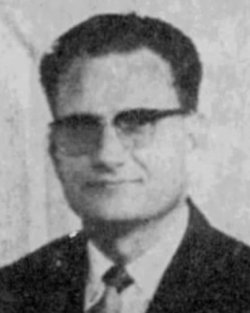
W.E. Best

#71 Sanctification - Position & Condition of the Believer, Part 1

Romans 8:1-13
W.E. Best July, 1 1973 Audio
0 Comments
Remastered Oct/Nov 2024

Sermon Transcript

Auto-generated transcript • May contain errors

100%
But let's read the 13 verses,
and there are two parts, or two divisions, to the verses that
we're reading. I'm going to outline it for you
this morning to the best of my ability, and if you will take
down the outline, it will be a help to you as we progress
in the study of these verses. Let's read the verses first of
all, and then I'll try to outline it in a very simple manner. In verses one through four, we
have the position of the believer, mentioned by the apostle once
again. The eighth chapter has something
in common with the two preceding chapters on the subject of sanctification. Chapter 6 and 7 deal not only
with the position of the believer in the first part of the chapter,
but the condition of life in the latter part. The same thing
is true in the verses that we're going to read this morning. The
position of the believer is stressed in the first four verses, and
then we come to the conflict which the believer has, the conflict
between the flesh and the spirit. Thus, we have the condition of
life described in verses 5 through 13. Now, that's just a simple
outline. We'll go into it more after we
read the verses. There is therefore now no condemnation
to them which are in Christ Jesus, who walk not after the flesh,
but after the Spirit. For the law of the Spirit of
life in Christ Jesus hath made me free from the law of sin and
death. For what the law could not do
in that it was weak through the flesh, God sending his own Son
in the likeness of sinful flesh, and for sin, condemns sin in
the flesh. That the righteousness of the
law might be fulfilled in us who walk not after the flesh,
but after the Spirit. For they that are after the flesh
do mind the things of the flesh, but they that are after the Spirit,
the things of the Spirit. For to be carnally minded is
death, but to be spiritually minded is life and peace. Because
the carnal mind is enmity against God, for it is not subject to
the law of God, neither indeed can be, so then they that are
in the flesh cannot please God. But ye are not in the flesh,
but in the Spirit, if so be that the Spirit of God dwell in you.
Now if any man have not the Spirit of Christ, he is none of his. And if Christ be in you, the
body is dead because of sin, but the Spirit is life because
of righteousness. But if the Spirit of him that
raised up Jesus from the dead dwell in you, he that raised
up Christ from the dead shall also quicken your mortal bodies
by his Spirit that dwelleth in you. Therefore, brethren, we
are debtors not to the flesh to live after the flesh, for
if ye live after the flesh ye shall die. But if ye through
the Spirit do mortify the deeds of the body, ye shall live." There is no greater chapter in
all the Bible as far as doctrine is concerned than Romans 8. There
are some that could be compared with it, but there is not a chapter
in all the Scriptures that is greater in doctrinal content
than this chapter. You've heard it that the chapter
begins with no condemnation and it concludes with no separation,
and that's true. But I'd like for us to even go
beyond that statement that has been made so many times. I'd
like for us to think about Romans 8 this morning as presenting
salvation, which has not only its beginning but also its ending
in eternity. It began with a divine purpose,
and I'm using the word purpose rather than plan. It seems that
we're hearing so much about the plan of God today, and yet in
the definition of a plan, it isn't in harmony with the scriptures
at all. So the chapter begins, we might
say, with a divine purpose. There is a purpose. And then
we have a divine process explained within the context of this chapter,
and it leaves at its completion a divine product. Now listen
to what I've said. We have in this chapter a divine
purpose. It also discusses very vividly
a divine process, but it concludes with a divine product. I do not believe that a person
can go from Romans 8.1 to Romans 8.28 in one leap. Notice what
I said. I do not believe that a person
can go from the first verse to the 28th verse in one leap. You hear it said today by many
that the young Christian ought to read Romans 8. I do not want
to discourage the young Christian from reading Romans chapter 8.
But I must warn every believer in Jesus Christ that there is
an order in the study of Scripture. And unless the order is followed,
the believer will not get out of the Scriptures what he should
as he reads and studies the Word of God. For a person to just
start in right after he is saved, reading Romans 8 will not do
him a great amount of good. There are many things that precede
Romans 8. He must understand, first of
all, the subject of condemnation that is presented in the first
part of Romans. Then he must understand the subject
of justification that we spent a great deal of time studying
here about a year ago. He must understand the subject
of sanctification. And it is sanctification that
the apostle is dealing with not only in chapter 8, but also in
the two preceding chapters, 6 and 7. And all of this must take
place in his study before he can have any appreciation for
the subject to follow, which is the great subject of glorification. So, there is an order that must
be followed. There is an order that one must
follow in his studies in school. Who would think of a person studying
algebra, who had not even studied arithmetic, And that could be
illustrated from many points of view. So the person in Jesus
Christ has a responsibility, but it is the responsibility
of the man of God to direct the people of God in the proper approach
to every great biblical subject. Therefore, if a person is to
receive the most out of any given subject, it must be approached
properly, it must be approached according to the plan that God
has given for his people as so vividly described in the Holy
Scriptures. Now let me kind of outline these
verses, 1 through 13 of Romans chapter 8. In verse 1, Paul speaks
bold. I said in verse 1, he speaks
bold. He speaks boldly because he could
say, there is therefore now no condemnation to them which are
in Christ Jesus. That's bold language. Now there
is a reason for such boldness. And the reason for such boldness
is given in the next verse. I want you to see how beautifully
this passage of Scripture is outlined. In fact, it outlines
itself. So in verse 2, we have the reason. In other words, verse 2 explains
why Paul's speech was so bold and assuring. Look at the first
part of the second verse. For the law of the Spirit of
life in Christ Jesus hath made me free from the law of sin and
death. That explains why Paul could
speak so boldly. He had been made free by the
Lord Jesus Christ. Then when we come to verse 3,
notice once again the first word that is found in this text. In
verse 3, Paul states how the power for Christian living was
provided. how the power for Christian living
was provided. Now look at the verse. For what
the law could not do in that it was weak through the flesh,
God sending his own Son in the likeness of sinful flesh and
for sin condemned sin in the flesh. So we have the power provided
for Christian living in verse 3. Now that brings us to verse
4. In verse 4, what do we have? We have the purpose of Christ's
work on the cross. The purpose, now we have seen
the power for Christian living in verse 3, now the purpose of
Christ's work on the cross is given in the fourth verse when
Paul said that the righteousness, or the ordinance would be a better
translation of the word, that the ordinance of the law might
be fulfilled in us who walk not after the flesh but after the
Spirit. Now we have seen briefly the
thoughts developed in the first four verses. In these first four
verses, the apostle is once again emphasizing the position of the
believer in Jesus Christ. Now, beginning with verse five
through verse 13, this is a controversial passage of scripture. I am not
going to take the time as I ordinarily do to give to you many different
interpretations of this passage. I will only relate one to you
this morning. You will find if you have done
much reading in commentaries on this particular passage, beginning
with verse five through verse 13, that it sets forth in the
minds of a great number of theologians the contrast, notice now what
I'm saying, the contrast between the regenerate and unregenerate
person. But I want to tell you this morning,
I do not accept that. I cannot accept that. I was taught
it, I believed it for a long period of time before I continued
to wrestle with this portion of Scripture. That is taking
it clear out of its context to do that. You say, well now there
are many problems if you go any other route. We'll see about
those problems as we pursue in the study of these verses. Now
let me say this. Verses 5-13 illustrate, demonstrate
the conflict that the Christian has in his Christian life and
it is, that is this particular section, is an expansion, notice
what I'm saying, is an expansion of what? of the last part of
verse 4. Let me prove what I'm saying.
Now, beloved, you don't come to this conclusion by just reading
and say, well, I've read that passage, I've read it a hundred
times in my life. That doesn't mean very much.
There's a difference in reading and studying. Now look at the
last part of verse 4. After the apostle has given the
purpose for the power provided by Jesus Christ that is brought
to the believer, of course in regeneration, he says that the
righteousness or that the ordinance of the law might be fulfilled
in us, not by us, not by us, but in us. It is fulfilled by
the power of the indwelling Holy Spirit. And I'm constrained to
believe that most religionists know nothing about this. Know
nothing about this. Now notice what he says. in the
last phrase of the fourth verse, who walk not after the flesh,
but after the spirit. So verses 5 through 13 is an
expansion of the phrase, who walk not after the flesh, but
after the spirit. Now I'd like to give to you the
outline that I've developed. On verses 5 through 13, we're
going to deal with every phrase of this passage of Scripture.
We're not afraid of any phrase, we're not afraid of any word
within the context of the passage. But we're going to study this
passage under three headings as we expand upon Paul's statement
of the last part of the fourth verse. talking to Christians
who walk not after the flesh but after the Spirit. I do not
believe that it is a contrast, I want to emphasize, a contrast
between the saved and the unsaved. But I believe it gives to you
and me the conflict that the Christian has in his Christian
life. Now, we're going to study this
passage, this division, under these three headings. Number
one, the first, in other words, we'll divide it like this. The
Christian conflict is evidenced, first of all, by two classes,
flesh and spirit. You'll see when I give you this
outline that it will include everything within the context
of verses 5 through 13. Number two, the Christian conflict
is evidenced by two issues, two issues, carnality and spirituality. And number three, the Christian
conflict is evidenced by two results death and life. Now, what did I say? This passage
has three major divisions. So, the Christian conflict is
to be considered, first of all, by the evidence given by two
classes, and the two classes are flesh and spirit. It is evidenced by two issues,
carnality and spirituality, and two issues are results, rather,
and they are death and life. Now, I'm not through yet. Let
me, for the benefit of you who are relatively new in coming
to the services of this church, I don't want you to be left out
in the dark, so to speak. So let's look at the first four
verses for a moment, just a moment or two, before we begin our exposition
of verse 1. Did you know that in the first
four verses which describe the believer's position in Christ,
we have a summary of chapters 5, 6, 7, and 8? Please get this, please do. I said in the first four verses,
we have a summary of chapters 5, 6, 7, and 8. Now I want to prove it to you,
and this ought to be of great interest to you. For instance,
in verse 1, there is therefore now no condemnation to them which
are in Christ Jesus. Let's pause with that phrase.
No condemnation. Now we have the sum, this is
a summary of the entire fifth chapter of the book of Romans. You see, in the fifth chapter
of Romans, and of course if you do not know it well enough to
recall many of its precious truths to your minds now from memory,
then you'll not be able to follow it. That's why it's necessary
to study the scriptures. But in chapter five, what do
we have? Condemnation is removed in Jesus
Christ for the believer. That's the whole substance of
the fifth chapter. The condemnation that is described
in the first part of the book of Romans. Now, in chapter five,
the condemnation is removed. It is removed in Jesus Christ. So verse 1 is a summary of chapter
5. Now look at verse 2. In verse
2, for the law of the Spirit of life and Christ Jesus have
made me free from the law of sin and death. That verse is
a summary of the entire sixth chapter of the book of Romans.
All you have to do is go back and read it. But we don't have
time. We've already discussed it. We have taught it. But verse
2 is a summary of chapter 6. Now look at verse 3. For what the law could not do,
in that it was weak through the flesh, God sending his own Son
in the likeness of sinful flesh, and for sin condemned sin in
the flesh. That is a summary of the seventh
chapter of Romans. Now as we look at verse four,
verse four gives to us a summary of the eighth chapter which we
are now beginning to study. that the righteousness of the
law might be fulfilled in us who walk not after the flesh
but after the spirit. Now let me summarize it for you
again. In verse 1 we have a summary
of chapter 5. To put it now in just a few words,
condemnation is removed in Jesus Christ. Verse 2 is a summary
of chapter 6. Believers are crucified with
Jesus Christ. We are to reckon ourselves to
be dead indeed unto sin, but alive unto God through Jesus
Christ our Lord. That's taught in chapter 6. Verse
3 is a summary of chapter 7. Chapter 7 shows the impossibility
of the law to produce righteousness. But Jesus Christ is the one who
has produced righteousness, And we're in Jesus Christ, therefore
we bring fruit unto righteousness. And verse 4 is a summary of chapter
8, the possibility of Christian holiness. Notice what I'm saying. I'm not talking about sinless
perfection. I'm talking about Christian holiness,
and there is a vast difference between the two. But the possibility
of Christian holiness is in the power of the Holy Spirit, and
the Holy Spirit is emphasized throughout the eighth chapter.
Do you see there is a lot in Romans 8, and all of this is
necessary before we begin our study of Ezra and Nehemiah. The believer has had to learn
that he has neither righteousness, satisfaction, sanctification,
nor power in himself. He has learned by the grace of
God, and as he has been studying Romans 5, 6, and 7, that righteousness,
satisfaction, sanctification, and power are in Jesus Christ
and not in himself. The believer has come to his,
we might say, pain and experience. Now, I do not go as far as some
do in describing this. Scrooge has given a good statement,
but he carries it a little bit further than I would carry it.
And there's a reason why I would not carry it quite as far as
he does. You remember when we began the
study? of the Israelites and their being
brought out of Egyptian bondage. And we're still in that study,
by the way. And we will go back where we
left off in Exodus. We'll take up there and you'll
see the connection. You must see the connection between
the principles of the Old Testament and the principles of the New.
They're the same. That which is foreshadowed in
the Old is found in the New. But you remember, we said there
are three great experiences in the life of the children of Israel.
First of all, leaving Egypt, their wilderness journey number
two, and then entering into the land of Canaan number three.
Now Skrogi has illustrated it like this. And there is a precious
truth involved here. I said a precious truth involved.
But we have to be careful in describing our Canaan experience. Please notice what I'm saying.
We have to be careful in explaining our Canaan experience. The High
Life Movement, by so many religionists today, carries this expression
beyond the teaching of God's Word. And I want to warn you
right now about that. in case you do not already know. Scrooge has said something like
this. He says, the believer has passed out of Egypt and through
the wilderness, and through the wilderness, he has come to his
Canaan experience. I believe if we can really enter
into a study of Romans 8, that we are experimentally in our
Canaan experience. Notice how I stated that. But
he made another statement which I think is very good. He said
he has come, talking about the Canaan experience now, he has
come to know the hindrances, I want to stress that word, hindrances,
as well as the principle of sanctification. You see, we're dealing with sanctification.
There are hindrances to sanctification, but there's also the principle
of sanctification. And we'll be studying what the
hindrances are, at least some of them, some of them. There are hindrances to sanctification. Then he said, Egypt is illustrated
by Lazarus in the grave. Now that's okay. I won't argue
with that. The willingness by Lazarus coming
forth from the grave but bound with grave clothes, that too
is all right. even Canaan, and then he went
on to say, and Canaan by Lazarus, free from grave clothes. Free from grave clothes. Now
that can be carried too far. That can be carried too far.
You see, the Christian never comes to the place in his Christian
experience when there is no conflict between the flesh and the spirit. And many are carrying that last
statement by Scrooge too far. I said too far. Sanctification is first positional
and then it is progressive. It is a tragedy. after all the years that I've
been preaching to some of you, and if you were not in a position
to make the distinction without referring to your notes between
position and condition, I would be disappointed. I would be disappointed. If you can't make the distinction
between standing in Christ and the state of one in Christ, I
would be disappointed, really disappointed. So here
Paul begins once again, as he has done in the two preceding
chapters, to establish first of all one's position before
he starts discussing what? The condition of life. Let me
put it in simple terms for you, some of you who are studying,
just beginning your studies. You must be in Christ and know
that you are in Christ. You must have that assurance
before you can make any progress, really, in the studies that we
are making now. And Paul does that in the very
first verse, as we're going to see this morning. So in Romans
8, 1 through 4, the position is confirmed in Christ. Notice the word therefore. You've
heard it before, but I'll use it again and expand on it and
go beyond some things that I've said about it before. The word
therefore gathers into itself all that precedes. If one knows anything about the
English language, when he uses the word therefore, so the word
therefore gathers within it all that precedes, all the seven
chapters that precede the eighth chapter. Condemnation, justification
in Christ, And of course the beginning of sanctification in
chapter 6. So what's he doing? He's gathering up now into that
one word, all that precedes. Our condemnation of sin, notice
now, has now become no condemnation, no condemnation. Do you know
why? It has become no condemnation,
judicially, legally, by our being in Jesus Christ. Now we've gone
into that subject and we can't do it again this morning. In
fact, we can't even take time to review, as important as a
review would be. But I said our condemnation has
now become no condemnation judicially because we are in Jesus Christ. I'm going to take almost all
the time this morning on verse 1, so get set. I hope that you
take some notes. And don't think that you know
all about this text of Scripture because you don't. I don't. After
35 years of study, I still don't. That's why I said I enter into
it with fear and trembling. Now, let's go a little further. Let's go a little further. So
our condemnation, first of all, has become no condemnation judicially,
legally, because we're in Jesus Christ. Now, let's go beyond
that. Let's take another step. Our
no condemnation is experienced by you and me. So let's take two words. Our
condemnation has become no condemnation, number one, judicially or legally
because we're in Jesus Christ and experimentally because Jesus
Christ lives within us and we know it. Would you look at it? It isn't
enough to just think about no condemnation legally. No condemnation legally is experienced
by every recipient of God's grace. So if you come to me and you
say, I'm in doubt about my salvation, then something's wrong. Something's
wrong. The person who can say, as Paul
did, boldly, But are we going to see the basis of that boldness?
And the basis of his boldness was not something that he framed
in his own mind, but it was something taken, it was a testimony of
Scripture taken from the Word of God. There are a lot of religionists
today who say that they have assurance, when in reality they
have no assurance. no assurance, so no condemnation. Now look
at the word now. There is therefore now, now. This word is important. It does
not speak of time, only it speaks of eternity. Are you following me? So the now is not of time, but
of eternity. Therefore there is no condemnation,
verse 1, no accusation, verse 33 of the same chapter, and no
separation, verses 35 through 39. But let's look at no condemnation
again. We're not through with it. In fact, we haven't even
started. There is therefore now, now,
not only in time, but in eternity. The reason I said not only in
time, but in eternity, because God has justified us. Therefore, no accusation will
ever be brought against us. And there is no separation. So
that, beloved, refers to not only time, but eternity. Can
you rejoice in that? You can if you know Christ. You
can if you have grace. But no condemnation is without
an article. Oh, let's look at that a moment.
You say, now then, you're getting too particular. And that's your
problem, preacher. Well, I'll tell you what, you
can just go on if you want to and dabble around, but I'm going
to weigh it out. No condemnation is without an
article. It is general rather than specific. Oh, does that have a meaning?
I said, does that have a meaning? No article It is general no condemnation, not a specific condemnation only. Someone might say, well now I
believe that Paul is talking about a specific condemnation,
that we are no longer legally condemned. We are now legally free. That's true, but that's only
part of the truth. Will you follow me? No article. That means it's general rather
than specific. But the specific, beloved, heads
the list. The specific heads the list. What I'm going to say now would
mean nothing to you and me if it were not for the specific
no condemnation. Let's illustrate it. The law of Christ, verse 2. The law of the spirit of life
in Jesus Christ hath made me free from the law of sin and
death. Now let's state it a little different. Looking at verse 2 to explain
this no condemnation, what do we have? The law of Jesus Christ
has satisfied the law of justice, and it has cancelled the law
of sin. But that ought to mean something. Let me state it again. The law
of Christ has satisfied the law of justice. and therefore has
cancelled the law of sin. There is therefore no legal condemnation
to me. Why? Because the law of Christ
has satisfied the law of justice and has cancelled the law of
sin. That was the game. Do you understand that? Let's
go a little further. I said that it's general and
not only. In other words, by the very fact
there is no article, it begins with no legal or judicial condemnation,
but it goes beyond that. Number two, there is no cause
of condemnation in the believer. There is no cause of condemnation
in the believer. Now listen to me a moment. I
don't care what you have been in the past. I don't care what
kind of life you have lived. If you are justified in Jesus
Christ, if you are a Christian, there isn't anything in you now
to condemn you. Why? because the law of Christ
satisfied the law of justice and freed you from the law of
sin. I had glitz, but look at this. There's no cause for condemnation
in you because you have been redeemed. Can't you rejoice in that? Now
that's number two. I'm not through yet. Number three,
no person can condemn you. I said no person can condemn
you. I know a lot of people that they
think they're condemning me, they'd like to condemn me, they'd
like to condemn you, but they can't condemn you. You know why? Turn to the 32nd and 33rd verses,
as well as the 34th. Let's begin with verse 31 of
the same chapter. No person can condemn you. What shall we say then to these
things? If God be for us, who can be
against us? He that spared not his own son,
but delivered him up for us all, how shall he not with him also
freely give us all things? Who shall lay anything to the
charge of God's elect? Let the person come. Let him
bring all of his accusations that he wants to against me.
He can't condemn me. I said he can't condemn me. Listen to the next verse. First
of all, the last phrase of verse 34. It is God that justifies. Now verse 34, who is he that
condemneth? No person can condemn the person
that God has pronounced no condemnation. Pronounce him free of condemnation. Here's the reason. Number one,
it is Christ that died. Number two, yea rather that Christ
is risen again. Number three, who is even at
the right hand of God. And number four, who maketh intercession
for us. You're legally free. There's no legal or judicial
condemnation. You can't condemn yourself. No
one else can condemn you. But let me give the fourth. The
glorious gospel of the Lord Jesus Christ can't condemn you. Why? Because you have obeyed
it. 2 Thessalonians 1. Every regenerated person, when
he hears the glorious gospel, in the power of the Holy Spirit,
obeys it, embraces Jesus Christ. And therefore, the gospel king
can do that. Now, when you look at the statement,
there is therefore now no condemnation. There's a lot in that, isn't
there? You're not legally condemned.
You can't condemn yourself. No one else can condemn you.
Nor the source can condemn you. Why, he even carries it so far
as to say in the last part of Romans chapter 8, who shall separate
us from the love of Christ shall tribulation. And he mentions
a number of things. And none of those things can
separate us from the love of God which is in Christ Jesus.
So God's holy law doesn't condemn you? You can't condemn yourself? Some other human being cannot
condemn you? Circumstances can't condemn you? The gospel doesn't condemn you? And look again, no condemnation
now. This is the believer's absolution. This is his forgiveness. I read the story of a painting. I've never seen it, but I have
read about the painting. I don't even know where it, in
what art gallery it is hanging. But the title of the painting
is Waiting for the Verdict. I read where one preacher who
had seen it described it. He said, a great painting, a
great painting. You know, artists many years
ago were great for depicting the expression even on a person's
face. I have the original work of John
Bunyan. and the copy that I have, three
huge volumes, it has a lot of artwork in it. And artwork 200
years ago, it was art, not what you see today that is called
art, a lot of it. You can even see the expression,
even in the eyes of some of the artwork in these books that I
have. Artwork is tremendous. So this
preacher was describing this painting entitled Waiting for
the Verdict. You can imagine the concern,
the interest, the consternation of an individual who sits in
the courtroom and is being judged, and there is the jury and all
of the defense testimony has been given, and the prosecuting
testimony has been given, and then it's turned over to the
jury, and here is the person who has been alleged to be guilty
of various sins. And this is the picture that
this painter painted, waiting for the verdict. He said, oh,
what consternation, what interest on the face of that person, waiting
for the verdict. Now, get the picture. Suppose that the jury comes out
and the jury gives to the judge the statement, we find the accused
not guilty. And then the judge gets up and
he makes the statement, the jury has found the accused not guilty. Oh, the joy on the person's face,
the relief. Wait a minute. No such verdict
could ever be brought in for you and me. We're all guilty.
We're all guilty, doomed, damned, apart from the grace of God. Apart from the grace of God.
But there is therefore now no condemnation to them who are
in Christ Jesus. No condemnation. Now let's go
a little further. What is the difference between
the believer and the unbeliever in regard to legal judgment or
condemnation? What is the difference between
a believer and an unbeliever in regard to judicial condemnation? If you're present this morning
and you are an unbeliever and you die in your sins, now listen,
you're obligated, you're duty-bound under God as a creature of God
to listen. You're duty-bound to listen. And you die in your sins. Judgment is ahead for you. It's future for you. And oh, what a future! It's described
in Revelation 20, 11 through 15. It is described as the great
white throne judgment, before which all the unsaved shall stand,
and they shall be judged to determine the degree of punishment that
they shall receive throughout eternity. The question was, what is the
difference between the unbeliever and the believer in regard to
legal condemnation? To the unbeliever, it is future. Oh, but to the Christian, it
is behind. It is past. It took place 2,000
years ago. Jesus Christ was judged for a
guy. He stood in your place. To the believer it is behind.
There is therefore now no condemnation. Why? It's behind. Legal judgment
is behind. But for the person who dies in
his sins, it's before him. It's before him. Let's even go a little further. When we think about the believer
being in the Lord Jesus Christ and there is no legal condemnation
hanging over the believer's head, here's what makes it possible. He's in Christ. He's in Christ. We're talking about the believer's
position, aren't we? Yes. We want to establish this
before we get to the condition of life. So, the no-condemnation is the
result, first of all, of the believer's position. Position. He's in Christ. Now, he is in
Christ, first of all, representatively at the cross. This is described
by Paul in Romans 5, 12 through 21. He is in Jesus Christ representatively
at the cross. You were not there. You had not
even been born, but you were there representatively. Number two, you are in Jesus
Christ actually Actually, by regeneration. You were there,
first of all, representatively in Christ. And you are in Jesus
Christ, actually, by what? By the result of the Holy Spirit
having performed a work of grace in your heart. That's actual. And I'm not through. And you
are there experimentally by faith. Thus the believer is in Jesus
Christ. Let's look at the phrase again.
There is therefore now no condemnation to them who are in Christ Jesus. In Christ Jesus representatively
at the cross, in Christ Jesus in regeneration, actually in
Jesus Christ by faith experimentally. You know that you're in Christ. The Spirit of God bears witness
with your spirit. Therefore, you know that you
passed from death into life. While there is no spiritual condemnation
to the justified believer, there may be experimental condemnation. You say, I wish you'd leave that
off. Now follow me or you'll get really confused. And yet
you shouldn't. You shouldn't. I'll approach
it from a different point of view in a moment. While there
is no positional condemnation in the believer, there can be
conditional condemnation in the believer. Do you know what I'm
talking about? My whole sermon, almost all of it, last Sunday
morning was right along this line. Right along this line. You should
have heard it. It would help you to better understand
this, but I'll explain. There is no positional condemnation. There never will be any positional
condemnation, but there can and oftentimes is conditional condemnation. I'm going to give you several
scriptures and we'll look at a few. We're going to take time
to look at a few. 1 Corinthians 9.27 is the first. Will you turn with me and read
it with me? We could give them, I think we
could quote them all that we want to give, but I want to take
time this morning and I want you to turn to them in your Bibles
and read them with me. The first one is Romans 9 and
verse 27. This verse of Scripture does
not teach apostasy as some believe. even though the word reprobate
is used. Let's look now at verse 27. Paul
is talking about himself, and he was in a race. He was in a conflict as a Christian. But verse 27 says, I keep under
my body and bring it into subjection, lest that by any means, when
I have preached to others, I myself should be a castaway. A castaway. Now, a lot of people
have made a big to-do over this word because of the Greek word
that is employed in this particular text. Now, adocimos means disapproved,
like docimos means approved. Paul was not worried about being
disapproved from the standpoint of his position in Christ, but
he was vitally concerned, as you and I better be, about the
condition of life. He's talking about his service
here, and he did not want his service to be disapproved of
God. I said, we'll never be legally
condemned. We'll never be positionally condemned,
but there is the possibility and oftentimes is, experienced
by many, conditional condemnation. Well, let's go a little further.
When you turn to the 11th chapter of the same epistle, the 11th
chapter, the subject of the Lord's Supper is dealt with here, and
Paul found it necessary to say some very hard and strong things
to the Corinthians who were not properly discerning the Lord's
Supper. So he says, beginning with verse
28, But let a man examine himself, and so let him eat of that bread,
and drink of that cup. For he that eateth and drinketh
unworthily, and this is an adverb of manner, don't forget it, eateth
and drinketh damnation or judgment, if you'll notice your marginal
reference, to himself, not discerning the Lord's body. Verse 30, for
this cause many are weak and sickly among you, and many sleep. Many sleep. That means you're
dead. The Lord has killed some of you.
In other words, you've been taken out of this life physically,
but being physically dead doesn't mean that you're spiritually
dead in the sense of forever separated from God. Let's go
a little further. Turn with me, if you will, please,
to 2 Timothy. No, it's 1 Timothy 5 and verse
24. 1 Timothy chapter 5 verse 24. Here's another instance. It is possible for the Christian
who will never be positionally condemned to be conditionally
condemned. And 1 Timothy 5, 24 teaches that
very thing. Some men's sins are open beforehand. I don't have time to give you
the context from which this is drawn. I'll let you do that.
But he's talking about Christians. And he's really talking about
elders here, leaders in the church. Some men's sins are open beforehand,
going before to judgment. and some they follow after. Now turn to the last one, 1 John
5.16, and the first epistle of John was written to the children
of God in order that they might know that they were saved, and
yet in the midst of this assuring knowledge we have this statement. 1 John 5.16, If any man see his
brother, sin of sin which is not unto death, he shall ask
and he shall give unto him, notice now, and he shall give unto him
for them that sin not unto death. There is a sin unto death. What kind of death? Physical
death. I do not say that he should pray for it, that he should pray
for it. Union with Jesus Christ is a
mystery. I can't explain it, neither can
you. Union with Jesus Christ. There
is therefore now no condemnation to them which are in Christ Jesus. It's a mystery. But I'd like
for us to think, in closing, about three great mystical unions. And I believe in mentioning these,
it will help us to even have a greater appreciation for the
mystery of our union with Jesus Christ, which we cannot explain. First of all, there is the union
of the three persons of the Godhead. in one substance. That's a mystery. The union of three persons in
one substance. You can't. You can't. You can
explain at it. This is what I said. You can
explain at it, but you'll never be able to completely comprehend
the mystery of that union. It is called a mystery. But our
union with Jesus Christ is also called a mystery. And even though
some explanation can be given and analogies can be used, yet
for the very fact that it's a mystery, it can never be completely comprehended
by you and me. Let's look at the second union. three persons in one nature,
that's the Godhead, two natures in one person, we're talking
about Jesus Christ now, the hypostatic union, the divine nature and
the human nature being united in the one person, the Lord Jesus
Christ, that's a great mystery. It's called that. And then we
come finally to the third, the union of what? persons, the union of persons,
follow me now, where persons and natures are distinct. A union of persons in Jesus Christ
where persons and natures are ever distinct. What a great mystery. You know what Paul calls it?
Turn to Colossians, if you will, please. The epistle to the Colossians,
chapter 1. Let's see what the Apostle Paul
has to say about this great mystery, great mystery. I'd like for us
to read, beginning with about the 21st verse. And you who were sometime alienated
and enemies in your mind by wicked works, yet now hath he reconciled
in the body of his flesh through death to present you holy and
unblameable and unreprovable in his sight. If ye continue
in the faith grounded and settled, and be not moved away from the
hope of the gospel which ye have heard, and which was preached
to every creature which is under heaven, Whereof I, Paul, am made
a minister, who now rejoice in my sufferings for you, and fill
up that which is behind the afflictions of Christ in my flesh, for his
body's sake, which is the church. Whereof I am made a minister
according to the dispensation of God, which is given to me
for you to fulfill the word of God. Even the mystery, here it
is. even the mystery which hath been
hid from ages and from generations, but now is made manifest to his
saints, to whom God would make known what is the riches of the
glory of this mystery among the Gentiles, which is Christ in
you, the hope of glory." Christ in you, the hope of glory. In experience, the believer cannot
leap from Romans 8.1 to Romans 8.28. We know that all things
work together for good to them who love God, to them who are
called according to His purpose. There are groans, groans, groans
between no condemnation, and we know that all things work
together for good to them who love God. to them who are called
according to His purpose. I'll use this as an illustration
in closing. You say there are some things we're to learn? Oh
yes, and we learn them in the realm of sanctification. Someone
has said groans precede good. The groans that are described
in the verses preceding verse 28 precede the good. And then this. Have you ever
heard about the person who had a beautifully trained voice?
This was the illustration the individual used in explaining
this. His elocution and diction were superb, but he lacked a broken heart. He lacked a broken heart. You see, there must be pathos,
there must be feeling. These are the outflow of the
song of the redeemed throughout the ceaseless ages of eternity
when they sing, worthy is the lamb that was slain. Revelation
5, verses 9 through 13. We have tried to establish only
the first thing this morning in verse 1 in our discussion
of the believer's position. Now tonight we'll begin with
verse 2, and verse 2 explains why Paul
was so bold in saying, There is therefore
now no condemnation. to them who are in Christ Jesus.
W.E. Best
About W.E. Best
Wilbern Elias Best (1919-2007) was a preacher and writer of Gospel material. He wrote 25 books and pamphlets comprised of sermons he preached to his congregation. These books were distributed in English and Spanish around the world from 1970 to 2018 at no cost via the W.E. Best Book Missionary Trust.

Comments

0 / 2000 characters
Comments are moderated before appearing.

Be the first to comment!

Joshua

Joshua

Shall we play a game? Ask me about articles, sermons, or theology from our library. I can also help you navigate the site.