Bootstrap
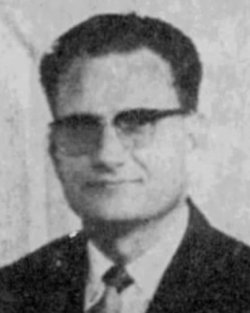
W.E. Best

#73 Sanctification - The Christian Conflict Evidences Two Classes, Issues, & Results

W.E. Best July, 1 1973 Audio
0 Comments
Remastered Oct/Nov 2024

Sermon Transcript

Auto-generated transcript • May contain errors

100%
Romans chapter 8. Let us read
the first 13 verses. Last Sunday morning we stated
that in verses 1 through 4 we have the believer's position,
and in verses 5 through 13 the subject of the believer's condition
of life. We'll study briefly the connecting
link between the believer's position and his condition of life. And then get into verses 5 through
13. There is therefore now no condemnation
to them which are in Christ Jesus, who walk not after the flesh,
but after the Spirit. For the law of the Spirit of
life in Christ Jesus have made me free from the law of sin and
death. For what the law could not do
in that it was weak through the flesh, God sending his own Son
in the likeness of sinful flesh, and for sin condemned sin in
the flesh. Now we have the purpose clause
in the first part of verse 4. Notice what I said, the purpose
clause, that the righteousness of the law might be fulfilled
in us who walk not after the flesh but after the spirit. Now for the expansion of Paul's
statement in the last part of verse 4. For they that are after the flesh
do mind the things of the flesh, but they that are after the spirit
the things of the spirit. For to be carnally minded is
death, but to be spiritually minded is life and peace. Because the carnal mind is enmity
against God, for it is not subject to the law of God, neither indeed
can be, so then they that are in the flesh cannot please God. But ye are not in the flesh,
but in the Spirit, if so be that the Spirit of God dwell in you. Now if any man have not the Spirit
of Christ, he is none of his. For if Christ be in you, the
body is dead because of sin, but the spirit is life because
of righteousness. But if the spirit of him that
raised up Jesus from the dead dwell in you, he that raised
up Christ from the dead shall also quicken your mortal bodies
by his spirit that dwelleth in you. Therefore, brethren, we
are debtors, not to the flesh, to live after the flesh. For if ye live after the flesh,
ye shall die. But if ye through the Spirit
do mortify the deeds of the body, ye shall live. I want to take
just a few minutes this morning by way of introduction to give
to you the basic thoughts of the first phrase of verse four,
that the righteousness or the ordinance of God might be fulfilled
not by us, but in us, who walk not after the flesh, but after
the Spirit. If I were to do justice to the
first phrase of verse four, I would take the entire period of time
that we are studying this morning. But there are a lot of technical
things to be dealt with in that, and I do not want to deal with
those in the service this morning. Therefore, we will deal with
those in a subsequent lesson. There are two principal views
of the section of scripture which we are going to study this The
first view held by a great majority of the Reformers was that this
particular passage of Scripture teaches the subject of justification. And I'll give to you briefly
their argument. One has said, and I quote, if
Romans 8 verse 3, which we studied last Sunday evening, teaches
the sacrificial death of Christ, and the condemnation of sin in
him as the substitute of sinners, then the verse must be understood
of justification and not of sanctification. Christ condemned sin in order
that the demands of the law might be satisfied. It is maintained,
therefore, that this righteousness, or ordinance of the law, was
fulfilled by Jesus Christ and imputed to us. Now, this is the view held by
a great number of Reformers. It is the view known as the view
of justification. Now, there is another view, and
it is the latter to which I subscribe and believe that in the light
of the contact, it is the teaching of this passage of Scripture.
I was not taught this, and a number of years after leaving school,
when I was getting the works of a man in Canada whose ministry
I held in high esteem and still do, Dr. T.T. Shields, he held,
of course, the same view that the Reformers held on this particular
passage of Scripture. I looked back in one of my old
Bibles, some notes that I have more than 25 years, in fact nearly
30 years, and found some notes that I had made in the wide margin
of my Bible many years ago by T.T. Shields on this particular
passage of Scripture. I have also read a great number
of individuals who hold to this particular view. Let us ask ourselves
a question this morning. Is the Apostle Paul going back
now after having finished the subject of justification, and
is he dealing once again with that particular subject, or is
he now, as he began in chapter 6, as well as chapter 7, And
there is a continuation of the same line of thinking in the
first part of the eighth chapter. Is it justification or sanctification? It is sanctification that the
apostle is dealing with. Now here's the other view held
not only by contemporary men, but also by some of the reformers
of the past. Listen to this. This is the second
view which deals now not with justification but with sanctification. Quoting, the law was fulfilled
for us in Christ's career and death, or in his life and death,
in order that it might be fulfilled in us. Now that expression really
did captivate my attention a number of years ago. Listen to it again. The law was fulfilled for us,
that is the demands of the holy law of God, was fulfilled for
us, the law fulfilled for us by whom? By Jesus Christ, not
only in his death, suffering the penalty of the broken law,
but in his life, in his life. So the law was fulfilled for
us in Christ's career and death in order that it might be fulfilled
in us. Though the righteousness of the
law was not fulfilled by us, yet it is fulfilled in us in
sanctification. That, beloved, to me is as clear
as it can be. Now listen to this. Thus, the righteousness demanded
by the law could never be fulfilled in a person under the law, that
is, a human being under the law. Why? Because of the weakness
of the flesh, which we have already seen in the study of verse 3.
But it is fulfilled in the believer by the Spirit under grace. Now let me give that again because
there is the whole truth in just a few words. Thus the righteousness demanded
by the law could never be fulfilled in a person under the law. Why? Because of the weakness
of the flesh, the third verse. But he goes on to say, yet it
is fulfilled in us. in sanctification. It is fulfilled
in us by the Holy Spirit who resides in us as believers, and
therefore the righteousness of the ordinance of God is fulfilled
in us, not by us, but by the Holy Spirit in us. And that,
you see, in the realm not of justification but sanctification. Let me go a little further. How
can the Christian state be construed as the fulfillment of the law?
We're taking the word state, which is synonymous with the
word condition. How can the Christian condition
of life or how can his state be construed as the fulfillment
of the law? Here's the answer. Quoting again,
the believer is delivered from the dominion of sin. We study
this in the sixth chapter of Romans. Therefore, he is not
under law, but under grace. That's Romans 6.14. The Christian
has been put to death to the law through the body of Christ. That's Romans 7, which we've
already studied, verses 4 and 6. Now, in chapter 8, And we
are studying at this time the 8th chapter of Romans. Paul speaks
of what? He speaks of the impotence of
the law in verse 3. Does this mean the holy is limited
by that which is unholy? Does this mean the just is limited
by the unjust? Does this mean that the good
is limited by the evil? The law is said to be holy, just,
and good, Romans 7, 12. Does this mean that the sovereign
God has limited himself so that things he desires cannot come
to pass? The weakness is not in God's
desire, but in man. man can do nothing for himself. God has removed believers from
the jurisdiction of the law of sin and death, even though that
law still works in our members. We are now under the jurisdiction
of the law of the spirit of life in Christ Jesus, Romans 8. The law of God has the fullest
relative norm in the state of grace. Grace does not make void
the law of God, but rather establishes the law. A complete building
does not destroy the blueprint, but establishes it. Sanctification
follows justification. Sanctification is not perfectionism,
but perseverance. A tremendous statement. Sanctification
is not perfectionism, as we have already exposed some of the views
held by many, but what is it? Perseverance. Now this should
really wrap it up. The flesh. is our unregenerate, follow me
now, and unregenerable fallen nature. The flesh is our unregenerate
and unregenerable fallen nature. For the believer it was put to
death on the cross, judicially pronounced death. But the death
was not actual. It was judicial. We've already
studied this. So this should bring a lot of
things to your minds. Now, the believer is under no
obligation to the flesh. This is what we have in the last
two verses, which we will be studying this morning, verses
12 and 13. He is not under any obligation
to the flesh. He is privileged to walk according
to the Spirit. Why? Because of the presence
and power of the Holy Spirit within. Now we want to spend
our entire time this morning discussing verses 5 through 13. under the three things that I
mentioned last week, three different headings. I'll give them to you
again. We will have some introductory
things to say before we start developing this outline. But
we're going to study now verses 5 through 13 under three separate
headings. First of all, as we discussed
the subject of the Christian conflict, The conflict is evidenced
first of all by two classes, flesh and spirit. Number two,
the conflict of the believer is to be viewed and evidenced
by two issues, carnality and spirituality. And finally, the
conflict is to be evidenced by two results, life and death. Now for some introductory things. Bishop Mole, in his work on the
book of Romans, has made this significant statement concerning
the word flesh. I'm sure that you observed as
we were reading verses 5 through that there are many references
to the word flesh. As we saw last Sunday evening
in the study of the third verse, in fact, we divided the text
under three major divisions and under each division we used the
word flesh. We'll not go back and review
that because we do not have time to do it. But Bishop Mole makes
this statement. concerning the word flesh. I
quote, flesh signifies either the state of man unregenerate,
either the state of man unregenerate or the evil principle or the
principle of sin that dwells in the believer. We all know
after having studied chapters 6 and 7 that that is a true statement. The word flesh can refer and
often times does refer to what? Man in his unregenerate state. But the word flesh is used in
the sense of the unregenerable nature within the Christian. And Paul uses the expression
in the seventh chapter and verse 23, sin that dwelleth in me. The statement, the sin that dwelleth
in me, is simply the flesh that remain in him. All of us know
by experience who have passed from death into life. Even though
we can boldly say, there is therefore now no condemnation to us because
we are in Jesus Christ, yet we all know that there is a nature
within us. There is a principle of sin dwelling
within us, and that principle will continue to live within
us. Therefore, the conflict in the
believer is the conflict between the flesh and the spirit, and
that is what we're studying this morning in verses 5 through 13. And there is a great companion
passage of scripture that should be used in this connection, and
that passage is Galatians 5, 16 and 17. Don't forget that Paul, in that
particular passage, was addressing the born-again believers who
resided at Galatia. And they were having a tremendous
conflict. And the conflict was between
the flesh and the spirit. There was no conflict in my life
between the flesh and the spirit until I was saved by the grace
of God. when the grace of God came into my heart and life,
when the Holy Spirit of God, the third person of the Godhead,
took up his abode in my life, as soon as he took up his abode
in my life, the conflict began and the conflict continues. The
conflict will continue until we stand in the presence of the
Lord Jesus Christ. flesh, whether it refers to the
unregenerate man, is never subject to the law of God. Do you know
why Romans 8-7 has been such a controversial text of scripture? It took me a long time to see
this. In fact, it took me a great number
of years. It took me more than 20 years,
probably 25 years to see. why verse 7 of Romans 8 has been
such a controversial text. Look at it with me again as we
explain something by way of introduction into our study of these verses.
Paul said, Because the carnal mind is enmity against God, for
it is not subject to the law of God, neither indeed can be. The flesh, beloved, whether it
refers to an unregenerate person, is not subject to the law of
God. You know as well as I do that
an unregenerate person is not subject to the law of God. You
know it from experience. You've gone through this. We
studied it back in the first part of the seventh chapter of
Romans, when Paul gave his own personal experience as he explained
this particular point. Even before he was regenerated,
he was not subject. As an unregenerate person, he
was not subject to the law of God, but even after he was regenerated,
After the Spirit of God came in and applied the redemption
which had been accomplished on the cross by Jesus Christ to
his heart, the unregenerable nature that resided in Paul It
was not subject to the law of God. So let me say to you this
morning, even as a Christian, the old unregenerable nature
in you is no more subject to the holy law of God than an unregenerate
person is subject to the law of God. You say, what hope is there for
me? Well, that's what we're discussing. That's what we're discussing.
You see, the law of the spirit of life in Christ Jesus has made us free from the law
of sin and death. And even though the old nature
in us, indwelling sin within us, which is not subject to the
law of God, is overcome, follow me now, is overcome by the person
of the Holy Spirit who lives within us and enables us to walk
according to the Spirit, even though there are many manifestations
of the flesh in our lives while we do walk in this life. We all know this by experience
and the word of God explains it. You can see why this is a
very important passage of scripture which we are studying. The Christian
life is a conflict. There is no growing out of the
flesh into the spirit. There is no such thing, beloved,
as you growing, and I'm talking to you who are Christians, there
is no such thing as you growing completely out of the flesh and
into the spirit. The flesh is going to remain
in you as long as you're in this life, and as long as you and
I are in this life, we're going to have a conflict. But you see,
we have an advantage, and oh, what an advantage. We have an
advantage over the unsaved person. He does not have the Holy Spirit
dwelling within him. Therefore, he cannot overcome
these things. He can never please God. Only
the person who has passed from death into life, only the individual
who has been regenerated by the Spirit of God can please the
Lord. And even then we do not please
him perfectly, because there is no such thing as perfectionism
in this life. Don't expect an unsaved person
to understand you. He can't. He can't. The unsaved person will look
at some defect in your life or some slip you make, and then
what will he do? He will spend all this time pointing
to that particular thing, and he will magnify that. That's
characteristic of him. He doesn't understand. But the
Christian, you see, understands the fellow Christian, and he
knows even though he makes mistakes, He knows that if he is a true
believer, he will not continue to wallow in his condition, but
by the grace of God he will arise from that condition. The believer
in Jesus Christ does not wallow in sin. He sins, but he doesn't
wallow in it. He doesn't habitually live in
it. This ought to be a great help
even to unsaved people. I think this can be understood
mentally, Bonsai people. It can't be understood spiritually,
because it has to be experienced. But there can be some understanding,
mentally, of what I'm talking about. And therefore, every person
is obligated to listen to the testimony of Holy Writ. God has condemned sin in the
flesh. Now we studied this in the third
verse, and the Holy Spirit is in accord with that condemnation. Notice what I said. I said God
has condemned sin in the flesh, and the Holy Spirit is in accord
with that condemnation. The believer therefore is not
to give place to that which God has condemned. in giving the
Christian the Holy Spirit, God enables the believer to walk
apart from the movements of the flesh. If it were not for the
indwelling Holy Spirit, you and I would walk and do everything
that pleases the flesh. And, beloved, sometimes we're
too hard and we don't understand really as well as we ought to
understand. the position and we're forgetful of how we live
before the grace of God came into our hearts and lives. The Holy Spirit has said, if
you will notice, to dwell in us. To dwell in us. Look at the ninth verse. You're
not in the flesh. You're no longer in the realm
of the flesh. The regenerated person has been
taken out of the realm of the flesh, and he is now living in
the realm of the Holy Spirit. So he says, ye are not in the
flesh, but ye are not in the flesh, but in the Spirit. If so be that the Spirit of God
dwell in you. Let's look for a moment at the
word dwell. What a precious word it is. The word dwell does not
mean that the Holy Spirit is a guest that has been invited
by the believer to come in for a while. That isn't what it means.
You see, if I were to come to your home, I would simply be
a guest there. That's all I would be. I don't
belong there. I'm just a guest while I'm in
your home. Now the Holy Spirit in the heart
of the believer is not a mere guest that has been invited by
the believer who comes in and goes out. But the Holy Spirit
dwells, which means he is not our guest, but he is the host. He's the host. Now that makes
a difference. Will you think about that for
a moment? When I visit in your home, then you're the host. You're the host of that home.
I'm the guest. Now the Holy Spirit in the life
of the believer is not a guest. He's the host. He lives there. He dwells there. He'll never
move out. So by the Holy Spirit within,
who is the host, not the guest, He enables us to walk according
to the Spirit and not live according to the flesh. This is what Paul's
talking about. This does away with antinomianism. There's no place for it. Now
you can see why the apostle says what he does in the first part
of the fourth verse, that the ordinance of God might be fulfilled
in us, not by us, but in us by the host through us. That's sanctification, and this
is what we're studying. Will you think for a moment about
the host who indwells our hearts and lives as believers? The third
person of the Godhead, I never have gotten around to preach
that sermon I prepared several weeks ago on the condescension
of the Godhead. What a tremendous subject it
is. I'll preach it one day, but let me refer to it again. In
the 113th division of the Psalms, references made by the psalmist
concerning God the Father There was condescension on the
part of God the Father to even think about creating the heavens
and the earth. There was condescension on the
part of God the Father to even contemplate, to even purpose,
to plan to create man in his image and after his likeness.
You see, whatever God creates has to be inferior to the Creator. Therefore, by the very fact that
God said, let us make man in our image and after our likeness,
that is a condescension. Everywhere we look as we behold
nature with all of its beauties, it was a condescension on the
part of God. to even create the things that
we look upon and behold the beauty of them. But let's not stop there. There was condescension on the
part of God the Son who was sent by God the Father and he came
into this world assuming human nature. human nature, and we discussed
that last week in the third verse. God sent forth his Son in the
likeness of sinful flesh, not in sinful flesh, not even in
the likeness of flesh, but in the likeness of sinful flesh.
That was condescension for the Lord Jesus Christ to take up
for himself human flesh, our human nature, and walk among
the sons of men for 33 and a half years. As men looked at him,
they didn't recognize him. There wasn't anything attractive
about him, physically speaking, according to the 53rd chapter
of Isaiah's prophecy. His visage was so marred that
no one desired him. when he was hanging on the cross, even his own disciples went away
from him, followed him afar off, for condescension, but I'm not
through. For the Holy Spirit, beloved,
to condescend, to come into your old, depraved, wicked, evil,
deceitful heart, and to come in the mind of brave, deceitful,
wicked heart and impart the righteousness provided by Jesus Christ to apply
redemption that had been purchased by Jesus Christ in his condescension
to my heart. That's condescension. And then
to condescend to live, to become a host. dwelling in me. That's condescension. That ought
to be enough to make us all fall on our faces before the righteous
and holy God. The Holy Spirit dwells, dwells
within. Now let's take up the three parts
of our lesson. The Christian conflict The Christian conflict is evidenced,
first of all, by two classes. Flesh, now let's explain the
word flesh, the unregenerable fallen nature that resides in
you and in me. And the Holy Spirit, the third
person of the Godhead, who dwells within us, who lives within us,
who is the host within us, not a mere guest. So we have what? The flesh versus the spirit. Michael Angelo once made this
significant statement as some men gathered around and watched
him as he took his chisel and was chiseling away on a piece
of marble. He was going to make a statue.
And as he was chiseling away, some big hunks came off and just
would fly in this direction and fly in that direction. And Michael
Angelo turned to the men who were watching him as he was working
upon that statue, and this is what he said, while the marble
wastes That is, while the chips fall to the floor, the image
grows. You ask, what application does
that have to the Christian life? It has a real application. You
see, the Holy Spirit is living within. He's living within. You and I are subjected to conflicts. to temptations, persecutions,
trials, and all of these things that happen in our lives, they
are for a purpose. By a particular trial, a great
chip of that old stone is knocked off of one corner. And with all
of these chips flying, What is God doing to you and to me through
the process, get me now, through the process of sanctification? I'm not talking about justification.
That's already settled. There is therefore now no condemnation. I'll never come into condemnation,
but I'm talking about the growth and development of Christian
character. Let me illustrate it by a text
of Scripture within the context. Will you look at Romans 8 and verse 29? For whom he did
foreknow, he also did predestinate to be conformed to the image
of his Son. that he might be the firstborn
among many brethren. Notice this statement. Whom he
did foreknow, he also did predestinate to be conformed to the image
of his son. As Michelangelo took that old
rough chisel and the chips were falling to the floor, A statue
was in the process of being made. As God deals with you and me
providentially, as we are tried, as we encounter persecution,
as we encounter opposition, all of these things are for a purpose,
that these old chips might fall off, that the dross might be
removed. Why? Because he has predetermined
that we should be conformed to the image of his Son. And the more and more we're tried,
the more and more we reflect the image of Jesus Christ if
the Holy Spirit resides in us, if we have passed from death
into life. You see, unsaved people are tried
too. They encounter opposition, but
it doesn't work for them as it works for you and me. In looking at the word predestiny,
this last week I received a phone call from a young preacher, been
preaching four years. And I saw immediately that we
had absolutely nothing in common, but he felt that it was his responsibility
to straighten me out doctrinally. And after 35 or 40 minutes, I
finally said, young man, I said, I enjoy talking to people, but
when I talk to somebody, I want to talk to somebody who's studied
longer than I have and knows more than I know." I said, do
you get the point? Because he was not concerned
in the least. He was a real smart aleck. And
so he felt that it was his responsibility to straighten me out. Why? He
said, I don't believe in predestination. I said, you don't believe in
the Bible? Oh, yes, I do. It just came to the place where
there was no need of going any further. I didn't want to hang
up on him because I knew if I did that then he'd say, well, now
he doesn't have the right spirit. Well, I'll tell you something.
You can never have the right spirit to a person like that.
It doesn't make a difference what you say, the tone by which
it is said, or anything else. God has predetermined that you
and I will be conformed to the image of his Son. So in this
conflict which we're experiencing in this life, it is in order
that the image of Jesus Christ might be reflected more and more
in our hearts and lives. You know as well as I do that
when you have gone through some tremendous trial, it has brought
you closer to the Lord as a Christian, and as a result of it, some things
have been removed. In other words, you have been
able to see some things that you could not see before. I could
spend the rest of the time giving biblical illustrations of that,
but let me give just one. Do you remember David, a man
after God's own heart. That's what the Bible says. David,
a man after God's own heart, walking along one day, there
was a person, his archenemy, by the name of Shimei. Shimei
cursed him. Oh, thou bloody man, thou bloody
man. That was for a purpose. You know
what? That took a big old chip off
of David that needed to be removed. He was able to see something
even by the cursing of his bitter foe. When his bitter foe said
to him, thou bloody man, thou bloody man. So that was a trial for him.
That was a real experience for him. But it was for a purpose.
Now think of this. The Apostle Paul did not need
a thorn in the flesh during the time that he was caught up to
the third heaven. Are you following me? During
the time that he was having this experience with the Lord, and
it is described in the 12th chapter and the first four verses of
2 Corinthians. when he was caught up into the
third heaven and heard words that were not lawful for him
to utter. During that time he needed no
thorn in the flesh. When did Paul need the thorn
in the flesh? It was after he returned to the
earth and he was given a thorn in the flesh. He prayed to God
for its removal. In fact, on three different occasions
he prayed in that manner. But God did not remove the thorn.
Do you know what God said? The Lord said to Paul, when you're
weak, then you're strong. And my grace is sufficient for
you. Paul, you need that thorn in
the flesh. Beloved, you and I need the thorns
that we have in the flesh. We need them here. They are for
a purpose. pretty good lesson for us, isn't
it? I would say it's a good lesson for us. And that brings us to
this great text of Scripture, a statement made by John the
Baptist. Will you consider what all he
encountered in his preaching of the gospel? The opposition
that he faced? In fact, it ended up in having
his head severed from his body. What did John the Baptist say?
Here is what it says in John 3 and verse 30. Christ must increase,
but I must decrease. There it is. There it is. The Lord Jesus must increase. You and I as believers must decrease. through our trials, through our
persecutions, through our afflictions, Jesus Christ increases and we
decrease. So the word flesh is used not
in a literal but in a moral sense in this particular portion of
Scripture. It is the believer's unregenerable fallen nature. We know that it was judicially
judged. It was judicially crucified at
Calvary. But beloved, it was not actually
crucified there. And you know it, and I know it. What about these people today
who seem to think? And notice I said, who seem to
think? that they have grown completely
out of the realm of the flesh, and now they're living completely
in the realm of the Spirit. The Scriptures give us many different
ways by which the flesh is manifested in the Christian life. It is manifested by deeds, and
Paul warns against this in Colossians 3, 9. It is manifested by a person
putting too much confidence in his flesh. That's found, beloved,
in Philippians 3, 4. Listen to these. I'm trying to
be helpful. We have to look at all the scriptures.
We can't isolate some of the text. There is a religion that
is the religion of the flesh. Too much of religion today is
religion of the flesh and not of the spirit. It is simply a manifestation
of the flesh rather than a manifestation of the spirit. Where is that found? Galatians
3 and John 6, 63. There is such a thing as a worship
that has too much of the flesh in it. There is such a thing
as the service of the Christian manifesting too much of the flesh.
You ask where is this found? Why it is found in Philippians
3 and Galatians 3. There is such a thing as methods
of the flesh being used for the advancement of the Lord's work. Let me cite one biblical example
of this. It hasn't been too long ago that
we discussed this. Therefore, it should be fresh
on your mind. Do you remember the first time that the Israelites
needed water, and God said to Moses to strike the rock? He did, and water came out to
supply their need. That's the 17th chapter of Exodus.
But when you turn over to the book of Numbers, later on, later
on in the life of the nation of Israel as they were going
through the wilderness, they needed water once again. And
God spoke to Moses and said, What, strike the rock? No, he
didn't say that. He said, speak to the rock. Instead of Moses speaking to
the rock, what did he do? He struck the rock. And he said,
to really do a good job of this, I'll... He did. And water came out. You say, now wait a minute, preacher.
He disobeyed God. He surely did. He was told to
speak. Did you know it was because of
that disobedient act that kept him out of the land of Canaan?
But I'll tell you what was accomplished. Water was provided, but the wrong
method was used for it. It is never right to do wrong
that one might have the opportunity of doing right. One of the young
men in our church was telling me recently, He had a conversation
with his father, and his father was talking about religion, and
his father came to the conclusion and even told his son, after
the son had raised the question, it's all right to tell a person
a lie if it makes him feel good. Why don't you think about that
for a moment? Is it right to tell a person
a lie if it makes the person feel good? That's the devil's logic. It
is never right to tell a person a lie in order to make him feel
good. That's the logic of politicians
today. That's the logic of the devil.
That's the logic of the economist. And I could go on and on and
really make an application of that. And did you know when we
make a study of Ezra, Nehemiah and Esther, we're going to get
into all these things that I'm referring to now. All of them. Moses used the wrong method. It is true that they got water,
but Moses sinned and he paid for his sin. What I'm saying is the flesh
manifested itself in many different ways. Now let me close by saying
this, That is close, this particular point. It doesn't make any difference
how spiritual your service is, how spiritual I want my service
for the Lord to be, how spiritual I want my sermon to be, how spiritual
I want my Christian life to be. Even in every sermon, in everything
I do, it doesn't make any difference how spiritual it might be. There
is mixed with it too much of the flesh. I admit it and so
do you. No Christian can get away from
it. Why? It is because of the unregenerable
principle of sin that resides in the belief. So when we listen to a person
and we say, oh, how spiritual, and there may be a great amount
of spirituality in it, but oh, but beloved, if we could see
the heart As the Lord sees the heart, we would see that there
is flesh mixed with even the best of one's service for the
Lord. You won't deny that. If you do,
you're deceived or the biggest hypocrite that ever walked because
every child of God knows by experience that there is a real conflict
within. I want to illustrate this in
another way. Do you remember in the 14th chapter
of the Gospel according to Matthew, when Peter saw the Lord Jesus
Christ walking on the water and he said, bid me to come to thee?
Now Peter was a Christian, a born again person. at that time. Bid me come to thee. This is
the last part of the 14th chapter of Matthew. You can read it for
yourself, but I'm sure you remember the story well enough to get
the point. What happened? Peter started
out walking toward the Lord Jesus, but the wind was strong, the
Bible says, boisterous or it was strong. And when Peter saw
how strong the wind was blowing and the waves were large, he
looked at the waves and when he looked at the strong wind
and what it was doing to the water, he began to sink. Now why did he begin to sink?
And he cried out, save me lest I perish. And the Lord saved
him. Do you know what was wrong? As
long as Peter had his eyes on Jesus Christ, he was walking
according to the Spirit. I'm trying to use a simple biblical
example of the principle that I'm setting forth. As long as
he was looking at Christ, he was walking according to the
Spirit. But when he looked at the wind,
when he looked at circumstances, he was walking according to the
flesh. And when he looked at the wind
and what it was doing to the waves, he began to sing. Why? He was following the leadership
of the flesh, and he began to sing. Beloved, as long as you
and I are looking at Jesus Christ, we're making him preeminent.
We're walking according to the Spirit. But when we begin to
look at circumstances, when we begin to look at ourselves, when
we begin to look at others, look out! The work will suffer. If I spend all my time looking
at you, the work of preaching will suffer. If you spend all
your time looking at me, your service for the Lord will suffer.
We must keep our eyes on Christ. Do you know of a better example
than that from the scriptures? I don't. I don't. As Peter walked, looking
at Jesus Christ, he didn't sink. He was walking
according to the Spirit. But when he looked at circumstances,
he began to sink. Why? Because he was following
the leadership of the flesh. Let's look at the second heading.
The conflict is evidenced not only by the conflict between
the flesh and the spirit, but by carnality and spirituality. Really, we've already discussed
it. We've already discussed the carnality by the last example
we used when we told you about Peter. He was walking according
to the flesh, and that was carnality. But there are many biblical examples
of carnality. When Abraham, the man of faith,
went down into Egypt, that was a manifestation of carnality. When David looked at Bathsheba
and desired her, that was a manifestation of carnality. When Peter stood before the fire,
warming himself by the enemy's fire and denied that he was a
follower of the Lord Jesus Christ, that's a manifestation of carnality. When he cursed and denied that
he knew Jesus Christ, that's a manifestation of carnality.
When the Corinthians walked as men, 1 Corinthians 3.3, that's
a manifestation of carnality. Many believe that Romans 8, 7,
as we've already stated at the beginning of our study this morning,
describes only an unregenerate person. Above it, I'm here to
tell you that the text, even though it does describe an unsaved
person, but it also describes, and in the light of the context,
What is Paul talking about? He is talking about the all unregenerable
nature in the believer which is not subject to the law of
God. It never will be. It will always
rebel. But oh how thankful you and I
as Christians are for the Holy Spirit, the host within us who
enables us to overcome, to overcome. So the carnal mind in the believer
is no different whatsoever than the mind of the unsaved person. Let's look at some things in
connection with this. As to the nature of the carnal mind, it
is against God. It is against God. Would you
accept that? I said, as to the nature of the
carnal mind, we're looking at the text, now we're breaking
it up. It is against God. So the unregenerable part of
the believer is an aversion instead of an attraction. So the law
of God, it's an aversion to it, it's not an attraction to it. Now, I'm not to be too disturbed
sometime when I first give something to you as a Christian and you're
not familiar with it, and you say, wait a minute now, and you
kind of blow up. Wait a minute. As we continue
to expound the scriptures and you see the truth of it, you'll
love it because it's the truth of God. At first, if you let
the old carnal mind have its way, you'll blow your neck. You'll say, oh, no, no. But before
it's over with, as the truth is expounded, as a believer you'll
love the truth. Psalm 119. Well, let's go a little
further into the seventh verse in describing carnality. As to
the futility of the carnal mind, we have seen its nature. It is
against God. As to the futility of the carnal
mind, what about it? It cannot please God. Notice
now, I said it cannot please God. And then as to the effect of
the carnal mind, it is death. Now don't be disturbed with the
word death here. I'm hoping, beloved, that you
are familiar enough with the scriptures to know that the word
death is used many ways in the scriptures. Death can refer to
physical death, the death of the body. Death can refer to
spiritual death, that which every person is guilty of, and it comes
into this world dead in trespasses and in sin. So it is used in
the sense of being spiritually dead or separated from God. It
is used in the sense of physical death, that is, the body being
separated from the soul. It is also used in the sense of
influence. Are you following me? Influence.
And this is what Paul is talking about. Influence. Ephesians 5
and verse 14. Paul, in addressing the Ephesian
saints, said to them, Awake thou that sleepest. You're sleeping
Christians. Awake thou that sleepest and
arise from what? The dead. Your influence is dead. Your influence is not counting
for the Lord. And Christ shall give you what?
Not life. They already had life. He'll
give you life. life. But the word death is also
used in the sense of physical death, physical death, the physical
death of the Christian because of unconfessed and unrepentant
of sin. He has failed to repent of his
sin. He hasn't confessed his sin,
1 John 5, 16. So what do you think the Apostle
Paul is talking about in the light of this context? He talks
about death, and we'll notice that in the last part. Now turn
to the other side. We have seen what carnality is.
As to its nature, it's against God. As to its futility, it cannot
please God. As to its effect, death, either
influence or physical death because of unconfessed and unrepentant
of sin. But the spiritual mind, what
about the spiritual mind? The conflict now between carnality
and spirituality. The spiritual mind assumes the
responsibility of mortification. That's why Paul said in verse
12, therefore brethren we are debtors not to the flesh. You
and I are not debtors to our flesh. Wait a minute. Wait a minute. Let me explain
that. I am a debtor to my flesh in this sense. I am to provide
for the needs of my body, for the needs of my body, but I am
not a debtor to the flesh, the unregenerable nature that resides
in the body. See what I'm talking about? I
am to make provision for the body. flesh in that sense. But when it comes to the unregenerable
nature that lives, resides in this body, I don't owe it a thing. I'm to mortify the deeds. That's why Paul says, therefore,
brethren, we are debtors not to the flesh, to live after the
flesh. You're not a debtor to live after
the desires of your flesh. You're to mortify it. You're
to crucify it. Now let's turn it around. We
saw the nature, the futility, and the effect of carnality. Let us look at the nature, the
effectiveness, and the effect of spirituality. As to the nature
of the spiritual mind, it hungers and thirsts for righteousness.
That's the nature of the spiritual mind. It hungers, it thirsts
for righteousness. you can rest assured that the
unregenerable nature within you will never thirst and hunger
for righteousness. Now, as to the effectiveness
of the spiritual mind, it yields to the indwelling Holy Spirit
within. Notice what I said, it yields
to the indwelling Holy Spirit. Yes, there's a cooperation on
the part of the believer, with the Holy Spirit in progressive
sanctification. There is, however, no cooperation
with an unsaved person with the Holy Spirit in his regeneration. But there is cooperation on the
part of the believer when it comes to progressive sanctification. As to the effect of the spiritual
mind, it overcomes the strength and power of the flesh. In other
words, it experiences life and peace now. Now, here, let us
not forget that as to our position, we're judicially free from all
condemnation. But beloved, as to the present,
the Holy Spirit who lives within us has made a most wonderful
life available for us as we yield to him. And that is present. As to the future, there is something
guaranteed for you and to me. So as to the past, as to the
present, and as to the future, all's involved. when we think
about the Christian life. So the effect of the spiritual
mind is overcoming the power of sin and enjoying peace now. Then let's look at the last two
in closing. Death versus life. The carnal nature cannot kill
the justified soul. Thank God for that. I said the
carnal nature cannot kill the justified soul. The unregenerable
nature within you and me cannot kill the justified soul. But it can kill our influence,
and oftentimes does kill our influence. So death is used,
as we've already shown, in several ways. Now let's see what he says
in verse 13. For if ye live after the flesh,
ye shall die. If a person lives after the flesh,
he's going to die from the standpoint of his influence, and he may
die physically unless he repents of his sins, unless confession
is made. But on the other hand, but if
ye through the Spirit do mortify the deeds of the body, ye shall
live. I close with this statement.
Ye shall live. Beloved, are we living this morning
or are we just existing? You know there are some people
who are perfectly satisfied just as long as they exist in life. And I'm talking now about just
a physical existence. Just as long as they can exist. You can tell that that's all
the ambition that some people have. Just so I can just exist,
just so I get by. A person like that doesn't have
much initiative, does he? He doesn't have much ambition.
You and I do not appreciate an individual who says, All I want
is just existence. Wait a minute. Let's turn that
around. Let's look at that from the spiritual
point of view. How many Christians are there
who are satisfied with just mere existence of life? This last week I tried to explain
to a couple the joy that one gets from the study of the scriptures. In fact, the question was asked
me, well, what do you do when you get through study? You just
study and study. He couldn't understand why a
person would spend so much time studying. Can't you just take
up the Bible and just read it? Oh, yes, a person can do that.
I said, you see, I see things in the scriptures and the scriptures
have things for me. I said, when I study the scripture,
it's just like I were a miner, and I go into a mine. And in
the different parts of the mine, here is one part of the mine,
there's gold over here, and if I keep digging there, I'll hit
a vein of gold. And over here, here's another
vein, and if I dig in this one, there's a vein of silver. And
then if I dig over here, I'm just more than likely to find
a big bunch of diamonds. I suggest something just fascinating.
I don't think you ever understood. You see, the Lord Jesus did not
come to just merely give us life. I am come that you might have
life. I have life. Life. But I am come that you might
have life more abundantly. Are we as Christians just existing? Are we just existing? Or are
we really living?
W.E. Best
About W.E. Best
Wilbern Elias Best (1919-2007) was a preacher and writer of Gospel material. He wrote 25 books and pamphlets comprised of sermons he preached to his congregation. These books were distributed in English and Spanish around the world from 1970 to 2018 at no cost via the W.E. Best Book Missionary Trust.

Comments

0 / 2000 characters
Comments are moderated before appearing.

Be the first to comment!

Joshua

Joshua

Shall we play a game? Ask me about articles, sermons, or theology from our library. I can also help you navigate the site.