Bootstrap
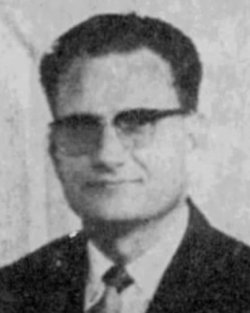
W.E. Best

#75 The Disctinction Between the Sons of Bondage & the Sons of Adoption

Romans 8:14-16
W.E. Best July, 1 1973 Audio
0 Comments
Remastered Oct/Nov 2024
Begins with some 'scrathiness' but resolves into the audio.

Sermon Transcript

Auto-generated transcript • May contain errors

100%
the eighth chapter of the Book
of Romans. For the benefit of some of you tonight who are with
us and have not heard the messages last Lord's Day and this morning,
we began a brief series of messages last Sunday showing the distinction
between subjective and objective life. It is in the power of subjective
life that one is able, by faith, to lay hold on the objective
message that has been revealed to us through the gospel of the
Lord Jesus. I have also stated that there
are two strands of scripture, both of which speak of life. but we must get them in the proper
order or we end up with heretical views. And that is exactly what
is transpiring in the religious world today. I have cited several
illustrations that all of us are familiar with to prove the
point. The outline that I gave last
Sunday, and we've already discussed the first two points, We began
discussing the third this morning, and we'll continue tonight and
also next Lord's Day, the Lord willing, of course. The first
point, the Bible shows that there is
subjective life, and subjective life is the work of the sovereign
spirit in the impartation of the principle of life without
any means whatsoever. You can compare it really with
the subject of regeneration. We're not going to quote the
verses that we did last Sunday because we don't have time to
review all of that information. Secondly, the Bible also teaches
objective life, and the objective life, of course, is the result
of subjective life. That is the order. Now we're
in the discussion of the distinction between subjective and objective
aspects of life. And in the discussion of the
distinction between the two, we have chosen Romans chapter
8, verses 14 through 19, but we are reading and considering
verses 14 through 25. In just a moment we'll read that
section of scripture once again. But in the distinction between
subjective and objective aspects of life, we have shown there
is a difference between the statement, children of God, and the statement,
sons of God. Now let us read, beginning with
verse 14, Romans chapter 8. for as many as are led by the
Spirit of God, they are the sons of God." Notice it doesn't say
children of God in verse 14, but rather sons of God. The Greek word there is phoioi
and not techna, not the word for children, but the word for
sons. Now verse 14, for ye have not
received the Spirit of bondage again to fear, but ye have received
the spirit of adoption, whereby we cry, Abba, Father." Verse 16, the spirit himself,
rather than itself, beareth witness with our spirit that we are,
notice now, children, we are the children of God. The word
used here is the word tecna and not huioi, the children of God. Verse 17, And if children, then
heirs, heirs of God, and joint heirs with Christ, if so be that
we suffer with him, that we may be also glorified together. For I reckon that the sufferings
of this present time are not worthy to be compared with the
glory which shall be revealed in us. For the earnest expectation
of the creature waiteth for the manifestation of the sons, not
the children of God, but the sons of God. For the creature
was made subject to vanity, not willingly. but by reason of him
who hath subjected the same in hope, because the creature itself
also shall be delivered from the bondage of corruption into
the glorious liberty of the children of God. For we know that the
whole creation groaneth and travaileth in pain together unto now, And
not only they, but ourselves also, which have the firstfruits
of the Spirit, even we ourselves, grown within ourselves, waiting
for the adoption to wit, the redemption of our body. For we
are saved by hope, but hope that is seen is not hope. For what
a man seeth, why doth he yet hope for? But if we hope for
that and we see not, then do we with patience wait for it? I appreciate very much the interest
that is being manifested on the part of the members of the church
in the study of this subject. It is a vital subject. When one
understands this subject, he is capable of listening to preachers,
listening to radio broadcasts, or listening to the testimony
of some individual and knowing where he stands in the sight
of God. There is not enough study along
this line, and because of that, We have today many people who
give lip service even to the doctrines of grace who don't
even know what the doctrines of grace really are. I'm going
to have to review just briefly. Well, I'm going to put it like
this. Instead of reviewing what we had to say on verse 14 this
morning, I would rather amplify what I had to say in the study
of verse 14, and then we will have to review briefly the different
views that have been presented on the 15th verse. But tonight
we're going to confine all of our thinking in this study to
the distinction between what? The spirit of bondage of gain
to fear and to the spirit of adoption. First of all, let us
look at verse 14. Verse 14, from the very first
word in the verse, is simply explaining what the apostle had
said in verse 13. You're going to notice in the
study of these verses how that there is progress, how there
is development, and therefore it is very difficult to outline. In fact, it doesn't really need
to be outlined. Each verse that follows simply
explains what precedes. And as we go forward in the development
of these verses, you will see that there is progress, and as
we develop, we'll see how that we go from not so much assurance
as to our relationship to the Lord, but that assurance continues
to increase in great intensity as a result of the understanding
of the verses that follow. Now verse 14. For as many as
are led by the Spirit of God, they are the sons of God. That is an explanation of the
last part of verse 13. We're not discussing, as I stated
this morning, the first 13 verses of this chapter at the present
time, because that's a different subject. But looking at verse
14, for as many as are led by the Spirit of God, and this refers
to the Holy Spirit being our guide in life. I stated this
morning that there are many persons today who talk about being led
by the Spirit, but they're not led by the Spirit of God. They're
led by some other spirit. How can one know when he is led
by the Spirit of God? We also stated that every heretic
under the sun Every cult talks about being led by the Spirit.
Even backslidden church members will talk about being led by
the Spirit. Now, how can one tell when a
person is led by the Spirit or not? Well, instead of reviewing
what we said this morning, I'm going to amplify what we said
this morning. And I have to review something
in order to amplify. You remember I made the statement
this morning that religion is made up of three things. Number
one, an interest in sports. Number two, an interest in politics. And number three, an interest
in entertainment. And then I proved that to you
this morning by some examples that I gave from sermon, one
in particular that I heard on the radio early this morning
as I was awakened by our radio. Now, let me amplify that. Being
led by the Spirit. How does one know when he's led
by the Spirit? It is when What he does is in
harmony with the written revelation of the word of God. The Holy
Spirit never leads one to do anything contrary to what is
recorded in the scriptures. Now Paul shows in verse 14, for
as many as are led by the Spirit, by the Spirit, they are the sons
of God. And this is an amplification
and an explanation of what he has just said in the last part
of the 13th verse, that all who crucify the deeds of the body
shall live. And now he's showing who it is
that does that. And the persons who do that are
individuals who are being led by the Spirit of God. But that
isn't all he has to say. Now getting to verse 15. Verse
15 explains verse 14. And so verse 15 reads like this. For ye have not received the
spirit of bondage again to fear, but ye have received the spirit
of adoption, whereby we cry, Abba, Father. I told you this
morning, and many of you have gotten the American Standard
Version, and there are several copies on the table, and you
can get a copy if you have not gotten one, and there's a tremendous
price on it, $9.57, saving you 40%. And I think that the American
Standard Version is the best translation even though I continue
to use the King James Version and will do so because for 38
years plus I've studied this, I've memorized scripture from
it, and that's the reason I continue to use it. But the American Standard
Version is a tremendous translation. Listen to it as I read from it
now on the 15th verse. For you have not received a spirit
of slavery leading to fear again. But you have received a spirit
of adoption as sons, by which we cry, Abba, Father." Now, I'm
going to have to review what I said this morning in introducing
our subject for tonight. There are three principal views
of this verse of Scripture by grace men. I'm not going to consider
what others believe on this text. But there are three different
views of this verse by grace men. I've consulted them through
the years, and they are this. Number one, there are those who
believe that the word spirit, that is used twice in this verse,
refers not to the spirit of God, but to the disposition of the
individual. Secondly, there are those who
believe that the word spirit refers to the Holy Spirit in
both places, therefore it does not refer to human disposition. And number three, there are those
who believe that the first time the word spirit is used, the
spirit of bondage again to fear, it refers to the disposition
of one's mind, but the last time the word is used in this text,
it refers to the Holy Spirit of God. What do you believe? Now, I stated this morning, and
I would like for us to think about this again. I said, after
all these years of study, I realize more and more, and as I quoted
that cliche that all of us are familiar with, fools rush in where angels fear
to tread. I'm afraid that all of us are
guilty when we take up the word of God is that we rush in where
angels fear to tread. So I would warn you, when you
study the Bible, to be very careful, to analyze it, and seek to rightly
divide the precious word of truth. Now all three of these views
that I have given to you cannot be right. They cannot be right. And let me add, beloved, I'm
not going to be foolish enough to tell you that I'm always 100%
right on everything I say because I'm not. But I'll tell you something
else, no one else is. No one else is. One thing I appreciate
about this church, it doesn't bother me in the least when I
see that I've been wrong on something as a result of additional study,
to admit that I've been wrong. And I notice this about the people
in this church, those of you that have been around a long
time, and I know you better. It doesn't bother you to admit
that you have been wrong. But I'm leery of any individual,
whether he's been here a long time or a short time, who gives
the impression that whatever he says is right, and he knows
all there is to know about it. I don't have any time for that
kind of a person when I really know who he is. just don't have
any time to waste with it, as plain as I can be. But beloved,
the person who has the right spirit, he admits that he has
not always been right, and there is room for growth and development
in his own life, and so he's going to recognize that the man
of God must have the same right. He too, as he studies, he grows
in grace and knowledge of the Lord Jesus Christ. Now I'm not
going to take the time tonight to give to you about 20 different
source materials that I've read on this, but I've given to you
the three basic views that are held. Now what do you believe?
Do you believe the word spirit as it is used twice in verse
15? Do you believe it refers to the Holy Spirit or to the
human disposition, or is it used as the human disposition in one
place and the Holy Spirit in the next place? Now you've got
to make up your mind about it. Thus you see that sometimes you
might think that you know something about the Word of God, but then
when you really begin to study you find out pretty soon you
don't know near as much as you think you know. So all of us
need to be careful. We must never rush in where angels
fear to tread when it comes to sacred things. Now, let's boil
it down to our subject tonight. Our subject tonight is the distinction
between the fear of bondage, or the spirit of bondage again
to fear, and the spirit of adoption. Well, preacher, what do you believe?
I believe the word spirit refers to the Holy Spirit in both places. Now, I've declared myself. But
I must add, I have not always believed that. Now let me show
you another conflict between grace men on this text of Scripture. And the second is this. You see,
I want you to be students of the word. I don't want you to
run around here half cocked as you seek to witness for the Lord.
I'll tell you something. There are a lot of people who
witness for churches would be better off if they didn't say
anything. They're not in the witness. They're not in the witness. So
when we witness, we don't want to go out half cocked. We want
to have some understanding as to what we believe and why we
believe what we believe. Now for many years, as a result
of what I was taught, this is what I believed about the spirit
of bondage again to fear. I believed what I had been taught.
I believed most of the things that I read as my source materials. It sounded feasible to me, and
so I accepted it without any question. And that is this, that
the spirit of bondage again to fear refers to the pre-Christian
state. And after a person has received
the spirit of adoption, he will never be brought back into that
state of life. Now, beloved, there is an element
of truth in that. But I do not believe that is
what the text teaches, as I'm going to demonstrate tonight.
And I think I can prove it from the scriptures. Yet if you believe
different from what I'm going to give, that's between you and
the Lord, and it is not a matter to cause great division. In fact,
I wouldn't put up with it anyway. Now let's begin to investigate
the text. Do you have it clear in mind
as to what we're looking at? Let's look at the verse again.
He has just stated, for what? Those of you who are being led
by God's Spirit, this is proof that you are the sons of God. Now he says in verse 15, for
ye have not received the Spirit of bondage again to fear. but ye have received the spirit
of adoption, whereby we cry, Abba, Father." This verse, like
every other text, as I stated this morning, has caused great
debate and will continue to cause great debate. I gave to you the
definition of adoption which I want to state again because
we're not studying adoption tonight, that's another subject, and I
will deal with that in one particular lesson. But adoption is an act
by which one already, a child of God by birth through the Spirit,
is placed forward as an adult son in relation to God. That's the simple explanation
of adoption. Now when you read the works of
the Puritans, and I've been a student of the Puritans for more than
30 years, you'll find that there are differences of opinion as
to the meaning of adoption. And I gave to you some examples
of that this morning, which I will not quote again tonight. But
what do you believe now? What do you think you believe?
Let me ask you this question. What do you think you believe
about this text? Or have you even given any real deep consideration
as to the meaning of the word spirit in this text? What does
it mean? Have you given any consideration
at all as to the meaning of the spirit of bondage again to fear
and the spirit of adoption? Now, for our study. First of all, what does it mean? when the text states, we have
not received the spirit of bondage again to fear. There are many great men, I could
call the role, who say this refers to the pre-Christian And that sounds feasible in the
light of the text and context. I said that sounds feasible.
But let me raise a question tonight. Does an unsaved person have any
fear of God? Are you following me? Does an unsaved person have any
fear of God? Now, I do not want us to go outside
the context of Romans to make a study of this subject. We won't
have to. When you go back with me to the third chapter of Romans,
we're going to take time to do this. This is studying as well
as preaching. Romans chapter 3, verse 18. Let's take it step by step as
to the meaning of the phrase, the spirit of adoption again
to fear. The apostle gives 14 horrible
indictments against every unsaved person, the last of which is
mentioned in verse 18. There is no fear of God before
their eyes. Now, when he mentions these fourteen
indictments against the unsaved, he starts out, if you will In
verse 9, what then? Are we better than they? Knowing
the whys, for we have before proved both Jews and Gentiles
that they're all under sin. As it is written, there is none
righteous, no, not one. None that understandeth. None that seeketh after God.
Now what about all these people today who think as unsaved people
they understand spiritual things? Somebody's lying and it is not
the word of God. You remember what I said this
morning, quoting John Trapp, whose commentary I've had for
many years? He said, truth to an unsaved person is like warm
clothes to a dead carcass. That's well stated. He doesn't
understand. Divine truth doesn't mean anything
whatsoever to a person who is dead in trespasses and sins.
Furthermore, he does not seek God, and yet, when you hear these
evangelists today who tell about their campaigns, wherever they're
going, wherever they go, people are just seeking after God, seeking
after God. They're liars. I said they're liars. You mean
those evangelists are liars? Yes, they're liars. I'm saying
people are not seeking after God. It takes subjective life
for a person to seek after God. And he will never seek after
God until there has been a work of grace wrought in his heart.
And then coming to the last indictment, there is no fear of God before
their eyes. Now, if this fear of bondage
refers to the pre-Christian state, how does that harmonize with
Romans 3.18? I'll let you answer. Romans 3.18
is talking about the pre-Christian state. And he says there is no
fear of God before their eyes. And yet our text says in Romans
8 and verse 15, we have not received the spirit of bondage again to
fear. So who is it that has been brought
to the place of having fear? It is the person in whose heart
there has been a work of grace. Now I'm going to give you some
more scripture in a moment, but I'd like to use a personal illustration. I'd like for you to think about
your own experience of grace. I'd like for you to go back because
I said before we get through studying this passage of scripture,
you will know exactly where you stand in the sight of God, whether
you're really saved or you just think you're saved. See, I don't
take anything for granted. with myself or with anyone else.
We're dealing with the divine truth. Now, I can remember reading
John Bunyan years ago, and it confused me. Have any of you
ever been confused by reading John Bunyan's works in Pilgrim's
Progress? It sounded like that he was wavering,
that he didn't really understand. He was talking about having such
a fear of God that sometimes he wished that he were something
other than a human being. Do you remember this? I understand
that. I can remember, I didn't know
how to explain it, but a fear came into my own heart and life. I can remember the fear was such
immediately after Wally and I were married, which will be 39 years,
24th of this next month. Immediately after we were married,
there was such a fear that one night someone came to witness
to me. Oh no. Even though I had not
been going to church, I went a few times with her before we
married. There was such a fear, what did I do? I walked about
12 blocks, after looking up the name of the preacher that I had
heard about, I called him up and asked him if I could talk
with him. He said, yes, come on over, as
any preacher would do. I went over and I told him how
I felt. And he kept questioning me and
found out as a result of my testimony that when I was 14 years of age
I was persuaded to join the church. This morning after we left I
turned the radio on and the end of a certain program was on And
I won't have to call it a name because I don't want to, you
know, do that too much. I don't want to give him too
much publicity because you're getting too much as it is. And
he was talking to a family that had come down to join the church. And he told about a little seven-year-old
boy. And another one, a little girl,
members of this family, and they wanted to be baptized and join
the church. And so the preacher said, all
this beautiful family. Now can't you just see those
folk leaving and talking about their beautiful pastor? See that's
a salesmanship. All this beautiful family and
these beautiful children. See, there is an institution
that believes in infant baptism. I'm not saying tonight that God
does not regenerate young people. I know one young girl in this
church family that I believe God did regenerate her at a very
early age. But that doesn't happen often.
That doesn't happen often. You say, well, who are you to
judge? Well, we can tell by what? by the attitude, the testimony,
and the fruit. That's how we can tell. How do
you think the Apostle Paul could tell? Who was elected of God
when he wrote to the church at Thessalonica? Well, to prove
to you how he could tell, turn to 1 Thessalonians chapter 1,
and I'll show you what the Bible has to say, and not what someone
imagines. We used this verse last Sunday,
but I want to use it again because it establishes something at this
point. 1 Thessalonians chapter 1, and we'll read beginning with
verse 4. Paul said, knowing brethren,
now how did Paul know it? Knowing brethren, beloved, your
election of God. Now here's how he knew it. For our gospel came not to you
in word only. You see, the gospel will go to
an individual in whose heart there has not been a work of
grace in word only. But wherever there has been a
work of grace, wherever there is subjective life, When the
gospel is presented to that person, it is a result of this subjective
life, the Holy Spirit within, that the individual is able to
believe and embrace the objective message of Jesus Christ, his
person and work. Listen to it. Our gospel came
not unto you in word only, but also in power, and I'm going
to read it as it is in the original, in power and in the Holy Ghost
and much assurance. That's how Paul knew it. Now
go back in your own experience. Beloved, if there was not in
your own experience the fear of bondage, then you did not
experience what is absolutely necessary before the spirit of
adoption enables one to cry Abraham. Are you listening? All right,
so let's look now at Romans 3.18. No fear of God before their eyes. No fear of God before their eyes. So these people can just walk
down and, I believe, I believe it's easy beliefism. It's not
of the spirit of God. I know what took place in my
own heart and life, and beloved, it lasted for several days. Why? Because I had no one to direct
me. I had no one to help me. I had
no one to give to me the scriptures. My wife and I visited several
churches without any help whatsoever. Like the preacher with whom I
talked that night when I went to his home. As soon as I told
him that I had joined the church at the age of 14, he said, aww. He said, why? He said, what's
wrong with you is you're backslidden. He said, you need to join the
church, you need to move your membership, and you need to get
active. Well, I'll tell you what he did.
He talked me into joining the church the following Sunday,
moving my membership. And the very following week,
what did he do? He gave me a Sunday school class
of intermediate boys. I stood before that class one
Sunday and knew that I knew absolutely nothing and something was wrong,
but no one helped me. Do you know why? The preacher
didn't know how to help me. Do you know why he didn't know how
to help me? He was an Arminian. He didn't know the doctrines
of grace. Now I want to ask you a question
before we give some other proof from the context, beloved. What
happened to you in your experience? Was there any real remorse? Now
you might raise the question. Now preacher, I realize that
sometimes if a person has lived in sin and he's really been living
as it were in the very depths of sin and there has been a great
change in his life, I can understand that. But what about an individual
that has been brought up in a Christian home? He's been protected from
immorality. It doesn't make any difference.
Doesn't make a bit of difference. There is still a fear because
the Spirit of God will teach through the instrumentality of
his word to one in whose heart there's been a work of grace
that he's depraved. That he's a sinner. That he's
been disobedient to God. and there is a sense of fear.
Now the degree of that fear may be different in different persons,
but there is a fear, and if there has been no fear, then you better
check with yourself. Now I'd like you to do something
else. I'd like you to go to the seventh chapter of the book of
Romans. Let's keep this within context. What are we talking
about? We're talking about the spirit
of bondage again to fear. Now look with me at Romans 7,
if you will please, beginning with verse 7. What shall we say then? Is the
law sin? God forbid. Nay, I have not known
sin, but by the law. For I have not known lust, except
the law hath said, Thou shalt not covet." Before we read the
next verse, I don't know what you might believe. I know what
most of the people in this church believe, and I think all of you. You believe that the seventh
chapter of Romans describes a saved person, a regenerated person.
You know, there are some who do not believe that. But I can't
accept that, Tommy Rock. The seventh chapter of the book
of Romans describes a regenerated person. Now listen to Paul, verse
8. But sin taking occasion by the
commandment wrought in me all manner of concupiscence, for
without the law sin was dead. Now before we read verse 9, let
me inject a passage of scripture. Do you remember the third chapter
of Philippians, when Paul describes his pre-Christian state as a
Pharisee of the Pharisees? How that all the righteousness
which he had attained, it had been attained, A-T-T-I-N-E-D,
by his works of the law. And then coming down to verse
8, and especially verse 9 of Philippians chapter 3, he said,
but I counted all those things but done are as refuse that I
might be found in Christ, not having my own righteousness,
that which he had wrought out by his own works in obeying or
trying to obey the deeds of the law. But he said, I count all
those things but lost, but done, that I might be found in Christ,
not having my own righteousness, but that which is imputed to
me, but the righteousness of Christ. And that comes by imputation. Now, up to that time, Paul thought
he understood the law. I said he thought he understood
the law. Now look at verse 9, and you'll
see why I injected that thought. Now Paul says, for I was alive
without the law once. That is, there was a time when
I thought I was alive. Sin was lying dormant in my life. But when the commandment came,
I thought I understood the law. And he did from a legalistic
point of view. But when the Spirit of God came
into his life and wrote a work of grace in him, then the Spirit
of God took the law of God and convicted Paul of his sin. He saw the law in a different
perspective then. He saw the law in a spiritual
perspective, whereas he had seen the law as a Pharisee of the
Pharisees. Let me illustrate that further.
Persons who are unsaved read the word of God, and all they
see is the historical message. That's all they see, just the
historical message. But whenever the grace of God
comes into a person's life, even that which he has seen historically,
after the grace of God comes in, then he sees the spirituality
of that message, and it has an entirely different meaning to
him then than it did before. Right or wrong? You see what
I'm talking about? Now look at verse 9. Paul said,
for I was alive without the law once, but when the commandment
came, sin revived. You know what we need today?
Is a revival of sin in this manner. Not a revival of sin as the world
thinks about a revival of sin, but a revival of sin in this
manner. When the commandment came, sin revived. And I died. And when he died,
he had a fear. That was torment! Beloved, I
know what he's talking about. I've gone through it. Have you?
Have you? Let's read on. He says in verse
10, And the commandment which was ordained to life I found
to be unto death. For sin, taking occasion by the
commandment, deceived me, and by it slew me. Now how does the Holy Spirit
work fear in the heart of a person? The Holy Spirit, when he enters
in by the work of regeneration, then takes the very law of God
and works fear in the heart of that person. This relative of mine that I've
been telling you about called me again last week. And while
she was talking to me, she told me about her husband. Said, my
husband would just like these women that I'm trying to help.
Said he had the attitude that no one was going to keep him
from drinking his beer. She said, number of years ago
we were on vacation and coming back and we were coming through
Louisiana. And he wanted to stop at a beer joint. And so said,
we stopped. And while we were in the beer
joint, She said, someone came by our car and left a little
red-covered Gospel of John on the seat. And she said, when
we started to drive off, I was driving and he was sitting, and
he picked up that little Gospel of John and he started reading.
And so when he got over to the third chapter, he said, Ethel,
we've got to start going to church. And she said, he started. And
she said then he hadn't been in church now for 40 some years. Now get this, he was a pretty
old man at that time. So what did he do when he got
interested? He went up to East Texas where
he was raised and consulted the church cleric of a little Baptist
church and wouldn't know if he could get a letter. Isn't this
amazing? And she didn't know it different
when I was talking to her and she's a big Sunday school teacher. Now in
the First Baptist Church of Homburg, she's retired, hired or something. But anyway, she said, does he
think he can get his letter? I said, Ethel, he didn't need
a letter. I said, after 40 some years,
it wasn't a letter he needed. He needed something else other
than a letter. And she laughed and said, I agree
with you. And then I tried to help her. And you know, when
I tried to help her, it just went over. She didn't know what
I was talking about. Didn't even know what I was talking
about. How pathetic. Fear. So what does the Holy Spirit
use in bringing fear to a person? Well, I'll tell you what the
Holy Spirit used, even as a child. Though I was not brought up in
a Sunday school and church, I had heard about the Ten Commandments,
and I knew the Bible said, Covet thou shall not steal thou shall
not lie And you know what happened? I began to think about all the
lies that I told And the things that I had stolen you mean you
were a thief Yes, and every one of you has been a thief you've
stolen something Even if it's nothing more than going to the
cookie jar and taking a cookie You've stolen something. So those
things begin to come to my mind and so the holy spirit used one
little truth I had learned as a child and wrought fear in my
heart. Isn't this what Paul's talking
about? Look at it, beloved. Look at it. Let's read on. Wherefore he says the law is
holy and the commandment holy and just and good. He soon saw
nothing wrong with the law. Nothing wrong with the law. Verse
13. Was that which is good made death
unto me? God forbid. But sin, that it
might appear sin, working death in me, by that which is good,
that sin by the commandment might become exceeding sinful. Now will you listen to the next
verse? This is the testimony of a regenerated man. And what
does he say? For we know that the law is spiritual,
but I am carnal, soul under sin. What does that mean? Bloody connected
with the spirit of the fear of bondage. Paul experienced that. I experienced that. You experience
that if you're saved. Everyone has experienced that.
And if you have not experienced that, that it's questionable
as to whether you're saved or not. Very questionable. Because that precedes the spirit
of adoption. The spirit of adoption. Now I
want to give you a classic biblical example of what I'm talking about.
Are you with me? Will you turn with me please
to the 19th chapter of the gospel according to Matthew? Matthew, Mark, and Luke all record
what I'm going to give to you. You remember the story of the
rich young man called a ruler in one of the gospels who came
to the Lord Jesus and asked what he would do in order to inherit
eternal life? And what did Jesus Christ do?
I'd like you to begin reading with verse 16. I don't have time
to develop this too far. I'm using it as an illustration
tonight. But I assure you that what we're
discussing is important. And if you'll follow me, you'll
know exactly where you stand. And before we get through, if
you don't have as much assurance as you ought to have tonight,
and there's a difference between faith and assurance. There's
a difference between salvation and the assurance thereof. I
believe some people are saved and don't have any assurance
of it. And I'll prove that later on. But when we get through,
you'll have more assurance than you have now. I have more assurance
than when I began to study this. Are you following me? Now, verse
16, Matthew 19. And behold, one came and said
unto him, Good master, what good thing shall I do that I may have
eternal life? And he said unto him, why callest
thou me good? There is none good but one, that
is God. But if thou will enter into life,
keep the commandments. Now why did Jesus Christ tell
him to keep the commandments? He wanted to see if his question
was really sincere. He knew, but he wanted him to
know it. Nothing took Jesus Christ by surprise, but he wanted this
man to know it. There are a lot of people today
who talk about salvation, talk about Christ, but they're not
sincere. Not at all. So he poured it into
the law. Can this be denied? And finally
he said, go and sell all you have. I'll make it short. Go
and sell all that you have. Give the poor and come and follow
me. And what does the record say? This man went away sorrowful. Now why, I'm asking you a question,
why did he go away sorrowful? Beloved, if there had been a
work of grace wrought in his heart, he would not have gone
away, but there would have been fear, because the Spirit of God
would have taken the law of God and would have brought fear,
which would have resulted in the fear of bondage. But there
was not. He had fear, all right, but you
know what it was? The fear that he wouldn't have
all that wealth that he had, and he didn't want a part with
it. See what I'm talking about? Quite a difference, isn't it?
Isn't it clear? Now go back to our passage. Let's
go on down to the 24th verse. We all know about the conflict
Paul had between the inward man, between the flesh and the spirit
that is described beginning with verse 15 through 24. Well, let's
drop down now to verse 24. And Paul is speaking as a believer,
as a Christian, as a regenerated man. What does it say in verse
24? Oh, wretched man that I am! who shall deliver me from the
body of this death. He was afraid. That was a holy
fear. And beloved, not the reverential
fear that I'm going to talk about in a moment. There is a difference
between the reverential fear that one has of God and this
fear of bondage. Do you know the difference? Whenever
a person has reverential fear, he can come with this reverential
fear boldly under the throne of grace, Hebrews 4.16. And the
reverential fear is spoken of in Hebrews 12.48. But there's
a difference. And the person who comes to the
Lord with reverential fear doesn't cry, deliver me from the body
of this death. He doesn't cry in that manner.
It isn't that kind of fear. That kind of fear. Now I want
to go into this even more. But beloved, I want to give enough
tonight on it for you to think about. And we'll just keep amplifying
this great truth until it's well established in our minds. Now
let's go a little further. Is there any doubt about what
this teaches? None in my mind. Now Paul says, every one of you
received, and notice the word received, and this is interesting. We have some young men in our
church who studied Greek and they will remember this. I can
remember very well when I first started memorizing the Greek
vocabulary. Therefore I see, remember this,
Lombardo, I take. Well now, the word receive that
you see in this text which we're studying tonight is one of the
Greek, is the word that is used to translate one of the many
Greek words that means receive. And I don't have time to discuss
them all. But if you think this is not a big subject, beloved,
I challenge you to take Vine's word studies and look at the
word receive and all the different Greek words. It'll give you something
to hold you for several weeks to come. But now I want to simplify
it for now. Notice, you have received, talking
to these Christians, you have received this fear. But now,
since you have received, follow me now, since you have received
the spirit of adoption, whereby you cry, I'm a father, you'll
never receive that fear again. Why? Why? Because, beloved, you
now have a higher degree of confidence and assurance in Jesus Christ. Oh, how great this truth is.
Whenever the person, having been led by the Spirit of God, decry
Adolf's promise, he has reached, what, a higher degree of confidence
and assurance, and he will never be brought back to that place
where he will receive again the spirit of fear, the spirit of
bondage, that bondage. Now let's look at the word receive
for a moment. This is an interesting word, as I said, lombano. Did you know this word is used
in both the active and in the passive sense? I don't have time
to develop it, I'm just simply relating to you the truth. Now,
what was received by the Roman Christians, what had been received
by Paul, was not something he took He was not active, but he was
passive. He received it as a gift of God,
and I challenge anybody to refute that in the study of this work,
how precious this is. Now let me illustrate something.
You know, I said this morning that I'm opposed to the Kessick
movement, the higher life movement. You hear people say today, well,
now sanctification is like justification. It is take it by faith. You take
it. You take it. The love of the
word received as it is used here is not in the active voice. Not at all. It's in the passive.
It's in the passive. Receive! So the person in whose
heart the Holy Spirit of God, in that subjective aspect of
life that has brought about this pure bondage. After that experience,
then he is given, notice what I said, he is given the spirit
of adoption. And I'm going to illustrate that
in a simple manner. He's given the spirit of adoption
whereby he cries, You notice the word that is used,
Abba, that's an Aramaic word, and it is connected with Father.
And this simply means, in the study of this verse, that both
Jews and Gentiles that have been regenerated with the Spirit of
God cry Father. And it's spontaneous. I said
it is spontaneous. Let me illustrate something.
I have known of people who try to convince themselves that they
love someone. Beloved, whenever a person tries
to convince himself that he loves someone, he doesn't love them.
Are you with me? Love, if it is genuine, is spontaneous. If I had to try to convince myself
that I love one either, I don't love her. I don't love her. If you have to try to convince
yourself that you love someone, you don't love him or her. Because
love is spontaneous. You can't explain it. I said
you can't explain it. We now know that. With us it
was almost love at first sight. And I'm not opposed to love at
first sight. I tell you what, I was in love with Jesus Christ
the first time I saw him by faith. I was loved at first sight by
faith. The light that was used by God
and God commanded the light to shine out of darkness, a shine
in my heart bringing to me the light of the knowledge of the
glory of God and the face of Jesus Christ. Now, if you have to convince
yourself that you're a Christian, you're not a Christian. you have to try to convince yourself.
If you're a Christian, you're a Christian, and what you do
is spontaneous. Now notice this. Here is spontaneity. We have received not the spirit
of bondage again to fear, but now we've received the spirit
of adoption whereby we cry out of honor. way to tell whether you're a
Christian or not. I look back in my own experience,
and I can remember before receiving any instruction, after regenerated
by the Spirit of God, and there was a time when there was that
Spirit field of bondage. And then came what? The Spirit
of adoption. It was received And then I began
to address God as my father. God! Did you know an hour has
already gone plus? An hour plus? Time surely does
fly. We try to limit our messages
and lessons to an hour. So I'm not going to go too far
in this. Because I want to continue to expand on this subject. Why? Because of its importance. I
want to show the difference between the spirit of the fear of bondage
reverential fear, and even the fear which a backslider has.
They're not the same. They're not the same. Think of this for a moment before
we close. The time came in the life of
Job when he said in Job 23, I think it is, Oh, that I knew where
I might find him. What had happened? The Lord had
forsaken him or departed from him. Not the essential presence,
but what? The presence of his blessing
upon him. We knew it. All of us in our
Christian lives have come to the place where we have lost
the sense of his blessing. He never leaves his own, essentially.
I'll never leave thee, nor forsake thee. And all of us have felt
like jewels. All that I knew where I might
find you. You tell me tonight, I've never
felt that way. You tell somebody else, don't
tell me. But I might tell you what you are. And you're a big
fat lie. Just a big fat lie. every child of God. I don't care
how spiritual he might think he's been. He's come to the place
where he's felt like, oh, that I knew where I might find him. Notice now Job did not say, who
shall deliver me? He just said, oh, that I knew
where I might find him. Beloved, do you see the greatness
of this subject? Well, I want to just project
something, so I'd like to just go a little further in this tonight. In the 16th verse, of course,
there's another witness and another higher degree of assurance and
confidence. And then as a result of that
higher degree of assurance and confidence, we come to the 17th
verse. And here the apostle says, we're
heirs of God and joint heirs with Christ, and this points
to the kingdom. This points to the future. We're
saved in hope. Then I'll give a little note
of warning here. Do you know how to distinguish
between Christianity and the cults? It's very simple. A cultist
will tell you if you do what he asks you to do, you're a wolf
for nothing anymore. He'll make you rich, He'll give
you peace of mind. Now you know what I'm talking
about all these calls on the radio and television? The Bible doesn't
make any such promise. Look at verse 17. I said the
Bible doesn't make any such promise. And if children then heirs, heirs
of God and join heirs with Christ, if so be that we suffer with
him. He hasn't promised you. He hasn't
promised me. that when we accept Christ, when
we have the blessing of God, we'll never want anything else,
we'll never have any more problems? Only heretics make such promises. Only heretics make such promises.
The Bible says, you're going to suffer. This is the time of
suffering. Why is this the time of suffering?
because we're living in the place where our blessed Lord was rejected
and died by the hands of cruel and wicked men. And Jesus Christ
said, you will suffer because I suffered. This is the age of
suffering, and suffering precedes raining, raining. And of course the climax of the
development is really in verse 19. For the earnest expectation
of the creature waited for the manifestation of the sons of
God and that of being the kingdom. Oh, what a time. You think it's not something
to rejoice about? But I want you to see as we continue to
study the development, the progress in assurance and certainty that
we have as a result of seeing how Paul develops this. He said,
sure, you must know and you can know that you're the sons of
God because you've been crucifying the deeds of the old body. But
now I'm going to tell you how you've been able to do it and
why you've been able to do it. See the simplicity of it? You
could never have done it had it not been for The spirit of bondage again,
the fear having been wrought in your heart and life, followed
by the spirit of adoption whereby you cry out of honor. And then
the next step, the Holy Spirit himself bears witness with our
spirit, giving us assurance. How is this done? That we are
the children of God. Now we're heirs of God and joint
heirs of Christ.
W.E. Best
About W.E. Best
Wilbern Elias Best (1919-2007) was a preacher and writer of Gospel material. He wrote 25 books and pamphlets comprised of sermons he preached to his congregation. These books were distributed in English and Spanish around the world from 1970 to 2018 at no cost via the W.E. Best Book Missionary Trust.

Comments

0 / 2000 characters
Comments are moderated before appearing.

Be the first to comment!

Joshua

Joshua

Shall we play a game? Ask me about articles, sermons, or theology from our library. I can also help you navigate the site.