Bootstrap
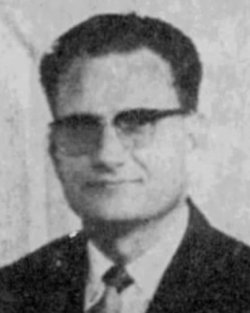
W.E. Best

#90 Reprobation Defined - It's Cause Considered, Negative & Positive

Romans 11:1-12
W.E. Best July, 1 1973 Audio
0 Comments
Remastered Oct/Nov 2024

Sermon Transcript

Auto-generated transcript • May contain errors

100%
Israel's future furnished the
prophets with one of the glorious themes of the Old Testament.
This is true since it is related to the subject of the kingdom.
In chapter 11 of the Book of Romans, Paul gives an argument
for certainty of and purpose in Israel's future. Paul, first of all, referred
to his own personal experience, and this is presented as a type
to foreshadow Israel's national turning to the Lord in the future. I think this was intended. It
was so intended, appears, first of all, from the manner of Paul's
discussion of himself. That, of course, referring to
the revelation of the living Christ from heaven to the Apostle
Paul in Acts 9, verses 3 through 5 and verse 27 of that chapter.
No other person in the dispensation of grace has been converted in
the manner that Paul was converted. It was a type of Christ's future
dealings with the nation of Israel, when he would turn national Israel
back once again toward himself. Revelation 1, 7, when they shall
look upon him whom they have pierced, Matthew 23, 38 and 39. and drawing from the Old Testament
one of the great prophetical statements by Isaiah in Isaiah
66 and verse 8. The second thing to which I want
to call attention once again concerning Paul's reference to
himself and his own personal experience with Christ, a unique
experience not experienced by any other person in the dispensation
of grace, We must consider Paul's own reference to this experience
of grace as he refers to it in 1 Corinthians 15 verse 8 and
1 Timothy chapter 1 verse 16. Following Paul's personal reference,
the apostle referred to history to prove that God was faithful
to his promise that he had made to the nation of Israel. There
has never been a time when some of God's chosen people, nationally
speaking, were not faithful to the Lord. God safeguards his
testimony. I stated this morning that Elijah
was rebuked when he made the statement that he alone remained
faithful. He had become so occupied with
his own fidelity that he overlooked the faithfulness of God to the
people of Israel, or to those whom he had chosen to be saved
by the grace of God. That's a good lesson for us.
Since God reserved a remnant for himself during the dark time
of Israel's apostasy, during the time that Elijah was preaching
And then during the time of Israel's dispersion, that was the time,
of course, that Paul wrote this letter to the Roman saints. He
refers to it as this present time. In verse 5, God has a remnant
according to the election of greats. Distinction must be made
between national Israel and spiritual Israel. Romans 9, 6 gives us
that distinction. National Israel is dispersed,
nationally speaking. She continues to be dispersed
throughout the nations of the world. Spiritual Israel is never
dispersed. I was reading this past week
a work by an Amillennialist on Romans 9, 10, and 11. He made a statement, and I'm
going to quote it for you. He can't prove it, but I'm sure
it sounded good to him, and that's the reason he made it. He said,
and I quote, National Israel is not the elect Israel, end
of quote. How can individuals ignore national
election? All one has to do is go back
to the Old Testament All he has to do is just read the book of
Exodus, and especially the seventh chapter of the book of Deuteronomy,
and he must, if he believes the scriptures, come to the conclusion
that national Israel was chosen while God passed by all the other
nations. Yet our millennialism, in trying
to disprove the biblical doctrine of the second advent of Christ
being premillennial, have drawn some wrong conclusions. Thus,
this person said, National Israel is not the elect Israel. There
is one thing about which we can be sure in this changing world
in which we live. It is the future of Israel. That's one thing that we can
be sure of, that is the future of national Israel. Paul's testimony
throughout the 11th chapter is that God is not through with
his national people. We're now living in that period
known as the times of the Gentiles. The times of the Gentiles is
going to be filled And when the fullness of the Gentiles has
come, then the Lord will turn to Israel, and a nation will
be born in a day, Revelation chapter 7, along with Isaiah
chapter 65 and 66. The statement, his people, in
verse 1, and His people whom he foreknew, in verse 2, have
to be understood by us. That is why I spent some time
this morning discussing those two verses with you. We know that Israel is the wonder
of the world. Has Israel's glory been consumed
in her shame? Has their heritage been lost
by their apostasy? That's the belief of a great
number, even of sincere Christians, and I want to emphasize, sincere
Christians. There are many Christians who
have, I believe, the wrong concept of God's future dealings with
the people of Israel. Israel's national blindness that
we are studying in connection with the seventh verse of Romans
chapter 11, as I stated this morning, is not total. As regards
themselves, verses 7 through 10, Israel's national blindness
is not fatal. as regarding God's purpose with
the Gentiles, verses 11 and 12. And national Israel's blindness
is not final concerning God's purpose with the nation of Israel,
according to verses 13 through 25. We know that from this nation
came not only our Bible, which we cherish, but also our Savior,
the Lord Jesus Christ. Israel is the strategic pivot
of the world's destiny. That's why that my attention
is drawn toward the Middle East, and yours should be drawn in
that direction. On the very soil where our blessed
Lord Jesus Christ shed his blood for our redemption. Human blood
is going to be shed in the world's greatest battle. Things are already
beginning to take shape, even for that battle. Israel will
be the seat of the greatest government ever under the Lord Jesus Christ, who is
the captain of our salvation. The election of grace and the
election of verses 5 and 7 must refer to the particular election of
individuals from, now get this, the theocratic election referred
to in his people, verse 1, and his people which he foreknew,
in verse 2. Let me state that again. That
is very important. I said the election of grace,
verse 5, and the election verse 7, must refer to the particular
election of individuals from the theocratic election referred
to in his people, verse 1, and his people which he foreknew,
verse 2. The elect alone are delivered
from destruction by the grace of God. Hence, all who are not
must necessarily remain in blindness. On the surface, Paul's statement,
and the rest were blinded, verse 7, seems to contradict God's
punishment of the wicked for their sins. We must remember
there is a negative reprobation, there is a passing by. God passed
by all whom he did not elect. The reason for this aspect of
reprobation is not revealed to us. The difficulty, however,
fades away when one understands that God justly punishes justly
punishes the ungodly for their sins, just as he is justly punishing
the nation of Israel now for her own crimes. As we saw from
our reference this morning to the Psalms, the 69th division
of the Psalms, the reference to which Paul used in his defense
of the fact that national blindness of the nation of Israel is not
permanent. It is not total, it is not fatal,
and it is not final. Now for a more diligent study
of the subject of reprobation itself. In the reading recently
of the work on reprobation by John Bunyan, an excellent work
as a whole. I did find some things with which
I could not agree, and beloved, I could not agree with them because
John Bunyan, even though he had a great amount of truth, was
not one versed in eschatology. And I know that those of you
who have done any reading of the works of John Bunyan know
that to be a fact. None of the Puritans, in fact,
were students of eschatology. Therefore, most of them made,
I feel, some mistakes when it came to the interpretation of
eschatology. That was not their real battleground. Their battleground had to do
with the subject of soteriology, or the science of salvation,
and not eschatology, the science of coming things. Now, in the
reading of Bunyan's work on reprobation, and he has a very lengthy work
on the subject, as a whole his work is very good, but some of
the references that he used are taken out of context, and that's,
of course, is what I'm referring to. Tonight I'd like to discuss
the subject, at least I want to begin discussing it, I do
not feel that I will be able to complete it this evening.
I'll go as far as I can and then we will complete it next Sunday
evening, the Lord willing. I will not deal with this subject
in the service next Lord's Day morning. There are three things
that I want to discuss. First of all, reprobation must
be defined. Number two, the cause of reprobation
must be considered, must be defined first of all The cause of reprobation
must be considered, number two. And finally, distinction must
be made between negative and positive reprobation. I think
this subject covers really every aspect. Now, we will not be able
to deal as much with each aspect as we would like to, but this
outline covers everything that ought to be discussed under the
caption of reprobation. Reprobation must be defined,
the cause of reprobation must be examined, and distinction
must be made between negative and positive reprobation. We'll
begin with the first point. Reprobation must be defined. The word reprobation is used
in many passages in the Scriptures. It must be studied not only in
a general way, but also in a particular sense. Generally speaking, reprobation
means to be disapproved. It means void of judgment and
to be rejected. Now we're talking about reprobation
generally. I said, generally speaking, it
means to be disapproved. It means that one disapproved
is void of sane judgment. For instance, in Romans 1, when
God gave them up to do things that were not convenient, and
We know that the inconvenient things that were done, of course,
were done by the mere fact that they were not able to make sensible
and sane judgments. So they were void of sensible
judgment. Now I can't tell, neither can
you, persons whom God has reprobated to the extent that they're not
going to be saved by the grace of God. I might listen to Madeleine
O'Hare debating with some Baptist preacher and say she gives all
the evidence, externally speaking, of being reprobated. Now, I don't
think there would be any argument by any Christian on that statement
yet. What about the Apostle Paul before
the grace of God rescued him? I'm sure that many persons would
have thought that this man who was going out and taking Christians
and bringing them before the Sanhedrin and they were being
killed, that surely a person who would do things like he was
doing, must be a reprobated person, but he wasn't. He wasn't. You see, I do not know, and you
do not know, it is wrong for you, it is wrong for me, to say
that a person is reprobated, absolutely speaking, because
we do not know. Now we are right in saying that
the things that the person might be doing, the statement that
he might be making, indicate that he is reprobated, but I
cannot say for sure that he is a reprobate or she is a reprobate
in the absolute sense. We must remember that. So while we are observing our
own fidelity, and taking refuge in our own faithfulness, we must
not overlook the faithfulness of God. And the Lord has some
people that would just surprise any of us. In fact, if you'll
just stop and consider for a moment, your own conversion is a surprise
to somebody. Isn't that true? My own relationship
to the Lord has certainly proved to be a surprise to some people,
and the same can be said of you. So the Lord saves whom he pleases,
and he passes by whom he pleases. So generally speaking, reprobation
means to be disapproved, void of judgment, rejected. A reprobate
mind does things which are not convenient either as the faith
or morals. We are witnessing immorality,
the like of which we have never seen in our lifetime. This indicates
general reprobation on the part of God as he reprobated the nation
of Israel. And we must place professing
Christendom in the category of national Israel, if we want to
make an up-to-date application of the principle of reprobation. There is a positive sense to
reprobation. I've been talking in general
terms, now let's talk in a positive manner. I said there is a positive
sense to reprobation. It is not to just be passed by. It is not to just be left out of
God's family. Negative reprobation is passing
by, whereas positive reprobation is the punishment of the sinner
for his sin. Now let's establish something
before we go any further. All of us who are saved give
God credit for our salvation. We do not give man credit for
salvation. So we give God credit for our
salvation, and rightfully so. Why? Because our salvation is
by grace. So as we give Lord, the Lord,
praise for our salvation, we cannot blame God for his passing
by of any person. We cannot blame God for positively
reprobating or condemning any sinner for his sins because every
sinner sins responsibly and is therefore responsible for his
sins. We must establish those two things
firmly in our minds. Now it is reprobation from eternity
that has confused and continues to confuse so many people. I
said reprobation from eternity is that which confuses so many
people. How are we to explain this? You
see there is a sense now negative reprobation is from eternity. Go back to the ninth chapter
Romans. beginning with verse 11 through verse 13. Even before
Jacob and Esau were born, God had chosen Jacob and had passed
by Esau. Before they were born, before
they had done any good or evil. Now that is negative reprobation,
that is not positive reprobation. That was accomplished by God
in eternity before time. Now when it comes to the positive
reprobation of Esau, that took place in time and God positively
reprobated Esau for his own sin because he sinned responsibly. He was a responsible person. So reprobation from eternity
has confused a great many people. And beloved, it behooves all
of us to be well-versed in this subject if we want to honor the
Lord and state the truth at the same time. The confusion is due
to the lack of understanding of God's eternality. Now I can't
go back and review a great number of things relating to the subject
of God's eternality, except to say that positive reprobation
is punishment of the sinner for his sins. Non-election is not
a punishment. In other words, when God chose
Jacob, and passed by Esau. His passing
by Esau was not a punishment of Esau. There is no punishment involved
in negative reprobation, or in preterition passing by. Positive reprobation is punishment
of the sinner for his sins, and this takes place in time. not in eternity, but in time. That's the simplicity of the
subject. Now the question may be asked,
how can the reprobated be punished before they are born? Now that's
the question that is always asked by those who object to the doctrine
of reprobation. Do you know how to answer it?
It's answered in a very simple manner. I'm sure that you're familiar
with the proper answer concerning the subject of election. Election
is not salvation. Election took place before time. Election took place in eternity
past, if we want to use that expression. Therefore, election is not salvation,
but election is unto. Please do not forget the preposition
unto. Unto salvation. Election guarantees salvation. The salvation of every person
whom the Father elected in Jesus Christ. Now, as election is not
salvation but unto salvation, reprobation, negative reprobation,
is not punishment, but positive reprobation is punishment of
a sinner for his sins in kind. As election is not salvation
but under salvation, reprobation is not punishment, but it is
unto punishment. Then you must make the distinction
between negative, passing by, and positive reprobation, God
punishing the sinner for his sins. I can't make it any plainer than
that. It's plain to me, and I hope that it is to you. We have now
defined reprobation. Now we've come to the cause of
reprobation. This also must be studied, it
must be considered. The chief cause of reprobation
is the nature of God. There are two things in God by
which all things have their origin. Now these two things are important.
Number one, the eternality of God in general, and number two,
the attributes of God in particular. Now let's let that soak in for
a moment. The chief cause of reprobation is the nature of
God. There are two things in God by which all things have
their origin. Number one, the eternality of
God in general, and number two, the attributes of God in particular. As the eternal God, he was before
all things, and by his attributes, he creates
all things. You'll notice how I'm using that
word in the present tense. and I'm doing it for a purpose.
Therefore, we conclude that nothing can have a being apart from God's,
what, knowledge or purpose. This being a self-evident fact,
and it is that, it was impossible for any, any to be either elected
or reprobated apart from God's will. Now whether people are willing
to acknowledge or not, I said whether they are willing to acknowledge
it or not, this is a biblical fact. It is not the being of a person
or thing that administers knowledge or foresight to God. And this,
you see, is the view that many religionists are presenting today.
It was the perfection of his knowledge and power that gives, notice this, that
gives things their being. Let me explain that with a very
simple illustration. God did not decree that there
would be a universe because he foresaw that there would be one. Wouldn't that be a foolish statement? There is a universe today because
God purposed there would be one. You have to use that same principle,
beloved, when it comes to the subject that we are discussing
tonight. The same principle applies to
the subject of reprobation. Strictly speaking, there is no
more foreknowledge than there is afterknowledge with God. All things are known to God from
eternity to eternity. Thus you can see that, strictly
speaking, there is no more foreknowledge than there is afterknowledge.
I heard a statement today that I appreciated a great deal. I
listened to this man last Sunday, and today I listen to him again. He is on the Lutheran Hour. Dr. Hawkins brought a very good message
on motherhood last Sunday. And basically, his message was
very good today. I could tell that he was counteracting
the charismatic movement. Evidently, the Lutheran people
are having their problems with the charismatic movement. This
movement seems to be creeping into every major denomination
today in a very sly, underhanded way. He took his Scripture from
Acts chapter 2. I like the statement that he
made. He didn't go into detail. He just simply made a statement
and then he built upon that statement. He said, Now we have heard for
years that speaking in tongues is a manifestation of one having
been baptized in the Spirit. And he said, Acts 2 is ordinarily
referred to as a proof text. But he said, I must remind you
that the people who spoke in tongues in Acts 2, they spoke
in languages and the languages could be understood
by the persons from the places or the countries from which they
had come. Now that's true. Anyone who has
good sense, sound mind, can understand that in the reading of Acts.
Here's the statement he made that I really like. He said,
instead of God speaking through tongues, he speaks today through
sons. This was his subject. And then
he really built on it, and it was a great message. along that
line. The Lord speaks today through
his son. He's talking about Christians,
born again persons. Not through tongues, but through
sons. And then he put this, I thought,
capstone on it. He said, you know, communication
is a word that all of us understand today. He said, every elementary
school child understands the word communication. He said,
when I was young, he said, that was a big word, and sometimes
we'd have to look it up to see what communication meant. He
said, some 50 years ago, people didn't use that word very much,
but it is a common word today, so almost every child understands
the meaning of the word communication. He said, you know, when God communicates
to you and me, he talks down. I like that. He talks down. You get that point? He has to
talk down to you and me. But he said, when we communicate,
we talk to individuals. God talks down to us in order
we might talk to individuals. I thought that was a great statement,
and I appreciated it very much. You know, we have to learn, beloved,
to appreciate truth wherever it is given. And we must be able
in this day when there is much truth being proclaimed to make
the proper distinction between truth and error. So I thought
that his subject was very good, very timely, even though he didn't
go into a long exposition. denouncing the charismatic movement,
he simply showed by his positive message that it was a bunch of
foolishness, and God talks down to us, and then the Lord speaks
today, not through tongues, but through sons, as we communicate
one with another. I thought it was very good, very
timely. So, that brings us to this point. I said the Lord knows everything,
everything. So strictly speaking, there is
no foreknowledge any more than there is any afterknowledge with
God. God may refer to elect some without
abusing them. He can refuse to give them grace
without abusing them. You see, every man is a sinner.
He's a sinner. by his involvement with Adam
in his sin in the Garden of Eden. Every person is a sinner, therefore
every person is responsible. And when he sins, he sins responsibly. I like some statements that Dr.
Macbeth has made in his work on the Book of Romans. You would
not agree with all of it, but some of the statements that he
has made are tremendous. Reprobation is God's act, it
cannot be denied. It is the negative of election.
Reprobation, however, does not make man a sinner any more than
election makes man a Christian. As election took place before
the foundation of the world, so did reprobation. being the
negative, you see, of election. God cannot be condemned, this
is what I like, God cannot be condemned in his selections,
nor can he be accused in his rejections. I'm in perfect agreement with
that statement. God cannot be condemned in his selections.
He cannot be accused in his rejections. Why? The answer is given in a
very simple way. No sinner deserves favor. God is obligated to none. God's election is an act of mercy
and not of merit. His reprobation is an act of
justice. Every reprobated person will
receive his just dues. Now I need to pause for a moment. Did you know that that is going
to be the testimony of every person who is reprobated absolutely
considered? Do you remember the unrepentant
thief on the cross? Do you remember what he said?
The repentant thief said, remember me when thou comest into thy
kingdom. On the other side of our blessed
Lord The unrepentant thief was hanging, and what did he say?
We have received our just reward. Now, men may complain today.
They may want to accuse God today, but I assure you, when the unsaved
stand before the great white throne judgment, the testimony
will be at that time the same testimony that the unrepentant
thief gave when he said, we receive the just reward of our deeds. I want to emphasize that. Yes,
men may accuse God today. They may bring accusations of
unjust treatment toward individuals today. But when the unsaved stand
before the judgment of God, they will then recognize that God
is just in everything he does. Dr. Macbeth, throughout his work
on the Book of Romans, is very concise. His sentences are very
short. So when he said, God cannot be
condemned in his selections nor accused in his rejections. No
sinner deserves favor. God is obligated to none. God's
election is an act of mercy and not of merit. His reprobation
is an act of justice. The elect are saved in mercy.
The reprobated are lost in justice. God does not wrong one person
by being merciful to another. That is well stated in a very
short paragraph consisting of pointed sentences. Another cause of reprobation
is God's willingness to show his wrath and make his power
known, Romans 9, 19-22. God may refuse to elect some
without abusing them. He can refuse to give them grace
without abusing them. God is not unjust, therefore,
in giving one mercy and giving another justice. In the salvation
of the elect, we are to look for the higher cause than the
grace of God, and no higher cause in the destruction of reprobate
than God's just severity that is used by Paul in Romans 11. We did not get that far. We may
in a subsequent lesson. Has anyone ever complained because
God treats the devils as a criminal class? I haven't heard anybody
going around moaning and groaning about the treatment that the
devils are receiving. Have you? Think about that for
a moment. Have you ever heard anyone weeping
over devils because of what they're receiving from the hands of a
just God? Have you heard anyone complaining
about what they're suffering from the hands of a just God?
No, I haven't heard any complaints. The determinative will of God
is connected with Therefore hath he mercy on whom he will have
mercy. The parallel must be maintained
in the sovereign act of hardening, and whom he will, he hardened. Now let's look at some very important
points on the subject of reprobation. Reprobation is not on the ground
of God's foresight of man being a sinner. There are some who
believe that. Those who believe that believe
that God's election of some is based on his foresight of individuals
believing on Jesus Christ. Now I want to show you the fallacy
of this. I said reprobation is not on the ground of God's foresight
of man being a sinner. If this were true, then all of
us tonight would be reprobates. Now I'm making a very important
point, so don't let it slip past you. If sin comes only by reprobation,
then reprobates only would have been tempted and fall. However, the temptation and fall
in the garden of Eden were universal. We all fell. Now I'm stressing
the word universal. I said both the temptation and
the fall were universal. We were all tempted in Adam and
we all fell in Adam's Romans 5 plan. But the act of reprobation
was what? Particular, not universal, but
particular. Thus the elect, as well as the
reprobate, was under sin. Those of us who enjoy the grace
of God tonight, we were under sin in the same sense of those
whom he passed by. Do you see the difference between universal sin universal temptation,
and particular election, particular reprobation. Let's go a little
further into that. No man under sin stands upright. No man. Both the elect and the reprobated
are classified as sinners. Both are classified as sinners. The person whom God elected to
salvation, who is not yet regenerated, is classified as a sinner. And
we're sinners saved by grace, if you want me to go to that
extent. So really when one person communicates with another person,
if a Christian communicates with a non-Christian, we have a saved
sinner communicating with an unsaved sinner. How do you like
that? So don't think too highly of
yourself. It's just a saved sinner communicating with an unsaved
sinner. Paul spoke of himself as the
chief of sinners, and he was a child of God when he gave that
testimony. All of us who have been saved
in the length of time and have studied and have grown will agree
with that statement without any reservation. Reprobates are ordained
to condemnation, Jude verse 4. But it is not easy to say who
they are. I can't say who they are. You
can't say who they are. It takes a special gift of discernment. to know who the reprobates are. Now, our Lord could say of some
in his time, ye are the children of the devil. I can't say that,
you can't either. They might be acting like it,
but I'll tell you something, Peter even acted like it after
he was a Christian. And our Lord had to say to Peter,
get behind me Satan. Only the Lord could say at that
time, ye are the children of the devil. Now we know the Apostle
Paul possessed a special power, a special gift, the gift of discernment. And we find in the Acts of the
Apostles where he referred to a particular person as being
a child of the devil. He was able to say that because
of the spirit of discernment of the gift, the discernment
that the Lord had given to him. You and I do not possess that
gift. And beloved, believe me, no one
living today possesses that gift. I don't care what he might claim.
We know that Man fell by sin, not by reprobation. Adam did not fall because he
was reprobated. He fell because of his self-determination
to sin. We've already discussed that
in our study of free will versus free grace. Adam sinned not by
reprobation, but by disobeying the command of God, that the
day you eat of that fruit you shall die. Sinning is universal,
but reprobation is particular. Adam was not reprobated. I stated
to you several weeks ago that I cannot agree with Arthur W. Pink on his belief concerning
Adam. He believed that Adam was reprobated.
I can't agree with that at all. That will not hold water. Now
that doesn't mean that I'm going to discard all the works of Arthur
W. Pink that I have in my library.
He's a great writer, but he's a man, and he was wrong on that
point. I didn't realize it, but about
a year and a half ago I was speaking at a certain church And I didn't
know that the preacher believed that. He had read off the WP,
and he just swallowed it hook, line, and sinker. And so I hit
it pretty hard. And I was told just a few weeks
ago that that man is really strong on that point. I said, well,
I thought so by some remarks that were made after the service
that night. He didn't attack me, and he is basically sound. in the truths of God's word.
So I wouldn't condemn him just because I feel he's wrong on
that point. But I want to show you the fallacy
of it. If Adam was reprobated, then beloved, that means since
we all fell in Adam, we were all reprobated in Adam. Now you
can't get away from that. I want you to think about it
for a moment. We all sinned in Adam, but we were not all reprobated
in Adam. If Adam was reprobated, then
we were all reprobated in him, and there's no hope for anyone.
We sinned in Adam, but we were not reprobated in Adam. So I
cannot accept that statement or that belief. Sinning is universal. Reprobation is particular. Now Adam did sin, and I do not
believe that Adam died in his sins. I believe that Adam was
saved by the grace of God. I believe that the Lord sought
him out, found him, and clothed him. And when one wants to point
to the last verses in the third chapter, of the book of Genesis
to try to substantiate the view that they hold, I want you to
know it won't hold water if a person will study it diligently, and
I'm not getting off on that tonight, except to call attention to the
fact that I'm thankful that I was not reprobated in Adam. Adam
was not reprobated and I was not reprobated in him. Reprobation,
it is true, is God's act. But there is a difference between
negative and positive reprobation. Now I gave to you a number of
things this morning that I will not have to review with you again
tonight. So I want to close, we've already
been going nearly an hour, with a discussion of this point, distinction
between negative and positive reprobation. And I'm going to just pass by
some things that I gave you this morning, and come to the third
point under this major heading that I want to discuss with you
in closing. Election and reformation must not be interpreted in the
light of supralapsarianism. Now those of you who have the
notes on the decrees of God will know why that we're going into
this particular point. There are seven things that I
want to give under this heading tonight. Actually, I ought to
bring, really, in reality, I ought to bring a message on this particular
point. But I want to give these seven
things in closing. I want you to be thinking about them. We
will enlarge upon them later. I said election and reprobation.
must not be interpreted in the light of supralapsarianism. And
I'm not going to define supralapsarianism. I've already done that. Number
one, election and reprobation do not run alongside each other
as parallel lines. God is neither the author of
sin nor the creator of man for destruction. Now these seven
points that I'm giving in closing tonight are, beloved, very, very
important. Election and reprobation do not
run alongside each other as parallel lines. God is neither the author
of sin nor the creator of man for destruction. It is wrong
for any person to say that God created man to destroy, that's
wrong. that is not scriptural. Number
two, election and reprobation do not result from the one causality
as two parallels in the ways of belief and unbelief. Election and reprobation do not
result from one causality as two parallels in the ways of
belief and unbelief. Belief is from God, as we know. Unbelief is not from God. Unbelief comes from the sin of
man. In election, faith is the gift
of God. in positive reprobation, unbelief
originates within man. It does not come from God. Number three, salvation is the
fruit of divine election, but sin is not the fruit of reprobation. You see these important distinctions
that I'm trying to make? Salvation is the fruit of election,
but reprobation, positive reprobation, is not the fruit of reprobation
or positive reprobation. It comes from the sin of man. In election, we know that faith
is God's gift. In positive reprobation, unbelief
originates within man. So salvation is the fruit of
election, but sin is not the fruit of reprobation. Sin does
not originate from reprobation and is not in the same way an
outward sign of reprobation as salvation is of election. I'll give the last part of that
again. Sin does not originate from reprobation. and is not in the same way an
outward sign of reprobation as salvation is of election. Number four, faith is not the
cause of election, but it is the means of salvation, not regeneration,
ordained in the elect by God Unbelief, we're making the distinction
between faith and unbelief. Unbelief, however, was not ordained
by God as faith was ordained by God, but is suffered in the
reprobates as the cause of final damnation. Suffered by God as
the cause of final damnation. Number five, Paul did not teach
a parallel between election and positive reprobation. Paul did
not teach a parallel between election and positive reprobation. Vessels of wrath are not said
in Romans 9 to be aforeprepared, but rather fitted to destruction,
whereas the vessels of mercy are said to be aforeprepared. That's very important. Paul did
not teach a parallel between divine election and positive
reprobation or condemnation. vessels of wrath, Romans 9, are
not said to be, quote, aforeprepared, but, quote, fitted to destruction,
whereas the vessels of mercy are said to be aforeprepared. Number six, the final action
of God toward the wicked. and I'm using a quotation from
someone else, is a reaction. The final action of God toward
the wicked is a reaction. Positive reprobation is an act
of God in time, but known by God before time. Now, I don't have the time tonight,
we're talking about time. to give you all these references
that are turned to him. So let me give you two or three for
you to study in connection with this point. I said the final
action of God toward the wicked is a reaction. Pause in reprobation
is an act of God in time, but known by God before time. 1 Samuel
15.23, 2 Kings 17.20, Lamentations 5.22, and read the greater portion
of the 50th chapter of the prophecy of Isaiah. Begin with verse 1
and you'll see what we're talking about. Positive reprobation is
God's answer to sin. Thus we must accept the sin causality
of suffering. Not the God causality, but the
sin causality of this cursing. this positive reprobation. Finally,
this is number seven. Let's put it together now, if
we can, by a verse of scripture. This concept, this is number
seven, of election and positive reprobation, cannot be explained,
as I've already stated, in a supralapsarian manner. When the question regarding
causality arises, now listen to the scripture. Scripture speaks. Notice what I'm saying. I said
the concept of election and positive reprobation cannot be explained
in the supralapsarian manner. When the question regarding causality
arises, scripture speaks. And what does Scripture have
to say? Here it is, 1 John 3.10. Here's putting it together. In
this the children of God are manifest, and the children of
the devil. Whosoever doeth not righteousness
is not of God. Neither he that loveth not his
brother. That's putting it together. Think
about it for a moment. So the concept of election and
pause in reprobation cannot be explained in the supralapsarian
manner. When the causality of reprobation
arises, the word of God ever speaks. It speaks in this manner,
in this the children of God are manifest, and the children of
the devil. Let's pause for a moment. The
children of God manifest themselves to the world. The principle of
life cannot be hidden. They love the brethren. They
love the word of God. They love the assembly of God's
people. They're seen growing in grace
and knowledge of the Lord. The path of the justice of the
shining light that shines more and more unto the perfect day.
In this, the children of God are manifest, and the children
of the devil. They hate the things of the Lord.
They hate God. They hate to be subjected to
the things of God. They don't enjoy listening to
the things of God. They do not do righteousness.
Their deeds are unrighteous in this. The children of God are
manifest, and the children of the devil. Whosoever doeth not
righteousness is not of God. neither he that loveth not his
brother. I close by saying, let us ever
make the proper distinction between negative God passing by some, and in passing by, negatively
speaking, he does the reprobates that he passes by no harm, he
does him no injustice. Whatever they shall receive,
they shall receive the just judgment of God.
W.E. Best
About W.E. Best
Wilbern Elias Best (1919-2007) was a preacher and writer of Gospel material. He wrote 25 books and pamphlets comprised of sermons he preached to his congregation. These books were distributed in English and Spanish around the world from 1970 to 2018 at no cost via the W.E. Best Book Missionary Trust.

Comments

0 / 2000 characters
Comments are moderated before appearing.

Be the first to comment!

Joshua

Joshua

Shall we play a game? Ask me about articles, sermons, or theology from our library. I can also help you navigate the site.