Bootstrap
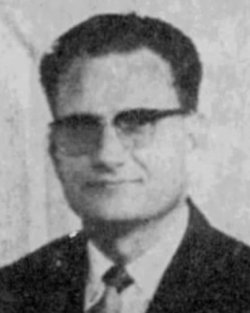
W.E. Best

The Dignity, Humility, and Glory of Christ

Philippians 2:5-8
W.E. Best June, 17 1972 Audio
0 Comments
Best on the Person of Christ

Sermon Transcript

Auto-generated transcript • May contain errors

100%
Philippians 2. Let's read the verses again that
we are dealing with just briefly. giving some things, some highlights,
that some of the things that I have not put in print, some
things I have, but some I have not. You can't put everything
in print. But let's read the verses again,
verses five through eight, because this is all we'll be dealing
with tonight. We'll take up where we left off in our discussion
of the dignity, humility, and glory of Jesus Christ in Philippians
2, the great Christological passage beginning with verse 5 through
verse 11. But we're reading beginning with
verse 6. Now verse 5, this mind be having
in you, which is also in Christ Jesus. The one existing in the
form of God did not regard existing to be equally with God something
to hold on to. Now you notice how I translated
that? Something to hold on to. Verse
7, and I'm going to use the word emptied here because we'll be
discussing it further tonight. but emptied himself having taken the form of a slave, having, I hope I can read, having been
made in the likeness of men and who has been found who has been found, I'm having
a hard time reading my print here because I'm having problems
with my eyes, having, let's read the seventh verse again. Maybe
it'll come to me as I'm reading. But emptied himself, having taken
the form of a slave, having been made the likeness of men, and
who has been found to appear as a man. And then in verse 8, he humbled
himself, having become obedient unto death, the death of a cross. Those are the verses that we're
looking at tonight. Now let me review just briefly
to bring us up to make the proper transition from where we left
off last Wednesday evening and our study tonight. The form of
God is what we're discussing or were discussing last Wednesday.
So the form of God was Christ's eternal state of dignity before
the incarnation. And then I gave you two views,
two major views of this, and I'm not talking about the heretical
views now. I'm talking about two views that
more or less embrace some of the important things concerning
Christ's incarnation. Some believe the form of God
refers to Christ's essential glory. the glory that he had
with the Father before the foundation of the world, and I gave you
seven things on that last Wednesday evening. And then there are others
who believe that the form of God is identified with the essence
of a person in Philippians 2 and verse 6. Therefore, looking at the statement
in the form of God, which proves not only Christ's pre-existence
But it proves that his existence was essentially one with the
Father. And he spoke of being equal with
the Father. I and my Father are one. John
10 and verse 30. So the dignity of Christ's essence
was veiled by the incarnation. It was something from which he
humbled himself by making himself of no reputation. And we'll not go any further
with that because we've already discussed that particular point.
Now coming to the form of a servant, the form of God, and secondly,
the form of a servant. The same word morphe is used
in connection with both. So the form of a servant was
the state of Christ's humiliation during the days of his flesh. Now this is the point that we're
beginning with tonight. Now, I have seven things under
A and B if you're outlining this particular lesson. It would be
Roman numeral two, the form of a servant was the state of Christ's
humiliation. during the days of his flesh
and then of capital A under that to use the proper outlining form. The expressions which assert
Christ's incarnation also prove his deity. Now these are things
that I'll be giving under capital A. One, number one, one could not
say of a mere man, now watch these arguments please, one could
not say of a mere man that he was found in fashion as a man,
or in the appearance of a man as I have translated it, as I
read to you. So no one could say of a mere
man that he was found or he appeared as a man. He wouldn't appear
as a man, he would be man. Number two, one could not say
of a mere man that he thought it not robbery, I'm using the
King James now, and you can check this, of course, with the translation
that I gave tonight, to be equal with God, not robbery, to be
equal with God. And number three, no one could
say of a mere man, wherefore God also hath highly exalted
him and given him a name which is above every name. So he's
not a mere man, he's more than man. He's the God-man that we
have stated before. So, man, yes, more than a man. He's called a man, the man approved
of God. Like we have in Acts chapter
2 and verse 21, I believe it is, or 22. Number four. The act of incarnation is attributed
to the preexistent Son of God. Preexistent Son of God. Not attributed to either God
the Father or God the Holy Spirit. Only one became incarnated. Number five, the reality of Christ's
assumption of human nature is set forth in three expressions. This is a very important point
here, because it has three parts. The reality of Christ's incarnation,
or the assumption of a human nature, is set forth in three
expressions. Form of a servant, likeness of
men, or the appearance of men, found in fashion as a man. Number six, Jesus Christ is not
God in man or God and man, but the God-man. Now that's a very
important point. I've used this many times. In
fact, I hardly ever speak on the subject of the Incarnation
without making this statement. So Jesus Christ is not God in
man. He's more than that. You see,
God is in you. God is in me. God is an ever-Christian
in the person of the Holy Spirit. Christ dwells in our hearts by
faith, etc., etc. So God is in His people. Now,
you have to say something different when you come to Jesus Christ.
So, He's more than just having God in Him, because I have God
in me. God the Holy Spirit is in me.
God the Holy Spirit is in you. as a person who has passed from
death into life. So we do not say, do not refer
to him as God being in him, or God and man. You don't say God
and man because you have two persons. And that's heresy. Jesus Christ was not two persons. One person with two natures.
So you have to be careful about the use of that expression. So
the correct biblical expression is he's the God-man. In other
words, he is the theanthropic person about whom we have been
speaking now to some extent for the last three Wednesday evenings,
or the third one including the one tonight. So number seven, if Jesus Christ
had been born a human person by the will of man, He would
have had an ego turned away from God. Just like you were born
with an ego turned away from God. But he was not a human person. He is the theanthropic person
and I've already explained that so we shouldn't have to repeat
that again. Now, capital B, if you're outlining,
the Eternal Son, and I'll use this expression to begin with
tonight. We're looking at that Greek verb, which is a very,
very debatable subject among religionists today. And it's
found in verse 6 of verse 7. instead of verse 6. So number one, we're looking
at the verb, the inflected form is, as you will look at it in
your in your Bible, in your interlinear, echinocence, This has caused great controversy. There is still controversy raging,
and it'll continue to rage, just as long as we have human beings
trying to discuss the things of God with our natural minds. So the question is, of what did
the Eternal Son empty himself, if you want to use that expression
to begin with tonight? of what did he empty himself.
It's called the kenosis. Kenao is the verb. And it's called the kenosis theory. So in thinking of the kenosis,
we must never permit ourselves to think of Jesus Christ as any
other than God who changes not. He didn't change. He didn't become
less than he was before the incarnation. If Jesus Christ became less than
he was eternally when he came into this world, then he's mutable. He's not immutable. And you don't
have a Savior. You're without a Savior. You're
no better off than the Muslims who worship Muhammad and Allah.
They deny the divine triunity. Number three, the text affords
a clear guidance in determining what sense Christ emptied himself. Now how would you explain it?
And how did we translate this? Let me read it again. Let's look
at verse six. The one existing in the form
of God. That's the essence of God. That's
his eternal existence. That can never change, period. I like the way the Puritans put
it. God can't un-God himself. Now that's a rather unusual way
of expressing it, but I think people can understand that God
cannot un-God himself. He becomes if in other words
if Jesus Christ became less than it was eternally Then he isn't
what he was and if he's not who he was then he is not our Savior
So it's just it's ridiculous But how do we explain it that's
the question I Did you know most people today believe that Jesus
Christ actually laid aside His attributes? Did He lay them aside? I deny that He laid aside His
attributes. If anyone will honestly search the New Testament Scriptures,
he will find that Jesus Christ did not lay aside His attributes. He used them when He pleased. He used them when it was right
for Him to do so. He used them in being in subjection
to the will of the Father. Now this can be a deep subject. We could start here tonight and
we could go on for about two or three Wednesday nights and
I'll tell you now that we would wade out into some deep water
And you'd finally get to the place that all you can do is
say, I cannot comprehend it, but I surely do lay hold of it
because it's the truth of God. If I could explain it, then I
would be God. Because only God himself can
explain himself. And he has told us as much as
he wants us to know. But there is enough that has
been revealed to us that we can believe what the scriptures say
and never make a mistake concerning the most important things concerning
the person of Jesus Christ. You know, if I were looking for
a place to go and worship, I wouldn't have to ask but just one question.
That's all I'd have to ask. What do you believe about Christ
and then carry it a little further? And I'll guarantee it would eliminate
every institution that ought to be eliminated. Well, let's go into this a little
bit tonight. In the incarnation, what did
Christ do? in his incarnation there is no
suggestion that Christ exchanged or changed his essential being
or divested himself in any way of his Godhead or any of his
attributes. Now can I say it any more completely
than that? So He did not change His essential
being. He did not divest Himself of
His Godhead. In Him dwells the fullness of
the Godhead and that by the way. Colossians 2.9. That during His
incarnation. And lastly, neither did he divest
himself of any of his attributes. I want to give you just a few
verses at this point. I'm talking about his attributes
of deity. John 5, 19 and 30. John 8 and
verse 38. John 12 and verse 49. John 14
and verse 10. Now there are many verses, but
I wanted to give those to you. Number four, there was no change
of content even though Christ assumed the
form of a servant. No change of content. That's the reason I like our
the manuscript that was used to give us the translation that
we're using, that is the Greek text that we're using. Now, the
received text doesn't use it. John 118, the only begotten Son
of God. The only begotten God is the
way our text reads. The only begotten God. No change of content. Number
five, there are three words used in scripture to denote the interrelation
of the Father and the Son. Now this is a very, very important
point. Let me state it again and I'll
give you the three Greek verbs. Or the three words. Not verbs,
but words. So there are three words used
in scripture to denote the interrelation of the Father and the Son. They
are, number one, morphe, which is used in the passage we are
now studying. Morphe. It speaks of His essence. In the form of God speaks of
the essence of Christ. The second word is icon. I'll spell it for you in English.
You can get it. E-I-K-O-N, and the O is Omega,
not Omicron. Icon, and it's used in Colossians 1
and verse 15. The image of the invisible God. Jesus Christ is the image of
the invisible God. That is, as manifesting the Father
to you and me. Finally, the third word, it's
the word from which we get character. And it's character. And that's
not kappa, but chi. If you've learned your alphabet,
you know what I'm talking about. K-A-R-A-K, and that's kappa.
Then T and A, that's the long, that's not epsilon, but eta. And R. character word from which
we get character Hebrews 1 3 which includes both Christ's nature
and His expression both character and expression Hebrews 1 3 So those three words keep in
mind, please number six The work of Christ in all his offices,
prophet, priest, and king, in all his offices is the act of this or that nature. So watch this. The work of Christ
in all his offices is not to be considered as the act of this
or that nature, but it is the act and work of the whole person
who is the God-man. It's the act of the whole person. Now the seventh point, we'll
look at ekinosin. That's the inflected form. Kenao. Kenosis is derived from the verb
that is used in verse 6, the inflected form. Let me tell you
what Warfield said about this verb. Warfield said it was a mistake
to translate it, quote, emptied himself, end of quote. Now Warfield
has some great things on the person of Christ. So I'll tell
you that now. One of the Puritans, not as far
back as you might be familiar with some of them, but he does
have some outstanding things on the person of Christ. The
verb is found only five times in the New Testament. And since
it is found only five times, I want to give you, we know where
one of them is found, right here, we're looking at it in verse
seven. I want to give you the other
references. Now the way you study a word is to see how it is used
in other places. And you can better determine
how it should be used. But that doesn't always give
you the key. You still got to understand that
it must be understood in the light of its immediate context.
But I do want to give you the other verses. Romans 4.14, 1
Corinthians 1.17, 1st Corinthians 9 15 and finally 2nd Corinthians 9
in verse 3 so it's found in Philippians the first passage we're studying
2 7 and then it's found in Romans
4 14 1st Corinthians 1 17 and 9 15 and found in 2nd Corinthians
9 and verse 3 now in all these references We're not going to
stop now and go and read all those four verses. You can do
that. But I'll give you a little summary,
and you'll remember some of them. In all these references, it is
used figuratively. Notice what I said, figuratively. And means to make void in one
place. It means to make void. No effect
in another place. Of no account. And then it's
translated in the verse which we're studying tonight in the
King James of no reputation. So the passage in Philippians
2.7 simply means that Christ made himself, some say, of no
reputation, did not assert his divine prerogative, but took
the form of a servant. Now I'd like for us to go into
that a little bit more at this particular time. And then before
we are dismissed tonight, I want to get into some other areas
that will be helpful on this particular point. I'm not going
to assume that all of you are familiar with the Chalcedonian
view of Christology. So I'll give you the major points,
and this is a good place to give them. So what did Christ give
up? Now he gave up something. What
did he give up? That's the question. What did he give up? Let's look at verse 6 again. Look at verse 6 now, Philippians
2. The one existing in the form of God. did not regard existing,
you see I'm using the word existing rather than to be. This is the
verb I, me and it means to exist or to be. So I'm using existing. We have a participle here so
I'm using it. Existing equally with God. Now look, watch this
and you'll see the difference here in translation. The one
existing in the form of God is talking about his eternal existence.
before the incarnation, and did not regard existing equally with
God something to hold on to. Now you see what I'm saying?
Something to hold on to. Now he didn't hold on to the
glory in which he was living. He left heaven. He left Heavenly
glory if you want to use that expression and came to earth
a sin-cursed earth So he who was eternally with the father
came to earth and became like us he didn't become us, but he
became like us the appearance of man and Assumed a human body
for what purpose in order that he might die God absolutely considered
can't die and What part of Jesus Christ died,
if you want to put it in that framework? Deity didn't die at
Calvary. God can't die. But His human
nature paid the price. Paid the price. But God didn't
die. He had the ability to even raise
Himself. Now if He had died, He couldn't
raise Himself. He said in John 10, I have the
power to lay down my life, I have the power to take it again. He was not only resurrected by
the power of the Father, but he was resurrected by his own
power, but the power of the Holy Spirit. So let's look at this sixth verse
again to get it clear in mind now before we go into this any
further. The one existing in the form
of God, did not regard existing equally with God something to
hold on to. Something to hold on to. Now
let's keep that thought in mind. Now the question is, what did
he give up? He gave up something, what did
he give up? Now we could discuss a number
of things, but let me give three or four tonight so you can see
what we're getting at. Number one, I think this is a
very important one. He gave up his relation to his
own holy law. Now watch this. He gave up his
relation to his own holy law in order that he might suffer
its penalty on behalf of those for whom he must die. Does that make sense? He's the
author of the law. He and the Father are one. The
author of the law, it's his law. So he did what? He gave up, as
it were, his relation to his own holy law. Notice what I said,
the relation to it. In order that he might suffer
its penalty on behalf of the elect for whom he came to die. That make sense? Number two, he gave up his heavenly
environment, so to speak. I said he gave up his heavenly
environment. Now this is described in the
17th chapter of John, the great high priestly prayer of Christ,
as His glory, the glory. He looked forward to the time
when He would return to the glory which He had with the Father
before the foundation of the world. Now let me show you what
we're talking about. So go back with me for a moment
to John chapter 17. So number two, He gave up His
heavenly glory. He didn't give up his moral glory. He didn't give that up. Couldn't
give that up. Of course, that would have been
a change in him. But he gave up the heavenly glory. John 17. I don't want to read this whole
chapter. I think we need to begin reading with about the twenty
about the 21st verse let's begin with oh we can go down a little further
just the 24th verse will really be sufficient to prove my point
24th verse father I desire that they also whom you have given
to me may be with me where I am in order that they may behold
my glory notice now they may behold my glory this is what
we're going to be behold one of these days which you have
given to me because you love me before the foundation of the
universe so he gave up heavenly glory
and came to be with us, like us, in order that he might redeem
us, thus being our kinsman-redeemer. And I have a few things I want
to say about the kinsman-redeemer tonight. Then number three, Christ
gave up his independent exercise of authority. He was in submission to the Father. This is taught in the 11th chapter
of 1 Corinthians. Paul began in discussing order. As Christ is in subjection to
the Father, Man is to be in subjection to Christ, and the woman is to
be in subjection to the man. That's God's order. Hadn't changed
either, folks, regardless of the age in which we live, regardless
of the laws that are passed by the government. Have I made myself clear? Now, I think this is enough so
you can see what we're talking about. What did he give up? What
did he voluntarily give up? I just mentioned three of the
most important ones. His relation to his holy law
in order that he might pay the penalty of that law in his own
death, his own suffering for those for whom he must die. And
two, His heavenly glory. He left it, but He's going back.
And He's there now. He's already there. When He finished
the work the Father sent Him to perform in the first part
of John 17, He went back. He's there, sitting at the right
hand of the Father. And thirdly, independent exercise
of authority. He always did the will of His
Father. That's the language of the New
Testament. That's the language of Jesus Christ during the Incarnation. Now, these are things that I
want to give to you tonight. I'll just shorten them. Somebody
asked the question, well, how could He still be God? Now, does this bother you? With
what I have just said, does this bother you? How could He still
be God? How could he still be God if
he gave up his relation to his own holy law? How could he still
be God if he gave up his heavenly environment? How could he still
be God if he gave up his independent
exercise of authority? Well, I think I can give a simple
answer to it. It wouldn't satisfy everybody. There was no change in the divine
nature. When Jesus Christ came into the
world, there was no change in the divine nature. But His divine nature assumed
a human nature without. Now I want to stop right there
with the word without. Now I want to give you the four
things of the Chalcedonian Statement that has gone down in history
And here it is Christ possessed the divine nature and the human
nature Without now we're going to answer
without four things here number one without mixture mixture These
are the four things the four cardinal things of the Chalcedonian
statement And this put a stop to a lot
of heresy in that day. But things have escalated to
the point now, folks, heretics are not going to pay
much attention because God is already giving them over to a
working of error that they may believe a lie. That's the day you and I are
living in. Let us not forget that. He is not giving them repentance. I said he's not giving them repentance.
So Christ possessed the divine nature, that eternally, and the
human nature when he became incarnated, without mixture. No mixture. These two did not mix. The human nature was not mixed
with the divine nature. The divine nature was not mixed
with the human nature. Watch this. Number two, without
change. Without change. Number three, without division. Without division. And number
four, without separation. Now does that help? That helps
us to get a little glimpse of verse six. And what does verse
six say? And I personally think this is
a little better way of translating it, and I got some of the things
that I'm using in the translation by studying Greek works and carrying
them into some works that many of you do not have. So when I
added something to hold on to, don't think that I've just hatched
that up. I got that, and it's not original
with me, but it's good. It's good, as far as I'm concerned.
So the one existing in the form of God did not regard existing
equally with God something to hold on to. So the Lord Jesus
being eternally with the Father, existing in the form of God eternally,
when the Father in the covenant of grace which the Divine Trinity
incorporated, Hebrews 13, 20 and 21, The son certainly was in agreement. He was the one who would come
to earth and he was the one who would assume a human nature. So he didn't think. Look at it
again. Did not regard existing equal
with God something to hold on to. You see, but he was willing,
but emptied himself and we're now discussing that. Now what about the two wills?
Jesus Christ had a human will as well as a divine will. What
about the two wills? Let me make a statement on that
point. The word will is to be understood in a behavior complex and not as a substantive entity. Not as a substantive entity. To make the will a substantive
entity is Nestorianism. Now, shall I get off on some
of those isms that are now wasms? Be wonderful if all the isms
were now wasms. Christ's human behavior pattern
in all his earthly relationships was absolutely sinless. absolutely sinless. Now talking about Christ coming
into the world and thinking about our kinsman Redeemer, I want
to call your attention to something. The book of Ruth. If you're not
familiar with the book of Ruth, become familiar. Ruth and Song
of Solomon are two books that every Christian ought to, he
ought to be so, or she ought to be so acquainted with these
two books. You talk about the gospel being portrayed in the
Old Testament, folks, the gospel surely is portrayed in both.
The book of Ruth is called the Romance of Redemption. The Romance
of Redemption. Now I'm not going to give you
a little synopsis of all four chapters of the book of Ruth.
But I guess I need to mention a little bit. Hopefully you understand
that. You know, remember Naomi? And then Ruth? Well, let's go
to the Boaz, the kinsman redeemer. Great type here, folks. I mean
a great type. Go to the fourth chapter. Well, I think for the benefit
of some of you, let's look at the first chapter for a moment. Ruth was in the land of Moab
without God. In chapter one. In chapter two,
Ruth was brought by providence into the field of Boaz. That's the title of chapter 2.
Maybe I can give these chapter titles and that will give you
a summary enough. In chapter 1, Ruth was in the land of Moab
without God. In chapter 2, Ruth was brought
by providence into the field of Boaz, chapter 2. chapter 3
Ruth rested at the feet of Boaz and folks there's not anything
here anybody who can read the Song of Solomon or the book of
Ruth and see evil in it folks that person has a sick mind are
you with me are you with me So in chapter three, Ruth rested
at the feet of Boaz, and I'll let you study the book. Chapter
four, this is what we want to look at just briefly in connection
with the kinsman redeemer. We're talking about the incarnation,
what he gave up, what he became. Ruth became the bride of Boaz. That's chapter four. Now to sum
it all up, Ruth was lifted up by grace from the dunghill of Moab to
sit as a princess with Boaz and you and I as the recipients of
grace have been lifted up from the dunghill and folks that's
a biblical term that I'm using from 1st Samuel chapter 2, and
we have been raised up and made to sit together in the heavenlies
in Christ Jesus. We are a heavenly people and
being a heavenly people, folk, we can't live with our heads
in the gutter. Just that simple. Now let's start with the first
verse of chapter 4 after mentioning the other things. Then went Boaz
up to the gate, and sat him down there. And behold, the kinsman
of whom Boaz spake came by, unto whom he said, Ho, such a one,
turn aside, sit down here. And he turned aside and sat down.
And he took ten men of the elders of the city and said, Sit ye
down here. And they sat down. And he said unto the kinsman,
Naomi, that is come again out of the
country of Moab, selleth a parcel of land, which was our brother's
Elimelech's. And I fought to advertise thee,
saying, buy it before the inhabitants and before the elders of my people.
If thou wilt redeem it, redeem it. But if thou wilt not redeem
it, then tell me that I may know, for there is none to redeem it
beside thee, and I am after thee. And he said, I will redeem it. Now drop down to verse six. And
the kinsman said, I cannot redeem it for myself, lest I mar my
own inheritance. Redeem thou my right to thyself,
for I cannot redeem it. Now this was the manner in former
time in Israel concerning redeeming and concerning changing for to
confirm all things a man plucked off his shoe I know a lot of
you would like for us to really go into these things and folks
there is a tremendous lesson here but just stay with me we
can't deal with all these things tonight and gave it to his neighbor
and this was a testimony in Israel therefore the kinsman said unto
Boaz buy it for thee so he drew off his shoe Boaz said unto the elders and
unto all the people ye are witnesses this day that I have bought all
that was Elimelech's and all that was Chilean's and Mahlon's
of the hand of Naomi. Now you remember when Naomi went into Moab. She had
two sons. One long until she had two daughters-in-law. And one went back with Naomi. She said, I want to go where
you go. I want to live where you live. I want to be buried
where you're buried. And so forth and so on. Tremendous.
Folks, that's the testimony of a Christian today. That's the
testimony of a Christian. Anything short of that, the person's
not a Christian, period. Don't care how religious or anything
else, just not a Christian. Now notice in verse 10, moreover
Ruth, a Moabitess, the wife of Mallon, have I purchased to be
my wife. Who purchased her? Boaz. purchased us Jesus Christ we
constitute the bride that he is putting together you say well
what do you mean putting together well there are a whole lot of
parts to Christ's bride I'm a part you apart now let's look let's stop right
there for a little bit in verses 6 through 8 the book presents
the romance of redemption Boaz declared that in redeeming the
property, he also purchased the widow of Mallon, Ruth, to be his own
wife. Jesus Christ had to become identified
with man, in the incarnation, in order to have the right to
redeem. He is therefore the God-man.
In other words, he's our kinsman-redeemer. However, if he had been involved
in man's fall and identified with man's sin, talking about
Christ, he could not have acted as Redeemer. That's why it's so important
to have the right concept of the person of Christ. Anytime
you hear, I don't care if it's your neighbor, if it's your relative,
who it is, and he thinks that Jesus Christ could see in folks,
you had better, you had better separate yourself. I didn't say
isolate, I said separate. There's a difference between
isolation and separation. We don't have to isolate ourselves
from our lost relatives and all, but we sure do have to separate
ourselves. I hope we understand that. And
God doesn't honor His truth through us unless there is separation. So no sinner can redeem himself,
much less can he redeem his brother. I got so sick last night when
Bob Jones Sr. was talking and he said, we gotta
go out and save people. Well, I knew what sense in which
he was talking about saving people. And they even had the power teams
there working. Did you see that? With those
concrete blocks and breaking them and all that silly stuff?
That's what they do, the charismatics. Not any difference. Not any difference
in Bob Jones and the charismatics, period. In the major things. I really like those sticks they
were breaking up and throwing in the fire too, didn't you?
Did you get that? Had a stick, break it, you know,
and that symbolized your sin, you just go and throw it in the
fire. Those kids. Why, you could get a bunch of
kids at some camp, and give them all a stick, and then give them
a little word picture and say, now, take that stick, that stick
is representative of your sins. Break it in the head of bonfire,
go and throw it in the fire. So just throw your sins in that
fire. Hoo, we got decisions, and take them all out and baptize
them and they become church members and grow up, and grow up in churches. No wonder, folks, no wonder,
The so-called churches today are as rotten as they are, filled
with unsaved people, unregenerate people. This is a beautiful picture here. Now you may wonder about the
near kinsmen than Boaz. I'll say just a word about it,
could not undertake what was really needed, what the law could
not do, God through Jesus Christ has done for you and me, and
that's Romans 8 and verse 2. What did he say? He said, I can't
redeem it. We read those verses. He plucked off his shoe, verse
7, in token of giving place to another. in token of giving place
to another. To whom? Boaz. Boaz. So in taking possession, a man
goes forth and sets his foot upon the possession. Chapter
3, verse 12 of this book. The law cannot redeem. It has
to give place to grace. The law wasn't even given for
the purpose of redeeming. But grace and truth came by Jesus
Christ. Paul shows us how we have become
dead to the Lord by the body of Christ so that we might be
married to another, Romans 7, 1-6. Even to him that was raised
out from among the dead. Now what follows in this book
is based upon two laws in Israel. Number one, the law as to the
redemption of an inheritance, Leviticus 25, 25. And secondly,
that of raising up a brother's name on his inheritance, Leviticus
25, 5 through 12. Now these things are purchased
heir and inheritance. Now who can declare Christ's
generation? Christ's generation touches only
His human nature. And His human nature touches
His kinship. His kinship. Now we're not talking about eternal
generation, folks. We're talking about Isaiah 53. So Christ is great enough to
bring in life where death exists. So the first couldn't redeem
it. What the law cannot do, Jesus Christ has done for us. Romans
8 and verse 2. So Jesus Christ is the light
to lighten the Gentiles. Now I go back to conclude our
study tonight. So in all the references, what
do we have? In all these references, cannot always use figuratively.
And that's why I am spending the time that I am tonight on
this particular word. The passage of Philippians 2.7
simply means that Christ made himself King James says no reputation
did not assert his right his divine prerogative but took the
form of his servant in other words he was not something he
was holding on to that is existing equally with God he was ready
to lay it aside or to give up some things on behalf of those
that the father had given to him in the covenant of redemption
And we'll give two or three pungent statements in conclusion. So
the kenosis theory is based really on the pantheistic conception
that God and man are not absolutely different, but that the one can
be transformed into the other. Better be careful with it. And
when you read things. It is subversive of the doctrine
of immutability. Destroys the divine trinity,
the Godhead. humanizes the eternal Son, and
what else, makes Christ neither God nor man. Pretty serious,
isn't it? Now what's the goal? The goal
of Christ's humiliation was his sacrificial death, the death
of the cross. That's verse eight. That concludes
the humiliation of Christ and we begin his exaltation with
verse nine, which we'll not get into tonight. So death was the
depth of Christ's humiliation. Now I want to give some things
in conclusion. We'll have to bring this to a close. So let's look at this for a few
minutes. Death was the depth of Christ's humiliation. I want
to give you three things under that. Number one, It was specified
death. Two, it was aggravated. It was the death of the cross. Three, it was voluntary. He humbled himself and became
obedient even to the death of the cross. The death of which Christ subjected
himself was not natural. I said it was not natural. It was one of great pain, piercing
of hands and feet, distortion of the body, and six hours in
the heat of the day. Boy, we just spent a little time
out in the heat. We complained like everything. But you know, there was a suffering
worse than his physical agony. Usually when you hear sermons
on the cross, Christ's suffering, they emphasize the physical suffering. There was another suffering far
exceeded his physical suffering. His soul was made an offering
for sin. Soul agony. Soul suffering, folks. So it was one of great pain.
Secondly, it was one of shame. Christ endured it amidst circumstances
of aggravated... Circumstances, I said, that were
aggravated. Think of the nakedness, think
of the scorn, think of the shame. And thirdly, it was one of curse.
Pain was bad. Shame was worse, but curse was
worse than all. He became a curse for you and
me. Now folks, when people understand
these things, and the regenerated people do, to some extent, and
the more we study God's word, the better understanding we have,
and the better understanding we have, I think the better Christians
we become. The grounds upon which Christ
humbled himself to death were, and then I'm closing with this.
What were the grounds? Number one, the eternal covenant. Hebrews 13, 20 and 21. Number
two, the scriptures in order that the scriptures might be
fulfilled. Not only Genesis 3, 15, Isaiah
53. Number three, that justice might
be satisfied, Hebrews 9 22 and Romans 3 25
and 26. Number four, that he who had the power of
death might be destroyed, Hebrews 2 14. And finally, that he might take away the cause
of death, namely sin. John 129, Romans 8-3, 2 Timothy
1-10. Do you know there are four different
types of what is known as the kenotic speculation? I'm going to just name them,
just something for you to think about. There is what is known
as the absolute dualistic type. Secondly, there is what is known
as the absolute metamorphic type. Number three, there is the absolute
semi-metamorphic type. And four, there is the real but
relative type. You want to get into those things?
I don't know, I think that's a little bit too deep for the
time being. Let me close with this statement. What is the truth
of all that we've been talking about tonight? How can we put
it in just a few words and conclusions? This is when you sit down and
you think and you think and you think and you write something
and then you think back over all the things that you've been
studying. Now I've got to get this in, I've got to get that
in, I've got to get this in, and try to get it in one concise
statement. Here it is, best that I know
how to state it. Christ was possessed of all the
essential attributes properties of deity but he did not use them except
at the pleasure of the father during the time of his humiliation now folks that can't be denied
from the standpoint of scriptures I'll say it again Christ was
possessed with all the essential attributes and properties of
deity. Now that statement encompasses
all the attributes, so that encompasses all of the work in here that
if you wanted to read it by the attributes of God by Charnock,
plus a lot of other studies. So Christ was possessed of all
the essential attributes and properties of deity, but he did
not use them except at the pleasure of the
Father during the time of his humiliation. Let us stand.
W.E. Best
About W.E. Best
Wilbern Elias Best (1919-2007) was a preacher and writer of Gospel material. He wrote 25 books and pamphlets comprised of sermons he preached to his congregation. These books were distributed in English and Spanish around the world from 1970 to 2018 at no cost via the W.E. Best Book Missionary Trust.

Comments

0 / 2000 characters
Comments are moderated before appearing.

Be the first to comment!

Joshua

Joshua

Shall we play a game? Ask me about articles, sermons, or theology from our library. I can also help you navigate the site.