Bootstrap
Scott Richardson

If We Say We Have No Sin

1 John 1:8
Scott Richardson December, 16 2001 Audio
0 Comments

Sermon Transcript

Auto-generated transcript • May contain errors

100%
The book of Philippians, but the book of Peter, 1 Peter
I believe. 1 John, how about that? 1 John. I read to you there in the book
of Genesis where God said that Noah was perfect and a just man
in his generation. And over in the book of Job it
said Job was a perfect man. And it says also there in the
Old Testament that Abraham was a perfect man. Now, these men,
along with the Apostle Paul that we talked about here this morning,
they were referred to as being perfect, and we tried to tell
you here that perfect in the connections or in the sense that
the word is used in connection with Paul and Abraham and Job
and Noah cannot possibly mean what is
usually understood by the word perfect. That is evident from the fact
that these men that God said was perfect, sinned. So they could not be perfect
in the sense that it is commonly understood in our day in religious
circles. You would be, and I do not think
you would be surprised, you might be, of the great multitude, great
number of religious people who today believe that they can get
or come to a place in their religious experience that they do not sin,
that they are perfect. The Scriptures that we read this
morning and what we read here tonight and what we will read
here in 1 John cannot possibly mean what they take it to mean. It has got to mean something
else apart from sinless perfection. And the first reference or evidence
of that truth is that Noah sinned. Noah sinned, Abraham sinned. Abraham told a great big lie
when he told that king. He said this king admired Abraham's
wife, Sarah. And Abraham told him, said, Well,
this is not my wife, this is my sister. And all these others that I've
mentioned, they lied in a different sense, in a different way, but
they sinned against God. The Bible says the plowing of
the wicked is a sin. A foolish thought is a sin. An
implication, just to imply something that's not right, is a sin. And these men sinned. So it's
evident from their lives that these religious people today
who build a doctrine on that and teach and preach that you
can reach a stage in your experience that you're free from sin, you're
perfect before God, you must come to the conclusion that they
misunderstand the context of the word perfect, what the context
is, and certainly they need to be taught. Frequently, the word
perfect in the Bible means sincere, and I think that to say that
And Job was sincere, and Abraham and these fellows would more
rightly describe their relationship before God than the word perfect. And we need to remind people,
and particularly people if we have opportunity that is teaching
this kind of foolishness, that the Scriptures say that there
is not a righteous man on the earth. in himself, in himself,
which is saying there is not a perfect man on this earth in
himself. Now, the perfection in connection
with what Paul is talking about, as I told you this morning, was
a perfect knowledge, a perfect knowledge of himself, and a perfect
knowledge of how God saves sinners. Perfect in that respect. Paul
knew, and he said over and over and over, what a terrible, terrible
fellow he was, a sinner. He said that he was a Pharisee
of the Pharisee and the son of a Pharisee. And he said all these
things that was counted for righteousness for me, He said, I count them
but done. He said, I once was a blasphemer. I had men murdered. Paul was a sinner. Now, he was
perfect in the understanding that the Holy Spirit of God arrested
him on the road to Damascus. He was on the road to Damascus
with letters of authority in his hand. to have people there
in Damascus arrested for believing and following the Lord Jesus
Christ. He was going to have them arrested,
and he held the coat of Stephen and that group that took stones and stoned Stephen. He was in
that group, a group of people. Stephen was there preaching to
them, They grabbed him and stoned him to death, and Paul held her
coats while they'd done it. Paul wasn't perfect in the sense
that he didn't have no sin. He had sin. He was a sinner,
saved by the grace of God, and he knew in himself, he had a
perfect knowledge of the fact that he knew that there was nothing
in him, about him, pertaining to him that would gain him favor
with God, he understood that it was just the opposite, that
he was an enemy of God, a hater of the true and the living God.
He wanted to kill the Lord Jesus Christ who was God in the flesh,
a murderer. He murdered Christ in his heart. He wanted to do away with him,
do away with anyone who mentioned his name. But he had a perfect
knowledge of himself. and the Spirit of God convicted
him of who he was and convinced him who the Lord Jesus Christ
was. He had a perfect knowledge of
that, but he didn't have a perfect knowledge of Jesus Christ, because
he says there in the third chapter of the book of Philippians, he
said, I pressed toward the mark. Where's that at? Let me read
that. Philippians 3, isn't it? Listen to what he says. He says down there in the 9th
verse of that 3rd chapter, well, first he said, I count everything,
the things that were gained to me, my reputation, my understanding
superiority over other men as far as stature and character
and reputation goes. I count all that loss. That was gain for me. But he
said, I count it loss for Christ. Yea, doubtless, I count all things
but loss for the excellency of the knowledge of the Lord Jesus
Christ my Lord. for whom I have suffered the
loss of all things, and do count them but dumb, that I might win
Christ, and be found in Christ, not having my own righteousness,
which is of the law." My self-righteousness, that's what he's talking about.
My self-righteousness, which is of the law. He said, not having
my own, which is of the law, but that which is through the
faith of Christ, the righteousness, which is of God by faith. I have
his righteousness. How did he get his righteousness?
It was imputed to him. It was charged to his account.
That's the only righteousness that the Bible speaks of apart
from self-righteousness. That's the righteousness that
God demands. What do you think the fulfillment
of the law is? The fulfillment of the law of
God given to Israel. That's righteousness. the fulfillment
of that law. The Lord Jesus Christ fulfilled
that law. Paul never fulfilled it. The
Lord Jesus, as a man, fulfilled it in Paul's place, and it was
charged to Paul's account, imputed to him. All right? Then he goes on and he says,
that I might know him. He already knows him, but he
wants to know him perfectly. In fact, that's what he's talking
about. I have not yet attained, but I pressed toward the mark. I haven't stopped. So he says that I may know him
in the power of his resurrection. I want to know something about
that. In the fellowship of his sufferings, I want to know something
about that. Being made comfortable unto his death conformable unto
his death, if by any means I might attain unto the resurrection
of the dead, not as though I had already attained, either were
already perfect. But I follow after that which
I may apprehend, and that for which I also am apprehended of
Jesus Christ. And in that fourteenth verse,
I press toward the mark of the prize of the high calling of
God, and Jesus Christ, that's what this perfection is as it's
connected to these scriptures that I've read to you here this
morning and this evening here. That's the perfection that Paul's
talking about. And certainly that word, as I
said, Ken, is oft times used as sincere rather than perfection. Here in 1 John, 1 John chapter
1 and verse 8, I want you to look at that with me. It says, If we say that we have no sin,
we deceive ourselves, and the truth is not in us. Now, who
is doing the talking here? Not someone that just came off
of the street. This is John, the beloved apostle,
who lay his head on the breast of the Lamb of God. This is John, beloved John, the
author of the Book of Revelation, the Gospel of John, 1 John, 2
John, 3 John, beloved disciple This is what he says, if we say
we have no sin, surely if there's a man that can be perfect, sinlessly
perfect, it's old John, son of Zebedee, surely it's him. He said if we say we have no
sin, we deceive ourselves and the truth's not in it. I told you about Paul there.
Paul was perfect in one sense, but not perfect in another. Perfect
in the sense that he knew who he was, had a good knowledge
of who he was, a sinner, far off from God, no hope for him
unless God brought grace to his heart. And God arrested him on
the road to Damascus and unhorsed him, and old Paul said, When
the Lord spoke to him, Paul said, Who art thou? Who art thou? He said, I'm the Lord. I'm Him
whom thou persecutest. Boy, that fixed old Paul right
there. He pleaded guilty. He threw his hands up. He said,
You don't have to put the cuffs on me. I'll go. I won't put up
no fight. I believe. Lord, help my unbelief. All right. and had a perfect
knowledge of himself, and he had a perfect knowledge of the
gospel. And he went so far as to say that if anybody else preaches
any gospel other than the gospel that I preach, let the man be
damned. That's what an understanding
he had of the gospel. He said everything else except
what I preach is false. If he doesn't preach what I preach,
he's a false preacher. He's a deceiver, and that's what
old John talks about here. He says, if we say we have no
sin, we deceive ourselves. If we say we have no sin, well,
John, as he wrote this here, he knew he would be a liar if
he said that he had no sin, for it says here, If we say that
we have not sinned, that is verse 10, we make him a liar, we make
God a liar, and His Word is not in us. Does that indicate or suggest
in any fashion sinless perfection, that a man can arrive at a state
in his experience in this life when he can look at God or look
at God in Christ and say, I'm perfect. I don't sin no more. It's all over with. If he doesn't
sin no more, he's just like God. And I know that ain't so. That's
an impossibility. So he said, if we say we have
no sin, we deceive ourselves and the truth is not in us. And
if we say that we have not sinned, we make God a liar. And I guess
I'd say that's about the worst thing that you can do, isn't
it, is to make God Almighty a liar, say, well, you're a liar. God
says, you're a sinner, and you say, well, no, no, I'm perfect. I'm perfect. I don't sin no more.
You make God a liar. you're telling God to his face,
you're a liar, you don't know what you're talking about. Well,
yet he knew this. He knew also that whosoever was
born of God could not sin. He knowed that. Where's that
at here in this, I don't think it's in this chapter, maybe in
the next chapter. Whosoever is born of God doth
not commit sin, for his seed remaineth in him, and he cannot
sin, because he is born of God. Now, John here knew that if he said that he did not
sin, he deceived himself and he made God a liar. He knew that.
But he also knew that whosoever was born of God could not sin. That means could not sin as others
sinned. That means could not sin as Satan
sinned and could not sin away this new life that he possessed. That's what he's talking about.
He meant, in connection with that, he meant that he could
not sin with malice and hatred to God that Satan sinned with
malice and hatred to God. Again, if it be literally true
that whosoever born or whosoever is born of God cannot sin or
sinneth not, then I would say this, if that's true, whosoever
is born of God sinneth not, that's true. It would follow then that
none of the Old Testament saints were born of God, because they
all sinned. Now, how are you going to explain
that? I know David sinned, and David's
heart beat with God. David loved God, and God loved
David. But David took another man's
wife. David had that man's or that woman's husband killed and
covered it up. He sinned. What if he sinned? He can't be saved. He's not saved
if he sinned or he's not born of God because it says here, 9th verse, whosoever is born
of God doth not commit sin, and says he cannot sin, David sinned,
Job sinned, Abraham sinned, Moses sinned, the only one born of
God. If you follow the line of thinking
that these religious hucksters have today, There's one thing
about these religious hucksters is they don't think. They don't
think. If you get them to think a little
bit, that's one thing about believers. True Christians think a little
bit and think for themselves. That's why they're hard to deceive.
They go to the Bible. They stand on what the Bible
says. Well, it would follow then that
these Old Testament The saints were not born of God, but because
they sinned. And then, if that's so, which
it is, it would follow that none of us are born of God, for we
all sin. Is that not right? Doesn't that
follow? The Old Testament saints sinned.
They're not born of God. You and I, sin, we're not born
of God. If we take this literally to
mean sinless perfection. So it can't mean that. Now there are those that are
very heavy on teaching that you're saved today and lost tomorrow. Even the so-called
Church of Christ, even they teach you that. They are so dogmatic on that
if the Scripture speaks, that's when we speak. And they'll make
a statement and quote a verse of Scripture and make another
statement, and they'll just keep doing that. They know the whole
lot. But they say that you can be
lost, you can be saved today and lost tomorrow. They don't
believe once God saves the sinner, he's saved forever. They don't
believe that. They believe you can be lost. There's a whole
lot of, most of them, we're in the minority. Most people believe
that. You know the reason they believe
that? Bob, it's because they believe salvation's by works.
See? If you believe salvation's by
works, that you can work yourself into the blessings and mercies
of God, and then if you quit working, well, then it follows
that you ain't saved no more. But salvation's by the grace
of God. It's not by works, lest any man should boast. Not by
works of righteousness that we have done. So those that teach
saved today and lost tomorrow. All right? If a man be born of
God, how can he be lost? If a man be born of God, he cannot
sin, how can he fall from grace? The perfectionist says that whosoever
is born of God cannot sin. He goes on from perfection to
perfection, is what they say. Yet in the same breath, in the
same very breath, he says that it's impossible for a man to
be born of God, or it's possible for a man to be born of God today
and yet be lost tomorrow. If he's lost tomorrow, why is
he lost tomorrow? Can you figure that out? If he can be saved today and
he cannot sin, These perfectionists say, He cannot sin. All right? They turn right around and say,
You can be saved today and lost tomorrow. It doesn't make sense. You can't be saved today and
lost tomorrow. Once God saves you, He saves
you forever. That's the comfort of the gospel
of our Lord Jesus Christ. Without that, what have you got?
You haven't got anything. You've got no hope, no comfort,
no joy, nothing. You're just holding on. And I'm not trying to give us
a license to sin. That's not my motive here tonight
or this morning, that we might have some leeway to sin. We sin when we do the best we
can and try to stay in the atmosphere of spirituality and try to walk
with God, yet we sin in spite of it. And we'll never get rid
of it. You listen to me. We'll never
get rid of it until the flesh, until the flesh dies and our
body goes to the grave. That's when we'll quit sinning,
when we die and go to the grave. But he says if we sin, up there,
if we confess our sins, he's faithful and just to forgive
us of our sins. Well, that's what I say. Every perfectionist that I know
of or ever had anything to do with is an Armenian. He doesn't
believe in the sovereign grace of God. He doesn't believe in
the election of God. He's an Armenian. He believes
in the free will of man, that man has a free will. And I say
he hasn't got any free will. God's the only one who's got
a free will. Adam had a free will. And what happened to Adam? He turned his back on God. He
turned his back on God and ate of the fruit. And because of
what Adam did ruined us all. We're all ruined because by one
man. One man's sin is imputed to us. Thanks be unto God by one man's
obedience. His righteousness is imputed
to us. They talk about growing in grace.
No such a thing as growing in grace. That doesn't mean or imply
even that we grow better. We never grow no better. A lot
of Baptist people believe they grow in grace. How can you grow
in grace? What are you talking about when
you tell me you're growing in grace? You don't grow in grace. You
don't get no better. Growing in grace, I think means
growing in the knowledge of God in Christ, gaining knowledge
from the Scriptures where we can be comfortable and enjoy
the Christian experience. I couldn't enjoy it if I thought,
well, I may leave here tonight and go home and go to bed and
die and go to hell. I don't even know if I'd come
to a religious group that That's all they had to say. My hope
is in Him, life eternal. And He said that I am the resurrection
and the life, and he that believeth on me, though he were dead, yet
shall he live. Resurrection. I give unto them
eternal life, and they shall never perish. Never means never. Perish means perish. Never perish,
they'll never perish. They'll never be destroyed. That's for the believer. That's
what I believe. That's my hope. My hope is built
in nothing less than Jesus' blood and righteousness. That's my
hope. That's a good hope. That's a
hope I can explain. That hope's built in Christ.
Well, we'll quit and go home. And maybe that will help you
about this 1 John. If we say we have no sin, well,
don't ever say that. We deceive ourselves. Truth's not in us. Well, okay,
let's stand. We'll be dismissed. Remember them a lot now. Wait
for it.
Scott Richardson
About Scott Richardson
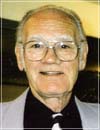
Scott Richardson (1923-2010) served as pastor of Katy Baptist Church in Fairmont, West Virginia.
Broadcaster:

Comments

0 / 2000 characters
Comments are moderated before appearing.

Be the first to comment!

Joshua

Joshua

Shall we play a game? Ask me about articles, sermons, or theology from our library. I can also help you navigate the site.