Bootstrap
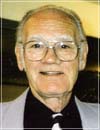
Scott Richardson

What Does Being Dead To Sin Mean

Romans 6:2-11
Scott Richardson May, 27 2001 Audio
0 Comments

Sermon Transcript

Auto-generated transcript • May contain errors

100%
I want to read a few verses here
in the 8th chapter of the book of Romans. He said there in the 30th verse,
it says, Moreover, whom he did predestinate, them he also called, and whom he called, them he also
justified. and whom he justified, them he
also glorified. What shall we say, then, to these
things? If God be for us, who can be
against us? He that spared not his own Son,
but delivered him up for us all, how shall he not with him also
freely give us all things? Who shall lay anything to the
charge of God's elect? It is God that justifieth. Who
is he that condemneth? It is Christ that died, any rather
that is risen again. Who is even at the right hand
of God? Who also maketh intercession
for us? Who shall separate us? from the
love of Christ. Over here in the 6th chapter
of the book of Romans, Romans chapter 6, and let me read verses 2 and verses 7, verses 2 and 7 and 11. Paul says in verse 2, God forbid, how shall we that are dead to
sin live any longer Then in verse 7, he says, For he that is dead
is freed from sin. And then verse 11, he says, Likewise
reckon ye also yourselves to be dead indeed unto sin. but alive unto God through Jesus
Christ our Lord. And then in the seventh chapter
and the fourteenth verse, he says, For we know that the
law is spiritual, but I am carnal and sold under sin. Now, Paul here in these verses
describes believers as being dead to sin, and he describes
himself as a believer, and he says in the last verse that I
read to you that he was carnal and sold under sin. Now, how
can it be said of the same person that he is both dead to sin and
sold under sin? Now, being dead to sin can only
refer to the state of the person as being dead to the guilt and
the defilement and the dominion of sin based totally upon the
righteousness of Christ freely imputed unto him. Now, there
in that eleventh verse when he says, Likewise reckon ye also
yourselves to be dead indeed unto sin and alive unto God,
through Jesus Christ. That first line there where it
says, Reckon ye all so yourselves to be dead. The word reckon means
impute. It's just like saying consider
it to be so. Reckon it to be so. So we conclude
then that the Apostle Paul certainly was certainly not dead to the
power and to the presence and to the influence of sin in his
character and in his conduct. We are agreed on that. Now, soul,
to understand, refers only to his character and conduct as
being constantly plagued by self-righteousness and self-love. And that's what
he's talking about here in the seventh chapter, being flagged
by self-love and self-righteousness. He said, for that which I do,
I allow none. For what I would, that I do not,
but what I hate, that I do. If then I do that which I would
not, I consent unto the law that is good. Now then it is no more
I that do it, but sin dwelleth in me. And there is this battle
that rages in the soul of the believer, one pulling in one
direction and one pulling in another direction. So that's
what soul under sin refers to, is this Paul's character and
Paul's conduct as being constantly tormented and plagued by his
self-love and self-righteousness, which hindered him from loving
God as he desired to and hindered him in his service to God, hindered
him in perfectly loving his neighbor as himself. But he still fell short of the
standard of perfect righteousness. Now, I think we have been taught
these many years that God could never justify or entitle Paul
to the least part of his salvation based on that which is carnal.
Paul said he was sold under sin and was carnal. Now, he cannot
justify sinners on the basis of wickedness. He can't do that. His honor and his glory is at
stake. His holiness and justice is at
stake here. So if he can't justify sinners
on the basis of out-and-out wickedness, Paul's character and conduct
had to be excluded then from the ground of salvation as the
entitlement to all the blessings of heaven. Nothing we can do
in our character or in our conduct, starting from the cradle to the
grave. Nothing we can do in a lifetime. Whether it's 40 years or 20 years
or 10 years or 70 years or 100 years, there is nothing that
we can do in our character and in our conduct all the days that
we live from the cradle to the grave before or after we're saved
that will measure up to the standard of perfect righteousness. Now,
we understand that. We agree that that's true. Everything
that we do, we fall short. We fall short and at no time,
even when we're doing our very best, Bob, can we honestly say
that we love God perfectly and we love our neighbors as ourselves. There is never a time from the
cradle to the grave at the best state and the best environment
and the best situation When we have our greatest love, can we
say that we love God like he ought to be loved or love our
neighbors as they deserve to be loved? So we must continually
cry out like the Apostle Paul who cried out, O wretched man
that I am. So God cannot justify us based
on anything that falls short of his perfect righteousness.
Yet in God's salvation, in the salvation of God wrought by the
Lord Jesus Christ. He justifies us, he sanctifies
us, he qualifies us, and he entitles us to all of God's salvation. Now, how does he do that? Because
he puts us in him. Because it's based, all that
God does for us by way of saving us is based. is grounded on the
Lord Jesus Christ as he freely imputes his righteousness and
it is received by us. So our character then and our
conduct is to be totally excluded from the ground of our justification
and our right to eternal life and glory. and our conduct. Well, since that's true, and I know
it to be so, this ought to cause us, we ought to experience this
in light of that, that it's not based on our character and conduct,
based solely and wholly on Christ and his finished work. His finished work is that he
established a perfect righteousness that stands every sinner who
receives that righteousness in good stead with God. He finds favor with God. It entitles
him to all that God is and all that God promises. It entitles
him to all the blessings and eternal glory of God's heaven. Now, this ought to cause every
sinner to rejoice. We are saved and dead to the law and sold under
sin, and our character and conduct is excluded as a basis of our
justification, so our justification then is based on that which Christ
did, who Christ is and what he did. Now this ought to cause
every sinner to rejoice. There is no reason whatsoever
under the sun for any person here under the sound of my voice
to see. No reason for you to cling to
your self-righteous efforts which all fall short and to continue
and you're rejecting the grace of God revealed in God's salvation
of sinners. So if our character then and
our conduct is totally excluded as a basis, and the reason I'm saying these
things is I want us to be skilled in the Word. That is a desire that every believer
ought to have, to be skilled in the Word and to know for sure
and for certain that the salvation of God is His as a free gift,
a free gift of God alone based on the doing and the dying of
the Lord Jesus Christ. character and conduct is totally
excluded, then our salvation, you see, is guaranteed. Then our salvation is sure. Our
salvation is certain. Why? It is not based on our character
and conduct. It is based on the righteousness
of the Lord Jesus Christ, charged by our account. So it is guaranteed. It's sure, it's certain. No wonder
then, as I read at the outset of the service, no wonder no
one can condemn us. You can't be condemned. Well, I didn't read that, did
I? I will read it. Verse 1 of chapter 8, Paul's talking to these, who
have been freely justified by God, based on the righteousness
of Jesus Christ, reckoned to their account, charged to their
account, has nothing to do with their character and their conduct.
Now, I'm not saying here, don't get me wrong, I'm not saying
When I say it's not based on your character in God, I'm saying
when a man is saved by the grace of God, his character and his
conduct make some change. There is a difference. He's through
with these dead works. Now he's alive unto God and he
desires to please God. He desires to show forth in his
life ways and means whereby God might be glorified. His sole
objective now is to live for God. Although he's not perfect,
even before salvation and after salvation, no time in his life
is he perfect, sinless, perfect, sinless perfection. No, no, no. It's all not based on him, it's
based on Christ. the love of God in Christ may
shed abroad in his heart. He loves God and he loves Christ.
He wants to serve Christ. He wants to testify concerning
Christ. He wants to tell others if he
gets the opportunity. Well, no wonder then if it's
this way, not according to our righteousness but according to
the righteousness imputed unto us by the Lord Jesus Christ.
If that's so, then that's so because it's here. No wonder
then no one can condemn us because they have nothing to condemn
us for. When we stand before God at the
great gathering of his people, it says here, Who shall lay anything
to the charge of one of the least of God's people? You can't lay
anything to their charge because they're in Christ. See? If God
be for us, who's going to be against us? Who can rise up in
judgment against us if God is on our side, if God's for us? This is sure and certain. There's nothing questionable
about this. There's no ifs or conditions
on this. If I do this and if I don't do
that, It's all conditioned on the righteousness of the Lord
Jesus Christ, for it imputed us. No wonder, then, if this
is so, that none can condemn us. No wonder that no one can
separate us from the love of God. No wonder the man who is
saved by the grace of God based on the righteousness No wonder
he can't lose that salvation. He can't lose it. He can't be
saved today and lost tomorrow because it's based upon the Lord
Jesus Christ and his righteousness. No one can separate us from the
love of God. It says, Shall tribulation separate
us from the love of God? Hard times. I've had a lot of
hard times. If that had separated you from
God, I'd have been separated a long time ago, wouldn't you?
Shell distress, I've had a little of that, too. Or persecution,
or famine, or nakedness, or peril, or sore. That won't separate
us from the love of God which is in Christ Jesus. We've never
been promised good times. We've been promised this, after
much tribulation you shall enter into the kingdom of God. Tribulation,
hard times, tough times. As it is written, for thy sake
believers are killed all the day long. We are counted as sheep
for the slaughter. But nay, in all these things
we are more than conquerors. How? Through him that loved us.
and freely gave us his righteousness, which ours is to our account.
For I am persuaded," I'm convinced. Paul said there's no question
in my heart about this thing. I know it's sure. I know it's
certain. It's guaranteed. God himself guarantees it. For
I'm persuaded that neither death, when I die, that won't separate
me from the love of God or you. neither death, nor life, nor
angels, nor principalities, nor powers, nor things present, nor
things to come, nor height, nor depth, nor any other creature
shall be able to separate us from the love of God which is
in Christ Jesus our Lord." Now, you see, a sinner ought to rejoice
in that, ought to rejoice to know that his character and his
conduct that the salvation of God is not based on his character
and conduct, but his salvation is based upon the doing and the
dying of the Lord Jesus Christ, his righteousness, freely. So
turn your back on your self-love and self-righteousness and quit
humping up and rejecting the free grace and the love of God,
He said, Come unto me, all ye that labor and are heavy laden.
Quit that working. Seize your doing and start trusting. Come unto me, all ye that labor
and are heavy laden, and I'll give you life, and I'll give
you rest. And that's the way it is. And
that's how a man can be. dead to sin, and sold unto sin,
and to be carnal, and to be saved at the same time, based not on
his character or his conduct, but based on the righteousness
of freedom.
Scott Richardson
About Scott Richardson
Scott Richardson (1923-2010) served as pastor of Katy Baptist Church in Fairmont, West Virginia.
Broadcaster:

Comments

0 / 2000 characters
Comments are moderated before appearing.

Be the first to comment!

Joshua

Joshua

Shall we play a game? Ask me about articles, sermons, or theology from our library. I can also help you navigate the site.