Bootstrap
Scott Richardson

By His Own Blood

Hebrews 9:12
Scott Richardson June, 10 2001 Audio
0 Comments

Sermon Transcript

Auto-generated transcript • May contain errors

100%
in the twelfth verse. It says, Neither by the blood
of goats and calves. The animal sacrifices. The blood of animals, the lambs,
the bullocks, the turtle doves, the blood of
those animals had no efficacy. They did not have the value to cleanse us from our sins, and the high priest He went in
the holies of holies once a year to meet with God on behalf of
the people that he represented. It says in this verse, in verse
11, But Christ being come a high priest of good things. We do have a priest, not a priest that was ordained
by man or a man-made priest. We have a high priest made after
the order of Melchizedek. Our high priest is the Lord Jesus. He is not only prophet, but he
is priest and he is king over all and above all. But Christ
being become a high priest of good things to come by a greater
and more perfect tabernacle. Now, the high priest went in
to the Holies of Holies, which was in the Tabernacle. The Tabernacle
was not a permanent place. It was made out of canvas and
leather. Well, maybe not canvas, but leather
anyhow. And it was made that it could
be taken down at a moment's notice. When the children of Israel made
a move, well, then Aaron's sons who were priests, and all those that were
in the priesthood, that was their job to take care of the things
of the tabernacle, to take it down and move it. And when the
children of Israel moved, they took the tabernacle with them.
And the high priest went in once a year. So it says that Christ
being come a high priest of good things to come by a greater and
more perfect tabernacle, not made with hands. That is to say,
not of this building. Now, listen to this. Neither
by the blood of goats and calves, but by his own blood. Speaking of the Lord Jesus, our
High Priest, He didn't take the blood of goats and calves, no
efficacy in their blood. Showed forth death, they were
a type, a picture of Him who was to come and shed His blood. So neither by the blood of goats
and calves, But by his own blood he entered
in once into the holy place, having obtained
eternal redemption for us. He obtained redemption on our
behalf. He being our surety, He being
our substitute and representative, He being God manifest in the
flesh, God incarnate, man and God in one person, taking upon
Himself our humanity. And all the rest, all the rest
put together could not make atonement for our sins. So he, the great
high priest, must come into the tabernacle
once a year, but not without blood. You've got to have blood,
value to the blood. Remember when he spoke to the
Israelites there in the book of Exodus? He said he would destroy all
the Egyptians, the firstborn of all the houses in Egypt, from
pharaohs to the least servants. He said, the death angel is going
to come over. That's God himself. He's the
death angel. He said he's going to come over.
And he said, but when he sees the blood, every squatter's house
that had the blood on the lintel in the side posts of the door,
every one of them that had the blood, he said, when I see the
blood, I'll pass over you." So when he comes into the presence
of God to obtain eternal salvation, he comes not without blood. Over here in the 22nd verse,
I believe it is, the 20th verse says, saying,
This is the blood of the testament which God hath enjoined unto
you. Moreover, he sprinkled with blood
both the tabernacle and all the vessels of the ministry. And
almost all things are by the law purged with blood, and listen
to this, and without shedding of blood there is no remission. no remission of sins without
the shedding of the blood. And our Lord Jesus Christ must
die. And the shedding of His blood
speaks of death, because the wages of sin is death. And we
are sinners. We are sinners by nature, born
that way. We went astray from our mother's
womb. speaking lies and hypocrisy. Sinners by nature inherited our
first Father's nature. Sinners by nature, sinners by
choice, and sinners by practice. We must have our sins put away. he came to make an end of them. He put them away, and it says
that he put them away as far as the east is from the west. He cast them behind his back,
and he will remember them against us no more. All based on the
shedding of the blood. the innocent victim, he who knew
no sin, but was made sin, that we might be made the righteousness
of God in him." Righteousness is established. The righteousness
that God demands, God provides. What he demands, he provides. Our righteousness is not of ourselves. Our righteousness is of God himself. When he said to David and Abraham,
he said, Blessed is the man to whom the Lord will not charge
sin. That man has received the imputation of the
righteousness of Christ. So there is no forgiveness of
sins. There is no righteousness apart
from the shedding of the blood. because the soul that sinneth
shall surely die. And our Lord, being our substitute
and our surety, he died. Christ died while we were yet
sinners. Christ died while we were yet
enemies. Christ died for our sins. Righteousness is established. He died because He must keep every aspect of
the holy law. Justice demands that the soul
that sinned shall surely die. Justice demands that. And God
can only forgive sins on the basis of one who presents himself
without sin and yet in his own body pays what God demands as
a penalty and punishment for our sins. And Christ died for
our sins, stood in our place as one of us, as a man, just
like you being a man or a woman, he was a human being and he was
God in one person. God cannot die, but the man,
Christ Jesus, he can suffer and he can bleed and he can die. But God can't suffer, God can't
bleed, and God can't die. But the man, Christ Jesus, God
and man in one person, he could suffer, he could bleed, and he
could die and God raised him from the dead.
He was delivered, listen to me now, he was delivered for our
offenses, he was delivered for our sins, for our offenses and
raised again for our justification. That is, judicially and legally. When he was raised again, we
went with him. We was in Christ. When he died,
we died. And when he was buried, we was
buried. And when he rose again, we rose
again with him. So we don't have anything to
do with it. God did it all. What part in
it do I have? You furnish the sin. That's the
only part that you and I have in this great matter of salvation
that we furnish the sin. God takes care of it all by His
grace. By His free favor, He does this
for us. Well, that'll be all I'll read.
We'll be here for a few minutes in the book of Romans, chapter
4. Romans chapter 4. In verse 16 of the fourth chapter. He says, therefore, it is of
faith. Of course, faith is a gift of
God, a free gift. The wages of sin is death, but the gift of God is eternal
life. Faith in itself is worthless. Faith in itself. Faith does not do anything. Faith does not save us. We are not saved by faith. We
are saved by and through faith that connects us to the Lord
Jesus Christ. Therefore, it is of faith. Here in the book of Ephesians,
let me read a verse here. The second chapter, I think it
is. It says here, And you hath he
quickened. God quickens the dead. He's the
quickener. And you hath he quickened who
were dead, spiritually dead. They were alive physically, but
spiritually they were dead to the things of God. Life is in Christ, and if you're not in Christ,
you don't have life. You're dead, dead spiritually. But Paul says, And you, you Ephesian
believers, here in this first chapter he says, Blessed be the God and Father
of our Lord Jesus Christ, who hath blessed us, that's past
tense, already blessed us, with all spiritual blessings in heavenly
places in Christ. All blessings is in Christ. Everything that God has and all
of his gifts and all of his promises are all yea and amen in Christ. Without Christ you can do nothing. So he says in verse 4, According
as he hath chosen us in him, that is, as God Almighty, over
all and above all, hath chosen us in him, chosen us in Christ,
Before the world was, God in his determination and his will
and his purpose chose so many out of Adam's fallen race unto
himself and placed them in Christ. According as he hath chosen us
and him before the foundation of the world, that we should
be holy and without blame before him in love. to be without blame
and to be holy before God in love, that cannot come about
in ourselves. We cannot be holy as God requires
us to be holy, but we are holy in Christ, in our substitute,
in our representative, in our He chose us in Him before the
world ever was. He chose us in Christ. We fell
in Adam, but we never fell in Christ. He preserved us all of
that time, up to that time He called us with a holy calling. He says that we should be holy
and without blame before him in love. Well, we just can't
be holy enough in ourselves. That's an impossibility. The
thought of foolishness is sin. Can anybody here say this evening,
if they never have a thought of foolishness, that that hasn't
crossed their mind sometime in the span of your life? Probably you've got a thought
of foolishness right now. The very thought of foolishness
is sin. How can we think even, how can
we grasp the idea of being holy and without blame before him
in love if we take a look at ourselves? It's got to come by
imputation. It's got to come judicially and
legally before God by the imputation of the righteousness of the Lord
Jesus Christ imputed to us. That's how we're holy and without
blame in Christ, having predestinated,
predetermined If he chose us in Christ before the foundation
of the world, it was predetermined. It was not a thing that he did
by any meanie-miney mole. But he set his affections upon
so many, the Bible says, out of every tribe and every tongue
and every nation under the sun. He says that there is an innumerable
company. There are millions of them. And
he said he is I, the Father and the Son and the Holy Spirit in
perfect unity, one God in three persons. Set their affection
upon us. this one and that one, not because
he foresaw anything in them. That was good. That was agreeable. That was conformable. Not anything. He saw them as what? As poor, helpless, hopeless,
doomed, damned sinners. And if he didn't do something
in their behalf, they would lie under the wrath of Almighty God
in hell forever and forever and forever. And so God provides
them with a sacrifice, and that sacrifice must be a perfect sacrifice
to give value to his blood. So the Lord Jesus Christ, second
person of the Trinity, made an agreement and said, I'll be responsible
for those that you've chosen me. I'll be responsible for them. Whatever you require out of them,
I'll provide. So he provides a sinless perfection. He provides a perfect righteousness
without flaw, without blemish, or without stain, or without
blot, His righteousness. And those that God hath chosen
who believe His testimony concerning His Son and His righteousness,
The righteousness of God then is charged to their account,
and he sees them in Christ, having predestinated us, predetermined, unto the adoption of children
by Jesus Christ to himself, according to the good pleasure of his will.
Now, that means that he did not see anything in us. There was no reason found in
us that would cause God to show favor to us. The reason is not
in you, if God hath saved you, by and through the substitutionary
work of the Lord Jesus Christ and brought you to faith in Christ? It was not. It is an impossibility
for you to have anything that would entice or induce God to
look in your direction. The reason is found in Him, and
the reason is It was according to his good pleasure. I think that's what it said.
Having predestinated us unto the adoption of children by Jesus
Christ to himself according to the good pleasure of his will. His will. Our Lord, I mentioned
this morning, our Lord Jesus Christ said, I come not to do
my will, I come to do the will of the Father. And it's the will
of the Father that all that the Father gave to the Lord Jesus
Christ will come to the Lord Jesus Christ. That's the will
of the Father. And him that cometh to me, I
will not cast out. That's the will of the Father.
To the praise of the glory of his grace, where He, that's God,
He has made us accepted, that means accepted before God, and
how are we accepted? In the Beloved, in the Lord Jesus
Christ. In whom? Whom is a person? That's the Lord Jesus Christ.
In whom we have redemption? How? Through his blood he died. He really died, the man, Christ
Jesus, God, man, one person. He actually, really suffered,
bled, and died, and went into the ground, was buried. He actually
died. So we have redemption through
his blood. His blood speaks of him dying. Without the shedding of the blood
there is no remission, no forgiveness of sins. Without that, because
justice will not permit God to forgive us of our sins apart
from the penalty being paid. The precepts of the law have
been kept and he also keeps the penalty of the law. He was not
a sinner. He had no sin. He was as pure
as pure can be. He always pleased God from eternity
and throughout eternity he is the darling of God's love and
the darling of God's bosom. He's the delight of God. He had
no sin. It was not necessary for him
to die, but being our sponsor, being our surety and our benefactor,
being our substitute in order that we might be saved, we've
got to have a spotless righteousness. So the Lord Jesus Christ, he
died in our stead, shed his blood so justice is satisfied, asked
to punishment, see? God does not forgive, he does
not lower his demands or his standard or his holiness. So Christ being a man stood in
our stead, offered to God a perfect sacrifice, sinless perfection,
God said, that is my beloved son whom I am well pleased, and
he shed his blood, which means he died to pay the penalty. And he said, his obedience, even
unto death, that's our righteousness, that's our righteousness. He
established this righteousness, now this righteousness is freely
charged to our account. So you look at me here tonight. I'm a sinner by nature, a sinner
by practice, a sinner by choice, but I'm a sinner who trusts in
the Lord Jesus Christ as my righteousness and my sin bearer. So as God
views me, he sees me in him, and in him I am as he is. Do you see that? Now, I understand
that. I see that clearly, and I hope
you do. Now, that's clear to me. I hope it is to you. We have redemption through his
blood, the forgiveness of sins according to the riches of his
grace. Well, let me go back there to what I was talking about. Well,
let me say this. You remember the parable of the
prodigal son. Now, we're all familiar with
that. There was a rich man and he had
two sons. And one of his sons grew tired
of working on the farm taking care of the sheep or whatever
it was at that particular time. He got tired of it. And the custom
was, and still is, that when the father dies, he leaves his
heirs his fortune. And this boy was disgusted and
tired and weary. And he wanted to see He wanted
to go on the other side of the fence, across the river. He wanted to get out and see
how other people lived. So he said, Father, I long to
go off into a far country and give me my inheritance now, if
you will. And I'm sure that the Father
reasoned with him and tried to help him see what was going to
happen down the road and all that, but he had to have it.
So he gave him his inheritance. And he took his inheritance and
he went off in a far country among the heathen. And they befriended him for a
good while and he ate and made merry and all that. But there
come a time that he spent everything that he had in riotous living,
spent it all. And in the providence of God, they sent him down to a farmer
who raised hogs. He was a Gentile, he wasn't a
Jew in this far country. And he said, well, I'd like to
have something to eat. He said, well, if you take care
of these hogs, I'll... And that was coming down the
ladder for a Jew to have anything to do with hogs. Unclean. And so he made a living there
for a while working with them hogs. And finally, it says, and
he came to himself, and he said, Well, I said, my father, my father
whom I've left. Well, I said, he's got all these... He said, I will arise and go
back home. I'll arise and go to my father.
So he did. And the father, in the meantime,
was looking down the road. Had a premonition. The providence
of God was working in both ends of the spectrum. And he'd go
out and he'd look down the road or down through the field yearning
to see that boy. And finally that boy got within
sight of home and his father saw him. And his father took out running. to meet his prodigal son, his
son that was lost. He ran with swiftness. And he made the first overture
towards his son. He grabbed him around the neck
and pulled him to his bosom. And he hugged him, and he kissed
his cheeks. He kissed him, and he kissed
him, and he kissed him. And the father or the son said,
Father, I'm not worthy to be your son. Let me, let me just
be a servant. I'll be treated like the servants
are treated. But the father said, That'll
never happen. Once you're a son, you're always
a son. You may experience this sometime,
maybe already have now. You might have a son and he'll
go off into the far country and get caught up in things and in
ways that demean you, but he's always a son. That cannot
be changed. You can say, well, I divorced
him. I had nothing to do with him.
But he's still your son. You can't get away from that.
He's still your son. He's blood of your blood and
bone of your bone and flesh of your flesh. Always was and always
will be. That's the way it was with the
father. The father loved his son. Now, God could not have him in
his presence with sin upon him, and he can't have us in his presence
with sin on us. He will not permit a single speck
or stain of sin upon his sons and his daughters. could not have the prodigal son
at his table with the rags of the far country upon him. He could go forth to meet him
in those rags. He could fall upon his neck and
kiss him in those rags. And that was characteristic of
the Father of grace to do so. But to see him at his table in
his rags would never do. The grace that brought the Father
out to the prodigal reigns, the Bible says, through righteousness,
which brought the prodigal to the father. Now, it would not
have been grace had the father waited for the son to deck himself
in robes of his own making. That would not have been grace. And it would not have been righteous
to bring him in his rag. But both grace and righteousness
shines forth in all their beauty and brightness here. When the
father went out to the prodigal and fell on his neck, but yet
did not give him a seat at his table, and would not give him
a seat at his table, until he was dressed in a manner suited
to that high and elevated position. So he said to his servants, he
said, my son, who was long, but now is fine, let's have Let's have a feast in honor of
my son coming home. So he said, bring the padded
tab and bring the vest coat of the
house. Bring him sandals for his feet
and say they brought out this robe. this robe with splendor
that gave elevation to his sonship. And he said when he brought the
robe out, he said to his servants, put this robe on him. Particle son did not touch the
robe. They put it on him. And that's the robe of righteousness
freely imputed to the believing sinner. It's the robe of righteousness
that fits the elevated position as the Son of God and that servant
didn't have a thing to do with it. He didn't say, Here, hold
that up so I can get my arm in it. He didn't say, Get it by
the shoulders and I'll back up there and I'll try to get that
on. No, it was all outside of himself. God's salvation, God's
redemption, is not of works, lest any man should boast, not
of works of righteousness which we have done, but according to
his sovereign mercy hath he saved us." So he brought that prodigal son
in and seated him at his table. Isn't that a wonderful story? He had no virtue. He didn't have
anything to offer, did he? In his rags, forlorn, spent all
of his money, all of his dad's money that was given to him.
His dad didn't criticize him. When he seen him coming, he didn't
say, well, I knew it would happen. Sooner or later it's going to
take place. He's going to come back. What
did you come back for? Got any of that money I gave
you? Not a word. Oh, he expressed his love. Went
up there and put his arms around his neck and began to squeeze
him. And began to kiss him on this side and this side, and
probably kissed him on the mouth. Bring the padded cab. Eat, drink, and be merry. My
son was lost, but now he's found. And bring the best robe of the
house and deck him in. That's God's salvation. He does
it all. We haven't got anything to do
with it. We furnish the sin. Listen to me. When God told Abraham,
Abraham was 99 years old. His wife was in her 90s. She
had a dead womb. She couldn't have no children. And Abraham couldn't produce
a seed. Dead. Both of them dead. And God said, I'm going to give
you a son. And Sarah laughed. And God said,
why did Sarah laugh like that? She laughed. God said, Abraham, come out,
I want to show you something. They went outside there, and God said,
Abraham, I'm going to give you a son, and you're going to be
the seed of many nations. And Abraham, how could they?
I'm as dead as Sarah's womb is dead. How can this be? And he said, you'll see the stars. He said, can you count them stars?
He said, no. The sky was brilliant, lighted up from that vault. He said, if you can count them
stars, then you can count your seed. Because he said, your seed
will be the number of those stars. And he said, you see the sand
that's on the seashore? He said, they'll be like the
grains of sand. You're going to be the father of man. Abraham, how could Abraham grasp
the idea of him being deceived when he was 99 years old and
she was 90 and her womb was dead and his dead? But the Bible says
somewhere there, I believe it's in Hebrews where
I started out, He knows in Romans, wasn't it?
Romans chapter 4, when old Abraham believed God,
that's what it says, he believed God. He believed that God could
make it so. God could give him a seed that
no man could number. He believed that. He believed
in God. who's the quickener of the dead.
We're dead in trespasses and in sins, I read you that. Dead,
as dead spiritually as we are physically, but God hath quickened
us who were dead in trespasses and in sins, just as dead as
Abraham's body and just as dead as Sarah's womb. And here, listen to this verse. What shall we say then that Abraham,
our father, as pertaining to the flesh, hath found? For if
Abraham were justified by works, what I do and what I don't do,
oh, I must do this, I must do that, in order to gain God's
favor. If you've got to do anything
to gain God's favor, then that's works. Anything, I don't care
what it is. The lifting up of a pencil that
has fallen, if that's a condition, you've got to pick that up in
order to gain God's favor, that's a work. And he says here, for
if Abraham were justified by works, justified before God,
seen by God as not guilty, no condemnation. For if Abraham were justified
by works, he hath whereof to glory. Then he can brag a little
bit. If I'm saved, and I go around believing that my works had something
to do with it, Well, then I share God's glory. I can say, well,
me and God. God couldn't do it without me.
Me and Jesus. Oh, no. It's Jesus only. It's not what you do or what
you don't do. It says he would have something to glory, but
it says not before God because God won't share his glory. Now,
listen. For what saith the scripture,
What does the scripture say about this? It says, Abraham believed
God, who was the quickener of the dead. That's what he believed. And going up in here, he says,
verse 17, as it is written, I have made thee a father of many nations, an innumerable company, before
him He believed, even God, who quickeneth
the dead, and calleth those things which be not as though they were."
Now listen, talk about Abraham now, whose hope, who against
hope, believed in hope that he might become the father of many
nations. according to that which was spoken,
so shall I see be." He believed against hope, and being not weak in faith,
he considered not his own body, now dead, when he was about a
hundred years old, neither yet the deadness of Sarah's womb. He didn't even take it into consideration. He staggered not. He didn't falter. He didn't get on the threshold
and then take a step back. He didn't stagger. He staggered
not at the promises of God through unbelief, but was strong in faith,
giving glory to God, and being fully persuaded that what he
had promised, what God had promised, he was able to perform. Therefore," here we go, "...therefore
him believing the testimony of God being the quickener of the
dead, and therefore it was imputed to him, charged to his account
for righteousness." The only righteousness is I've
got. That's the only righteousness, that's the only holiness I've
got, is that which is imputed to me, the righteousness that
was established by the Lord Jesus. Now, listen to this. Now, it
was not written for Abraham's sake alone, for his sake alone,
that it was imputed to him, here's the good part, but for us. if we believe on Him that raised
up Jesus our Lord from the dead. What did our Lord do? He who
was delivered for our offenses and raised again for our justification.
Scott Richardson
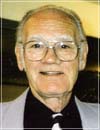
About Scott Richardson
Scott Richardson (1923-2010) served as pastor of Katy Baptist Church in Fairmont, West Virginia.
Broadcaster:

Comments

0 / 2000 characters
Comments are moderated before appearing.

Be the first to comment!

Joshua

Joshua

Shall we play a game? Ask me about articles, sermons, or theology from our library. I can also help you navigate the site.