Bootstrap
Scott Richardson

The Person, Christ Jesus

Romans 1:1
Scott Richardson April, 8 2001 Audio
0 Comments

Sermon Transcript

Auto-generated transcript • May contain errors

100%
after the book of Romans, if
you will. Romans 1. And verse 1, Paul, a servant of Jesus Christ. This identifies who Paul is. He's a servant of Jesus Christ. Great statement, isn't it? Paul, a servant. One who serves. One who is obedient. a servant of Jesus Christ. He's
called an apostle. He's been separated unto the
gospel of God. And the gospel is good news to
those that hear it. Good news to those that hear
it. Evidently, many do not hear it,
because if they did, we'd have a different world than
what we've got. He's called an apostate. He's a servant. He's called. And if God calls him, then it's
a holy calling. And then he's separated. Not separated from the world,
but he is separated unto the gospel. That is, he lives in
this world, but he's separate from the world and separated
unto the gospel. And he says in verse 16, he said,
I am not ashamed of the gospel of Christ. Evidently, there must
have been some in Paul's day of Adam's race that were ashamed. of the gospel. And why would a man be ashamed
of the gospel when the gospel is good news? When the gospel
begins with a person, and the person who is the gospel, the
Lord Jesus, promises life forever to whosoever would believe in
Him. Why would a man be ashamed of
that? But Paul was not ashamed. But there are many who are ashamed
of the gospel, ashamed of him, who don't want to be identified
with him. Why would a man refuse to be
identified with one who is God and man in one person? who has
all power and all authority in this world and in the world to
come. Why would a man want to be separated by way of identity
with this man, Christ Jesus? Well, let's start this way. If someone were to ask, Do you
preach and trust a person? Or do you preach and trust a
system of theology? Two questions. Do you preach
and trust a person? Or do you preach and trust a
system of theology? Well, we know for a certainty
that Jesus Christ, the Lord, is most certainly a person. He is a unique person. He is both God and man in one
person. We trust in a person. We know that Righteousness is
perfect satisfaction both to the precept and the penalty of
the holy law of God Almighty. Well, to the answer that I would give if a person
asked me, Do you preach and trust a person? or do you preach and
trust a system of theology? My answer would be that we preach
and trust a person who is identified and distinguished
in our system of theology, and it begins with the gospel,
this system of theology. Now, you cannot have one without
the other. You cannot have the person without
the theology. You cannot separate the person
of the Lord Jesus Christ with the righteous Jesus Christ. There is a difference between
the person and his work. You can't have one without the
other. If you trust the person as he
is revealed here in the Scriptures, you will surely arrive at trusting the theology. Well, here in Romans chapter
1 and verse 4 is where the system of theology begins. It says,
concerning his son, This is what Paul preached. He preached the
gospel concerning his son, God's son, not Paul's son, but God's
son, which was made of the seed of David according to the flesh. He came out of the lineage, ancestry
of David, the great king of Israel and the sweet singer of the Psalms. That's where he came from, the
flesh, his lineage. And declared, he's declared not to be, that
to be is in italics, which means that it's not in the original which was made of the seed of
David, according to the flesh, concerning his son Jesus Christ,
and declared the Son of God with power, with power, infinite power,
who speaks, and it's done. He doesn't even have to speak.
He wills, and it comes to pass. Son of God, power, glory, and
infinite holiness, power, authority, and has power over all flesh. This is where our system of theology
begins. The Gospel, first, as Paul says, begins with concerning his son,
the Lord Jesus, which is Christ's person. It begins with Christ's
person. We know that he came, he lived,
he died, he was buried. Well, he came, he lived, he suffered,
he bled, he died, he was resurrected. begins with him and his coming. The gospel first concerns the
Lord Jesus Christ, his person. Why does it first concern his
person? Do you just trust in a person? I trust in a person and I also
trust in this system of theology that identifies this person. All the value and power of everything
that this person did is gained from the fact that he is the
Son of God incarnate. All that he did comes from the
fact of who he is. He is God and man in one person. That is theology. That's theology. God, man, one. Very few people
believe in that system of theology. If you would ask the Jehovah
Witness and the Mormons and all the rest of them about the deity
of the Lord Jesus Christ, they would tell you, no, we don't
know anything about that and we don't believe that. We believe
that he was a lesser. He was a lesser deity is what
what the Jehovah Witnesses say, He is a lesser deity than God. They don't believe that He is
truly God and truly man in one person. Now, their system of
religion and salvation is an impossibility. You've got to
have deity and humanity in one person. So the Gospel first begins with
concerning his Son, Christ's person. And why? Because all
the value and all the power of everything that this person did
is gained from the fact that he is the Son of God incarnate. In Romans chapter 1 and verse
16 it says this, Keep in mind now verse 2, "...which he had
promised afore by his prophets in the holy scriptures." What did he promise? Well, he
talked about called to be an apostle separated under the gospel
of God which he had promised afore by his prophets in the
word. They wrote it down. They talked
about the Messiah who was to come. concerning His Son, the
Lord Jesus. That is what the prophets talked
about. They talked about the Messiah
who was to come, He is the Son of God. So the gospel begins
concerning the Son of God, and it says up here in verse 16,
Paul says, I am not ashamed of the gospel of Christ. It is the
power of God unto salvation. To everyone that believes it,
to the Jew first and also to the Greek. For therein, therein
what? Therein the gospel is the righteousness
of God revealed. Is that not what a man needs? He needs a righteousness that
is equal to the demands of God's holy law. He needs, as I said many times
here before, a sinless perfection that will stand him in good stead
with God, because God's law is honorable and it's just and it's
holy and it's pure. It's a good, holy, and just law. law of God. And the end result of the fulfilling
of that law renders one sinlessly perfect. Perfect for God. Perfection. Righteousness means
perfection. That's what God demands out of
his people. So it begins, the system of theology
begins concerning his son. And it says, Paul said he wasn't
ashamed of it. I'm not ashamed of the gospel
concerning his son. Why? Because it's the power of
God unto salvation. What is salvation? Salvation
is a perfect righteousness before God. That's what salvation is. And where is it to be found?
It's to be found only in this person who hath come and fulfilled
the law in behalf of those that the Father gave him. They have a perfect righteousness
because God said that He would impute the righteousness of Christ
to the stead and place or on the account of the believing
sinner. So we trust in a person. There is a person in His Word.
You cannot trust in His work without trusting in His person.
And I'm telling you that these that you see on the television
and talk with and read about from time to time are trusting
and believing in a Christ who cannot save you. They said we love Jesus. You
talk to them a little bit and they say, but we love Jesus.
What Jesus do you love? Do you love the Jesus of the
Bible? Or a false Jesus? Oh no, we love Jesus. We believe
Jesus saved us. How did He save us? Well, He
died. There's more to it. He saved us on the account of righteousness
fulfilled. God cannot turn a man down who
has the righteousness of Christ imputed to his person. Well,
it's the power of God unto salvation, this righteousness established
which is revealed in the gospel that I read to you. Verse 17, For therein is the
righteousness of God revealed from faith to faith, as it is
written, The just shall live by faith. For the wrath of God
is revealed from heaven against all ungodliness. Righteousness
established is revealed in the gospel. his infinite power, this
righteousness has been established by him because of his infinite
power to do so and because of his person who established it. If he was not God and man in
one person, he could not establish. Well, but however the person
and the righteousness are distinct, immediately God the Holy Spirit
reveals unto whosoever is interested the humanity and the deity of
the Lord Jesus Christ. How was his deity declared? It was declared by the resurrection
of the dead. As a man, he died. As God, he could not die. God
cannot suffer, God cannot bleed, and God cannot die. The Lord Jesus Christ in his
humanity died and was resurrected. And what is the ground of his
resurrection? The ground of his resurrection
is righteousness established. He fulfilled the law. Every jot
and every tittle of the law he fulfilled. That's what God has
required. that his law be fulfilled. The only way his law could be
fulfilled is by a deity and humanity in one person. And so the promise
was fulfilled in the person of the Lord Jesus Christ when he
died. God raised him from the dead
by the resurrection of the dead. And on the ground of his resurrection,
his righteousness is established forever. Well, Paul said, I'm not ashamed
in verse 17, I believe. He said, I'm not ashamed of the
gospel of Christ, for it is the power of God unto salvation to
everyone that believes. to the Jew first and also to
the Gentile. For therein, in the gospel, is
the righteousness of God revealed from faith to faith. As it is
written, the just shall live by faith. Now faith, the faith
of God's people, submits to the righteousness of God. established
by the Lord Jesus Christ, who is both God and man in one person. The righteousness is not Christ
himself. I want to make that very clear
here this morning. The righteousness is not Christ
himself. Righteousness is the work of
Christ himself. It is the work of Christ. It's not the person of Christ,
it's the work of Christ. He said, Thou hast given, I have
finished the work that Thou hast given me to do. What is this
work? This work is fulfilling the law
on behalf of those that the Father gave him before time ever was. That's the work. So I say, if
someone said, well, do you trust in a person or do you trust in
a person or in a system of theology? I say both. You can't have one
without the other. You've got to have this righteousness
and the only way you get it is to believe on the Lord Jesus
Christ and God the Holy Spirit imputes that to your person,
gives it to you freely, clothes you with his garments of salvation. It is the work of Christ Himself
performed in His obedience unto death to satisfy both the precept
and the penalty of the law. What the law demands, He gives
in Himself perfection unto God. and at the same time gives himself
to the penalty of the broken law and suffers and bleeds and
dies. That's what takes place. Now,
our Lord Jesus Christ fulfilled, as I said a million
times, every jot and every tittle of God's holy law on behalf of
all those that God gave him. The Lord Jesus is one person
with two distinct natures, God and man and one person. Now,
he is fully God in every attribute of deity. He is fully man. in every attribute of humanity
excepting sin is the sinless one. The work of the Father that sent
him to accomplish demanded the constitution of his person as
God and man. in one person. God the Father
chose a multitude of guilty, hell-deserving sinners and determined
to save them and bring them into full favor and fellowship with
himself. However, God could not save even
one And they said, God could not save even one of
those multitude of guilty, deserving hell sinners apart from his law
and justice being satisfied by the obedience and the death of
a proper substitute. And that proper substitute is
the God-man, man and God in one person. God couldn't save anybody. God could not save anybody. One thing that God cannot do
is save a man apart from the satisfaction of holiness and
justice. The Lord Jesus Christ came to
do that. He's our righteousness by imputation. That's the gospel. That's salvation. It's not in its... Oh, yes, I
love Jesus. Everybody loves Jesus. Y'all
stand up singing Dirty Vacation Bible School. Oh, how we love
Jesus. Oh, how we love Jesus. And then they meet on Sunday
night and the whole congregation stands up and they all love Jesus. But do they love his substitutionary
work? You can't have Jesus without
his righteousness. What do you believe? I believe
in Christ. I believe in the person of Christ.
But the person of Christ absolutely cannot save me. It's His work and His person. Man and God in one person. He
saves me. He can bear my penalty. He can
bear my hell. And He can fulfill that law that
God demands, that I love Him with all my heart and soul. My
neighbor is myself. The Lord Jesus Christ, the person,
That is His work and He fulfilled it. And God then bases our salvation
on the fulfillment of the righteousness established by the Lord Jesus
Christ Himself. God the Father appointed the
Son as mediator of the of the covenant of grace
and conditioned all the salvation of his people
upon Christ and his finished work. Christ had to become incarnate
to obey the Lord in every detail. He had to be God and man one
to obey the law perfectly, and to bleed and cleanse us from
our defilement, and to suffer and to die in order to redeem
his people. He had to be both God and man,
and any religion, any doctrine, or so-called gospel that denies
His deity or His humanity is a false gospel. Make no bones about it. You deny
His deity and His humanity, you've got a false Christ who can't
save anybody. God and man in one person, as
a man. he established righteousness.
Not that he needed a righteousness. He is righteous in himself. But
he finished the work that the Father gave him to do. What was
that work? To establish a sinless perfection,
a righteousness that would meet the demands of justice in precept
and in penalty. Why did he suffer and why did
he die? He did that for guilty, deserving sinners. So he did
that for and fulfilled all righteousness. He has accomplished work to establish
righteousness by his obedience unto death, the Bible says. For
his sheep, I lay down my life for the sheep. The work he was
sent to do was a very specific work. It was perfect satisfaction
of both precept and penalty. And this is an infinite righteousness
which he attained by his perfect obedience on the tree. when he completed the work by
his death and God raised him from the dead. He was buried and raised again
the third day. And his righteousness enables
God, enables God to be a righteous judge as well as a loving and
kind and merciful and gentle Father. To believe on Him now,
to believe on the Lord Jesus in John chapter 3 here, listen to what it says,
John chapter 3, God so loved the world that he gave his only begotten
Son, that whosoever believeth in him, his person and his work, whosoever
believeth in him should not perish, but have everlasting life. Now, to believe on him is to
believe on this person who lived and died and rose again on the third day, as he accomplished this specific
work, righteousness. You've got to have righteousness. You've got to have the person
and you've got to have his work. Righteousness, and I say this
tenderly, I don't want to be mistaken. I don't want to be
misunderstood. His righteousness is seen in
His work. He was obedient unto death. That's His righteousness. And
listen to this now in Romans chapter 4. You're familiar with
these verses. It says, verse 3 of the fourth
chapter, It says, But what saith the Scriptures? What does the
Word of God say? Well, it says, Abraham believed
God, and it was accounted unto him
for righteousness. He believed in the sign, that
the sign was to come. Christ had not come at this particular
time when Abraham believed God, but he believed the promise of
God that God would supply this righteousness that he demanded
in the person and in the work of his Son. And Abraham believed
God. So when they say to believe on
the Lord Jesus, it's to believe God, that God through Christ
and His righteousness imputed to you is your standing before
God. Well, he goes on and says, listen
to this, verse 6, Even as David also describes the blessedness
of the man, unto whom God imputeth righteousness without works. David was a type of Christ, a
kingly type, and Christ came through his lineage, but Christ
is not mentioned only in type in the Old Testament, and even
as David described the blessedness of the man to whom God imputes
or charges righteousness to without works. That's what it means to
believe on Him. And then he goes, well, there's
no doubt about it. Listen to verse 23. It says,
now, after concerning Abraham and David, it is not written
just for Abraham's sake alone or David's sake alone, that it
was imputed to him, to David and to Abraham, but for us also,
to whom it shall be imputed, if we believe on him that raised
up Jesus our Lord from the dead who was delivered for our offenses
and raised again for our justification. Justification is to be found
not guilty before God because we are dressed in the righteousness
of the Lord Jesus Christ who is the fulfiller of the law. We stand before God in Christ
justified freely by the grace of God forever and forever. So
you see what I'm talking about now? I'm talking about a system,
a system of theology. Yes, I believe in a system of
theology. Yes, I believe in Christ's person. It begins with Christ's
person, the gospel. And His gospel is identified
in the Scriptures by His obedience. There can't be any person saved
apart from the righteousness of God in Christ. That's all
there is to it. Everything is dependent upon
this righteousness. That's the reason he could say
that back here. Even as David described also the blessedness
of the man unto whom God imputes righteousness. Everything is
based on righteousness and who renders that righteousness? Who is it that establishes that
righteousness that causes us to gain favor with God? Who is
the Lord Jesus Christ? God in man, one person. He establishes
that righteousness. He doesn't say anything about
believing on the Lord Jesus Christ here. "...unto whom God imputeth righteousness."
Righteousness. It hadn't been established yet.
Christ had not come. So righteousness is that which
the Lord Jesus Christ establishes, perfect righteousness without
flaw, renders a man to be absolutely pure before God, without spot
or without wrinkle. As Christ is, so is He. You can't have the person of
Christ without the righteousness of Christ. They're inseparable. You can't
separate Christ from His righteousness. You can't do it. So I trust in the person and
I trust in the righteousness imputed to me freely by God on
the account of the Savior. All right.
Scott Richardson
About Scott Richardson
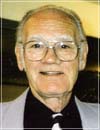
Scott Richardson (1923-2010) served as pastor of Katy Baptist Church in Fairmont, West Virginia.
Broadcaster:

Comments

0 / 2000 characters
Comments are moderated before appearing.

Be the first to comment!

Joshua

Joshua

Shall we play a game? Ask me about articles, sermons, or theology from our library. I can also help you navigate the site.