Bootstrap
Scott Richardson

The Righteousness of God Imputed To Us

Romans 4:6
Scott Richardson April, 1 2001 Audio
0 Comments

Sermon Transcript

Auto-generated transcript • May contain errors

100%
Turn with me here this evening
for a few minutes to the fourth chapter of the Book of Romans,
and I'll probably repeat myself. What I said this morning a great
deal will be repetition, I think, probably. But repetition is how
you learn. over and over and over and over.
And in the spiritual realm, why, sooner or later, if we are to
be skilled in the Word, it's because we consider the Word
to be the Word of Truth, and we go over it and over it and
over it. No end to it. say the same thing. Not two or three times, but sometimes
a hundred times or more. Same verses, same chapter. Same
subject all the time, which is Christ. Repetition over and over. The more the better. We don't have to worry too much
about us. studying the Bible too much.
None of us do that. None of us reads it like we ought
to read it, I'm sure. Anyhow, in this fourth chapter,
I think I mentioned this this morning, in this sixth verse,
it says, Even as David also describeth the blessedness of the man."
It would be pretty hard to describe the blessedness of the man unto
whom God imputeth righteousness without worse. God imputes righteousness to this
man whom he calls blessedness. And it's not on the account of
works. Righteousness. It's God's righteousness. It's the righteousness of Christ.
It's righteousness in a two-fold manner. It's the righteousness
of a man And it's the righteousness of
Christ, who is God and man in one person. So we have the righteousness
of God, the righteousness of man, and the righteousness of
God, or the righteousness of the Lord Jesus, imputed to us. And God saying to Paul here,
as Paul sets forth the glorious gospel
of our Lord Jesus. It says, David also describes
the blessedness of the man unto whom God imputed righteousness
without works. Say, blessed are they whose iniquities
are forgiven, the man whose iniquities are forgiven. forgiven, and whose sins are covered with
the blood of the glorious One, the Lord Jesus Christ. And blessed
is the man to whom the Lord will not impute sin. Blessed is the
man to whom the Lord will not charge him with sin. What really was imputed here
to David that Paul mentions in verse 6, 7, and 8? What was really imputed to David? It was not Christ's person or Christ's absolutely considered. It was the righteousness of Christ
Himself. Now, here in the fourth chapter
and this eleventh verse, look at that with me. And he received the sign of circumcision. This is talking about Abraham.
A seal of the righteousness of the faith. which he had yet being uncircumcised, that he might be the father of
all them that believe," it's Abraham now, "...though they
be not circumcised, that righteousness might be imputed unto them also."
Now, what was imputed to them? It was righteousness that was
imputed unto them. So you can't separate Christ
and His righteousness. And it says here, Blessed is the man to whom the
Lord will not impute sin. Blessed is that man that God
will not charge sin, too. There's going to be a great judgment
one day when all of humanity, all men that ever lived, are
going to have to stand before God at the great judgment. There's
going to be some there that God will not charge sin to. That's what it means. There's
going to be people from all nations under the sun. from Adam to the
last one that is ever born, a multitude that no man can number, and some
of them are going to be there, and God will not charge them
with sin. In passing, real quick, let me
say, it is because God in his mercy took their sins and laid
them on the just one, the Lord Jesus. And he paid the penalty. Remember I said now, the holy
law of God, which is a just and holy law,
must be satisfied in precept and in penalty. It must be fulfilled,
every jot and every tittle, and it must receive The wages do
sin. And our sins was laid on Christ
the just one who had no sin, who fulfilled the law, never
jotted, never tittled that law. All that God demanded of us set
forth in the law, an eye for an eye, a tooth for a tooth,
and on. Our Lord Jesus Christ bore the penalty of it. Not only
did he bear the penalty, but he made an end of it and cast
our sins behind his back. And he describes it as putting them into the bottomless
ocean and he will remember them against us no more. Our Lord did that on our behalf. Now it says here that Abraham
wasn't even circumcised when the Lord God Almighty reckoned
him to be a righteous man. Cometh this blessedness then
upon the circumcision only? That were the Jewish people.
The Jews were the only nation that was ever commanded to be
circumcised as an identification as to who they were. The Gentiles
were never commanded to be circumcised, only the Jews. They had to be
circumcised. Abraham was not circumcised,
but he was still reckoned to be a righteous man, righteous not in himself, but
by way of imputation. For we say that, or come at this
blessedness upon the circumcision only, or upon the circumcision
also, for we say that faith was reckoned to Abraham for righteousness. Christ hadn't come yet. But the promise was that he was
going to come. How was it then reckoned when he was in circumcision
or in uncircumcision? Not in circumcision, but in uncircumcision
that he received the sign of circumcision, a seal of the righteousness. Now, what was imputed to David? What was imputed to Abraham? Righteousness! And that's the
basis of our salvation, is the righteousness that Christ established
when He came down upon this earth. From the day He came until the
day He was crucified and put in the grave, from that time
to this time, He came to establish a righteousness Himself, and
that righteousness is imputed to those that the Father gave
Him before time ever was. So it says here that He received
the sign of circumcision, a seal of the righteousness of the faith
which He had, yet being uncircumcised. that he might be the father of
all them that believe, though they be not circumcised, that
righteousness might be imputed unto them also." Now the basis
then of God's salvation is the righteousness wrought and established
by the Son of God in the That's our salvation, Christ who suffered
and died and bled as a man. And the righteousness that he
himself established, he who kept the law, every part of it, he
kept it all, glorified God in doing so. the father of circumcision to
them who are not of the circumcision only, but who also walk in the
steps of that faith of our father Abraham, which he had, being
yet uncircumcised for the promise that he should be the heir of
the world was not to Abraham or to his seed through the law,
but through the righteousness of faith." Well, after reading these verses,
you might come to the conclusion that Paul was overemphasizing
here in these verses, overemphasizing righteousness. And you would
think maybe that that might lead sinners in trusting in a system
of theology. But that would not be right because
what does God say is imputed to us as the only ground of our
justification. It is righteousness that Christ
established. That's what's imputed unto us,
what he's established. Now, this does not dishonor the
name of the Lord Jesus Christ. Certainly we would not say anything
or suggest anything that would dishonor him who's altogether
loved who is the darling of God himself. We wouldn't dishonor
him. And this does not dishonor Christ
and it does not lead anybody to trust in a system of theology
rather than the Lord Jesus Christ. This honors and exalts the Christ
of God to his proper place as our glorious mediator and Lord,
and the Bible says, the Lord, our righteousness. What is his
name? His name is the Lord, our righteousness. We have that which God demands,
and we've got it. Because Christ himself established
it. It came to the time he died,
there was no sin in him. No sin in him. He told no little
white lies. He did not embellish on something
to the extent that it was out of proportion. He never spake a word. that could
be considered sin. He never made no mistakes. He
produced and established a righteousness that pleased God Almighty Himself. A righteousness that is so valuable
only God can estimate the value of the blood and the righteousness. established by the Lord Jesus
Christ. How valuable must this righteousness
be that comes from this glorious man who's got man in one person? How valuable must his blood be? You can't estimate the value. You don't need to estimate the
value. God has already estimated it. He knows how valuable Come to the fountain and plunge
in that fountain of blood and be clean. Be clothed in his righteousness,
righteousness that magnifies and honors the holy law of God. No, sir, when we see this, it
does not lead sinners into trusting a system of study or a system
of theology, this ultimately gives a sinner the right views
of the person Christ. It gives you right views of who
He is, this Christ who establishes this righteousness. Who is He? God and man, one person. I've said that so many times
in the past three or four weeks to people I've talked to, and
I've talked to them, told them about the righteousness of God
in Christ, and they just... I lose their attention. They
have no right views on who Christ is. He's a man and he's God,
in one person. If you can believe that, you
can understand it. Well, these right views identifies
him and distinguishes him from these counterfeit saviors that
are talked about on the television every day, exposes it. But it causes the
sheep of God, the sheep of God, all that the Father giveth to
me shall come to me, those sheep, those lost sheep. It causes His
lost sheep to put all of their trust and confidence in Him whom
to know is life eternal. Instead of leading them to a
system of theology, it leads them to trust in the risen Christ
who has established righteousness for them, who has borne their
penalty and clothed them and stands them in good stead
with God. Now, if this righteousness wrought
and established by God's dear Son is removed, concealed, denied,
none of these are possible. You can't remove, conceal, deny. The righteousness is not possible. This does not dishonor the Lord
Jesus Christ because we know, because we have been taught by
the Holy Spirit. We know this glorious person,
this Christ of God. We know that he is both God and
man. And we know that he is the only
person who could have established this righteousness. No other
man born of woman could establish a holy righteousness that would
please God forever and forever and forever. only God's Christ. So it doesn't dishonor Him. It
exalts Him, puts Him in His proper place, the Lord, our righteous
Lord, King of kings, Lord of lords. It is Himself, His person. He's the only one that's qualified
to establish such a righteousness. And his person, who he is, God
and man, gives immense value to his work, who he is, who he
is, God and man, one person. That gives value to what he's
done. Now, one more time, I'll have
another shot at this. One more time. If God the Son,
that's the Lord Jesus, if God the Son became incarnate, He
did. He's incarnated. He left heaven and took upon Himself the form
of man. And He is the God-man. All right? if the Son of God
became incarnate, and the process was stopped right there. When
he became a man, born of the virgin, and he grew up to become
a man, but the process stopped right there. And he went back
to heaven with the Father, Would there be any salvation if God's Son left heaven to become
a man? And the process of him and his
existence and all that was stopped right there. And he went back
to heaven to be with the Father. Would there be any salvation?
No. There would be no salvation. This person had to establish
a righteousness by his obedience unto death so that God the Father
could be both a just God and Savior. God's justice, holiness, has
to be satisfied. And the reason it's hard for
us to lay hold of this is because what little we know of justice
is injustice. Very little justice is seen in
this land, upon this earth in which we live. But God does not
compromise his justice. God is not a man. who would compromise. God is God. And He will not lower that which
He demands. He says, The soul that sinneth
shall surely die. I have sinned and I am going
to die. But my death is in Him. I died
in Him. So God must be just and justifier
of him that believeth in Jesus. All right. I said this person
had to establish an obedience unto death so that God the Father
could be just and justifier of those that believe in Jesus.
Now, suppose this then. Suppose this glorious person,
the Lord Jesus, who became incarnate. Now he simply, after his deity
was clothed with his humanity, and he became God-man in one
person. After that took place, what if
he just simply looked around and showed himself to the people
and taught the people an example of love and righteousness
to follow. And then he went back to heaven
to be with the Father. Would there be any salvation?
No, there wouldn't be no salvation. God's law must be magnified and
honored. How is it going to be magnified
and honored? By the establishment of a perfect
righteousness of this man, Jesus, who is altogether glorious in
obedience and holiness, and who is the only one who can do this. He's got to die. Christ must
suffer to pay the penalty, to keep the precepts of the law,
to magnify it and make it honorable, that it might be imputed to us,
that we might be brought into the family of God, into fellowship
with God by and through the person Jesus. and the righteousness
that he established. Well, this morning I told you
that God had determined to save a multitude of guilty sinners
and take them into his family. Now, God could not save even
one of them apart from his holy law being Fully justified and
satisfied. Couldn't save a one of them. Can't save a one until God's
justice is satisfied. The penalty must be borne. But the blessed substitute, he
comes along. He's the poor sinner's head representative. And all that the law requires,
our Lord establishes. He takes our penalty and our punishment. He is the Lord our righteousness. And on the grounds of who this
man is and what this man did, all of that is imputed to him. God cannot save even one of them
apart from his holy law and justice being satisfied because he is
holy and he is just. God therefore conditions, that word condition,
God therefore conditions all their salvation. upon the doing
and the dying of the Lord Jesus Christ. That's what it's conditioned
for. Now, if God stopped at this point, would there be any salvation? No. God sent his Son, into this world
as the representative of the people, his people. The Bible
refers to them as the elect of God, a multitude that no man
can number. God sent his Son as their representative and substitute for his people,
And he came and was incarnated, become a man, to take a human
body and soul. The Lord Jesus, Consciousness,
incarnated. And this body and soul that he
took was created for him by God himself. And the Holy Spirit
in the womb of the Virgin, which brought us into union with
God himself. He became God and man in one
person, the Lord Jesus. Oh, we bless his name here tonight.
Thank God the Father for sending him. Tie up all the loose ends. And I read in a portion of the paper the
last couple of days, I think a couple of pages in that paper
is called Faith Abroad. Something about faith. It's a
religious portion of the Bible. And they had questions and answers. of Billy Graham, he answers questions. And he said, in the answer to
one of his questions, he said that God has done all he can
to save the sinner. God's done all he can. He can't
do no more. If the sinner—well, it went on. You can get that piece and read
it for yourself, maybe. Find it in an old paper. But
he just said the opposite of what the Bible teaches. This
is the opposite. And it's said up and down this
land, you know, God's not able. He can't do what he wants to
do. There's no cooperation from the
human family. And so about the only thing he
can do pity God because God wants to do something, but He can't
do it. Oh, He's going to save everyone. Everyone that He chose
in Christ before the foundation of the world. And it's all going
to be based or conditioned upon the doing and the dying of the
Lord Jesus. All conditioned on it. It ain't
going to be conditioned on our feelings, our desires. It's going
to be conditioned on Him. But we're going to come to know
who He is personally. We'll know who He is. We'll know
what He done. And we'll know the righteousness
that He established is imputed to us. And in that imputation,
God regards us as though we had never sinned. Regarded right
now as though you'd never sinned. Although you've sinned ten million
times. but you are regarded by God legally because of the establishment
of the righteousness of the Lord Jesus Christ, which is freely
charged to your account, He views you legally as though you never
sinned, as though you were just like Him. A righteous is He's
righteous. Well, let's stand and we'll be
dismissed.
Scott Richardson
About Scott Richardson
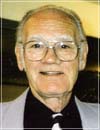
Scott Richardson (1923-2010) served as pastor of Katy Baptist Church in Fairmont, West Virginia.
Broadcaster:

Comments

0 / 2000 characters
Comments are moderated before appearing.

Be the first to comment!

Joshua

Joshua

Shall we play a game? Ask me about articles, sermons, or theology from our library. I can also help you navigate the site.