Bootstrap
Scott Richardson

By One Man's Obedience, Many Are Made Righteous

Romans 5:19
Scott Richardson January, 14 2001 Audio
0 Comments

Sermon Transcript

Auto-generated transcript • May contain errors

100%
Romans chapter 5, verse 19. What I want to say to you this
morning is the last statement of that nineteenth
verse which says so, By the obedience of one shall
many be made righteous. The first part of the verse says,
For as by one man's disobedience many were made sinners. The first Adam, our federal head,
our representative, represented all. of humankind was sin entered
into us because of Adam's disobedience. And all of sin comes short of
the glory of God. But he doesn't stop there. He
says, So by the obedience of one. Prior to that, he says,
By one man's disobedience. Now he says, so by the obedience
of one shall many be made righteous. And that's the end of the desire of all those that
Christ died for. desire to be made righteous. We know we can't be made righteous
in ourselves. We can be self-righteous, but we cannot be made wholly
righteous in ourselves, no matter what we think, say, or do. The desired end is to be made
before the presence of God absolutely, totally, completely righteous
without sin. The desired end of all flesh. It says, By the obedience of
one, the Lord Jesus, shall many be
made righteous." Shall many be made righteous. A joyful truth,
a wonderful truth to miserable sinners. Oh, that this word would
ever be on our minds. so by the obedience of one shall
many be made righteous." Over in the book of Isaiah, if you
care to turn, chapter 55, it says this. In verse 8 of Isaiah 55, it says, this is God speaking, For my
thoughts are not your thoughts, neither are your ways my ways,
saith the Lord. For as the heavens are higher
than the earth, so are my ways higher than your ways, and my
thoughts than your thoughts, saith the Lord." Our thoughts are to make ourselves righteous
by our own obedience. That's our thoughts. But he said,
my thoughts are higher than your thoughts. My thoughts are not
your thoughts. Neither are your ways my ways,
saith the Lord." Our thoughts are to make ourselves
righteous by our own obedience. That's the natural man's thoughts. That's the thoughts of the man who has not been born of the
Spirit, the natural man. The man prior to regeneration,
his thoughts are to make himself righteous by his own obedience. That is his thoughts. And God
says in verse 7, Let the wicked forsake his way, and the unrighteous
man his thoughts. Then he says, For my thoughts
are not your thoughts, and neither are your ways my ways, saith
the Lord. So we first have to find out
what our thoughts are. Our thoughts are to make ourselves
righteous by our own obedience. We think by what we say, what
we do, by way of good works, that if we say and do and act in regard to these things, in
regard to our thoughts of works of righteousness and so forth,
we'll finally become righteous. That's our thoughts. And our ways, we think, are to be justified
before God by our righteousness. But the Lord calls us to forsake
these unrighteous thoughts as well as our wicked ways, and
submit by faith to his thoughts and to his ways, to be made righteousness by the obedience of one. And
that is what the text says in I Corinthians. So by the obedience
of one shall many be made righteous. Consider, first of all, then,
that this negative is implied here. No obedience but one shall
make any sinner righteous. That's what it says. So by the
obedience of one shall many be made righteous. Now, the question
is to you and I here this morning, what are you seeking after? What is this great emphasis on
your doing? What will it result in? What
are you striving for here in this life? What are you striving
to be? What are you striving to do?
That's the question. What is the result or the end
of your prayer? I know that all here pray. Some pray more than others, but
all do pray. Now, what is the end or what
Is it that you are trying to gain in your prayer? What are you trying to gain in
your reading, in your hearing, in your communicating, in your
striving against sin and to excel in obedience? Is it to make yourself
self-righteous? Is that why we come to church? Is that why we separate ourselves
from the things of this world and the world itself? Is this why we try to mold and
form our character and not to do the things that are opposed
to God himself? Is it to make ourselves self-righteous? If so, if that's the idea, if
that's the purpose of you and I this morning, that our prayers
and our hearing and our reading and communication and all that
and striving against sin and separating ourselves from others
and from this world and so forth is In the end, we hope that it'll
result in a self-righteousness. Well, if that's true, if that's
really what we're striving for, to finally arrive at a, to have
a righteousness which is a self-righteousness which comes because of our obedience
to certain things. Now, if it is to make myself
and yourself self-righteous, if that be the case, then it
all comes from our unbelief of the truth that I have read to
you thus far. Because it says, So by the obedience
of one shall many be made righteous. By one obedience, just one obedience,
and He's not talking about your obedience. By one obedience shall
many be made righteous, and by no other obedience whatsoever. Never be made righteous before
God by your self-righteousness. Righteousness comes only by and
through the Lord Jesus Christ. That is faith, faith which is
a gift of God. Faith is in the person and the
work of the Lord Jesus. that constitutes our righteousness,
faith in His person and His work. It says, Shall many be made righteous? Many shall be made righteous. So by the obedience of one shall
many be made righteous. Those that look to the person
and the work of the Lord Jesus Christ, they and they alone will
be made righteous in His sight. And the good works, so-called,
that we do, that is, we separate ourselves from this and separate
ourselves from that, and form or try to form our character
to be different than others and so forth. That's all null and
void because any work that is blessed of God begins with faith. There must first come faith from
on high. And then good works began. But prior to that, no work will
render us righteous before God. It says that the works of one,
or the obedience of one, shall many be made righteous. Who are the many? who are made
righteous by Christ's one obedience. Who are they? Well, over here
in the book of Hebrews gives us a little light on that. Hebrews chapter 2 and verse 10. Listen to what it says. Well, verse 9, to keep this in
context, verse 9 says, But we see Jesus, who was made a little
lower than the angels, for the suffering of death, crowned with
glory and honor, that he by the grace of God should taste death
for every man. For it became him for whom are
all things, and by whom are all things, in bringing many sons unto glory. Who are the many
now? in verse 19 of Romans chapter
5. So by the obedience of one shall
many be made righteous. And now it says in Hebrews, And
by whom are all things in bringing many sons unto glory. Well, this many sons are those
who see themselves as miserable sinners, miserable, hopeless,
helpless sinners in themselves. And they believe in the testimony
of God concerning His Christ for righteousness unto justification. Now, in Matthew, chapter 20,
it says this. Chapter 20 and verse 28, the book of Matthew. He says here, Even as the Son
of Man came not to be ministered unto, but to minister and to give his
life a ransom for many. Who are the many who are made
righteous by Christ's one obedience? Who are the many? The many sons
whom Christ shall bring to glory. And here he says, and the many
again. He came to be a ransom for many. All who see themselves as hopeless,
helpless, miserable sinners are the many, whoever they might
be. These that know of their imperfections,
these that know of their poorness in spirit and mind and soul,
and have no hope in themselves or in their self-righteousness,
come to him. He gave his life a ransom for
the many. He came to give his life a ransom
for many. Over in the book of John, chapter
5, we find something else. John chapter 6, I guess it is. John chapter 6 and verse 29. Jesus answered and said unto
them, This is the work of God. that ye believe on him whom he
hath sent. That's the Lord Jesus Christ.
Believe on him whom thou hast sent. Verse 38 of this chapter
says, For I came down from heaven, not to do mine own will, but
the will of him that sent me. And this is the Father's will
which hath sent me, that of all which he hath given me, I should
lose nothing, but should raise it up again at the last day. And this is the will of him that
sent me, that everyone which seeth the Son, and believeth
on him, may have everlasting life, and I will raise him up
at the last day. Even all that the Father hath
given me, he said, shall come to me, and him that comes to
me I will in no wise cast out. Now, all of these, all of these
which the Father hath given unto the Lord Jesus Christ, all of
those are known by the Father and known by the Lord Jesus Christ. And all these shall know in part
that they are those for whom Christ died, that they're perishing
sinners. And they'll come to find out
that they are in that blessed number. There's a number of the
world's population that has been turned over. to the Son by the
Father, and all those that were given to the Son by the Father
shall make up the many," shall make up the many, that he gave
his life a ransom for, that he is paying the price, paying the
price that the law of God demands, paying it for them, and they
shall come to me. Precious words, I'd say. Precious,
blessed, blessed, comforting, merciful words. They shall come
to me. I gave my life as a ransom for
the many. I say precious words to me, and
I hope they are precious words to you. Poor sinner. I'm a poor sinner and nothing
at all. But Jesus Christ is my all in
all. I am a poor sinner. I have nothing,
absolutely nothing to bring to Christ but an empty hand or an
empty pocket to receive what He gives. Nothing I have in myself. A precious ransom has the Lord
Jesus Christ made for me. Me, who has the sentence of death
written on his soul, he knows that we are poor, hopeless, helpless
beggars, and he also knows that we are as proud as devils. Wondrous
love, I would say. He came to minister to our needs. He came to minister to our wants. He came to kill our pride. He wants nothing from us. He bestows all upon us, asks
nothing from us. He sees us in our poverty, in
our need, and in our want. He sees us in our misery. He
sees us as we are. You say, well, how can I minister
unto the Lord Jesus? Well, you can't because you have
nothing to minister. You're poor and hopeless and
helpless and have nothing whatsoever to bring. Absolutely nothing. All you've got is a sin-sick
body and a sin-sick soul. What could you bring? No wonder
the writer of the hymn says, Nothing in my hand I bring. You have nothing to bring. It's
all free. The righteousness of God is all
free. to those who desire it and want
it. The righteousness of God. Not
the self-righteousness that is in our thoughts and in our ways. We think that if we do this or
we do that or if we turn this direction and go in another direction
that we're pleasing God, but there's nothing that we can do
to please God. The only thing that is left for
us to do is to find ourselves in Him who alone pleases God. I read to you from the fourth chapter of the book of
Romans. Let me read there again for a
few minutes. Romans chapter 4. He says here, and we've read
it many times, but I want to read it again. He talks about
Abraham in that fourth chapter. He says, If Abraham were justified
by works, now I've already said that most natural men, most natural
men, and we're included in that. If we are saved, we're spiritual
men, but there was a time when we were natural men, and our
thoughts was that if we would do this and we would do that,
that we would form a righteousness that would be a self-righteousness,
a man-made righteousness, that we could offer to God, minister
unto God with our self-righteousness, and by our efforts we could gain
favor with God. And I'm saying that you can't
gain favor with God only through the obedience of one who is the
Lord Jesus Christ. To gain favor with God, you've
got to keep the law of God. You've got to keep the law of
God perfectly. You can't err in one part of
the law of God. If you do, you break it all.
You're guilty of all. So there's nothing, everything
that you do is tainted and motivated by yourself, by the natural man
trying to gather up enough things by way of works to make yourself
righteous and gain favor with God. And God says here through
Paul about Abraham, he said if Abraham were justified by works,
if he is justified by his self-righteousness, works of righteousness which
he hath done from self, why, he said, he'd have something
to glory in then. But the Bible teaches us that
God must have all the glory in Christ Jesus. He won't share
his glory. If Abraham were justified by
his words, by his self-righteousness, he hath whereof to glory. But
it says, Not before God. He can glory in himself if he
wants to, but that doesn't count for anything. But not before
God. What does Abraham glory in? He glories in the fact that he
believed God. Abraham believed God. He believed
what God had to say concerning the Messiah who was to come.
He believed the report. He believed that he didn't have
any righteousness. He believed that he must have
a righteousness of someone else. And so by the obedience of one
shall many be made righteous in God's sight. And that's the
desired end of every one of us, isn't it? To be made righteous
before God. as though we had never seen.
The Lord Jesus Christ takes our place, becomes a man. And as a man, one of us, does
not the Bible teach about the man Christ Jesus in glory? When we die and go to heaven,
we are going to go see that man. We will see the man. Jesus, the
Christ, the Son of God and Son of Man in one person. And that
man lived for us, satisfied all the claims of God's law that
was against us, and honored that law, kept every jot and every
tittle of that law for us. And for the punishment that was
due us as being breakers of God's law, he bore that in his own
body. and he wrought a perfect righteousness
by his obedience. So by the obedience of one shall
many be made righteous. I want to be made righteous by
the obedience of the Lord Jesus Christ, therefore I have nothing
to glory in. It was all of him. And so when
I come before God, in prayer or praise or whatever, I must
come in another man's righteousness in that I have nothing whatsoever
to give or minister to him. I've got no righteousness. I've
got nothing to boast about. I've got nothing to brag about.
I've got nothing to glory in. All the glory belongs to him. For by one man's obedience, shall
many be made righteous." I hope you see what I'm saying. If Abraham
were justified by works, by what he'd done, if he was trying to
gain favor because he quit doing this and he quit doing that,
he'd have reason to glory. He'd say, well, I have a small
part in this. You can't have a small part in
this, Abraham, for it's by one man's obedience shall many be
made righteous. Well, how's Abraham going to
be righteous? Well, he believed God. He believed
what God had said concerning the Lord Jesus. And over here
it says, Now to him that worketh, that is, him that tries by his
own self-righteousness, to gain favor with God. Why? He says,
Now to him that worketh is a reward, not reckoned of grace, but of
death. That is something that God must owe us, but not of grace. But it says, To him that worketh
not. He doesn't strive against sin. He doesn't hear and read and
communicate and all these things in order to gain a righteousness
by his self-righteousness, but him that worketh not, but believeth
on him that justifies ungodly, unholy, no-account sinners."
His faith is counted for righteousness. Even as David also described
the blessedness of the man unto whom God imputed righteousness
without works." God rettens to the account of the believer a
righteousness without works, and that is the righteousness
wrought by the Lord Jesus Christ. Righteousness wrought by his
obedience even unto death. that holy righteousness, that
sinless perfection that stands the believer in good stead with
God. This is the grace of God. And
he also goes on and says, It was not written for Abraham's
sake or David's sake alone. It was written for the many.
All that the Father gives to me shall come to me, and I'll
clothe him in my righteousness and make him acceptable before
God in my acceptability. I'll clothe him with the wedding
garments of righteousness. I'll reckon it to his account. It will be there under His name.
He will stand in me, and I will stand in Him. And He will be
accepted by God on my behalf, on the account of my righteousness,
my sin bearing, my keeping the law, my bearing the curse of
the holy law in their stead and place. So it is not written for
his sake alone for Abraham and David, that it was imputed to
him. But for us also, us, the many,
all the Father giveth to me shall come to me." What's the evidence
of you being one of them? Have you come to Him? Have you
come to the Lord Jesus Christ as you are? Not as you pretend
to be or think you are, but have you come to Him as you are? a
no-account, unprofitable sinner. After you have done all the things,
the Bible says, Jesus said, after you have done all the things
that I have commanded you to do, consider yourself an unprofitable
servant. Have you come in that light?
If you come in that light, you will be in that us also. you come as you are. And if you
do, and lay hold of the Lord Jesus, then all of his righteousness
will be charged to your account. And you'll be looked upon by
God as if you was as righteous as he, the all-obedient one. That's the way you'll appear
before God. I wish I could believe that. You say, well, try. That's
the only thing that will help you in this life and in the life
to come, especially in your dying hour. The only thing that's going
to help you is that you've got the righteousness of another
imputed or charged or reckoned to your account. That's the only
thing that's going to help you. That's the only thing that will
help me. That's the only thing that's going to help you. our age, regardless of our stature
in this life, the only thing that's going to see us through
is the righteousness of the Lord Jesus Christ imputed to us. Now, how do I know it's imputed
to me? I know because I'm a poor, helpless,
hopeless, miserable sinner that has nothing to give to God, only
a hand to receive And he said, If you'll come to me, I'll charge
all your sins to the Lord Jesus Christ, and all his righteousness
will be imputed to you. God cannot lie. This is it. This is what the Bible is all
about. How? How? Through him. Listen
to what it says. It is not written for his sake
alone. that it was imputed to him, not
just to him, but for us also, to whom it shall be imputed,
if we believe on him that raised up Jesus our Lord from the dead. Well, you say everyone believes
in Jesus. If we believe on him, who stood for us. Believe on
Him in that light. I know I could go to any group
of people, not a particular group, but just any group at random,
and ask, How many believe on Jesus? And they say, Yes, I believe
on Jesus. But they do not believe on Jesus to the saving of their
souls. They believe on Jesus as a historical
figure, a man that was here in time that they called Jesus,
they believed that, most people do. Ninety-nine percent of the
world's population, I guess, would believe in that. But it
says, if we believe on Him that raised up Jesus our Lord from
the dead. Now, why did He die? Why did
He die? Well, because justice must be
satisfied. God will not wink at sin. God will not shut his eyes to
sin. God will not compromise with
sin. God will not look over sin and
bypass it, but the holiness of God demands that the soul that
sinneth shall die. And our Lord Jesus Christ became
a man, and he died in my place. If we believe on Him that died,
ye rather is risen again. Now listen, if He died in my
stead and place and room, it says that He was, or who, the
Lord Jesus, was delivered for our offenses. He was put where
He was on that tree for our offenses. not his offenses he had done.
He's the sinless one. He's one out of love, great,
great, glorious love. Love that's inexplainable and
unimaginable that would cause him to leave the Father's presence
and become a man as a man, be spit upon, be despised and be
rejected and go hungry and thirsty and be ridiculed and finally
tortured by ungodly men and hung on a tree? Why did He? Because He loved us with an eternal
everlasting love. He loved us and Paul says, He
loved me and gave Himself for me. Now that's what I'm talking
about. I'm not talking about raise your
hand if you believe in Jesus. They all believe in Jesus. Everybody
believes in Jesus. But they believe that Jesus bore
their sins in His own body on the tree and paid for them and
they won't have to pay for them. How many believe in that? Only being enlightened by the
Spirit of the of God Himself. Can a man believe that? No man
comes unto the Father except by Me. If any man comes unto
the Father, I must draw him, He said. Well, raised him from
the dead, delivered for our offenses. I wish you'd find that out. I believe some of you do. Maybe
all of you. I hope all of you do. So I believe
this is the words of all that. Now, here's another verse over
here in the book of Titus. The book of Titus. Listen to what it says here in
the book of Titus. In the third chapter it says, Put them in mind. He's talking
to Titus here and telling Titus, you teach the brethren these
things. Put them in mind to be subject to principalities. Not to be unruly and disobedient,
but be subject to the laws of the land, to principalities and
powers, to obey magistrates, to be ready to every good work. to speak evil of no man, to be
no brawlers, but gentle, showing all meekness unto all men. For
we ourselves also were sometimes foolish, disobedient, deceived,
serving divers' lusts and pleasures, living in malice and envy, and
hateful and hating one another. But we experienced the kindness
and the love of God our Savior towards man appeared. Verse 5, not by works of righteousness
which we have done, that self-righteousness, not by works of righteousness
which we have done, but according to his mercy he hath saved us. Not by works of righteousness,
which we haven't done. We haven't done any, have we? If we could just find out. I believe I found out that by
nature I'm a vile sinner. By nature. I'm condemned by the
law of God. I found that out. The law of
God condemns me. not just for the first commandment,
but all ten of them. I haven't loved God with all
my heart and soul and mind and strength. That condemns me as
a lawbreaker. Thank God for the mercy of God
and the grace of God and the Holy Spirit of God that He has
made a revelation of that to my soul and to my heart. I am
condemned by the law of God and I justly deserve the damnation
of hell. and all the miseries of hell,
I deserve it. God help us. It's an act of God's sovereign
mercy that He saved many of us. Not by works of righteousness.
It's by one man's obedience. One man. Saving the many. being justified by his grace,
justified as though he had never sinned, made heirs according
to the hope of eternal life. My soul. Bless the Lord. Oh, my soul, David said, and
all that is within me. Bless his holy name. Bless him
for his grace and mercy. Set us apart. Found us when we
were lost. brought us home, all the way
home, in his love and in his mercy, by one man's obedience. Why, that old hymn says, My hope
is built on nothing less than Jesus' blood and righteousness.
And it's just the opposite of what the natural man says. His hope is built. on His righteousness,
but it is by the righteousness of one man that we are made righteous,
by His obedience, the Lord Jesus Christ. Let's stand. We'll be dismissed.
Scott Richardson
About Scott Richardson
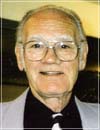
Scott Richardson (1923-2010) served as pastor of Katy Baptist Church in Fairmont, West Virginia.
Broadcaster:

Comments

0 / 2000 characters
Comments are moderated before appearing.

Be the first to comment!

Joshua

Joshua

Shall we play a game? Ask me about articles, sermons, or theology from our library. I can also help you navigate the site.