Bootstrap
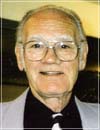
Scott Richardson

Not Faith, But Christ

Romans 4:1-6
Scott Richardson June, 23 2000 Audio
0 Comments

Sermon Transcript

Auto-generated transcript • May contain errors

100%
me the title to the sermon. And I said, well, I'm going to read from chapter
four in the book of Romans and read you about five verses of
that fourth chapter. And the subject that I will attempt
to pursue is not faith, but Christ. Not faith, but Christ. Now, several years back, When I was
a whole lot younger, folks used to say, that fellow
never amounted to nothing. And I've been determined all
these years not to disappoint them. But I hope that I don't disappoint
you. Let me read now those five verses. What shall we say, then, that
Abraham our father, as pertaining to the flesh, hath found? For
if Abraham were justified by works, he hath whereof to glory,
but not before God. But what saith the scripture?
Abraham believed God, and it was counted unto him for righteousness. Now to him that worketh is the
reward, not reckoned of grace, but of debt. But to him that
worketh not, but believeth on him that justifieth the ungodly. His faith is counted for righteousness. Remember, I'm going to talk about
this. Not faith, but Christ. Now, God Almighty, who our brother
so ably lifted up, described, and brought before our very eyes
here this evening, the true and the living God. God over all
and above all, he reckons the believing man as having all righteousness. I'm right there so far. God reckons the believing man
as having all righteousness, though he has not done any. I'm right there. And though his faith is not righteousness,
in this sense, it is that faith is counted to us for or in order
to righteousness, that we are justified by faith. Now, faith
does not justify as a work, or as a moral act, or as a piece
of goodness, or as a gift of the Spirit, but as a bond. but as a vital union, but as
a connection between us and the substitute. Now, the person and
the work of Christ for us is the object of true faith. The Spirit's work in us is that
which produces this faith. Now, over in Exodus 17, and maybe
verse 7, but somewhere along there, it talks about God speaking
to Moses to smite the rock that the water might gush forth. Now, without the touch of the rod,
the water would not have gushed forth. Is that right? Yet it
was the rock and not the rod that contained water. Now, the
bringer of the sacrifice to the temple or the tabernacle was
to lay his hand upon the head of the sheep or the bullock,
otherwise the offering would not be accepted for him. It was
by way of identification that this bullock, this lamb, this
sheep, stands in my place in my stead, my sacrifice, dying
for me. He was to lay his hands upon
the offering, or he would not be accepted for him. Now, the
laying on of the hands was not the same as the victim on which
the hands was laid. The serpent-bitten Israelite
was to look at the uplifted servant of brass in order to be healed. But his looking was not the brazen
servant. It was not his act of looking
that healed him, but the object to which he looked. So faith is not our righteousness. Faith is not our righteousness. It joins us to the Righteous
One and makes us a partaker of His righteousness. Now, by a
natural figure of speech, faith is often magnified as something
great, whereas it is actually and really nothing but our consenting
to be saved by another. Now, it's supposed greatness
is derived from the greatness of the object which it grasps
or lays a hold on. So faith is not our righteousness. Faith is not our physician. As
a matter of fact, it only brings us to the physician. It's not
even our medicine. It only administers the medicine
which was divinely prepared by him who healeth all our diseases. Our faith is but our touching
Jesus. The woman who was in that crowd, who desired
to touch Jesus, and she couldn't get through for the mass of human
beings crowded around our Lord. But finally, she made it through,
and she touched the hem of his garment. When she touched the
hem of his garment, the Lord said, Who touched me? I felt
virtue being drawn out of me. Now, in reality, when we feel like that we have
touched Jesus, in reality, it's his touching us is what it is. Faith is not our Savior. It was
not faith that was born at Bethlehem's manger. It was not faith that
loved the Lord and gave himself for us. It was not faith that
bore our sins on the tree in his own body. It was not faith
that died and rose again. Faith is one thing, but the cross of the Lord Jesus
Christ is another thing. Now, let's not confound or mix
up the two. happens many times along the
way. Let us not confound them or ascribe
them to a poor, imperfect act of man that which belongs exclusively
to the Son of God. Faith is not perfection, yet
only by perfection either our own or another, can we be saved. Now, that which is imperfect
cannot justify, and imperfect faith could not in any sense
be a righteousness if it is to justify. It must be perfect. Faith must be perfect if it's
to justify. It must be like the lamp. without
spot and without blemish. An imperfect faith—now, you're
like this—an imperfect faith may connect us with a perfection
of another, but it cannot of itself do anything. Either in protecting us from
the wrath to come, or divine equivalent before God Almighty. All faith here on this earth
is imperfect, but the believer's security and hope and comfort
is this. It matters not how weak or how
feeble or poor our faith may be. If it touches the perfect
one, what shall I say? All is well. The Church draws
out the virtue that's in Him, and we're saved by the grace
of God. The slightest imperfection of
our faith, if faith were to be our righteousness, would be fatal
to our ever hope. God has asked and provided a
perfect righteousness, but he nowhere that I know of asks or
expects a perfect faith. A broken pitcher can convey water,
to the traveler's thirsty lips. So a feeble and weak faith will
connect us with the righteousness of the Son of God. The faith that can overcome that
poor weak faith, which all of us are to a measure familiar
with. Poor weak faith that can only
cry, Lord, I believe. Help thou my unbelief. Will do. Faith is not satisfaction to
God. In no sense or no aspect can
faith be said to satisfy God. or to satisfy the holy, inflexible,
unerring law of God Almighty. Yet, if it is to be our faith,
it must satisfy. Being imperfect, it cannot satisfy. It cannot satisfy not only because
it is imperfect, but because it is human. Faith cannot be
our sin-bearer. That which satisfies must be
capable of bearing our guilt and our shame. And that which
bears our guilt and our shame must be perfect. But divine faith,
nothing but divine faith, could accomplish that. But faith in
itself cannot accomplish propitiation. Faith cannot pay no payment to
satisfy our debt. Faith cannot wash away our sins. Faith cannot provide no righteousness. Faith is not Christ or the cross
of Christ. Faith is not the altar. Faith
is not the mercy seat. Faith is not the incense. Faith does not work, but a set
of work that's already done two thousand years ago. Faith does not wash, but leads
us to the fountain filled with blood. that washes us and makes
us clean. Erewhit. Erewhit. Not a flaw, not a wrinkle. Erewhit. Oh, faith goes on. Always at
the cross. You hear these guys saying it? I read it sometimes. Well, I said, Jesus has done
all he can do. Let's get on with it and do something
else. Faith goes on. Always at the
cross. Always there. So where do you go? And to whom
will you go? Faith. Faith is always like the
beggar with an outstretched hand. Always taken, but never given. Faith is never the rich man's
gold. It's always the cable, never
the anchor. Always the knocker, but never
the door. Not the palace or the table.
Always the handmaid, and not the mistress. It's the window
that lets the light in, not faith, but Christ. Faith has no worthiness in itself. It joins us to infinite worthiness,
the infinite worthiness of him in whom the Father delights. whom the Father presents us perfect
in the perfection of him. Faith is not that foundation
laid in Zion. Faith only brings us to that
foundation, grounded and settled, that we may not be moved from
the hope of the gospel. It receives the good news. And the last thing I want to
say now, is that faith never leads us away from the cross
to which it first led us to. It's not faith, it's Christ. He's our all and in all, now justified by faith in order
to righteousness. All right, thank you for your...
Scott Richardson
About Scott Richardson
Scott Richardson (1923-2010) served as pastor of Katy Baptist Church in Fairmont, West Virginia.
Broadcaster:

Comments

0 / 2000 characters
Comments are moderated before appearing.

Be the first to comment!

Joshua

Joshua

Shall we play a game? Ask me about articles, sermons, or theology from our library. I can also help you navigate the site.