Bootstrap
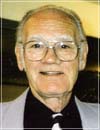
Scott Richardson

What Does The Burnt Offering Mean

Leviticus 1:1-4
Scott Richardson June, 11 2000 Audio
0 Comments

Sermon Transcript

Auto-generated transcript • May contain errors

100%
The book of Leviticus chapter
1. The first chapter of the book of
Leviticus. And I'll read a little of this chapter. beginning at verse 1, and the
Lord called unto Moses. If you'll notice in the reading
of the Bible, it's always God who does the seeking. It was the Lord that called unto
Moses. It wasn't Moses calling unto
the Lord. The Lord always takes the initiative,
as he did with Adam. He said, Adam, where art thou? And he called unto Moses and
spake unto him, Out of the tabernacle of the congregation say, Speak
unto the children of Israel, and say unto them, If any man
of you bring an offering unto the Lord, he shall bring your
offering of the cattle, even of the herd, and of the flock. And if his offering be a burnt
sacrifice of the herd, let him offer a male without blemish,
and he shall offer it of his own voluntary will. at the door of the tabernacle
of the congregation before the Lord. And he shall put his hand
upon the head of the burnt offering, and it shall be accepted for
him to make atonement." And I'll stop right there. He shall put his hand upon the
head of the burnt offering. It must be his hand. not his
wife's hand and not his servant's hand. It must be his hand. There must be nothing between
his hand and the sacrifice. Nothing between his hand and the sacrifice. He is not
to touch the shoulder. is not to touch the side, but
is to touch the head of the sacrifice. He himself, the offerer, must
touch the head of the sacrifice. And by doing so, he acknowledges
before God He acknowledges before God that
he has sinned, and he makes a confession of his sin. And by doing so,
he says he deserves to die because he is guilty of crimes against
God. But he expects forgiveness through
the death of the sacrifice. It also teaches, I believe, the
transfer of his sins from himself to the sacrifice. That is, he is a type of the
imputation of them to the Lord Jesus Christ. There is a transfer. He lays his hands upon the head
of the sacrifice. confesses his sins, acknowledges
that he is a sinner, acknowledges that he is guilty, acknowledges
that he has no merit. But he says in this burnt offering
by the laying on of his hands that this burnt offering, this
victim, this sacrifice should be accepted in his place. So there is the transfer of his
sins, the offerer, to the offering. And it is a picture and type
of the transfer of our sins on him who knew no sins. Now, this
is, of the offerings, it is called
the burnt offering. He shall put his hand upon the
head of the burnt offering, and it shall be accepted for him, to make atonement for him, the
sacrifice. And it must be an unblemished
male of the first It was a type of the Lord Jesus Christ offering
himself for the perfect accomplishment of the will of God. It is a type
of the Lord Jesus offering himself without spot and without blemish
unto God. Now, when he came forth, when
he left heaven, left the glories of heaven, left his father's
bosom and came forth to accomplish the glorious and wonderful work
of atonement, to atone for our sins. Now, it was his highest
and most cherished object in so doing. And I'll tell you why. It was for the glory of God. He said, Lo, I come to do thy
will, O God. Now His whole life, I've mentioned
this before, I said that His whole life from the manger to the cross, from the cross
to the throne. Every step that he took, he took
by way of a substitute. All that he did, in that sense,
was for us. Never done anything for himself. It was all done as a substitute. Also, when he says, Lo, I come
to do thy will, O God, his whole life from the cradle to the cross
and the cross to the crown was to do the will of God. Let the
will of God be what it might be. Our Lord Jesus Christ came
to do it. If it be thy will, he is going to do it. In Hebrews
chapter 10 and verse 10, it says that by the doing of his will,
we are sanctified through the offering of the body of Jesus
Christ once and for all. Now, the primary aspect of his
work on the cross and also leading
up to the cross was God work. It was His delight. It was His
greatest desire to accomplish the will of God while He was
here on earth. Now, no one had ever done this
before. No one had ever accomplished
the will of God upon this earth before the coming and the doing
and the dying and the finished work of the Lord Jesus Christ.
That had never been done before. Of all the millions that have
passed through, there was none that had ever done this before. Some had done that which is right
in the sight of God. There were many of them, but
none had done the will of God completely and perfectly. No one had ever given perfectly
from the beginning to the end, from the first to the last, none
of them had ever done the will of God except the God-man, the
Lord Jesus Christ. And it was his delight to do
the will of God. He was not reluctant about doing
the will of God. He desired to glorify God. And he says there in the seventeenth
chapter of the book of John, I have glorified thee. And when
he made that loud cry and said, It's finished! And he gave up
the ghost, gave up the spirit. He said, I've fulfilled the will
of God. I've kept the will of God while
I was here upon this earth. None had ever perfectly, from
first to last, done the will of God. But this is exactly and
positively what the Lord Jesus Christ did. The Bible says that
he was obedient unto death, even the death of the cross. He steadfastly,
the Bible says, set his face to go to Jerusalem to be crucified. He walked from the Garden of
Gethsemane to the Cross of Calvary, all in doing the will of God. He said, The cup which my Father
gave me, shall I not drink it? What do we have here? We have
a perfect man on this earth accomplishing the will of God even in death. Now, if it was possible for you
and I to digest the depth of his love to the Father, of the
depth of his devoted heart, which is seen here under the eye of
God on the tree, surely none but God, as in everything else,
It holds good that no man knoweth the Son but the Father. And no
man can know anything about him except the Father reveals him. What love, what graciousness,
what service rendered by this servant, the Lord Jesus. Now
the mind of a man, it is possible to some measure to grasp any
subject of knowledge under the sun. Human science can be laid
hold of by the human intellect, but no man knoweth the sun save
as the Father reveals by the power of the Holy Spirit through
the written Word of God Almighty. If his offering be a burnt offering,
a burnt sacrifice of the herd, it says, let him offer a male
without blemish. In keeping and doing the will
of God, this man who is the only man from beginning to end to
do the will of God perfectly, he himself must be without blemish. He must not have a flaw in him. Everything in his person must
be in accordance with the glory of God. He must be perfect. and it must be perfect to be
accepted. Now, the essential glory and
the dignity of Christ's person forms the basis of what we call
Christianity or the religion of the Lord Jesus Christ. He
imparts dignity to everything he does and to every office that
he attains as prophet priest and king. No office could possibly
add glory to Him who is God over all, blessed be forever. God manifests in the flesh. He is the glorious Emmanuel,
God with us. He is the creator and the sustainer
of the universe, and I couldn't I couldn't at my best state tell
you of the dignity and the glory of the Lord Jesus Christ. The
unblemished male of the first year was the type of the Lord
Jesus Christ offering himself for the perfect accomplishment
of the will of God. Nothing expressive here. that shows in him or in the sacrifice
any weakness or any imperfection. It says that a male of the first
year was required. And in John chapter 17, verse
number 4, he said, I have glorified thee on earth. I have finished
the work that thou gavest me to do. in accomplishing the will
of God, which forms the basis of our salvation. In him accomplishing
the will of God and glorifying the will of God, in the process
of all of that, he saved his people by his substitutionary
work. So our hearts this morning, as
we think about it, ought to be filled and running over with
sweetness and affection for the Lord Jesus Christ who came unasked. He wasn't asked for. When Adam
sinned, Adam didn't ask for an atonement. But the Lord Jesus
Christ came to accomplish the will of God. God had an eternity. for the foundation of the world.
God had chosen some from Adam's race, chose to save them, save
them by and through the accomplishment of his perfect will. And the
Lord Jesus Christ agreed to come and to be accountable for all
of them, for every single solitary one that God chose out of the
human race unto himself, and he gave them to Christ. And Christ
said, I will be accountable for them. So he must accomplish the
will of God in their behalf as their substitute. So it says
in John chapter 17 and 4, I have glorified thee on earth. I have
done it. I have finished the work that
thou gavest me to do in our hearts. ought to be filled with sweet
affection towards his person. It does not detract in the least of his love to us because he
says that his object in coming and his greatest desire is to
make God the basis of his primary work. on the tree. It doesn't
detract from his love for us. He loved us and gave himself
for us. Not only did he love us, but
he loved the Father to do the Father's will. And he loved us
and gave himself for us. His love to us and our salvation
in him can only be founded upon God's established glory. God's
got to be glorified. Let the whole earth, the Bible
says, be filled with His glory. And it is in Christ Jesus, nowhere
else. It does not say all the earth
shall be filled with anything short of the glory of God. Well, now let's talk just a little
bit about this this Israelite. It says, If his offering be a
burnt sacrifice of the herd, let him offer a male without
blemish. He shall offer it of his own,
that's free will there, voluntary will at the door of the tabernacle
of the congregation before the Lord. And he shall put his hand
upon the head of the burnt offering. and it shall be accepted for
him to make atonement for him. He will put his head or put his
hands upon the head of the burnt offering and it shall be accepted
for him to make atonement for him. That sacrifice, by way of
identification, He lays his hand upon the sacrifice and he says,
I've sinned against you and this sacrifice is going to suffer
for me. This sacrifice is going to die
for me. So the act of the laying on of
the hands is just the expressive idea of full identification with
the sacrifice. So the offerer, the one that's
offering, the one that brings the mail without blemish, he
and that victim becomes one. He identifies himself and lays
his hand upon the sacrifice is hit, he becomes identified with
him as one. So the offerer and the sacrifice
are one. And, of course, that's what I've
been preaching these many years, that we are one with him. We are vitally joined to him. When he took our humanity upon
himself, we were vitally connected to him. We were one. And when
he suffered, we suffered. When he died, we died. When he
was buried, we were buried. And when he resurrected from
the grave, we were resurrected. And when he went to heaven, we
are in him now. One. We are one with the sacrifice. Finally joined to him and never
can be separated. That cannot be reversed. That
is the way it is. The oneness in the case of the
burnt offering secured for the offerer all the acceptance of
the offering, all of that. We are accepted in the Beloved. We are accepted in the Lord Jesus
Christ, accepted before infinite holiness. accepted before God
himself. We are accepted on the basis
of the offering, so the offerer and the offering become one. In 1 John chapter 4 and verse 17, you listen
to me now, in verse 17, It says, As he is. Now he is speaking
of the Lord Jesus Christ here. As he is. He is speaking of him
now who is in his kingly glory, who lived and died and rose again
and is seated on God's right hand. being glorified by God
the Father for the accomplishment of the Father's will. It says,
As he is, as the Lord Jesus Christ is. Now this is that oneness
that I'm talking about. As he is, so are we in this world. Whatever the Lord Jesus Christ
is now in his kingly glory, in light of the fact that he
has accomplished the will of God, and God raised him from
the dead, and God said, I'm pleased with
him, whatever he is in all this glory, because of our oneness
with him, we're like him. As He is so are we in this world. We are in Him that so nothing in any measure
short of this would avail anything. Nothing short of us being in
Him will do. We must be in Him. The man who is not in Jesus Christ
is in his sins. There is no middle ground. You
must either be in Jesus Christ or out of Jesus Christ. In or out. As He is, so are we
in this world. Final union. We are in Him. You must be either in Christ
or out of Christ. There is no such thing as halfway
in Christ and halfway out of Christ. If there be a single
hair's breadth between you and the Lord Jesus Christ, then you
are in an actual state and condition of the wrath of God. you must
be in Christ. He is on the authority of the
Lord Jesus Christ, this one that is in Christ. He is clean ever
with. All of this is based on the accomplishment
of the will of God by the Lord Jesus Christ. who finished the
work that the Father gave him to do. So all of our hope this
morning is based upon the blood and the obedience and the righteousness
of the Lord Jesus Christ. That's our standing. We stand
in Him. We live in Him. We die in Him. We've been raised again in Him. Just as in the case of the burnt
offering, the offerer's acceptance was based upon the acceptableness
of his offering. It is not a question of what
he was. The question did not arise as
to what the sinner was. He knew that he was a sinner.
So it's not a question of what he was, but the question is,
what was the sacrifice? The sacrifice was without blemish
and without spot. Our sacrifice, the Lord Jesus
Christ, the type of the burnt offering here, is without blemish
and without spot. So it says here, but what The
sacrifice was without blemish. It shall be accepted for him.
The sacrifice that he laid his hand upon shall be accepted for
him who brought the sacrifice to make atonement for it. Christ
has glorified God And in so doing, he has saved the poor, hopeless
sinner. God in Christ has done it all,
and he has done it effectually, and it cannot be reversed. What
God has done is done forever. There is no change in that. If we were to look over there
in the book of Exodus, when Moses told them to bring a lamb, and the lamb was to be penned
up for so many days, and he who was to bring the lamb, was to
go out and look at the lamb, inspect the lamb so many times
every day to ensure that his lamb was without spot or without
blemish, without a flaw. And I'm sure that that Israelite
inspected that lamb from the top of his head to the bottom
of his hooves. And if there was a defect in
that lamb, then the type would be destroyed and he must catch
up another lamb. Because the Lord Jesus Christ
of whom the type points to was without blemish and without fault,
without wrinkle. He was perfect in every respect. And if this lamb had one blue
eye and one brown eye, he was rejected. If this lamb had any
default whatsoever, if he was crippled, if he limped, whatever,
he was rejected. But the Bible teaches that the
Lord Jesus Christ was without spot and without blemish. when
this Israelite here in the book of Leviticus, when he put his
hand upon the head of the burnt offering, he was identifying
himself with that offering. He said, Me and the offering
are one, and I expect to be forgiven. I expect to receive pardon because
of this sacrifice. They said that he shall kill
the bullock before the Lord in that fifth verse. And the priest
Aaron's son shall bring his blood, bring the blood and sprinkle
the blood round about upon the altar that is by the door of
the tabernacle of the congregation. And he shall flay the burnt offering. That means he must skin that
burnt offering. Take the hide off of the offering. Flay it. That was what the priests
were to do, to take the skin off of the burnt offering. And that means that, that's a type, I believe, speaks somewhat of the suffering
of the Lord Jesus Christ. He shall flay the burnt offering, take the hide off it, and then
cut it into his pieces. And the sons of Aaron, the priests,
shall put fire upon the altar, and lay the wood in order upon
the fire. And the priests, Aaron's sons,
shall lay the parts the head, the fat, in order upon the wood
that is upon the fire which is upon the altar. And his inwards
and his legs shall he wash in water. And the priest shall burn
all upon the altar to be a burnt sacrifice." And that is speaking
of the suffering of him, the Lord Jesus. An offering made
by fire. And it will be a sweet savor
unto the Lord. Now, back to that flaying of
the burnt offering. If you remember, I think here
in the book of Genesis, the book of Genesis in that third
chapter. After Adam had violated the will
of God, and God sought him out and found
him, and put a curse upon the woman, the beast, the devil,
and upon the man. And then it says over here in
verse 18, it says, Thorns also and thistles shall it bring forth
to thee, and thou shalt eat the herb of the field. And in the
sweat of thy face shalt thou eat bread, thou return to the
ground, for out of it was thou taken, for thus thou art, and
unto thus shalt thou return." And Adam called his wife's name
Eve because she was the mother of all living. And then to Adam
also and to his wife, here's the part I want you to see. The
Lord God made coats of skin. And when that high priest played
that offering, he was taking the skin off of that offering
as a covering. And it was given to the priest.
That skin was not burnt up. The inward parts and all that
was burnt up. Fire burnt it up. But not that
coat of skin. And that's a type of the covering. that the believer has in the
Lord Jesus by way of imputation where it says, Blessed is the
man to whom the Lord will not impute sin. It is because that
man has that garment of righteousness which he talks about here. And
Adam called his wife's name Eve because she is the mother of
all living. And unto Adam also and to his
wife Did the Lord God make coats of skin? He did it all. He made
coats of skin. The animal was killed and the
skin was saved. And they made coats, coverings,
coverings of skin and clothing. And so it is with you and I in
this burnt offering. doing the will of God, accomplishing
God's will. Let me read a little bit from
chapter 17 of the book of John, and then I'll give it up. John
chapter 17, verse 4, he says, I have glorified thee on earth,
accomplish Thy will, all that is required of the sinner. I finished the work which Thou
gavest me to do. And now, Father, glorify Thou
me with Thine own self, with the glory which I had with Thee
before the world was. I have manifested Thy name unto
the men which Thou gavest me out of the Thine they were. Thine they were. They belong
to Him. And Thou gavest them Me, and they have kept Thy Word. Father, verse 24, Father, I will
that they also whom Thou hast given Me, be with me where I
am, that they may behold my glory, which thou hast given me, for
thou lovest me before the foundation of the world. O righteous Father,
the world hath not known thee, but I have known thee, and these
have known that thou And I have declared unto them thy name,
and will declare that the love wherewith thou hast loved me
may be in them, and I in them." So there is the certainty and
assurance of the believer's relationship
with God in Christ. It's in Him. It's in Him. Out of Him, there's no hope.
We've got to be in Him. We've got to be quickened by
the Spirit of God, regenerated, born again. And once we're born again, we'll
believe the message of who Christ is and who God is. and who the Holy Spirit is and
what their part was in the salvation of the sinner. It was God who
elected them and gave them grace in Christ before the world was.
It was the Lord Jesus Christ who stood in their place and
is accountable for them, and it is the Holy Spirit who quickens
them and gives them life. And when he gives them life,
they gladly believe on his name. They don't believe on his name
in order to be born again. They believe on his name because
they are born again. The effect of the new birth is
that we trust in the Lord Jesus Christ alone. We trust in the
burnt offering. We see that there is no virtue,
no help in ourselves, We lay it all aside. It's our trust
in him. He's my sacrifice. I lay my hand
upon his head. I identify with him. I'm one
with him. He died for me. He suffered for
me. He finished the work. What is
the work of God? One of them said. And the apostle
said, This is the work of God. that you might believe on Him.
And so that you believing on Him is the work of God, the work
of God in your soul. When you've been born of the
Spirit of God, then you believe. Well, the Lord bless us and help
us to appreciate what the Lord Jesus Christ has done for us. How He suffered in our stead. punished for us, lived for us,
died for us, ever lives in heaven to make known our desires and
wants and needs and intercedes for us. Oh, that we could love
him like he ought to be loved, serve him like he ought to be
served, honor him like he ought to be honored.
Scott Richardson
About Scott Richardson
Scott Richardson (1923-2010) served as pastor of Katy Baptist Church in Fairmont, West Virginia.
Broadcaster:

Comments

0 / 2000 characters
Comments are moderated before appearing.

Be the first to comment!

Joshua

Joshua

Shall we play a game? Ask me about articles, sermons, or theology from our library. I can also help you navigate the site.