Bootstrap
Scott Richardson

The Cry Of The Sin Bearer

Psalm 22:1
Scott Richardson June, 11 2000 Audio
0 Comments

Sermon Transcript

Auto-generated transcript • May contain errors

100%
Psalm 22. I'll read a little
bit of that. Psalm 22. My God, my God, why hast thou
forsaken me? Why art thou so far from helping
me and from the words of my roaring." Now, this has got to be the cry
of a sinner or the cry of a sin-bearer. Or it could be both. And it seems to me like that
in the Psalms in particular, it's the sin bearer. It's the
cry of the Lord Jesus. One reason why I think it is,
is because the first question, My God, my God, why hast thou
forsaken me? That was the cry of the Lord
Jesus in the consummation of his suffering on the tree. When
the wrath of God was poured on him
against our sins, God viewed him not only as his
son, but as a sinner. He viewed him as a sinner. He was in our humanity, and his
life's work was to be a sin-bearer, and to be a substitute and surety
for the people that God gave him. And he said, My God, my
God, why hast thou forsaken me? God has promised that He would
never forsake us. He said, I think in regard to
Joshua or Moses, some of their instructions, He said, Be not
dismayed or discouraged. I shall never leave thee nor
forsake thee. He is speaking to the children
of God by faith in Christ Jesus. He is going to forsake some,
those that are outside of Christ. He is going to forsake them completely. Now, they are not forsaken completely
at this hour because He makes the rain to fall upon the just
as well as the unjust. So there are certain blessings
that come from the hand of God that the unregenerate enjoy as
well as the regenerate. But there will come a time when
he will forsake them. He will turn his back on them
completely, and there will be not any aspect of blessing of God that will fall upon them,
because he will cast them into the lake of fire. My God, my
God, why hast thou forsaken me? Here I think it is the utterance
of the sin-bearer. Why hast thou forsaken me? And
the sin-bearer gives utterance to his feelings. while bearing
the sins that were not his own. He had no sin. The only way he
can be identified with the sinner is becoming one with his humanity
and bearing his suffering in his stead, in his place upon
the tree. He gives utterance here in these
psalms, in particular, Psalm 22 and Psalm 48. He gives utterance
to what he feels, while bearing the sins that are not his own,
but which were felt as if they were his own. So he makes this cry, My God,
my God, Thou hast forsaken me. left me alone. He is leaving
the sinner surety alone. He who knew no sin was made sin. And so, as I have tried to say
here for some time now, that his life as a substitute
began in the manger when he was born. and from the manger to the tomb
to the crown, all that he did, he did on behalf of the sinner,
establishing a righteousness of God whereby God can be just
and justifier of him that believeth in Jesus, God requiring and demanding
a perfect righteousness. And so the work of perfecting
that righteousness that God demands is laid on Him, the Lord Jesus. And as a man, he is going to
perfect that righteousness, and he begins it when he was born
in Bethlehem's manger, from the cradle to the throne, the life
of the substitute. He gives utterance here to his
feelings, how he feels while bearing the sins which were not
his own, his agony, his anguish, terrible torments upon his pure
soul. And he felt these sins as if
they were his own. Why art thou so far from helping
me? And from the words of my roaring,
O my God, I cry in the daytime, but thou hearest not, and in
the night season, and am not silent. He said, But thou art
holy, O thou that inhabitest the praises
of Israel. Our fathers trusted in thee,
they trusted, and thou didst deliver them. They cried unto
thee and were delivered. They trusted in thee and were
not confounded. But I am a worm and no man, a
reproach of men and despise of the people." Well, it's kind
of confusing, you know. At times when you read statements
like this, they trusted in thee and were not confounded. Our
fathers trusted in thee, they trusted, and thou didst deliver
them. It seems like now it is the sinner,
it is the sinner crying out. But actually it is the sin bearer
crying out who has taken our complete nature upon himself
apart from sin and is acting in our behalf. So as the sin
bearer he cries out. Although he has no sin, no sin
in his nature, but the effects of it is laid
on him, so it makes him cry out. I am a worm, he said, and no
man, a reproach of man, despised of the people. From the time
he came till the time he left, he was despised of the people. We read a little account of him
in the four Gospels where he went from place to place and
had big crowds and all that at times, but they only came for
what they could get out of him. They didn't really love him.
They had no respect or no honor for the Son of God. He was despised
by his own people, and the evidence of that is It's in the first
chapter of the book of John. It says he came unto his own.
That is to the nation Israel. When he's talking about our fathers,
he said he came unto his own. Our fathers were Israelites.
He came unto his own, but his own received him not. He was a man of sorrows. He sorrowed
all his life. From the time he came to the
time he left, he's a man of sorrow. He's acquainted with grief. Our
grief, our sorrows, was laid upon him. And it was so real
to him, although he had none really in himself, but as our
substitute, he felt them. And that's what it means. All
they that see me laugh me to scorn, make fun of me, mock me. This is not one week or one day
we're talking about, or one instance. We're talking about thirty-some
years. He went about doing good, establishing a righteousness
for his people, bearing the scorn and the mockery of that generation. Thirty-three years, thirty-some
years, every day, every hour. He said, My soul is exceeding
sorrowful even unto death. The torment and the fear was
so great. I'm a worm. Oh, let's see me
laugh at me to scorn and shoot out the lip, shake the head. He trusted on the Lord. Remember,
this is part of an expression used over there in the New Testament,
his accusers, the Pharisees. They said he trusted on the Lord
that he would deliver him. Let him deliver him, seeing he
delighteth in him. Quoting from the writings, But
thou art he that took me out of the womb, a body thou didst
prepare for me. Took him out of his mother's
womb, Mary. Thou didst make me to hope when
I was upon my mother's breast. Son of God hanging on His mother's
breast. Can you conceive such humiliation,
condescension of the Son of God becoming the Son of Man? And
as a baby, the Mighty One, the Glorious God, the Creator of
heaven and earth, the Sustainer of all things, as a 20-inch baby
hanging on the breast of His mother. human being could take in our
humanity, the Son of God and Son of Man in one person, be
in our substitute. I was cast upon thee from the
womb, thou art my God from my mother's belly. Be not far from
me, for my trouble is near, for there is none to help. Have no helpers. Many bulls have
compassed me, strong bulls of Bashan have beset me around. They gaped upon me with their
mouths as a raving and roaring lion, the way people treated
me. I'm poured out like water, and
all my bones are out of joint, hanging on this tree. My heart
is like wax. It's melted up in the midst of
my bounds. My strength is dried up like
a potsherd. I thirst. My tongue cleaveth
to my jaw. Thou hast brought me to the dust
of death, for dogs have compassed me. The assembly of the wicked
hath enclosed me. They pierce my hands and my feet.
I may tell all my bones they look and stare upon me. They
part my garments. and cast lots upon my vesture. This is a sin-bearer. O blessed
sin-bearer, O that there was one who would come, be willing
to come, delight to come, to redeem his people, that blessed
one, the Lamb of God. Be not far from me, O Lord, O
my strength, haste thee to help me, deliver my soul from the
sword, my darling, from the power of the dog. Save me from the
lion's mouth. I will declare thy name unto
my brethren. This is another New Testament passage. And in
the midst of the congregation will I praise thee. Well, that
is as far as I will go. turn with me again there to Psalm
38 and I'll maybe mention or go
over what I've already said to some extent anyhow. Psalm 38
verses 1 to 4 and keep in mind what I've been saying here that The confession and the questions
asked in these psalms must either be those of the sinner or the
sin-bearer. And it could be both. But we
are more interested in the sin-bearer than we are the sinner. O Lord,
rebuke me not in thy wrath, neither chasten me in thy hot displeasure. for thine heirs stick fast in
me, and thy hand presses me sore. There is no soundness in my flesh
because of thine anger, neither is there any rest in my bones
because of my sin." Here he speaks as a sin-bearer who had no sin,
but standing in the place in the room of sinners, he was bearing
their shame, their guilt, their sin. For mine iniquities are
gone over my head as a heavy burden, and they are too heavy
for me to bear." Well, I told you that he was the sin bearer
from the time he came until the time he left, and ever lives
to make intercession for those whom he bore their sins. So, here in these verses from
these two different psalms that I read. The sin bearer here shows what
views we should have or should entertain and what our confessions
should be as sinners. He says there in the book of
John, if we confess our sins, He is faithful and just to forgive
us of our sins. That is not to say that our sins
are not all put away. When He bore the weight and load
of our sins, He bore them all, past, present, and future. He bore them all. The mass of
our sins rolled up, collected together in His infinite wisdom.
laid upon the pure, spotless, sinless Son of God and they were
done away with and gone forever. But in our nature as new creatures
in Christ, citizens of a new generation, new creations, when
we We sin against God. And all of us sin against God in word or in deed or in practice. We sin. We don't want to sin. We don't like to sin. We have
no love for sin. But yet we have a nature of sin. There is such a thing as sin
being in us, which it is. It's in us. Sins in us, that
hasn't changed. Our nature is just the same.
We belong to a new creation, but our nature hasn't changed.
And it arises up against us, and we sin against God. Sin and
omission and commission. Sin and knowing what we should
do and not doing it, and doing what we shouldn't do in spite
of it. And when we do sin, in thought or deed, big or little. And no such thing as a little
sin. They're all big sins because
they're separated from God. But anyhow, when we do sin, we
are to, I believe, confess our sins unto God. Lord, I've sinned
against you. I wish I hadn't of done it. give
me another opportunity. I won't do it again." Something
to that. We manifest an attitude of deep
regret that we got caught up in something. Our Lord Jesus, He said, if you
confess your sins, if you sin, confess your sins and God will
be just in forgiving your sins. But they're already forgiven.
That's what makes us want to confess our sins because they're
already gone. They ain't going to be held against
us no more. And he said, I don't even remember anymore. But to
make us, it won't help us any. That is, in our relationship
to God, it'll make us feel a whole lot better to know that we got
it off our chest. In the presence of the Holy God,
we've admitted to Him what we've done. Sorry we've done it. Hope we won't do it again, although
we might, in all probability we will. But yet the mercy of
God, the love of God and the mercy of God is so wide and so
deep, it's bottomless. It's like an ocean of mercy without
a bottom. As a matter of fact, the Apostle
Paul said, he said, the knowledge, the knowledge of the love of
God, it's unutterable. It's inconceivable! You just
can't visualize the greatness and the love and the mercy of
God Almighty to cover us with His wings and make a covering
for us and present us faultless and perfect before God the Father. Well, we've got to take what
we read here in these Psalms as the confession of the sin
bearer, the Lord Jesus. He is telling us what he thought
of sin when it was laid on him only as a substitute for others,
for you and I. You see, as I said now, he assumed
our burden when he entered the manger. And he laid that burden
aside, which was our sins, only at the cross. From the time he
started until the time he said it's finished, he bore the guilt,
the shame, the weight, the awfulness of our sins. And on the tree,
on the cross, only on the cross, he laid them aside because he
paid for them. He paid for them by way of punishment. He suffered for our sins. in our stead and place and room,
for our shame and our guilt." And when he said, It's finished,
that points back to a whole life's sin-bearer's work. His whole
life was a life of a sin-bearer. It's finished. It's like, in
a sense, when Noah built the ark. And there's not much detail
from the beginning of the building of the ark to the finish of it.
There's just a statement that God commanded him to build an
ark and told him the materials to use and so forth. And he told
him that whoever got inside the ark was safe. But he didn't say
anything about the timber to be cut. Someone had to go up
on the mountain and cut them trees. And they didn't have no
chainsaws then. They had a hard, well it took
them 40, was it 40 years? 120 years to build that ark. Took them a long time to get
that material together. Oxen to pull them down. I saw
maybe it was some sort of a handmade tool or something, making planks.
Somebody's got to put the nails if they used nails or whatever
they used to build that ship. The structure of the ship, the
external and internal of it, nothing's mentioned of that.
And that's like the work, the last work of the Lord Jesus Christ,
not too much said about it. And we need not take it for granted
that it was a life of suffering, suffered all the time. You don't hear anything about
the Lord Jesus Christ laughing in the Bible, telling jokes and
stories like we do, entertaining. I don't know. He was a man. I reckon he had the same pleasures
that we did to a certain extent. But it's a life of suffering, that's
what I'm trying to say, like old Noah. They mocked old Noah
all the time. Wait on, Noah, building an ark,
coming a big flood. They mocked him and said, oh,
that crazy man. Oh, they stood around. People
walked down there every day. There was people around there
that came there when they was babies and stayed there until
the time they died, a hundred and some years old, and never
realized what was going on and just mocked old Noah. And Noah
just kept on and kept on. Finally the ark was built and
the rains came from underneath and up above and floated that
and put Noah and his sons and their wives and his wife on that
ark and saved them. Consummated. Life's work. Salvation of those eight souls. Well, it's finished. He said,
It's finished, Father. It's finished. The work that
you give me to do, I finished it. It's complete. Life-suffering
every day, every minute, acquainted with grief and sorrow, despised
and rejected, mocked and scorned and spit upon. It didn't deter
him. He had determined to do the will
of God make any difference what the will of God was. When we say he suffered, we mean
that he, all the time of his life while he was upon this earth,
he suffered especially when he bore the wrath of God against
our sins on that tree. And there he laid him aside and
he will never suffer again. Never, never, never, never. They
ought to suffer no more. The work's done, it's finished.
Can't be repeated, won't be repeated, can't be reversed. What's done
is done. The Godhead, the Father, the
Son, and the Holy Spirit so strengthened his human nature and upheld it
so that he could bear the weight and the wrath of God against
sin, he suffered how he suffered. He suffered heavy and terrible
torments. He suffered anxieties. He suffered pains and he suffered
sorrow. He suffered distresses. He suffered
Satan's temptations. He suffered poverty. He suffered
disgrace. He suffered infirmities, he suffered
hunger, he suffered thirst, he suffered fear. He not only suffered
for sins, but he felt that God was against him in the suffering
as a judge. Then he was barren, another person's
sins, not his own. of God as a holy judge, I guess
he felt that. Ah, so glad. He said, Now is my soul troubled,
even unto death. When he said that, he spoke as
a sin bearer, as the substitute bearing the weight of our sins. in 1 Peter chapter 3 and 21, what had the figure of the putting
away of the filth of the flesh to do with him? To do with the
Christ of God. He had no filth of the flesh
to put away. What does it mean? But as a substitute,
as our surety, as the sinless one, as a substitute into all
parts and circumstances of our life. He's the substitute. The
filth of our flesh. That's what he's talking about.
Not the filth of his flesh. He had no filth. The filth of
our flesh. He put it away like a figure
under baptism. He died a sinner in death. But we've got to remember this
while we remember the other. We've got to remember that he
was always the sinless one bearing our sins, carrying them up to
the cross as well as bearing them on the cross. Don't forget
that. He bore them all. Well, poor
as my faith is, as little as my faith is in this substitute, It doesn't take a great faith.
It ain't like a grain of mustard seed. And I feel like that my
faith is smaller than that. I have a poor faith. But I do believe that God imputes
righteousness without works. God imputes righteousness without
works. God is willing to receive me,
not only willing to receive me, but willing to receive any sinner
who is a sinner. And I told you the other day
that a sinner is a sacred thing, for God hath made him so. makes
you a sinner. I'm not saying that God's the
author of sin, but I'm saying that if God ever convicts you
and lets you see yourself as He sees you, He'll make you a
sinner. You'll know you're a sinner then. So a sinner is a sacred thing
because only God can do it. Only God can convict and convert
and to bring upon this individual soul the awful load of his weight
and guilt and shame and how he wants to get away from it and
how he can get away from it and cause him to plead with God,
Lord, help me. Well, God imputes righteousness
without words and God is willing to receive not only me but any
sinner on the basis of his perfection on the perfection of another,
the Lord Jesus Christ. If this has taken place in our
hearts, if we've been made to know that we're a sinner, we're
sinning against God, we're guilty. And the charges of the judge,
oh, we don't challenge the charges, we plead immediately, guilty,
I'm guilty. I'm guilty as charged. I have
no defense. I plead only the mercy of God
in the blood of the Lord Jesus Christ. That's all I've got.
I haven't got anything else, no crutches, no help, no props
to keep me up, no self-help. I plead, I plead the righteousness
of the Son of God, the sinless, blessed One, who said, Come unto
me and I'll give you rest, all you that labor and are heavy
laden. So, He entitles me, a sinner,
to use another name. When my own name is worthless,
I can be saved by another's name. His name shall be called Jesus,
for He shall save His people. My name is worthless, so He lets
me use another's name, the Lord Jesus Christ. That name which
is above every name. No name like His name. He entitles
me to use another name when my own name is worthless. He entitles
me to wear another garment because mine is torn and mine is filthy
and dirty and it is like a filthy rag. And to appear before God
in another person that sin-bearer. I can appear in the name of my
sin-bearer. The sin bearer and I, the Lord
Jesus Christ, who is the sin bearer, he and I have exchanged
names. We are not talking about Christmas
presents either. We exchange names. We have exchanged
robes. We have exchanged persons. And I am now represented by him,
my own personality having disappeared, and he, the sin bearer, appears
in the presence of God for me forever and forever and forever
and it never shall end and never shall be reversed. I am guilty
and I cast myself upon the mercy of God in Jesus Christ and therefore
assure that heaven shall be my home. God have mercy upon us
all.
Scott Richardson
About Scott Richardson
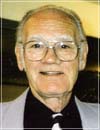
Scott Richardson (1923-2010) served as pastor of Katy Baptist Church in Fairmont, West Virginia.
Broadcaster:

Comments

0 / 2000 characters
Comments are moderated before appearing.

Be the first to comment!

Joshua

Joshua

Shall we play a game? Ask me about articles, sermons, or theology from our library. I can also help you navigate the site.