Bootstrap
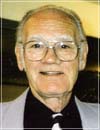
Scott Richardson

Faith

Romans 4:1-5
Scott Richardson December, 23 1997 Audio
0 Comments

Sermon Transcript

Auto-generated transcript • May contain errors

100%
Romans chapter four. I'll read those first five verses
of Romans chapter four. What shall we say then that Abraham
our father as pertaining to the flesh has found? For if Abraham were justified
by works, justified by works, to be justified
before God is to be as though we were not what
we are in reality. To be justified is to be as he
is. We talk about being justified.
We can say that as He is, as Christ is, whatever He is, as
He is, so are we in this world. We are justified by righteousness,
though we have done no righteousness. And he considers us and accepts
us on the basis of righteousness, but it's the righteousness of
him that faith connects us to. For Abraham was justified by
works. Works. Works. Most people believe that if they
ever go to heaven when they die, it'll be by what they do or what
they don't do. It'll be something pertaining
to self, works. If he were justified by works,
he hath whereof to glory. That if works would justify Abraham,
why, then he could boast a little bit, glory in it. But it says
you can't do that before God. For what saith the Scriptures,
Abraham believed God." Abraham believed God. And that's about what's taking
place with us, and we believe God. We believe God sent His
Son. We believe that His Son satisfied
all the demands that God demanded of us. He undertook our case. and lived the life that we didn't
live and couldn't live, and died the death that we couldn't die,
and rose again and never lives to make intercession for us. And by his doing and his dying,
he established righteousness, he wrought obedience, and bore
our sins, the penalty to do our sins in his own body. Abraham
believed God. We believe God. Believe what
God said. And it was counted unto him for
righteousness. Now to him that worketh is a
reward not reckoned of grace, but of death. A man that works
in order to assure himself God's favor, it's not grace, but it's
a debt. something that God owes you.
And He don't owe us anything. But to him that worketh not,
but believeth on him that justify the ungodly, his faith is counted
for righteousness. Now, it says here that his faith
is counted for righteousness. Now, let me begin by saying faith
is not our righteousness. It's accounted to us in order
to righteousness. And I'll explain that in just
a second. It's accounted to us in order
to righteousness, but not as righteousness, because if it
was counted as righteousness, it then would be a work like
any other doing. of a man. It would be a work,
and it would be of debt, not of grace. Now, if it were a work, if faith were
a work and faith was our righteousness, it would be incompatible with
the righteousness of the Son of God, which is by faith, not
by work. Faith, now, you listen closely
to me tonight, I want you to hear what I've got to say. Faith
connects us with righteousness and is therefore distinct from
righteousness. Faith connects us to righteousness,
but faith And righteousness is two different things. Faith is
not righteousness. God, on the account of righteousness,
the righteousness of the Lord Jesus Christ that is imputed
to us, on the account of that imputed righteousness, God reckons,
considers. God reckons the believing man
as having done all righteousness, though he has done no righteousness
at all. And even though his faith is
not righteousness. In this sense, it is that faith
is counted to us for or in order to righteousness that we are
justified by faith. Faith does not justify as a work
or as a piece of righteousness. It is simply the bond. It is simply the means of connecting
us. to righteousness. Faith is not
righteousness. Faith is the bond that cements
us to righteousness, which is Jesus Christ our Lord. Well, let me go on here now. The object of faith. What is
the object of faith? The reason for faith. What does
faith lay hold of? True, saving faith. The object of true, saving faith
is the person and the work of the Lord Jesus Christ. So we
can rightfully say that the work of Christ for us is the object
of faith, or the person and the work. And the person and his
work can't be That can't be separated. The person is not one thing and
the work is another thing, but the person and the work of Christ
is one thing, not two things, one thing. When we say we trust
in the work of Christ, we're saying we trust in the person
and the work of Christ. Paul said, the only thing I preach,
he said, is Christ crucified. Christ the person and crucified
what he done. So the object of faith is the
person and the work of Christ for us. That's the object of
faith. Now, the Spirit in us is that
which produces this faith that connects us to that righteousness. The Spirit of God produces. Faith. Faith is not our righteousness. But the Spirit produces the righteousness
that hooks us up, or produces the faith that hooks us up with
the righteousness of God in Christ Jesus. Now, the object of faith, brings about
peace and justification. Peace of mind, peace of soul,
peace of conscience and justification. The object of faith, that's where
it comes from. The object of faith produces
peace of mind, peace of heart, peace of soul and peace of conscience.
It's not out of the work of the Spirit in us. The work of the Spirit in us
produces faith, and faith lays hold of its object, which is
the person and the work of Christ. And the person and the work of
Christ, as faith lays hold of it, brings about peace of mind
and peace of conscience. The Spirit doesn't produce that
in us, the Spirit produces That faith that connects us to our
salvation, which is the Lord our righteousness. Well, let
me give you a biblical illustration of what I am saying. When the
children of Israel were in the wilderness, and they did not
have any water, and they complained unto Moses, that there is about
to die of thirst. And they said, You
brought us out here to kill us. And so Moses, acting as their
intercessor, went unto God and told Him about what the people
had to say. And so he told Moses, he said,
Take the rod and smite the rock. And Moses took the rod, and he
smoked a rock, and water came gushing forth from the rock.
Now, without the touch of the rod, the water would not have
come forth from the rock. Is that right? Without the touch
of the rod to the rock, No water would have come out. Yet it was
the rock and not the rod that contained the water. See what
I'm talking about? There was no water in the rod. The water was in the rock. But the rod must touch the rock
before the water comes. when the Israelite that was bitten
by the serpent and is about to die, he was told by Moses to look
to the uplifted serpent of brass. Told him to look at it, didn't
he? Now, it was not his act of looking at the brazen serpent
That's safety. But it was the object to which
he looked. You see what I'm talking about?
So faith is not our righteousness. It joins us to the Lord, who
is our righteousness, the Israelite. that brought the sheep or the
bullock, the sacrifice, into the tabernacle, the first thing
he was to do after he brought his sacrifice into the tabernacle
was to, before they killed the sacrifice, he was to lay his
hand upon the head of the sheep or the bullock. He had to put
his hand down there. Otherwise, the offering would
not have been accepted for him if he hadn't laid his hand upon
the head of the sacrifice. The sacrifice would not have
been accepted in his stead, in his place, in his room. But listen
now, but the laying on of the hand of the Israelite was not
the same as the victim on which it was laid. It was two different
things, wasn't it? So I say again, faith is not
our righteousness. It joins us to the Lord, our
righteousness. Saved by faith? That's a figurative
saying. Faith never saved anybody. The Lord saves people. not faith. Faith only connects us to Him
who does save. We believe on the Lord and it
is accounted unto us in order to or for righteousness. Blessed is the man saying, Blessed
are they whose iniquities are forgiven and whose sins are covered. Blessed is the man to whom the
Lord will not impute sin, won't charge sin to. Who is that man? It's the man that has received
the gift of faith, and that gift of faith produced in him, or
the Spirit of God produced in him, that faith that reaches
out and lays his hand upon the sacrifice. Well, it's true that faith doesn't
save us. I know the Scriptures say, in
one place, when our Lord dealt with this woman, He said, Go
thy way, thy faith has saved thee. That's figurative. It's figurative language there.
A man who has been saved by the grace of God, through faith in
the Lord Jesus Christ, never brags about his faith. He brags
about the object of faith, the Lord Jesus Christ. Faith is not
our physician. Faith is not our doctor. It only
brings us to the doctor. It is not the doctor. brings us to Him and to Him alone. It brings us to the doctor. Faith
is not even the medicine. It only administers the medicine. Faith is but our touching the
Lord Jesus Christ. But what is even this? But in reality, Christ touching
us. Faith is not our Savior. It was
not faith that was born at Bethlehem. It was not faith that died on
Golgotha's brow. It was not faith that loved us
and gave itself for us, was it? is that which the Spirit produces
in us, and that faith lays hold of the healer, the physician,
the Lord Jesus Christ, our righteousness. And our believing is counted
for righteousness. It's imputed to us, given to
us. It's not faith that loved us.
It's not faith that gave itself for us. It was not faith that
bore our sins in its own body on the tree. It was not faith
that died on that cross. It was not faith that came down
from the cross and went into the ground and on the third day
rose again. Faith didn't do that. Who did
that? The Lord, our righteousness. What is faith? Faith is that
which connects us to the Great Position, connects us with the
Lord Jesus Christ, and we're one with Him throughout time
and throughout eternity. Faith is one thing, and the cross
of Christ is another. confound the two, or confuse
the two, or give to some imperfect act of man that which belongs
exclusively to the Son of the living God. Salvation belongs
unto Him. My faith, my faith, we talk about. You have this faith, I have that
faith. You have no faith at all unless God gives it to you. And
if God gives you faith, that faith connects you with the risen
Lord. Faith doesn't save you. Christ
does the saving. Always did and always will. Faith
is not perfection. Oh, Pat McGinnis mentioned it.
Some fellow told him the other day, he said, well, I know I'm
not perfect. Well, a man doesn't have to be too smart to know
he's not perfect. He said, I'm not perfect. Faith
is not perfection. But listen, yet only by perfection
are we saved. But faith is not perfection.
But we must have perfection. Faith is not perfection, but
faith causes us to lay hold of Him
who is perfect. Every jot and every tittle of
the law, He kept, obedient. Faith's not perfection. Yet only
by perfection, either by your perfection or another's perfection,
will you be saved. And you know you ain't going
to be saved by your perfection because you haven't got any. And I haven't
got any. So it's got to be saved by another. I've got to be saved
by another man's perfection. You see, that which is imperfect
cannot save. Imperfect faith cannot save anybody. I'll tell you what imperfect
faith can do, though. Imperfect faith can connect you
with one who has perfect faith, the Lord Jesus Christ. But it
cannot of itself. It cannot of itself do anything. Faith, just as naked faith of
itself, can't do nothing. It can do anything of itself
and in itself. Faith is not Christ. Faith is not the
cross of Christ. Faith is not the blood of Christ. Faith is not the altar. Faith
is not the sacrifice. Faith is not the labor. Faith
is not the mercy seat. Faith is not incense. It does work. Faith works, certainly,
I love. But faith in itself can do nothing. Faith is not our righteousness. Have I said that enough this
evening to at least make you think about it? Faith, faith. But to him that
worketh not. But to him that worketh not,
that's what I read to you, but to him that worketh not, but
believeth on him that justifieth the ungodly, his faith is counted
to or in order of righteousness. Faith in itself is not righteousness. Faith does not work in that sense. What does faith do? Faith accepts
the work that was done 2,000 years ago. Faith accepts that
work. That's the object of faith, the
person and the work of Christ. And if a man has true faith,
he accepts that, he receives that, he bows down to it. Faith
does not wash. Faith does not cleanse. Oh no,
but faith that does not wash, it does not cleanse, but it brings
us to the fountain that's open for sin and uncleanness. That's what faith does. Faith
connects us with Him. Faith has no value or worthiness
of itself or in itself, but it does connect us to Him who has
infinite worthiness, in whom God is well pleased. That's how
we please God, is to be connected to and with what He done in our
place and our room on the tree. That's how we're justified, sanctified,
everything involved in the word salvation. It's shut up and tied
up and wrapped up in him on a tree. Faith certainly is a sacred thing
because there's not much of it. And it comes from God. But it's
a gift of God. Faith's a gift of God. People
nowadays in modern day religion believes that every man's born
with faith. Some have great faith, some have
little faith. And all he's got to do is to
reach down within himself and kind of turn something on to
generate that faith that he has. But that's not so. Man is dead
in trespasses and in sins, and he's void of faith. When Adam fell, all The godlike
qualities in Adam fell with him and he lost them and forfeited
all things. And we have not faith until God
gives it to us. Faith is a gift of God. And when he gives us that faith,
when he gives us that faith, the Spirit in us, is part of
the gift of God. The Spirit in us produces that
faith, and that faith leads us to the fountain filled with blood
that flows from Emmanuel's veins and cleanses the vile sinner
and makes him as though he had never sinned. And that's the
good news of the gospel. And I'm not offering it to people
In the sense that I'm peddling it out here alongside the road
and handing it out or anything like that, I'm just telling you
how God saves sinners. And that's the way He saves them.
I'm telling you that faith is not a piece of righteousness,
but faith is the means whereby we're connected to Him who's
the object of faith. Everybody see that, don't you?
You see that? Faith. Faith. It's mysterious,
it's mysterious. It's not big faith, not little
faith, it's faith, faith. Just a small grain of faith,
the side of a mustard seed, that's enough, that's enough. It'll
lead you to Him who's more than enough, who is our righteousness.
And that's what God requires, righteousness. He requires that
righteousness. And that righteousness is found
in Him, and faith will link us to Him.
Scott Richardson
About Scott Richardson
Scott Richardson (1923-2010) served as pastor of Katy Baptist Church in Fairmont, West Virginia.
Broadcaster:

Comments

0 / 2000 characters
Comments are moderated before appearing.

Be the first to comment!

Joshua

Joshua

Shall we play a game? Ask me about articles, sermons, or theology from our library. I can also help you navigate the site.