Bootstrap
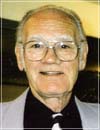
Scott Richardson

What Is That Righteousness That God Will Accept

Psalm 32:1-2
Scott Richardson June, 29 1997 Audio
0 Comments

Sermon Transcript

Auto-generated transcript • May contain errors

100%
I was trying to find something
here to read that would coincide with what I'm going to try to
say. It's not that there's a scarcity
of scriptures to substantiate the subject, but it's just that
I don't seem to have the guidance. to find exactly what I want.
But this thirty-second psalm, the first two verses of the thirty-second
psalm, the two verses covers about everything that I want
to say. And that's strange. It will take me forty-five minutes
to say the truth that the psalmist says in two sentences. That's strange, isn't it? Take
me all that time. Well, listen to what he says. Blessed is he. Blessed. That's the most blessed word
in it. adjective used to describe the
people of God. The people of God are called
blessed. Now, probably those around about
us wouldn't think that we're blessed. Folks that know us They'd
say, well, I wouldn't hardly say he or she is blessed. That description or term of endearment
belongs to those who are the children of God by faith in Christ
Jesus. And to call a human being blessed
is kind of strange. But now, this is what our Father
in Heaven says in regard to those who are the receivers and believers
of His Son. He calls them blessed. They are
blessed. Blessed by God, not blessed by
human help, not blessed by a man, not blessed by a church, not
blessed by distinguished educators and individuals of far superior
intelligence than we, but the author of the word blessed here
is none other than God Himself. And He said, Blessed is he, he
or she, or girl. Blessed is he whose transgression
is forgiven and whose sin is covered. That man is blessed,
isn't he? He is blessed, my soul, how blessed
he is. His transgression is forgiven. Only God can forgive a sinner who sins cover. Blessed again in verse 2. Blessed
is the man. Blessed is he in verse 1. Blessed is the man unto whom
the Lord imputeth, not iniquity, and in whose spirit
there is no guile, no deceit. Blessed is the man unto whom
the Lord, that word imputeth means account, account to. Blessed is the man to whom the
Lord reckons. It means reckons. It means credited,
blessed is the man to whom the Lord accounts not sin to. Blessed is the man unto whom
the Lord imputeth not iniquity. Well, this is what I want to talk to
you about. What is the righteousness that God will accept? to give
us entrance into his heaven. That's what I want to talk about.
That's a big subject. That's a scary subject. That's
bigger than I am. What's the righteousness? What is the righteousness that
God will accept to give us entrance into heaven? Most people now,
most people, you say, well, not everybody. Well, maybe not everybody,
but I would rather think everybody. Most people believe somehow man
must have a righteousness before God. Most everybody, if not everybody,
if not every member of Adam's fallen race, if not most of them,
that somehow they must have a righteousness before Almighty God. Now, the
real questions are, what kind of righteousness is required? That's the first real question. Most everybody I've said, and
you agreed with me, believe that every man must somehow have a
righteousness before God. But the first real question is
this, what kind of righteousness is required? And how does this
righteousness become mine? Two important questions. Oh,
I mean this is a difference between being destroyed in hell and having a home with
the Father to answer these questions right. Paul, in the Roman letter,
in the book of Romans, and in the third chapter, shows clearly
beyond a shadow of a doubt that religious Jews and cultured Gentiles
did not have this required righteousness in that he said, in Romans chapter
3 and verse 10, there is none righteous, no, not one. That's the way he said
it. There is none righteous, no. Someone might say, well, now
wait a minute, Grandma was, Grandpa was, He says, There is none righteous,
no, not one. Not one can be found among the
race of fallen Adam. There is none righteous, no,
not one. Now, what God says about righteousness
certainly is at variance with the beliefs and conceits of a
natural man. Most people believe that it's
an easy matter to satisfy God, since God is merciful, and God
is loving, and God is kind, and God is gracious, therefore it
is not a difficult thing to satisfy God. Well, man by nature, born
this way, man by nature is self-righteous, And self-righteousness, listen
to me now, is the last idol rooted out of the heart of a man. He'll
cling to that right up to the bitter end. Self-righteousness. Like the Pharisees of old that
Paul wrote about, he said that they went about, and we all at
one time went about to establish our own righteousness and not
submit ourselves to the righteousness of God, which is by faith. Now, righteousness defined. Let me try to define what I'm
talking about. I'm speaking here of a justifying
righteousness by which we must stand before God. And we must,
if we have this justifying righteousness, we'll be able to stand before
God spotless, without blemish and without wrinkle. If we have
the righteousness required of God. God requires a righteousness. Tell me about it. Tell me about
it. I'm interested in it. Well, I
said I'm speaking of a justifying righteousness by which we stand
before God spotless and blameless. Now, God Almighty, who's over
all and above all, is the only one who must determine what is
righteousness. He's the only one that can, who's
qualified to determine what righteousness is. Righteousness is defined
as a right relationship with God. Righteousness is defined
as perfect conformity to God's holy law. Righteousness is perfect
holiness. Righteousness is inward and outward
perfection. Righteousness is to go Perfectly
straight. Perfectly straight. That's the
righteousness that God requires, and that's the definition to
it. Perfect conformity to the holy, holy law of God. Inward. Inward perfection of
the soul and of the heart. And outward perfection. Inward
and outward perfection. in the body and in life itself. Righteousness required. That is what God requires. Now,
there is a reason why God requires righteousness. First off, He
requires it because He is the Creator God. It is because He
made everything that you see and don't see. He made it. The
star, the moon, the sun, the earth, and the inhabitants thereof."
God spake. God just spoke. He said, Let
there be light. Let there be light. Light was. Why is righteousness required? Because God is Creator. God is
the Lawgiver. God is the Governor. God's the
judge and God's character is holy and blessed and just. Right. God's law has an obligation
upon all men. The holy and just law of God
has obligation upon every man born of woman, every man child
Every woman, every boy, and every girl has an obligation and demands. Not only has an obligation, but
the law, the holy law of God demands satisfaction, demands
to be satisfied. The righteousness of God requires
is a righteousness that is suitable to His nature. The righteousness,
in other words, I could say this and be right in saying it. I
could say that God demands of us to be what He is. God demands,
that is, as to character and righteousness. I could say that
God will not accept anything less than what He is. I could
say that and be right. The righteousness of God requires
that the righteousness that He provides is also suitable to
His nature as God the spotless Holy One. That righteousness that he requires
is the only righteousness that will entitle an individual to
go to heaven when he dies. He must have the righteousness
that God demands. Well, it's impossible. With man, that's impossible. That's right. The Bible says,
But we are as an unclean thing. The Bible says that our righteousness,
the very best righteousness, if it's only in a tenth of a
second, if we could establish a righteousness that was in length
of time, was only a tenth of a second, that righteousness
would be as filthy rags in the sight of God. Our righteousness has filthy
rags. In the book of Romans, chapter
3 and verse 19, he says that the whole world, all the world,
might become guilty before God. You see, righteousness is essential,
but righteousness is impossible with man. It's essential. God requires it. But with you
and I, members of Adam's fallen race, fallen people, it's impossible. We've lost all righteousness.
We lost everything we had in the fall. We lost our innocence.
We lost that relationship we had with God. We lost everything. He said all have sinned and come
short of the glory of God. Every single solitary individual
born of Adam's race has sinned and come short of the glory of
God. Only those who can satisfy the
divine court of God Almighty with a righteousness that meets
His standard, will enter into heaven. So help me God. Only those that have the righteousness
that He requires will receive the verdict of life, perfection. within, and perfection without,
from the cradle to the grave. He's got to have it. He's got
to have it. That's the only ticket. That's
the only verdict. That's the only way we'll stand
in good stead with God. Now listen to me. Although the
Lord Jesus Christ was righteous in His person, that is, He was
without spot and without blemish, from the time He came to the
time He left, He knew no sin. He was righteous in His person,
but listen to me now, yet He had to work out a righteousness
for the believer. He had to establish a righteousness
for the believer. Though He was righteous in Himself,
holy, holy, holy Lord God Almighty, co-equal with God and thought
it not robbery to be equal with God. Son of man and Son of God
in one person. Yet he must work out a righteousness
for the believer. Now the righteousness of God
which justifies a poor sinner like you and me was actually
inaugurated at Bethlehem. That's where it started. when
God sent His Son. That's where it started. That's
where it originated. It was perpetual throughout the
whole course of His life and consummated in His finished work
on the tree. When He cried out, It's finished! That was the consummation of
His whole life. as a substitute, as the representative
of those that God gave Him before time ever was. Now, the righteousness
was wrought by the life and the death of the Lord Jesus Christ. Now, He yielded, rendered unto
God perfect obedience. When I say rendered unto God,
I mean He gave unto God's holy law, perfect conformity. That's what I mean. I mean that
He kept that law as a man, as a man. I've said hundreds of
times, as much God as if He was never a man, as much man as if
He was never God, and as a man, as a being, a human being, taking
upon Himself the robe of human flesh as a man, like I'm a man. He rendered unto God's holy law
perfect conformity. Every jot and every kittle of
that law He kept, our Lord Jesus Christ. When He bore the penalty
of the broken law, He bore it not for Himself, for He never
broke the law. He bore the penalty of the broken
law for those who are believers and receivers of Himself. He bore it for them. He obeyed
perfectly, completely, in heart, in body, in walk, in talk, in
life and in death. He obeyed perfectly, perfectly. The righteousness that He provides,
that He wrought, the righteousness that He provides the believer
is called the righteousness of God. Let me read two verses of
Scripture to you. Over here in the book of, and
you're familiar with it, I've quoted it many times, but let
me read this in the book of II Corinthians. Chapter 5, and verse 21. Verse 19, To wit that God was
in Christ, reconciling the world unto himself,
not imputing their trespasses unto them. God was in Christ,
reconciling the world unto himself, the world of believers, those
that the Father gave him. Now listen, not imputing, that
means not accrediting to their account, not imputing their trespasses
unto them, and hath committed unto us the word of reconciliation.
Now then, we are ambassadors for Christ. As though God did
beseech you by us, we pray you in Christ's stead, be you reconciled
to God. Now listen, for He, that's God
the Father, hath made Him, that's the Lord Jesus Christ, sin for
us. You'll see in italics there it
says, to be. In italics, that means the translators
added that to they thought further strengthened the statement. But
the 2B is not inspired. For he hath made him sin for
us. Who knew no sin? See that? He
made him sin for us. That we might be made, what?
That we might be made the righteousness of God in Christ. Then over here in the book of,
well, I'll dispense with that verse and I'll read it some other
time. Romans 10 and 3, you can read
it yourself. It's that righteousness of God
of which the Pharisees were going about to establish a righteousness
of their own, but rejected the righteousness of God. This is the righteousness. that
meet God's standard. It's from God. This righteousness
is from God, and this righteousness pleases God. And this is the
righteousness which we must have, and this righteousness which
God did entirely apart from human help. He did it Himself. It's His righteousness. Now,
the righteousness provided by God is where God's justice is
satisfied. You can't satisfy justice. Even
if you went to hell, you couldn't satisfy justice because there's
no end to hell. There's no one ever comes out
of hell. No one ever came out of hell, and no one's going to
come out of hell. So you couldn't satisfy justice
in yourself. But the righteousness provided
By the Lord Jesus Christ is where God's justice is satisfied, sin
is punished, God's holiness is demonstrated, and God's truth
is made manifest, God's law is honored, and God's authority
is upheld. The righteousness that I'm talking
about, the righteousness of God, is a perfect righteousness, it's
a complete righteousness, it's a full righteousness, it's a
victorious righteousness, it's a free righteousness to any and
all that wants it. To any and to all that wants
it. It's the phrase of the day. Anybody
that wants it can have it. It's there for the taking. Righteousness now, let me talk
about righteousness imputed, and then I'll quit. I told you
a little bit about what it means. To impute means to reckon, or
it means to account. Now, when I read over there in
Psalm 30, I believe, Blessed is the man to whom the Lord will
not impute sin. Blessed is that man to whom the
Lord will not charge sin to." That's what he's talking about.
Why won't He charge sin to that man? Because that man's sins
were imputed to the Lord Jesus Christ, and He bore the penalty
of them. He established the righteousness
that God requires, and it's all on Him, and it's not on me. And that which He did do is accounted
to my account. That which I've done is accounted
to His account. My sins were transferred to the
Lord Jesus Christ, imputed to Him, counted to Him as if He
had did them. His righteousness is accounted
to me as if I earned that righteousness. That's what the word impute means. Now listen. to reckon, to account, credited to. Now, it doesn't
change the object. Imputation doesn't change the
object who receives the imputation. It doesn't change him. That is,
I'm still a sinner. I'm still a sinner. I'll always
be a sinner. I'm ashamed of it. And I'm not
going to go around bragging about it, but I want to state the fact
that I've been in the way for going on 50 years. And I've been
preaching for 40-some years. And I've been preaching here
for going on 42 years. And I'm still a sinner. And you
may be ashamed of me for saying that. I don't know. But I'm still
a sinner. I hate that sin. that sent my
Savior to the trees. I hate every evil thing. I don't hate it as I ought to
hate it, but I hate all wickedness and all evilness, but still I'm
a sinner. I'm a sinner. Listen to me now. Righteousness imputed. It does
not change the object. It doesn't change me, but it
changes the way I'm regarded. See? It changes the way God regards
me. He doesn't regard me as a sinner.
Why? Because my sins were laid on
Him. And He paid all that I owed.
All to Him I owe. That's what we're saying, isn't
it? Why? Because He took my punishment.
The punishment due me against my sin. Listen. All of my sin, sin back there
when I deceived my mother, when I went astray from my mother's
womb, speaking lies and hypocrisy and deceit, those sins, sins
when I was a 7, 8, 4, 5, 6, 10 year old boy, sins when I was
18 years old, sins when I was 21, sins when I was 30 and on
down the road. He took all of my sins and laid
them on Him. And He paid what was due them.
He paid the full penalty that was due me, because my sins were
laid on me. And I have no sins now, as God
regards me. I haven't changed it. I'm still
a sinner. But God regards me as one with His Son, the Lord
Jesus Christ. All my sins are forgiven. All
my transgressions are forgiven. And I'm covered. I'm covered
with His with His righteousness, with His holiness. It doesn't change me, but it
changes the way God regards me, Pat. Now He regards me as what? Blessed. Blessed man. He even calls me a saint. And
all the saints that are in Christ Jesus are saints of God. And that's the last thing that
anyone would make applicable to me. But in the eyes of God,
everybody that's in Jesus Christ is blessed, and they're a saint
of God. And they have no sin. They owe
God nothing now except their love and appreciation, which
we can't even give God His due love and appreciation like we
ought to. I can't do it. Ah, listen, let
me say it again. You write this down. To reckon,
to account, it doesn't change the object itself, but it changes
the way the object is regarded. Does not the Bible say in the
book of 1 John, does not it say, as He is? When it says, as He
is, who's He talking about? He's talking about the Savior.
He's talking about the Lamb of God. He's talking about the Sent
One. He's talking about God's Christ. He's talking about the Lily of
the Valley. He's talking about the Rose of
Sharon. He's talking about Him who has
eyes of a dove, who's altogether lovely. And He said, as He is,
so are we in this world. We're like Him. We're like Him. My God, if that don't make you
rejoice and be happy, nothing in this world will. If that will
not dictate to you and constrain you to give yourself wholly and
solely to Him, nothing will. All the threatenings of this
world will not do that. This is the only thing that will
do it, is to see what God has done for you in Christ and how
He regards you now. He regards you in union with
His Son. As He is, so are we. Well, listen, God is willing
to receive me, and He is willing to receive any poor, helpless,
hopeless, doomed, damned sinner who will come to Him on the ground
of their sinnerhood on the ground of who they really are, not what
people say they are, but what they know they are on their sinnership. They come to Him as sinners.
God is willing to receive me on the ground of His perfection
if I am willing to be received in the perfection of another
with whom God is well pleased. I am willing myself. Well, if
a man is willing to receive that perfection in another in whom
God is well pleased, that is the Lord Jesus Christ, then the
whole transaction is completed and I am justified by His blood. And as He is, so am I in this
world. Oh, to be entitled! To be entitled! to use another's name. And I'm entitled, and every believer
is entitled, not to use their own name, but to use another's
name. Even when we pray, we use another's
name. We come to God in Christ Jesus. We ask for things in His name,
in His name. so to be entitled to use another's
name, when my own name is worthless and ought to be spit upon, to
be allowed to wear another's robe, another's coat, because
my robe is torn and my robe is filthy, to appear before God
in another's persons, the persons of His beloved Son, the Lord
Jesus Christ. That is the mountaintop of all
blessings, to appear in the presence of God in the person of His Son. Isn't that a blessing, Bob? Ah,
the sin bearer! The Lord Jesus and I have exchanged
names. We have exchanged robes. We've
exchanged persons. I am now represented by Him,
and my own personality has completely disappeared. And He now, He and
He alone now, according to the book of Hebrews, chapter 9, verse
24, He and He alone appears in the presence of God. Oh, for me. And all that makes
him precious and dear to God. Man, he's dear and precious to
God, isn't he? No doubt about that. Now, that's one thing I
can be sure of. There ain't no question behind
that. The Lord Jesus Christ is dear and He's precious unto God. Now listen, all that makes Him
precious and dear unto God, the Father, has been transferred
to me, His Excellency. His glory are seen as if they
were mine. As if they were mine. I receive the love and the fellowship
and the glory as if I had earned it meritoriously myself. I am treated by God on the account
of the righteousness wrought by the Lord Jesus Christ in my
behalf, in my stead, in my place, I am treated as if I had done
all the good, which I have not done, but which my substitute
did in my place. In another, I am altogether righteous. And I shall be forever as long
as God lives. And this is what God has done
for His people. This is the gospel of substitution. This is, blessed is the man to
whom the Lord will not charge sin to. Although I sin, He doesn't
charge sin to me. Why? Because He charged it to
my substitution. Well, it sounds like that's difficult
to believe. And it is. And you'll only believe
it if God deposits grace in your heart. Then you'll believe it. And He'll give you repentance.
And you know what repentance is? Now, that's not what most
men say it is. repent of your sins. That means
you have to go clean back when you first started. And you first
started when you came forth from your mother's womb. Go back to
every one of your sins and say, well, I'm sorry I did that, and
I'm sorry I did this, and I'm sorry I did that, and on down.
Now listen, there's a million sins that you forgot about. You sinned against God willfully,
but you didn't even know about it. How are you going to repent
of them sins? You know what repentance is? Repentance is your attitude towards
the Lord Jesus Christ. You are going to have to repent
of that. You heard about Him, but you
were indifferent. Repentance is your attitude towards
God. That attitude has got to change. once he was indifferent, but
now he's your all in all." Well, all right. Lord bless. We'll
meet again soon.
Scott Richardson
About Scott Richardson
Scott Richardson (1923-2010) served as pastor of Katy Baptist Church in Fairmont, West Virginia.
Broadcaster:

Comments

0 / 2000 characters
Comments are moderated before appearing.

Be the first to comment!

Joshua

Joshua

Shall we play a game? Ask me about articles, sermons, or theology from our library. I can also help you navigate the site.