Bootstrap
Scott Richardson

Christ Our Substitute

Luke 2:7
Scott Richardson June, 29 1997 Audio
0 Comments

Sermon Transcript

Auto-generated transcript • May contain errors

100%
Let us pray together. O merciful,
loving, kind, generous Father in Heaven, thank you for the
day, your mercies and blessings. Thank you that, Father, you can
sustain us in the hour of need. Lord, you do. And we thank you. we know that whatever transpires
is not done apart from your authority. You're the living God, and you have the right to rule,
and no limit to your right. We acknowledge, Father, We are under Thee, our great
King. We are under Thy bountiful hand. And You love us too much to lay
upon us more than we can bear. And we thank You. Lord, we bless
You. Bless Your Father most of all
for Him who loved us and gave Himself for us. All that he was, Father, he gave,
pure and spotless, stood in our place, bore our guilt and our
shame in his own person. Victorious, Father, thank you
for him. Help us to talk about him here
this evening, that it might redound to his honor and to his glory
and to the health of thy people. bless these that have gathered.
Remember all thy people everywhere, Father, as they gather from time
to time. We pray for them, and pray for
those who would lead them, the shepherd of the sheep. In His
name we ask these things. Amen. Over here in Luke chapter
2, Luke chapter 2. I want to read that 7th verse, or at
least begin to start there. And she brought forth her firstborn son, and wrapped
him in swaddling clothes, and laid him in a manger, because there was no room for
them in the inn. And there were in the same country
shepherds abiding in the field, keeping watch over their flock
by night. And, lo, an angel of the Lord
came upon them, and the glory of the Lord shone round about
them, and they were sore afraid. And the angel said unto them,
Fear For behold, I bring you good tidings of great joy, which
shall be to all the people. For unto you is born this day
in the city of David a Savior, which is Christ the Lord." I
want to talk to you a little bit here this evening about this
one who is mentioned here, a Savior, which is Christ Jesus
the Lord. Now, He entered our world as a substitute. It says that He entered this
world as a Savior. Now, if He is a Savior, He's
got to be the substitute. Is that not right? If He's the
Savior, He's got to be the substitute. God, the only scheme, plan that
God recognizes is the scheme of substitution. That's the only
way God deals with sinners is on the basis of substitution.
All the Old Testament symbols and types, points to the coming
of the Savior. And we sometimes are led to believe
that just His work on the tree is the most important part of
his substitutionary work. And to a degree, that's true. But
the substitutionary work of the Lord Jesus Christ had its beginning when God sent His Son here at
Bethlehem in the manger. And I said all that to say this.
There he was at Bethlehem, born of a woman, Mary. And it says
here that there was no room for him in the inn. No room for them
in the inn. No room for the Savior. No room
for his mother and his father. No room for him in the inn. The
Bible says in 2 Corinthians chapter 8, verse 9, it says that our
Lord Jesus Christ was rich, and for our sakes He had become
poor. Rich, He had become poor, for
our sakes. Now in His poverty and in His
Banishment in this life is the start or the beginning
of his substitutionary life. No room for him at the end. No
place for him at the end. He was banished from this ordinary
place where a mother would give birth to a child and forced to
go into an inn, and the manger was his cradle. So he was an
outcast at the beginning. He was an outcast even when he
first came on the scene. Men would not give him a roof to shelter him and his family. They wouldn't give him a cradle
where he could lay his head. as a helpless babe, but he was
as a substitute. All of this, every part of his
life, has to do with him being a substitute to meet our needs. And I'll tell you a little bit
about that in just a minute, about why he was baptized. Why
was he circumcised? Baptism and circumcision both
are symbols and rites that denote cleansing. He didn't need no
cleansing. He was pure. He was pure from
the cradle to the grave. No sin in him. The only thing
that he had to do with sin was he bore the penalty due us against
our sins. So he was an outcast from the
first moment of his birth, and his vicarious life, his substitutionary
life, had its beginning in the manger. What else can this rejection
of humankind and his poverty, what does that mean? What does
this outcast condition mean? but that his sin-bearing began
when he came on this earth. I know now it was not consummated
until he shed his blood. I understand that. It was not
consummated until he shed his blood and died. But it had its
beginning right here in the manger. That's when it started. So what
I'm saying is, he is whole life's work. He was a man of sorrows
equated with grief. Whose sorrows and whose grief
is he talking about? He's talking about ours. He's
equated with grief and sorrows because he's our substitute,
see? Despised and rejected by the
world. Why? For us. He suffered from
the time he came till the time he left. Let me point something out to
you here, and I think it's Psalm 88. Psalm 88. I believe. I'm not sure. Psalm 88. Listen to this. O Lord, God of
my salvation, this pertains to the Lord Jesus
here. O Lord, God of my salvation,
I have cried day and night before Thee. Let my prayer come before
Thee. Incline Thine ear unto my cry,
for my soul is full of trouble. My life draweth nigh unto the
grave. I am counted with them that go
down into the pit. I am as a man that hath no strength,
free from the dead, like the slain that lie in the grave,
whom thou rememberest no more, and they that are cut off from
thy hand. Thou slayed me in the lowest
pit, in darkness, in the deeps. And look over here in the latter
part of it. Verse 13, But unto thee have I cried, O
Lord, In the morning shall my prayer prevent thee. Lord, why
castest thou off my soul? Why hidest thou my face from
me? I am afflicted and ready to die
from my youth up, even from my birth. This all started. I am
ready to die from my youth up while I suffer thy terror as
I am distracted. The fierce wrath goeth over me. Thy terrors have cut me off. They came round about me daily
like water. They compassed about me together. Lover and friend hast thou put
far from me, and my acquaintances unto dark." That's the Lord Jesus
there crying through David, the King David. This is the greater
David. This is King David. This is the
only King. real, true King who only has
one crown and only has one glory and one people. This is Him here. He's not just merely referring
to the anguish of the cross. A lot of people just mistake
these for, they say, well, that's the anguish of the cross, that's
what He suffered on the cross, but He suffered a lifetime like
this. From the start to the finish,
he suffered a lifetime. Listen, his very name, the very
name that God gave him, when he came into this world,
says the same truth. It says that his name shall be
called Jesus, for he shall save his people from their sin. When He came into this world,
His name shall be called Jesus, Joshua, for He shall save His
people from their sins. His name proclaims His mission
and His work as to our salvation. Jehovah, the Savior, Jesus, is
that by which this infant shall be called. As the Savior, He
comes forth from the womb. As the Savior, He lies in the
manger. And if He is the Savior, I'll
say it again, I've said it three times already, and if He is the
Savior, He must be the substitute. And if He's the substitute, His
substitutionary work started when He was born in the city
of David. It started then. So it's not
just in the cross. It was a lifetime of suffering.
suffered all his life. All of his life he was full of
the trouble, trouble lay heavy upon him. Made him cry out to
God. He bore our griefs and our sorrows. Despised and rejected he was. The name Jesus was given to him,
not merely in reference to the cross, but to his whole life. That's what I'm trying to say.
Mary of old, she said, My soul magnifies, magnifies the Lord
my Savior. And I rejoice, she said, in God
my Savior. The angel said to the shepherd
there in the field, Unto you this day is born in the city
of David a Savior which is Christ the Lord. Substitutionary work
began then. Now scarcely is he born, and
he sheds his blood. Circumcision. They circumcised children back
then, the man child, with a fleaty rock. They bruised his flesh
and the blood began to run. Circumcision deals with him as
guilty and he needed, as a guilty man, the sign of cleansing, which
is what circumcision was. He was not born in sin. He was
not shaped in iniquity, but the Bible says He was that holy thing
in Mary's womb. He was circumcised as other children
of Abraham are circumcised. He took upon Himself the seed
of Abraham. Why was He circumcised is a good
question, if He was not the substitute, see? Why circumcise Him? if he wasn't a substitute. He was the substitute. All these things he did in our
behalf, for us. Our substitute in the time he
came into this world. This right or symbolic act proclaimed
his vicarious birth just as truly as did the cross proclaim His vicarious death. He who knew no sin was made sin
for us that we might be made the righteousness of God in Him.
This was the very beginning of that obedience in virtue of which
righteousness comes to us, the righteousness that I talked to
you this morning. It is written, As by one man's
disobedience, the first Adam, many were made sinners, so that
by the obedience of one shall many be made righteous. as being an obedient son, he
must be circumcised, which is a sign of cleansing. He did not
need to be cleansed, he was pure, but it's part of this obedience
that establishes righteousness, justifying righteousness, which
he established and works out for us, that is, in finality,
imputed, or charged to our count, or reckoned to us, part of that
obedience. So by the obedience of one shall
many be made righteous. Now, he himself testifies concerning
his baptism. We often wonder why the Lord
Jesus Christ was baptized. Well, he said himself in Matthew
chapter 3 and verse 15, he said, Thus it becomes us to do what? Fulfill all righteousness. And what was true of his baptism
was no less true of his circumcision. Fulfill, establish righteousness. Though he was righteous in his
person, he must work out a righteousness for us by way of obedience to
God's law. The pain and the blood and the
bruising of his blessed body, connected with that symbol of
shame, can only be understood that even in his infancy, He
was our Savior. Even in His infancy as a child,
He is our substitute in our stead, establishing righteousness by
His obedience. He was the vicarious One. It doesn't mean now that He bore
sin in the full sense and manner
that he bore sin on the tree. It doesn't mean that at all. And I don't want you to understand
that I think that when he was baptized or when he was circumcised
that that was bearing our sin in his own body like he did on
the tree. Because I know, as we've already
said, For without the shedding of the blood, for without death,
sin bearing could not be consummated. He's got to die. He's got to
shed his blood. And so his sin bearing, he was
bearing our sins from the start, and it was consummated when he
shed his blood, when he died, when he gave up the ghost. See? He bore it. In His lifetime, every day, He
was bearing our sins, in a sense. He bore it in a manner according
to the condition of His years. Even then, He was the Lamb of
God. What is the Lamb of God? God's
Lamb. Substitutionary Lamb. He was
the Lamb of God when John the Baptist See Him coming up there. And He said, Behold the Lamb
of God. He is the Lamb of Man. Establishing righteousness on
our behalf by His obedience from the cradle to the grave. Consummating
all of this by giving Himself, His pure, perfect, sinless Self
in our stead and bearing our punishment there on the tree.
And by the way, When he bore our punishment, it was without
the camp. It was without the gate, outside
the city. He didn't die on Main Street.
They took him out there on the hill in Golgotha, the place of
the skull. He died out there. He was banished. His banishment and rejection
started in the end and wound up in Calvary, outside the camp. not on Main Street. His banishment
to Egypt is a part of that life of humiliation by which he was
bearing our sins. As the banished one, he bore
our banishment that we might return to God. He passed through
the earth as an outcast, despised and rejected because he was standing
in an outcast place. He is representing me and you
if we be believers. So the whole, that's what I'm
trying to emphasize, the whole from Matthew to the book of Revelation,
all of it has to do with his sin bearing. And it all took place in a short
period of time. For three years the historian
sang, and it was a life of rejection. He came unto his own, but his
own wouldn't have nothing to do with him. He came unto his
own people, and they said, No, we'll not have you. Now, I read
to you over there in that 88th Psalm, and I told you, I think,
that it didn't merely speak there of the anguish of the cross,
when the full wrath of God's holy justice fell on him. That's
not just what he's speaking about in those Psalms. When he talks
about how he cried and trouble was upon him and those things.
But he's talking about his lifetime. His whole lifetime was one of
grief and trials and sorrows and trouble. That's what he's
talking about. Of all this, there is no doubt
in my mind, when I remember that He was always, from start to
finish, the sinless One bearing my sins. You see, substitution
attached itself to each part of His life as truly as His death. And that is the truth, so help
me God. powers of earth and the powers
of hell fell upon Him from the beginning unto the end, consummated
on that tree when God Himself turned His back on the Son of
God. Our burdens, our sins, our transgressions
and our iniquities, He assumed when He entered the manger there
in Bethlehem. And listen to me now, He assumed
them there when He came. The burden of sin was on Him
then as our substitute. And He did not lay them aside
only at the tree. That's when He laid them aside.
He bore them all His whole lifetime. And finally, He said, It's finished. This life, this life's work of
trials and troubles and grief, Disrespect! It's over with! I've laid down my life for my
sheep. I've laid it down. Well, he not
only suffered for sin on that tree, but I'll tell you something
else happened there too. He felt God Almighty, his Father,
against him in his suffering. While he suffered, the Bible
said, it pleased the Father to bruise him. He felt the anger of God towards
sin in his sufferings. It pleased God to bruise him. Oh, what a loving Savior! He
did all this for us. He did all this for us. unto his own. Oh, I'm glad tonight
I got a... I told you one time about that
outfit down there in one of those states. They had problems in
the church. And so a group of them said,
we're leaving. And they went on the other side
of town. And they tried to get a work started. And they was having a difficult
time. And these people that remained,
they got in some conversation with them about their predicament. And they said to them, they said,
there's little hope of anything transpiring or taking place over
in that end of town. They said there's little hope.
I said that to say this, a little hope is better than no hope at
all. Aren't you glad you've got a
little hope? A little hope tied up, bound up, wrapped up, shut
up in the Lord Jesus Christ who lived a life of rejection and
suffering as our substitute and finally laid our burdens down
when he said it's finished. And it will soon be over with
a good many of us here. And we'll be so thankful when
we get out from underneath all of this evil and wickedness And
we really appreciate what He's done for us, don't we? We don't
really appreciate Him like we ought to. I know you appreciate
Him. You know I appreciate Him. Not
like I ought to. How much I owe. I owe everything
to Him. Without Him, oh... Without Him, it just will blow
your brains out. Well, I'm going to quit now.
Scott Richardson
About Scott Richardson
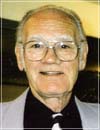
Scott Richardson (1923-2010) served as pastor of Katy Baptist Church in Fairmont, West Virginia.
Broadcaster:

Comments

0 / 2000 characters
Comments are moderated before appearing.

Be the first to comment!

Joshua

Joshua

Shall we play a game? Ask me about articles, sermons, or theology from our library. I can also help you navigate the site.