Bootstrap
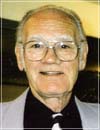
Scott Richardson

Perseverance Of God's People

Job 17:9
Scott Richardson May, 12 1991 Audio
0 Comments

Sermon Transcript

Auto-generated transcript • May contain errors

100%
I want to read a little bit here
in the seventeenth chapter of the book of Job and use that
ninth verse as kind of a text, a basis for my remarks concerning the perseverance of the people
of God. It says here that the righteous
also shall hold on his way. That's what it says. The righteous
also shall hold on his way. And that means that the man who
is righteous before God has a way of his own. It's not the way
of the pledge, nor is it the way of the Word. But it's a way
marked out for him by divine command in which he walks by
faith. The just shall walk by faith. The just shall live by faith. The man who is righteous before
God. Now, that does not mean that
a man can be righteous in himself before God. No man can be righteous
in himself before God because all men are unrighteous by nature. And the Ethiopian cannot change
his color, and the leopard cannot change his spots, and neither
can ye who are accustomed to do evil do any So if a man's
righteous before God, it must be by and through another because
it cannot be by himself. By himself he's unprofitable,
he's unrighteous, he's ungodly, he's corrupt. And we could go on and use many
other adjectives to describe his low He's far off from God
and far away from God. He cares nothing for God. He
hates God, and he revels in his evil and his wickedness. So in
himself, Paul said, it has before been proved both Jew and Gentile
are all under sin. We are sinners by nature. sinners by choice and sinners
by practice, and that's all we'll ever be in ourselves is sinners. That's what we are. So if a man's
ever righteous before God, it won't be in himself. It'll have to be in another. Now, that may sound like a riddle,
but if you solve that riddle, you'll have one foot in the kingdom
of God. Blessed is the man to whom the
Lord will not impute sin or will not charge sin to. The man who is righteous before
God has a way of his own. And it says the righteous also
shall hold on his way, his way. not the way of the flesh or the
way of the world. It's a way marked out by and
for him by divine command in which he walks by faith. And
once the man enters upon this way of life, he's known then
as what? A pilgrim. He's a pilgrim. And the pilgrim must persevere
in this way or perish. Once he has entered into this
way, he shall hold on to this way. He must continue in this
way or he shall finally and fatally forever perish. The Lord Jesus
Christ himself said, if any man draw back, my soul hath no pleasure
in him. continuing on in the path of
faith and holiness is a necessity for the true believer, for that
one who is truly righteous before God. Does not the Bible say,
for he that endureth to the end shall be saved? You remember the seed that was
sown on the rock? It came up real quick like. But
by and by, when the sun came out, that seed that grew up real
quick on that rock withered, and that proved that the plant
had no life in itself. If it had life in itself, it
wouldn't have withered. Now, the declaration of the text
that I read to you that says the righteous also shall hold
on his way, the declaration of that text is that the truly righteous
man shall hold on his way. That is, he shall not go back. He shall not leave the hedges
or the fences. and wander to the right or to
the left, and he shall not lie down or sit down in idleness,
he shall not faint or grow weary, and cease to go on his journey,
but he will continue. That's what that text means. The righteous also shall, shall,
s-h-a-l-l, shall hold on his way." That's what it means. Now, it will frequently and oftentimes
be very difficult for him to do so. Nowhere in the Bible does
it teach that a Christian, a believer who is truly righteous before
God, will have an easy time of it. in this life. It teaches
just the opposite of that. It will frequently, very often,
be difficult for the believer to hold on to his way. But he will have such resolution,
he will have such determination, such power of inward grace, given
him a that he will hold on. He may not always travel, and
he's on the road, he's on the way, and he's on a journey. All the children of God are pilgrims. They're strangers to this world.
They're like Abraham, their father, who looked for a city. He kept traveling here and there.
And all he had was his altar and his tent. He was a traveler. The Bible refers to him as a
sojourner. He did not take up permanent
residence anyplace. He went from place to place.
And wherever he went, he built an altar to worship God, and
he had a tent which was depicting His temporary stay. He didn't
build anything permanent. He was looking for a city whose
builder and maker was God. He wasn't looking for anything
permanent. So you see, brethren, we're on
a journey, and we're going to stay on that journey until we
come to journey's end. Journey's end for us is to be
with God. Now, this may be difficult. for a man, oft times, many times,
to hold on his way. It hasn't been promised by God
to be easy. It's always depicted as being
hard and difficult. And he may not always travel
with equal speed, but it is not said that he shall hold on to
his pace. But it says that he shall hold
on his way. There's times when we run, and
times when we grow weary, and times when we faint. There's
other times when we crawl, even on all fours, in pain, but we
still stay on the way, you see. He shall hold on his way. But under all these difficulties
that a man has, the man who's truly righteous before God, that's
what I'm talking about. I'm not talking about a man who's
righteous in his own eyes, or righteous in his mama's eyes,
or his daddy's eyes, or his children's eyes, or his neighbor's eyes.
I'm talking about one who draws his strength from the source
of the righteousness of the Lord Jesus Christ, wherein is his
standing. I'm talking about that fellow.
He shall hold on his way, and under all the difficulties that
he undergoes, the faith of that man who is righteous before God,
that man whom God himself has justified, is steadfastly sent
toward Jerusalem, and he will not He will not be deterred,
he will not turn back until he sees the King in all of his beauty
at the end of the journey. What I'm saying is, he shall
hold on his way. He will. The scriptures, nowhere
that I know of, teach. that a man will reach his journey's
end without continuing to travel along the road. He won't reach
his destination if he gets off of the road. You cannot get to
Pittsburgh by going south. You must go directly north to
get to Pittsburgh. If your journey is Pittsburgh,
don't start out for Charleston or Parkersburg or Cincinnati,
because you'll never get there. If you're going to Pittsburgh,
you've got to go north on the road that leads north, and if
you get off of that road, you're not going to wind up in Pittsburgh.
And the scriptures do not teach that a man will reach his journey's
end without continuing to travel along the road. Now, it's not
true. I don't care what folks say.
It's just not so. The Bible doesn't teach it. It's
not true to our experience. It's not true that one act of
faith is all, and that nothing is needed of daily faith, daily
prayer and watchfulness, The doctrine of the Bible is just
the opposite of that, namely that the righteous shall hold
on his way. In other words, the righteous
shall continue in faith, in repentance, in prayer, and under the influence
of the grace of God that was given to him in regeneration,
or given to him better in Christ before the world, The Bible does
not teach a salvation by a physical force which treats a man as a
dead dog and carries him where he would not go. That's not the
salvation of the Bible. The salvation of the Bible is
that man is made willing He's always made willing to come to
the Lord Jesus Christ, and he's willing to follow the Lord. Other
sheep I have, which are not, they must come, and when they
come, they'll follow me. Follow me. They won't listen
to the voice of the Antichrist or the false prophet. They'll
follow me. And he that follows me, I give
unto him eternal life, and he shall never perish. Oh, no, he
holds on. You see, the Bible says that
this one who is truly righteous before God, who holds on, he
is personally active in this matter. The indication of the
expression, shall hold on his way, indicates an activity on
the part of him. He holds on. He doesn't let go. He clings to. He's holding on
to the Lord Jesus Christ with all the strength of his being. Oh, he plods uphill and he plods
downhill. He overcomes, he jumps here,
jumps there, crawls, sets down, gets up, but he keeps on going
until he comes to journey's end. I never thought in my life, or
even dreamed or supposed, that just because a man supposed that
he has once entered on this way, he may therefore conclude that
he is certain of salvation, even if he leaves that way. Oh no,
we believe, I believe, that he who truly receives God's Holy
Spirit so that he trusts and believes in the Lord Jesus Christ
and all that's involved in God's salvation shall not go back but
shall continue in the way of faith." Oh, listen to me. I'm not saying
that a believer does not sin. I'm saying the opposite of that.
Though the believer sins, and he does commit many and many
sins, the believer, he that is truly righteous before God yet
commits sin. Though the believer, when he
commits sin, to his own grief and to his own misery, yet in
spite of all that, they thrust the tenor of his life will be
holiness unto the Lord and obedience unto the Lord. That will be the
tenor of his life. And I've used this illustration
many times. Let me use it again. It says more than I can say in
two days by trying to illustrate this truth of the tenor of a
man's life. I'm saying believers sin, but
it's their grief and misery when they do sin. but the tenor, the
tenor of their life, the direction of their life. As you look at
it from the perspective, from the start to the finish, as you
can focus in on the thrust, the bend, the tenor of their life,
they're going in one direction. And it's holiness unto God, obedience
unto God. That's the direction they're
going in, even though they sin. They're going in that direction.
It's like the Mississippi River, the fella said, said it flows
south. Starts way up in Minnesota someplace,
I think. A little trickle, maybe. But it keeps coming. The force
of it, it gets stronger and it gets wider. And it just keeps
coming down, keeps coming down. And it's running directly south.
That's the way it's going. It doesn't go, it's not going
uphill. But there's times in the course of the Mississippi
River that it'll flow east, and it'll flow west, and sometimes
it'll flow north. But it'll whip right back. The
force of that river is going in one direction. It's going
to wind up in the Gulf of Mexico. And that's where a believer is.
That's where a true believer who is righteous before God,
now he may grow weary and faint and sit out a bit, but He may
sin, but the force, the direction of his life is going in one direction,
and that's towards God. He'll hold on his way. He falls
into sin. I don't say that he doesn't.
But when he does, it'll be his grief and it'll be his misery.
And he'll not rest until he's cleansed from this awful shame
and guilt of his sin. He'll confess his sin before God. If you'll come out of it
feeling better, I'll grant you that. I will say this of a believer,
a true believer, he shall hold on his way. And I say this of
him, a true believer, that he would live if he could. He would live. If he could, if he had his desires
met and fulfilled, he would be as perfect as his Master is in
heaven. He would be free. He doesn't
want to sin. He does sin, but he doesn't want
to. He'd like to be without sin. He'd like to not make snide remarks. He doesn't want to hurt people
and offend people and lead people into wrong. He doesn't want to
do that. He wants to do what's right. And if he had his desire
met, ah, he'd live. If he could live as he would,
he'd live a perfect life. Ah. I hope you can say in your
heart here this morning, would that I could live as I desire,
let it be without sin. I'd be perfect as my Father which
is in heaven. That's the doctrine I'm talking
about. I'm talking about this doctrine of the perseverance
of the believer that once God has imparted to him grace and
holiness in his heart, he will persevere to the end. He's not
going to fatally perish along the way. God will not permit
it. He will not permit it. Let me try to prove the doctrine,
then I'll quit. God has an elect people. Is that
right? If that's not right, I just will
quit. God has an elect people. He said it over and over and
over and over and over in the Bible. God has an elect people. Now, whom he has chosen unto
what? Unto eternal life, the end of
the road, the journey. The end of the journey is where
God is, it's eternal life. And that truth that God has a
people and he's chosen them unto eternal life, that truth necessarily
involves the continuance in grace. We believe that the Bible teaches
that spatial redemption, and this spatial redemption secures
the salvation and the consequent perseverance of the redeemed,
who are the objects of that spatial love of God in that God's especially
applies to them the ransom who is the Lord Jesus Christ to pay
their sin debt. And I certainly believe in the
effectual calling of God which is bound up with justification,
a justification which ensures glorification. The doctrines
of the grace of God are like an unbroken chain If you believe
one of them, you've got to believe in the next, for each one of
them involves the whole chain. In the letter that the apostle
wrote to the Hebrews, he has some solemn warnings against
apostatism. Well, let me turn over there
to that. In the sixth chapter, I believe
it is, of the book of Hebrews, Hebrews chapter 6. Let me read
this warning about apostasy. Here in chapter 6, he says, Therefore, leaving the
principles of the doctrine of Christ, let us go on unto perfection,
not laying again the foundation of repentance from dead works,
and of faith toward God, the doctrine of baptisms, the laying
on of hands, the resurrection of the dead and eternal judgment.
This will we do, Paul said, if God permits. Now, listen to this
solemn warning about apostasy. For it is impossible for those
who were once enlightened and have tasted of the heavenly gifts
and were made partakers of the Holy Ghost, and have tasted the
good word of God, and the powers of the world to come, if they
shall fall away, if they shall fall away, to renew them again
unto repentance, seeing they crucify to themselves the Son
of God afresh, and put him to an open shame." in his warnings against apostasy. Listen, he always adds words
under the inspiration of God which show that he himself, while
he wrote this, did not believe that those whom he warned would
actually apostatize. Notice what he said here. in
verse 9 of this same chapter, after he hath set forth this
warning of apostasy. He adds these words, and he says,
But beloved, beloved of Paul and beloved of God, we are persuaded
better things of you, true believers, those that are truly righteous
before God, We are persuaded better things of you, and things
that accompany salvation, though we thus speak." What's he talking
about? Huh? We're persuaded better things
of you, and things that accompany salvation. We're persuaded. We
don't believe that you're going to do that. We don't believe
that the people of God, the true people of God, are going to apostatize. Now, you turn over there to the
10th chapter of the book of Hebrews and see some more warnings. He
gives equal warning here in this 10th chapter of the book of Hebrews.
And he says this, he said, For if we sinned willfully after
that we have received the knowledge of truth, thou remaineth no more
sacrificed for sin. Buddy, that is a man that's The
bent of his life is not going in one direction. The bent of
his life is he's sinful. Now, he says, a certain fearful
looking for of judgment and fiery indignation which shall devour
the adversaries. He that despised Moses' law died
without mercy under two or three witnesses. Of how much sore punishment,
suppose he, shall he be thought worthy to whom hath trodden underfoot
the Son of God, and hath counted the blood of the covenant, the
blood of the agreement that God made with the Father and the
Son and the Holy Ghost, wherewith He was sanctified, an unholy
thing, and hath done despite unto the grace of Almighty God."
Paul said, this man is worthy of punishment who despises Moses'
law, who trods underneath his feet the blood of the Lord Jesus
Christ, who despises that blood covenant. But listen to the end
of the chapter, end of the chapter, Paul adds, to what he's already
said, that I don't believe that you fellas are going to apostatize. Listen to what he says. For yet a little while, verse
37, he that shall come will come and will not tarry. Now the just,
who are the just? Those that are truly righteous
before God. Those that God looks upon and
sees them in His Son, the Lord Jesus Christ. They're the just
ones. Listen, the just died for the
unjust. In our natural state, we are
unjust. But the just one died for us,
so we're in Him. His death is our death. His punishment
is our punishment. His resurrection is our resurrection. His standing before God is our
standing before God. Now listen, the just, They shall
live by faith. That's what I've been saying.
They shall live, but if any man draw back, my soul shall have
no pleasure in him. Look at verse 29. But we are
not of them. See? There's a difference. My God, can you see that this
morning? There's a difference. We're not of them. They went
out from us. because they weren't one of us.
If they had stayed with us, it'd have been because there's one
of us. But they went out from us to make it known that there's
never one of us. He's not talking about there's
never a Baptist, never a Methodist, never a Presbyterian or an Episcopalian
or a Roman Catholic. That's not what he's talking
about. There's never one of us joined to the Lord Jesus Christ.
There's never one of us. Never a true believer. That's
what he said. But we are not of them who draw
back unto perdition, but of them that believe to what? To the
saving of their souls. Huh? Listen, let me read you
something else. 1 John chapter 2, the book of
1 John. 1 John chapter 2, verse 19. I think
I read it. They went out from us, but they
were not of us. For if they had been of us, they
would have no doubt have continued themselves. These are those that
apostatize. They're apostates. They're apostates. They made some little old profession
of faith and was somehow encouraged by somebody, or their emotions
and feelings were affected, and they said, this Jesus is all
right. And it's like the seed that was
sown on the rock, they had no life in themselves. The sun come out, and the plant
withered, and it proved it had no life in them. And these were
among us, they said. They were among us. They went
out from us, but they were not of us. For if they had been of
us, they'd have continued with us, but they went out. The life
went out. There's no life in themselves. But they might be made manifest
that they were not all of us. He describes here apostates. There's a passage, I think it's
in John chapter 15, in the Gospel of John, a passage that speaks
of the branches of the vine which are cut off and cast into the
fire. You remember that part of John
chapter 15? I am the vine, ye are the branches. Then he says that he speaks of
some branches of the vine that was cut off and is cast into
the fire. Now, these branches that were
cut off from the vine and cast into the fire They're described
as branches of Christ that bear no fruit. They don't bear any
fruit. You see, the Bible says, "...by
their fruit ye shall know them." Now, the branch which bears fruit,
that branch is purged, but that branch is never cut off. Is that right? It's purged, but
it's never cut off. It's purged, and it might do
what? Bear more fruit. The fruit of the grace of God
is seen most of the time in a man's attitude. It's an attitude thing. That's where you see it. You
can have all the doctrines of God's Word in your head, but
if it doesn't produce a right attitude, If a man can't preach
this that I'm talking about this morning in love, he hasn't got any grace. Those who bear no fruit, they're
not figures of true believers. They fitly represent those who
are mere Our Lord Jesus Christ in that memorable passage in
John or Matthew chapter 7 verse 22, he tells us concerning them,
who come before him and say, Lord, Lord, we have prophesied
in thy name. We have done great things on
your behalf. We have done it. Lord, Lord. His reply is to them, I never
knew you. His reply is not, I have forgotten
you. He doesn't say, I've forgotten
you. He said, I never knew you. I
never knew you in eternity, I never knew you in time, and I don't
know you now. Well, look at what we've done.
What you do and what you don't do is not how God saves sinners. He saves sinners through the
doing and the dying of his Son, not you, not me. Lord, Lord,
someone asked me during this Bible conference, a couple of
preachers came to me and they said, listen, they said, did
you believe you was ever persecuted for Jesus' sake? I said, well,
I doubt it. I can't remember of any. particular
time that I ever suffered for Jesus Christ's sake. I've suffered
some, but it's been for my own foolishness, my own stubborn
rebellion, my own sin, not for Christ's sake. Well, they began
to say, well, talking about remembering when they had suffered for Jesus'
sake. I said, well, I'd be a little
cautious if I was you about this, because I said the Bible teaches
those that remember What they do for the Lord Jesus Christ
are those that finally perish. And those that don't remember
what they do are those that Jesus Christ did as often as you've
done it. For one of these, my little ones,
you've done it for me. They said, Lord, when did we
do these things? When did we do them? We don't
remember them. So when you remember, watch out.
You might be in trouble. Best not to remember. They said, Lord, Lord, we did
this in your name. And he said, Depart from me,
I never knew you. He didn't say, Depart from me,
I've forgotten who you was. I never knew you. The best argument,
I believe, for believers holding on his way comes from the nature
of the life which is imparted to the believer at regeneration. Now, Peter describes it like
this in 1 Peter, chapter 1. Turn over that with me, if you
will. Chapter 1 and verse 23. Peter says, and I think this is where, 1 Peter
1 and 23. Now, we're talking about regeneration. We're talking about the nature. of the life that was implanted,
imparted to the soul at regeneration. It says here, being born again. When we were born again, when
we were quickened from the dead unto life in regeneration, we
were born again not of corruptible seed, but of incorruptible. We are born by the word of God
which liveth and abideth forever." That seed that begun us lives
and abides forever and forever. Well, Peter says here, the life
speaks of a people whom God has implanted the seed and the result
of the implantation, impartation of the incorruptible seed, the
Word of God, the end result is they're born again. They've been
born again. Not of corruptible seed, but
of the incorruptible seed, the Word of God, which lives and
abides forever. The new life, then. New life. We're raised again to walk in
the newness of life. When we're baptized, we show
forth By confession, we died with Christ, was buried with
Christ. We rose again with Christ to walk in the new. We're new!
We're new people! We've got new life! We're not
of the world! Our desires are different! We
desire to be like Jesus Christ, even though we can't, we desire
to be. We've got a new life! It's amazing to me, brethren,
today, if I was a Christian. It's amazing! The new life which is implanted
in us when we're born again is not like the fruit of the first
nature, of the first time we were born, of our parents, mother
and father. You see, this seed of the new
birth is not like the seed of the first birth, because that
which is of the first birth is subject to what? Mortality. But this seed, this new seed,
begotten by the Word of God, is a principle which cannot die
or cannot ever be corrupt. And if it be so, then he who
possesses it liveth and abideth forever." Now, the same thought,
one more thought, and I'm going to quit here. 1 John chapter
3, the same thought. It's taught here in 1 John chapter
3. It says this in verse 9, "...whosoever
is born of God," this ought to interest you, "...whosoever is
born of God," oh yes, I believe in Jesus, do you not? "...whosoever is born of God
doth not commit sin." I just got through saying believers
sin to their grief and to their misery. Whosoever is born of God doth
not commit sin. Why? For his seed remaineth in
him. What seed are you talking about?
That incorruptible seed which liveth and abideth forever that
Peter talks about. Huh? Oh, listen. This is to say, brethren, as
I've already mentioned, and I'll hurry with this, to say the bent
of the believer's nature is not towards sin. The new life of
the believer sinneth not. It's born of God and it cannot
transgress. Yet the old nature, that we have
wars against the new nature, and the new nature, the new life
prevails against the old nature and will not permit us to finally
live in open rebellion and sin against God. The bent of our
nature will be going in one direction. one direction of God. Well, listen,
over here in the Bible, in the book of John, it says, He that
believeth on the Son hath everlasting life. The book of Job says, He
that is truly righteous before God, the righteous before God,
shall also hold on his way. Brethren, I expect to go to heaven
when I die. My expectations are not based
on anything that I have done or could have done. My expectations
are based on who the Lord Jesus Christ and what he did in my
behalf and the warrant of the Bible. The Bible says the just,
the righteous, shall hold on to his way. So I expect, though
having many difficulties, having run like I ought to have
run, sometimes taking an inch at a time, but I expect to find
my way, get to my journey's end.
Scott Richardson
About Scott Richardson
Scott Richardson (1923-2010) served as pastor of Katy Baptist Church in Fairmont, West Virginia.
Broadcaster:

Comments

0 / 2000 characters
Comments are moderated before appearing.

Be the first to comment!

Joshua

Joshua

Shall we play a game? Ask me about articles, sermons, or theology from our library. I can also help you navigate the site.