Bootstrap
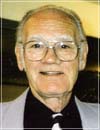
Scott Richardson

Justified By Faith

Romans 4:16
Scott Richardson May, 12 1991 Audio
0 Comments

Sermon Transcript

Auto-generated transcript • May contain errors

100%
chapter of the book of Romans.
I'll talk to you for just a little bit and then we'll go home. We'll
meet again next Wednesday, Lord willing. Let me begin reading verse 16,
the fourth chapter. Therefore it is of faith We've
got to find out what the it is there. See that? Therefore it. What
is the it? What's that refer to? Therefore
it is a faith that it might be by grace. To the end, the promise might
be sure to all to see the air. all whose names are written in
the Lamb's Book of Life. That's the seed. Not to that only which is of
the law, but to that also which is of the faith of Abraham, who
is the father of us all. It is of faith, what he says,
that it might be of grace And our problem is, what does the
IT refer to? You can only find out what the
IT refers to if you take into consideration the context wherein
the IT lies. He's talking about his salvation. He's talking about God's salvation
here in this chapter. What shall we say, verse 1? What shall we say, then, that
Abraham, our father, as pertaining to the flesh, hath found? If Abraham were justified by
works, he hath whereof the glory, but not before God. In one word,
if you read the context here, it refers to the promise. And
in one word, salvation is a faith. It is the believing the promise
of God Almighty taking God at His Word and acting upon that
particular belief in regard to God's salvation and trusting
Him and Him alone. That's what it means when it
says, It is of faith. So it wasn't Abraham's case,
anyhow. And that's what he's talking
about. The whole chapter is about Abraham. Who's Abraham? He's
the Father of us all. How was Abraham saved? How did
Abraham receive God's salvation? We're going to be saved just
like Abraham. We're going to receive God's salvation just
like Abraham. How does Abraham stand before
God? Justified by his own works? No. He's justified by the imputed
righteousness of the Lord Jesus Christ that's imputed to him.
That's how he's justified before God. No other way to be justified
before God. So, in Abraham's case, Abraham,
according to the story of Abraham, Abraham obtained the promise
by faith and not by words or by the energy of the flesh. He
relied alone upon the promise. promise that God made to him.
He relied upon that promise. It says, for if Abraham were
justified by works, if he is justified by God by something
that he did do that constituted a work or an act of merit, he
hath whereof to glory. He would have reason or cause
to glory before God and say, looky here, this is what I contributed
to my soul's salvation, if he was justified by works. But he
wasn't justified by works, so he could not have anything to
glory in before God, for what saith the Scriptures, Does Abraham
believe God? Abraham believed God Almighty,
and it was counted unto him for righteousness. Now unto him that
worketh is the reward not reckoned of grace, but of death. But to him that worketh not,
but believeth on him, that justifieth the ungodly, his faith is counted
for righteousness, even as David also described the blessedness
of the man. David describes the blessedness
of the man unto whom God imputeth righteousness without works. God charges him or accounts to
him Righteousness without him doing a thing. Every man that
stands before God, a truly righteous man, that stands before God did
not have anything to attribute to that righteousness wherein
to make him accepted in the Beloved. It was all by and through the
righteousness given to him, charged to his account, imputed to him. unto whom God imputeth righteousness
without works." God considers a man righteous without works.
That's contrary to human reasoning, isn't it? It's contrary to natural
thinking, to the natural mind. That's contrary. Why? Because
all of our life we've been taught by word and by example, if you
do good, you'll be rewarded for it. Isn't that right? Be good,
be a good little old boy. Be good, don't you do as other
kids do. Santa Claus will bring you a
present, or daddy will get you a bicycle, or this and that.
We've been told that all our lives. And then when somebody
comes along and tells us that that don't count for nothing
in God's sight, we cringe. We say, how could that be? I've
been told all my life the whole principle or theory in this system
in which we live is, is do good, work hard, be honest, and good
will come. And that's true in a sense. But
not when it refers to God's eternal salvation. Works won't cut it. Works won't cut it. Can't bring
anything to God. You have to come empty-handed.
You have to come like a beggar. You have to come like the lowest
harlot. Like the murderer. You have to
come like him. You have to come offering nothing.
Nothing in my hand I bring. Nothing to bargain with, barter
for. Nothing. Nothing. Absolutely
nothing. I got nothing to give. I stand
on the fact that you're a merciful God and I'm an awful, terrible,
God-hating sinner and I ought to go to hell and that's all
I've got. I come with my sins, that's all I've got. That's all
I've got of my own is sin, sin, sin and I bring it. That's all
I've got. That's how God will accept you. You come on that
ground. You come on that ground as a
sinner. God is merciful to sinners. He
delights to show mercy to sinners. So it was in Abraham's case.
What did he do? He obtained the promise by faith
and not by words or the energy of the flesh. He relied alone
upon the promise of God. Blessed is the man that David
describes, whom God imputed righteousness without words, saying, saying
what? Saying what? What does God say
about this man? Said, Blessed are they whose
iniquities are forgiven, whose sins are covered. That's what
God says about that man that he imputes that righteousness
to. Who does he impute that righteousness to? The believing sinner. The
sinner that has no works, no merit, no nothing, God gives
it to him. It's a pain, so it can be by
grace, not by baptism. This county is filled with people
going around saying, he that believeth and is baptized by
me, that my church will be saved. He that believeth and holds out
to the end, well, that man's got a chance. That's not where
it's at. It's not in works. That's what
I'm trying to emphasize. It's not in works. It's not in
marriage. It's not in doing this and doing that. It's all based
upon what God's already done in his Son. He already has punished
his Son in somebody's death and satisfied his just thereby enabling
God to be just and justifier of the poor sinner who believes
in Jesus. It is a faith. In verse 17 we
read this, As it is written, I have made
thee a father of many nations, Abraham. Before him whom he believed,
even God, who quickeneth the dead, and
calleth those things which be not as though they were." Now,
Abraham's faith consisted in what? It consisted in believing
God, or believing the promise of God, and this Abraham did
firmly and practically and fully. He believed and depended in the
promise of God Almighty alone. You remember the story of Abraham. He was far off in Chaldea, the
Ur of the Chaldeans. He was an idolater. That's what
he was. He worshipped statues, idols. He was far off in Chaldea. And
he was called out by the God of glory. The God of glory appeared
unto our father Abraham and called him, effectual calling. The Bible says, Make your calling
an election sure. Make your calling first. Make
sure God did it. Make your calling an election
sure. God called him out. And what did he do? He promised
to give him a land and a sea. God said, Abraham, get thee out
from thine own country and from thy kindred. Get thee out, and
I'm going to give you something. I'm going to give you a land,
and I'll give you a sea. And straightway, the Bible says,
Abraham went out not knowing where he was going. He believed
God's promise. He believed His promise. God
just verbally spoke to him. Abraham didn't know nothing about
God. He was an idolater. His daddy
was an idolater. He'd come from a long line of
idolaters, ungodly heathen. He had no goodness, no works
to prepare him to be accepted before God Almighty. appeared
to him out of the blue and told him, Abraham, the God of glory
appeared to Abraham and called him and said, get me out. Leave
your kindred, leave your country. He said, I'm going to give you
a nation, I'm going to give you a land, and I'm going to give
you a seed. And straightway he went out.
The Bible says, knowing, not knowing where I was going. Just
believe God. And when he came to the land
of Cano, he had no settled, fixed, resting place. But the Bible
says he wondered about in tents, still believing fully that the
land wherein he sojourned as a stranger was his own land. God promised him to give him
a seat And yet as he sojourned and wandered in this land that
he thought was his, he had no children. God promised him a
child, a son, a seed, and he wandered in this land, sojourned
there as a stranger, but he had no seed. Huh? Year followed year, and in the
course of nature, Abraham grew old. He grew old like some of
you and I are doing. Growing old, ain't we? Nature
will take care of that, won't it? Oh, growing old. Oh, Abraham
was growing old. Year after year passed, he is
growing old. And his wife, she is growing
old right along with him. And she is long past the age
of childbearing. Long past it. Yet there was no
son born to Abraham. Eh? Let me emphasize this again. For if Abraham were justified
by words, he hath whereof the glory, but not before God. For
what saith the Scriptures? Abraham believed God. He followed God. God told him,
go this way, and he took off going down the road, got down in the land again, no
fixed, permanent, settled place, wandered with his tents sojourned
in that land that he called it his own. Year after year, year
after year, but he had no son. He had no seed. He wandered about
in the tents and so forth. putting his tent up, taking it
down, building his altar and so forth. Yet there was no son
born to him. But finally, you know, the mischief
he and his wife got into with Ishmael, with the handmaid Hagar? Oh, and last old Ishmael was
born, and when Ishmael was born, There was no rejoicing with Abraham
because his hope in the direction of the fulfillment of promise
was dashed to the ground for he was informed by God that the
covenant was not with Ishmael. The promise is not yet fulfilled. The seed is not in Ishmael. And the Ishmaelites are still
over there. All them Arabs, I believe, are Ishmaelites. What do you
think about that, Brother Wright? Is the Ishmaelites? That's them
Arabs over there. They are thorn in everybody's
flesh. Nothing but trouble. I must say, the United States
ought to go over there and do this. Them people have been fighting
for hundreds and hundreds and hundreds of years. And they'll
continue to fight one another. No. He was informed that the
covenant was not with Ishmael. But now Abraham had fourteen
more years to wait. Fourteen more years, huh? Until he was a hundred years
old. He's eighty-six. He's eighty-six
and he's hired a child with his handmaid. But he was informed
by God to see it's not in Ishmael. You've got to wait." And he waited. What did he do? He believed God. It says that he is a hundred
years old, and Sarah had reached her ninetieth year, yet Abraham
believed the word of the Lord. And he fell on his face, and
he laughed with holy joy. And he said within his heart,
how can a man have a child when he's a hundred years old? So when Isaac was born, the promised
child, that's the scene. When Isaac was born and when
he grew up to be about sixteen or seventeen or eighteen years
old, Abraham believed that in Isaac
should the covenant be established. And he didn't doubt for one second
when the Lord made him, told him, take Isaac, thine only son,
the child of promise, take him unto a land which I'll show thee,
there on Mount Moriah, take Isaac and offer him up as a sacrifice. Abraham obeyed without questioning. He didn't question God. He didn't
say, hold on, hold on, this can't be. If I'm to have a seed and
Isaac the seed, you're going to kill him. What are we going
to do? He didn't question God. the kind of faith that God delights
in, just taking God at His word. He that believeth on the Son
hath life. Thank God for that. That's what
I believe, don't you? He that hath the Son hath life,
and he that hath not the Son, the wrath of God abideth on him. But he that hath the Son He believed that God was able to raise Isaac up from
the dead. That's what he believed. He believed
if he took Isaac out there and offered Isaac up, killed him,
cut his throat, put him on the altar and set the fire to the
wood and burned him up in smoke, he believed Abraham staggered
not at the promises of God, but he believed and was fully persuaded
what God promised he was able to perform. That's the kind of
faith that honors God. He believed it. He believed that God would keep
his word. Why didn't he? By the grace of
God. I believe God will keep His Word. Now, Abraham had only, now and
then, a verbal promise. Just now and then, once in a
while, God would appear to Abraham, explain to him what I'm reading,
and speak to him. And that's all he had, yet he
held on to it. That's all he had was the Word.
of the living God. And he held on to it. And he
relied on it, though there was nothing else to rely on or lean
on. He had no signs, no marks, no
evidences. He had nothing but a voice and a face that spoke
to him. That's all he had. Yet he held on to it. It
says the voice of God No sign, no evidence of any offspring
to fulfill the promise that he should be the heir of the world
and father of many nations. No evidence of that. But Abraham
needed no other ground of confidence but that God had promised it. God had said it, said, I'll give
it to you, I'll give it to you. And the only ground of his hope
in the fulfillment of that promise was that God said it. That's
all he had. And he believed that God would
make good on his word. The faith of Abraham, according
to this particular chapter, considered no difficulty. It says in that
18th verse, who against hope believed in hope that he might
become, as Abraham, the father of many nations, according to
that which was spoken, so shall thy seed be. And being not weak
in faith, He considered not his own body, now dead, when he was
about a hundred years old, neither yet the deadness of Sarah's womb. He staggered not at the promise
of God through unbelief, was strong in faith, given glory
to God. His own advanced years, a hundred
years old, and the age of his wife, did not stagger him. The difficulties were not for
Abraham. The difficulties were for God
to consider, not for Abraham. There's no difficulty with God.
Abraham knew that if God could make the world out of nothing,
he had no problem. So he relied on God and God alone. Listen, he knew God who made
the world and all things by the word of his power. He saw only
a faithful God, and Abraham was content. He was content to trust
in God. And therefore, being fully persuaded
that what he had promised, he was able also to perform, and
therefore it was imputed to him for righteousness. This, what
I've told you here tonight, is what justified Abraham and made
him the father of all believers. It is of faith, you see. Abraham believed it. That's what
the gospel, received the gospel. It's by faith. We have no evidence. Anybody seen God lately? Anybody
seen Jesus? Where's your evidence that God's
alive and Christ did all this? Where's the evidence? We have no evidence. What is
the ground of our hope? His Word to us. His Word to us. The only reason I got under God's
heaven tonight to believe that when this thing's all over with
I'll go to be with Him forever is because God said, He that
believeth on the Son hath life. I state my claim there. God requires
of me a righteousness, and I've got none, but He said, I'll give
you one. God requires of me to believe. I can't believe. But he said,
I'll give you faith. God requires of me to repent
of my sin. And I can't repent. But he said,
I'll give you repentance. And so I trusted him. I believe
him. I take him at his word. He hoped. Abraham hoped against
hope. Well, I hope that'll help me.
Scott Richardson
About Scott Richardson
Scott Richardson (1923-2010) served as pastor of Katy Baptist Church in Fairmont, West Virginia.
Broadcaster:

Comments

0 / 2000 characters
Comments are moderated before appearing.

Be the first to comment!

Joshua

Joshua

Shall we play a game? Ask me about articles, sermons, or theology from our library. I can also help you navigate the site.