Bootstrap
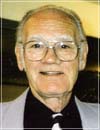
Scott Richardson

Wasted Time

1 Kings 20:40
Scott Richardson October, 17 1982 Audio
0 Comments

Sermon Transcript

Auto-generated transcript • May contain errors

100%
20th chapter, and the text will
be in the 40th verse. And as thy servant was busy here
and there, he was gone. Now the parable that is told
here is about a soldier in the heat
of the battle. He was charged by his superior
officer, his commanding officer, to take care of an important
prisoner. That was his sole duty and prime responsibility. He
was honor-bound, duty-bound, obligated by the fact that he
was a soldier to do that which the commanding officer commanded
him to do. That was his chief business,
that was his main business, that was his only business, was to
take care of this important prisoner and see that he would not escape.
That's the parable here. Keep this man. Verse 39 says, As the king passed
by, cried unto the king, and he said, Thy servant went out
into the midst of the battle, heat of the battle, right in
the middle of it, guns cracking on every hand, spears being cast
and hurled one side to the other. the wounded crying, blood being
spilled. And behold, he said, in the midst
of this battle, a man turned aside and brought a man unto
me, and he said, Keep this man. Keep this man. The officer turned
to him and said, Capture the prisoner here, a very important
prisoner. We've got to interrogate him. He's got some information
probably that will be of help to us as we further the battle. Engage the enemy. The security
of our homeland, our forces, is at stake here. Keep that man.
He's an important prisoner. Keep this man. It's so important
that if by any means he be missing, that is, if he gets away, then
thou shalt, then shall thy life be for his life. If this fellow
escapes, you'll have to give your life for his. That's the
importance that was placed upon the keeping of this prisoner.
Keep this man, and if somehow you permit this man to escape,
why, the penalty will be you've got to pay with your life. So
the soldiers' one and main business from that moment on was to do
what? Look after the prisoner. That
simple, isn't it? Look after the prisoner. That's
your business. You haven't got anything else
to do except look after that prisoner. Keep your eye on him. Keep your weapons pointed in
his direction. Tie him up if necessary, but
keep the prisoner. Whatever you've got to do in
order to fulfill your duty and my command here, I want you to
do it. I'm saying all this to emphasize
the fact that how important it was to keep this prisoner. Very
important. Don't let him go. Because if
you let him go, here's the importance emphasized on keeping the prisoner
is if you let him go if he gets away. You've got to pay the penalty
and the penalty will be your own blood. So keep your eye on
this fella. Don't let him go. Watch him.
It's important. Most important thing you got
to do. This is the most important thing you got to do. Don't you
worry about the fellas down there firing the guns. Don't you worry
about whether they have enough food or whether they got in extra
uniforms or whether they ought to bring the cannons up or the
trucks up. Don't you worry about the medics.
Don't you worry about anything. You keep your eye on this prisoner.
Keep this man. Keep him. watching your sole
duty, your sole duty from right now until you're relieved of
this responsibility, your main business, your only business,
your chief business is what? Keep this man. Keep this man. But, he had other things to do. He
had other things to do in regard, I suppose, to himself or to his
family. His mind was taken up by other
things. He thought about other things.
He considered other things, in all probability, in regard to
himself or in regard to his family. His mind was taken off of his
prime responsibility and chief business of keeping the prison. He had other things to do, I
suppose, in regard to himself or to his family, and he turned
his thoughts in another direction, began to think about something
else. And the prisoner, of course, naturally seized upon the opportunity,
and he was gone like a flash. I mean, he went down the road.
I mean, his heels was clicking down that pavement. He was gone.
He kept watching for an opportunity. He knew what they was going to
do. They'd interrogate him, then they'd kill him. They're going
to kill me. I'm going to watch this fellow
like a hawk, and if he lets his guard down one time, I'm gone.
And he kept watching him, and watching him, and watching him.
In the meantime, this fellow, he began to think seriously about
the duty that he had in keeping the prisoner and tried to fix
his mind upon it and watched him. But the first thing you
know, his attention was engaged with other considerations and
cares of his own self. And it says that he was busy
here and there. Busy doing something else that
he was not cut out to do. It wasn't his business to do
anything else. It was his business to watch that prisoner. And when
he let his guard down and relaxed and began to do something else
that he was not commanded to do, the prisoner was gone. And so he came to the king then and
thought maybe he could get some relief. Thought maybe he'd be
pardoned. at 40th verse, in the middle
of it. It says, "...and the king of Israel said unto him..." See,
he disguised himself with ashes on his face. This is a prophet
talking. He disguised himself with ashes on his face. Verse
38 tells that. Verse 39, "...as the king passed
by, he jumped out and cried unto the king and told him this parable."
And now, here in verse 40, after he makes his confession, thinking
maybe that he'd get off. And the king of Israel said unto
him, So shall thy judgment be. Thyself hast decided it. He stated
his case. He stated his case here, and
the king said, Well, you've stated your case. You've already decided
your judgment here. You've decided the penalty. Your
carelessness has lost us an important prisoner, and you know the penalty. It was due to your neglect, your
own carelessness. You knew better. You knew better. You can't plead any sort of excuse
here. You knew better. I don't have
to judge this case. You've decided the case yourself.
You let the prisoner go. Don't tell me how you let him
go. Don't tell me this or that. I don't want to hear that. You've
already stated the case. You've decided the case. You
know the penalty. Well, of course the parable had reference
to Ahab the king. Ahab let an important prisoner
escape. God had commanded Ahab to kill
Ben-Hadad. Kill him. Show him no mercy. Verse 42 says, And he said unto
him, Thus saith the Lord, because thou hast let go out of thy hand,
speaking of Ben-Hadad, he had him in the corner, all he had
to do was thrust him through. All he had to do was kill him.
Because thou hast let go out of thy hand a man," now listen,
"...a man whom I," that's God, referring to God, "...whom I
appointed to utter destruction. Therefore thy life shall go for
his life, and thy people for his people. And the king of Israel
went into his house heavy and displeased, and came to Samaria."
Well, we know what happened to Ahab. We know that the dogs licked
his blood. We know the bitter end of the
king of Israel, whose name was Ahab. We know that. But how is
this teaching here, how does it apply to us this morning?
Since Ahab is gone and the dogs licked his blood, how does this
apply to us? Well, in this way, in this sense,
this parable applies to us. Every one of us has received
a charge from God. Now, the question is, have we
neglected the charge through carelessness or indifference
or unconcern that God hath laid upon us? Now, that's how this
parable is applicable to us this morning. You know and I know
that it is as clear as the noonday sun that every man born of woman
or every person born of woman is bound by the fact that he
owes his very being to God, that it is his bounden duty to serve
and to glorify God. That is his bounden responsibility
and obligation is to serve and to glorify God. That's why I
put you here. Serve Him, glorify Him. That's
a charge that we've been charged with, is to serve God. You know,
in the beginning, I think in the first chapter
of the book of Genesis, in the latter part of it, it says that
at the completion of His creation, even to the creating of a man
out of the dust and causing the deep sleep to fall upon the man
and take from the man a rib and made a woman, God looked upon
all that He had done in regard to creation. Everything. The
water, the moon, the sun, the stars, the animals. He looked upon everything. He
looked upon his crowning creation which was humanity. And he said it was very good.
That's what he said. He said it's very good. He looked
upon all of it and he said it's very good. God knows what we are, and He
also knows what He meant us to be. He meant us to be very good. He said He's very good. When
I got through with this, very good. I'm pleased with what I
made, very good. But it wasn't long after that
that God looked down from the heavens upon this earth to see
if there was any, any good upon this earth. And He couldn't find
a single solitary individual upon the face of His green earth
that was good. He said that man is evil and
he is continually evil and there is no good in him. But at the beginning, he was
very good. When God got through with him,
he was very good. Now, it's as clear, Bob, as the
noonday sun, that the chief duty and responsibility of every man
is to serve God, glorify God, and enjoy God forever. Now, whether
you believe that or not, I don't know. I can't make you believe
it. Only God can make you believe that. But under God, and thirty-some
years of reading the Bible, and thirty-some years of preaching
the Bible, I'm convinced that I'm right. I'm convinced that
I'm right. I don't think I'm wrong. I'm
not a novice. I'm not someone who just came
off the street here and said, well, I'm going to preach to
you people. tell you some things about the Bible, but I'm one
that has some credentials. I have 30 years of experience,
so I wouldn't lie to you. I wouldn't tell you a lie here
in order to emphasize a point. I wouldn't do that at all. I
just want to state a fact that it is the chief duty and responsibility
of myself as well as every one of you to serve God, to glorify
God, and to enjoy God forever. And He has laid this solemn charge
upon every one of us. Now, have we neglected it? We have had time and opportunity
within our keeping. Have we neglected it as time
and opportunity escaped us through our own carelessness? Well, let's
think for just a little bit here this morning about the obligation
which this text that I read to you in verse 40 suggests. Now, this man, being engaged
in war, was bound to obey the orders of his commander. Keep
this man. He was bound by legitimate authority. That authority was his superior
officer. He was bound by this legitimate
authority from this moment that the prisoner was delivered unto
him to obey the command of his superior. We're bound, every
one of us. to serve our Creator and live
for His glory. We're bound. Bound by the fact
that we came from God. I know that the higher critics of the Bible that has
their place in education? As a matter of fact, the majority
of the scientists and biology teachers, even in high school
and junior high, do not believe the creation account of the Bible.
They don't believe this. They have been so educated over
and above this creation account that now they say that we just
came into being through a process of evolvement, evolution. We evolve from one stage unto
another until we've got where we're at. But that's not what the Bible
says. The Bible says in the beginning was God. And the Bible says that
we came from the hand of God, that God made us. God made us. What I am saying this morning
would sound very ignorant and childish to these that believe
in evolution. They would say, well, that fellow,
his problem is he has not studied under a higher critic of the
Bible. He needs to go to school and
listen to what this professor has to say and how he explains
it. Because this just couldn't be
so that we're from the hand of... But we are from the hand of God. That's what I'm saying. I'm saying
that we owe our being to God. I'm saying that God literally
stooped down and formed us out of the dust of nothing and made
us what we are and breathed into our nostrils the breath of life. We came from God. We were not evolved from One sell something through possums
and animals and fishes and things of that nature. Brother, we come
from God. So, we're bound then by legitimate
authority. We're bound by God from this
moment to obey God. We're bound to serve our Creator. We're bound to love Him. We're
bound to glorify Him. Now, I know that, for the most
part, the majority of the people of this world have never seriously
given that a thought. And I'm ashamed to say that there's
a whole lot of people that have professed to believe this have
never seriously given it much thought. Due to their neighbors, they've
considered to some degree. There's not very many people
that you and I know of that would just shut the door in their neighbor's
face. And I'm talking about neighbor
in the sense of confining him in the neighborhood, not necessarily
meaning the peoples over in Asia or somewhere like that, which
they are our neighbors, but I'm confined to people that live
next door or two or three houses away or a mile away even. If a man or a woman who's our
neighbors that we know them from for years, If they would come,
if we only knew them for five, if they'd come to our house,
we would not shut the door in their faces, would we? We wouldn't
do that. There's not very many people
that would do that and say, well, I don't know you. Well, I've
lived here for four or five years and I speak to you back there
every day as we go by. I holler at you. My name's so...
I don't know you. I don't want nothing to do with
you. I need some help, friend. I need some help. My family's
sick. My family's sick. My car's broke down. I got to
be at work this morning. I need someone to help me. I
don't know you and I haven't got any time for you. Now, I'm
saying, brethren, that most people in the world today considers
their neighbor a little bit. They give some serious thought
about their neighbor. Maybe not serious thought, but
some thought about their neighbor. But their obligation to God,
they have not given that any thought whatsoever either. No
serious consideration to God. Consideration to their neighbor,
yes. If their neighbor runs out of gas, They'll give him a gallon
of gas or take him to the gas station where he can get a can
full. If he needs $10 and they got $10, they'll help him. They'll
help him with that $10. If he needs some groceries, they'll
help him. If he needs to get to the doctor, they'll help him.
But obligation to God? Obligation to God? See what I'm
talking about? There has been a serious charge
laid to us by God that we are bound by legitimate authority
who is the God who made us. We are bound by that authority
to love Him, to serve Him, and to glorify Him as long as we're
here. And that's so. That's so. But I'm saying, that most people,
most people, obligation to God, no way. They forget, they have
forgotten God and live as if there were none. As a matter
of fact, the practical language of their life is summed up in
the words of Pharaoh, Moses, when Moses came to him and said,
God hath said, Jehovah God hath said, let my people go. And he responded to that question,
or to that statement, by stating a question which he said, who
is the Lord that I should obey his voice? Now that's the practical
language used by the majority of people at any given time upon
the face of this earth. Who is the Lord that I should
obey His voice? Legitimate authority is God Himself
who said that His creation is bound by His authority to love
Him and to serve Him and to glorify Him the balance of their days.
Man says, Who is the Lord that I should obey His voice? I preached
to you not so long ago from a text in the book of Malachi that says,
Will a man rob God? Will a man rob God? Well, you
know and I know that a man will rob God. Rob God of His charge
that was given by God Himself to rob him of it. We rob God
of His glory every day. When we neglect to fulfill the
obligation and the charge given to us by God, we rob Him. We
rob God of His time. We rob God of talent. We rob
God of service. We rob God of His legal rights
over us. We rob God. Will a man rob God? I say that he will. Well, emphasize
again that it's the duty. of every one of us to glorify
God and enjoy Him forever. See, it was for this reason that
He made us. That's the reason why He made
us, to serve Him, to honor Him, to obey Him. Will a man keep a horse or a
cow if a horse or a cow will not yield him any benefits? You wouldn't keep a cow, it wouldn't
give you no milk. He said, well, we bought this cow in order that
we might have milk for our family. But when the time came for the
cow to become fresh and be able to yield some milk in order to
sustain the family, milk for the children and butter for the
table, cheese and other things that are made off of the fruit
of this cow, and you find out that the cow will not do anything
for you, what would you do with that cow? Would you feed that
cow just to stand around and look at it? Would it yield you
no benefits? Would you, Jack? No, you'd kill
that cow, wouldn't you? I'll kill that cow, we'll get
something out of it, we'll have some meat. Well, kill the cow. Would you own a dog that would
not yield to you as master? Would you own a dog, Bob, that
bit you every time you stuck your hand out to feed it? Would
you say, well, Margaret, that dog still won't pay any attention
to me every time I go out there in the garage to feed it. It
bites me. Would Margaret say, well, Bob, just go ahead and
continue to do that. No, Marty wouldn't say that.
Marty would say, well, why do you do that, Bob? Why do you
go out there every day and give that dog an apple at 49 cents
a can and that dog bites you on the hand? Why did you do that,
Bob? No, no, Bob. I know Bob Wilson. I know Bob. I'll feed that dog. He comes
out there and bites me every time. He will not yield to me
as my, he will not yield to me as master. When I say sit, I
want him to sit. Get rid of the dog. That's what
would happen. Get rid of the dog. Alright? If a vine will
not yield any fruit, what would you do with that vine? If you
had a grape arbor up there and you couldn't get any grapes on
that grape arbor, would you stand around? Well, you might use it
as an ornament. I doubt it, though. Pretty soon
you'd cut it down. You'd say, well, that vine will
not yield me any fruit, so I just want to get rid of that vine.
So is the man who has not honored God. He has not yielded God any
fruit. Remember, brethren, the fig tree? Our Lord came along one day and
He was hungry. He had a couple of His disciples
with Him. He was hungry. And off in a distance He seen
this tree. It had leaves on it. And according to the history
of the fig tree, when the fig tree has leaves, it's supposed
to have fruit. And he turned to his disciples
and said, we'll go over there and we'll have some figs. We'll
have something to eat. Nourish our bodies. And he got
there. There wasn't anything on the
tree save leaves only. That's all that was on the tree
was leaves. And it was a time for fruit. But there was no fruit
there. And what did our Lord do? He
cursed that fig tree. He cursed that fig tree. He said,
there's supposed to be fruit on that tree, and there's no
fruit on it, and He cursed that tree. And it withered up and
died. Let's remember, brethren, I hope
that this will not escape from our memories, that there is a
day coming when all of us, as a matter of fact, when every
man and every woman born into this human family, that all of
us must give account of our lives unto God. And it will be based
upon this question. Have you served and obeyed and
glorified me? You've read of that description
given of the judgment in the book of Matthew? When I was hungered,
you gave me no meat. When I was thirsty, you gave
me no drink. When I was sick, you visited
me not. You didn't help me. When I was
in prison, you didn't come to me. You remember the description
of that judgment. And you remember the penalty?
The man decides his own penalty. What is the penalty? Our Lord
said, take that fellow, take that fellow and bind him, binding
hands and his feet, and cast him out into outer darkness where
there is weeping and wailing and gnashing of teeth. Well, if you look at this text
that I read to you, you'll see in that text a confession of
this soldier. And it's found in verse 40. The confession was, he was gone. When he went to the king, And
he said, I was busy here and there, and he said, finally it
dawned upon me that I was given a responsibility here to keep
an important prisoner, and I looked everywhere, and the confession
is, he's gone. He's gone. You see, he was duty-bound
to take care of this prisoner, but he had to confess that he
was gone. Well, what I want to impress upon my own heart as
well as yours this morning is this. The time which has not
been used in the service of God is gone and escaped us, we'll
have to give account for. The time. God has given us time
and opportunity. Have we neglected this time and
opportunity? Will we have to say, it has gone? Time has escaped me. I cannot recapture it. It's gone. Where it's gone, I know not where. If you have not lived unto God, if you are 20 years old or 40
years old or 50 years old or 60 years old this morning, and
you have not lived your years unto God, just think of all the
elapsed time. All the time that has escaped
you, which cannot be recaptured, which you must give account for. All this time. Time when you
could have served God. Time when you should have served
God. And now your candle is burning
low and it's about to go out. It's about consumed all of the
wax and the wick is down to about a quarter of an inch. And all
the wax is melted and poured out onto the table and it's just
a matter of time when this candle is going out. Time is going and
eternity is approaching at a rapid pace. And you haven't got much
time. I ought to have visited so and
so. I ought to have visited so-and-so, but I didn't do it. Why didn't
you do it? Well, I had time, I had time,
but I was busy here and there with other things that concerned
myself or my family, and I didn't do it. I wish I had. I wish I
had visited so-and-so. So-and-so was laid upon my heart
months ago. I thought about so-and-so. I
had a definite impression, and that impression must have been
from God, to visit so-and-so. and encourage so-and-so or talk
to so-and-so about the welfare of their soul or tell them the
story of the Lord Jesus Christ, but I didn't do it. I didn't
do it. I had time. I had time. I was busy here and there, and
I didn't take advantage of the opportunity. I didn't seize upon
that opportunity Like I should, I was busy here and there. Have you not read in the paper
or heard on the telephone by report that so-and-so died last
night? And you're shocked, isn't that
right? You mean Mrs. so-and-so or Mr. so-and-so, yes, they passed away
last night, they got sick about Six o'clock in the evening I
was talking to my first cousin over there and she told me that,
so-and-so told her that he took sick real quick and they called
the emergency car and don't you know he was dead before they
got him to the hospital. Oh, I can't believe, well it's
so whether you believe it or not. I wish I had talked to that
fella. I had him upon my heart certain
times, and I thought I ought to go and visit with him, but
I didn't go. I was busy here and there, but
now time is gone. You see what I'm talking about?
I was busy. I was busy. You was busy doing
what? You was busy in regard to your
affairs. main business, our one business,
our only business, is to serve God. And part of the business
of serving God is to obey God and to go and tell the story. You say, well, I don't think
they'll believe it. You haven't got anything to do
with that. God didn't tell you anything about making that fellow
believe the story. That's not your responsibility.
The man who kept the prisoner's responsibility was to keep the
prisoner. That's all. It's not about feeding
the prisoner. You keep your eye on him. We'll
take care of his food. Your business is to keep him.
And our responsibility in serving God is to tell the story. Tell
the story. Tell the story. Go ye into all
the world and tell the story. Tell the story. Yeah, but they
wouldn't believe it. I know his background. He wouldn't
believe it. Well, you haven't got anything
to do with it. That's none of your business. Your business
is to tell the story. That's serving God. That's obeying
God. I wish I'd have went. But! It's
like the lady told me one time. I said, well, there's some colored
people down at number seven. And I thought, well, a fellow
would like to hear colored colored people sing, and I did too, and
I had a fella coming here, and I thought, well, we'll just have
that group down there to come sing for us. And I'd done them
a favor one time, and I thought, well, they'll kind of feel obligated. And so I got in touch with them,
and the woman who was in charge of the singers said this, but
she said, we'd like to come, but we have other fish to fry. I'd like to serve God. It's what
we say, but I have other fish to fry. I have other fish to
fry. He died without hope. Well, that
time's gone. People that die without hope
that it was laid on your heart, definite impression of the Spirit
of God to talk with or to encourage or to help in some manner, And
they die, and they die without hope when the time's gone! That
time's gone! You can't recapture it, it's
gone! What I've said in the past half hour, that's gone! That's
gone! It's throughout! You can't capture
that anymore, that time, it's gone! It's gone! What about,
I noticed on Wednesday night, we had the Lord's Supper, and
I looked around here, Sixty of us here? No, it would have been
a hundred of us. It would have been a hundred of us. Some never
come. Some church members never come,
have not taken the Lord's Supper for years and years and years.
You say, well, you're picking, I'm telling you the truth. That's
all. Years and years and years and years. Listen, those times
and opportunities that God gives you to serve Him have been neglected. You have been careless and that
time is gone. You can't make up for it. It's
gone. Don't tell me now that you didn't
know. Well, I didn't know it was my
duty. You mean to tell me You profess
to be bought with the blood from the veins of the Son of God and
you didn't know that it was your responsibility and privilege
to honor Him by the drinking of the wine and the breaking
of the bread? Huh? You didn't know that? You knew
that. You're gone. It's gone. What did you say? I don't care.
That's what you're saying. You're saying, I don't care.
You're saying, I'm concerned more about myself than I am about
God. That's actually, I know I'm being
frank, but that's actually what you're saying. You're saying,
I was busy. I was busy. Where was you busy at? Here and
there? What doing? Doing things that
concern myself? You know, preacher, I've got
to make a living. I've got to do this and there's my family
and this and that. I was busy. I was busy here and
there. I did nothing for Him. Spent
my life, did nothing for Him. Now my life's gone. All I wanted
was what? Pleasure? I wanted to satisfy
myself. Pleasure. Pleasure. My life's
gone. Now that's a bit of a sad thing,
isn't it? It's a sad thing when life comes to an end. It's going
to come to an end. It's going to come to an end
for me. It's going to come to an end
for you. One of these days we're going to lay our head down on
the pillow and we're going to turn sick. We're going to turn
sick and we're going to say, I've got an ache in my side.
I've got an ache in my back. I've got an ache in my chest. I've got
an ache in my head. I've got an ache in my stomach. I feel like I'm
gone. I remember a fellow that I used
to preach to and he told me on his dying bed, I looked over
at him and this is what he told me. This is what he told me.
Some of you all remember here. This is what he told me. He was
dying. He said, this thing's for real, I believe. He said,
I think this is for real. And brother, it was. About three
hours later, it is for real. One of these days it will be
real for us. We've been sick many times. Jack's sick now. He's got the shingles. Sick.
One of these days he's going to be sick unto death. We've
got folks not here today, they're sick. But normally they'll get
over it. But there'll be a time, you see
what I'm talking about? There'll be a time, brethren,
when I'll be sick. I mean I'll actually be sick.
I'll get a hurting in my stomach. And brother, I'll be sick. And
I'll say, Martha, I believe I really am sick now. It's just not no
virus. It's no virus. It's not something
that's going to pass. I feel like I'm going to die.
And I'll tell you it'll be a terrible thing when my life is over and
my life is gone, and I say, when I spent my life in pleasure,
just doing things, hunting and fishing and going here and there
and buying cars and doing this and doing that, spending my time
and my money on my sin. Won't be much of a comfort with
it. My life's over with. Oh, we'll see. Every one of us
will say, oh, if I had my life to live over. No need talking
about that. You won't. You won't. No need
saying, if I had my life to live over, because I won't have it
to live over. When time is gone, it can't be
recaptured. It's gone. He said he was gone.
He was gone! Make the compassionate of the
king! Well, he's gone! Opportunity's gone. Opportunity
to serve God is gone. I had opportunity to make things
right and to make friends, but I wouldn't do it. I was too mean,
too stubborn, too bullheaded. I had to have my way. I just marred that fellowship
that I had with that brother and that sister all them years.
I could have swallowed my pride. to make things right and to make
friends, but I wouldn't do it. I wouldn't do it. Too mean, too
stubborn, too bullheaded. I'd have my way. I just marred
that fellowship that I had with that brother and that sister
all them years. I could have swallowed my pride.
I could have been forgiving. I could have been loving, even
if he wouldn't have, I could have. But no, I wouldn't do it.
I wouldn't do it. That'd be a sad commentary, and
you lay your head down on that pillar of death one of these
days and say, oh, if I had my life to live over, I wouldn't
have quarreled with so-and-so. It's too late! It's too late! It's gone. It's gone. There's other fish to fry. All
I ever wanted was to make money. That's all I ever wanted. My
ambition was to make money. Yeah, I made it. The Bible says
you gained the world. You lost your soul. Gained the
world. Lost my soul. Something else
I want you to notice in this text. He made a confession, but
he made an excuse. Made an excuse. What was his
excuse? His excuse was, I was busy here
and there. I was so busy, I just didn't
have time to look after that prisoner. I was busy. I was just
busy. Well, how come you're so busy? Your only responsibility was
to keep the prisoner. How come you got so busy? I was
busy here and there. I wasn't busy watching the prisoner. I was busy here and there. in
regard to things of myself. That's where I was busy at. I
was busy. This is no excuse for a soldier,
is it? The soldier has no business to
have any business except to do what the commander tells him.
Some of you fellows have been in the army, and you know what
I'm talking about. If you're or whoever it was, come along
and said, I want you to stand guard of that clothesline. I
want you to watch it. Then your business is to stand
guard and watch the clothesline. I remember one time when I was
a young fellow, and I got a job at the mines. I wasn't quite
18 years old, between 17 and 18, and I got a job in the mines. And I didn't think my dad ever
knew much. I thought, well, he's too slow for me. I knew far more
than he does. And I was in the mines working,
and the boss told me, he said, I want you to go down, there's
a long ways down ahead of you, and get that drill and all that
cable and bring it up here to the shotgun. And I said, okay. And I walked down there, And
there must have been 500 feet of that cable. And I mean it
was a great big drill. It wasn't a little old drill
like that. It was a great big drill. Great big heavy drill. Weighed 50 pounds
anyhow. And I got that drill on my shoulder. And I got that cable wrapped
around me. And I started up through there.
And that cable was catching on them ties. And catching here
and catching there. And me putting it down and picking
it all. And I finally got it up there
to where the man said to bring it. And after I got it in there,
the fella said, well, I don't need it now. And I, boy, that
made me mad. My dad come by on the motor,
and I jumped up on the back of the motor, and I said, you know
what I've just done? He said, what's that? I said, Jack Steele
come along, told me to go down there and get that cable and
that drill and bring it up here to the shot fireman. He said,
I did all that. I went to all that trouble. He
said, I've just pulled myself. He said, I just wore out, and
I'm wringing wet. So I took it up there, and the guy said, you
don't want it. He said, so what? He said, let me tell you. He
said, if he tells you to take the drill and take it outside
and take it up on the tipple and throw it off, he said, you
do it. You see what I'm talking about?
My sole duty was to do what the boss told me. He'd be responsible
for the rest of it. You see, there's no excuse for
the soldier here. The soldier has no business to
have any business but to do what the commander tells him. That's
right, isn't it, Carl? Carl is a soldier. His sole duty
was to watch the prisoner. Our sole duty is what? To glorify
God. That's our sole duty. You say,
well, but I've got to work. Yes, you've got to work, but
on your job you glorify God. If you don't make an attempt
to glorify God on your job, then you've got a problem. Your responsibility
is to glorify God in every area of your life. But I have to work. Yes, you have to work, but you
have to give your employer an honest day's work. And you have
to, when opportunity and time presents itself, to tell a story
and to give a good witness of the grace of God in your life,
you've got to be Johnny on the spot. I'm not saying that you've
got to get out here in a cave or something like that, like
the Roman Catholic monks. That's not what I'm talking about.
Our sole duty is to glorify God, just as the sole duty of this
fellow was to watch that prisoner. When this man said, I was busy
here and there, he ruled out, or he cut away the only excuse
he had, because he shocked that he had the ability to watch the
prisoner. He said, I was busy here and
there. He had ability, see, to do what
the what the commander told him to do, but he said, I was busy
here and there. So that ruled out that as an
excuse. Now if he had said, I was sick,
I was sick, so sick I could not stir. I was so sick that I felt
like I was paralyzed all over, and I could not prevent that
fella from running off. Or if he'd said, while I was
watching the prisoner, another fellow come up here and cut my
arm off, or cut my leg off, and I was busy trying to get the
blood stopped. Or he might have said, well,
while I was watching that prisoner, I had a fit. I had a fit. And the fellow just run off while
I was having this fit. That'd been some excuse, wouldn't
it? It would have been an excuse. Maybe it wouldn't have been justifiable,
but it would have been an excuse. But this fellow, he said, I was
busy here and there. He had ability to do what the
commander told him to do. See, he's busy here and there.
It meant that he was busy serving himself. That's what it meant. Instead of his master, he was
robbing his master of his time, just as we robbed the Lord of
our time and our ability to serve Him. Well, here's a man, supposition. Here's a man, he's busy all of
his life. Busy all of his life. What has
he done? That's the bottom line. He's
busy all of his life, but the bottom line is, what has he accomplished? Well, he made a good bit of money.
That's what he's accomplished. He made a lot of money. He made
it for himself. That's something, isn't it? At
least something can be said for him. He's busy all his life and
he made a lot of money, but he made a lot of money for himself.
Not having served the Lord, he collected a great deal of money
for himself. Now, I feel like I can say this
to the majority of you people here this morning. There's a
whole lot of you. Maybe you got some money. Most
of you haven't. Most of you haven't. You've given
all your money to the Lord. If you would have taken the money
that you've contributed, and without, I must say, without
a pressure, the money that you've given voluntarily, not told anybody
about it, not stood up and said, I've given so much. All the money that you have given
freely unto God in that offering box, if that was If that was
all brought into accumulation and put in the bank for you,
you'd probably, some of you'd have $30,000 or $40,000. Is that
right? Some of you gives $250, $300 a month or more. $300 a month for 12 months
is what, Pat? $3,600 a year. Multiply that by what, Pat? By
10? I know you'd get $30,000 just
in 10 years' time. What if it was 20 years' time?
That would be over $60,000. Some of you here have given almost
or maybe more than $60,000 to the cause and claims of the Lord
Jesus Christ in 20 years. Some of you have done that. I
bless God for you. I bless God because you've done
that. You could have had it for yourself.
You could have had it in the bank. And here a year or so ago
at 16% interest on $60,000, some of you, some of you here who
are 55 or 60 years old who'd like to retire but you can't
retire because you haven't got enough money, you could have
retired! You could have said, $60,000
in the bank and I've got it on 16% interest and I believe with
what little bit of pension I can get that that 16.5% interest
will carry me through and I'll still have plenty of money. Could
have done it, Pat. Could have done it. I thank God
for you. I really do. Without you, we'd never get off of the ground. But what about this man, what's
he done all his life? All his life. I give $5. He's a big giver. He's a big
giver. Give $5. Keep it. Keep your $5. He give $5. That's something,
isn't it? He made it for himself. He collected
a great deal of it. He lived to make money. That's
all he lived for. You know people like that. live
to make money. They wouldn't. Don Bell said
they wouldn't give a nickel to see a snake ride a bicycle. I'd
sure give a nickel to see that, wouldn't you? They wouldn't give
a nickel. Oh, they might give a community
chest or something, come along, and they'd say, would you make
a contribution to the community chest? We'll take two dollars
out of your pay for six pays. and make it $30. Yeah, I'll be
willing to do that. Or I'll check off a contribution
to the Democrat party, the Republican party, a dollar. We'll do that.
Ain't too much. I live to make money. What is
he, an idolater? That's all you can say? A man's
an idolater? Why? Because he thought less
of God than he does his own pocket. His own pocket is more to him
than God. He despised the Lord and preferred
his own gain. Ah, what a poor thing this is.
What can money do for a man when he's dead? I'll tell you what
it can do for him when he's dead. Buy a bigger monument for his
graveyard. That's what it can do. He can
put it in his will. say when I die or lots of people
before they die make preparation for the tombstone and they call
up the fella and they say I want you to set this massive tombstone
up here on my plot and and put my birth there and something
underneath it there, and put that I was born in 1809, and
then when I die, 1980, then you can fill in the last figure there
if you want to. Make plans for that, see? That's
what a man can do with his money. He can have a bigger coffin.
He can tell his wife, now when I die, I don't want no wooden
coffin. I mean, I want a stainless steel coffin. All this money
that I've worked so hard to get during my lifetime, robbing God. Oh, he said, I want to go some
use. I want a stainless steel coffin.
That's what money can do for you. It gets you an extra couple
pallbearers. That's what it can do for you.
You see that? I tell you about them pallbearers. You ever see how they walk? Like
this. That's the way they walk. You ever hear them? That's the
way they walk, Jack, like this. Close together. They won't trample
on anybody's heels, Glenn. Like this. You'll hear them one
of these days. Too late. That's what a man can do. Rob
the God of his time. Rob the God of opportunity. Get
him a couple extra pallbearers, a few more flowers over there
on the wall. What good will all that pomp
do when a man's dead? It won't do him a bit of good,
will it? Have I professed this morning
to have been bought with the blood of the Lord Jesus Christ
and then neglected the main business of my life, serving the Lord?
I hope that's not so with me. I hope that's not so. I hope,
by the grace of God, I professed that I've been bought, I professed
that years ago, that I've been bought with the precious blood
of the Lamb of God. Have I neglected the main business
of life, which is to serve the Lord? You answer the question. Have I professed to be dead to
this world? Can I really say I'm dead to
the world? While I was busy here and there, time was gone. Time was gone. Can't recapture
it. Remember, when life is gone,
you can't live it over again. I hope that this at least will
provoke me and provoke you to serious consideration of service
unto God. It's not like he's not worthy
of it. It's not like our God is unfeeling, unkind, unlovely. It's not like that our God has
not done something for us. My, what more could we ask? God Almighty becoming a man and
bearing my punishment. bearing my punishment in his
own body, surely I must have a cold, barren heart if I could
not respond to that, and say, Lord, here am I. Send me. Use me. God help me that I might not
neglect time and opportunity that he's given me. Because when
it's gone, it's gone. When this day's over with, there'll
never be another one. It's twenty-four hours, and I've
gone off into nowhere. Lord help us. Let's stand, we'll
be dismissed immediately.
Scott Richardson
About Scott Richardson
Scott Richardson (1923-2010) served as pastor of Katy Baptist Church in Fairmont, West Virginia.
Broadcaster:

Comments

0 / 2000 characters
Comments are moderated before appearing.

Be the first to comment!

Joshua

Joshua

Shall we play a game? Ask me about articles, sermons, or theology from our library. I can also help you navigate the site.