Bootstrap
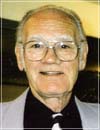
Scott Richardson

There Is But A Step Between Me and Death

1 Samuel 20:3
Scott Richardson October, 10 1982 Audio
0 Comments

Sermon Transcript

Auto-generated transcript • May contain errors

100%
Turn with me this morning to
the book of 1 Samuel chapter 20. Chapter 20 of the book of
1 Samuel. In the last statement of that
third verse, would you look at it with me? The last statement
of the third verse, 1 Samuel 20, there is but a step between me
and death. This is the statement of David. This was a description of his
present condition. There is but a step between me
and death. He gives forth here a description
of his present condition. Just a step between me and death. This is what he's talking about. It says that in verse number
1, that he had fled from Ramah and came and said this to Jonathan. Jonathan was his close friend,
his dear friend. He loved him like a brother.
And Jonathan was the son of the king, King Saul. They had come
together and had some conversation here. And David said to Jonathan, he
said, What have I done? What is mine iniquity, and what
is my sin before thy father? What have I done? What sin have
I committed against your father, King Saul, that he seeketh my
life? What is it that I have done,
Jonathan? Do you know? Do you know? Can you tell me
anything? Can you help me out here, Jonathan? What have I done
that your Father seeks my blood? He seeks my very life. Why is
that? Do you have any idea? Now, this
is what Jonathan said. And he said unto him, that is,
Jonathan said, God forbid! That's not right. You've got
it wrong. You've got it wrong, David. That's
not right. My Father's not like that. He's
not about to kill you. God forbid. Dispense from your
mind such depressing thoughts that my Father is seeking for
your blood. He said unto him, God forbid
thou shalt not die. You won't die, David. David,
you're alarmed about some things that you ought not to be alarmed
about. You ought not to get all up in
the air about this thing and become depressed. Oh, and that's
not good for you. God forbid thou shalt not die. Behold, my Father will do nothing,
either great or small, but that He'll show it to me. There's
nothing that my Father will do. That is, my Father and I are
in a very close intimacy here. Very close companionship. We're
very close. And I know the heart of my Father.
And He wouldn't do anything if it was something great or something
small. He'd tell me about it. In other words, I'm in on everything
that He does. And so your worry and your fret
and this period of depression that you're undergoing, David,
and you're being frightened and scared to death here, well, I
said, it's unreal. There's nothing to it. God forbid,
my father's not going to kill you. If he's going to do anything,
he'd have told me about it. But what he will show it to me,
and why should my father hide this thing from me? It is not
so. It's not so, David. Well, now look down here in the
latter part of this third verse, where it says, But truly, this
is David talking now, but truly as the Lord liveth, and as thy
soul liveth, just as sure as God in heaven is alive, and just
as sure as you, Jonathan, are alive, your soul liveth, and
as thy soul liveth, there is but a step between me and death. You think you know what you're
talking about, Jonathan, but you don't. You don't know what
you're talking about. Your dad, King Saul, he's got
something against me. I don't know what it is. And
he's out to kill me, and he'll never be satisfied until he tastes
my blood. Well, I said that at the outset
here, there is but a step between me and death, but this was David's
description of his own condition, that King Saul was out to do
him in. the bitter anger and jealousy
and malice and hatred of the king would not be satisfied with
anything short of the blood of this man, David. But Jonathan, you see, he didn't
know this, nor did he believe it when David told it to him. He could not make himself believe
that his father really wanted to kill this young, brave, true-hearted
warrior, this great man who had battled Goliath, who had stood in the gap and defied the
armies of the Philistine. had accomplished so much for
the cause of this nation, Israel. Esh couldn't believe that Saul,
his father, would do a thing like that. And he assured David,
as I read to you, he assured David, he said, It's not so,
it's not so. My father wouldn't keep anything
like this from me. But David knew better. He said, He's out after my blood
and he'll not be satisfied until he tastes my blood. Well, this
is the first thing that I want you to see here. in this statement,
in this little narrative, this little story here. I want you
to see this. That it was by David's knowing
his danger that he was permitted to escape. I want you to see
that, that everything that I'm about to say hangs on that one
statement there. That it was by David's knowledge
David's understanding of his danger that he was able to escape. Had he not known his danger,
he would not have escaped. Had he been as ignorant of his
condition and his danger as his good friend Jonathan was, why,
David would have walked right into the lion's mouth and would
have fallen by Saul's sword. But you see, he was not ignorant
of his danger. He knew what his danger was. He knew that there was a hole
in the ground about two or three steps before him. He knew that.
And so his knowing that prevented him from falling into that hole.
Instead of going blindly on, Like Jonathan would have him.
Jonathan didn't know. Jonathan was ignorant. Jonathan
wouldn't believe what David told him. Now, if he was like Jonathan,
he'd have just walked on out and walked right down into that
bottomless hole there. But he knew something. He knew
his danger. He knew his danger, and by knowing
his danger, he was able to escape the sphere of King Saul. Someone said to be forewarned
is to be forearmed. He was able to save his life
because he perceived his danger. Can you see that? He was able
to save his life because he understood his danger. Well, I think it
would have been very unwise, very unwise, and a very uncaring
person. Who would have said, don't tell
David that Saul's out to kill him? Don't tell him that. Look
at him and Jonathan there. They're having such a good time.
They're enjoying fellowship one with another. They're exchanging
pleasantries here. They're getting along so good.
Don't run over there and tell him now that Saul is right around
the corner with his spear, and it's sharpened to the hilt. Don't tell him that, that Saul
lies in darkness there, waiting his approach, and he's going
to kill him. Don't do that, because you're going to upset him. You're
going to upset him, and you'll destroy this pleasant company
that he has with Jonathan. I said that it would be a very
unwise and uncaring person who would not or who would have taken
that attitude and say, well, let's just not tell him. But
a true and wise friend, a true and wise friend would have told
David of his danger in order that David might escape. Now
that's a true friend. A true friend would not have
said, just forget about it. Forget about it, don't say anything
about it. Let's just kind of act like it's not going to happen.
Let's just hide our head in the sand. Let's forget about it and
leave David, enjoy his fellowship with Jonathan. Don't tell him
anything. A wise and true friend would
tell him of his danger. Why? In order that he might avoid
this danger. In order that he might escape
and save his life. Well, that's what I'm trying
to do. That's what I've been trying to do for the biggest part of
30 years. It's to warn men and women of
this danger. I've been trying to tell people
practically every opportunity that I've had before a small
or a large number or on a one-on-one basis. I have tried to tell men
directly to their face I've tried to tell them to avoid this danger. I've tried that. I've pleaded
with them. I've wept. I've cried. I've went
on and on and on and on trying to tell men, avoid the danger,
avoid the danger, avoid the danger. Well, some have listened, but
the majority of them have not listened. Many have regarded
me Not as a friend, but as an enemy, because I've told them
that. You see, a man who is your friend will tell you the truth
every time. A man who tells you the truth,
regardless of whether you like what he says or not, whether
you esteem him highly, you treasure that fellow as your friend, because
he's telling you the truth. If he knows something that you
don't know that's about to happen to you. And He warns you of a
way to escape that particular end. You better listen to Him
and count Him as your good friend. Is that not right? Count Him
as a good friend, that He'll be so, even if it sounds forceful,
even if it conflicts with your thinking. You count him as a
friend. War, well, listen, let me read
something to you. Over here in the book of Hebrews
is a verse of Scripture I want you to see. In the book of Hebrews,
about, I think, the tenth chapter, listen to this. In the tenth chapter, beginning
there at verse 25, it says, Don't forsake the assembling of ourselves
together. That is, the church of the Lord Jesus,
from its beginning, assembled themselves together from time
to time. In the early history of the New
Testament church, they met every day, maybe two or three times
a day, maybe every night. They met in houses. They met
in caves. They were not permitted to meet
in public assemblies like we are now, in a house of their
own, with their bylaws and constitutions and all that. They didn't have
the freedom that you and I enjoy now, but they assembled themselves
together. And because in this particular
time, their greatest fear was the Jews. The Jews sought to
do away with the religion of the Lord Jesus Christ. That was
the idea. Paul going down to Damascus with
a list of names in his hand. He was going down there to get
those people, to incarcerate people, and even to kill people
who were identified with that lowly name, the Lord Jesus Christ. Followers of Jesus. Paul said,
I'm going to kill them all. I'll kill them all. He said,
I gave consent to kill these people. I gave consent to put
them in jail. And so these people, they weren't
able to jump in their cars on Sunday morning without any hindrance
whatsoever to get out to the meeting and to sing the hymns
of Zion and to join in with prayer and praise unto the God who delivered
them. They weren't able to do that.
They didn't have that privilege, that liberty, that enjoyment
that we just take it for granted. And Paul said here, he said,
now listen, he said, not forsaking. the assembling of ourselves together,
not forsaking the assembly of ourselves together. Don't you
forsake it when the brethren meet. Don't you forsake that
assembly. Take advantage of that opportunity.
Take advantage of it. You might not have many of them.
Take advantage of it. You're meeting there in order
that you might glorify the God who saved you. You're meeting
there that you might praise Him and thank Him for what He's done
for you. You're meeting there that you might be encouraged,
that the faith of the brethren might encourage you to help you
to continue on, and help you to fight the good battle of faith. Alright? He said, as the manner
of some is. There's some that was doing this,
and Paul said, they're going to have a problem here. Don't
you do it. But exhorting one another, and so much the more
as you see the day approaching. That is, tell one another about
what I'm telling you. Exhort one another. Brother,
you ought to come on down here with us and sing and pray and
read the Bible and come on down here and be encouraged. Keep
telling one another that. And he goes on and he says, If
we sin willfully after we have received the knowledge of the
truth, there remaineth no more sacrifice for sin. but a certain
fearful looking for of judgment and fiery indignation which shall
devour the adversaries." Now listen to this. What I'm saying
is this, and I'll get to it here in verse 28. A man is to be considered
as a wise friend who will warn us of our danger, that there's
a step between us and death. and after death. The Bible says
it's appointed unto man once to die. It's appointed. And then
the judgment. Now, if we die unprepared, unprepared
to face eternity, unprepared to face the God who fills eternity,
brother, listen, we're going to fall into the hands of an
angry God. Now listen to this. It says,
He that despised Moses' law, He that disregarded the Ten Commandments,
that had no use for the law given by God unto Moses. He says that
man, under the economy of Moses, that man died without mercy under
two or three witnesses. If two or three people could
come and say that this fellow has violated the Sabbath day,
this fellow has violated his neighbor's liberty or so forth,
or broken the commandments, two or three or more witnesses, while
then the elders took him to the edge of town and they picked
up boulders and they stoned that fellow to death. They just bashed
his brains out. They just smashed his flesh. They broke his bones. They killed him right there.
That's the way they did it there. It says, he that despised Moses'
law died without mercy under two or three witnesses. Now they
did that because God ordered them to do so. Now listen to
this, verse 29. Of how much sore punishment,
suppose ye, shall he be thought worthy who hath trodden underfoot
the Son of God, and hath counted the blood of the covenant wherewith
he was sanctified an unholy thing, and hath done disfite unto the
Spirit of grace. For we know him that hath said."
Now who has said this? Paul says, For we know him that
hath said. God will not lie. If God said
something, it will come to pass. We know him, Paul said. That
is, said what, Paul? Vengeance belongeth unto me. I will. Now, this is one of those
I wills of the Bible that, boy, you can just check it off. It's going to come to pass. I
will, God said. I will recompense. That is, I'll
pay back. I will recompense, saith the
Lord, and again the Lord shall judge his people." Verse 31,
it is a fearful thing to fall into the hands of the living
God. Turn with me to Psalm 90 real
quick. Psalm 90. What am I saying here? What am
I trying to do? I'm trying to emphasize this
morning that a wise friend will tell you of your danger in order
that you might avoid it. Now, every man is going to die. I quoted that scripture to you. Every man is going to die. It's
appointed unto man once to die, and then the judgment. Now, if
we die unprepared, well, then we're going to fall into the
hands of a living God. And the Scripture said, I read
it to you, it said, it's a fearful thing to fall into the hands
of the living God, unprepared to meet Him. Fearful thing. There in the book of Hebrews,
in the next chapter over, I think in the eleventh or twelfth chapter,
it says, for our God, is a consuming fire. Now, God in Christ is loving
and kind and merciful and tender and gentle and all of these things,
but to meet God out of Christ, to meet God out of Christ, He
is a consuming fire. Psalm 90 says, Lord, thou hast
been our dwelling place in all generations. before the mountains
were brought forth, or ever thou hadst formed the earth, the world,
even from everlasting to everlasting thy God, thou turnest man to
destruction, and sayest, Return, ye children of men, that is,
return to the dust. For as a thousand years in thy
sight are as but yesterday, when it is past, and as a watch in
the night, thou carryest them away as with a flood. That is,
the population, the world's population, the people, human beings, they
are asleep. In the morning they are like
grass which groweth up. In the morning it's nice and
green and moist and tender. It flourisheth and groweth up. But in the evening, that same
grass, that's green, and the moisture lays on it. That same
grass in the evening is cut down, and after it's cut down, it's
withered, it makes hay, and then you can stick a match to it,
and up it goes in smoke. For we are consumed by thine
anger, and by thy wrath are we troubled. Thou hast set our iniquities
before thee, our secret sins in the light of thy countenance.
For all our days are passed away in thy wrath, and we spend our
years as a tale that is told." Just tell the story. Our life,
the shortness, the brevity of our life is like a tale that
we tell. Two minutes after we tell the
tale, it's forgotten about. You couldn't even remember it.
We hear someone come along and tells us a tale. And we say,
well, that's a pretty good story. I want to remember that. Well,
ten minutes later, someone else comes along and we say, well,
let me tell you this tale I just heard. And the first thing you
know, we got to turn to Him who told it and said, I forgot it
already. I forgot it. Would you bolster me and arouse
my memory a little bit here in that story? I forgot it. That's
where our lives are, the brevity, the shortness of our lives in
comparison to eternity. It's like a tale that's told.
The day of our years are three score years and ten, that is,
seventy years. And if by reason of strength
it be four score years, yet is their strength labor and sorrow,
for it is soon cut off. Our lives are soon cut off, and
we fly away, we fly away. For who knoweth the power of
thine anger, even according to thy fear? So is thy wrath. Now, the psalmist said this,
he said, I see my danger. He said, so teach us, or teach
me, to number my days, that we may apply our hearts to wisdom. What am I trying to say? I'm
trying to say this, brethren. There is, in one sense of the
word, only a step between death and every one of us here this
evening, or this morning. What was true with David is true
with us. David says, my condition right
now is that there's just a step between me and death. Jonathan,
my good friend, doesn't believe it. He doesn't know it, but I
know it. And since I know it, my knowledge of it is going to
prevent me from this bitter end. Now, I can tell men about it. I can tell men about it. But
unless they come to the realization of their danger, they will not
escape. And that's been the problem of
ministers, preachers, evangelists, and bishops, and so forth, since
the beginning of the preaching of the gospel. Men, they do not
have that ability to arouse a man's interest. They don't have that
It's not eloquence, it's not the choice of words, it's not
the paragraphs in the sentences, it's not the atmosphere, it's
not the occasion. It's none of these things or
all of these things together that is needful and necessary
or the proper ingredient in order to enable the minister to arouse
a man to his danger. That's not it. It's not it. We
can tell the story and point men out to the fact that if they
die without the Lord Jesus Christ, they'll fall into the hands of
God who has consumed them. We can do that, but unless a
man lays it to his heart, unless he brings it to his heart and
considers his latter end, the knowledge of his end will not
prevent him from escaping. Most men, you see, they do not
regard what I'm saying this morning. They'll forget it two minutes
after they've passed the door, or a minute after the preacher
says, Amen. It's forgotten. They give no
consideration of what's been said. For this reason, we can say it and emphasize it,
but unless We are aided and assisted by the Spirit of the living God
to awake dead souls that will never have a sense of their danger.
Every man among us was born of woman dead in trespasses and
in sins. Dead. Dead before God. That is, what I mean is this,
I mean that we were born Spiritually dead. We had no natural inclination
or natural aspiration or desires towards God. We didn't have that
naturally. We did once in Adam. We did once
in Adam. But Adam rebelled against God,
and in his rebellion, He and all of his seed, that's you and
I, we're Adam's seed, we lost. We lost. We forfeited whatever
right or claim that we had in God. And that natural ability
to attempt to justify ourselves before God, we got that from
Adam. As soon as Adam sinned, instead
of appealing to God for mercy, Instead of turning to the God
of mercy and saying, Lord, look what I've done. I'm ashamed of
myself. You've been so good, it's a titan
come out. Instead of doing that, instead
of taking that approach, what did he do? He tried to cover
his sin. He tried to cover his shame and
his nakedness. He and Eve got together and they
made aprons. They made corks of big leaves.
Tried to cover their nakedness. What they should have done. I'm
not saying I would have done any different. I would have done
just exactly what they would have done. I know that. But this is
what they should have done. They should have appealed. They
should have thrown themselves at the court of God's mercy and
said, Lord, we have sinned against you. But instead of that, you
see, this spirit of pride and self-righteousness and their
own self-existence entered into their bloodstream. And they said,
We will not bow before Him. We will not bow before Him. We will hide. We will clothe
ourselves. They clothed themselves and ran
out in the trees and hid from God. And God came down and said,
Where are you? Where are you, Adam? And they
said, We're over here. What are you all doing over there?
Why are you hid, Adam? He said, Because we're naked. Oh, they had them clothes on,
you see. Oh, my soul. You see what I'm
talking about this morning? That's the condition of every
man. every offspring of Adam. I can trace my ancestry back
to my father and my mother and my grandmother and my grandfather
and even my great-grandfather, but just as far as I can go.
But if I could go farther, if I had the know-how and the records,
I could go farther and farther and farther. And if I could continue
on, you know how I'd wind up? I'd wind up at Adam. You see what I'm talking about
this morning? That's the condition of every man. Every offspring
of Adam. I can trace my ancestry back
to my father, and my mother, and my grandmother, and my grandfather,
and even my great-grandfather, but just as far as I can go.
But if I could go farther, If I had the know-how and the records,
I could go farther and farther and farther. And if I could continue
on, you know how I'd wind up? I'd wind up at Adam. That's where I'd wind up. I'm
a son of Adam. Regardless of what I think or
what you think. We are the children of Adam. Fallen Adam. Fallen Adam. Adam
who rebelled against his maker. We have the same nature as our
father Adam. Just like him. Rebels against
God. And so when we're born into this
world, we're born with his nature. Born with his nature, dead spiritually. No man ever seeks after God unaided
and assisted of the Holy Spirit. No man does. Man left to himself. If you and I were left to ourselves,
we never would, if this world existed for another 10,000 years
and we existed along with it, we would never seek God. On our
own. We're dead. That's what I'm talking
about. Dead. Spiritually dead. What we need? We need the Spirit
of the living God that has life. We need Him to come on and infuse
life in our dead hearts. That's what we need. If God does
not, through the Word, assisted by the Spirit of God, if He does
not plunge that dagger into our hearts and strip us and break
us and give us life, We'll remain dead, and we'll never have any
sense of the danger. We'll walk right out and pull
right in that hole. You see what I'm talking about?
We'll walk right out, continue on with our eyes wide open, and
we'll walk right into that pitfall. Ah, my soul. I say this morning,
that my problem has been that I haven't got that quality to
arouse men of their lethargy, to call men from that sleep of
death and impart to them a knowledge of their danger. I can't do it.
I can talk about it. I can talk about it, but I can't
impart it to anybody else. Only God can do that. You say,
well, doesn't God do that to everybody? No, He doesn't. And
I'm not going to say I'm sorry to say that God doesn't do it.
But that's just the way it is. God doesn't do it to everybody.
He does it to some. He does it to some. There's been
thousands and thousands and thousands and literally millions of people
that have died. They have died. They have died
wicked. They have died and went out to
meet God with a lie in their right hand. They went out to
meet God shaking their fist at God. I told you about the Or
some of you. I told you about the fellow here
not so long ago out there in Jackson, Mississippi. The fellow's
working at the funeral home. And they called him that night
and they said, how about coming to the funeral home tonight?
He said, we need some help. And so he went over and when
he went in there, there was a gang of motorcycle riders. I don't know what their names
were. Some name that they have, an ill name. All gathered around, he asked
the undertaker's wife, he said, well, what happened? She said,
well, a guy got killed in a motorcycle. He said, oh, we're in an awful
mess here. He said, would you like for you to help us? She
said, there he is. And they had him laid out there.
And he had his leather jacket on, no sleeves in it, and no
shirt on, bare chest out like that. That's the way they wanted
him. He had his necklaces on. And he had around his wrist leather
thongs, leather thongs with pieces of steel jutted out from the
leather. And the boy told me, he said, the first thing that
come to me, he said, here's a rebel against God. He's going out into
eternity to fight God. Going out into eternity! A mere
mortal being going out with his motorcycle, going out with all
of his paraphernalia, all of his weapons, he's going out to
fight God! He's no worse than any other
rebel. He never rebels that way. He wants to go out and fight
God. Fight the God that made him. You see, I can't waken men
to this danger. Men are in danger. I said, brethren, there is a
sense that every one of us is only a step between death. Just
a step. Life is so short that it's not
an exaggeration to compare our life with a step. Ask any aged
person. Ask any of them whether life
is not very short when they look back on the time that they've
spent. I confess to my own experience
here this morning that there's scarcely in my own life breathing
time from one Sunday to another. I just preach one time and then
I've got to start preparing to preach again. Life's short. Talked to Albert before the service.
I said, Albert, it won't be long until winter will be here. And Albert's 89 years old. Am
I right, Albert? 90 years old Albert is. You know what Albert said? Albert
said, we've had a short summer. Time goes quick, doesn't it,
Albert? Time goes quick. It's a short summer. So I'm telling
you, I'm telling you here, life is so short. It's no exaggeration
to compare it with just one step. There's just one step between
me and death. Just one. How short. Yesterday
I was born. Today I live. Tomorrow I must
die. If this is so, and it is, if
my life is so short, O Lord, prepare me to face its end. There is, in another sense, but
one step between us and death. Why? First, because life is short. Secondly, because life is so
uncertain. It ends unexpectedly. It seems to me like the strong
and hearty men seem to be the first to fall. We were talking
the other day, folks, and I mentioned this fellow and that fellow,
and they said, oh, just to look at those robust men, big, strong
men. You didn't think they'd ever
die, but they all died early. It seems like those that we think
will live the longest are those that fall first. They're the
first tree that falls in this forest. Well, you see, a spider's
web is a cable compared to the thin thread of our existence. And then secondly, there are
so many gates to the grave. It's why I feel that there's
only one step between death. There are so many ways to go.
One minister stood before his congregation on a Sunday morning,
and he felt very secure in his pulpit. And he read these lines. Used to, when they sang a hymn,
the minister was the song leader. And he would read the first verse,
and then they would sing the first verse. And then he would
read the second verse, and they would sing, because they didn't
all have hymn books then, maybe just a half a dozen. But anyhow,
this The minister stood up that morning and he read the lines
of the first hymn, and they went like this, Father, I long, I
faint to see, Father, I long, I faint to see, desire to see,
the place of thy throne's abode. I'd leave thine eternal courts
and flee up to thy seat, my God and my God. And when he uttered
the word God, he fell back and was gone. Even in this sacred
place of this confines of this building, there is no security
from death. You see, there is no security
from death because you do not seek after death, death seeks
after you. Death lurks right around the
corner and it is coming for every one of us. And you can't resist
it. You're not looking for it. If
you could look for it, you might somehow avoid it, but you're
not looking for it. Death comes with iron hands. And once death gets a hold of
you with his iron hands, you must go. Now you can hold on
to the pulpit, you can hold on to the seats, or you can hold
on to the tree or the porch or the bed. Hold on to what you
want to hold on, but death will bring you on. And there's many
ways. Some die in their sleep. Some
never make a move. Some go out into eternity without
an anchor of pain. Some just close their eyes in
death. And we marvel at such a peaceful
death and say, oh, I hope that I die that way, but you ain't
got no choice in the matter. You didn't have no choice in
the matter of coming into this world, and bless God, you ain't
got any choice on going out of this world. That's all in the
hands of Him who made you. And there's many ways to the
gates of death. There's only a step, Bob, between
you and death, just a step. Many gates. Some die peaceful,
some die violent. Read in the Morgantown or the
headlines of the paper this morning to pick it up. Three people killed
at Morgantown. Looked like suicide. Looked like a fellow killed his
wife and some of his family and then turned a gun on himself.
Some go that way. One minute we're here and the
next minute we're gone. Dr. Gill, one time an old preacher
who was the pastor of the church that Charles Haddon Spurgeon
was the pastor of so many years, the Metropolitan Baptist Tabernacle
there in London. Dr. Gill was a man known for
his studying. I told some of the brethren here
the other night that he's the only theologian, the only preacher
that ever lived. that took the whole complete
Bible from Genesis to Revelation and made a commentary on every
verse. Every verse of the Old Testament as well as the New
Testament. John Gill has got comments on every verse. And
he did that in a lifetime. And he was known as a man who
was always in his study. Always in his study. And he said
one morning, he said, well, he said, at least a man is safe
in his study. And something happened, I don't
know what it was, to call him from his study for a few minutes
to another part of the building or maybe outside. But it was
said that just shortly after he left his study, a high wind
came up and blew the chimney down and the chimney fell right
down on the desk in his study where Dr. Gill would have been.
Well, in times of battle, men seek shelter behind trees, behind
rocks, behind walls, behind buildings. But where can you go to escape
the eras of death? Where can you go? David said,
if I make my bed in hell, he said, you're there. There's no
escape. That's what I'm talking about this morning. There is
but a step, David said to Jonathan, between me and death. Well, listen,
if all of that is so, it behooves every one of us then to find
out. If we have been awakened to the
sense of our danger, to find out how we can avoid that danger.
Well, Bob read it to us there this morning, the tenth chapter
of the book of John. We must flee to him and to him
alone. who was able to make us accepted
in the beloved. No one in themselves can go out
into eternity and meet God in love and mercy and passion, apart
from going out and meeting God in a substitute. We can't go
out in ourselves. We are unholy and imperfect and
full of iniquity and full of sin. And if we die without a
substitute, if we die without a Savior, God will cast us from
His presence forever. We must have a substitute. We
must have one that will qualify us to stand in His stead. In
the stead, in the room of God, we must have one that will do
it. There's only one that can do it, and that's the man Christ
Jesus. Jesus Christ, who was born under
the law, who lived under the law, who satisfied the law, who
became a curse because of the law, died in the stead, in the
place, in the room of every poor sinner. who has been awakened
to his condition, who has the knowledge of his danger, that's
there who will flee to him and hold him and trust him as his
Redeemer and his Redeemer alone. I mean Jesus only. I don't mean
Jesus plus your good works. I don't mean Jesus plus your
prayers. I don't mean Jesus plus your
going to church. I don't mean Jesus plus your
almsgiving. I mean Jesus Christ and Jesus
Christ alone as your Redeemer. Oh, if a man, if he's been awakened,
awakened to his sense of danger, God help him now to avoid that
and to come to Jesus. Come to Jesus. Come unto me,
Jesus said. They say come unto the church.
They didn't say, come unto the angels, or come unto this, or
come unto that, or come unto something else, come unto the
altar, come unto the Bible, come unto the preacher, the deacon.
He didn't say that. He said, if any man wants life, if there's
a man here who wants life, he said, you want life. He said,
anybody thirsty in this crowd. Anybody thirsty. Do you know
what it means to be thirsty? He said, anybody guilty in this
crowd. Anybody. Anybody guilty. He's guilty before God and needs
mercy and healing for the poor. So anybody who said, then let
Him come to me. Let Him come to me! Not the church. Not this. Not that. But let Him
come to me and what will I do? I give Him rest for His soul.
I give Him rest. I confess this morning that's
what I need. That's what I want. rest for
my poor soul, because I know shortly there is a step between
me and death. I must go. Death bids me to go,
and I've got to answer when the knock comes, when the cold, clammy
hand of death is anchored around my shoulder. There's no squirming,
there's no moving out from underneath, but there must be a going forward. So in light of that, flee to
him. For those of us here who know
something of what I'm talking about, and God hath become your
peace in Christ Jesus, then you ought not to hold any ill will
to anyone, for you're soon to die. That is, this business of getting
mad at somebody and holding down in their heart a grudge against
a friend or a neighbor or someone. You better get rid of that. Got
any malice in your heart towards anybody? Got any quarrels in
your family? You better get that straightened
out real quick. You're soon going to die. I remember
the story one time, and I'll quit, of a husband who was to
go out and fell the timber that morning. He was a timber cutter. And somehow he had grieved his
wife. I don't know what the truth of
the story was in regard to what he'd done, some awkward word or deed of some sort, something
he said or shouldn't have said. Whatever it was, it vexed his
wife. It grieved his wife. And he understood
that she was grieved at him and so as he departed from the home
that morning, he turned back to his wife and he said, wife,
I'm sorry. I'm sorry for what I've said
or I'm sorry for what I've done or I'm sorry for that attitude
that I've displayed this morning. He said, cannot we be friends? And he said, give me a kiss before
I go. And she turned from him. and
went back into the house. Well, she sorrowed and grieved
that whole day, for in her heart she loved him well. And she grieved because she could
not have reconciled herself to him and give him that loving
kiss that morning as he left. But she didn't know what was
in store for her. She thought, probably he'll be
back this evening, and then I'll make it right. But when time
come for the timber cutter to come home, she looked out the
window or out the door, and there come four men. And they were
shuffling like this. Here come four pallbearers, bearing
the corpse of her husband. And she would have given 10,000
worlds, like the world that we have, if they had not parted
as they did. Well, if you have family quarrels,
if you have neighbor quarrels, straighten them out, because
there's only a step between you and them. Only a step. David said, Jonathan said, No,
God forbid, it's not so. But David said, I know it is.
Now, the understanding that David had of his end prevented him from falling at the point of
Saul's errands. Now, if you have the knowledge
this morning that you're going to die and that you're going
to face God, And if you don't have a covering that will satisfy
and please God, and you know that there's nothing that you
can do or say that your righteousness, your self-righteousness will
not do it because we've been convicted of that. We've seen
that we're sinners against God. And we have no righteousness
which would be acceptable unto God. And the only righteousness
that is acceptable unto God is the righteousness of Jesus Christ.
Oh, if we've been made aware of that, well, then flee to Jesus.
Flee to Jesus and be found in Him, not having a righteousness
which is of the law, but that righteousness which cometh by
faith, the righteousness of Jesus Christ.
Scott Richardson
About Scott Richardson
Scott Richardson (1923-2010) served as pastor of Katy Baptist Church in Fairmont, West Virginia.
Broadcaster:

Comments

0 / 2000 characters
Comments are moderated before appearing.

Be the first to comment!

Joshua

Joshua

Shall we play a game? Ask me about articles, sermons, or theology from our library. I can also help you navigate the site.