Bootstrap
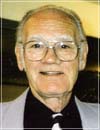
Scott Richardson

Who Hath Believed Our Report

Isaiah 53:1
Scott Richardson March, 14 1982 Audio
0 Comments

Sermon Transcript

Auto-generated transcript • May contain errors

100%
Chapter 53, you'll turn with
me there. Isaiah chapter 53. Isaiah 53. Isaiah of old here in this first
verse makes a sad complaint in his
question here. He says, Who hath believed our
report? To whom is the arm of the Lord
revealed? For he shall grow up before him
as a tender plant, and as a root out of dry ground. He hath no
form nor comeliness, and when we shall see him, there is no
beauty that we should desire him. He is despised and rejected
of men, a man of sorrow and acquainted with grief. We hid, as it were,
our faces from him. He was despised, and we esteemed
him not." Now, this is the report here. Who hath believed our report? This is the report, and the complaint
that Isaiah the prophet makes it, is, who hath believed? Why is it that there's only a
few, comparatively speaking, that have believed the report?
Why? Who hath believed our report?
Surely, he said, he's borne our griefs and carried our sorrows,
yet we did esteem him stricken, smitten of God, and afflicted. He was wounded for our transgression. He was bruised for our iniquities.
The chastisement of our peace was upon him, and with his stripes
we are healed. All we like sheep have gone astray. We have turned everyone to his
own way, and the Lord hath laid on him the iniquity of us all. He was oppressed. He was afflicted. Yet he opened not his mouth.
He is brought as a lamb to the slaughter, and as a sheep before
a shearer's dung, so he opened not his mouth. He is taken from
prison and from judgment. Who shall declare his generation?
For he was cut off out of the land of the living for the transgression
of my people. Was he stricken that his stroke
was laid upon him? It made his grave with the wicked,
with the rich in his death, because he had done no violence, neither
was there any deceit in his mouth. Yet it pleased the Lord to bruise
him, he hath put him to grief. Thou
shalt make his soul an offering for sin, he shall see a seed,
he shall prolong his days, and the pleasure of the Lord shall
prosper in his hands. He shall see the travail of his
soul, and shall be satisfied, and by his knowledge shall my
righteous servant justify many, for he shall bear their iniquities.
Therefore will I divide him a portion with the great." God speaking
here now. Therefore will I divide him a
portion with the great. I'll give to him. And he shall
divide the small with the strong. share with those that belong
to him. Why? Because he hath poured out
his soul unto death, because he was numbered with the transgressors,
because he bare the sin of many and made intercession for the
transgressors. It makes this sad complaint here. Who hath believed our report?
Who hath believed our report? Look at verse number 6 there.
We'll try in our bigger way here to say what this verse is saying
here. It refers to you and I. Isaiah said, all we like sheep
have gone astray. We have turned everyone to His
own way. All we like sheep. That is, He
compares us here to sheep. Now, I want you to notice that
in the comparison here, He doesn't compare us to these
sheep for their good qualities or virtues, but the comparison
is made for their foolishness. For their foolishness and their
being so dumb. A sheep is very foolish and a
sheep is very dumb. A sheep will go astray from its
shepherd. It will go astray from its foal.
It will stray from good pastures. And it will never return by itself. A sheep is not like a horse or
a cow or even a dog. Let your dog out and he may wander
all day and all night, or two or three days and two or three
nights, and finally you look out the door and there he is
on the porch. The dog will come back, but a sheep never does
that. A sheep will wander from its owner. It will wander from
its shepherd. It will wander from green pastures. And it will never come back by
itself. I'm not saying that it has to
be taken in an absolute sense, because I'm not sure I don't
know that much about a sheep. But generally speaking, the sheep
will not come back by itself. And so he compares us to sheep. He says, Oh, we like sheep have
gone astray. We've left our owner. Our owner is gone. We've made
a choice to leave our owner. force us out. We were not compelled to go. We went by our own volition,
by our own choice, voluntary choice. We chose to leave our
shepherd. We chose to leave Him who made
us, not Himself. Like sheep that went astray from
their shepherd, from their foal, from their good pastures, never
to return of themselves until they're looked up. Sheep will
never come back until the shepherd goes out to get them. He's got
to round them up, Bob. And most men that raise sheep
to any extent, that is to have a flock of sheep, I'm not talking
about just 10 or 15 or 25 or 30, but 100 or 200 or 300 sheep,
they have dogs. They have dogs and they have
a man who's appointed as the shepherd of the sheep, and he
has dogs to keep the sheep in line, and when the sheep runs
off, the sheep must be fetched back. Fetched back by the owner
or the shepherd or the dog. He won't come back on his own.
He must be fetched back. He'll never return of himself.
You see, he'll never come until they're looked up by the shepherd
or the or the owner or the dog, and brought back by them. You
see, the people, the people of God, the people who God made,
they're like foolish sheep. Foolish sheep. He doesn't compare
us to a sheep and go on and say something about the good qualities
of the sheep, about the gentleness of the sheep. Or the wool that the sheep produces? Not those qualities. But he says, oh, we like sheep
have gone astray. Foolish, silly sheep that have
left their good fold and good pastures and good master. That's
the way we've been. That's the way we are. That's
the truth about us. Makes you wonder why Isaiah made
this sad complaint here. Who has believed our report? Well, he says that all we like
sheep have gone astray, everyone to his own way. To his own way,
not to God's way, not to the owner of the sheep's way or the
shepherd's way. But every one of us has gone
astray. We have turned everyone to his,
his own way. We had to have our way. We had
to do what we wanted to do. Everyone to his own way. To his
own way. What is his own way? It's an
evil way. It's a crooked way. It's a slippery
way. It's a way of ruin. It's a way
of our choosing. And it's a way that we delight
in. All we like sheep have gone astray. Left our father. Left our master. Left the home. Like the prodigal son who left
his father's house. Give me what's coming to me.
I've got to go off into a far country. And will not return
until God goes and fetches him. He would not have never come
home had God not sent a famine there upon that land. And that
man began to be in want. And finally got him hired out
to some Gentile to go down and feed the pigs. And he was so
hungry that He was so hungry that he said, I'm just so hungry.
I'm so hungry. I don't know what I'm going to
do. I could almost get down there and eat out of the trough with
the pigs. He began to be in want, ready to never come home. God
must fetch him. You see what I'm talking about?
God must fetch him home. All we like sheep have gone astray,
an evil way, a crooked way, a slippery way, a way of ruin. Way of danger. God compares us to sheep. All we like sheep have gone astray. Well, let's go back up here to
verse 53 now. This describes us. Verse number 6 describes universally
mankind. Every man has gone astray. Everybody. There's no one that
has been excluded from this birth. It's a universal going away. Every man goes away from God. He does it naturally. It's hereditary
in his life. He's born with that nature. He
goes away. Well, Isaiah now says, Who hath
believed our report? Oh, why is it that men will not
believe this report? This report comes from God through
the sweet prophet Isaiah. Why do men refuse, reject, will
not believe this report? Why won't they believe the report
about themselves and about the Lord Jesus Christ as the finder
of the sheep? Why don't they do that? I can't understand, humanly speaking,
why a man wouldn't believe the report. First off, for the first
reason that I can give why he doesn't believe the report, he
confesses that he's a sinner, but he doesn't believe that he's
a sinner. He confesses, he says, yes I'm a sinner, but he doesn't
believe he's a sinner. Because if he believed that he
was a sinner, I believe that he would see until he found the
Savior who is a seeking God to find seeking sinners. Who has
believed our report? Don't believe the report? Well,
let me read a verse to you and then we'll look at that second
verse. In John chapter 8, John chapter 8 verse 33, this kind
of gives you some idea. of piety is that men will not
believe the report. They don't believe they're sinners.
They don't believe they're in danger. They don't see no need. They don't really believe that
they're captives of the devil. They've heard that. They've heard
that they're poor sinners. They've heard that they went
astray. They've heard that they need to be rescued. They've heard
that their rescue can only come by God Himself. They've heard
that, but they don't believe that. They don't believe that
they're in the clutches, in the clutches and held captive by
the devil. They don't believe that. But
every man outside of the Lord Jesus Christ is held captive
by the devil. Now, here in verse 33, our Lord
preaches to some people, and Jesus said, If you know the truth,
then ye shall know the truth, and the truth shall make you
free. The truth about yourself, if you know the truth about yourself
and the truth about me, a seeking Savior who came to seek and to
save that which was lost. If you know the truth about yourself,
poor, hopeless, helpless, wandering sheep that have wandered from
the fold and don't have sense enough to come back, Don't even
have any desire to come back. Delight, if you please, in being
lost. Lost and don't know they're lost.
Blind and don't know they're blind. If you could believe the
truth, he said, about yourself, and believe the truth about me,
he said, you'd be free. The truth, I'm the truth. I'll
make you free, free. And if the sun shall make you
free, ye shall be free indeed." But you know what their response
was? The same as Everman's response is to the gospel, unless the
gospel is accompanied by divine power. Everman makes the same
response. This is what they said. They
answered him. They said, We be Abraham's seed.
And that's enough. We're Abraham's seed. We've got
religion. We were never in bondage to any
man. We were never in bondage to the
devil, much less man. We're not in bondage. We're free
people. How sayest thou, Ye shall be
made free? Why do you say that to us? We
were never in bondage. We're free people. That's what
we say. And that's the reason that Isaiah,
I guess, made the sad complaint. Who has believed our report?
And that's the reason why. It's because men don't believe
it. Men don't believe the report about themselves and about the
Lord Jesus Christ. Now, the report is the gospel.
That's what it is. The report is the gospel which
is a report. It's a declaration of The love,
the grace, the mercy of God in Christ Jesus. The love, the mercy,
the grace of God in Christ. That's the gospel. That's the
report of Christ himself, his person, his offices, his obedience,
his sufferings, his death, and a free and full and final salvation
by him. That's the report of the gospel.
It's a good report, a true and faithful report. It's one that's
worthy to be believed, to be accepted, yet there's only a
few that believe in it. Huh? Isn't that odd? Only a few,
comparatively speaking. I know we've got a few here tonight,
but we've got room for a whole lot more, haven't we? We've got
room for a whole lot more. We could put a whole lot more
people in here than what we've got. You've come this evening
because you believe the report. Why is it so many don't believe
the report? It's a good report. You know
what makes it so good? It comes from God. It comes from
God. God Himself. Can you imagine
that? God Himself. stopping, standing still, paying
some attention and consideration to our need, poor, wandering
sheep. The report. All right, look at
verse number 2 now. Let's look at the report a little
bit in regard to the Lord Jesus. It says, like a tender plank,
talking about Jesus. Now this whole 53rd chapter The
book of Isaiah is talking about the Lord Jesus. It said, He,
that's Jesus Christ, He shall grow up before Him, that is,
before God, as a tender plant. What does He mean by tender plant? Well, I thought about this. I
hear a few days ago, most of you know I come up here
about every day, and sometimes I get tired sitting, and I wander
around, and I stood over here and looked out the window. I
looked out the window, and lo and behold, I seen the tulips
coming up. I looked over there, and I said,
well, them tulips is coming up. And it was just barely breaking
through. I said, they're coming up. And
then the next day I come, and I'll come out and look again
the next day. And I think it was yesterday. I counted them.
There's about 97 or 98 of those tulips coming up out of the ground. Tender plants. He said, for he
shall grow up before him as a tender plant, a tender plant which springs
out of the earth without notice, without notice. I'll bet you
that there was some of you folks here tonight didn't know those
tulips was up. I'll bet you didn't notice. Because
they'll spring up without you noticing them. Unless you go
and look almost every hour of every day, they'll come up without
you ever detecting them. It says the Lord Jesus Christ
will spring up like a tender plant. He'll come up. Grow up before Him like a tender
plant without notice. Low in its beginning. Just peek
right through the ground. Just grow a little bit here and
a little bit there. Slow in its growth. And it's
liable, see, to be crushed by somebody's foot. They're liable
to walk on it and crush this tender plant. Or if they don't
walk on it and crush it, it's liable to be destroyed by the
frost, the tender plant. And it has no great probability
of ever fully developing, this tender plant. There's so many
adversaries and enemies against this tender plant In all probability,
it will never grow up fully developed and have blossoms and fruit on
it, like the desired end is supposed to be. Well, he's like that, a tender plant. He goes on and
says, like a root out of dry grain, our Lord Jesus Christ. outward view of Him, the external
view of the Lord Jesus Christ like a poor plant or shrub just
crept up out of the ground in a dry and barren soil, ready
to wither away as soon as it comes up, a root out of dry ground,
has no strength, has no straightness of body, without leaves or without
blossoms, which makes the plant beautiful. We have here a tender
plant and a root out of dry ground. Hath no form about it, no straightness,
nor commonness, the external vision of this plant. And when
we shall see him, when we shall see him, there is no beauty in
him, no beauty, nothing that looks like nothing. When we look
at this tender plant that grows, springs up out of a A dry and
thirsty and parched ground, like he says here, a dry ground has
no form and no commonness. When we see this plant, we don't
think that this plant will ever amount to anything. We see where
the plant comes from. We see what's against the plant,
the enemies, the adversaries. If the foot doesn't crush it,
the frost will. It comes up, it has no blossoms,
it has no fruit. And when we see this tender plant
out of a dry ground, when we see it, there is no beauty about
it. There is nothing grand or majestic
about this plant. And that is what He describes
here of the Lord Jesus Christ. That is the way He was. That
is the way He looked. That is the way He appeared when
He came onto the scene. when he came into public view.
This is the way he appeared to people. There was nothing majestic
about his carriage. There was nothing externally
wonderful about his visage. I don't think that he was six
foot five, muscular and blonde hair and all that. I don't think
that there was something about him that was so outstanding that
the outstandingness of him attracted people to him. I think just the
opposite. There's no beauty about him,
no native or natural beauty that would cause such a striking contrast
or difference that people would desire him. He was like a root. He was like a tender plant. He
was like a root out of dry ground. No form or commonness. And when
we see there is no beauty in Him externally, that we should
desire Him. Nothing that looked so grand
or majestic about Him. There is nothing that appeared
outwardly in Him that would have the appearance of a prince or
a king, and he goes on and says he is despised. He is despised,
this tender plant, this root out of dry ground. The Lord Jesus
Christ, he is despised and rejected of men. Our Lord Jesus was not
admitted into the company and into the conversation of men.
He is despised by men. When men seen him coming, they
got off by themselves. They didn't follow him wholesale
just to listen to what he had to say. He was a lonely man in
a sense. He went by himself. He had to
call twelve men unto himself. If he hadn't called them, they
would have never come. He was despised and rejected of men. Men said, we don't desire his
company. There is nothing about Him externally. There is nothing
majestic about Him. Nothing princely or kingly about
His external appearance that we see any beauty in Him that
we should desire Him. We don't follow after Him. He
is despised and rejected, was not admitted into the company
and conversation of men. The Bible says He was accounted
as a worm and no man. As a worm. Men looked upon him
as a despisable, despicable worm of the dirt, of the dust, as
a root out of dry ground. It says he was accounted as a
worm and no man, and if a man, a madman, or one that had a devil. That is what they said of our
Lord Jesus Christ. And it goes on, it says now,
it says he is despised and rejected, he is a man of sorrows, Acquainted
with grief. Acquainted with grief, that means
he was known by his grief. Men knew him by his grief. He was known by the troubles
that he had. Known by the troubles and everybody
hated him. I say that literally. Everybody
literally hated the Lord Jesus Christ. Don't say you'd be indifferent
if he was there, you'd have done the same thing. We all hated
him. We all hated him. Hated him in our hearts. But
when he was here on earth, and when he looked men face to face,
eye to eye, the men that he looked at wouldn't admit him into their
company, wouldn't admit him into their conversation, and he was
known for his trouble. Men hated him. Isaiah makes this
complaint, who else believed God real poor? They hated the Lord Jesus Christ,
considered Him as a worm, no man, a madman, a devil, insane,
in league with bezel bub, acquainted with grief, were known by grief.
He was known by his troubles. His life was one of continued
sorrow, perpetual, continual sorrow, from the cradle to the
cross. He ate His bread in sorrow, with
the sweat of His brow. We hid our faces from Him, the
Scriptures say. He was despised and rejected
of men. A man of sorrows, acquainted with grief, known by his grief.
And we hid, as it were, our faces from Him. We hid from Him. We didn't have nothing to do
with Him. We seen Him coming, we turned our backs on Him. Don't
want to talk about Him. Avoid Him. Talk about anything
else in the world, we don't want to talk about Him. Not interested
in the story of the Lord Jesus Christ. Not interested. We are
not interested. This is man in general. You are
interested this evening because God made you interested. He made
you interested. If He hadn't made you interested,
you wouldn't be interested. I wouldn't be here. I wouldn't
be preaching if God didn't make me interested in the Lord Jesus.
If one day in my life God had not came from out of nowhere
and intervened in my life and done something to my soul. I
would never have been interested. Men were never interested in
the Lord Jesus Christ. Now I ate His bread and saw the
sweat of His brow. We hid our faces from Him. He
was unworthy of our notice, unworthy of our attention. We don't want
to talk about Him. I'm amazed. We don't want to
talk about Him. We don't want to hear about Him.
There's nothing about this story that will excite our attention,
get our attention. Nothing about the story. In itself,
it doesn't grab us. Doesn't that show you what sin
has done to us? This is what sin has done. Sin
has brought us to the place in attitude in understanding that
the story can be told that God Almighty become a man and suffered
in man's place to save man, and it doesn't strike our attention.
We could care less, and we say that in no uncertain terms. Who
cares? But I'll tell you what does take
our attention. You get up on Sunday morning, get the newspaper,
and the headlines say, local man's murder. That gets our attention,
doesn't it? We say, well, who was that, Pat? Do you know that fellow, Pat?
He's over on Newton Street. Do you know him? Yeah, I know
him. I wonder, well, what about that?
He killed himself. He killed another fellow. Stole
his money, and this and that, and so forth. We're interested.
It gets our attention. It's our nature. Tell the story
of God. Who has believed our report?
No one cares. No one cares. Here it comes.
Or rather, he wouldn't talk to me. Went to a fella's house one
time. I was thinking about it last
night before I went to sleep. I was thinking about this fella,
this old fella, and he had broke his hip. He broke his hip, and
this old man, he wasn't this old that he couldn't have tried
to get out and walk a little bit, I don't guess, but he didn't.
He broke his hip and he just took to the bed. And he stayed
to the bed until he died. And I used to come by there once
in a while and the wind would be up. And he'd like to listen
to the baseball game, listen to the baseball game. Had the
radio, and I could hear it, it was hard to hear it, real loud. Every time I'd come by, I'd listen
to the baseball game. That grated on my soul. And I
thought, there's that old man, and he's got a soul, and he's
got one foot in the grave, and I bet he's never heard the story.
And I thought, I ought to tell him the story. He'll die and
never hear the story. I ought to tell him the story.
And I didn't know the people. I knew who they were, but I didn't
know them. So I knocked on the door one day, and his daughter
was a school teacher. And she came to the door, and
she knew who I was, and she knew what I'd come for. And I said,
well, I'd like to come in and visit with your dad a little
bit. And immediately, she told me. She told me right up on the
top line. Right at the beginning, she told
me. She said, he doesn't need what you got. He doesn't need
that. He's all right. He's all right.
He belongs to church. Well, I said, be all right, I'm
going to visit with him. Yes, go on and visit with him.
Reluctant, he let me in. And I went back and we small
talked a little bit and finally I got right down to where it
was at. And that's how he stood. How did he stand before God? You know what he done? He rolled
over. He rolled over and turned his
back towards me and looked out to the window and never said
another word while I was there. He never opened his mouth. I'm
telling you that the Lord Jesus Christ is unworthy of our knowledge. That's the way we are. Who hath
believed our report? This is what sin hath done to
us and yet we just kind of bandish sin around, you know, and make
light of it. and joke about it and all that.
But this is what sin has done. This is what it has done. It
has brought us to the place that the Lord Jesus Christ is unworthy
of our attention, unworthy of our notice. He is a disagreeable
object as far as we are concerned. It says we esteemed Him not. We esteemed Him not. He was despised
and we esteemed Him not. Do you know what that means?
That means that we did not place any value on Him. Isn't that terrible? We did not
place any value on the Lord Jesus Christ, and God the Father said
this. He said, This is My beloved Son,
in whom I am well pleased. But we esteemed Him not. We place
nobody on Him. He said, You are unworthy of
our attention. We only hear about you. Turn
our backs. We have not got time for you.
Oh, sin has destroyed us. Sin has killed us. I will tell
you, brethren, before God, if something does not happen to
our poor souls, by the way of the new birth, we will all die
and go to hell. There is no other place for us
to go. God's got to intervene and do
something for us. We've got to be born again. We've got to have
a change. We've got to be turned around
from our way to His way. Who is the way? That's right. Acquainted with grief. Look down here where it says,
Surely it borne our griefs. He had no one by His griefs.
But He bore our griefs and He carried our sorrows. Yet we did
esteem Him stricken and smitten of God and afflicted. He was
wounded for our transgressions. Wounded for our transgressions. I underline that. Wounded for
our transgressions. Not for any of His own. But he was wounded for our transgression. What is our transgression? Our
rebellion against God? Our transgression of His holy,
righteous, and just law? He was wounded for our rebellion
and for our transgression in order to make atonement and satisfaction
for our rebellion. and our transgression and our
sins. He was wounded. Wounded. Not
just wounds which He received in His hands and His feet and
His side by the nails and by the spears. Not just those wounds. They were real wounds. He was
wounded. But this wound that He is talking
about here, It's not just limited to his hands and his feet and
his side, but it means the whole of his sufferings. That is, he
was wounded to death. Yeah, it means to be wounded.
Man, I was wounded. Fell in the war. Got shot. He
said, I was wounded. Better go out and get that fellow.
Why, he's wounded. He's hurting. Give him something
for his pain. He's wounded. He's been shot. He's been shot in the stomach.
He's been shot in the leg. He's been shot in the chest.
He's been shot in the head. He's wounded. He needs something
for the pain. He can't stand it. He's wounded. Our Lord Jesus Christ was wounded
for our transgressions. Who has believed our report? Isaiah said. He was wounded. Not for his transgressions. He
had no transgressions. He was wounded for our transgressions. Wounded unto death. It says he was wounded for our
transgressions. And it says he was bruised for
our iniquities. Now what does that mean? It means
this. It means that he was bruised
like corn being ground at the mill. When the two stone wheels
come together and smash the corn, the corn is crushed beneath the
weight of the stones into powder. Our Lord Jesus Christ was bruised
like corn is bruised at the mill, like wheat is bruised under the
burner. That is what it means. Bruised. broken and crushed,
crushed to pieces, fine dust. And our Lord Jesus Christ was
crushed and broken under the weight of my sin and your sin
and the punishment of our sins. Wounded and bruised and broken
and crushed, you see. And then he goes on. And he said
he was bruised, friar, Then he goes on down and says, "...and
with his stripes..." What does he mean by that? I don't know
what a lot of people mean, but I'll tell you what it means.
It means that these black and blue marks on his body, that's
what he's talking about, black and blue marks where the blood
settled after the blows were laid upon his body. Black and
blue. They pummeled him with their
fists and they took a cat of nine tails, and they took sticks
and they took rocks, they took everything that they could think
of, and they beat and bruised and crushed the Lord Jesus Christ. And the sweet Isaiah the prophet
here, when he's telling about the report, who hath believed
our report? And then he tells us what the report is. It says,
"...with his stripes were healed." You see that naked, bruised,
beaten, The figure of a man over there doesn't look like a man.
See those stripes on him? See those black and blue stripes
on his back and on his face and on his chest? You see them? He
says, with his stripes we are healed. That means with his suffering. With his suffering. We are saved
by and through the sufferings, the pain and the agony and the
death of the Lord. That's what saves a man. I'll
tell you. These stripes. You see, this
sin is a disease belonging to all men. It belongs to every
one of us. We've got that in common. Someone said here a little bit
ago, maybe before church, so-and-so died. Someone else said, well,
did he die of cancer? He said, no, he had heart disease.
All of us don't have cancer. All of us don't have bad hearts.
All of us don't have tuberculosis. All of us don't have a universal
disease as cancer or heart trouble. Well, we don't have that. See?
Some will and some won't. Some do and some don't. But all
meet upon this common ground. Every one of us can identify
one with another. in this respect that all of us
have this disease. It's a disease. It's an incurable
disease. There's no cure for the disease
that I've got. It's eaten up my body and soul,
and if it continues, it'll send me to hell. Sin is a disease,
and it's universal upon all men. And it's an incurable disease.
that belongs to all of us. And I said it's natural, it's
hereditary, it's incurable. And it can't be cured except
by the report. Except by the blood. Except with
His stripes we're healed. Except by the blood of the Lord
Jesus Christ. You see, forgiving sin is the
healing of this disease. And it is to be had in no other
way than through his stripes and his wounds and his blood
and his sacrifice. What a wonderful physician our
Lord Jesus Christ is. Why do you say that? I say that
for this reason. He, our physician, the Lord Jesus,
He heals us. by taking the sickness of his
people upon himself, being wounded and bruised for them by his own
suffering and death itself for our sins. My Lord Jesus, God
help us. Who hath believed it? This is
the report. Who hath believed the report? Can you thank God with me tonight?
Can you do it? Can you join together right there
where you sit in your heart and hold your hand up to God and
say, I thank God I believe the report. I thank God I believe it. I believe it. I believe it. I believe that
the Lord Jesus Christ for my transgressions and with
his stripes. I believe that I'm one of the
sheep that went astray, was out there voluntarily, willingly,
delighted in being there, so foolish and so insane and mad
that I would not come back. But he came where I was and fetched
me unto his feet. And thank God tonight that this
disease that I'm infected with, which is incurable, can be forgiven in Jesus Christ and Him alone,
by His blood, by His sacrifice, by His stripes, by His will. Any man, woman or girl, that
wants to be made whole. The only thing that keeps you
from being made whole is your own will. It's your own will. You won't because you don't want
to. If you're not made whole, it's
because you don't want to be made whole. Now that's the proof
of it. Isn't that right? You will not
come to me. You will not come. It's not that
you can't come, it's you won't come. That's what he said. Our
Lord said, you will not come to me that you might have life.
It's not that you can't come to me, but you won't come to
me. You haven't got the will to come. You don't want to come.
You don't want to come. I hope there's some here. I hope
there's somebody here that wants to come. Wants to come. Is willing to come. I come. I
come. I don't understand all the preachers
talking about. But I do understand that I'm
a sheep. I understand that I went astray. I understand that I'm
affected with this disease. I understand that unless something
happens to me, I'm a goner. Oh Lord, I come. I come. I don't understand it.
I don't know anything about experience. But I come. God helped me to
do it. Let's stand.
Scott Richardson
About Scott Richardson
Scott Richardson (1923-2010) served as pastor of Katy Baptist Church in Fairmont, West Virginia.
Broadcaster:

Comments

0 / 2000 characters
Comments are moderated before appearing.

Be the first to comment!

Joshua

Joshua

Shall we play a game? Ask me about articles, sermons, or theology from our library. I can also help you navigate the site.