Bootstrap
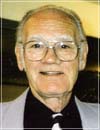
Scott Richardson

How The Lord Receives Sinners

Luke 19:1-8
Scott Richardson May, 3 1981 Audio
0 Comments

Sermon Transcript

Auto-generated transcript • May contain errors

100%
And let's read the first eight verses of the
19th chapter of the book of Luke. And Jesus entered and passed
through. entered and passed through Jericho. And behold, there was a man named
Zacchaeus, which was the chief among the publicans, and he was
rich. And he sought to see Jesus, who
he was. And he could not for the press,
because he was little of stature. And he ran before and climbed
up into a sycamore tree to see him, for he was to pass that
way. And when Jesus came to the place,
he looked up and saw him, and said unto him, Zacchaeus, called
him by name, make haste and come down. for today I must abide
at thy house." And he made haste and came down and received him
joyfully. And when they saw it, they all
murmured, saying that he was gone to be a guest with a man
that is a sinner. And Zacchaeus stood and said unto
the Lord, Behold, Lord, the half of my goods I give to the poor,
and if I have taken anything from any man by false accusation,
I restore him fourfold. I want us to think about the
last three words of the sixth verse. He, that's Zacchaeus, received
Him joyfully. I want to show you here a few
minutes this evening. I'm not going to be as long as I normally am. But in these few minutes here
this evening, I want to show you how He, the Lord Jesus Christ,
receives sinners, how He welcomes them, how glad He is to find
those whom He has come to seek and to save. You remember a particular
story that's told here in the fifteenth chapter of the book
of Luke. Turn over there with me if you
will. Luke 15. And the sixth verse. There is
a parable that our Lord told about a man having a hundred
sheep. It says, And if he lost one of
them, doth he not leave the ninety and nine in the wilderness, and
go after that which is lost until he find it? Now it is talking
here about the the mission or the purpose of the Lord Jesus. God hath given unto our Savior
an innumerable number of men and women and boys and girls
before time ever was. He gave them to him. And he came
into this world to pay what they owed, to redeem them from slavery,
to bring them unto himself, to find them, to make himself known
unto their hearts. Now, this is a picture of that.
It says that a fellow has having a hundred sheep, and if he loses
one of them. Now, does not this fellow that
has the hundred, does he not leave the ninety and nine in
the wilderness? And does he not go after that
which is lost? until he finds it. He doesn't
give up until he finds it. And when he's found it, and when
he hath found it, he layeth it on his shoulders rejoicing. And when he cometh home, now
this is the Lord Jesus after the seeking, the searching, the
finding of the wayward sheep. And when he cometh home, he calleth
together his friends and his neighbors, saying unto them,
What does he say? He says, Rejoice with me, for
I found my sheep which was lost. Rejoice with me, I found my sheep
which was lost. And then he speaks another parable
about a woman having ten pieces of silver, and if she loses one
piece, Does she not light a candle, and sweep the house, and seek
diligently, till she find that one piece of silver?" Now, in
the margin here in my Bible, it says that this is equal to
the one piece of silver, is equal to one Roman penny. Anyhow, that's
what was lost. One penny was lost out of ten
pieces. Well, does she not light a candle?
and sweep the house and seek diligently, she exercises an
effort, puts forth an effort to find the lost penny, because
the lost penny is valuable to her. And when she hath found
it, she calls her friends and her neighbors together, saying,
Rejoice with me, for I have found the peace which I had lost. Rejoice with me. And I remember
the story of the prodigal son. Rejoice with me was evident in
the father's attitude. This is my son that was dead,
but now he's alive. He was lost, but now he's found.
Rejoice with me. This is the attitude of the father
in the finding of his son. this lost son that had spent
all that he had on righteous living, and when he came to himself
and came home, he said, let's make a feast for him. He said,
kill the fatted calf. He said, let's have a feast and
let's make merry. He said, my son that was lost,
he's found. But I want to tell you here how
our Lord Jesus Christ receives sinners, how He welcomes them.
how glad he is to find those whom he came to seek and to save. From this text that I read to
you here, and these three words, which says, And he received him
joyfully, joyfully. Look at those three words. And
he made haste and came down and received him joyfully. Now, from these three words,
our text, Received him joyfully. We might put the he there. He,
that's Zacchaeus. Zacchaeus received him joyfully. So from this text, it appears
that when sinners receive the Lord Jesus Christ, they receive
him joyfully, so that there is joy on both sides. I've already
read to you where the Lord Jesus Christ said, Rejoice with me. I found this lost sheep. Rejoice with me." There was joy
in his heart when he found Him whom he came to seek and to save.
And now the sinner, when he comes down out of the tree, the Bible
says he received Him joyfully. So there's joy on both sides. There's joy in the sinner's heart,
and there's joy in the heart of the Savior. As a matter of
fact, you might say that it's a joyful business altogether
in the salvation of a sinner. There's joy in the heart of him
who seeks, and there's joy in the heart of him who's found.
It's a joyful business, the salvation of a sinner. Well, the Savior,
the Lord Jesus Christ, is glad to save, and the sinner is glad
to be saved. Now, this passage, I believe,
also teaches that often the most unlikely person is the first
to receive the Lord Jesus Christ joyfully. I suppose if we had
access to the people of that town of Jericho that lived there when this took
place, and we asked them, who would be the most likely person
in this whole city to be saved, to become religious, to receive
the Lord Jesus Christ? Who would be the most likely
person? Well, I'm sure that the last
one thought of or even mentioned would be this little tax collector
here. No one ever thought or believed
that this little greedy tax collector would be a recipient of the love
of God and that he would receive the Lord Jesus Christ joyfully. Everybody in this town disliked
this man. They didn't like this man. And
they disliked him so much that the Scriptures say here that
when Christ went into his house. They murmured, and they said
this, why they said, he's gone to be a guest of one who is a
sinner. And when they saw it, verse number
7, they all murmured. They disliked this fellow. You'll
find in most cases the most unlikely person to receive the Lord Jesus
Christ is the fellow that is most disliked by the most of
society. And they saw it, they all murmured,
saying, that he's gone to be a guest. He's gone to abide or
to dwell and to eat dinner in the house of a man that is a
sinner. Well, they all murmured, didn't
they? Yet, this greedy, rich, tax collector who was a sinner,
was the one person in that town that did entertain our Lord Jesus
Christ. And I suspect, brethren, that
many times since, our Lord Jesus Christ has been shut out of good
men's houses, that is, men who regarded themselves as good men. And I believe And I think this
is right, and I don't think that this discredits electing grace,
sovereign grace of God, in any way. To say that in many cases, when our Lord
passes by and men refuse or shut the door and refuse to entertain
Him as a guest in their house, I don't think he passes by again. I don't think. I think that when
he passes by one time and men in their rebellion against him
refuse to entertain him in their heart and make him the guest
of their home, it's not likely that he passes by too many more
times. It's like I said one time, I
believe, that if I give you a $10 bill and you tore that $10 bill
up and throwed it down on the ground, it ain't likely that
I'm going to give you another one. It's not likely. It ain't
likely. Well, let's get back to the text
here. He received him joyfully. Joyfully. That is, Zacchaeus, received
him, that is, Christ, joyfully. He received him joyfully. Now what does that tell us? He
received him, Zacchaeus, this rich, this chief among the publicans
who was rich. He received him. Well, there
are many, I believe, who suppose that in order to be saved, they
must receive a creed. They must receive a statement
or an article of fact that set forth certain beliefs in regard
to religion. They say, well, if I am to be
saved, I must believe these articles of this particular denomination's
faith. They say we are to receive a
creed, and many people believe that. The salvation is receiving
a creed, a statement of facts that sets forth what a particular
denomination or religion stands for. Now, listen, it's true,
I believe, that we are to have a creed. We're to have a creed. We're to have some articles of
faith in regard to what we believe, but we ought to take heed what
we believe. Whatever we believe ought to
be believed and measured and tested in light of the law and
the testimony of the Word of God. And I believe, brethren,
that a man might have the soundest creed in all Christianity. He may be the most orthodox person
alive. He might believe every article
of faith of every denomination, and he might believe every word
of the Bible, and yet be damned. You see, to be saved is not necessarily
or merely believing a creed. No, sir. The devil is orthodox. The devil knows what the truth
is. I believe he knows what the truth
is far more than I do. I believe he knows more truth
than I do. And I say I believe that he knows
more truth than you and I do put together. But the devil's heart has never
been changed by what he believes. He's still chained. He's still awaiting the pit. He's orthodox. He even believes
so strong that it says that he went so far as to tremble. Well, his heart's not changed. It's not the receiving of a creed
that saves a man. But it's the receiving of a person
into our heart that saves a man. Look at that again and just underscore
the second word of our text. Receive him. I just put a line
right under that. Receive him joyfully. Salvation does not come by receiving
a creed. That's not it. Although we have
a creed, and it's right to have a creed, but receiving or believing
the creed is not what we're talking about, and that's not what Saves
Act is. It was receiving of the Lord
Jesus Christ into His heart's love, or into the love of His
heart. That's what saved Him. It's not
written in this text that He received it. He received him,
not it, and he received him joyfully. Salvation you see is in this
person. He received him, not a creed. It doesn't make any difference
how orthodox and how sound the creed is. It's not salvation. Salvation does not come through
receiving of a ordinance. or many ordinances. Now, it doesn't
make any difference how correct and how scriptural an ordinance
is. It was never designed for the
salvation of our soul. It does not say here that Zacchaeus
received baptism or Zacchaeus received the Lord's Supper joyfully. Look at it again. It says he
made haste and came down and received who? Baptism? The Lord's Supper? Church membership? No. It says he received Him joyfully. There's no doubt in my mind that
Zacchaeus received baptism and he received the Lord's Supper
and he became a disciple of the Lord Jesus Christ. He learned
of Him. He followed Him. No doubt in
my mind. But put first things first. Salvation
is not in a creed. Salvation is not in an ordinance
or many ordinances. Salvation is in a person. Make
haste and come down. He made haste and he came down
and did what? Received Him. That's where it's at. I know,
but I'm religious. I know, but I believe the Ten
Commandments. I know, but this and but that. That's not it.
It's Him. What about Him? Do you know Him?
And this is life eternal. This is life eternal. What is
life eternal? Life eternal is knowing who?
Knowing Him whom God hath sent. That's what life eternal is.
It doesn't come through a creed. It doesn't come through ordinances. It's not said, today salvation
comes to your house because you have received a creed. It's not
said that today's salvation may taste and come down, for today
I must abide at your house because you've received a creed, or because
you've been baptized, or because you've joined the church, or
because you believe this, or because you've made certain good
intentions as to what you're going to do. Not said that at
all. Salvation came to this Man, when
he received the Lord Jesus Christ, when the Lord Jesus Christ crossed
the threshold of this man's heart, that's when that man was saved. When a person crossed the threshold
and entered into this man's heart, that man was saved and he was
saved all over. That's when he was saved. denominational or otherwise,
ordinances or statues or commands had nothing to do with it. It
was when the person of the Lord Jesus Christ crossed the threshold
of His heart, He is saved. He received Him. It was not even
the doctrine of Christ that Zacchaeus on this occasion received. Though I believe with all of
my being that he did receive the doctrine of the Lord Jesus
Christ, and I believe that he did learn of Him, I believe that
he was baptized, I believe that he did sit at the table of the
Lord and remember Him I believe that he did give of his means. I do believe that he was a willing
servant, a willing follower of the Lord Jesus Christ, but it
was not even the doctrine of Christ that Zacchaeus on this
occasion received. Listen, you need to beware. You
need to stay away from a Christianity from which the Lord Jesus Christ
has been eliminated. If you eliminate the Lord Jesus
Christ, you've got nothing. You've got nothing. All you've
got is the hucks. You've got outward forms. And
ceremonies and rituals, you've got nothing else. You hear the people who are critical
of religion talk about what I'm trying to say here this evening.
I read it a good bit from Orthodox writers. when they write about
certain churches and denominations who have preachers that are S.A.S. They're very eloquent, they're
orators, and they preach religion to great throngs of people on
Sunday morning, and they draw from these great throngs of people
that they preach to huge amounts of money to feed the poor and
to heal the sick and things of that nature, but there is never
no preaching of the Lord Jesus Christ. There is never no exaltation
in their midst of the Christ of God. You see, what they've
done, they have a religion, but they've eliminated the Lord Jesus
Christ. You can talk about Christ. You can talk about God, about
the Bible, about the Ten Commandments. You can make appeals to men on
the basis of the Word of God and still not preach the Lord
Jesus Christ. So you need to stay away from,
don't set your foot in a place that does not preach Christ and
Him crucified as the theme, as the burden of their whole Message. If Christ is not all, if He's
eliminated, you can talk about Christ. A lady told me not so long ago,
said, well, we go to so-and-so church, and said, boy, the preacher,
he's so good. He's so good. Well, I know what
she was talking about. He sounded good, and he mentioned
Christ. And he mentioned Christ as he
opened the pages of the book. You can preach about Christ,
but never preach Christ. You know that as well as I do.
Christ must be preached as the only substitute for poor, helpless,
hopeless, damned sinners. He must be preached in that fashion,
or he's not preached. If Christ is preached as one
whom awaits your approval, he is not preached as the Christ
in the Bible. Well, it was not even the doctrine
of Christ that Zacchaeus on this occasion received. And I said,
I believe, no, that he did receive the doctrine of Christ. And he
adorned the doctrine of Christ. I know that. Well, you know,
some folks say, well, I belong to this church or to that church.
But listen, just because a man belongs to the church is no sign
that he's joined to the head of the church. And if that's
all he's got, if he just belongs to the church, and he's not vitally
joined to the head of the church, which is the Lord Jesus Christ,
his joining of the church, is of no avail. He may have the
doctrine, but if he has not the head of the church, if he's not
vitally joined to God in Christ, his joining that church doesn't
help him out a bit. But this is the all-important
thing. Zacchaeus received Him. He received the Lord Jesus Christ
as his guest and He entertained him, and He gave unto the Lord
Jesus Christ His worship, His heart, and His love. And that's
what it's all about right there. That's what it is. Zacchaeus
received Him, and received Him, He entertained Him, and He gave
Him the best that He had. And that's what it's all about.
That's it right there. That's it. We receive Him, entertain
Him in our hearts, and give Him our hearts' love. He's the guest
of our house, and that's what it's all about. That's the important
thing. The creeds, the doctrines, the
baptisms, the ordinances, these have their proper place. Joining
the church, the giving of our money, they have their proper
place. But first, the first thing is to receive Him. Him. Him. Receive Him. All right. And notice another
thing now. He received him, and he received
him as his Lord. He said, Behold, Lord. Look at verse number 8. Behold,
Lord. Not only did he receive him as
his Savior, but he received him as his Lord. When a man receives
the Lord Jesus Christ, he receives Him as his Lord and his Savior,
which is to say, the Lord Jesus Christ is the ruler of his life. When a man is saved, he comes
under a new headship. He comes under
a new rule. He comes under the rule of Christ.
And he believed in the Lordship of Christ. He believed that Jesus
Christ was Lord over all. And he said, Behold, Lord, I
give to the poor. Behold, Lord, the half of my
goods I give to the poor. If I have taken anything from
any man by false accusation, I restore him fourfold. So you
can see in here that he received Him as his Lord. He must be your Lord. He must
be your ruler. He rules you. And notice another
thing here. I want you to see this, which
has to do with this willing, joyful reception that Zacchaeus
made of our Lord Jesus Christ. The call of grace does not hinder
the willing reception. Now, I think that, well, I just
know, no need for me to say I think, There was a previous call of
grace in the life, in the heart of Zacchaeus. Notice here where
it says, Zacchaeus, make haste and come down, for today I must
abide at thy house. Now, this call was powerful. Zacchaeus, come down! That was
a powerful call. And in a gospel sense, that call
was irresistible. It was effectual, and it was
irresistible in a gospel sense. Zacchaeus come down, and he came
down. It was irresistible. What I'm
saying is, he couldn't resist it. He couldn't resist the call. Now, what I've started out to
say is this, that the call of grace, does not hinder a willing
reception of the sinner in receiving of the Lord Jesus Christ. But
there was a previous call. This call here, in a gospel sense,
was irresistible. It was effectual. Yet it did
not interfere with what is referred to as free agency. It did not
interfere with the free agency of Zacchaeus as to make him unwilling
to receive the Lord. No, he received Him, and he received
Him joyfully. Is that not right? Well, this
is where a great many people make a big mistake right here. Right on this point is where
a whole lot of people go wrong. They think that The preacher
who preaches effectual calling makes out that men are like logs
of wood or blocks of stone, dead things that are to be dragged
about without reference to their will. And that's not true. That's
not what I preach, and that's not what anybody preaches that
I know of that preaches the sovereign grace of God. Let me say it again
now. Here's where many people make
a great mistake. They think that the man who preaches
effectual calling, or irresistible grace, or the doctrine of election,
or divine calling, who preaches that, they make out from what
they hear, they make out that men that I'm saying and preachers
are saying that men are just like a block of stone, like a
log of wood, dead things that are to be dragged about without
reference to their particular free agency or in reference to
their will. No, sir, I teach. I know that. I teach that men are answerable,
that men are accountable, that men are intelligent, that men
are responsible, but I also teach that the grace of God exerts
itself in such a way that it is suitable to that particular
man's freedom or that particular man's free agency, and at the
same time, the grace of God is victorious and conquers him,
and yet does not destroy his free agency. I'll tell you what
I'm saying. I'm saying that Zacchaeus here,
was not dragged down out of that tree by an angel. I'm saying that Zacchaeus was
setting up in that tree because he desired to see Jesus who He
was. He could not for the press, for
the crowd, because he was a little man. And he'd come up that tree
and he had a comfortable seat up that tree, or a comfortable
seat on the limb of that sycamore tree. And I'm saying that an
angel didn't come along when Jesus Christ said to Zacchaeus,
come down, make haste and come down. I'm saying that an angel
didn't reach up there or jump up on that limb and get him by
the shirt tail or get him by the back of the neck and drag
him down out of that tree and throw him down on the ground
against his will. That's what I'm saying. Am I
telling you the truth here? An angel didn't force him down.
Didn't do it. Well, an angel didn't open that
door of his house. That door of Zacchaeus' house
wasn't opened by one of those, what do you call them, Fred?
Your garage door when you're driving along? Some remote control. Zacchaeus didn't have one of
them remote control or channel selectors in his pocket. And
when he got near his house, he pushed a button. No, sir. Zacchaeus
took the doorknob or the door handle, whatever it was, and
he opened the door. He opened the door. An angel
didn't open it. He did it. He did it. Oh, he
opened the door of his home cheerfully, willingly, voluntarily, joyfully. And He come down out of that
tree Himself willingly, willingly. Not against His will, not against
His will. He was willing to come down.
Yet at the same time now, look at this, two sides to this, look
at this. Yet at the same time, secretly,
in His heart, there was a power other than His own which was
moving Him to act and to do as He did. You see that? What I'm saying, brethren, is
this. This may be hard to understand or for me to explain, but it's
plainly seen in the lives of people that God has converted.
Talk to anybody that God has converted, and they'll tell you
it was all a grace. God did it all. He did it all. I come to Him willfully, willfully,
Willingly, joyfully, voluntarily, I accepted, I received, but I
love Him because He first loved me. We must receive Him cheerfully,
joyfully, and voluntarily, and willingly, or else we have not
received Him at all. He will not force himself into
a man's house and sit there against that man's will. He won't do
it. He won't do it. He will not kick
the door down, regardless of what you've heard. He will not
kick the door down of a man's house and sit in that man's living
room against that man's will. He will not do it. He will not
come in armed to the teeth and forcibly take possession of a
man's soul. He will not do that. No, sir. You know what he will do? What he does do is that he comes
and gently, gently and lovingly and kindly changes the bias of
our will. You remember I said one time,
I've made this statement, I've said it lots of times, that God
saves a man against his will with his own consent. That's
what I'm saying now. I'm saying that God saves a man,
or God makes a man willing in the day of his passing. He makes
him willing. And what he does? He gently changes
the bias of a man's will so that you and I willingly invite him
into our hearts. We constrain him to come in and
abide with us and dwell with us. Not only are we willing to
have him, but we are desirous to have him. We desire to have
Him. We say, give me Jesus, else I
die. I must have Him. Not only are we desired in that
sense, but we're brought to a place that we'll sell all we have.
We've got to have Him. That's how willing we are. He
makes us willing. He made Zacchaeus willing by
a previous work of grace in his heart, he made him willing. You
see, he didn't interfere with his free agency. He didn't interfere
with his will. He made his will comply with
the will of God Himself, and made it so that he thought that
he was doing it, and he did it joyfully. He made haste. He made haste. You know what a lot of people...
When I preach, you know what a lot of people how they respond. And
I say, come down. Come down, sinner, come down.
I say, come down. You've got to come down. You've
got to hit the dirt. You've got to put your face down
here in the dust from whence you sprang. Come down, sinner,
come down. You know what they say? They
say, it's comfortable up here. I don't think I'll come down.
I'm getting along good up here. This is a good seat. In fact,
I brought me a hammer and a few nails when I climbed up this
tree, and I got me a little board, and I put me a little board across
the crotch of a limb here, and I nailed it down, and my feet
hang so, swing here, and I'm so comfortable up here, I'm not
coming down. I'm alright. I can see good up
here. I said, come down, sinner, come
down. Salvation is coming down. You never can go up until you
first come down. I say come down. I'm comfortable. I'm comfortable. You're welcome
to it. You can have it. You can have it. But if you ever
receive Him, you'll have to come down. Come down. Before you can go up, you've
got to come down. Oh, we're willing to have Him,
aren't we? And lastly, Lastly, after we receive Him. Now, we
receive Him willingly and gladly. And after we receive Him, everything
else will have to be done cheerfully, willingly, and voluntarily. We receive Him willingly. joyfully,
gladly, voluntarily. After He has entered across the
threshold of our hearts, after, and we're His children, we're
the children of grace. Everything that we do from then
on, we do cheerfully, willingly, gladly, and voluntarily. We do
it for His honor. and for his glory." Now, notice
something here. He did not command Zacchaeus
to give half of his goods to the poor. People make the doctrine of repentance
out of that. They say, well, you know, Zacchaeus,
he said he'd give half. Behold, he said, Lord, the half
of my goods I give to the poor, and if I've taken any Fang from
any man by false accusation, I restore him to him fourfold."
Our Lord didn't command him to do that. You know where that
sprang from? It didn't spring from a law.
There wasn't a command that said he had to do that. You know where
it sprang from? It sprang spontaneously from
a joyful heart. that received the Lord Jesus
Christ and appreciated who Christ was and what Christ did. And
he said, the love of Christ constrains me. If I've taken anything, behold,
all I've got, I give half of it to the poor. And if I've stolen
for any man, I'll give him fourfold. He wasn't commanded to do it. It came spontaneously out of
his heart. Oh, my soul! You know, when a
man begins to ask, must I do this or must I do that? He makes us to stand in doubt
as to whether he hath received Him joyfully or not. Now listen to me. Mark this down. The principle of rule to you
and me this evening who has received Him joyfully is not must I, but
may I." Not must I, but may I, Lord. We think it's a privilege. We think it's a privilege and
a blessing to do anything for Him. May I do it, Lord? May I
do it? Not must I do it. The principle
that rules is may I, not must I. Oh, this becomes a man's joy
and a man's delight to serve Him who first loved him and gave
himself for him. Zacchaeus, come down, come down. Zacchaeus jumped out of that
tree and did what? Received Him joyfully, joyfully. And our Lord received Him joyfully. So it was a joyful business.
Joy on both sides. Joy in the heart of the Lord
Jesus, and joy in the heart of the sinner. There's joy that
day. In Zacchaeus's house, there's
joy. There's joy. There's a whole bunch of folks
there, they murmured. They said, this is the most unlikely person
to be saved that ever I've seen. This little, old, greedy, miserable
tax collector that stole from us. Why? The Lord saved him,
and now the Lord is going into his house to be a guest. And
I'll tell you, they had a feast there that day. Zacchaeus was
like Mary. Zacchaeus fell at his feet. He
fell at his feet. Well, that's what salvation is.
It's receiving Him. Him. The Lord Jesus Christ. Let's stand.
Scott Richardson
About Scott Richardson
Scott Richardson (1923-2010) served as pastor of Katy Baptist Church in Fairmont, West Virginia.
Broadcaster:

Comments

0 / 2000 characters
Comments are moderated before appearing.

Be the first to comment!

Joshua

Joshua

Shall we play a game? Ask me about articles, sermons, or theology from our library. I can also help you navigate the site.