Bootstrap
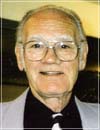
Scott Richardson

Stand Fast

2 Thessalonians 2:15-17
Scott Richardson April, 13 1981 Audio
0 Comments

Sermon Transcript

Auto-generated transcript • May contain errors

100%
Turn, if you will, to that second
chapter of the book of 2 Thessalonians, chapter 2. And I'll read verse 15 and 16 and 17. The last three verses
I'll read there. Therefore, brethren, stand fast
hold the traditions which ye have been taught, whether by
word or our epistle, our letter. Now our Lord Jesus Christ himself,
and God, even our Father, which hath loved us, and hath given
us everlasting consolation and good hope through grace. Comfort
your hearts and establish you in every good word and work." Now, Paul, who is the author
of this letter, Paul the Apostle, he seems to be very anxious about
those who had been converted and formed into this particular
body, this particular church of the Thessalonians. He seemed
to be concerned about that, and his prayer and his desire for
them was that they might be established in the truth, they might be trained,
instructed to know that truth and be firmly rooted in that
truth. Now, from what I read of this
chapter, it indicates that Paul was grieved and saddened that
these believers at the city of Thessalonians, they had been
disturbed, they had been troubled by a rumor about the coming of
the Lord Jesus Christ. And it grieved him because they
were disturbed and troubled about this matter. Someone had wrote a letter about the coming of the Lord
Jesus Christ, saying that the coming of Christ was at hand.
And they had wrote the letter and
attributed it to the Apostle Paul. He says up here in the first
part of the chapter, We beseech you, brethren, by the coming
of our Lord Jesus Christ, and by our gathering together unto
him, that ye be not soon shaken in mind or troubled. That was their condition, and
this is what saddened Paul. And I'll read to you here what
caused them to be troubled. that ye be not soon shaken in
mind, or be troubled neither by spirit, nor by word, nor by
letter as from us," which is some indication that there was
some deception here. He didn't write that letter and
tell them that the coming of the Lord Jesus Christ was at
hand. Someone else did that, and it disturbed these people.
And because they were disturbed and troubled, Paul grieved. Not only because they were shaken,
but because there did not seem to be anybody among this church,
any sound man with spiritual wisdom, who was well instructed,
who was rooted and grounded, firm and deep in the truth, that
was able to assist these people when trouble came. So he says in verse 15, Therefore,
brethren, stand fast. Stand fast. Hold the traditions
which you have been taught, whether by word or by our epistle. Stand
fast. Understand. He prayed that I'm sure that
there might be some men raised up in that church that would
be able to lead them and guide them if they had any more trouble. It's kind of like children playing,
being carried away with something new or novel. He wanted them
to be firmly. I want to insist upon this now.
He wanted them to be firmly established in faith, to know the truth,
like the city whose foundation, whose builder and maker is God. Like the city, it can't be moved.
Like a church, it can't be moved. A church is not tossed about
by every wind and doctor. A church that knows the truth,
stands for the truth, preaches the truth. for the glory of their
Redeemer. So, after exhorting them to stand
fast, he didn't feel like that was sufficient for the case. So he stopped writing here, and
laid down his pen, and fell down upon his knees, and he began
to pray to God to make them steadfast. Now our Lord Jesus Christ Himself
and God even our Father, which hath loved us and hath given
us everlasting consolation and good hope, comfort your hearts
and establish you in ever good work. Now you see, the preacher's
work is only half done. when he's exhorted the people
to stand fast and be firmly rooted and grounded in the truth. It's
only half done, and then he's got to pray. He's got to pray
unto God on behalf of himself and on behalf of his people.
I was thinking here, During the time we had our Bible
conference a week or so ago, I was thinking as I stood up
here before this congregation, I thought, what a great responsibility
it is or would be if you had a congregation like this at every
service. where all the pews were filled. You might have a hundred and
twenty or thirty people that you'd be responsible for. I thought,
what a tremendous responsibility. It's a tremendous responsibility
for me, whether you deem it to be so or not. It's called to
my attention every once in a while. that I must give account. I must
give account for you. So, I wouldn't want you to think
that I'm too harsh, or repeat myself too much. It says, Obey them that have
the rule over you, and submit yourselves. Obey them and submit
yourselves. to those that have the rule over
you, for they, those that have the rule over you that you are
to submit yourself to, for they watch, they watch for your souls,
that they may do it with joy and not with grief, for that
is unprofitable for you. So you see, the preacher's job
is only half done when he exhorts the people to steadfastness,
to know the truth, to know who God is and God's Christ and what
God's Christ has done on their behalf. When he emphasizes it
over and over and over, these things, in order that you might
be rooted in these truths. His job is only half done. Then
he's got to pray to God, to these that God's given him under his
care, that he watches for their soul. And he prays that God will
make them steadfast. They won't be tossed about by
every wind and doctor. Everything comes along, taken
up with, like a lady I knew not too long ago who'd been listening
for years and years and years and never heard anything, never
heard nothing. She knew what the television
preachers were saying, but she didn't know what I was saying.
She didn't know what I said. Never heard what I said. Didn't
pay any attention. She never gave heed. But she listened to the television. Listened to the preachers on
the television. They don't say nothing. They don't say nothing. If they
said anything, they wouldn't be there. The only preacher I ever heard
on the television who ever said anything was Henry Mahan. It
costs him $5,000 every month to stay there. $5,000 is what
it costs, what they have to pay out every month for him to preach
on that station down there at Charleston. These preachers on television,
they don't say nothing. No, they're witty. There's that John, somebody from
out there in Texas named Cornerstone Church. overcome by his mannerisms. Then there's that Reverend Jakes,
that colored fellow. He ain't saying nothing. He ain't
saying nothing. If he was, he wouldn't be on
there. Well, anyhow, I said, the preacher's job is only half
done. He's got to fall down on his knees and pray like Paul.
Make them, Lord! Cause them to hear, Father! Give
them ears to hear! Be inclined to be committed to
the truth and know the truth. Some say prayer is useless. Some
say there is no need to pray. Well, what do they know about
it? They never prayed much, if any. Oh, no. When a man prays, when a man
prays, He knows where it goes to. It
goes to God. And He answers according to His
will, not according to mine. It's His will be done, not my
will. Most of our praying has to do
with my will and your will. But prayer that's answered is
according to His will. And the people that say that
prayer is useless don't know anything about it. because they
never tried it. And if I send a letter, a telegram,
I don't know whether it's going to get to its destination or
not. You just don't know, do you, Pat? If I write a letter
and put the address and the stamp on it, I'm not sure it's going
to reach its destination. It might wind up in the dead
letter office. It might wind up where some postman
got tired of delivering the mail and threw it over the bank. But
I know when I come to Him, I know what the destination is, and
I know that He heareth us always when we come in His name, and
He answers our prayers. Prayer is not useless. The preacher's job is only half
done when he exhorts to be steadfast and he's got to pray. Let's talk
about what we have already. Verse 16, let's talk about now
what we have already. And we do have, he tells us something
here about him loving us and hath given us everlasting consolation. He tells us what we have already
and consoles us then with what we have already. Our consolation
is in that He loved us. We are consoled when we know
that the Lord Jesus Christ Himself and even God our Father hath
loved us. That ought to be a consolation.
Well, this is what we already have. It says, Our Lord Jesus
Christ Himself God, even our Father, which hath loved us."
Now he mentions, number one, the first source of all mercies
and all blessings. Every good and perfect thing
cometh from above. Our Lord Jesus Christ Himself
and God, even our Father, is the source of ever-mercy and
ever-blessing. We attribute it to conditions,
surroundings, circumstances, and this and that. If that had
not happened, it would not have been this way and that way and
so forth. But ever-mercy, ever-mercy and
ever-blessing has for its source the Lord Jesus Christ Himself,
even God our Father. He does not write now the Lord
Jesus Christ Himself and God, even the Father, but it is our, did you notice
that? It is our, O you are our Lord
Jesus Christ and even our Father. Our. I say He did not write now
the Lord Jesus Christ and God, even the Father, but it's our
Lord Jesus Christ Himself, even God, our Father. Our, our Father. Our Lord Jesus Christ being divine,
deity, being God, all God, Emmanuel, God with us. That's who the Lord
Jesus Christ is. Being divine, He is immutable. That is, He's unchangeable. And
His love is unchangeable. His love to the objects of His
love, There is not a shadow of change in His love. It never fluctuates. It never goes up and it never
goes down. It's always the same. It's fixed
on us. We're bound to give thanks always
to God for you, brethren, beloved of the Lord. Why are you beloved
of the Lord? Because God hath from the beginning
chosen, chosen. He's not talking about every
member of Adam's race. He's talking about these genuine,
true believers that have been converted unto God by the power
of the Spirit of God. This immutable, unchangeable
love of the Lord Jesus Christ, who is divine as well as human,
He is the God-man. This love, unchangeable as it
is, is fixed upon us who have been chosen by Him before time
ever was. all of His attributes and Himself. The Lord Jesus Christ, it says,
Himself. Our Lord Jesus Christ Himself. All of His attributes being God. All of His attributes and Himself
is at our disposal, those that He chose, the Beloved of God
the Father. If He chose you and He chose
me, then He is yours, Himself. He is yours, altogether yours. And you can say with Paul, Our
Lord Jesus Christ. And then the writer adds, and
God even our Father. Now, we sometimes tremble at
the very thought of God our Father. How could we approach God our
Father, were it not for God in human flesh, I'm talking about
our Lord Jesus Christ Himself, who is God in human flesh, we
could not approach God apart from Himself, apart from Him,
God in human flesh, who has become a man. This is our representative. stood in our stead and placed
in the room. Boy, what was I to do against our sins? Sat down
forever at the right hand of God to make intercession for
us. Listen, we can come to God the
Father through our Lord Jesus Christ because of His merit,
because of His value, because the virtue of His atoning sacrifice,
that He made a complete atonement. He atoned for all of our sins. He made the law of God honorable. He kept every jot and every kittle
of that law of God. And He satisfied the inflexible
justice of God in our behalf. And we can rejoice in God the
Father. and rejoice in Him and be thankful
that He's satisfied and He's consistent with His justice and
that He didn't show mercy at the expense of His justice. But
His justice must be satisfied before He can show mercy. If we can, by the grace of God
and the help of the Spirit of God, know the ever-blessed God
Almighty, God the Father, let us know Him, find out who He
is. The terrible God, the omnipotent
God, who shakes both heaven and earth with His voice. He who
touches the hills and makes them smoke and burns with fire. God the Father. This is God,
our God, our God, our God, our Lord Jesus Christ, our God the
Father. He's ours. Altogether, ours. All His attributes is ours, folks.
His love, His unchanging eye of His love is fixed on us. Paul said, therefore, brethren,
stand fast in this truth here, stand fast in this, and hold
the traditions which ye have been taught, whether by word
or by epistle. Stand fast. Well, listen, this
God is our God. Now, if we have on our side those
who will be true to us forever, what will that do for us? if
we have those on our side that'll be like that. Oh, it could be
more than a man. Oh, you can't have the utmost
confidence. You can't trust your life and
soul to a man unless he be the God-man. And you choose enough sides, and
we used to play ball. old broken bat that had been
nailed together and taped and an old ball that the cover had
been off of it and wrapped that thing up and as hard as a rock.
Choose up sides, be six or seven guys. Well, you're the captain,
you're the captain. Choose up sides. Choose up who's
on your side. My God, if we have on our side
those who will be true to us forever, We ought to be comforted
in our hearts and rejoice in our hearts and be established
in every good work. If you had trusted only in a
dead Savior, if that's all you ever trusted in was a dead Savior,
then you'd do well to go to His grave and weep. I'm talking about the true and
the living God. He who died, rose again, never
lives in God's right hand. He's on the side of the believer. You've got him on your side.
Brother, you're in good shape. Good shape. Ah, if you had such
a God as the heathens have, then might all consolation be withholden
from you. Confucius, the Mohammedans, oh,
they're gods. They're dead! They're dead and
buried! I got no wonder some of them
go to them weeping and wailing walls and go to this statue and
that statue. They ought to cry for them, they're
dead. I don't want no dead god on my side. I want a God who
was man and God, and one person who died in my stead and place
and room, paid all that I owed and discharged all of my liabilities,
and clothed me in his own righteousness, and ever lives to plead on my
behalf. That's the kind of God I want.
That's the God of the Bible. Oh, but with an almighty Savior,
the Lord Jesus Christ, whoever liveth, to make intercession
for us, and with an immutable, omnipotent, omniscient, omnipresent
Father, whoever lives to watch over me, what problem do I have
in light of that? Very little. Very little. That brings about consolation,
doesn't it? Our Lord Jesus Christ Himself,
Let me say a few words about that and I'll quit. Our Lord Jesus Christ himself.
Why did he put that word himself in there, you suppose? It sounds
just as good without that word, doesn't it? Why did he put that word himself
in there? It seems to me like it would
have sounded all right if he had written, Our Lord Jesus Christ,
and God, even our Father, which hath loved us. That sounds right,
doesn't it? But that's not the way it went.
It says, For now our Lord Jesus Christ Himself. See? Himself. He added that Himself
there. And God, even our Father, which
hath loved us. Well, it's to call to our attention
the real personality of the blessed Son of God. And it makes us to
feel that in Him, not in merely what He does, not in merely what
He bestows upon us, but in Himself. The Bible says, John, I believe
it was, says, and the Word was made flesh and dwelt among us. That is, that God the Father,
God Almighty, hath taken humanity into union with divinity, and
that He who stands at God's right hand, even the right hand of
God the Father is no other than the Son of Mary, bone of my bone,
flesh of my flesh. What joy and comfort overwhelms
my poor soul when I understand Himself, Jesus Christ Himself,
stands there as my representative, the man, Christ Jesus, who has
taken redeemed human nature right to the very throne and footstool
of God to represent me now and forevermore. He is on my side. Who can be against us? if God
be for us. Look at His person, Himself. Look at His person, not merely
as man, but as the God-man. The God-man. The God-man. It was the God-man who made a
complete atonement for His people's guilt and His people's shame. Look at him by faith, through
the eyes of faith, as a glorified man. A glorified man because he went
down into the grave bearing his people's sin. And he came out
of the grave without sin. He is a glorified, glorified
man. The only man, real man, that
ever lived and ever will live is the man, Christ Jesus. And He's on our side. And He
has loved us and gave Himself for us. And to support that, He said,
and God, even our Father. God the Father and God the Son. which hath loved us, hath loved
us, and hath given us everlasting
consolation. You remember that he told Jeremiah,
he said, Jeremiah, yea, I have loved thee with an everlasting
love. No end to it. This is what we have. We already
have this. This is what consoles us. This
is what keeps us faithful and keeps us committed. This is why
we're not ashamed of the gospel of Christ, for it's the power
of God unto salvation to every one that believeth, to the Jew
first, and also to the Greek." God help us. God help us. Therefore, brethren, stand fast. Stand fast. Know the truth. Don't be moved. God's on your
side. The Lord Jesus ever lives to
plead your case. Don't give in. Hang in there. Don't be one of those. Don't
be one of those that's tossed.
Scott Richardson
About Scott Richardson
Scott Richardson (1923-2010) served as pastor of Katy Baptist Church in Fairmont, West Virginia.
Broadcaster:

Comments

0 / 2000 characters
Comments are moderated before appearing.

Be the first to comment!

Joshua

Joshua

Shall we play a game? Ask me about articles, sermons, or theology from our library. I can also help you navigate the site.