Bootstrap
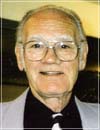
Scott Richardson

Rich In Mercy

Ephesians 2:4-5
Scott Richardson April, 13 1981 Audio
0 Comments

Sermon Transcript

Auto-generated transcript • May contain errors

100%
Well, we're glad to see all of
you this morning. Glad to see Rosemary, who's back
in Florida. Probably freezing to death. Pat, who's been down in Atlanta
furthering his education. We're glad that he's here and
all his wisdom, intelligence. be able to help us. And for you, who are just ordinary
people, we're glad God lets us meet from time to time on the
Lord's Day, Wednesday. We're all different in some respects, Some are highly intelligent.
Some are not. Some have good health. Some don't. We have one thing in common.
We have Him. Bound together. Joined together. One objective. To worship and to praise and
to thank Him. for His kindness, His tenderness,
His compassion, His mercy, that He cares for us. And the greatest blessing of
all is that He has made us to know it, that He cares for us. We'll turn with me, if you will,
to Ephesians chapter 2. Ephesians chapter 2. And I'll
read verses four and five. We'll say some things concerning this
great subject. It says, but God, there's one
of them buts again. Remember I said, read to you
in 1 Corinthians there, had that word but. ye are washed. But God, who is rich, God is
rich. I was watching that program on
the television the other night, on the biography channel or program,
and it was the life of John D. Rockefeller. And it was very
interesting. He become rich. The word rich is synonymous with
the name Rockefeller. Rich is Rockefeller. I've heard
that all of my life. Since I was real small, I've
heard the name Rockefeller. Rockefeller was associated with
people who were rich. I said, why? Man is rich as Rockefeller. You associate the word rich with
money, money. Said John D. Rockefeller in that
program, it said that he accumulated $19 billion, $19 billion. He is a Baptist deacon. And he said that God made him
rich. He said it was God's will that
I be rich. He gave all credit to God for
all of his riches. But they said on one hand he
was a hard and difficult man, but before his life ended, he
gave millions and millions and millions and millions of dollars
away to various, at least what he thought was worthy causes
anyhow. And still, to this day, there's
various endowment funds set forth in education and universities
and all to educate people. His money still goes on. That
has nothing to do with what I'm talking about other than just
to associate with the name Rockefeller that is rich. He had lots of
money, $19 billion. He was at one time the richest
man in all the world. He didn't have no education.
He wasn't a college man or anything like that. He thought about going
to college and his dad advised him not to. He said, you don't
need to go to college. He said, get you a job someplace
and learn how to be an accountant and manage business and things
of that nature. He said, these other things will
come on. So he did. He got him a job at a little
company over in Ohio and started from there and finally got to
southwest Pennsylvania in the oil field and made all of his
money. In fact, he is the fellow that
started Darryl's business. Standard Oil. And all the other
oil companies, Texaco and all the rest of them, when the government
broke up his monopoly, they all were Standard Oil companies.
But he had that $19 billion. He was rich. But God, who's rich? Not in money, in mercy. God's rich in mercy. If John
D. Rockefeller was considered rich
because he had $19 billion and was a philanthropist of some
sort, what about God? He's rich in mercy. Who is rich
in mercy? There's no doubt about that.
That's unquestionable. He's rich in mercy. That's my greatest need, and
that's your greatest need, is the mercy of God. And He's rich, and mercy's got
plenty of it. He's got plenty of it. And He
gives it. That's another thing about it.
He gives it freely, mercy, to those that recognize they need
it. Those that recognize they need
mercy are subjects for mercy. A man that doesn't need mercy
is not a subject for it. He's not a candidate for mercy
if he doesn't need mercy. But if he needs mercy, he's a
fit candidate for mercy. And if he needs mercy, mercy
is only to be had with God, and he's got a large quantity of
it. He's rich in mercy, but God,
who's rich in mercy for His great love, wherewith
He loved us, even when we were dead in sins,
hath quickened us together with Christ by grace are you saved. I want you to notice in this
chapter, chapter 2, the book of 1 Corinthians, the remarkable
change of subject matter, which starts at verse 4, that first
verse I read to you. The writer here had been giving
a a very sad description of what the saints of God are, or what
believers are by nature. That's what he'd been talking
about. But he changes the subject real quick. He talks here about, in his describing
the saints of God, of their conduct, of their of their conversation, of their morals. He talks of
what they really were about. He talks about what they really
were. And he appears to grow weary
of talking about evil and wickedness. And he says, but God And he goes
on to tell what God has done for those individuals that he
describes, beginning at verse number 1 in chapter 2. He describes
them, "...and you hath he quickened who were dead by nature." Who
were dead? Dead. dead men walking around,
dead women, dead boys and dead girls, yet walking around. They were dead concerning God
and spiritual things. Dead in trespasses and in sins. But he quickened them. And he
goes on and he says, where in times past ye walked according
to the course of this world, according to the prince of the
power of the air, the spirit that now works in the children
of disobedience, among whom also, Paul said, we all had our conversation
in times past, in the lust of our flesh, fulfilling the desires
of the flesh and of the mind, and were by nature the children
of wrath, even as others, but God." See how he changes the
subject real quick? Indicative of him being weary
of talking about wickedness and vileness, and he It changes the
subject real quick. It says, But God, like it was
in the book of I Corinthians, and such were some of you, but
ye are washed and made clean. What a relief it is to turn from
ourselves and turn from our fellow men to God. Quit talking about
our evilness and wickedness and our practice by nature. Let's
talk about God. Let's talk about Him a little
bit. Two subjects here that I want to just kind of briefly
remind you of. The first one is what we were and what God has done for us.
What we were. What we were. What we were is
dead in sin. And even when we were dead in
sin, whatever life of a spiritual kind that we have right now,
today. Whatever it is, it may not be
a spiritual life that has reached its maximum as of yet. It may be a flame Or it may be
just a spark. Whatever kind of spiritual life
that we have now, listen to me, that we have today, this morning,
right now, was not ours by nature. Whatever it is. There may be
some here that maybe you're not committed to the cause and to
the glory of God in Christ Jesus as much as you'd like to be or
as much as some that you admire are. But whatever it is, whatever
the degree of spiritual kind or spiritual
life that you have right now, it was given to you. It was given
to us by God Himself. It was not ours by nature. It
was not ours by nature. By nature we were dead in sin. That is what we were by nature. before God looked upon us in
love and in pity and said unto us, Live! We were dead in trespasses and
in sins. Dead as far as spiritual things
are concerned. Walking corpse. Dead men walking. Walking corpse. We were numb,
insensitive. We had no feeling. We had no power to do anything. Dead. Whatever the word dead
means, that's what we are, that's what we were prior to quickening,
prior to life, prior to visitation. prior to the time when the voice
of God said, Live, and live, prior to that time, who is known. Like a man that's paralyzed,
and you go to the doctor, and the doctor wants to find out
if there's any life in your leg or your arm, Takes a pen and
punches you and you can't feel it. No, I'm insensitive to the pain. Without power to do anything.
We were preached to. We were called and we were bidden
to come time and time again. But as far as all goodness was
concerned, we were like a corpse. unable to hear the sweetest sound
of the gospel of our Lord Jesus Christ. Don't you remember, and
I know most of you do, who are saints of God, believers in Christ
Jesus, called by God Himself. Don't you remember? When it was
so with you, when it was so with me, When you thought you could
do something good in your own strength and you found out that
it was a failure, your resolutions and good resolves and all your
promises, they all fell to the ground. We've all made them promises
and covenants to God We would do this and we would do that
and determine from now on never to do that again. And we've broken
those promises and covenants unto God when we attempted to
do them in our own strength. We had no strength to do them,
no power to do them, no desire to do them. I know a friend of mine, He wants to go to heaven when
he dies. He's greatly and deeply concerned,
he said, about where his soul winds up. But in his conversation, he doesn't
manifest any real sincere desire gain or achieve that which he
tells me that he has, because he'll be talking and all at once
he'll take the name of God in vain in describing a thing or
a person or a situation. And he knows that that bothers
me. Or he thinks that it bothers
me. And it does bother me. Soon as he says that, oh, he
said, I've got to quit saying that. I've got to quit saying
that. And I know down deep in his heart
that he's promised God that he's going to quit that awful habit
that he's got of taking God's name in vain. But I've been talking
to him for four or five years, and almost every conversation
I have with him shows me that he's broken his promise to God
he's never given. That's the way we are. And I
remember my own self. I've done it time and time and
time again. Try what I promised God I'll
do. I remember I told you here the
other night that when I was in the Pacific there for over three
years, I don't think I ever missed a night. When I lay down on my
bunk down there in that bottom deck, down there next to the
water, And before I went to sleep, I said, God Almighty, if you'll
get me out of here and get me back home, I'll do this and I'll
do that. I didn't do a one-up. I broke
every promise I ever made to God. I didn't have the strength
to do them. I was dead. Dead. D-E-A-D. I was walking around making promises,
but yet I was dead. by nature concerning spiritual
things. I was without strength, and all
of my resolutions fell to the ground. And I was like that expression
that Paul uses, that there was a time when we were without strength,
insensible, and we were powerless. without will, without desire
to do business with God, had no disposition, had no aspirations,
had no longings after God. You remember that, don't you?
Loved the world. I loved the world, and if I'd
have had my way, I'd have been like that fellow in the Bible.
I'd have become rich, increased with goods, and I would have
said, soul, take thine ease, eat, drink, and be merry. But I had my way. Do you remember
when you was that way? All of us was that way one time
or the other. That was our state by nature. We were dead in sins. I ask you this question then,
in light of that, did the Lord love us then? Did the Lord love us then when
we were like that? When there was nothing whatsoever
in us, about us, pertaining to us, to commend ourselves to Him,
did He love us then, I ask you? And I answer the question and
I say, yes, He did. Yes, He did. Yes, He did. But God, who is rich in mercy
for His great love wherewith He loved us, even when we were
dead, insensible to God, dead in trespasses and in sin. He
loved us. Had nothing whatsoever in us
to command Him or to commend Him or to commend us. Nothing. Nothing. He loved us. Did the spiritual things. There
was a life that was in us, but it wasn't a spiritual life. It
was a life of another kind. We was full of that life. We
was full of evil and wickedness and corruption, full of it. And the dead people that he's
describing here, as I've already mentioned, are walking, they're
walking around, they're a walking corpse. There may be some here
this morning. There may be some here that live
and move and have their being, but they are walking corpse,
dead. That's the way we were, dead
in trespassing, dead to goodness, dead to anything that was godlike. As for evil and wickedness, it
was full of that. We had a lot of life there. And
as a dead corpse gives forth corruption, and if it was possible
for us to open the grave of the dead corpse, our smelling process
would be filled with an odor of corruption. That's the reason when a man
dies, God says, put him out of your sight. We're not to stand
him up in the corner or leave him to lay in bed and dress him
up. We're to put him out of sight
because he's dead and corrupted and he has a vile odor. Put him down in the ground. and
cover him over with a heap of dirt to keep the stench in from
polluting the air. Dead, dead, dead, dead, dead. Dead people. Walking corpse. A corpse gives forth corruption
and fills the grave with an awful odor. So did our sins continually
give forth a corruptive odor continually in the presence of
God. Did He love us then? He did. He loved us then. My God, what love! What love! What great, glorious,
insurmountable, indescribable, unchanging love! For His great love, wherewith
He loved us, notwithstanding He loved us even
when we were dead, in sins. Well, let me just mention a few
things here and we'll be on our way. A few of the unlovely and
unlovable things which God saw in us. We were ungrateful to
begin with. Ungrateful unto God Now it's
a hard thing to continue to love an ungrateful person, isn't it? You try to do him good. You pick a fellow out here and
you have compassion and tenderness towards him and you pity the
poor fellow and you try to do him good and you continue You're
persistent in trying to do him good. But he never, one time,
says, thanks for trying to help me. Thanks for going out of your
way to do that. Thank you for depriving yourself
of that and giving it to me and taking up your time from your
schedule Try to help me. Never, never get a word of thanks
from Him. Do what you can for Him and He's
still unkind to you and talks about you after you leave. I
want to tell you here this morning, brethren and sisters, it is not
in the flesh to continue your love towards Him. It's not in
your flesh and blood to do it. Ungrateful, ungrateful, full
of ungratitude towards God. That describes us. Unlovely and
unlovable. Ungrateful. Listen, what ingratitude! was in our hearts one time or
the other. How sad it is that many people
live in this world, inhabitants of this world, of God's world,
who drink God's water, eat God's food, bask in God's sunshine
and year in and year out live without recognizing the God who
gave them such mercies. What an unspeakable character
is that! Such were some of you. What's even worse is a man that
has no gratitude for those that would attempt to help him. What's even worse is a man or
a woman or a boy or a girl who's full of murmuring and complaining. Hardly anything can be done to
please him. Do your best to help this fellow,
and he murmurs and complains. I'm telling you this morning,
and I know it to be true, it's not in flesh and blood to love
a complainer and a murmurer. It's a hard and difficult task,
isn't it, Bob? Try to do him good, and all you
get in return is murmuring and grumbles. Soon get tired of that,
don't you? Soon get tired of that. How many
times are you going to put up with his complaining when you've
tried to do him good? How many times? One time, two
times, three times? They'll come an end to the times.
According to flesh and blood, you'll quit it. You'll quit it. That's the way we were. But did
God quit us? Huh? He never quit us. Did He love us when we were insensitive? Full of ingratitude? Didn't do
nothing but complain? Didn't I talk to a preacher at
this Bible conference who told me? He said, I'm in bad shape. He said, I can't sleep at night.
I can't sleep at night. I said, well, there must be something
the matter. I said, you work hard, don't you? And he said,
yeah, I work long hours. And he'd come in and try to stay
up, and he said, go to bed, and I can't go to sleep. He said,
I don't know what to do. He said, can you tell me anything? I said, well, I can tell you
this. Take one of those melatons. Is
that the name of them? Melatonin. Take one of them pills.
Maybe that'll help you. I'll take one. So I was kind
of joking with him. He said, do you know of anything
I can do? He said, boy, I'm on the verge
of, he said, I just don't know what I'm going to do. I can't
sleep. He said, do you know, he said, I got angry with God
over this matter. So I got angry with God. How
come no one was asleep? Well, I understand where he's
coming from, and you do too. It's a terrible situation. We ought not to murmur and complain.
We ought to learn to be content with whatsoever state we're in.
And that's not easy. That's a difficult thing. Your
wife's dead, she dies, leave you by yourself. Your husband
dies, leaves you by yourself. One of your children passes on.
Oh, you're sick. It's hard. It's a difficult thing
for flesh and blood. That's what I'm telling you.
Not to complain or grumble. Get angry with God. That's the
way we were. Did He love us then, Bob? Huh? He loved us then. Well, it says
here, But God, who is rich in mercy for His great love, wherewith
He loved us even when we were dead. Full of complaining, wasn't
grateful, wasn't thankful, had no aspirations or desires after
God. I'm talking about I'm talking
about those people, lest you think I'm getting off. I'm talking about those people
that he describes in the fourth verse of this chapter. According as he hath chosen us
in him. I'm talking about those people.
At one time, Bob, they were walking corpse. They were dead in trespasses. Did he love them? Did He love
them when they were ungrateful, insincere, full of bellyaching
and mumbling? Did He love them then? He says,
even when we were dead in trespasses and in sins. He loved us then. Well, you keep doing favors and
things, unto people to relieve, or at least try to relieve the
condition and the situation, and all of them are not appreciated,
and man doesn't give you a word of thanks. You feel like that
you are done with this, fella, and I'll go to somebody else
or someplace else where maybe my favors will be more appreciated. And I'll just leave this fellow
alone. Oh, listen, but God did not act towards us in that way. His great love, wherewith He
loved us, was not, listen to me, His great love, wherewith
He loved us, was not to be turned away He loved us in spite of how we
acted and what we did. How we have trifled and made
light of spiritual things. We're kind of like the people
that was mentioned in the parable that they were invited to the
feast. The man of the house made a feast for his son and
he told his messengers to go out into the highways and byways
and invite people to come to the feast. The wedding supper. my son, and they made light of
it. They made light of it. That's
the way we were. We was warned to escape hell,
but that hell business seemed to us like an idle tale, a tale
that was well told, a fairy tale, a make-believe thing. It didn't
make much of an impression upon us. We was bidden time and time
again to seek the kingdom of God and seek heaven, seek God
where He is on the throne. But we loved the world too well. We loved the world and the things
of the world to think of things concerning heaven and joys of
an unseen world. We didn't have time for it, did
we? Did God love us then? Yeah, He
loved us. Ah, seemed like worn out,
but He wasn't. If you as a doctor and a patient came, wanted your help,
and you started to tell him what was his problem and tell him
about the cure. And he told you, I haven't got
time for that. I don't give a damn whether I
live or die. If you was a doctor, what would
you do? You'd say to yourself, I ain't
got time for this fellow. I got other patients out there
that want to get well. I'll see them." Well, that's
the way we are, for the most part. Did God love us then, when we laughed and made light
of heaven and hell? Well, did He abandon us? Not those that were chosen in
Him. He didn't abandon us. His great love wherewith He loved
us even when we were dead in trespasses and in sins. Still worse than any of these
unlovable and unlovely things that I've mentioned thus far,
we're full of pride. We're as proud as the devil.
Proud as the devil. We didn't have any righteousness
of our own, yet we thought we had some. Didn't we? We thought we had some. We always
said, well, I'm not as bad off as that fellow. I got a little
bit. I might not have much, but I
got some, Pat. I'm not bored of any righteousness at all. I got some. You haven't got any. You haven't got any. We thought
we had some. We're far off from God by our
wicked works, yet we stood like the Pharisee before God and said,
well, I'm glad and thank you that I'm not as bad as He is.
That's the way we were. Yet He loved us. Yet He loved
us. We was content, wasn't we? We
was content. I was content for about twenty
Twenty-three years, the first twenty-three years of my life,
I was content. I was content. Made all them promises to a God
that I didn't know. A figment of my imagination never
kept one promise. Yet, at twenty-three or twenty-four
years old, I was as content as a boy could be. Yet, I had nothing
to be content with. Did he love me then? Yeah. Even when I was dead. Full of lies and hypocrisy. Even
then, he loved me. Huh? Listen. Even though I was poor and naked
and wretched and blind, and was able to think in my own
heart that I was rich and hadn't needed nothing. Yet He loved
me. It's difficult, you see, to love a proud man, isn't it?
Now, you can love a man even if he has a thousand or a million
faults, if he's not full of pride and boastful. Now, you can love
him. You can love that sinner. You
can love that sinner if he's got indescribable sins in him
and on him, if he is not proud and boastful. But if he is proud
and boastful about him, when he struts before you like a sinner,
a self-righteous sinner does, he struts. Do you know what I
mean when I talk about strutting? Who was it Here the other day
showed me a picture of two peacocks. Somebody that was down in Florida,
I believe. You see them peacocks? Who had
them? I have a little of them peacocks
down there by their campground. Oh, they have great big fanned
out feathers, that big around. And when they come out of the
morning, they strut. You've heard that, proud as a
peacock. Peacocks strutting. That's the
way we were. We had nothing to strut about. We had nothing to brag or boast
about. But we was full of pride, and
we liked to strut. Not only before men, but we like
to strut before God, boastful. You see, it's hard
to love a proud, boastful, and strutful creature of the dust. Flesh and blood can't hardly
do it. Yet God, in His great love, wherewith
He loved us while we were dead in trespasses and in sins, loved
us, although we were proud and haughty and high-minded and full
of conceit. Yet He loved us and gave Him
for us. I've already mentioned this,
let me say it again. Before he was converted, before
God saved you, how many vows and promises did you make to
God? Yet all your promises was like
the morning dew, soon passed away. Yet he loved you, even
when we were dead in trespasses down in the sand. Who can love
one who cannot be trusted? It's hard to love one who lies
to you over and over and over. I know one who's dear to my soul, dear to
my heart, is as close to me as human flesh can be. It's hard for me. to love Him
when I can't trust Him. Huh? I love Him! But it's hard
to trust Him. Huh? It's hard when I can't trust
Him. It's hard for me to love Him.
Who can love one that can't be trusted? Did God ever love us like that? He
said He did. Huh? Which leads me to say, Nothing
will provoke Him to turn away from His purpose in mercy. How bad we are! And we certainly
have been bad. But nothing will provoke Him to turn Him
away from His purpose in bestowing mercy. You've read in the Bible where
it says it repented God and grieved Him in His heart that He made
man. You've read that, haven't you?
Yes, I have. But you never did read in the Bible where it says
that God repented of redemption. He never repented of redemption. God didn't do anything in the
dark when He chose us. When He chose us, He didn't choose
us in the dark. That's like a whole thousand
people out here in the parking lot at 12 midnight when it's
black as coal outside. And someone's standing there
and said, this one over there, this one over here, this one
will come up. God never chose people in the dark. He knew our
corruptions and our depravity and our pride and our thanklessness. He knew all about that when He
chose us. Yet He loved us and sent Him
to pay our debt. Well, I could go on, but my time
is gone. In light of that, Ought
we not to love Him? Ought we not to love Him? Our conversation in times past
in the lusts of our flesh, our conversation, our way of life,
the desires of the flesh, the desires of the mind, and were
by nature the children of wrath, the children of the devil, even
as others, but God. but God. Therein lies the difference,
brethren, it's but God. Whatever hope you've got this
morning, whatever godly desires you've got this morning, whatever
confidence that you've got this morning, whatever assurance of
faith you've got this morning, whatever it is hinges upon but
God. who's rich in mercy, wherewith
He loved us. Huh? Without Him, no way. Lord bless us. Let's stand, we'll
be disciplined.
Scott Richardson
About Scott Richardson
Scott Richardson (1923-2010) served as pastor of Katy Baptist Church in Fairmont, West Virginia.
Broadcaster:

Comments

0 / 2000 characters
Comments are moderated before appearing.

Be the first to comment!

Joshua

Joshua

Shall we play a game? Ask me about articles, sermons, or theology from our library. I can also help you navigate the site.